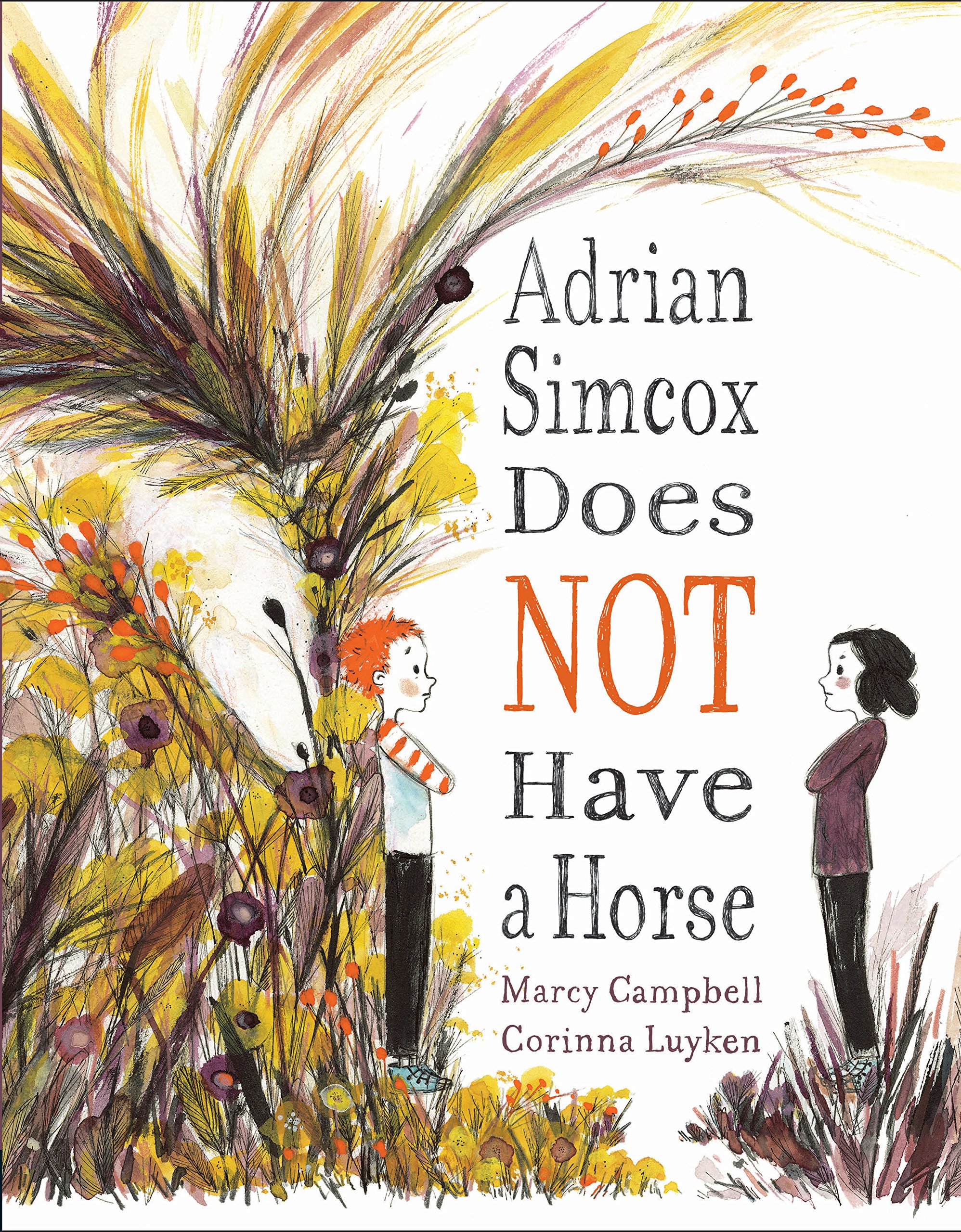
Adrian Simcox Does NOT Have a Horse by Marcy Campbell, illustrated by Corinna Luyke

Published by Dial Books

Image result for simcox amazon

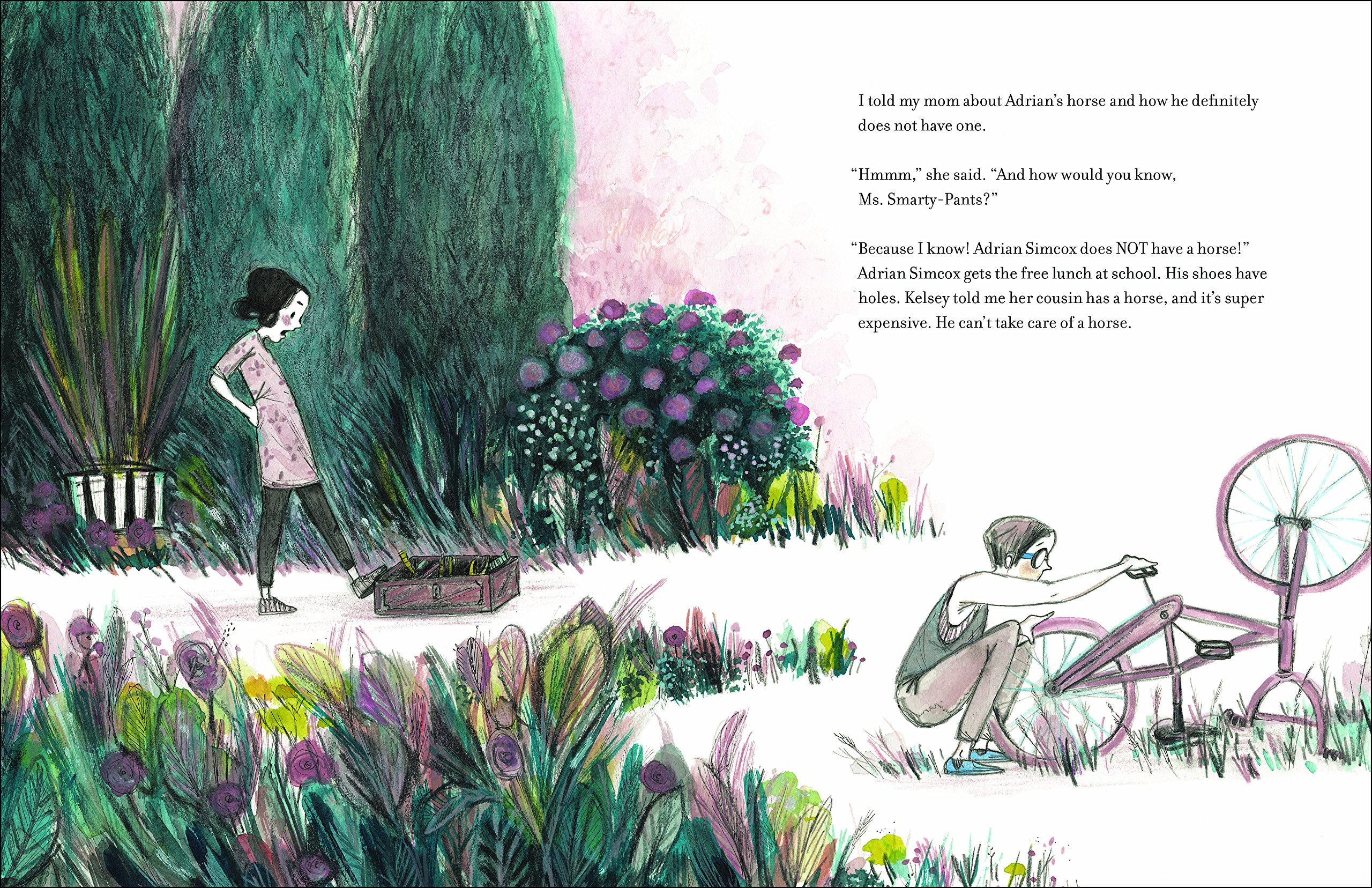
Image result for adrian simcox luyken

Summary:  Chloe is annoyed that her classmate Adrian Simcox keeps telling everyone that he has a horse.  She has some evidence that this would be impossible: he lives in a small house with his grandpa, his yard is tiny, and he gets free lunch.  One day she calls him on it, yelling on the playground, “He’s lying! Adrian Simcox does NOT have a horse!” She can’t help noticing that Adrian looks sad.  That night, when Chloe tells her mom about Adrian and his horse, her mother responds by suggesting they take their dog for a walk. Instead of their usual route, Mom takes them down a street where “the houses looked like they might fall down, and even though it wasn’t trash day, it looked like it was.”  Chloe recognizes Adrian outside in front of his very small house. While her mom talks to Adrian’s grandfather, the two kids hang out. What Chloe wants to say to Adrian is, “You do not have a horse”, but she sees that sad look again, and instead asks, “Is your horse at a farm?” That brings a smile, and Chloe realizes that Adrian has the best imagination of any kid at school.  40 pages; ages 4-8.

Pros:  A good lesson on kindness, empathy, and looking beyond appearances.

Cons:  The last page felt a little bit flat.

If you would like to buy this book on Amazon, click here.

The Rough Patch by Brian Lies

Published by Greenwillow Books

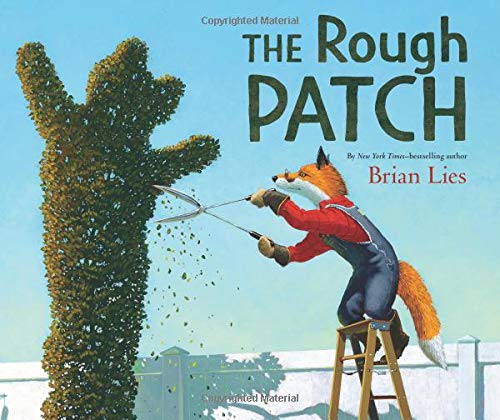
Image result for rough patch lies amazon

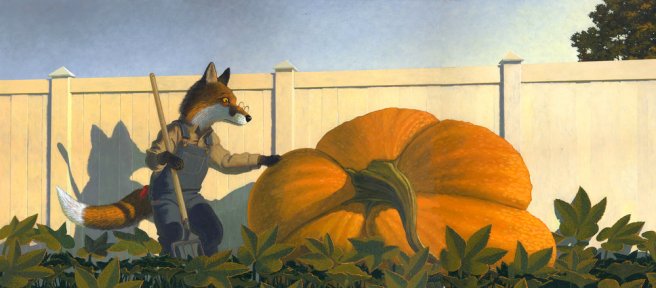
Image result for rough patch lies

Summary:  Evan the fox and his dog are best friends who do everything together; the first several pages are bright and cheery, showing the pair eating ice cream, hanging out with Evan’s friends, and, best of all, working in their beautiful garden.  “But one day, the unthinkable happened,” and Evan is shown sadly petting the body of his beloved dog. The fox goes through different stages of grief: shutting himself inside, hacking his garden to pieces, then allowing weeds to grow and the garden to become a desolate place.  One day, though, he finds a pumpkin vine growing and he lets it stay.  He gradually begins to take care of it, and by the end of the season, he has a huge pumpkin, worthy of entering at the fair. He catches up with old friends at the fair and even has some fun. His pumpkin takes third place, and Evan gets a choice of prizes: $10 or one of the pups from a box on the stage.  “I’ll take the ten,” says Evan, but he can’t resist a peek into the box…and the final page shows him driving his truck home, a puppy riding on the seat next to him. 40 pages; ages 4-8.

Pros:  Wow, this is one powerful book; one of my favorites of the year so far.  Anyone who has dealt with any sort of loss will find it a helpful read, and the story is written in a way that even the youngest will understand.  Plus, the illustrations are adorable.

Cons:  I wish we had learned the name of Evan’s first dog.

If you would like to buy this book on Amazon, click here.

All Are Welcome by Alexandra Penfold, illustrated by Suzanne Kaufman

Published by Knopf Books for Young Readers

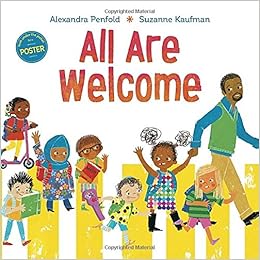
Image result for all are welcome here penfold amazon

Summary:  “No matter how you start your day./What you wear when you play./Or if you come from far away./All are welcome here.”  Rhyming text and busy illustrations assure a classroom full of children and their parents that all of them are welcome in the school.  The class is a veritable United Nations, with kids and adults of different races, nationalities, and religions.  The kids move through their day, reading, drawing, snacking, and playing outside.  After school, they go home to different homes and foods, but their community binds them together.  The final foldout page shows some sort of open house (maybe a science fair?) with all the parents and kids gathering for food and sharing of different school activities.  44 pages; ages 4-8.

Pros:  Elementary teachers and librarians, if you’re looking for something new for the first day of school, this may be your book.  The rhymes are catchy and the illustrations are appealing–just about any kid is likely to find a picture of someone who looks like him/her.  There’s a lot to look at and discuss.

Cons:  Apparently this book comes with a poster under the jacket, but since I got it from the library, the poster was gone.

If you would like to buy this book on Amazon, click here.

I Walk With Vanessa: A Story About a Simple Act of Kindness by Kerascoet

Published by Schwartz & Wade Books

Image result for i walk with vanessa amazon

Image result for i walk with vanessa kerascoet

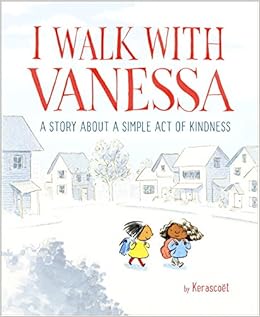
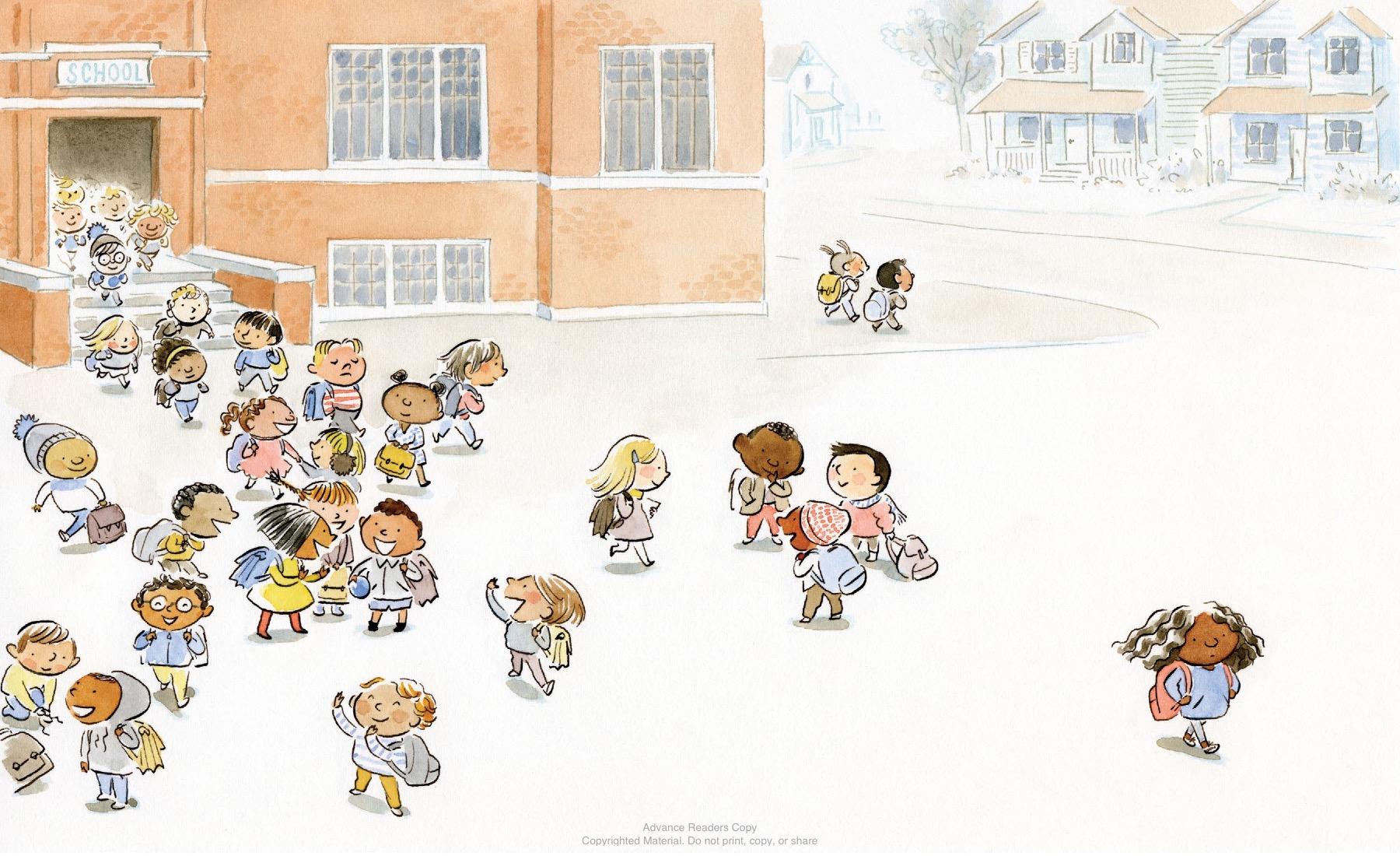
Summary:  In this wordless book, Vanessa is new at school, and seems to be feeling isolated on her first day.  She sits quietly in class and watches kids playing in the gym without joining in.  As she walks home alone, a boy walks up to her and starts yelling.  Another girl witnesses the incident and is clearly bothered by it, continuing to think about it after she gets home.  The next day she wakes up with an idea.  She saw where Vanessa lives, so she stops by her house and asks to walk to school with her.  As the two girls walk, others join them, first one at a time and then in groups, until there are dozens of kids walking together, Vanessa in their midst.  The bully is shown on the edge of the crowd, his face red and angry.  The happy crowd of kids enters the school, and Vanessa has found a new friend.  The last page has a message for kids about how to help someone who is being bullied and some helpful words for adults to use when talking about the book with children.  40 pages; ages 4-8.

Pros:  Although there are no words, kids will get this book right away.  There’s a truly feel-good ending, and the story will lend itself easily to discussion afterward.  The cartoon kids are adorable.

Cons:  The issue of bullying is not always as simple as this book makes it out to be.

If you would like to buy this book on Amazon, click here.


Be Kind by Pat Zietlow Miller, illustrated by Jen Hill

Published by Roaring Brook Press

Image result for be kind amazon pat miller

Image result for be kind zietlow pat miller

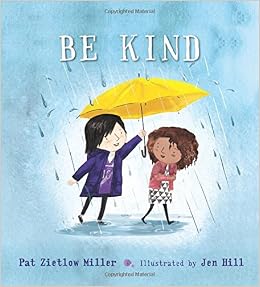
Summary:  When Tanisha spills grape juice on her new dress, the narrator tries to be kind (“Purple is my favorite color”), but Tanisha is too upset to appreciate the gesture.  The narrator wonders what she could have done differently, and reflects on what it means to be kind.  She thinks of kind acts she’s done in the past, like bringing a neighbor cookies or helping around the house.  Sometimes it’s easy (saying thank you), but it can also be hard (sticking up for someone when others are unkind).  In the end, she decides to paint Tanisha a picture, knowing that small kindnesses can lead to much larger ones.  The final illustration shows that her efforts have not gone unappreciated by Tanisha.  32 pages; ages 3-8.

Pros:  A good addition to the character education bookshelf.  Kindness is explained in terms even the youngest reader can understand and discuss.  It’s not clear if the narrator is a boy or a girl, making his/her experiences universal.

Cons:  Tanisha is clearly having a bad day, but she seems a bit ungrateful.

If you would like to buy this book on Amazon, click here.

The Rooster Who Would Not Be Quiet! By Carmen Agra Deedy, illustrated by Eugene Yelchin

Published by Scholastic Press

Summary:  The village of La Paz is a very noisy place until the people, wanting some peace and quiet, fire the mayor.  The new mayor, Don Pepe, brings in peace and quiet all right, but his ban on singing makes the village as quiet as a tomb.  One day a rooster comes to town with his family, and at dawn delivers a loud, “Kee-kee-ree-kee!”  Don Pepe tries everything he can to shut up the rooster–putting him in jail, cutting off his food, and eventually threatening to kill him–but the rooster continues his song.  “A song is louder than one noisy little rooster and stronger than one bully of a mayor,” says the rooster, “and it will never die–as long as there is someone to sing it.”  The inspired townspeople burst into song, Don Pepe skulks out of town, and La Paz is a noisy, lively village once again.  48 pages; ages 4-8.

Pros:  A timely message in today’s world, celebrating those who will not be shut down by bullies. Kids will enjoy the colorful rooster and exaggerated evil-villain characteristics of Don Pepe.

Cons:  While I’ve seen this book on a few Caldecott lists, I found the illustrations a mixed bag; I liked the portrayals of the rooster and Don Pepe, but not so much the ones of the townspeople.

If you would like to buy this book on Amazon, click here.

After the Fall (How Humpty Dumpty Got Back Up Again) by Dan Santat

Published by Roaring Brook Press

Summary:  Yes, Humpty Dumpty got put back together again, but “there were some parts that couldn’t be healed with bandages and glue.”  Humpty is now afraid of heights–he sleeps on the floor rather than in his top bunk, and is forced to buy Bo-Rings cereal rather than the enticing Sugar Bunny and Rainbow Bites that are stocked on the top shelves.  Worst of all, though, he misses the birds he used to watch from his perch atop the high wall.  Inspired by a paper airplane, Humpty creates a flying bird, but is dismayed when it lands on top of his old wall.  Determined, the egg overcomes his fear, and slowly climbs up the ladder on the side of the wall.  At the top, he cracks again…only this time, a beautiful bird emerges and soars into the air.  40 pages; ages 4-8.

Pros:  Dan Santat tells a remarkable story, making a fairy tale connection and using humor that preschoolers will enjoy, but conveying a message for all ages.  The illustrations may be worthy of another Caldecott for the illustrator.

Cons:  The “Sad Clown” cereal that is one of Humpty’s options on the grocery store’s lower shelf.

If you would like to buy this book from Amazon, click here.

The Bad Seed by Jory John, illustrated by Pete Oswald

Published by HarperCollins
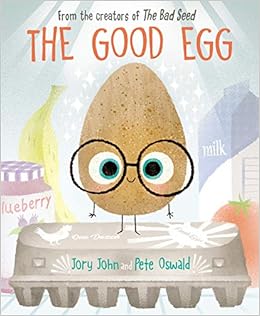
Summary:  That is one bad seed.  He never puts things back where they belong.  He tells long jokes with no punch line.  And he’s late to everything.  Why?  Well, it’s kind of a long story.  He started out okay, growing  up in a big family on a sunflower.  When the flower wilted, though, he lost his home, and eventually ended up in a bag.  A giant started to eat him, but he got spit out at the last minute.  It was pretty much downhill from there.  But now he’s made a decision to try to be good.  It isn’t always easy, and sometimes he slips back into his old ways, but he keeps going, and eventually starts to think maybe he’s not such a bad seed after all.  40 pages; ages 4-8.

Pros:  Pretty funny stuff that could open up discussion about why people do “bad” things, and how to help them do better.  It can’t be easy to personify different seeds, but Pete Oswald does a charming job.

Cons:  I’ve done just about all the “bad” things listed by the seed.  The picture of the abandoned shopping cart in the parking lot really hit home for me.

If you’d like to buy this book on Amazon, click here.

The Sound of Silence by Katrina Goldsaito, illustrated by Julia Kuo

Published by Little, Brown Books for Young Readers 

Summary:  Yoshio enjoys hearing the sounds of his Tokyo neighborhood: rain falling on his umbrella, his boots squishing in puddles, his own delighted giggles.  One day he hears a new sound, a woman playing a koto with twinkling, twangy notes.  When she’s through, he asks her what her favorite sound is.  She replies, “The sound of ma, or silence.”  From then on, Yoshio tries to hear the sound of silence, but at home, outside, or in school, there are always other sounds.  Finally, arriving early at school one morning, he sits down and begins to read.  Suddenly, in the middle of a page, he realizes that he is surrounded by silence!  He notices how peaceful it makes him feel, and realizes that the sound of silence has been there all along, running underneath all the other sounds.  An afterword explains the concept of ma and how it has influenced Japanese music and other culture.  40 pages; grades K-3. 

Pros:  A beautiful introduction to some aspects of mindfulness and meditation, and a way to help kids relax and focus on the present moment.  The illustrations show many details of a Tokyo home and neighborhood, and a note at the end explains how they were created using a combination of pen drawings and digital coloring. 

Cons:  This could be a tough concept for young kids to understand.

More-igami by Dori Kleber, illustrated by G. Brian Karas

Published by Candlewick Press 

Summary:  Joey loves things that fold—tacos, road maps, his foldaway bed—so when Sarah Takimoto’s mother comes to his school one day to demonstrate origami, Joey is captivated.  He asks Mrs. Takimoto to teach him, to which she wisely replies, “I can show you the folds.  But if you want to be an origami master, you’ll need practice and patience.”  So Joey goes home and folds everything in sight.  After going through his homework, his sister’s sheet music, Aunt Vivian’s recipe, and the $38 in his mother’s purse, his family has had enough.  Discouraged, Joey wanders into the neighboring Mexican restaurant, where the sympathetic owner gives him a job folding napkins.  He starts simply, but doesn’t give up, and after months of practice, he is finally able to create a masterpiece. Includes instructions for an origami ladybug.  40 pages; ages 4-8.

Pros:  A charming story about the importance of persistence when learning a new skill.  Joey, who appears to be African-American, is taught by a Japanese American woman and helped by his Mexican American neighbor in a multicultural friendly community.

Cons:  Apparently I lack the “grit” necessary to master origami, because even the ladybug looks a bit challenging to me.