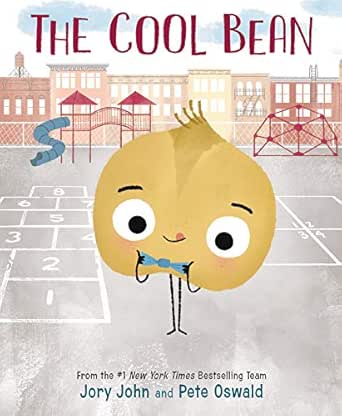
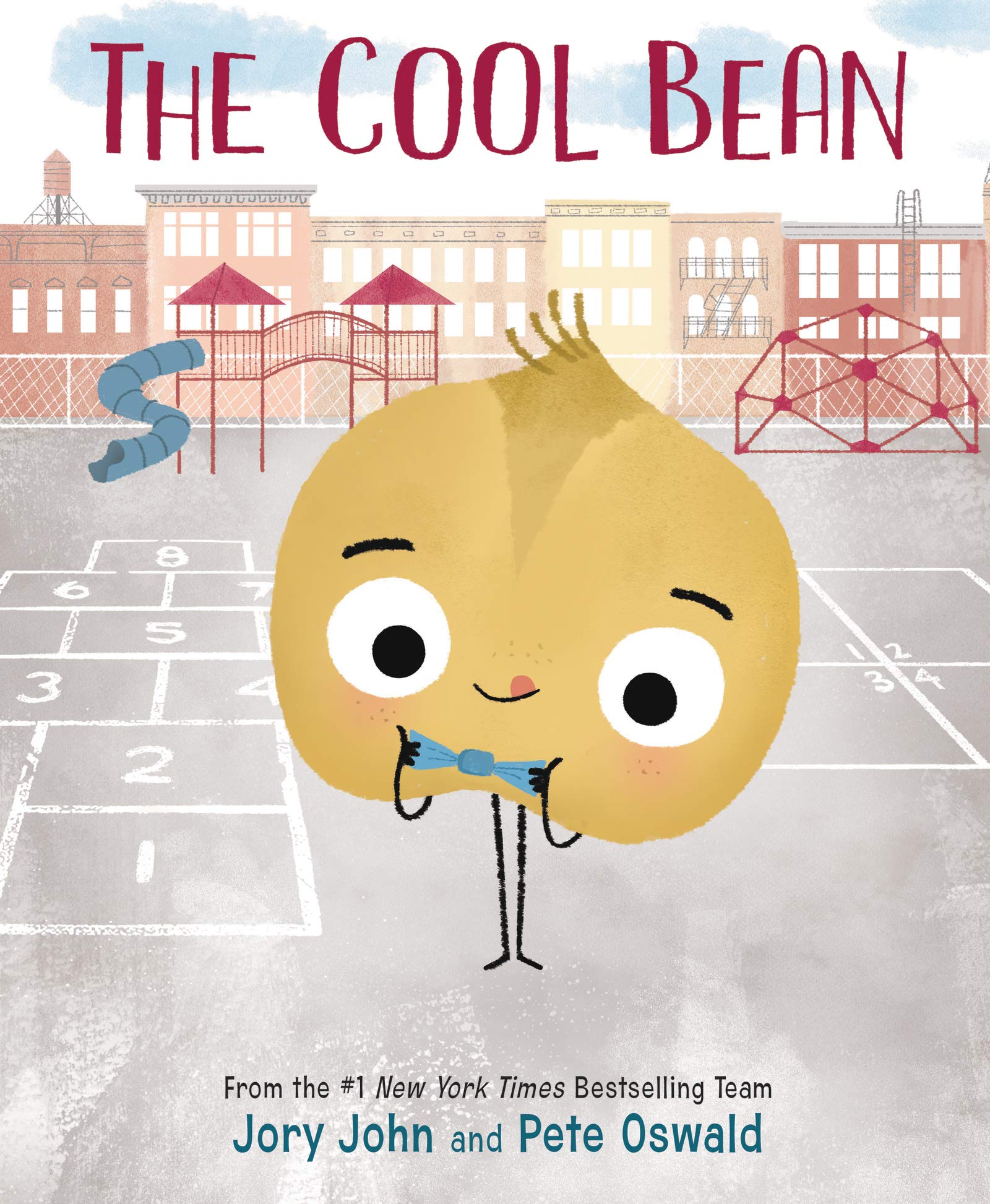
The Cool Bean by Jory John, illustrated by Pete Oswald

Published by HarperCollins

Image result for cool bean jory

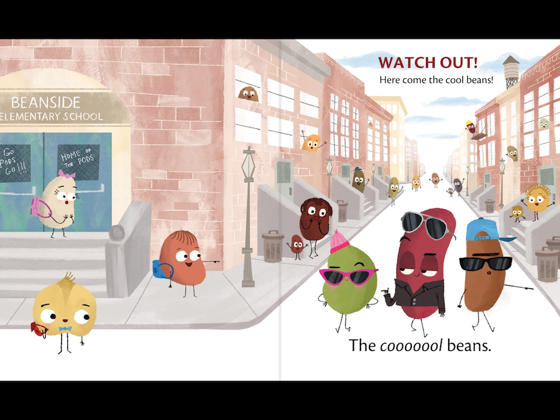
Image result for cool bean pete oswald

Summary:  There are some cool beans at the school…but our narrator is not one of them.  He used to hang out with those cool guys, but things changed, and now he feels pretty uncool most of the time.  His clothes don’t seem to fit right, he walks into things, and sometimes he snorts when he laughs. One day, though, some amazing things happen.  When he drops his lunch, one of the cool beans helps him clean up. When he falls down on the playground, another cool bean helps him up. And the third cool bean helps him out of an embarrassing situation in class.  These kind gestures turn his whole day around, and pretty soon he’s feeling confident enough to hang out with the cool guys again. He’s learned that kindness is cooler than any outside appearance, and he tries to spread that kindness to the other beans around him.  40 pages; ages 4-8.

Pros:  The team that brought you The Bad Seed and The Good Egg have produced another winning book that will help kids see that kindness is more important than being cool.  

Cons:  If only it really were that easy to get in with the cool kids. 

If you would like to buy this book on Amazon, click here.

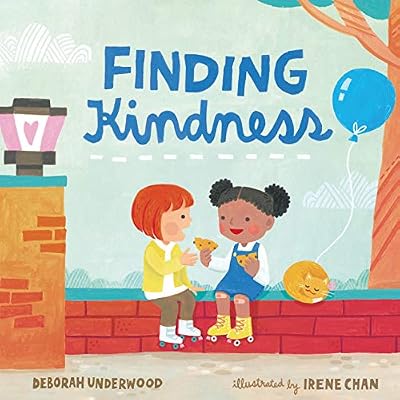
Finding Kindness by Deborah Underwood, illustrated by Irene Chan

Published by Henry Holt and Co.

Image result for finding kindness deborah underwood

Summary:  “Kindness is sometimes a cup and a card/or a ladder, a truck, and a tree;/a scritch and a cuddle, a rake and a yard,/a cookie, a carrot, a key.”  The rhyming text goes on to list all sorts of ways to be kind. Sometimes being kind just involves taking a break or sitting with someone who is sad.  There’s also being kind to yourself, forgiving yourself when you’ve made a mistake. The book goes through a day, ending with reading a bedtime story and wishing on a star.  32 pages; ages 3-7.

Pros:  The catchy rhymes and busy, diverse illustrations will engage even the youngest readers and get them thinking about everyday kindnesses they can give to others.  A good springboard for discussion and brainstorming about how to help friends and family.

Cons:  There’s no real action, just a list of ways to be kind.  Kids’ attention might start to wander before the last page.

If you would like to buy this book on Amazon, click here.


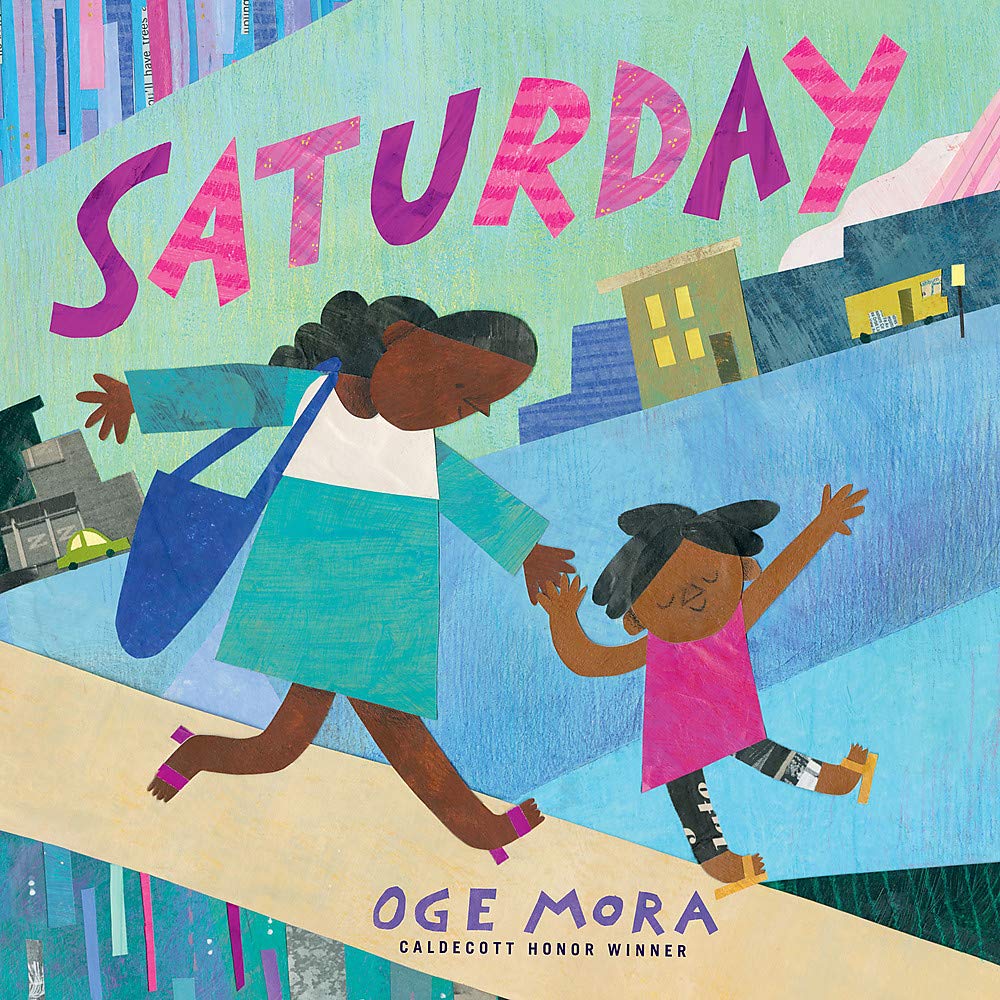
Saturday by Oge Mora

Published by Little, Brown Books for Young Readers

Image result for saturday oge mora

Image result for saturday oge mora

Summary:  Ava’s mom works six days a week, so Saturdays are extra special for the two of them.  They love to go to the library’s story hour, get their hair done, and have a peaceful picnic in the park.  This week they’re going to a special one-day-only puppet show.  But when Saturday arrives, everything starts to wrong. Story hour is canceled, their hairdos get soaked by a passing bus, and the park is filled with noisy people and animals.  Worst of all, they barely catch the bus to the puppet show, only to discover that Mom left the tickets at home. “I ruined Saturday,” she says. But Ava sees it differently.  “Don’t worry, Mommy. Saturdays are wonderful…because I spend them with you.” They head for home, where they both have the same idea: to kick off their shoes and spend the rest of the day making their own puppet show.  40 pages; ages 4-8.

Pros:  A simple, but heartfelt story that every harried parent will embrace.  The gorgeous collage illustrations are sure to be Oge Mora in the running for another Caldecott recognition this year.  Happy Saturday!

Cons:  A six-day work week.

If you would like to buy this book on Amazon, click here.

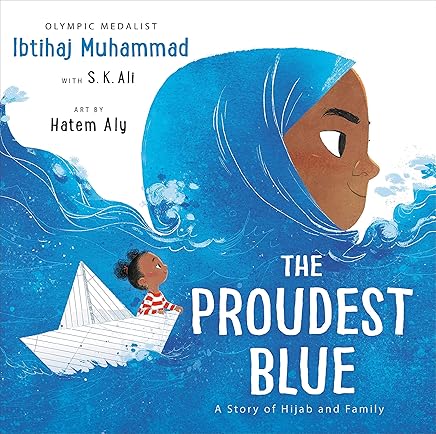
The Proudest Blue: A Story of Hijab and Family by Ibtihaj Muhammad with S. K. Ali, illustrated by Hatem Aly

Published by Little, Brown Books for Young Readers

Image result for proudest blue amazon

Image result for proudest blue hatem

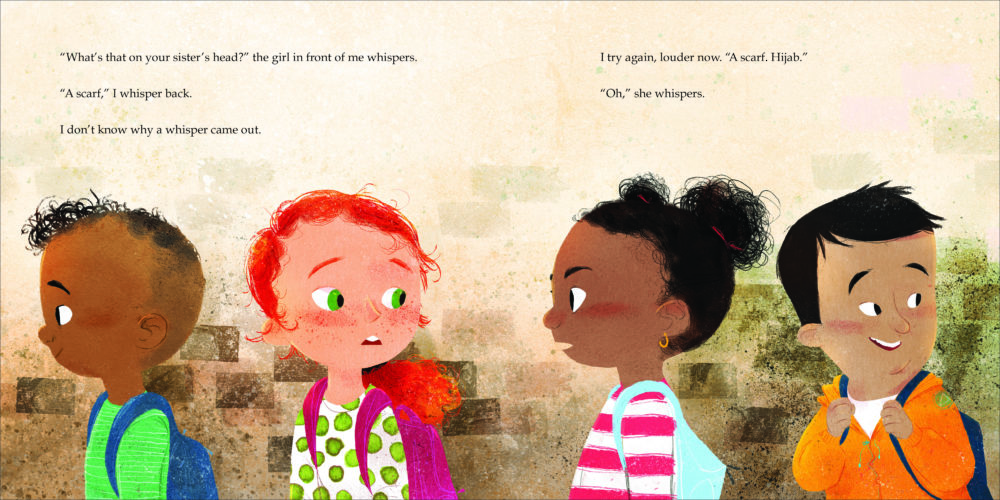
Summary:  Faizah is excited about her first day of school.  She has a new backpack and light-up shoes. But most exciting of all is that her older sister Asiya is starting sixth grade and wearing hijab for the first time.  Her scarf is blue, just like the sky and ocean. When the girls get to school, they go their separate ways, but Asiya is on Faizah’s mind throughout the day. She draws a picture of two girls in hijab having a picnic.  Later, she sees her sister on the playground at recess and hears a boy say, “I’m going to pull that tablecloth off your head.” Asiyah runs off with her friends, and Faizah remembers their mother’s advice, “Don’t carry around the hurtful words that others say.  Drop them. They are not yours to keep. They belong only to those who said them.” At the end of the day, the two sisters walk home hand in hand. Includes author’s notes about her own experiences that inspired this story with characters named for two of her sisters.  40 pages; ages 4-8.

Pros:  This beautifully illustrated story celebrates wearing hijab while at the same time showing the reality that girls face when they make this transition.  Readers interested in learning more about Ibtihaj Muhammad can read her excellent memoir Proud: Living My American Dream.

Cons:  There’s always that one bully.

If you would like to buy this book on Amazon, click here.

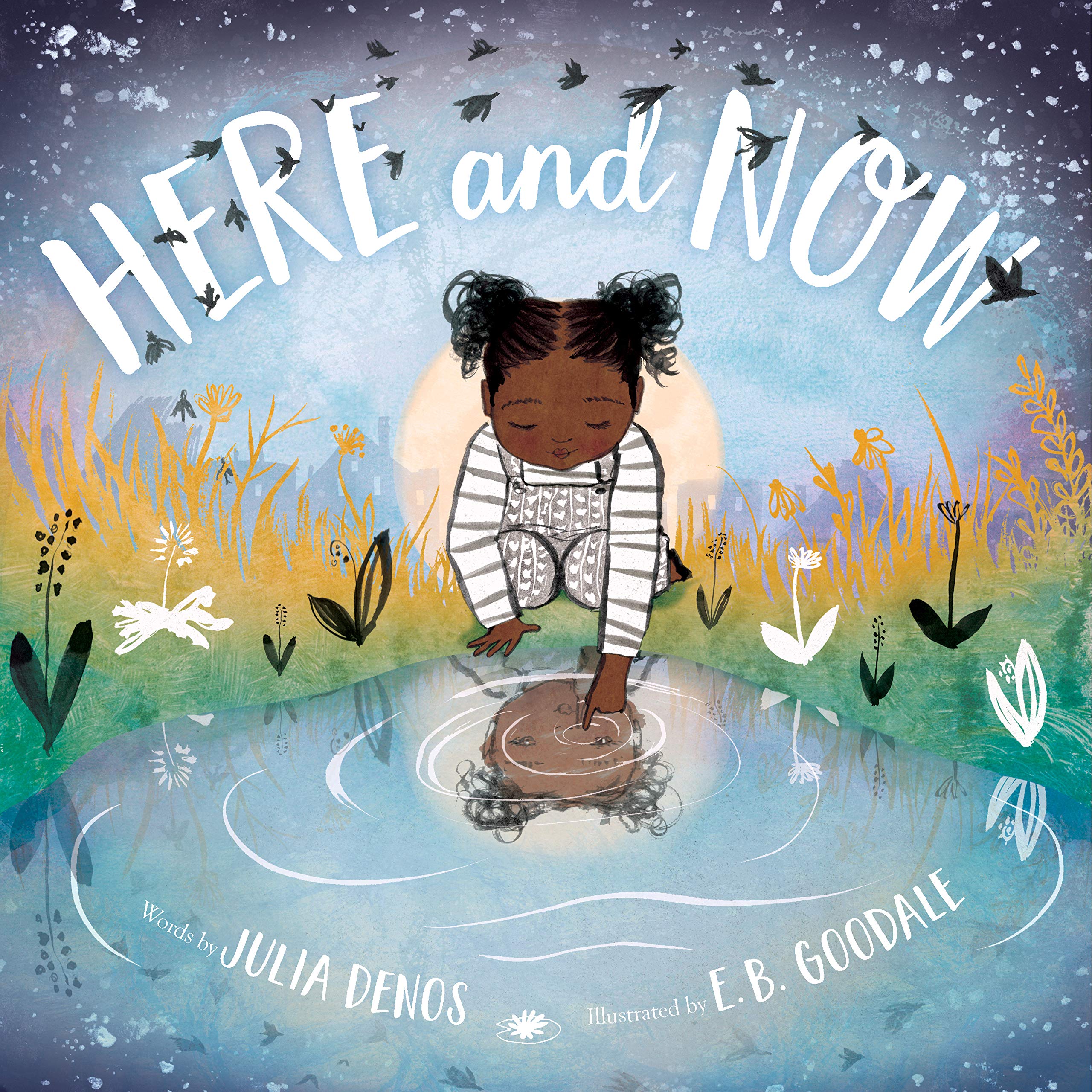
Here and Now by Julia Denos, illustrated by E. B. Goodale

Published by HMH Books for Young Readers

Image result for here and now amazon denos

Summary:  Readers are invited to notice where they are as they are reading the book.  While they focus on their bodies (“You are sitting, or you are standing, or you are wrapped up in a bed. Under your bum, under your feet, is a seat, a floor…”), there are countless activities going on around them.  Underground there are earthworms and fossils. Earth is spinning through space, and so are you. People and animals are all around, working, playing, eating, healing, and having ideas. And all the while, “right here, right now, YOU are becoming.  Isn’t it wonderful?” Includes an author’s note about meditation and how she came to write this book. 40 pages; ages 4-10.

Pros:  A great read for any kind of mindfulness activities, or to help a restless group of kids center and calm down.  The illustrations feature a recurring, multicultural cast of characters doing things that most kids will recognize from their everyday lives.  There could be all kinds of follow-up activities as kids notice themselves and the world around them.

Cons:  Some additional resources on mindfulness and/or meditation for kids would have been helpful.

If you would like to buy this book on Amazon, click here.


The Good Egg by Jory John and Pete Oswald

Published by HarperCollins

Image result for good egg jory john amazon

Image result for good egg pete oswald

Summary:  The Good Egg likes to help others and follow the rules.  The other eggs in his carton…not so much. As they stay up late, eat sugary cereal, and throw tantrums, the Good Egg tries to keep the peace and get everyone to behave.  Finally, the stress is too much, and he begins to crack. His doctor tells him the cracks are from all the pressure he is putting on himself. The Good Egg decides to take a little me time, and leaves the carton for an extended vacation.  Some R & R fixes those cracks, and he returns to the carton with new tools for taking care of himself and not worrying so much. 40 pages; ages 4-8.

Pros:  A little bibliotherapy from the team who brought you The Bad Seed.  Kids will enjoy the antics of the “bad” eggs, and hopefully learn a few lessons about the dangers of perfectionism.

Cons:  It seemed a bit preachier and not quite as much fun as The Bad Seed.  Guess it’s more fun to root for the bad guy than the good guy.

If you would like to buy this book on Amazon, click here.

When Sadness Is At Your Door by Eva Eland

Published by Random House Books for Young Readers

Image result for when sadness is at your door amazon

Image result for when sadness is at your door amazon

Summary:  Sadness, portrayed here as a large green blobby creature, can arrive unexpectedly and follow you around.  You might be tempted to try to hide it, but it’s better to give it a name and sit with it. Find activities that you both like to do, like drawing or listening to music.  Take it for a walk and let it know it’s welcome. One morning you may wake up to find that Sadness has gone, and it’s a new day. 32 pages; ages 3-8.

Pros:  This simple, concrete way of looking at sadness would provide excellent bibliotherapy for kids (or teens or adults) dealing with grief or depression.  The acceptance of sadness and hopeful ending makes it a peaceful, reassuring book.

Cons:  The story may seem a little oversimplified to those dealing with complicated emotions.

If you would like to buy this book on Amazon, click here.

Thank you, Omu! By Oge Mora

Published by Little, Brown Books for Young Readers

Image result for thank you omu amazon

Image result for thank you omu amazon

Summary:  Omu is cooking up a big batch of delicious-smelling red stew, which she thinks will be “the best dinner I have ever had”.  When a hungry little boy knocks on her door, she decides she’s made enough to share.  Next to arrive is a police officer, then the hot dog vendor.  Omu gives them bowls of stew, too.  As the day goes on, more and more people come, and Omu shares with them all.  When she goes to get her own dinner, she discovers the pot is empty.  But she doesn’t have long to feel bad.  There’s a loud knocking on her door, and Omu opens it to discover that everyone she fed has returned with a big potluck meal to share.  The last page shows the little boy’s thank-you card, and reads “That dinner was the best she ever had.”  Includes an author’s note about her grandmother Omu, the Nigerian word meaning both grandmother and queen.  40 pages; ages 4-8.

Pros:  A heartwarming story of sharing and community that reads a little like a folktale.  The collage illustrations show a diverse cast of characters.  This would make a good holiday read, maybe pairing it with Miracle on 133rd Street.

Cons:  Mr. Hot Dog Vendor seems like he should be able to feed himself rather than knocking on Omu’s door for a free handout.

If you would like to buy this book on Amazon, click here.

We Are Grateful: Otsaliheliga by Traci Sorell, illustrated by Frane Lessac

Published by Charlesbridge

Image result for we are grateful otsaliheliga amazon

Image result for we are grateful sorell

Summary:  “Cherokee people say otsaliheliga to express gratitude.  It is a reminder to celebrate our blessings and reflect on struggles–daily, throughout the year, and across the seasons.”  With each season, the Cherokee people in this book are grateful, whether it is for food or community or festivals or family.  People are shown creating traditional crafts, celebrating life and death, eating, playing, and remembering their people’s history and how it is woven into the history of the United States.  Cherokee words and their pronunciations are scattered throughout the text. End matter includes a glossary, an author’s note, and a Cherokee syllabary with some lessons about the Cherokee language.  32 pages; ages 4-8.

Pros:  A beautiful book that would make an interesting harvest time supplement to Thanksgiving reading.  I loved the bright folk art style illustrations.

Cons:  After studying the Cherokee syllabary, I think I can safely cross learning that language off my bucket list.

If you would like to buy this book on Amazon, click here.

Hey, Wall: A Story of Art and Community by Susan Verde, illustrated by John Parra

Published by Simon and Schuster Books for Young Readers

Image result for hey wall verde amazon

Image result for hey wall verde amazon

Summary:  A boy describes the concrete wall in his neighborhood, and all the goings-on in front of it throughout the seasons.  The people sing, dance, skateboard, eat, and tell stories, but the wall just sits there doing nothing. Then, the boy decides to change that.  Working with others from the community, he designs a picture to paint on the wall. The wall becomes a canvas for art that everyone can contribute to.  In the end, it’s covered with pictures of the people that have been shown on the previous pages. Includes author’s and illustrator’s notes telling about their experiences and inspirations from street art.  40 pages; ages 4-8.

Pros:  Readers may be inspired to create their own street art after reading this book.  The illustrations show a busy, diverse community that looks like a fun place to live.  Kids will enjoy looking back to find the people portrayed on the mural.

Cons:  The author’s note is a bit long for the intended audience; it would have been nice to include some photos of real street art along with her explanation.

If you would like to buy this book on Amazon, click here.