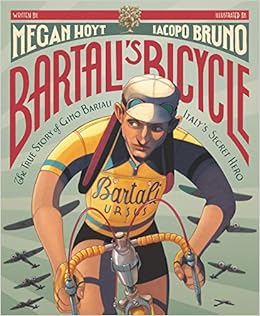
Bartali’s Bicycle: The True Story of Gino Bartali, Italy’s Secret Hero by Megan Hoyt, illustrated by Iacopo Bruno

Published by Quill Tree Books

Bartali's Bicycle: The True Story of Gino Bartali, Italy's Secret Hero: Hoyt,  Megan, Bruno, Iacopo: 9780062908117: Amazon.com: Books

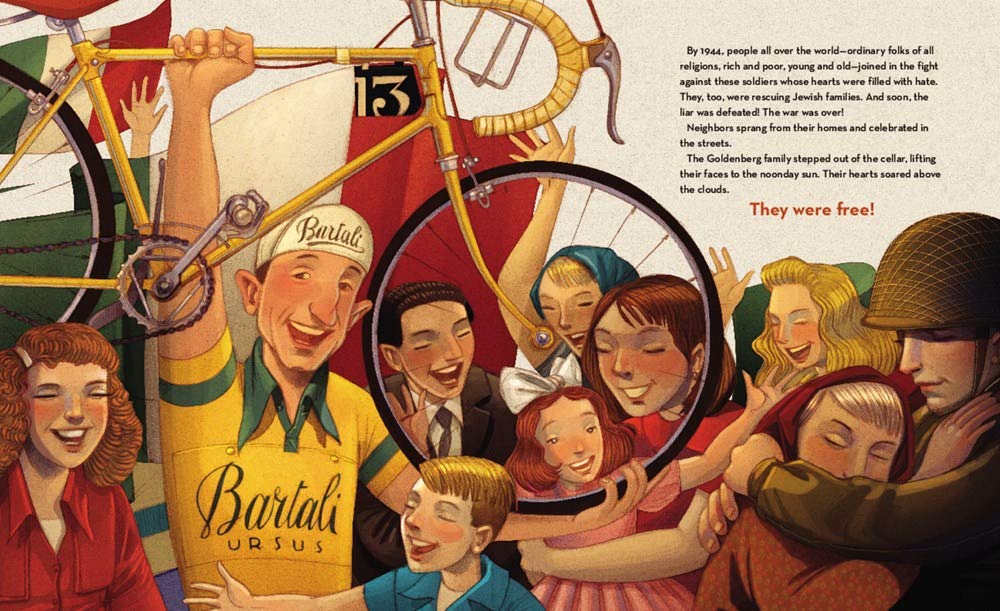
Summary:  Gino Bartali gained fame in Europe when he won the Tour de France in 1938.  So when Archbishop Elia Dalla Costa recruited him to help Jewish families escape the Nazis, Gino was ready.  He began cycling all over Italy, delivering fake identity papers to families in hiding.  He also used his fame by visiting train stations and distracting autograph-seeking soldiers while families destined for concentration camps were quickly rerouted onto other trains.  Forced into the Italian militia, he became a spy who helped rescue English P.O.W.’s.  After the war, he went on to win another Tour de France, but never talked about the more than 800 lives he had saved, stating that “Some medals are pinned to your soul, not your jacket.”  Includes a timeline, a letter from Bartali’s granddaughter Lisa, an author’s note, and a list of sources.  40 pages; grades 2-5.

Pros:  Another gripping story of a modest World War II hero that would pair nicely with Peter Sis’ Nicky and Vera.  The illustrations, which look like vintage posters, add a lot to the story. 

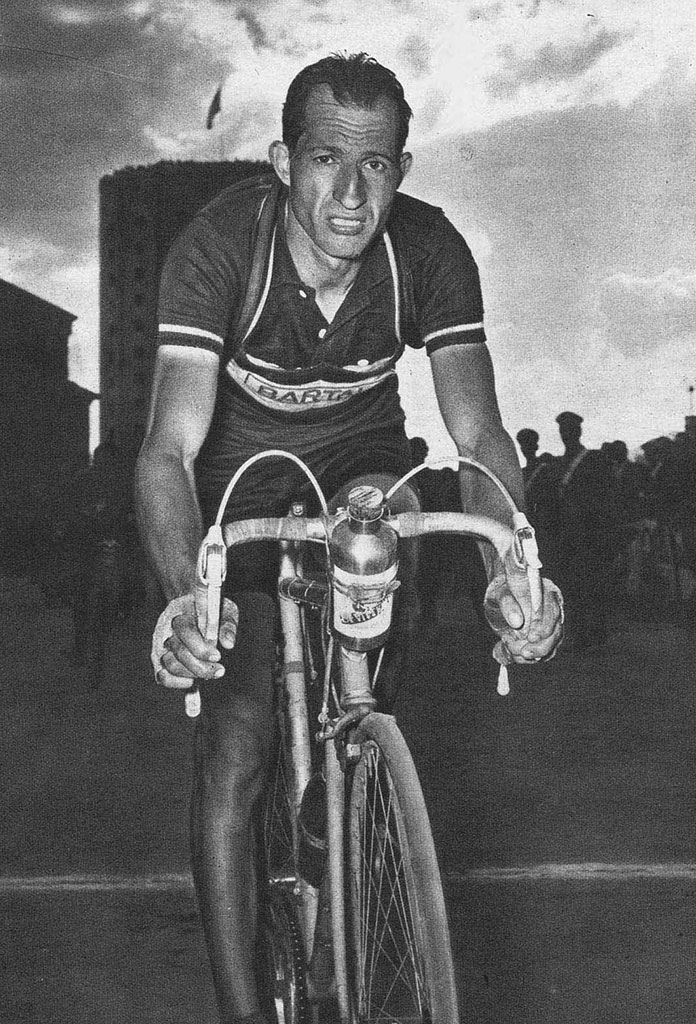
Cons:  There was very little information on Gino Bartali’s life before or after World War II.  Also no photos, so here’s one.

Gino Bartali | The Game of Their Lives - The Stories of Righteous Among the  Nations Who Devoted Their Lives to Sport | Yad Vashem

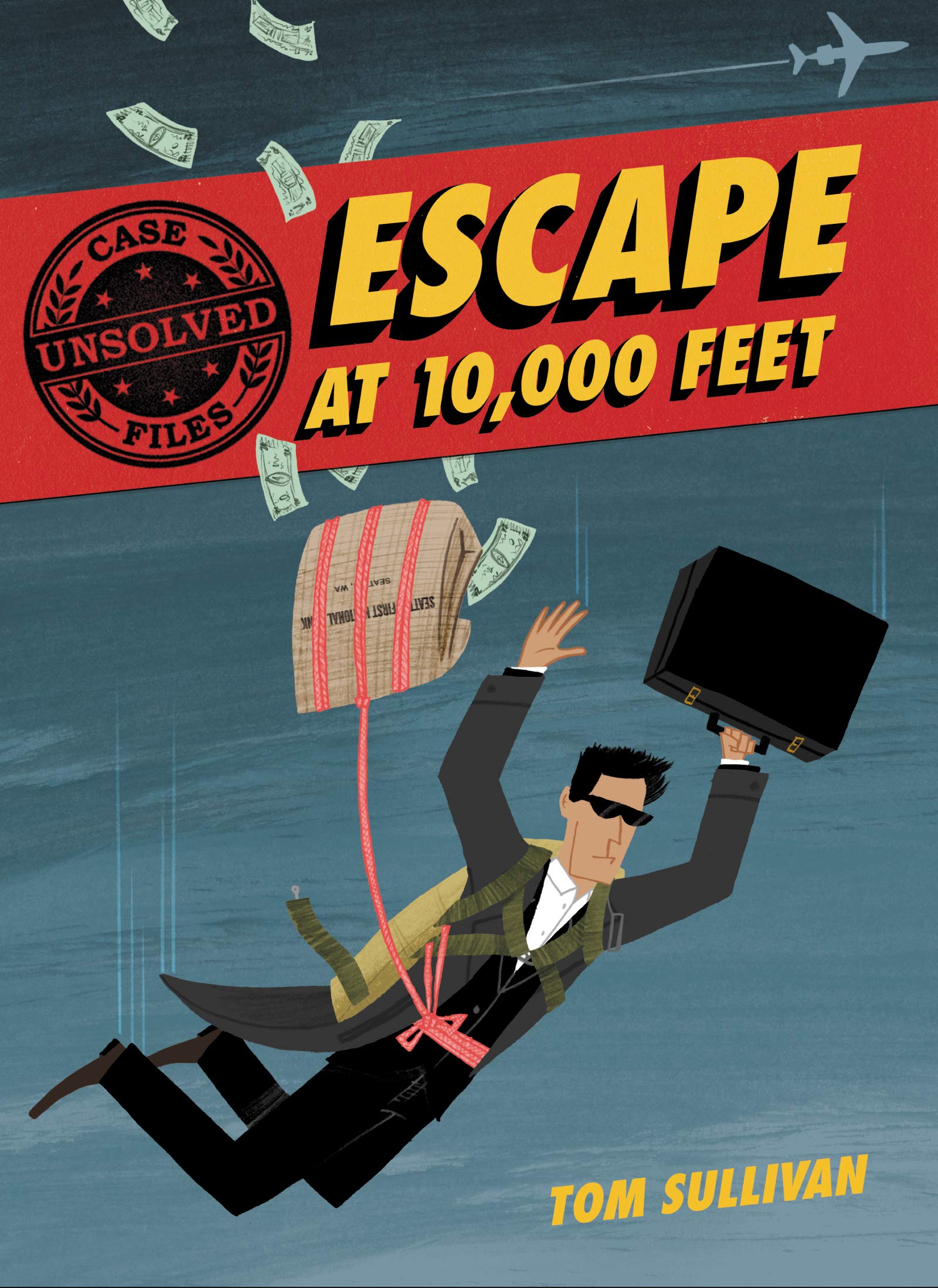
Escape at 10,000 Feet (Unsolved Case Files, book 1) by Tom Sullivan

Published by Balzer + Bray

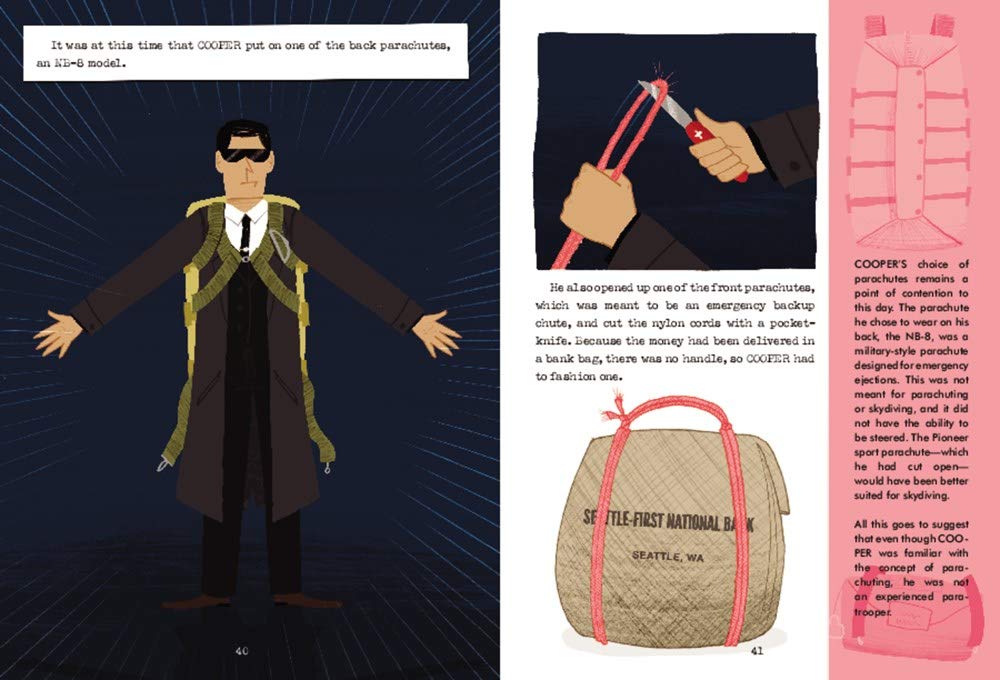
Unsolved Case Files: Escape at 10, 000 Feet: D.B. Cooper and the Missing  Money (Unsolved Case Files, 1): Sullivan, Tom, Sullivan, Tom:  9780062991522: Amazon.com: Books
Unsolved Case Files: Escape at 10, 000 Feet: D.B. Cooper and the Missing  Money (Unsolved Case Files, 1): Sullivan, Tom, Sullivan, Tom:  9780062991515: Amazon.com: Books

Summary:  On November 24, 1971, a man named Dan Cooper boarded a flight from Portland, Oregon to Seattle.  Six hours later, that man parachuted out of the back of the plane with $200,000 strapped to him.  No trace of him has ever been found, and only a small portion of the money has been recovered ($5,800 was discovered by a 10-year-old boy in 1980 when he was camping with his family in the woods of Washington).  The details of what happened that day are retold here with brief text, illustrations, and primary documents such as Cooper’s boarding pass and the transcript from the plane alerting the authorities about the hijacking.  Includes half a dozen photos and a list of sources.  104 pages; grades 3-7.

Pros:  It’s hard to imagine a kid unimaginative enough not to be intrigued by this mystery (and gobsmacked that in 1971 you could walk into an airport with a bomb, buy a ticket for $20, and saunter onto a plane unchecked).  The graphic format is appealing, but it’s also well-written nonfiction, with theories put forth and then carefully debunked, primary documents, and an impressive list of sources.  Look for book 2, Jailbreak at Alcatraz, coming in early September.

Cons:  The font, designed to look like it was made with a typewriter that needs a new ribbon, feels authentic but is not necessarily the easiest for kids to read.

Someone Builds the Dream by Lisa Wheeler, illustrated by Loren Long

Published by Dial Books for Young Readers

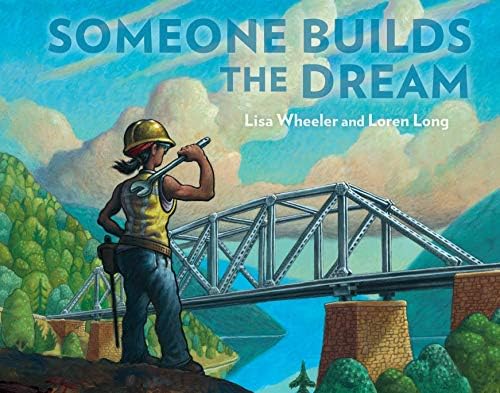
Someone Builds the Dream: Wheeler, Lisa, Long, Loren: 9781984814333: Amazon.com:  Books
Someone Builds the Dream: Wheeler, Lisa, Long, Loren: 9781984814333:  Amazon.com: Books

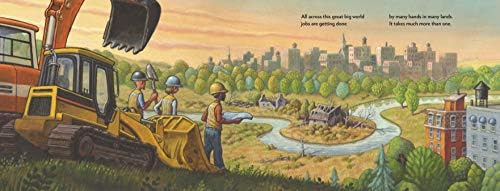
Summary:  “All across this great big world/jobs are getting done/by many hands in many lands./It takes much more than one.”  An architect designs a building, but other workers build it.  Likewise for engineers, scientists, authors and illustrators: their ideas are just the beginning, and it is up to thousands of other workers to make the dream a reality.  “So when you see a bicycle, a playground, house, or shoe, remember all the someones who helped make a dream come true.”  48 pages; ages 4-8.

Pros: The rhyming text and beautiful illustrations show a diverse group of workers who provide the hands-on skills necessary to plan and execute someone’s vision.  This would make a great book for Labor Day to celebrate all kinds of workers.

Cons:  Seems like the creative minds are generally valued more than the hands-on builders. (I guess that’s why Lisa Wheeler wrote this book).

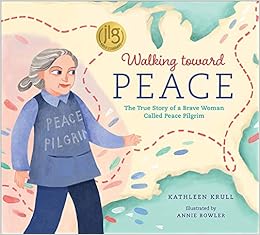
Peace by Baptiste Paul and Miranda Paul, illustrated by Estelí Meza and Walking Toward Peace: The True Story of a Brave Woman Called Peace Pilgrim by Kathleen Krull, illustrated by Annie Bowler

Published by North South Books

Peace | Book by Miranda Paul, Baptiste Paul, Estelí Meza | Official  Publisher Page | Simon & Schuster
Peace: Paul, Miranda, Paul, Baptiste, Meza, Estelí: 9780735844490:  Amazon.com: Books

Published by Flyaway Books

Amazon.com: Walking toward Peace: The True Story of a Brave Woman Called Peace  Pilgrim (9781947888265): Kathleen Krull, Annie Bowler, Annie Bowler: Books
Walking Toward Peace: The True Story of a Brave Woman Called Peace Pilgrim  – Mutually Inclusive

Summary: These two books arrived in the library for me from interlibrary loan land on the same day. Walking Toward Peace is the story of Mildred Lisette Norman, who had a vision of walking across the U.S. advocating for peace in the aftermath of World War II. She changed her name to Peace Pilgrim, and from 1953 until her death in 1981, walked through all 50 states, handing out flyers and talking to people about ending war and living in peace. Remarkably, she never carried any money with her, relying on her knowledge of outdoor living and, to a great extent, the kindness of people she encountered on the road.

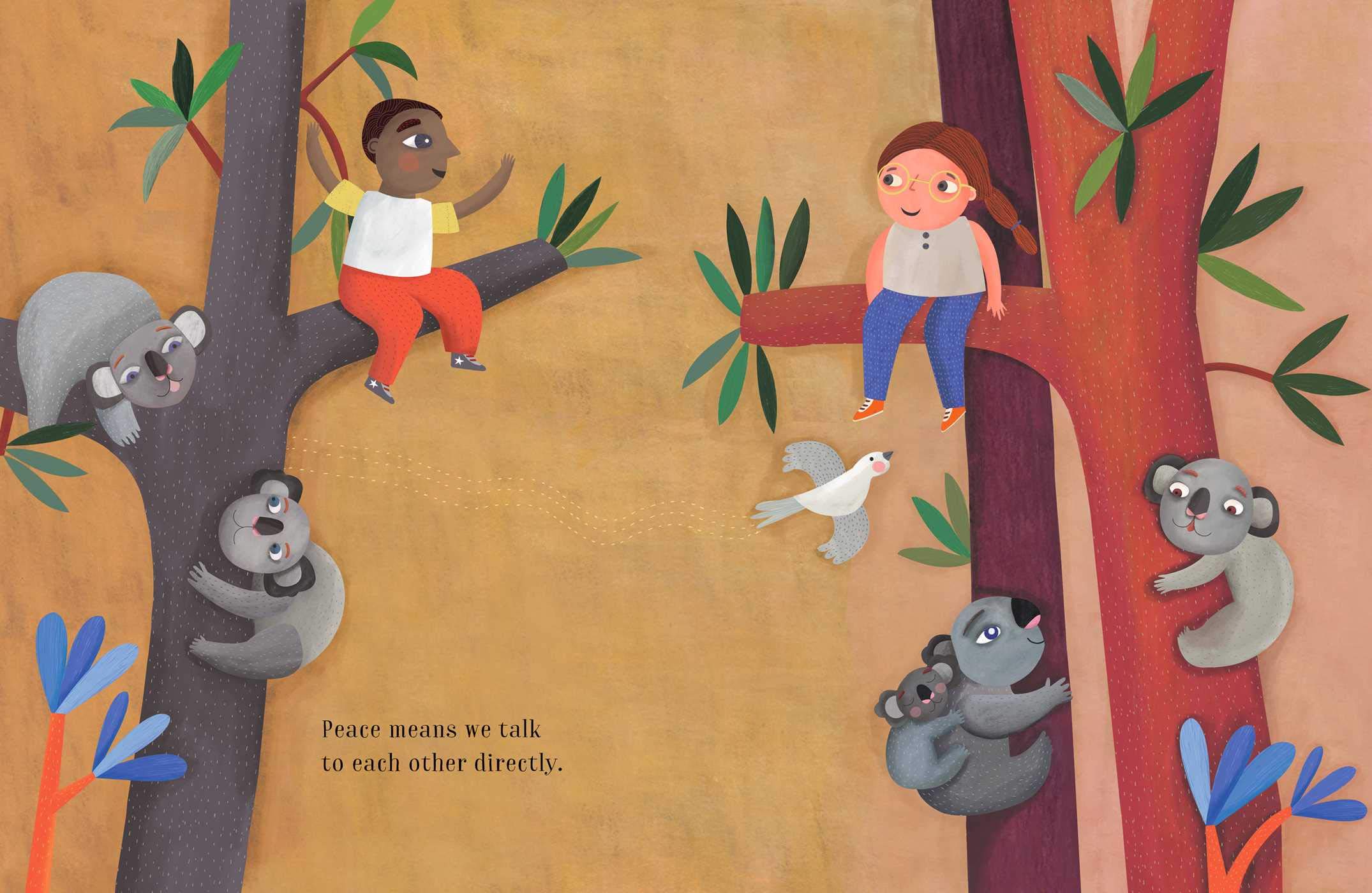
Peace draws on Baptiste and Miranda Paul’s experiences growing up in war-torn Mozambique. With simple rhyming text (“Peace is pronouncing your friend’s name correctly/Peace means we talk to each other directly”) and pictures of kids and animals living harmoniously, the book offers concrete actions for fostering peace. The authors’ note explains how war affects not only humans, but animals and the natural world as well. Both books are 40 pages and recommended for ages 4-8.

Pros: I’ve heard about Peace Pilgrim for years, so I was happy to learn about this new book. Her story is sure to intrigue both children and adults, and is a moving testimony to following your own path in life (literally, in her case). Peace would make a great follow-up book to read, with its emphasis on how peace is important to animals as well as humans, something that will resonate with a lot of kids. I loved the simple actions described, and the illustrations, especially the beautiful tree on the endpapers, with the word “peace” written in different languages on its leaves.

Cons: It seems like an ironic bummer that Peace Pilgrim was killed in an accident while riding in a car at the age of 72, and did not live to see the end of the Cold War.
ESTELÍ MEZA | Amie's Book Reviews

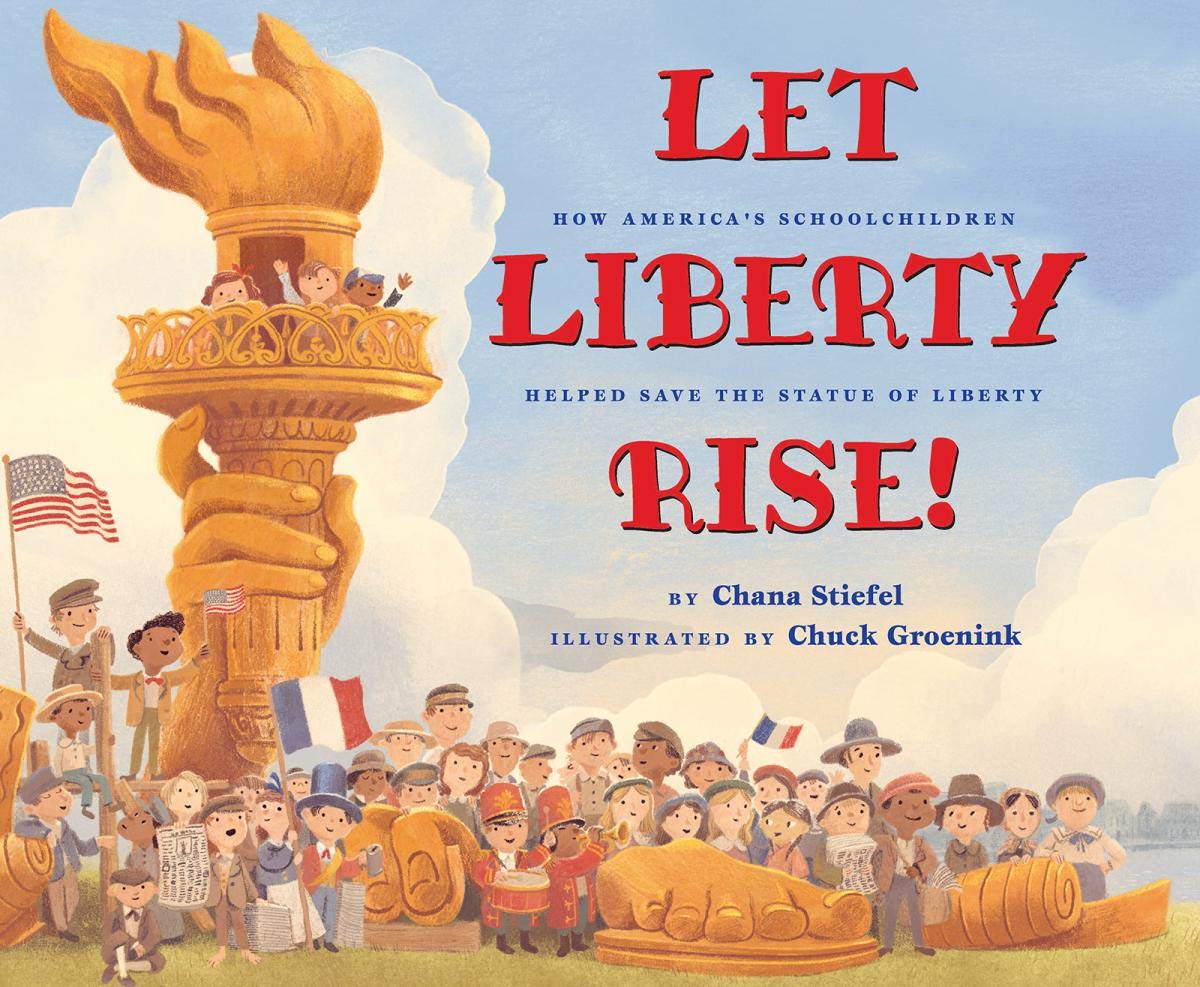
Let Liberty Rise! How America’s Schoolchildren Helped Save the Statue of Liberty by Chana Stiefel, illustrated by Chuck Groenink

Published by Scholastic Press

Let Liberty Rise!: How America's Schoolchildren Helped Save the Statue of  Liberty: Stiefel, Chana, Groenink, Chuck: 9781338225884: Amazon.com: Books

Summary:  When the crates containing the pieces of the Statue of Liberty arrived in New York, there was one problem: the pedestal for the statue was only half-built, and there didn’t seem to be much interest in raising the $100,000 needed to complete it.  Then Joseph Pulitzer, an immigrant himself and owner of the New York World newspaper, wrote in his paper, “Let us not wait for the millionaires to give money.  [The Statue of Liberty] is a gift of the whole people of France to the whole people of America.”  The “whole people of America”, including many children, rose to the occasion, sending the pennies and dollars that they could afford to build the pedestal.  By August, the full amount had been raised from 120,000 donors, and on October 28, 1886, about a million people came to New York to celebrate the new statue.  Includes a timeline, additional facts about the Statue of Liberty, a bibliography of books and websites, and two pages of photos and a map.  40 pages; grades K-4.

Pros:  Excellent nonfiction, with just the right balance of engaging and informative, and the perfect amount of back matter–love all those photos!

Cons:  It was a little anti-climactic to learn in the back matter that the original $100,000 price tag eventually jumped to $320,000 when construction began.  Fortunately, additional donors and Congress footed the bill.

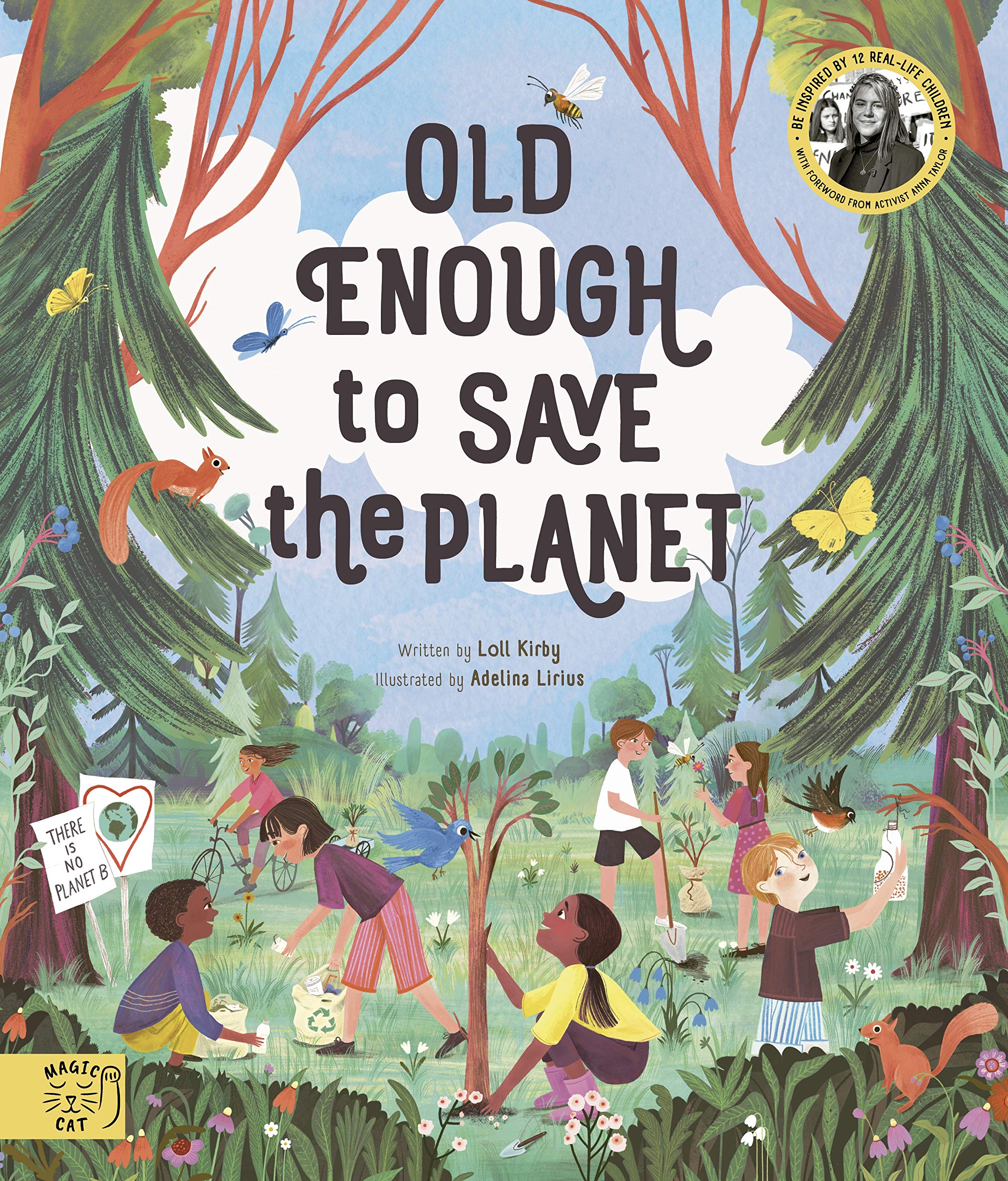
Old Enough to Save the Planet by Loll Kirby, illustrated by Adelina Lirius

Published by Magic Cat Publishing

Old Enough To Save The Planet: 9781916180529: Amazon.com: Books
Why everybody is old enough to save the planet | BookTrust

Summary:  Twelve children from around the world are profiled, each one having started an initiative to help the planet.  Each two-page spread shows kids at work, with a brief paragraph describing the young person and their activity.  Captions in the illustrations give additional information.  The last few pages offer ten things kids can do to help save the planet; ten things they can do to make their voices heard; and a list of seven websites with additional information.  32 pages; grades 1-5.

Pros:  Readers will be inspired by these kid activists who have already done amazing things to help make the world a better place.  There’s a lot to see in each illustration, and the information is brief enough for the younger grades.

Cons:  In the back matter, the author states that the Intergovernmental Panel on Climate Change “found that the world is already 34 degrees Fahrenheit warmer than two hundred years ago.” Was a decimal point left out?

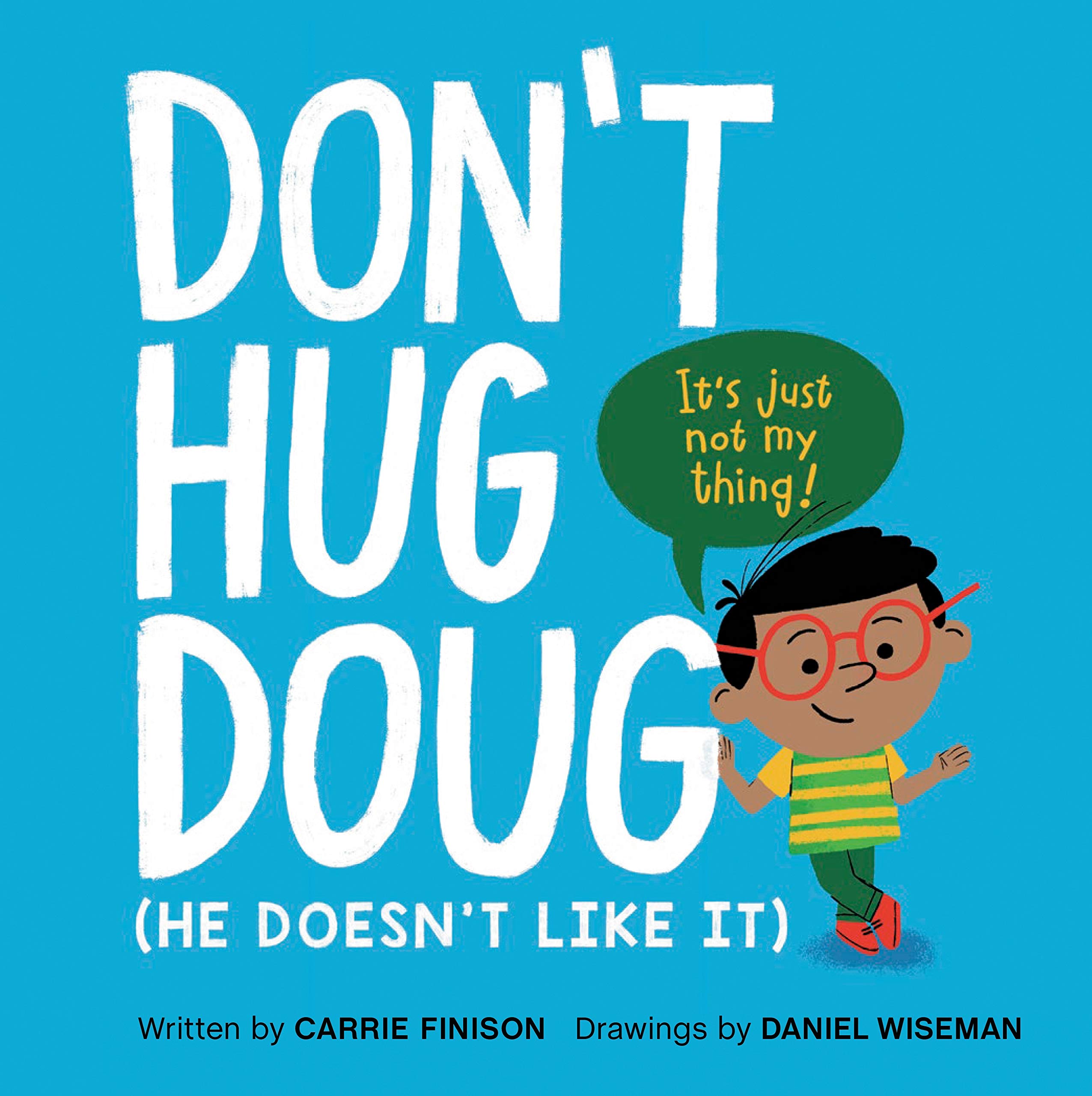
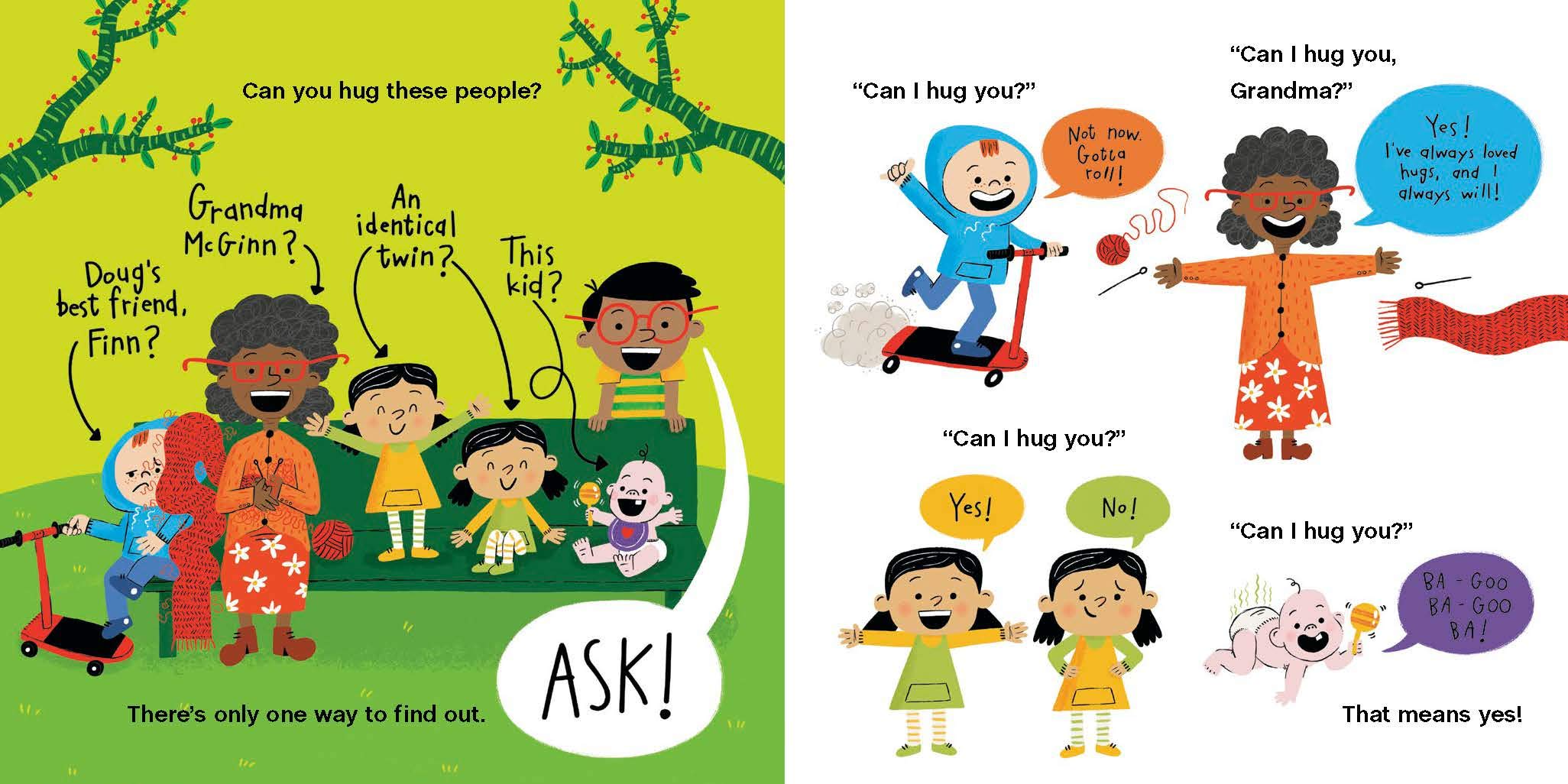
Don’t Hug Doug! (He Doesn’t Like It) by Carrie Finison, illustrated by Daniel Wiseman

Published by G. P. Putnam’s Sons

Don't Hug Doug: (He Doesn't Like It): Finison, Carrie, Wiseman, Daniel:  9781984813022: Amazon.com: Books

Summary:  You can hug a pug, a bug, or a slug (ewww!), but don’t hug Doug.  It’s just not his thing.  The only hug he likes is a NOT squeezy one from his mom at bedtime.  Don’t worry, Doug likes you, and he likes lots of other things, too: his rock collection, his sock collection, drawing with his chalk collection.  And he’s really good with high-fives.  Turns out Doug’s not the only one, so when considering a hug, be sure to ask first. 32 pages; ages 3-7.

Pros:  This lighthearted book about consent touches on quite a few topics: why not everyone likes hugs, the importance of asking before hugging, and that rejecting a hug isn’t the same as rejecting a person.  There’s plenty of humor in both the text and illustrations, and Doug is a good-natured guide.

Cons:  I’ve definitely made some of the mistakes described by Doug. 

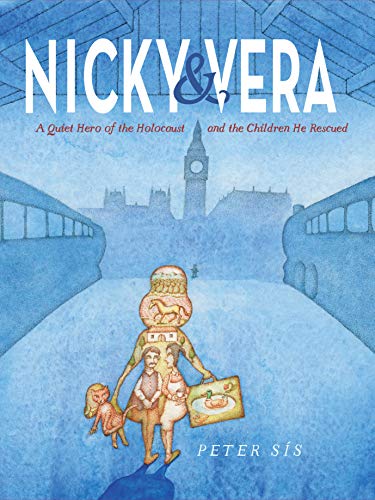
Nicky & Vera: A Quiet Hero of the Holocaust by Peter Sis

Published by Norton Young Readers

Nicky & Vera: A Quiet Hero of the Holocaust and the Children He Rescued -  Kindle edition by Sís, Peter. Children Kindle eBooks @ Amazon.com.
Illustrator Peter Sís shares hard stories with children – The Forward

Summary:  Nicholas Winton was a young man living in England when Germany invaded Czechoslovakia in 1938, and a friend asked him to come to Prague to help.  England was accepting refugees under the age of 17 if they had families to take them in.  Nicky set up an office in Prague and began collecting names and photos of children.  One of those children was Vera, a 10-year-old girl whose Czech parents wanted to send her to England.  A few months later, Nicky returned to London to recruit families to take the children.  He eventually got almost 700 children (including Vera) on eight trains out of Czechoslovakia.  A ninth train with 250 children never made it out after the borders were closed, and only two children on that train survived the war.  After the war, Vera returned home, but her entire family had perished, so she moved permanently to England.  Nicky never told anyone what he had done until his wife discovered his lists in 1989 and arranged a TV reunion with many of the people he rescued.  Nicky never thought of himself as a hero.  “I only saw what needed to be done.”  Includes a long author’s note with additional information and a photo of a young Nicholas Winton.  64 pages; grades 2-6.

Pros:  Peter Sis uses spare, understated text and folk art-style illustrations to tell this amazing story of a quiet hero and the girl whose life he saved (among many others).  Keep a Kleenex handy as you read this compelling story which is sure to engage readers well into middle school and may be considered for a few awards next year. And while you have the tissues out, watch this YouTube clip of Nicholas and Vera’s 1988 reunion on British television.

Cons:  I wish there had been a few more photos.

Facing Fear: An Immigration Story by Karen Lynn Williams, illustrated by Sara Palacios

Published by Eerdmans Books for Young Readers

Facing Fear: Williams, Karen Lynn, Palacios, Sara: 9780802854902:  Amazon.com: Books
Interview with Children's Book Illustrator Sara Palacios – Eerdlings

Summary:  Enrique is excited when his soccer team makes it to the tournament, then disappointed when his dad says he can’t go.  The team will have to pass through a checkpoint, and Enrique’s parents and older sister are undocumented.  Enrique thinks his dad is just scared, and decides to forge his signature on the permission slip.  Before he gets a chance to turn it in, though, there’s a rumor of a round-up, and the family goes to his Tía’s house to hide. There, for the first time, Enrique hears the full story of his family’s escape to the U.S., and decides his parents are both very brave.  After telling his team he’s decided not to play, they show up at his house to tell him they’re not going either, and everyone makes plans for a father-son game the next day.  Includes an author’s note; additional information on immigration and checkpoints; a list of organizations assisting and advocating for immigrant families; and a list of recommended reading.  44 pages; grades K-4.

Pros:  A compelling story about a boy forced to make a difficult decision that brings to light many of the issues faced by undocumented families.  The resources at the end provide excellent additional information.

Cons:  The story felt a bit didactic.

Unspeakable: The Tulsa Race Massacre by Carole Boston Weatherford, illustrated by Floyd Cooper

Published by Carolrhoda Books

Unspeakable: The Tulsa Race Massacre - Kindle edition by Weatherford, Carole  Boston, Cooper, Floyd. Children Kindle eBooks @ Amazon.com.
Debbie Reese (tribally enrolled, Nambé Pueblo) on Twitter: "Did you click  thru? Did you watch Floyd Cooper's video embedded in the article, of him  reading from UNSPEAKABLE: THE TULSA RACE MASSACRE? Here's

Summary:  “Once upon a time in Tulsa, there was a community called Greenwood.”  Although this was a segregated community, the Black part of town thrived, with excellent schools, libraries, medical facilities, and enough businesses to call Greenwood Avenue “Black Wall Street”.  But in 1921, accusations by a young white woman that a black teenager had assaulted her ignited a series of events that ultimately left up to 300 Black people dead, hundreds more injured, and more than 8,000 homeless when their community was burned to the ground.  The town was rebuilt, but the massacre was covered up; it was 75 years before an investigation took place that revealed that police and city officials plotted with the white mob to destroy the Black community.  Includes notes from both the author and illustrator describing their connections to this event, as well as photos of Greenwood burning and the Tower of Reconciliation that stands in Tulsa’s Reconciliation Park.  32 pages; grades 3-6.

Pros:  With six starred reviews, this book will surely be considered for multiple awards next January.  The structure of the story is perfect, describing the amazing community of Greenwood before the massacre as a place where Black people demonstrated that they could build thriving businesses and community services.  The massacre is described in a few heartbreaking pages, and Weatherford and Cooper don’t shy away from laying the blame squarely on the white community.  Their ending notes are fascinating, particularly Floyd Cooper’s story about his grandfather who survived the massacre.

Cons:  The endpapers are before and after pictures of Greenwood.  I wish the front endpaper was a photo like the back one is, but maybe there isn’t a photo in existence of what Greenwood looked like as a flourishing community.