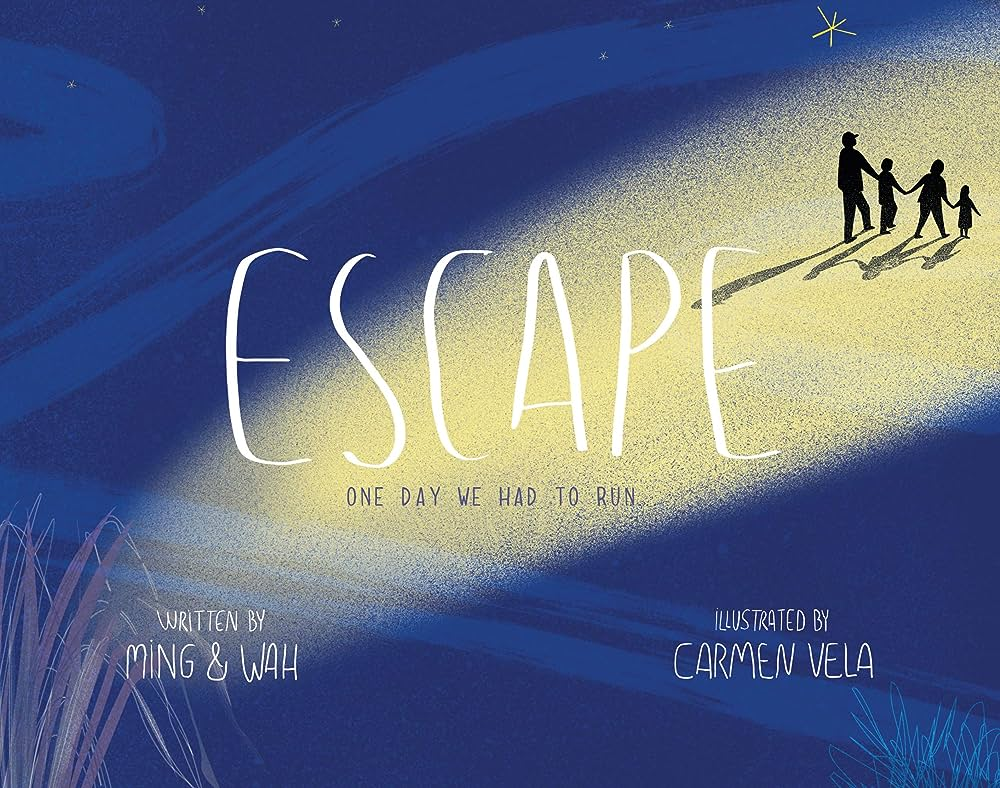
Escape: One Day We Had to Run by Ming & Wah, illustrated by Carmen Vela

Published by Lantana Publishing

Escape: One Day We Had to Run . . . by Wah, Ming &, Vela, Carmen - Amazon.ae

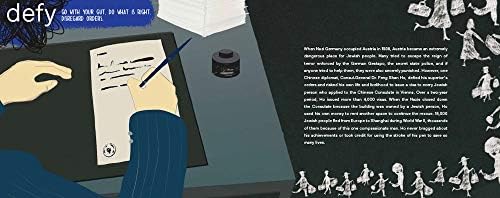
Summary:  “Escape (verb) – To avoid a threatening evil”: that’s the definition given on the title page.  Each spread has another verb–cling, defy, swim–with a story of refugees escaping danger.  Yusra and Dara Mardini cling to their boat as  they escape from Syra; Yusra goes on to swim for the Refugee Olympic Team in 2016.  Chinese diplomat Dr. Feng Shan Ho defies orders and issues over 4,000 visas to Jews escaping Germany during World War II.  Chan Hak-chi and Li Kit-hing swim for six hours through shark-infested waters in a typhoon to make it from mainland China to Hong Kong.  Each story is accompanied by a somewhat abstract illustration showing the escape.  Includes Articles 13 and 14 from The Universal Declaration of Human Rights and a link for more information.  40 pages; grades 2 and up.

Pros:  Each story is brief and compelling, making it a gripping read-aloud for older elementary or middle school kids.  The brief text, abstract illustrations, and even slightly mysterious authors (identical twins known simply as Ming & Wah) add an air of suspense that is perfect for the topic.

Cons:  I definitely wanted to know where I could find out more information about every one of the stories.

Why Longfellow Lied by Jeff Lantos

Published by Charlesbridge

Why Longfellow Lied: The Truth About Paul Revere's Midnight Ride: Lantos,  Jeff: 9781580899338: Amazon.com: Books

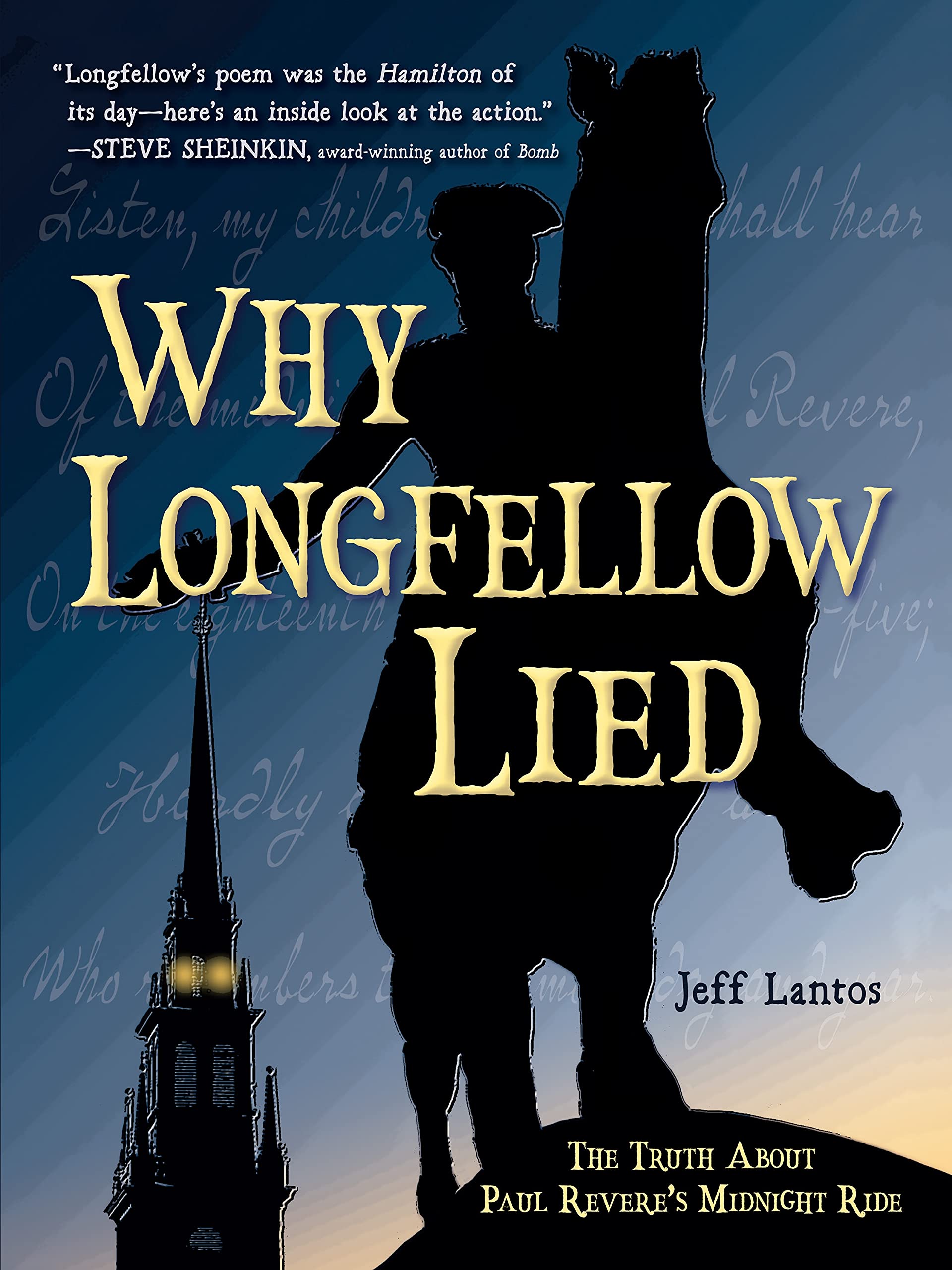
Summary:  Listen, my children: many of us have grown up with at least some knowledge of Henry Wadsworth Longfellow’s poem “Paul Revere’s Ride”.  Jeff Lantos takes a deeper look, going through it piece by piece with a retelling of the actual events and how they compare with the poem.  Both the prologue and the final chapter give additional context to the poem and the reasons that Longfellow wrote it in the early days of the U.S. Civil War.  Includes a cast of characters (the people mentioned in the book); the complete text of the poem; many illustrations, photos, maps, and sidebars; 18 pages of source notes; a six-page bibliography; and an index.  160 pages; grades 5 and up.  

Pros:  A lively addition to any American history curriculum, which not only presents the facts around the events of April 18-19, 1775, but also puts Longfellow’s poem in the context of the U.S. Civil War, and his fervent hope to end slavery and preserve the Union.  The plentiful illustrations and maps, the brief but interesting sidebars, and the extensive source material make this an excellent nonfiction resource.

Cons:  The title seems a bit of a harsh judgement on Longfellow, although I guess “Why Longfellow Used Artistic License in Recounting Historical Events in a Heartfelt Attempt to Preserve the Union” isn’t quite as catchy.  

The Story of Bodri by Hédi Fried, illustrated by Stina Wirsén

Published by Eerdmans Books for Young Readers

The Story of Bodri - Kindle edition by Fried, Hédi, Wirsén, Stina. Children  Kindle eBooks @ Amazon.com.
Sneak peek: The Story of Bodri – Eerdlings

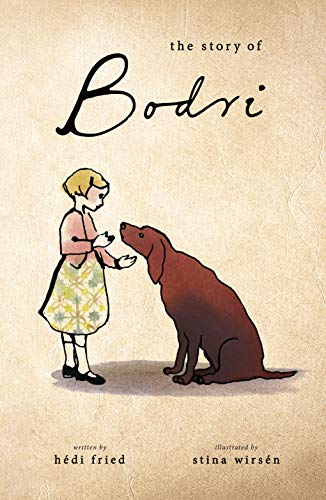
Summary:  The author recounts the story of her childhood, beginning with a happy life with her parents, younger sister, best friend Marika, and most of all, her special dog Bodri.  Then soldiers came to their town, and everything changed.  Jews like the author and her family could no longer go places, and the two best friends couldn’t play together.  Eventually, her family was taken away to a concentration camp, and the two sisters separated from their parents.  They almost died, but Hédi kept dreaming about Bodri, and the memories kept her going.  Finally, the two girls–emaciated, with their heads shaved–were free, and Hédi and Bodri had a miraculous reunion.  “We are here, and we go on telling everyone about what happened.  So that it will never happen again.”  32 pages; grades 2-5.

Pros:  A moving Holocaust story, with an unusual focus on what happened to the family dog.  The illustrations of the girls in the concentration camp are disturbing, but appropriately so for the history being told.  The beautiful pictures of trees throughout the story help to mark the passage of time.

Cons:  I was curious to learn more of Hédi Fried’s story, but I couldn’t find much biographical information about her.

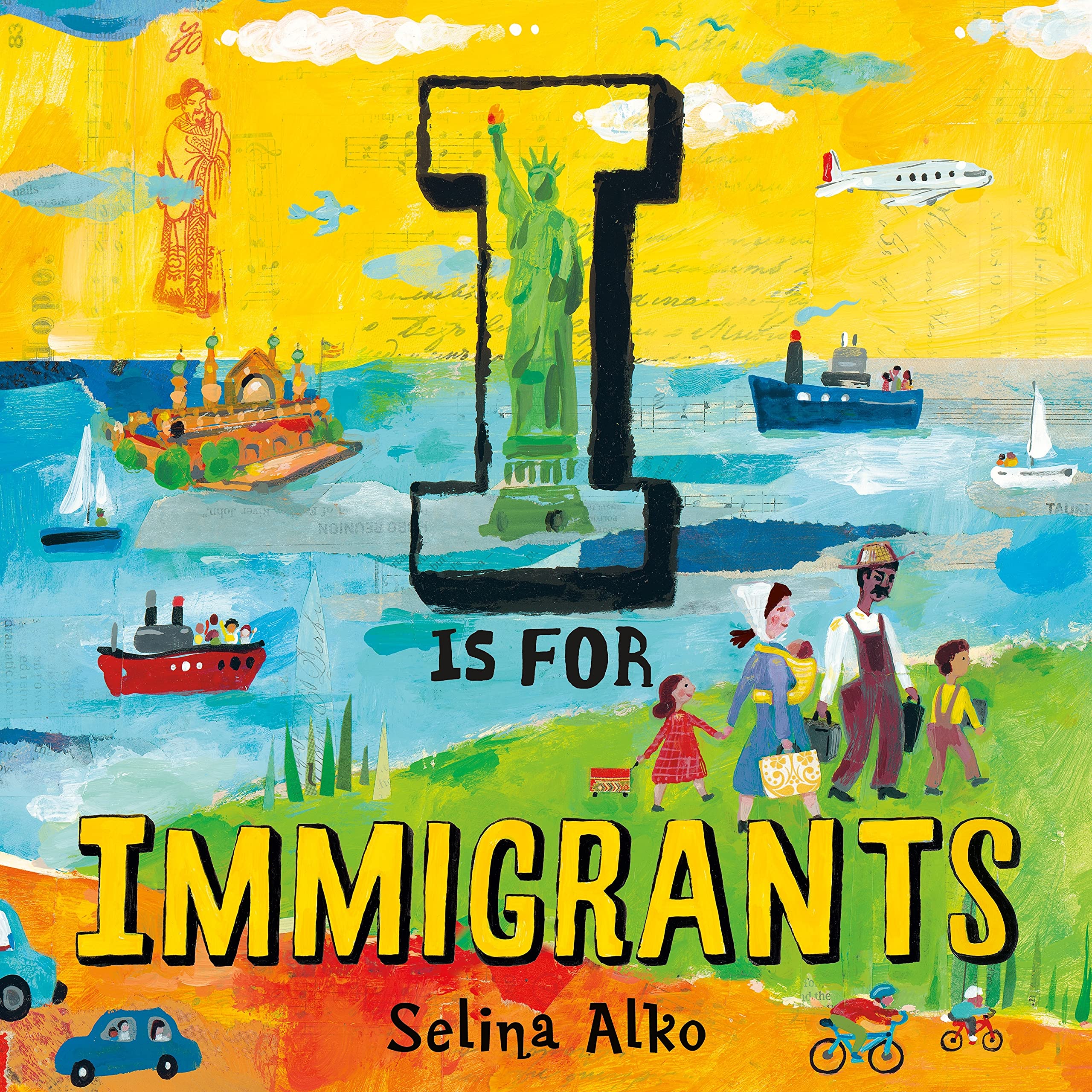
I Is for Immigrants by Selina Alko

Published by Henry Holt and Co.

I Is for Immigrants: Alko, Selina, Alko, Selina: 9781250237866: Amazon.com:  Books

I Is for Immigrants | Selina Alko | Macmillan

Summary:  Each page of this alphabet book is a collage of immigration-related words that begin with the featured letter.  For instance, A is for ancestors, African dance, Abuelita, ambition, and aspire; the Z page shows zest, a ziti dinner, Zen, a zither, and a sleeping mother and child (“Zzzzzzzzz”).  An author’s note tells of her own immigrant experience.  40 pages; grades K-4.

Pros:  This would make an excellent introduction to immigration, whether it’s for a preschool class or the start of a third- or fourth-grade social studies unit.  The colorful collage illustrations and words will get readers thinking about all the contributions immigrants have made to American culture.  Students could make their own collages as an extension activity.

Cons:  There’s not much context for the individual words, and younger kids will undoubtedly need some help with understanding some of them.

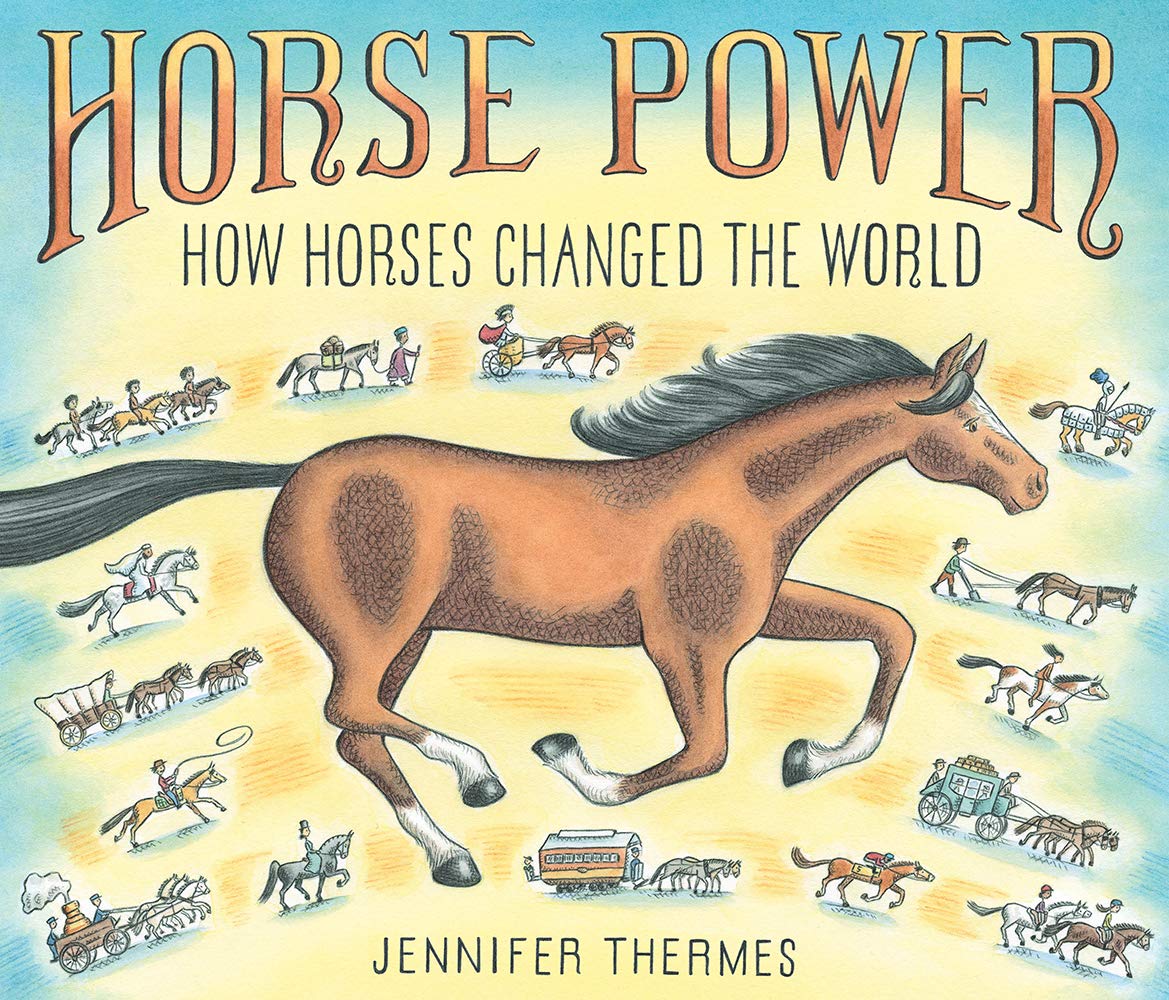
Horse Power: How Horses Change the World by Jennifer Thermes

Published by Harry N. Abrams

Horse Power: How Horses Changed the World: Thermes, Jennifer:  9781419749452: Amazon.com: Books

Summary:  Horses first appeared on Earth fifty-six million years ago, and although the earliest ones lived in North America, they eventually died out.  They survived in Europe and Asia, though, and their domestication revolutionized societies there.  Eventually, horses found their way back to North America in Spanish ships, and became part of life for both European settlers and indigenous people.  Horses allowed people to travel faster and work harder, and were a key part of the Industrial Revolution.  At the end of the 19th century, though, they began to be replaced by cars, and today are used by humans mostly for sports, fun, and entertainment.  Includes an author’s note timeline, and list of sources.  48 pages; grades 2-7.  

Pros:  Anyone who has enjoyed a Jennifer Thermes book knows that maps are a key part of her illustrations, and this one is no exception.  Her maps and diagrams help show horses in local settings as well as how they have traveled around the world.  Horse lovers everywhere will enjoy this book and undoubtedly learn a lot from the text and illustrations.

Cons:  As with any nonfiction picture book that covers a huge topic and span of time, this one is necessarily a little brief on the details.  It’s a good introduction, but kids seeking more information will need to delve into other sources.

Areli Is a Dreamer: A True Story /Areli Es Una Dreamer: Una Historia Real by Areli Morales, a DACA recipient/beneficiaria de DACA, illustrated by Luisa Uribe

Published by Random House Studio

Spanish and English versions available

Areli Is a Dreamer: A True Story by Areli Morales, a DACA Recipient:  Morales, Areli, Uribe, Luisa: 9781984893994: Amazon.com: Books

Areli Es Una Dreamer (Areli Is a Dreamer Spanish Edition): Una Historia  Real por Areli Morales, Beneficiaria de DACA - Kindle edition by Morales,  Areli, Uribe, Luisa. Children Kindle eBooks @ Amazon.com.

Areli Es Una Dreamer (Areli Is a Dreamer Spanish Edition): Una Historia  Real por Areli Morales, Beneficiaria de DACA: Morales, Areli, Uribe, Luisa:  9780593380086: Amazon.com: Books

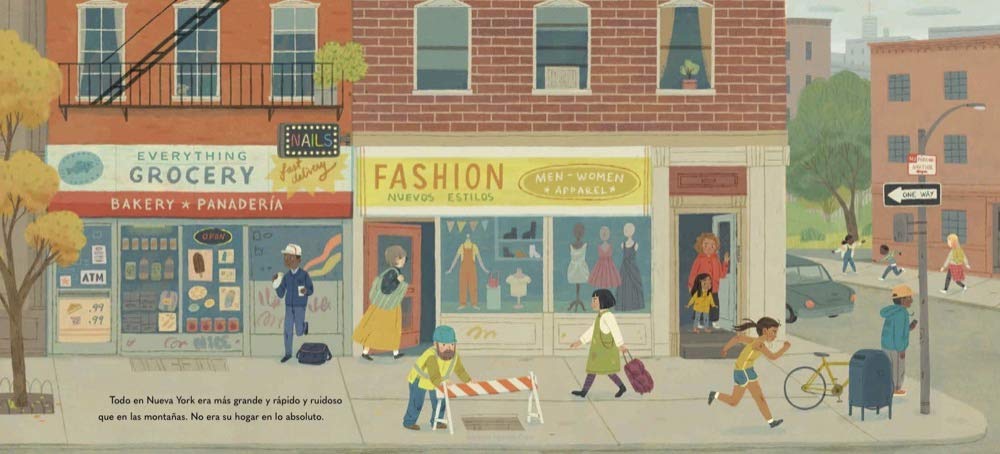
Summary:  Areli Morales tells her story, beginning with her childhood in Mexico where she lived with Abuela.  Every Saturday her parents would call from the United States, and Areli dreamed of the day she could join them there.  Her older brother Alex lived with her, but eventually was able to leave, because, unlike Areli, he had been born in the U.S.  Finally, when Areli was in kindergarten, she got word that she would be able to join the rest of the family.  When Areli arrived, she was thrilled to be with her parents and Alex, but struggled to learn English and fit in at school, where kids sometimes called her “illegal”.  As the years passed, things got easier, and a fifth grade field trip to Ellis Island made Areli realize how many other immigrants had come to America just like she had, and helped her to dream of a bright future in America.  Includes an author’s note about her DACA status: how she obtained it, what opportunities it opened up for her, and how it has been threatened.  40 pages; grades K-4.

Pros:  Areli’s story is told in a way that will engage younger readers but also show older kids the experience of immigrating to the U.S. and what it means to be a DACA recipient.  Kids who have had an experience similar to Areli’s will appreciate her story, and those who haven’t will get a child’s perspective on what it’s like.

Cons:  I liked Areli’s author’s note, but I would have liked even more information or additional resources about DACA.

Walking for Water: How One Boy Stood Up for Gender Equality by Susan Hughes, illustrated by Nicole Miles

Published by Kids Can Press

Walking for Water — Susan Hughes

Susan Hughes on Walking for Water: How One Boy Stood Up for Gender Equality  | The TeachingBooks Blog

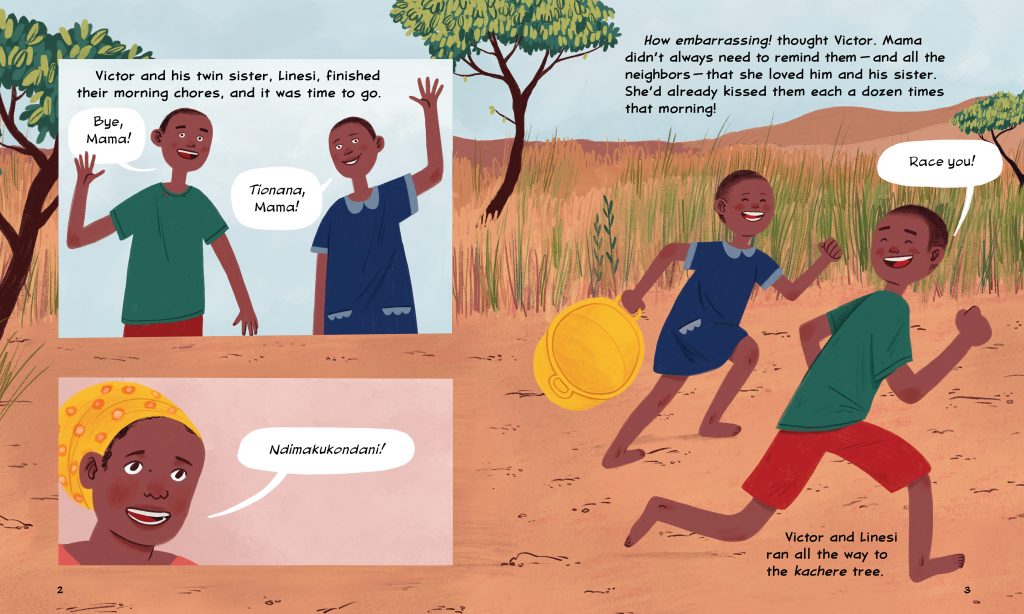
Summary:  Since turning eight, Victor and his twin sister Linesi have different morning routines: Victor heads to school, but Linesi sets off to spend the day fetching water for the family.  When Victor’s teacher talks to the class about inequality, Victor starts to notice how unequal life has become for him and Linesi.  He tries teaching her after school, but it’s hard for him to explain math concepts, and Linesi is exhausted at the end of her work day.  Finally, Victor presents a plan to his mother and sister, and the next day Victor is the one getting the water while Linesi goes to school.  They alternate days for school and work, and before long other kids have noticed and implemented similar plans in their own homes.  Includes an author’s note; a list of organizations working on water scarcity and gender inequality in Malawi (where the story takes place); and a glossary of Chichewa words used in the story.  32 pages; grades K-4.

Pros:  I’m always happy to see a new Citizen Kid book, and I found this one as inspiring and feel-good as many of its predecessors.  Like other books in the series, this one tells a story of a kid who has made a difference for his own family and the larger community.  The resources at the end will help readers find more information and think about what they can do to help.

Cons:  Many of the Citizen Kid books are about real children, but Victor and Linesi seem to be fictional, although the author says she was inspired by a 13-year-old Malawian boy.  I wish the story had stuck closer to the real-life kid.

Lucas Makes a Comeback and Lucas at the Paralympics by Igor Plohl, illustrated by Urška Stropnik Šonc

Published by Holiday House

Lucas Makes a Comeback by Igor Plohl: 9780823447664 |  PenguinRandomHouse.com: Books

Lucas at the Paralympics by Igor Plohl: 9780823447657 |  PenguinRandomHouse.com: Books

Summary: Slovenian author Igor Plohl has drawn on his own experiences to create Lucas, a lion who loses the use of his legs after falling off a ladder and injuring his spine. Lucas goes through a period of sadness, feeling like he has lost his independence and ability to work. With the help of therapists, friends, and family, he learns how to use a wheelchair and drive a car, gets his own apartment, and returns to his job as a teacher. Photos on the endpapers show Igor doing many of the activities that are described in the story.

In Lucas At the Paralympics, Lucas meets a fellow cyclist named Eddie, and the two of them decide to travel to the Summer Paralympic Games. Sidebars give additional information about the different competitions they attend. At the end, Lucas decides to train for the Paralympic Games in four years. Includes two pages of information about different events at the Winter Paralympic Games. Both books are 32 pages and recommended for ages 4-8.

Pros: Some much-needed picture books featuring a character with a disability. Readers will learn about some of the challenges faced by a person in a wheelchair, as well opportunities to compete in sports that are open to those with many different types of disabilities.. The book about the Paralympic Games is timely, since the 2021 Games take place at the end of the summer.

Cons: Given the restrictions of a picture book, Lucas’s journey to independence appears deceptively simple. Also, the photos of the author were on the endpapers, which meant some of them were covered up by the library dust jacket.

America, My Love, America, My Heart by Daria Peoples-Riley

Published by Greenwillow Books

America, My Love, America, My Heart: Peoples-Riley, Daria, Peoples-Riley,  Daria: 9780062993298: Amazon.com: Books

Summary:  The text of this book consists of questions to America: “Do you love me when I raise my hand? My head? My voice? When I whisper? When I SHOUT? Do you love my black? Do you love my brown?”  Spanish and Creole words are interspersed throughout the text. Includes an author’s note, describing her childhood growing up as one of the few Black kids in her class and with a Louisiana Creole background that sometimes made her feel on the outside of things. There’s also information on Louisiana Creole and Spanish, and photos of the author with her two grandmothers who spoke both languages; the Pledge of Allegiance is written on both endpapers. 40 pages; ages 4 and up.

Pros:  A thought-provoking read as we move toward the flag-waving patriotism of Independence Day, asking questions about what the American experience is like for all of its inhabitants.

Cons:  The affectionate title felt a little dissonant from the rest of the book.

Stamped (For Kids): Racism, Antiracism, and You illustrated by Rachelle Baker and adapted by Sonja Cherry-Paul, from Stamped: Racism, Antiracism, and You by Jason Reynolds, a remix of Stamped from the Beginning by Ibram X. Kendi

Published by Little, Brown and Company

Stamped (For Kids): Racism, Antiracism, and You: Cherry-Paul, Sonja,  Reynolds, Jason, Kendi, Ibram X., Baker, Rachelle: 9780316167581:  Amazon.com: Books

Summary:  It started with Ibram X. Kendi’s book Stamped from the Beginning.  Then Jason Reynolds did a “remix” for teens: Stamped: Racism, Antiracism, and You, and now there is this version for elementary kids.  In keeping with Reynolds’ assertion that Stamped isn’t a history book, Cherry-Paul writes that her book talks about history but is “directly connected to our lives as we live them right this minute.”  She suggests using rope as a metaphor when learning about race: a rope can lift climbers, join people together, or be used as a weapon.  In 24 chapters she traces the history of racism in America from 1415 to the present.  Throughout the narrative there are boxes inviting readers to pause and think more deeply about an idea that’s been introduced and how it relates to them.  The final section, “An Antiracist Future” calls kids to lead their generation in learning all they can about the “tree of racism” and to finally be the ones to chop it down.  Includes a timeline, glossary, and lists for further reading.  176 pages; grades 3-6.

Pros:  Every bit as compelling as Jason Reynolds’ book, written at a level that will be accessible to kids as young as eight or nine.  Essential reading for kids, teachers, and parents.

Cons:  Similar to my “Con” for the Reynolds book, this felt like a whirlwind tour through history; readers will only get a taste of many different interesting people and events. Hopefully, they’ll be inspired to use the reading lists to learn more.