Courageous women of World War II

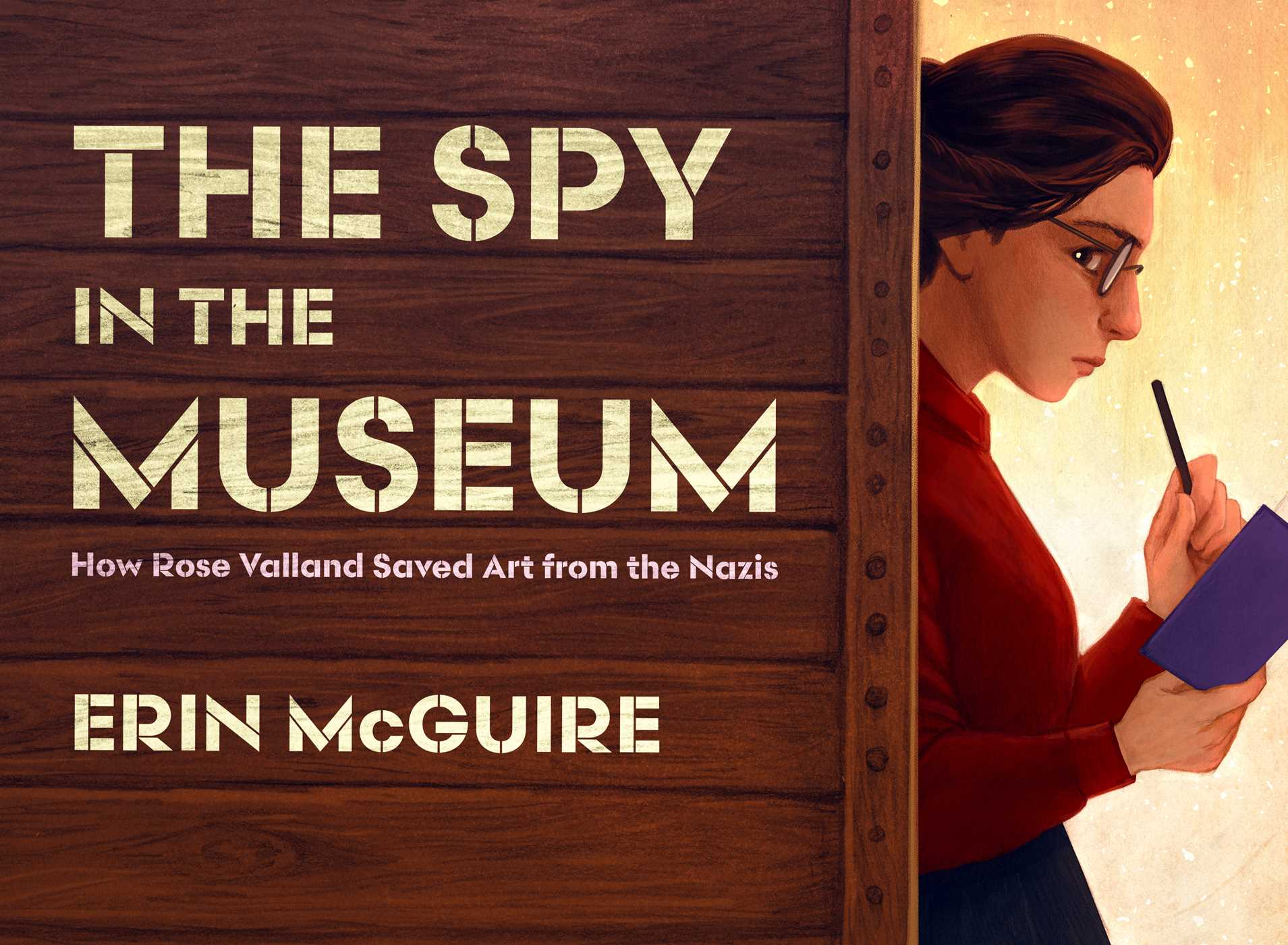
The Spy in the Museum: How Rose Valland Saved Art from the Nazis by Erin McGuire (Beach Lane Books, 40 pages, grades 2-5). Rose Valland loved art. As curator of Paris’s Jeu de Paume Museum, she appreciated all kinds of art: ancient, classical, or modern. Adolf Hitler hated modern art. When Nazis took over Rose’s museum, they fired all the staff except Rose, who was kept on as manager. As they started to steal the art, selling it to fund the war, Rose secretly listened to their conversations and made notes about where the art was going. The soldiers didn’t know she spoke German, but they still became suspicious of her, which put her in grave danger. Towards the end of the war, as the Nazis fled Paris, Rose worked with the French Resistance to stop their final train, loaded with valuable artworks, from leaving the country. For much of the rest of her life, she used her notes to help restore the stolen artworks from around the world. Includes additional information about Rose Valland and the art she worked to save, as well as a list of sources.

This inspiring story is supplemented with interesting and timely questions in the author’s note: why does protecting art matter, and why did the Nazis want to destroy it? The illustrations, many including famous artworks, add to the story and the conversation.

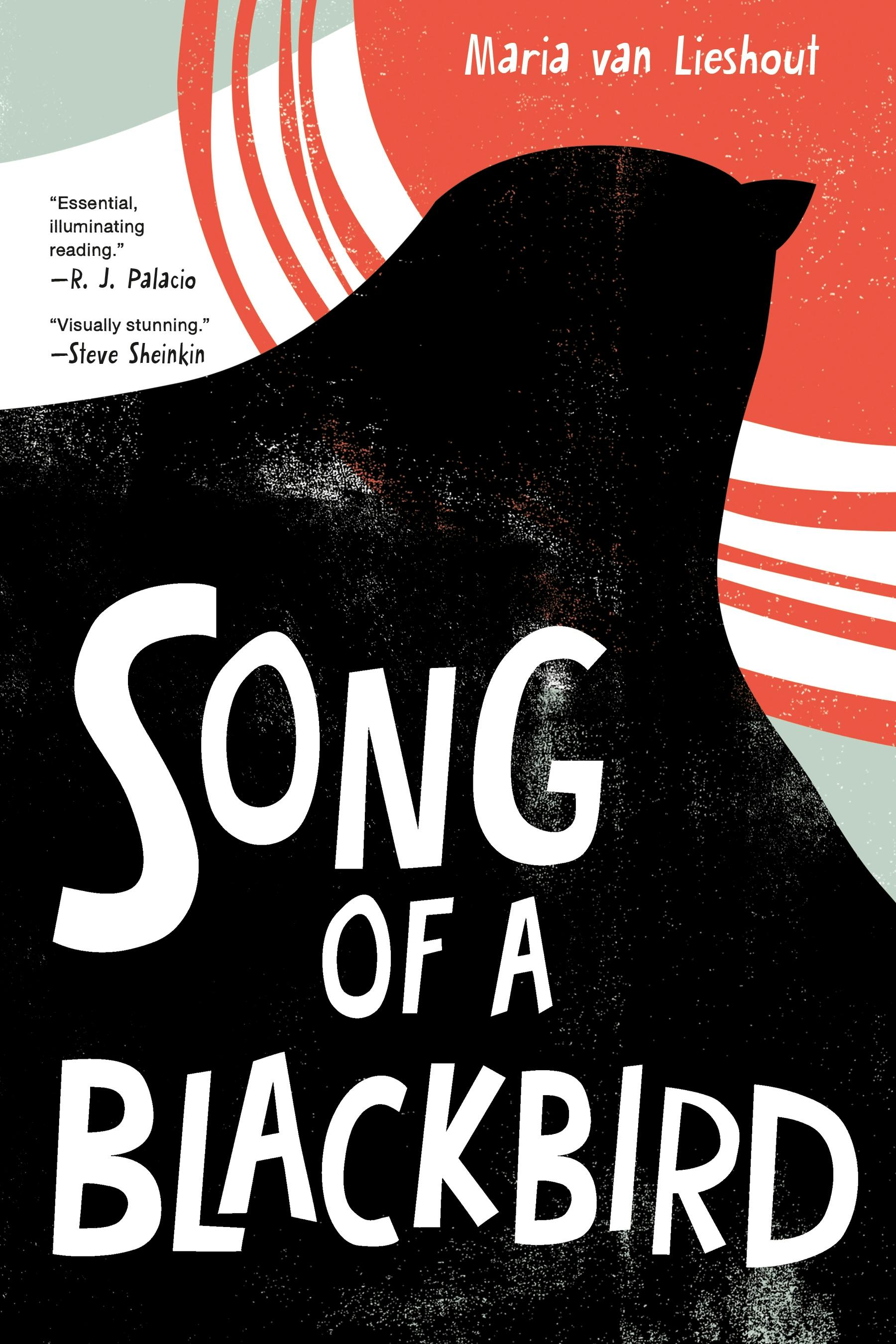
Song of a Blackbird by Maria van Lieshout (First Second, 256 pages, grades 8 and up). The narrative of this graphic novel alternates between 2011 and 1943 Amsterdam. In 2011, Annick is trying to find help for her Oma’s leukemia. When bone marrow tests reveal she was adopted, the two turn to a set of prints from her childhood, each signed by “Emma B.” to try to learn more about her past. Emma is the 1943 protagonist, an artist and student whose education is interrupted by the Nazi invasion of the Netherlands. She uses her talents to aid the Resistance, helping to create false documents and working to rescue children whose parents are being sent to concentration camps. A blackbird that represents art and creativity narrates, showing how his gifts help those in the darkest of circumstances. The two stories eventually meet, and the reader learns the fate of all the characters in a moving epilogue. Includes extensive back matter about the buildings pictured in Oma’s prints and the real-life people on whom Maria van Lieshout based her story.

I learned about this book when the National Book Award Longlist was announced a couple of weeks ago, and it absolutely blew me away. I truly can’t imagine creating this impeccably researched historical fiction, with its two riveting narratives, each one portrayed in its own color palette. Usually I’m rooting for a middle grade win over YA, but this is a compelling choice for sure. Although both books take place over 80 years ago, their stories speak to the timeless power of art and will surely inspire those fighting to create a brighter world.

Hopeful books for difficult times

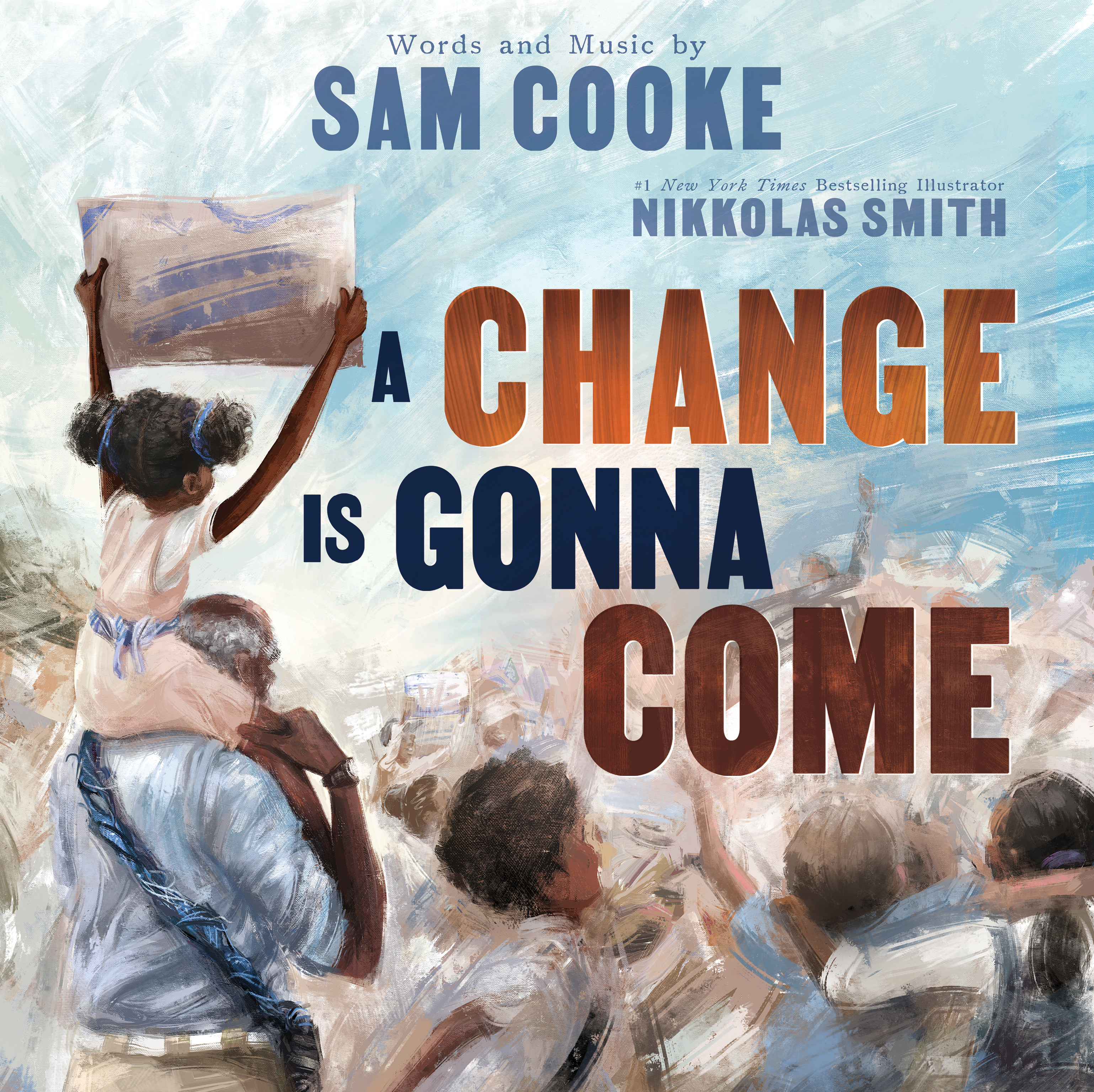
A Change Is Gonna Come words and music by Sam Cooke, illustrated by Nikkolas Smith (little bee books, 32 pages, all ages). Nikkolas Smith provides an illustrated version of the classic Sam Cooke song, with images of famous people and places from the civil rights movement. In the first few pages a boy, identified in the back matter as photographer Gordon Parks, finds a camera, which he later uses to photograph history. The pictures capture the song’s juxtaposition of despair and hope, with portrayals of Jim Crow laws in action and Medgar Evans’ funeral alongside those showing the March on Washington and the signing of the Civil Rights Act. Includes notes from the estate of Sam Cooke and from Nikkolas Smith, two pages of additional information about the people and events pictured, and a QR code that allows readers to hear the song.

Just like the song, this book packs a powerful punch, and made me think of Smith’s book The Artivist in which the narrator says, “I want to hold up a mirror to the world and show everyone what isn’t working right.” You’ll need multiple readings, including the back matter, to really get the full impact of this book, which I hope will be considered for both Caldecott and Coretta Scott King recognition. 

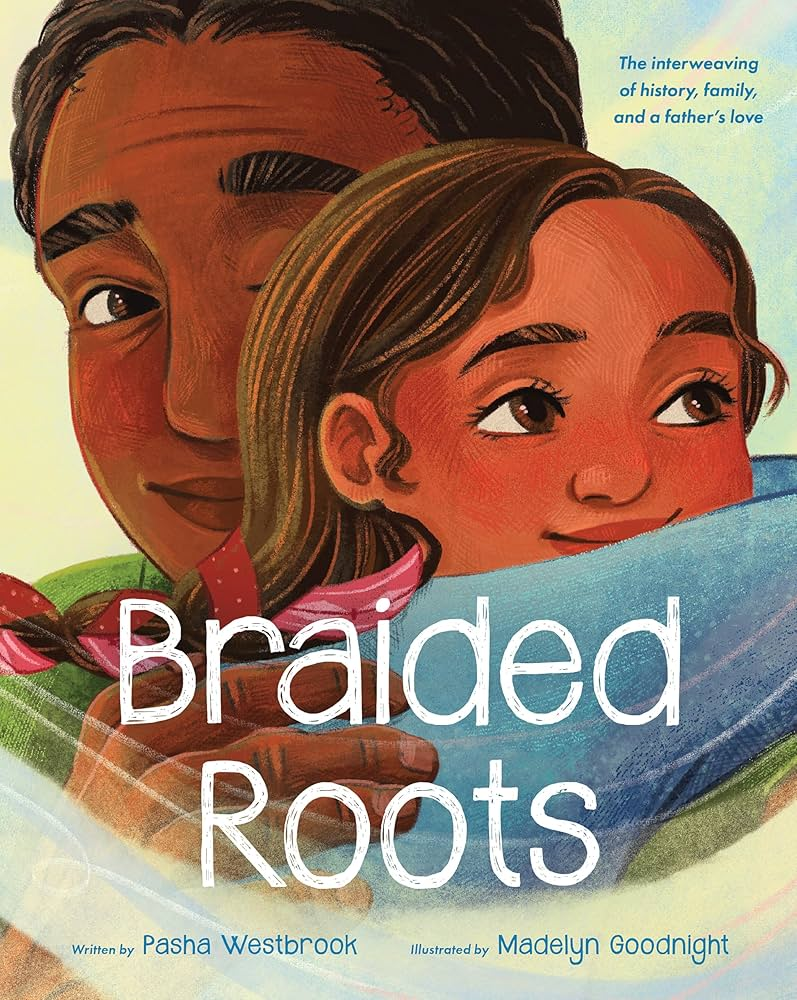
Braided Roots by Pasha Westbrook, illustrated by Madelyn Goodnight (Orchard Books, released November 4, 40 pages, ages 4-8). As her father braids her hair, a girl reflects on her family’s heritage, comparing the strands of her braid to DNA. Her ancestors include both enslaved people and those who walked the Trail of Tears. As Daddy finishes the braid, he tells her to be careful, because with such a strong braid, “You just might change the world.” Includes an author’s note about her inspirations from her own family, which included ancestors who were enslaved, mixed-race Black, Chicksaw, and Choctaw, and her single father who raised her and her three brothers, as well as an illustrator’s note.

This lovely family story reminded me of Hair Love by Matthew A. Cherry, which also features a father doing his daughter’s hair and My Powerful Hair by Carole Lindstrom, which explores the belief of Indigenous Americans that hair is a source of strength and memories. Kids may need some additional information to understand part of the story about the narrator’s ancestors, but this would be a good book to read to inspire them to investigate their own heritages.

Creating community

No More Chairs by Dan Gill, illustrated by Susan Gal (Little, Brown Books for Young Readers, 40 pages, grades K-3). On the first day of school, Mr. Gill’s students ask him why there’s an extra chair at the front of the room. He tells a story of when he was a kid, and he went to a birthday party with his best friend Archie. At the door, the host’s mother stared at Dan, who was white, and Archie, who was Black. “You can come in,” she told Dan, “but your friend cannot, because there are no more chairs.” At first Dan doesn’t understand, although Archie seems to, and he offers to bring a chair from home or sit on the floor. But when the mom is adamant, Dan finally realizes what’s going on. “Give these presents to Steve,” he says. “We’re going back to my house, where there are always enough chairs.” On the way home, Archie tells Dan he will speak up for him if Dan ever feels like he can’t speak for himself, and the two friends share a big bowl of ice cream. And that’s why, Mr. Gill explains, he always keeps an extra chair in the classroom, to make sure that everyone knows that there are always enough chairs, and everyone is welcome. Includes an author’s note of how he always told this true story from his childhood to his classes on Dr. Martin Luther King, Jr.’s birthday to help them understand the meaning of the day.

Use this short but powerful tale to either kick off the school year with a message of inclusion or to begin a conversation about the civil rights movement. It’s a story that will resonate with kids of all ages, as well as with adults, and points to the importance of people with privilege speaking up for those who are being marginalized.

Sunnyside School: A Community Helpers Book by Lindsay Ward (HarperCollins, 40 pages, grades K-3). Welcome to Sunnyside School! The first two pages show 39 different jobs that people have at the school. Then the story begins, with siblings Ali and Matty starting second grade and kindergarten, getting walked into the school by their mom. As the two go through their day, they meet all kinds of people: front office staff, classroom teachers, specialists, cafeteria staff, and more. Sidebars give additional information about their jobs, while questions are sprinkled throughout the text to keep kids engaged, and characters talk to each other via cartoon bubbles. Ali’s best friend has just moved away, and Matty’s going to school for the first time; each of them is successful and finding a new friend. At the end of the day, both kids meet their mom and report an excellent first day. Includes a search and find activity for kids to go back and find things like pencils and backpacks in the book, as well as a glossary.

This is an outstanding introduction to all the people who work in a school woven into a first day of school story that kids will relate to. I thought about reading this to kids at the beginning of school, but there’s so much information packed into it that it almost felt overwhelming to read it all in one sitting. it would be a great book to revisit a few times during the first week or two of school, as well as a good one to share with kids at home before their first day.

Two books for LGBTQ+ collections

Trans History: A Graphic Novel: From Ancient Times to the Present Day by Alex L. Combs and Andrew Eakett (Candlewick, 384 pages, grades 8 and up). The title gives a pretty good idea of what this book is: a graphic novel of trans history, starting in ancient times and going to the present, with an emphasis on western cultures. Much of the history is told through the stories of individuals, from ancient Egyptian pharaoh Maatkare Hatshepsut, “a person who was raised to be a queen but instead became a king” to Adelaide/Alexina/Camille/Herculine Barbin, a French intersex woman from the 19th century to trans activists of the twentieth century like Marsha P. Johnson and Sylvia Rivera. Their stories give some idea about beliefs and treatments of trans people were like at that time. The final chapter profiles present-day activists, each of which is written in their own voice. Includes many pages of source notes and a lengthy index.

I often reflect on how much I’ve learned from the thousands of books I’ve read for this blog, and nowhere is this more apparent than in my greater understanding of trans people. Authors like Alex Gino and Kyle Lukoff have helped me understand what it’s like to be a trans kid, and now Alex Combs and Andrew Eakett have added a whole new level of understanding with this outstanding graphic history. Focusing on individuals makes for a fascinating read, and the interviews with contemporary activists are compelling. It’s a huge amount of information, occasionally a bit overwhelming, but definitely an important book to educate readers in such an engaging format.

Athlete Is Agender: True Stories of LGBTQ+ People in Sports edited by Katherine Locke and Nicole Melleby (Christy Ottaviano Books, 224 pages, grades 5-8). In 22 essays, LGBTQ+ people tell the stories of their athletic experiences. Most of the narratives lift up supportive teammates, but there are also examples of bullying and prejudice encountered in sports. Interspersed with personal essays are brief biographies of successful LGBTQ+ athletes like tennis player Billie Jean King, WNBA players (and married couple) Courtney Vandersloot and Allie Quigley, and Olympic gold medalist rugby player and trans activist Ellia Green. The sports are varied: sled dog racing, water fitness, longboarding, and sailing, among others, and each athlete’s experience is equally unique. Introductory material includes a note on pronouns and the history of Title IX, and in the back you’ll find profiles and photos of all the contributors, information on how to be a good teammate and ally, steps to take to form a Queer Athletics Alliance or Gender and Sexuality Alliance at your school, and source notes.

I loved this positive presentation of sports, an area that has been particularly fraught for LGBTQ+ participants, especially trans athletes. The writers are honest about their experiences, and the way gender divisions in sports often made them feel uncomfortable. Each essay could stand on its own as a powerful argument for inclusion in sports, but taken all together that argument becomes all the more compelling.

A pair of books for the first day of school

When You Go to Dragon School by Chelsea M. Campbell, illustrated by Charlene Chua (Feiwel and Friends, 32 pages, ages 3-8). When the local school is too full, a group of kids decide to go to dragon school instead. The narrator tells them what they’ll learn: breathing fire, sleeping on piles of gold, sharpening claws and polishing scales, and flying in formation. But wait a minute–kids can’t do those things! The narrator admits that the dragons might think the kids are too squishy and kind of weird for not being able to do breathe fire or fly. But, wait again–maybe the kids could teach the dragons how to make s’mores with their fire. Or make a pillow fort on that pile of gold. Or fly on their backs to help them with their synchronized flights. So don’t worry, the narrator concludes, everyone’s going to love you.

Striking just the right tone for first-time students, this book acknowledges anxieties while encouraging kids to use their own strengths to make friends and enjoy all aspects of school. The smiling dragons are cute and welcoming and not the least bit scary.

First Day Around the World by Ibi Zoboi, illustrated by Juanita Londoño (Versify, 48 pages, grades 1-4). Kids around the world recount the different parts of the first day of school. As the sun rises over eastern Africa, children wake up and greet each other in Swahili. Moving west, we see students in Mali and Senegal traveling to school on foot and by boat. As the day goes on, readers travel to the Middle East, Asia, Europe, and the rest of the world’s continents (even Antarctica!) as kids around the globe share the foods they eat, the history they learn, the languages they speak, and the customs they observe. As the sun sets in Alaska, a sleepy child gets tucked into bed, ready to rest and prepare for another day of learning. Includes an author’s note recounting her school days in Haiti and the United States.

I love the idea of this book, and the text and colorful illustrations introduce a wide range of places and schools. I wish there had been maps on each page to show the locations, with a world map at the end to put it all together. I also had high hopes for this being a good read-aloud at the beginning of school, but I think the length and introduction of so much new information could make it difficult to keep kids’ attention.

Making a difference

The Music Inside Us: Yo-Yo Ma and His Gifts to the World by James Howe, illustrated by Jack Wong (Harry N. Abrams, 48 pages, grades 1-5). Growing up in Paris and New York City, Yo-Yo Ma showed his musical gifts early, playing cello from the age of 4, performing for President John Kennedy at 7, and debuting at Carnegie Hall at 15. But Yo-Yo wanted more than just the life of a musical prodigy. As a teen, he started questioning who he was, aside from being an obedient son and a cellist. He studied anthropology at Harvard and learned about music as a universal language. As an adult, Yo-Yo has used his music to bridge the gaps of culture, language, and generations. He continues to develop his musical gifts and to share them with people of all ages from all over the world. Includes a timeline, notes from the author and illustrator, and lists of additional resources.

I love how this book shows how Yo-Yo Ma, an incredibly talented and hard-working musician from an early age, has never rested on his laurels, but has used music in innovative ways to have positive impacts on the world. Through his appearances on Mr. Rogers, Arthur, and Sesame Street, his creation of Silkroad Project to bring together musicians from around the world, and his performances of “Songs of Comfort and Hope” during the pandemic, Yo-Yo shows us all how to use our unique talents in creative and powerful ways.

The Friendship Train: A Story of Helping and Healing After World War II by Debbie Levy, illustrated by Boris Kulikov (Bloomsbury Children’s Books, 48 pages, grades 2-5). In the fall of 1947, Europeans were facing a winter of hunger due to postwar devastation. Journalist Drew Pearson had the idea of creating a Friendship Train that would start in California and travel to the east coast, stopping along the way to pick up donations of food from across the U.S. While Mr. Pearson initially worried that there wouldn’t be enough donations to fill a boxcar, the final collection was enough for 500 boxcars. The food was transferred onto ships which sailed for Europe in December of 1947 and brought welcome relief to Europeans. The French people reciprocated with a Merci Train, collecting and shipping gifts in 1949 that were distributed all around the US. Includes a two-page author’s note with additional information about the Friendship Train and ways readers can address the problem of hunger today, as well as a list of sources and a bibliography.

This well-researched book tells a heartwarming story of Americans rising to the occasion to help Europeans get through the winter before the Marshall Plan was implemented. It would make a great read-aloud for Thanksgiving or the December holidays. My curiosity led me to read more about Drew Pearson, who sounds like a remarkable person deserving of his own biography. I also learned that his wife Luvie was equally involved in the project, although she’s not mentioned in this story. And if you want to find out about what happened to the Merci Train donations to your state, you can learn about it here.

Celebrating Black History

The History of We by Nikkolas Smith (Kokila, 40 pages, grades K-5). Through poetic text and rich acrylic illustrations, Nikkolas Smith traces the history of the earliest humans in Africa from more than 200,000 years ago. The people are shown making music and dancing, created languages, built homes, growing crops, wondering at the stars, and eventually discovering ways to travel on the oceans. A world map at the end puts Africa at the center of civilization, from where humans traveled to settle other continents. The back matter includes information about each of the spreads, and the author’s note relates how he never learned about humanity’s roots in Africa, motivating him to create this book. Includes a timeline covering the period from 233,000 years ago to 5,000 years ago.

I’d love to see this book considered for a Caldecott or Coretta Scott King award. It would make a good companion to Before the Ships, introducing kids to the history of the people of Africa before American slavery. Both books use beautiful language and illustrations to draw readers of all ages into a fascinating history that has long been ignored.

So Many Years: A Juneteenth Story by Anne Wynter, illustrated by Jerome Pumphrey (Clarion Books, 32 pages, ages 4-8). “How would you dress after so many years of mending your clothes with rags?” This question is followed by others: how would you sing, dance, and eat after years of having to sing in code, painful work, and only having scraps for meals? “Oh, how you would dress!” shows off the fancy clothes worn in an emancipation celebration from 1920. The other questions are answered with illustrations of other Juneteenth celebrations through the years, as people dance, sing, and feast right up to the present. “Oh, how you would celebrate…so many years of a life…fully yours…fully free.” Includes information about the history of Juneteenth and the lyrics for “Lift Every Voice and Sing.”

Each spread just has a single sentence, but together they perfectly capture the sense of freedom and celebration that are part of Juneteenth. And the paintings by one of my favorite illustrators beautifully show that history, often combining the hardships of the past with the joy of the present in the same spread. Another award contender.

Celebrating citizen activism for Earth Day

Whales in the City by Nancy F. Castaldo, illustrated by Chuck Groenink (Farrar, Straus and Giroux, 40 pages, grades K-4). “Before there were ships and streets and buildings and a city called New York, we were here.” Whales narrate the first half of this book, explaining how they were slowly driven out of the Hudson River by pollution. The few that survived headed for the cleaner waters of the North Atlantic. Humans take on the story from there, telling how they had finally had enough and started demanding clean water around the city. Starting with the first Earth Day, their activism eventually helped lead to the passage of the Clean Water Act. As time passed, the river grew cleaner, fish returned, and people could enjoy it once again. And finally, after a century, the whales came home to the waters around the city. Includes an author’s note, additional information about whales, a timeline of Hudson River history, profiles of a few of the people who led protests, a list of ways kids can help clean up rivers, and a list of sources.

I think we all could use a book right now that shows the positive effects of citizen action, and here is one that can be enjoyed by kids (and adults) of all ages. I liked how the narration was shared by the whales and the humans, and the back matter makes this an excellent resource that could lead to further research. The illustrations are amazing, as you can see from the cover.

Kaho’olawe: The True Story of an Island and Her People by Kamalani Hurley and Harinani Orme (Millbrook Press, 40 pages, grades 2-5). This history of Kaho’olawe, the smallest of the Hawaiian islands, begins with her birth from a volcano and continues with the arrival of the the first humans, Polynesian voyagers who settled there more than 1,000 years ago. Environmental devastation began when Europeans brought goats to the island and later used it for cattle ranching, but the total destruction began during World War II. The day after the attack on Pearl Harbor, the U.S. military took over Kaho’olawe and used it for bombing practices for the next 30 years. In 1976, activists began a campaign to stop the bombing, and finally, in 1992, the U.S. Congress officially ended the bombing and budgeted $400 million for clean-up efforts. Kaho’olawe is still suffering from the effects of all the damage, but today native Hawaiian groups, grassroots organizations, and scientists are working to restore the island and learn about its archaeological history. Includes notes from the author and illustrator (both Native Hawaiians), a timeline of Kaho’olawe’s history, a glossary, a paragraph about how to help, and additional resources and sources.

And here’s another tribute to activism in a fascinating history of a place I’m sure many of us (myself included) have never heard of. The history is sad, but the hard work of so many people in the face of seemingly insurmountable obstacles is inspiring. I loved the colorful illustrations which I’m guessing were inspired by Native Hawaiian art. Each page has a few sentences telling the story, with a paragraph giving additional information, making this a good resource for a wide range of ages.

Life during wartime

The Enemy’s Daughter by Anne Blankman (Viking Books for Young Readers, 288 pages, grades 4-7). Marta and her papa are traveling aboard the Lusitania, trying to get back to Germany with falsified documents. Just as her father’s true identity is discovered, the Lusitania is torpedoed, and the two must fight for their lives. Although they both survive, Papa is arrested immediately upon their arrival in England, while Marta manages to slip away. Hiding in a barn, she’s befriended by an Irish girl named Claire, whose family is poor but manages to find food and shelter for Marta. Marta’s talent for acting and imitating accents comes in handy to conceal her German identity and impersonate a Dutch girl. The two girls work together in a chocolate factory, and Marta saves her earnings for a train ticket to Amsterdam, where she hopes she can book passage back to Berlin. Despite having been taught to hate the British, Marta can’t help but respond to Claire’s friendship and the loving kindness of her family. When Marta’s true identity is discovered by a factory employee, Claire is horrified at first, but eventually she too realizes that their friendship is real and helps Marta escape. The last pages see Marta getting ready to travel to Amsterdam, worried but hopeful that her family will be reunited at last in Germany.

Readers will be drawn into this book right away with the tragic sinking of the Lusitania in the early chapters, followed by Marta’s struggle to survive and find her way home. I was hoping for a bit more resolution to her story, as well as finding out what happened to her father, but it’s a realistic ending given the time and place. The reflections on humanity and who is an enemy occasionally felt a little didactic but could definitely engender some interesting discussions.

Revolutionary Mary: The True Story of One Woman, The Declaration of Independence, and America’s Fight for Freedom by Karen Blumenthal and Jen McCartney, illustrated by Elizabeth Baddeley (Roaring Brook Press, 40 pages, grades 2-5). Mary Katharine Goddard didn’t get to go to school like her younger brother William did, but her mother taught her reading and math at home. When William decided to pursue bigger ambitions, Mary and her mother took over his print shop. After her mother died, Mary took charge, running a successful business until her brother asked her to move to Baltimore to help him with another shop. Once again, he left to pursue other interests, and Mary took over. As news of a revolution made its way through the colonies, Mary engaged in the risky business of publishing news and opinions about independence. After the Declaration of Independence was signed, the Continental Congress moved from Philadelphia to Baltimore, where they made the bold decision to send a copy of the document to each of the thirteen colonies. Mary was chosen as the printer, and she included her name on the declaration, using her full name, Mary Katharine Goddard instead of her usual M. K. Goddard signature. Includes additional information about Mary Katharine Goddard, the Declaration of Independence, and printing and publishing in colonial times; also a bibliography and an author’s note from Jen McCartney that tells how she completed this book after her mother (Karen Blumenthal) died in 2020.

This engaging story of a courageous woman deserves a place in any study of the American Revolution. The text and illustrations are lively, with action words like crank, whoosh, pound, and revolution woven into the pictures. The author’s note about completing the book after her mother passed away unexpectedly at the age of 61 adds a poignant note to the story of a woman who was inspired by her own strong mother.

Feminism, past and present

Tear This Down by Barbara Dee (Aladdin, 304 pages, grades 4-7). Freya has always liked asking lots of questions and having strong opinions, but as she’s gotten older, she’s learned to stay quiet rather than risk being made fun of. A school project leads her to the discovery that town founder Benjamin Wellstone, an outspoken abolitionist, opposed giving women the vote. Teaming up with new friend Callie, Freya embarks on a series of actions to tear down Wellstone’s statue and replace it with one of a local suffragist Octavia Padgett. After the girls sneak out of the house for some late-night statue vandalism before a big town festival, they are both grounded and forced to reconsider their tactics. Freya’s activist grandmother helps her to see that there’s room for both Benjamin and Octavia in town and leads her to come up with an idea of creating a quilt celebrating the suffragists that unites people rather than tearing them apart.

A good choice for Women’s History Month, the latest by Barbara Dee portrays an idealistic, outspoken protagonist who sometimes feels like her strong opinions need to be silenced. I always enjoy Dee’s books that tackle difficult issues with a light touch. Thanks to Aladdin Books for providing me with a free copy.

One Girl’s Vote: How Lucy Stone Helped Change the Law of the Land by Vivian Kirkfield, illustrated by Rebecca Gibbon (Calkins Creek, 40 pages, grades 2-5). From an early age, Lucy Stone felt the unfairness of the ways she and other girls were treated as inferior to boys. Her teacher called on the boys before Lucy, even though Lucy’s hand was raised first, and her father dictated family policy, including the decision that Lucy would not attend college like her brothers. Lucy was determined, though, and earned enough money to pay her tuition at Oberlin College, the first American college to accept women. But even at Oberlin, there was inequality, and Lucy fought back, organizing a secret women’s debate society and striking for equal wages to men’s for her campus jobs. After graduation, she was hired by William Lloyd Garrison to work for the New England Anti-Slavery Society. She soon became well-known as a passionate speaker, and her work evolved to include women’s rights. The work and travel was exhausting, but Lucy Stone’s voice helped pass the Thirteenth Amendment, abolishing slavery, and paved the way for women to get full voting rights 27 years after her death. Includes a timeline for Lucy Stone and the fight for women’s rights and equality for all, a couple photos, fun facts, and a bibliography.

In my experience, Lucy Stone is lesser known than fellow suffragists Elizabeth Cady Stanton and Susan B. Anthony, so I’m happy to see this delightful picture book that emphasizes Lucy’s early days but gives a nod to her tireless work for abolition and women’s rights. The timeline offers quite a few milestones in women’s history. I did not know that Lucy Stone was married to Elizabeth Blackwell’s brother, and that women who kept their maiden names, as Lucy did, were sometimes called Lucy Stoners.