National treasures

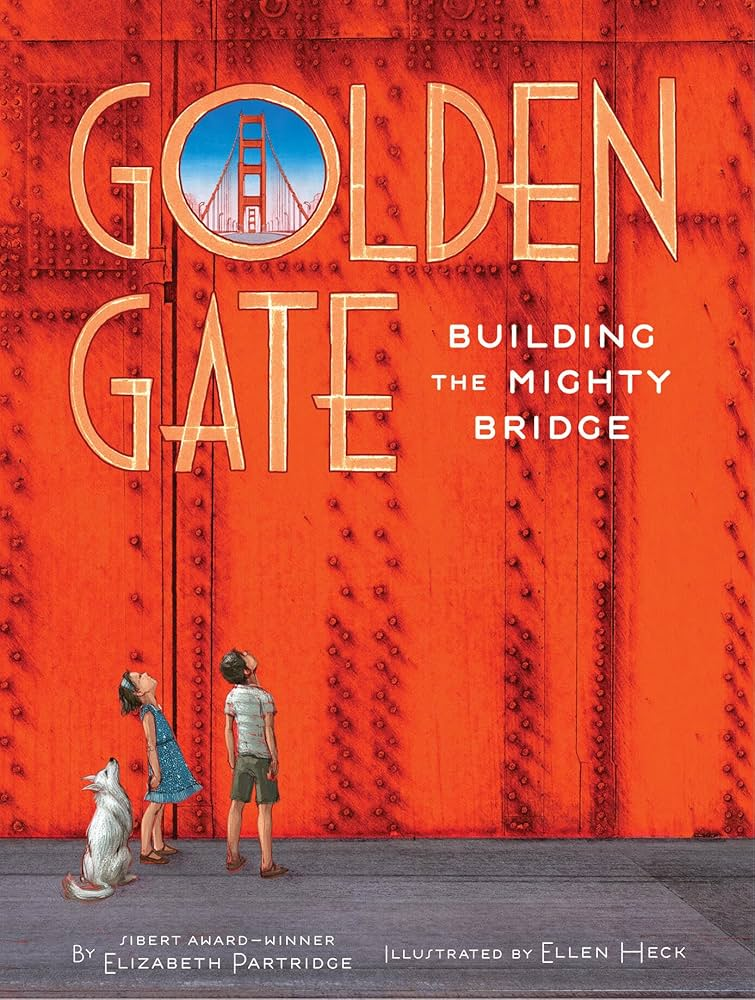
Golden Gate: Building the Mighty Bridge by Elizabeth Partridge, illustrated by Ellen Heck (Chronicle Books, 60 pages, grades 2-5). The two children of a lighthouse keeper observe the creation of the Golden Gate Bridge from their house. Told in second person narration (“You leap out of bed–how did you forget? Today’s the day work begins on the Golden Gate Bridge”), the text includes plenty of construction details and emphasizes the seemingly impossible nature of the project. As the kids grow older, the foreman gets to know them and sometimes includes them in some aspects of construction, like the day they get to ride the elevator to a height of 700 feet above the water. Finally, on May 27, 1937, the Golden Gate Bridge is open to the public, and crowds of people, including the two children, walk across the bridge, where “the word impossible seems like nothing at all.” Includes an afterword with additional information.

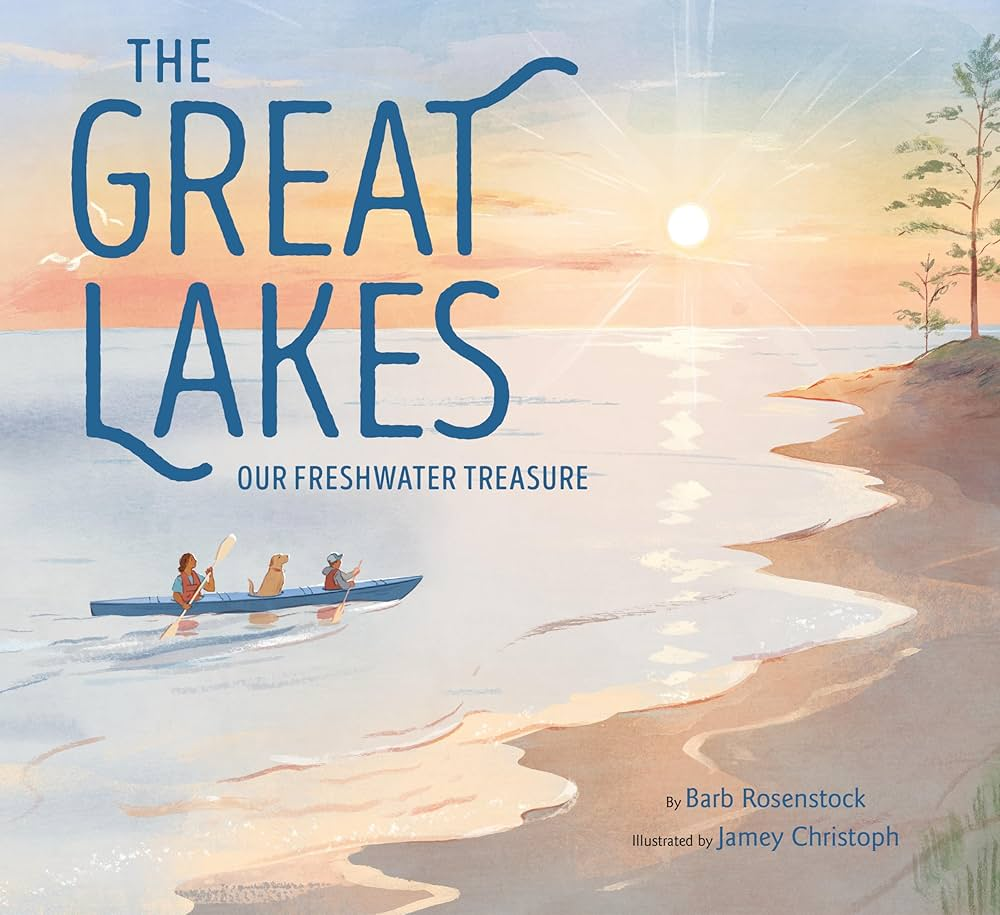
Great Lakes: Our Freshwater Treasure by Barb Rosenstock, illustrated by Jamey Christoph (Knopf Books for Young Readers, 40 pages, grades 2-5). Beginning with the history of the five Great Lakes, formed by the melting of a huge glacier that covered more than half of North America, the narrative shifts to the present importance of the lakes. Not only are they home to many species of plants and animals, but they contain almost all of the surface freshwater in North America. Although they are essential in supporting humans, we’ve done our best to poison and pollute them. In recent years, work has been done to protect them, and readers are invited to investigate how they can help preserve these national treasures. Includes messages from the author and Kathleen Smith, an indigenous woman from the Great Lakes Indian Fish and Wildlife Commission, information about the Center for Great Lakes Literacy, and a list of sources.

Both of these books are chock full of fascinating information, well supplemented by beautiful, detailed illustrations, that will help readers better understand two famous American landmarks. Although they are both picture books, each one contains quite a bit of text and somewhat technical information, making them better choices for older elementary and middle school readers.

A final pair of books about voting before the big day

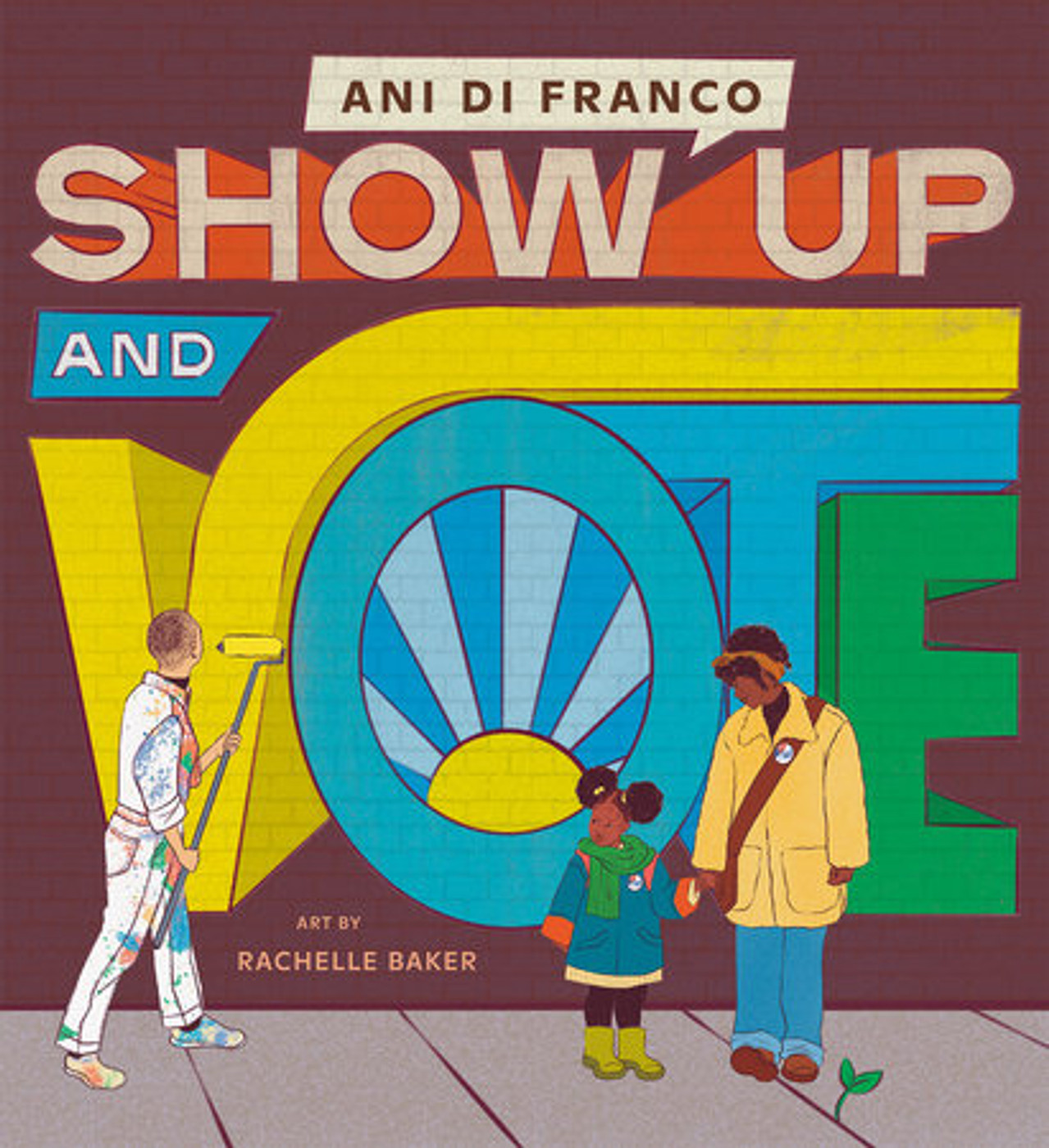
Show Up and Vote by Ani DiFranco, illustrated by Rachelle Baker (Rise x Penguin Workshop, 48 pages, ages 4-8). A young girl looks back at the end of Election Day, recalling how she was reluctant to go out on a rainy November morning, but her mother told her that they were on a mission. At the polling station, the girl recognizes friends and neighbors, realizing that voting is a community event. In the voting booth, she watches her mom make her selections, and as they finish, the two of them imagine people across the country doing the same thing. Proudly wearing their “I voted” stickers, they walk home, and the girl sees her neighborhood with new eyes, as a place where people work together to create a community, and “showing up to vote is how it all starts.”

Singer and songwriter Ani DiFranco has created an accessible introduction to voting and Election Day with rhyming text (and no capital letters) that reads kind of like a folk song and colorful illustrations that resemble retro posters. Readers will learn a bit about voting and be empowered to get involved in their communities.

Represent: The Unfinished Fight for the Vote by Michael Eric Dyson and Marc Favreau (Little, Brown Books for Young Readers, 256 pages, ages 12 and up). Dyson and Favreau continue their exploration of American history that they began in Unequal with this story of voting rights from the founding of the United States to the present. There are inspiring narratives about Black, female, Latinx, and Native activists who worked to get the vote for their communities, alongside less inspiring ones such as how white women largely refused to help Black and Native women once they had secured their own right to vote. And there are downright depressing ones that continue to this day like the Citizens United Supreme Court decision that has encouraged huge amounts of spending across the political spectrum and the gerrymandering of districts for political gain. The list of “People-Power Ideas” at the end (get rid of the electoral college, expand the House of Representatives, introduce ranked-choice voting, among others) seem commonsensical yet depressingly unlikely to happen. There are also ideas for student activism, a voting rights timeline, additional resources, and an index.

I found this book both extremely depressing and surprisingly hopeful, seeing that our current threats to democracy are actually part of a centuries-long plot to keep voting and power concentrated in the hands of a few. The struggles that have ensued to give more people the right to vote have resulted in torture, imprisonment, and murder, yet ordinary people have persevered and often ultimately met with success. Seeing ourselves as part of this long history rather than poised at some do-or-die moment gives me a glimmer of hope to continue the struggle.

Reminder: I have an Election Day and Voting Rights book list if you’re looking for more. I haven’t had a chance to add these two books yet!

Election Day, part two

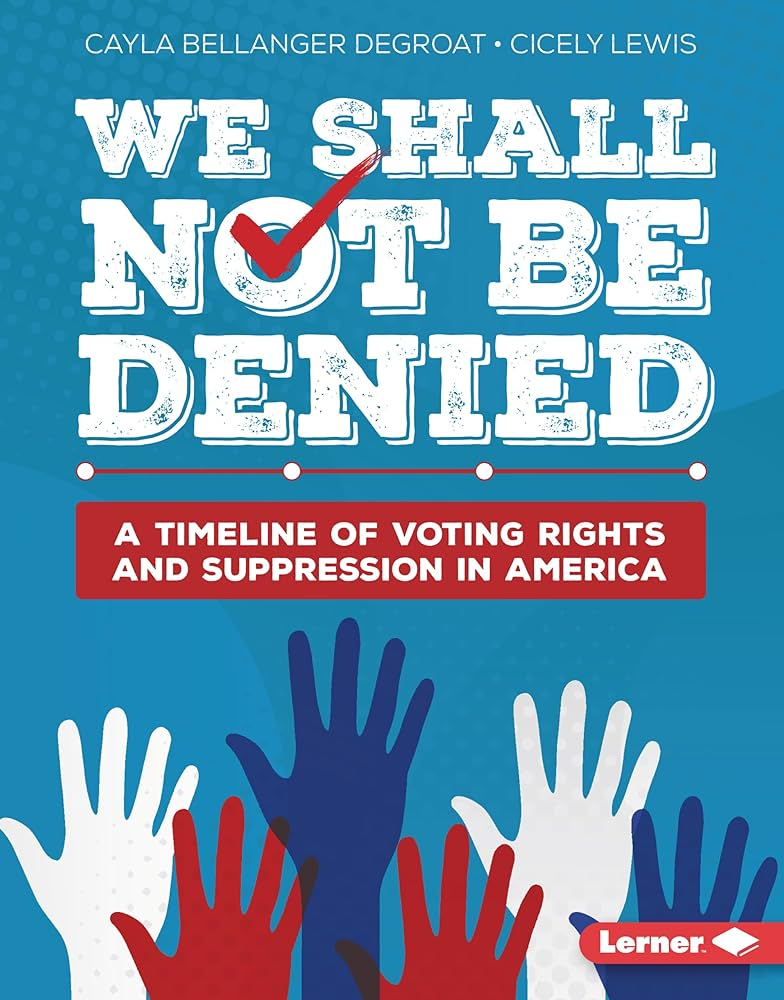
We Shall Not Be Denied: A Timeline of Voting Rights and Suppression in America by Cayla Bellanger DeGroat and Cicely Lewis (Lerner Publications, 48 pages, grades 4-8). Beginning with a present-day example of laws being passed to limit voting by mail, the authors trace the history of groups of Americans whose right to vote has been suppressed. A timeline at the bottom of each page keeps track of important years in voting rights history, while the text and illustrations give more details about those events. Although there have been backwards steps, the trajectory has slowly inched forward to give women, Indigenous people, Asian Americans, and Black citizens voting rights, and voting has become more accessible through absentee ballots and the repeal of poll taxes and other discriminatory practices. There is still work to do, and the final pages suggest actions readers can take, as well as offering reflection questions, a glossary, and index, and a reading list.

Readers will learn that voting, which should be a right, has too often been a privilege reserved for certain groups based on race, gender, and class. Although it contains a fairly brief, straightforward narrative, the book offers a lot of food for thought and discussion and would make an excellent resource to begin an investigation into the history of voting rights and the state of those rights today.

With Election Day just weeks away, teachers and librarians will undoubtedly be looking for resources to share with students. Here’s an Election Day and voting rights book list to help you out.

Indigenous history

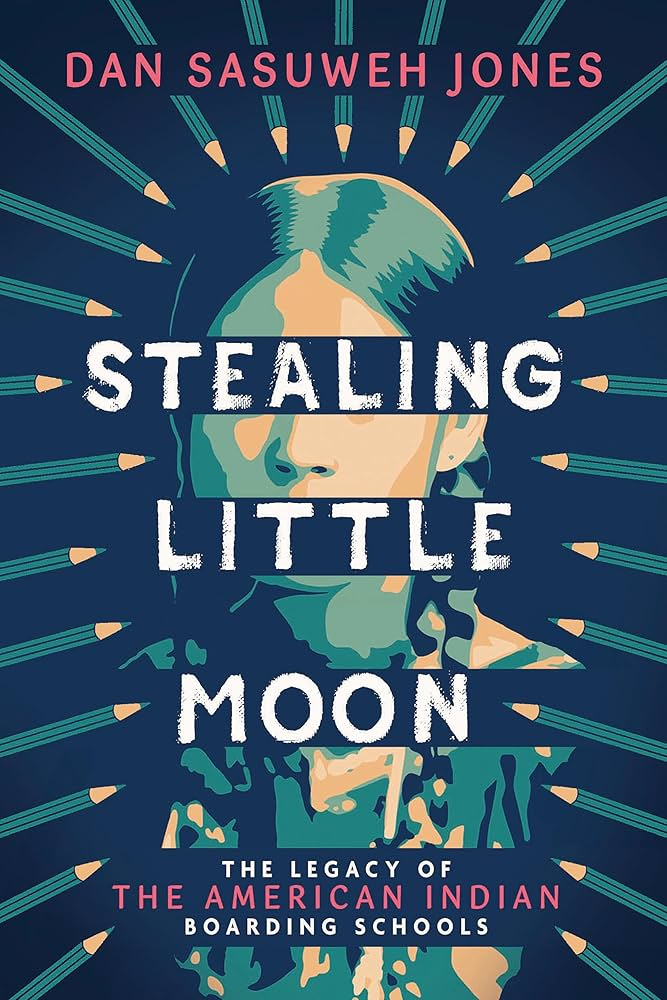
Stealing Little Moon: The Legacy of the American Indian Boarding Schools by Dan SaSuWeh Jones (Scholastic Focus, 304 Pages, grades 5-8). Dan SaSuWeh Jones tells the story of his family’s history with the Chilocco Indian Agricultural (boarding) School, beginning with the forcible capture of his grandmother Little Moon There Are No Stars from the Ponca reservation in 1885 at the age of four. The Chilocco school, run by Quakers, did not condone the physical abuse found at other Indian boarding schools, but it did use strict, military-inspired practices to force the students to assimilate to white culture. Little Moon There Are No Stars, renamed Elizabeth, stayed on for several years after her graduation to work as a school matron, and sent her own daughter there as well. By the time the author’s sister attended the school in the 1950’s, there had been many changes, becoming a vocational school that provided a positive experience for many (although certainly not all) of the students. The 1960’s and 1970’s saw political movements that helped the school and its students embrace their various cultures and languages. While the author didn’t attend the school, he worked there after it closed in 1985 as part of a maintenance crew trying to preserve the buildings and grounds. In his final chapter, he writes of the appropriateness that those buildings have crumbled, leaving the land to its natural state, a metaphor for the enduring nature of Indigenous cultures that have survived so much trauma yet still continue to live on. Includes an introduction by Denise K. Lajimodiere (Turtle Mountain Band, Chippewa), photos throughout the text, and a long list of additional resources.

Reading this book caused me to reflect on how much this blog has educated me and changed my views on American history. I’m not sure I knew anything about Indian boarding schools ten years ago, but I’ve learned from children’s books over the years, and this one added a lot to that knowledge. It’s masterfully written, weaving together a personal family memoir and the history of boarding schools in North America. The author writes unflinchingly about a multitude of abuses and deaths of children at many different schools, while at the same time acknowledging that some students had positive experiences and learned to embrace their heritage, particularly in the later years of the schools’ histories. The final chapters give hope that some of the many, many crimes and trauma committed against indigenous people are finally being at least brought to light and possibly, in some cases, addressed and healed. There are some horrific descriptions of child abuse, so be aware of that element when sharing this book with kids. I hope this book will be considered for awards, especially by the Sibert committee.

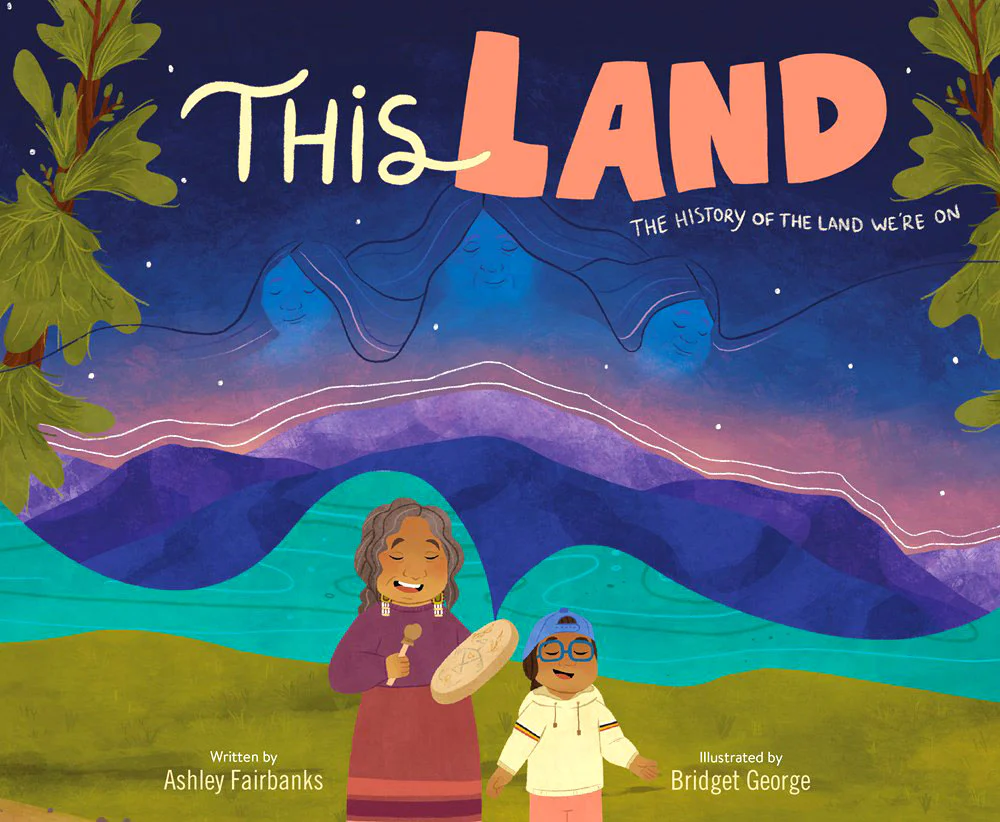
This Land: A History of the Land We’re On by Ashley Fairbanks, illustrated by Bridget George (Crown Books for Young Readers, 40 pages, ages 4-8). “This is my house. I live here with my family,” the narrator begins. “Before us, another family lived here.” Other families lived there, too, but further back in time, a whole community lived on the land before they were forced off by Europeans, something that happened all across the country. The narrator has a friend who is Anishinaabe (like the author and illustrator), and he and his grandma remind the boy of the Indigenous people who once lived there: their food, their songs, and mostly, the way they considered the land to be sacred. Now, as he travels around the U.S. with his family, the boy learns about different Indigenous groups who lived in those places and remembers how they once honored the land they were on. Includes additional information about land acknowledgement, discussion questions, and ideas for learning more about local Native people.

This straightforward story reminds readers to learn about the history of the land they now call home and recall that it once belonged to people who were forced to leave their homes. I really liked how the book acknowledges those who lived on the land of well-known sites like Mount Rushmore and New York City. I read in a review that the title calls to mind the controversy around the song “This Land Is Your Land,” a song that is considered problematic by many Indigenous people. I wasn’t aware of this and was reminded once again of how much I have learned from reading books for this blog.

Election Day

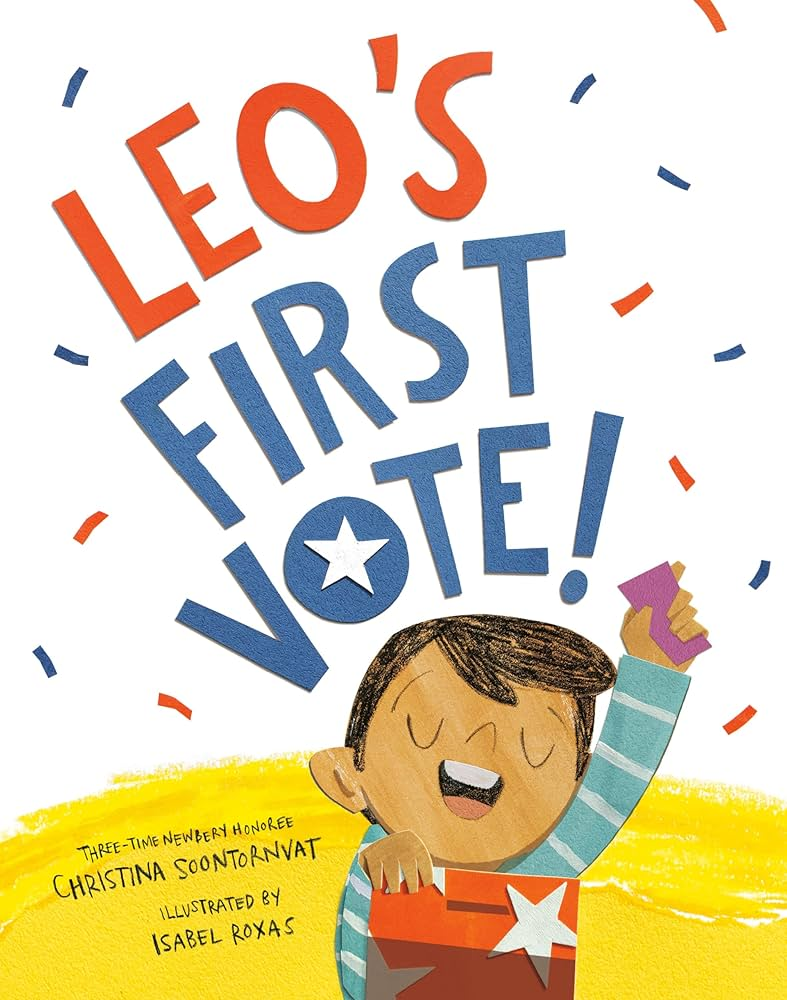
Leo’s First Vote by Christina Soontornvat, illustrated by Isabel Roxas (Knopf Books for Young Readers, 48 pages, ages 4-8). Leo’s excited that his dad has recently become a naturalized U.S. citizen, which means Dad gets to vote in the upcoming presidential election. Leo plans to go with him to the polls, but in the meantime, his class is having a mock presidential election. The kids learn about elections, and at home, Leo watches conventions and debates with his family. Everyone’s talking about the upcoming election, and when Leo hears a cousin say he’s not going to vote (“What’s the point?”), he feels deflated. But when his class’s mock election is determined by one vote, Leo finds his enthusiasm again. The last page shows Dad reading a newspaper with a headline declaring, “Historic turnout!” Also available in a Spanish language edition, ¡El primer voto de Leo!

Lots of facts about elections are woven into Leo’s story, and the excitement around voting will have kids eagerly anticipating Election Day. Personally, I am feeling so jaded about the day (Leo’s cousin really spoke to me) that I almost didn’t write this review, but good for Leo and his dad (and Christina Soontornvat) for having such enthusiasm about it.

Presidential Elections and Other Cool Facts: Understanding How Our Country Picks Its President by Syl Sobel, J.D. (Sourcebooks Explore, 5th edition, 48 pages, grades 2-5). This straightforward introduction to the presidency tells how elections work, as well as giving interesting facts about campaigns, the electoral college, First Ladies, and the order of succession should the President die or become disabled. There’s a list of all the U.S. Presidents, along with the years of their terms, and party affiliations. Includes a glossary, index, and lists of resources.

Rumor has it there’s an updated version of this book, but interlibrary loan has only been able to send me older ones, so I got to travel back to a time when Barack Obama was President, and Ronald Reagan was the oldest person to have been elected President at age 73. It’s a good introduction to the presidency and the election process, and although the writing and illustrations aren’t particularly exciting, it includes the kinds of facts and trivia kids (and adults) enjoy learning.

A pair of award contenders

Barrio Rising: The Protest That Built Chicano Park by María Dolores Águila, illustrated by Magdalena Mora (Dial Books, 40 pages, grades 1-4). The narrator lives in a neighborhood called Barrio Logan, one of San Diego’s oldest Chicano neighborhoods, where residents have been looking forward to finally getting the park they’ve been promised for years. When they find out that the new construction being done is for a police station, they’ve had enough. Neighbors band together to take over the land and protest, despite orders from the police to disperse. For twelve days, the crowd grows, drawing protesters from nearby barrios. Finally, the city council holds a meeting, led by Leon Williams, San Diego’s first Black councilman, and announces they’ve changed the plan from a police station to a park. Everyone celebrates and pitches in to create Chicano Park. Includes additional information about the park, which is now a National Historic Landmark. Also available in a Spanish language edition, El barrio se levanta: La protesta que construyó el Parque Chicano.

Keep this book in mind when Hispanic Heritage kicks off on September 15. The story about this 1970 event is inspiring, and the illustrations juxtapose birds, butterflies, and purple flowers with the gritty urban setting. I’d love to see it get some Belpré Award recognition for either the story or the illustrations.

Before the Ships: The Birth of Black Excellence by Maisha Oso, illustrated by Candice Bradley (Orchard Books, 40 pages, grades K-5). Instead of starting with the slave trade, as is often the case with Black history in America, this book begins “before the ships” when civilizations flourished across Africa. There were kings and queens, doctors, scribes, artisans, and merchants. Impressive buildings were created, as were stories and music, while scientists and mathematicians studied the world. A wordless page showing a slave ship sailing through the darkness divides the book between the past and the present, “after the ships.” The descendants of those Africans now live different lives, but they are still warriors, scholars, and leaders, or, as the final page says, “We are the light.” Includes an author’s note telling how her time in Africa showed her the cultures of Ethiopia, South Africa, Kenya, and Nigeria.

I’ll be surprised if this doesn’t get a Coretta Scott King award or honor. I love the focus, all too rare, on the civilizations that existed before African people were captured and sold into slavery, and I will definitely be sharing this book with teachers at my school. I would have enjoyed even more back matter, including a map or two.

Finding their voices

Ida B. Wells Marches for the Vote by Dinah Johnson, illustrated by Jerry Jordan (Christy Ottaviano Books, 48 pages, grades 1-5). Although this book tells the story of Ida B. Wells’s life, starting with her birth in Mississippi and continuing with some of her activism in Tennessee and Chicago, the main event is a march in Washington DC in 1913 for women’s right to vote. Many of the organizers felt that this march should be for white women only, or at least segregated (Alice Paul is specifically mentioned as expressing that view). Despite these protests and the suggestions that Ida march at the back of the line with her sorority, she made her way to the Illinois delegation and joined the white women in that group to march for their right to vote. Includes an author’s note, photos, a timeline of Ida B. Wells-Barnett’s life, and a list of sources.

The author does a masterful job of giving readers an overview of Ida’s life but focusing on one specific event that demonstrates the way she stood up for herself and other Black people. The back matter adds a lot and makes this a great resource for research.

Ode to Grapefruit: How James Earl Jones Found His Voice by Kari Lavelle, illustrated by Bryan Collier (Knopf Books for Young Readers, 48 pages, grades 1-5). Young James loved words, especially poetry, but when asked to read in front of the class or to say hello to a visitor at home, the words stuck in his throat. He finally stopped talking and just listened, paying close attention to his teachers, especially Professor Crouch who taught him poetry. James recited the poetry when he was alone, and sometimes he tried writing his own, but sharing it with the class was out of the question for him. One day, a shipment of grapefruit to his house inspired him to write a poem, and with Professor Crouch’s encouragement, James read “Ode to Grapefruit” to the class. This recitation opened the door for him, and he began performing on stage, as a debater and an actor, and eventually the distinctive voice of James Earl Jones became known around the world. Includes notes from the author (a speech pathologist) and the illustrator, as well as information and resources on stuttering and a list of sources.

This would make an excellent read-aloud, since the text is pretty short, and James’s issues are something most kids would relate to. I did wonder about the illustrations with all the kids having a slice of grapefruit in their mouths–did James hand them out, or was he just imagining them? But it would be fun to reveal at the end that the story is about the man who became the voice of both Darth Vader and The Lion King’s Mufasa.

Seeker of Truth: Kailash Satyarthi’s Fight to End Child Labor by Srividhya Venkat, illustrated by Danica da Silva Pereira (little bee books, 40 pages, grades 2-5). As a child in India, Kailash Satyarthi was inspired by the story of how a hummingbird stopped a forest fire by carrying drops of water in its beak. When he saw a boy working as a cobbler by the side of the road, Kailash wondered how he could help him go to school. Like the hummingbird, Kailash started with small deeds to make a difference–raising money and collecting books to help kids who couldn’t afford to go to school. As an adult, Kailash started his career as a teacher, but he wanted to do more. He quit his job and began rescue missions to free children forced to work in factories, mines, and quarries. His work gained international recognition, including the 2014 Nobel Peace Prize, which he shared with Malala Yousafzi, and resulted in worldwide changes to child labor laws. Includes an author’s note with additional information and a couple of photos, and a list for further reading.

This excellent picture book biography tells the story of Kailash Satyarthi’s life in a way that will easily be understandable to kids and will show them the power of a single individual to make a difference in the world. I liked that it tells the story of his entire life, so the reader can see how his ideas evolved, yet keeps the text brief enough for a good read-aloud.

Labor pains

Shift Happens: The History of Labor in the United States by J. Albert Mann (HarperCollins, 416 pages, grades 8-12). Low wages, long hours, wealth inequality, immigrants accused of “stealing” jobs: issues workers face today have in fact been around since the earliest days of United States history. This breezy but thoroughly researched account tells the painful story of American labor, in which actions for improved conditions have all too often been met with resistance, violence, and even murder. There are occasional hard-won victories for workers, and the twentieth century brought substantial legislation and improvements for labor–until they were eroded during the backlash of the Reagan years and beyond. The media is also implicated here for telling stories that favor capitalists and demonize labor organizers and unions. Teens looking for the truth about labor’s history will find plenty to think about, presented with short chapters and irreverent humor that will keep them engaged.

It’s taken me weeks to work my way through this book, but it was well worth it, with fascinating and disheartening stories that make it a good companion to Lies My Teacher Told Me. I was hoping to be able to recommend this for younger kids, but there’s definitely some language that might raise a few middle school eyebrows (starting with the title), and I think that, and the complexity of the topic make it more appropriate for high school.

For a more in-depth look at a single incident in U.S. labor history, try The Mine Wars: The Bloody Fight for Workers’ Rights in the West Virginia Coalfields by Steve Watkins (Bloomsbury Children’s Books, 272 pages, grades 6-10). I was too saturated on labor history from Mann’s book to read this one, but it looks like it includes many of the elements I read about: workers paid paltry wages in scrip for long hours of dangerous and back-breaking labor, and a strike that ultimately resulted in several killings. This particular story takes place in West Virginia in the early 1920’s, an era when it was particularly dangerous to be part of a union. This might be a better choice for a middle school introduction to labor history and will potentially appeal to fans of Steve Sheinkin.

Celebrating Asian American and Pacific Islander Heritage Month

Made In Asian America: A History for Young People by Erika Lee and Christina Soontornvat (Quill Tree Books, 320 pages, grades 5-8. This young readers’ adaptation of Erika Lee’s The Making of Asian America (2015) begins with an introduction that details the absence of Asian American history in most schools and some of the kids who have worked to bring attention to that. The main narrative covers American history from Columbus to Covid, relating the stories of people who immigrated to the U.S. from many Asian countries, including China, Japan, Korea, Vietnam, India, the Philippines, and more. Different people had different reasons for coming, depending on their country’s history and political situation, but almost all experienced racism, discrimination, and broken promises when they arrived. Like many other immigrants, they worked hard doing backbreaking labor to survive and to try to build a better future for their children. In more recent times, Asian Americans have become known as the “model minority,” a label which carries its own baggage. The Covid era showed that racism still simmers right beneath the surface of American society, as it exploded with the news that the virus originated in China. Asian Americans have a history of fighting for civil rights, both for themselves and for other groups experiencing discrimination, and that fight continues today, as explained in the last chapter. Includes notes from both authors as well as almost 30 pages of source notes and an index.

I learned so much from this book, which really drove home the point that Asian Americans are largely missing from American history. The writing is clear and engaging, and many of the profiles describe ordinary people whose stories are often both heartbreaking and inspiring. It was fascinating to get a brief history of so many different countries and to learn why different groups immigrated to the United States.

Magnolia Wu Unfolds It All by Chanel Miller (Philomel Books, 160 pages, grades 2-5). While Magnolia is looking forward to turning 10, she’s less excited about the summer ahead, which will mostly be spent at her family’s Bing Qi Ling Laundromat. When her mom’s friend moves to New York City from California, she brings along her daughter Iris, who is just Magnolia’s age. At first the girls feel strange around each other, but soon they bond over the sock board, where Magnolia has displayed all the stray socks that have been left behind at the laundromat. They decide to canvass the neighborhood to find each sock’s owners, using clues from the socks themselves to help them. As they solve each mystery, the girls learn more about their neighbors and hear some interesting stories about Magnolia’s parents, who turn out to have a fun and adventurous side that Magnolia hasn’t been aware of. A major fight threatens to destroy their new friendship, but Magnolia finds a way to repair things and, in the process, gains a deeper understanding of her new best friend.

With a 10-year-old protagonist, a larger font, and plenty of illustrations, this would make a good introductory chapter book. It was interesting to read this right after finishing Made in Asian America, as Magnolia’s and Iris’s families, from China and Vietnam respectively, are working hard to give their kids a better life in America and experience racism at various points in the story. Their resilience and close family ties make this a warm and engaging story with a fun and quirky cast of characters.

Lies My Teacher Told Me

Lies My Teacher Told Me: A Graphic Adaptation by James W. Loewen, adapted and illustrated by Nate Powell (The New Press, 272 pages, grades 9-12). James W. Loewen’s 1995 book (updated in 2007 and 2018) examined twelve high school American history textbooks and how they present the history of the United States. His conclusions are fascinating, showing how the narrative presents a patriotic view of steady progress over time, with Americans defending freedom and democracy around the world. Racism, genocides, corporate greed, and government secrecy are pretty much excluded from this version of history. He also investigated how and why textbooks are written like this, which turns out to be in large part because the committees that adopt the books for their states demand it. Loewen concludes by emphasizing the importance of telling the truth to students, presenting American history in a way that makes them think critically about events from the past and how they shape the future, in order to help them become active and engaged citizens.

I’ve heard of this book but never read it, and I am grateful for Nate Powell’s amazing graphic adaptation (Powell worked with John Lewis to create his March trilogy). I found it compelling reading, with so much of the history relevant to today’s current events at home and abroad. I can usually zip through graphic novels in a few days, but this took me quite a bit longer, with text-heavy pages and lots of fascinating ideas to consider. There were times that I wish I knew more about the topics being discussed, and many readers will want to consult the original work to get a fuller picture.