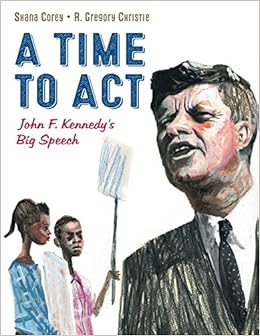
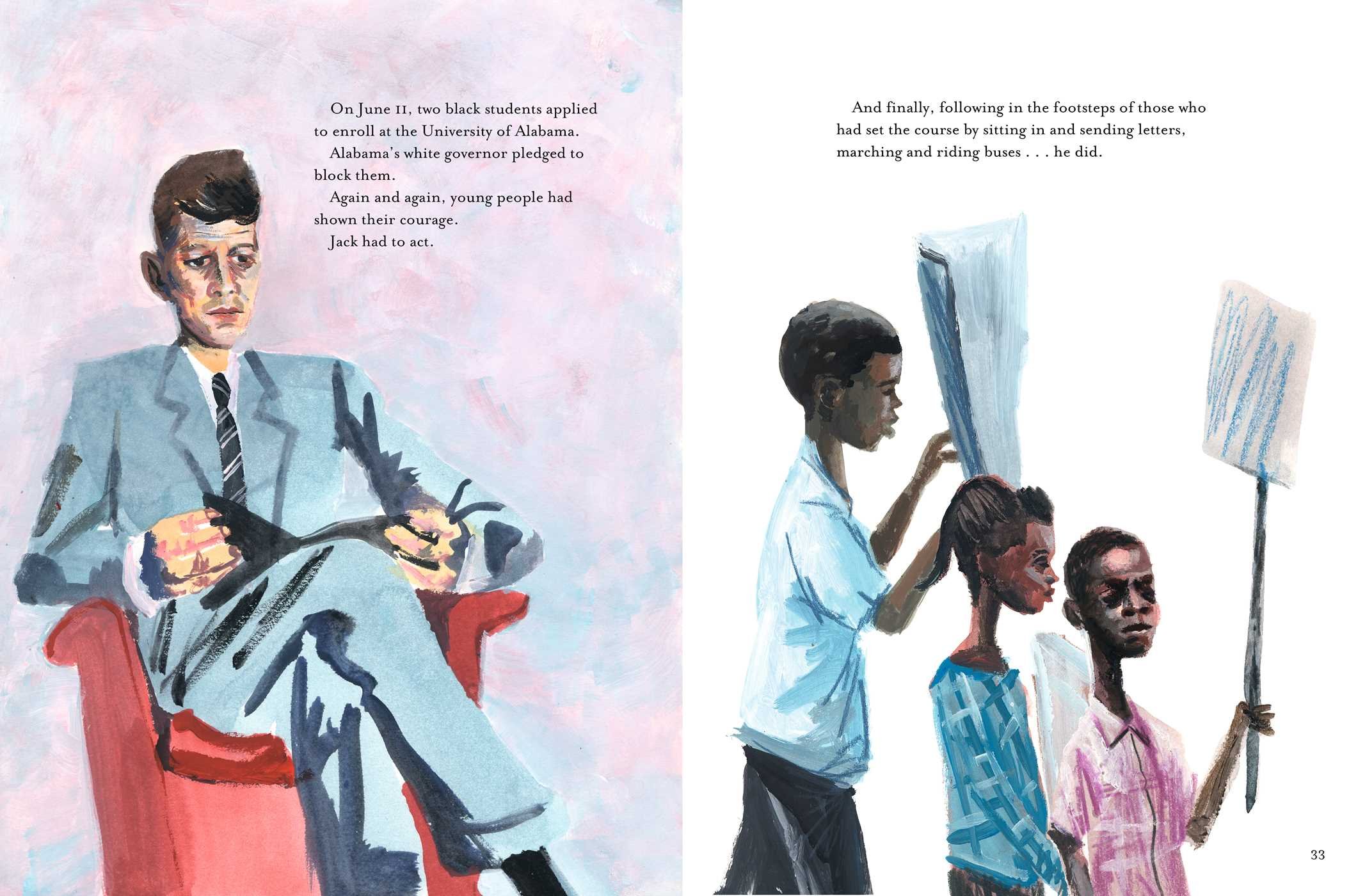
A Time to Act: John F. Kennedy’s Big Speech by Shana Corey, Illustrated by R. Gregory Christie

Published by NorthSouth Books

Summary:  Young John F. Kennedy didn’t always do well in school, and he was often sick.  But as he grew up and studied history, he became interested in the meaning of courage and how he could help others in the world. When his older brother Joe died in World War II, Jack became the focus of his family’s political ambitions.  When he was elected President, he quickly took action in a number of areas, like establishing the Peace Corps and starting the space race.  But he was less decisive on civil rights.  African-American leaders like Martin Luther King, Jr. and Jackie Robinson pressured him to act more forcefully, but it wasn’t until he saw young people around the country marching and going to jail that he found the courage to speak up.  The “big speech” of the title is his civil rights address, given June 11, 1963, that ultimately led to the 1964 Civil Rights Act.  Readers are encouraged at the end of the book to take action like those who inspired JFK to make this famous speech.  An author’s note gives more background; there are also thumbnail profiles of other famous people in the book and additional resources.  56 pages; grades 3-6.

Pros:  An inspirational story of the many accomplishments of John F. Kennedy, as well as a look at an area he where he was slow to act, and how others’ deeds finally led him to do the right thing.  The bold paintings complement the bold actions of the narrative.

Cons:  For a picture book, there’s a lot of content for readers to understand.

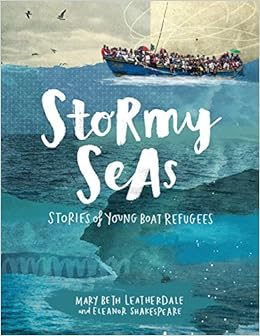
Stormy Seas: Stories of Young Boat Refugees by Mary Beth Leatherdale, illustrated by Eleanor Shakespeare

Published by Annick Press

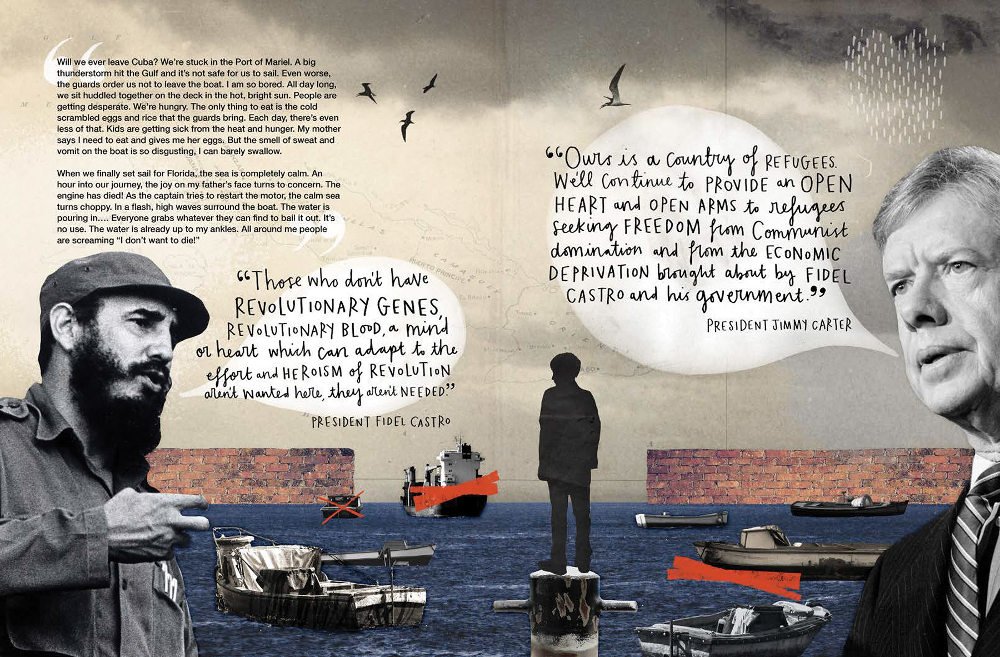
Summary:  Sixty five million people worldwide have been forced to leave their homes due to war, persecution, or natural disaster. Many of them, including a large number of children, are seeking refuge in countries in Europe and North America.  This book profiles five refugee kids from Germany, Vietnam, Cuba, Afghanistan, and Ivory Coast over the last 60 years.  They have undertaken dangerous journeys by boat, been attacked by pirates, been turned back from their original destinations, and have often arrived in an unknown place with little more than the clothes on their backs.  Yet each one has worked hard and become a productive citizen of his or her new country.  Each profile includes the narrative of the subject, much of it in his or her own words, a timeline of the journey, and a “What happened to?” section that tells the happy ending to each story.  Includes timelines and a list of resources.  64 pages; grades 4-7.

Pros:  Readers will empathize with the refugees’ stories, and by extension, the plight of refugees everywhere.  Fans of the “I Survived” series will find these suspenseful real-life survival tales riveting reading.  The collage illustrations add interest.

Cons:  There are some disturbing details, like the 14-year-old girls from Vietnam who are taken off the boat by marauding pirates.

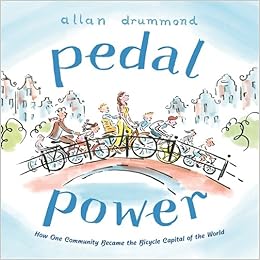
Pedal Power: How One Community Became the Bicycle Capital of the World by Allen Drummond

Published by Farrar, Straus, and Giroux

Summary:  Forty years ago, the Dutch city of Amsterdam had streets clogged with traffic, dangerous to anyone attempting to ride a bicycle.  How did it become the capital city of bicyclists, home to more bikes than cars?  Back in the 1970’s a young mother named Maartje Rutten watched beautiful old buildings being destroyed to make room for more highways, roads that were dangerous for her and friends who wanted to bicycle with their kids.  She began organizing protests, blocking the roads with demonstrations and even parties.  The fun turned serious when she met Vic Langenhoff, a reporter whose young daughter was killed by a car while biking to school.  The two joined forces, and their steady pressure on the government resulted in fewer cars, more bicycles, and safer streets.  Amsterdam has served as a model for making streets bike-friendly in other cities around the world like Tokyo and New York.  An author’s note tells more about Maartje Rutten and her campaign and gives a brief bibliography.  Great cyclists from around the world are shown on the endpapers.  40 pages; ages 4-10.

Pros:  Just in time for Earth Day, another inspiring environmental story from Allen Drummond, nicely illustrated with his cartoon-style watercolors.

Cons:  Kids may have to be led to this book, as the subject matter might not grab them right away.

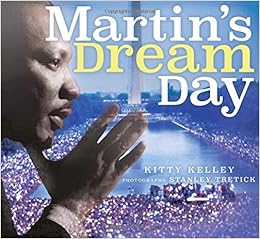
Martin’s Dream Day by Kitty Kelley, photographs by Stanley Tretick

Published by Atheneum Books for Young Readers


Summary:  Written to highlight photos by Look photographer and JFK favorite Stanley Tretick, this book focuses on Martin Luther King, Jr.’s “I Have a Dream” speech.  King is showed on the first page, nervous as he prepares to address 250,000 people at the Lincoln Memorial.  From there, the text and photos go back to explain King’s role in Civil Rights movement.  He is shown with John F. Kennedy, along with quotes from Kennedy urging Congress to pass his civil rights bill.  When Congress did nothing, King began to organize the March on Washington.  Photos are shown of individuals and crowds at the march, culminating with quotes from Martin Luther King’s speech.  On the last page, the reader learns of the passage of the Civil Rights Act of 1964 and the Voting Rights Act of 1965. Includes an author’s note and three websites with additional information.  40 pages; grades 1-5.

Pros:  A good introduction Martin Luther King, Jr.’s most important speech and the history behind it.  Seeing the author was Kitty Kelley–yes, that Kitty Kelley–I kept looking for gossipy passages about some King or Kennedy scandal, but don’t worry, you can safely read this to your first-grader.  The many photos bring an immediacy to the story and provide faces of real people instead of just the huge crowds.

Cons:  There could have been a lot more additional resources given.

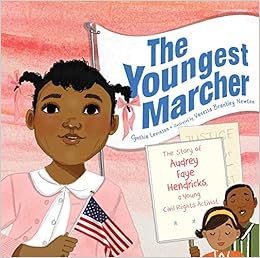
The Youngest Marcher: The Story of Audrey Faye Hendricks, A Young Civil Rights Activist by Cynthia Levinson, illustrated by Vanessa Brantley Newton

Published by Atheneum Books for Young Readers

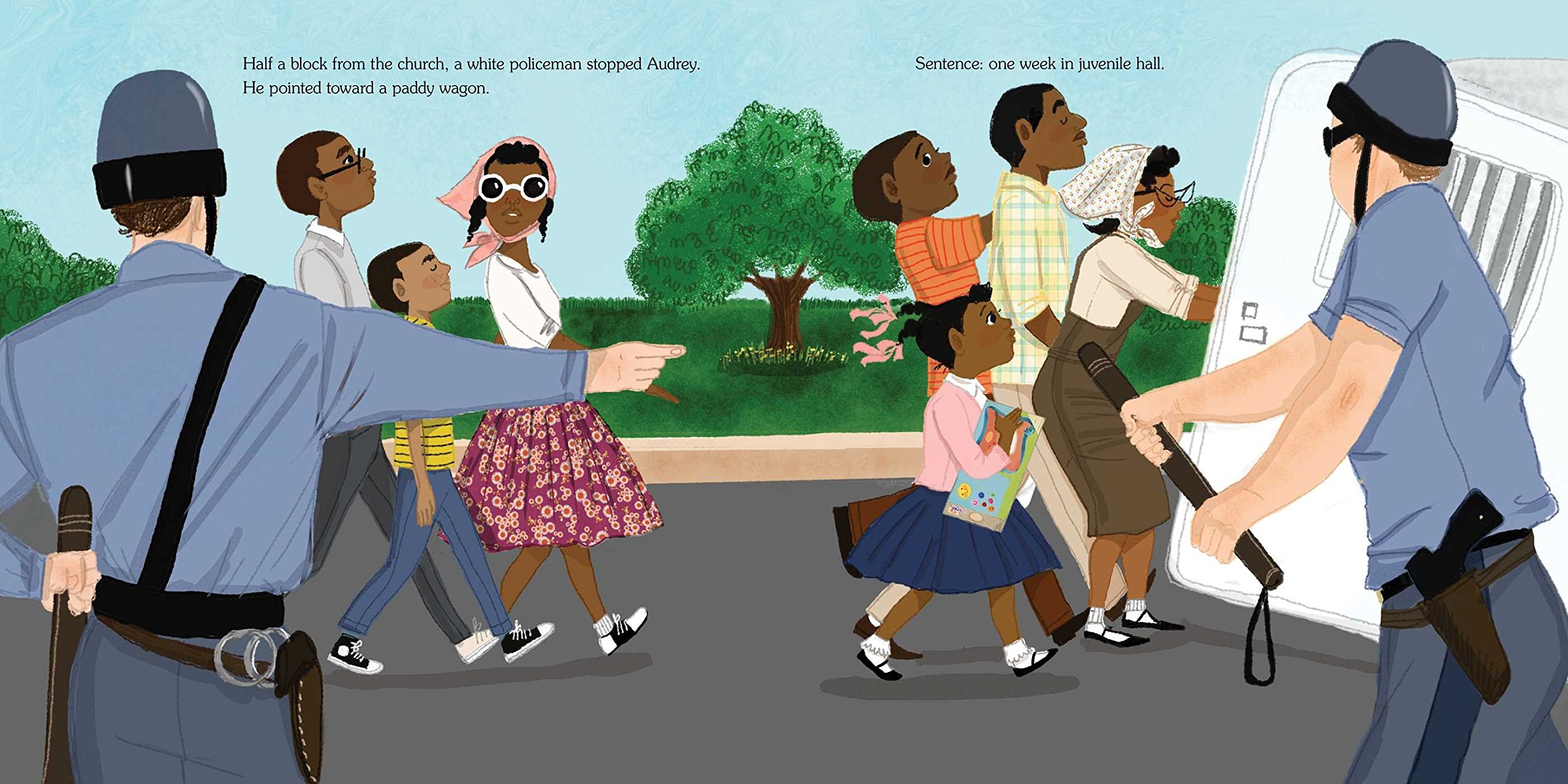
Summary:  Growing up in Birmingham, Alabama, nine-year-old Audrey Hendricks heard talk of civil rights marches from dinner guests Martin Luther King, Jr., Frederick Shuttlesworth, and James Bevel.  Audrey was eager to get involved, feeling the unfairness of having to use a dirty water fountain, getting worn-out books at school, and riding the freight elevator at the department store.  When Jim Bevel called on young people to “fill the jails” by protesting, Audrey eagerly signed up.  The youngest member of the march, she was quickly arrested with other kids and teens, and put in jail, where she stayed for a week.  With bad food, an uncomfortable bed, and mean guards, it was a tough time for Audrey, but she was proud when, on the fifth day, she learned there was no more room in the jail.  Their mission was accomplished, Audrey and the others were released, and two months later, Birmingham removed segregation laws from the books. Includes an author’s note giving more information about Audre, a timeline, and a recipe for the “hot rolls baptized with butter” that Audrey enjoyed for her first meal out of jail.  40 pages; grades 1-5.

Pros:  Cynthia Levinson draws on her research from We’ve Got a Job, her longer book on the Birmingham Children’s March, to tell this fascinating story for younger readers.  Kids will connect with Audrey and be inspired by her courage and positive attitude.

Cons: It’s pretty unbelievable that a nine-year-old spent a week in jail in 20th-century America.

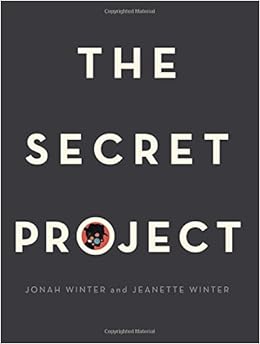
The Secret Project by Jonah Winter, illustrated by Jeanette Winter

Published by Beach Lane Books

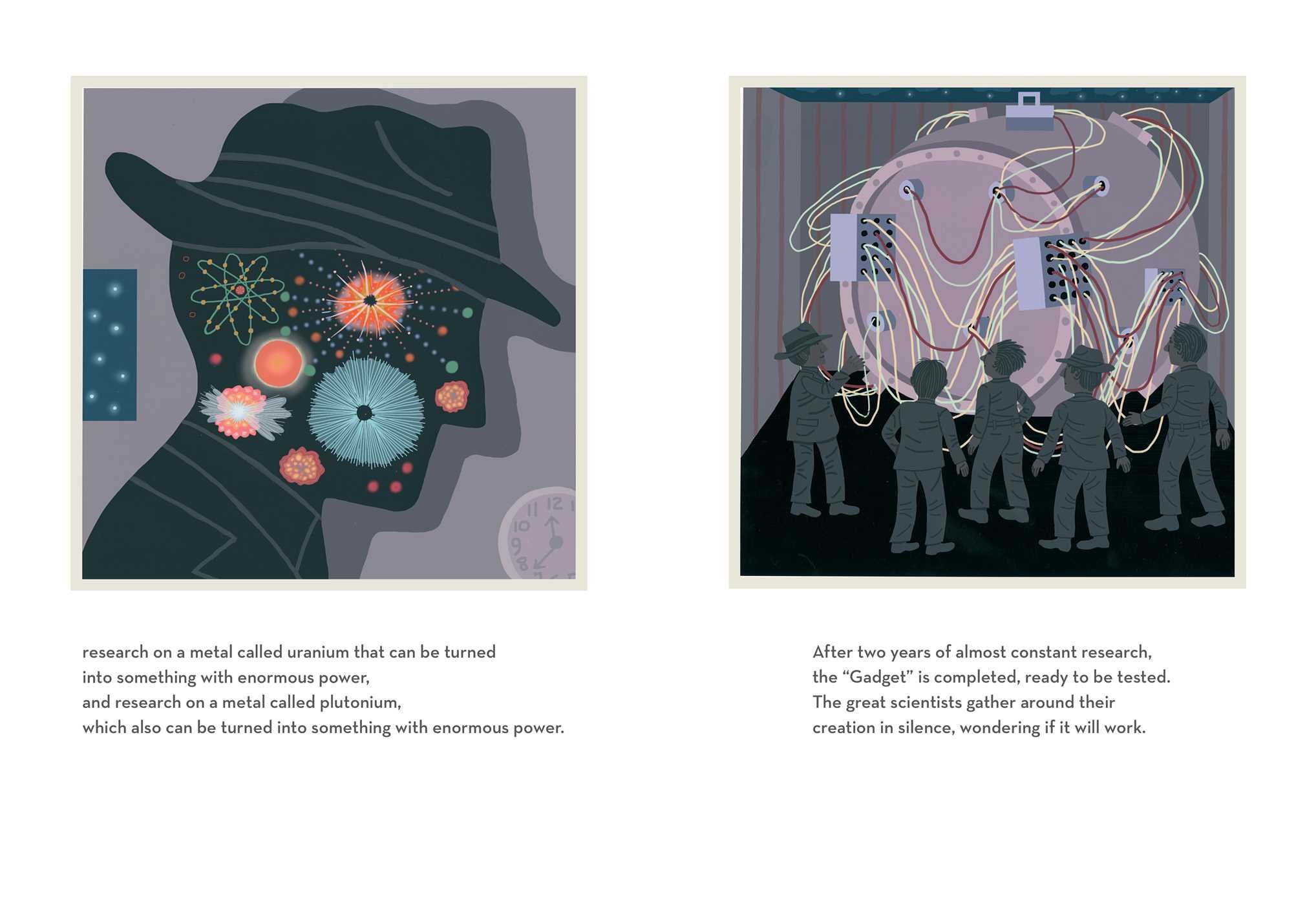
Summary:  A peaceful boys’ school in the New Mexican desert is suddenly ordered closed by the U.S. government.  Scientists arrive from all over the country to work on a top-secret project known simply as “The Gadget”.  Other workers don’t know what the scientists are working on, and the outside world has no idea their project even exists.  The scientists work long at hard, trying to figure out how to split atoms from uranium and plutonium.  At last, The Gadget is ready.  It’s placed on a stand in the middle of the desert, then the scientists drive far away.  The countdown begins…10, 9, 8, 7, 6, 5, 4, 3, 2, 1.  A huge fireball erupts, turning into a gigantic orange mushroom cloud .  The text ends with  two blank black pages.  Includes an author’s note giving more history of the Manhattan Project, and a list for further reading.  40 pages; grades 2-5.

Pros:  Mother-son team Jeanette and Jonah Winter have created a remarkable book, giving a brief history of the Manhattan Project in a way that is accessible for elementary school kids.  The illustrations convey the air of secrecy about the project, showing the scientists as black shadows throughout the story.  

Cons:  All the scientists portrayed are men. In reality, quite a few women scientists and mathematicians worked on the Manhattan Project.

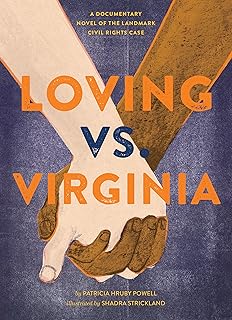
Loving Vs. Virginia: A Documentary Novel of the Landmark Civil Rights Case by Patricia Hruby Powell, illustrated by Shadra Strickland

Published by Chronicle Books

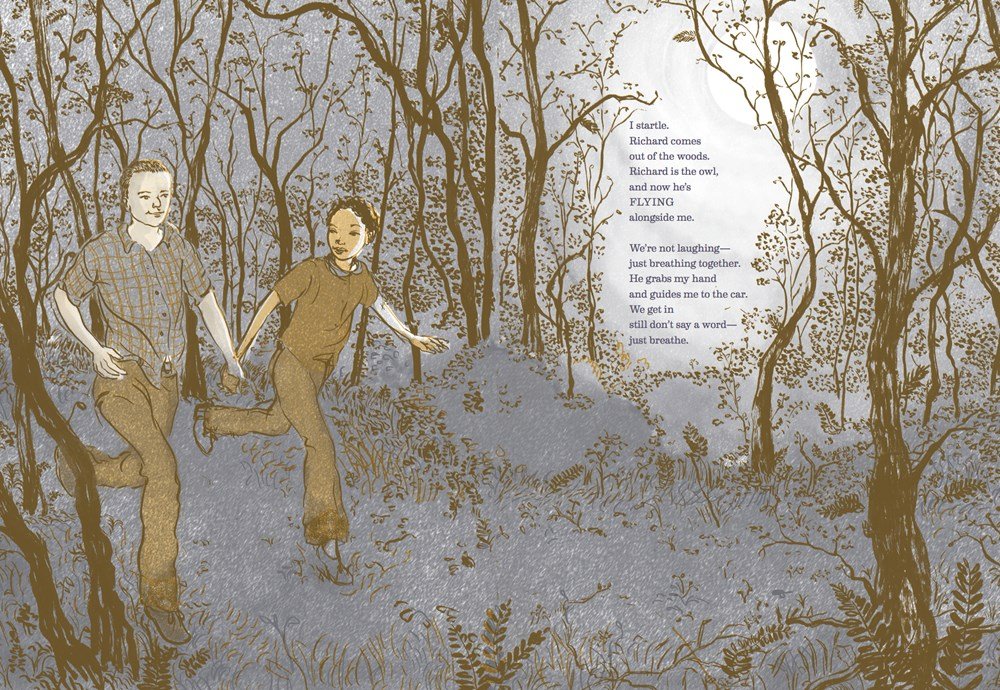
Summary: This verse novel, related in the alternating voices of Mildred Jeter and Richard Loving, tells the story behind the Supreme Court case of 1967, which ruled that interracial marriage is legal.  Mildred, of African and Native American descent and considered “colored”, and Richard, who was white, grew up as neighbors in a close-knit, integrated Virginia community.  They fell in love, had a child, and got married.  Shortly after the wedding, the local sheriff barged into their home one night, arrested them both, and sent them to jail.  They pleaded guilty and were given a suspended sentence.   Forced out of Virginia, they moved to Washington, D.C., where both were miserable.  Over the course of the next nine years, their case was appealed, finally going all the way to the Supreme Court.  The decision was overturned on June 12, 1967, and at last, they could move back near their families to raise their three children.  The story is interspersed with text and photos describing the history of the Civil Rights Movement during the same time period as the case.  A final note tells what happened to the Lovings (sadly, he was killed and she was blinded in one eye by a drunk driver in 1975); also includes a timeline and an extensive bibliography.  260 pages; grades 7-up (some PG language).

Pros:  A fascinating, timely book.  Kids may have seen the 2016 movie Loving about this case.  The first person narration makes it a personal story.

Cons:  Although the book has many beautiful illustrations, I would have liked to have seen some photos.

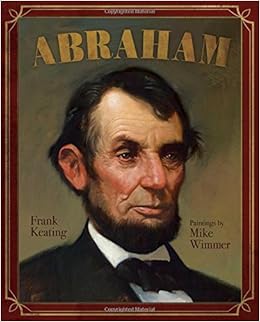
Abraham by Frank Keating, paintings by Mike Wimmer

Published by Simon & Schuster/Paula Wiseman Books  


Summary:  Abraham Lincoln narrates the story of his life, beginning with his birth in a one-room log cabin.  He tells of growing up in poverty, reading every book he could get his hands on, working at many different jobs until he was able to study law in Springfield, Illinois.  From there, it’s a pretty quick hop to becoming involved in the fight against slavery, then President of the United States during the Civil War.  The book ends with the Union’s victory, with no mention made of Lincoln’s assassination.  The Gettysburg Address and a brief bibliography are included at the end.  32 pages; grades 1-4.

Pros:  Told in a folksy voice interspersed with some of Lincoln’s own quotes, this would be a good introduction for primary grades.  The paintings add realistic details.

Cons:  When George, Theodore, and Abraham have been published in the “Mount Rushmore Presidential series”, there’s not much element of surprise about what the next book will be.

A Kids’ Guide to America’s First Ladies by Kathleen Krull, illustrated by Anna DiVito


Published by HarperCollins

Summary:  Which First Lady raised silkworms in the White House?  Who crocheted 3,500 pairs of slippers while her husband was President?  Kathleen Krull profiles each U.S. President’s wife, including Melania Trump, in 20 chapters.  Some, like Martha Washington, Jackie Kennedy, and Michelle Obama, get their own chapters, while others are put in groups of two to five.  Biographical information is given, along with each woman’s contributions to her husband’s administration.  There are boxes of interesting informational tidbits through each chapter, as well as a “Women Break Through” section that shows what was going on for women at the time.  Two drawings of each First Lady are given, one a portrait-style head shot and the other showing her in the White House.  A final chapter summarizes the role of the First Lady and how it has changed over time.  Includes a list of selected resources and an pretty extensive index. 256 pages; grades 3-7.

Pros:  I read this fascinating book in a single day.  The chapters about lesser-known First Ladies are particularly interesting.  Krull’s writing style is so engaging, the pages just fly by.

Cons:  It seemed odd that there was no mention of Hillary Clinton running for President, given that Melania Trump was profiled.  

One Last Word: Wisdom from the Harlem Renaissance by Nikki Grimes

Published by Bloomsbury USA Children’s

Summary:  Poet Nikki Grimes combines her own works with those of various poets from the Harlem Renaissance.  She uses the “Golden Shovel” method, in which she takes a line from another poet’s work, and uses each word from that line as the final word in every line of her own poem.  Her works focus on kids, particularly those of color, and have inspirational messages about hard work, hope, and being yourself.  The poems are illustrated by a variety of artists, including many children’s book illustrators such as Christopher Myers, Sean Qualls, and Javaka Steptoe.  An introduction gives a brief history of the Harlem Renaissance; back matter includes biographies of the poets and artists, sources, and an index.  128 pages; grades 5-9.

Pros:  Nikki Grimes was just given the Laura Ingalls Wilder award for making a lasting contribution to children’s literature, and this book continues in that vein.  Her own poetry is beautiful and inspiring, and placing it side-by-side with the Harlem Renaissance poets adds historical depth and richness.  The beautiful artwork completes the poetry.

Cons: Additional resources to learn more about the Harlem Renaissance would have been useful.