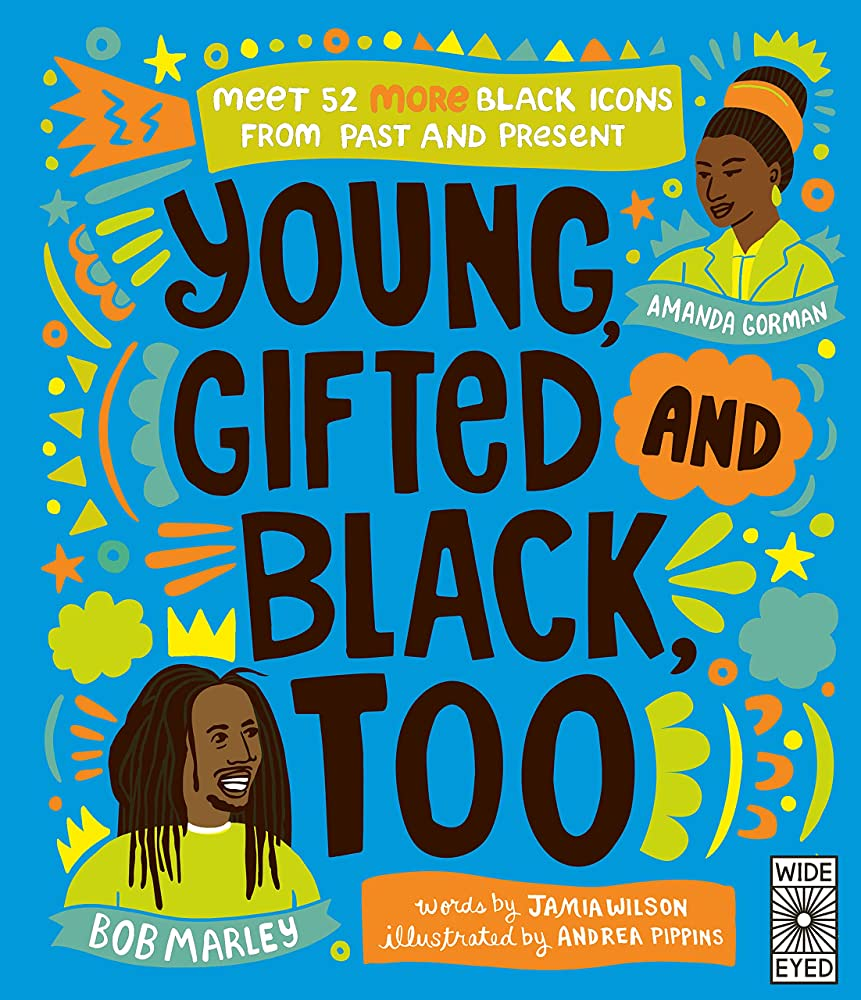
Young, Gifted, and Black, Too: Meet 52 More Black Icons from Past and Present by Jamia Wilson, illustrated by Andrea Pippins

Published by Wide Eyed Editions

Summary:  In this second volume of the series, profiles of 52 Black people from all over the world are arranged chronologically, beginning with Spanish poet Juan Latino (c. 1518-c. 1594) and concluding with Flint, Michigan activist Mari Copeny (2007-present).  Each subject gets several paragraphs of text and a folk art-style illustration that includes objects that show the subject’s area of expertise.  The introduction encourages readers to think about what contributions they want to make to the world.  Includes a glossary.  64 pages; grades 2-6.

Pros:  An excellent addition to Black history collections, with plenty of recognizable names like Thurgood Marshall and Coretta Scott King but lots of lesser-known ones that deserve to have some light shone on them.  There’s lots of international representation and the illustrations do a nice job celebrating the subjects’ achievements.

Cons:  The information is necessarily short, so additional resources will be needed for more in-depth research.

How Do You Spell Unfair? MacNolia Cox and the National Spelling Bee by Carole Boston Weatherford, illustrated by Frank Morrison

Published by Candlewick

Summary:  MacNolia Cox loved reading, studying, and spelling, which paid off when she won her eighth-grade spelling bee in 1936.  This victory qualified her for the Akron, Ohio all-city bee, where her correct spelling of “voluble” made her the first African American winner of that contest and sent her to the National Spelling Bee in Washington, D.C.  After weeks of preparation, fundraising, and a bit of celebrity, MacNolia and her mother were on their way to Washington.  As they headed south, they had to move to the Blacks-only car, and in D.C., they stayed with a local doctor, since they were barred from the all-white hotel.  She and another Black girl had to enter the spelling bee stage from the back door and sit at a separate table from the other contestants.  Despite the discrimination, MacNolia succeeded, advancing to the final five before getting out on the word “nemesis” (which was questioned, since it hadn’t been on the official list).  She didn’t win, but MacNolia helped level the playing field for spellers of the future, including Zaila Avant-garde, who in 2021 became the first African American to win the Scripps National Spelling Bee.  Includes an epilogue with additional information about the fight to end racism and discrimination in spelling bees.  40 pages; grades 2-5.

Pros:  A fascinating story about a courageous girl who persevered to follow her dreams.  The text cleverly asks readers to spell words appropriate to the story, and Frank Morrison’s distinctive illustrations portray MacNolia and her family with dignity and grace.

Cons:  I was sorry to read in the epilogue that MacNolia couldn’t afford college and worked as a maid for a doctor.

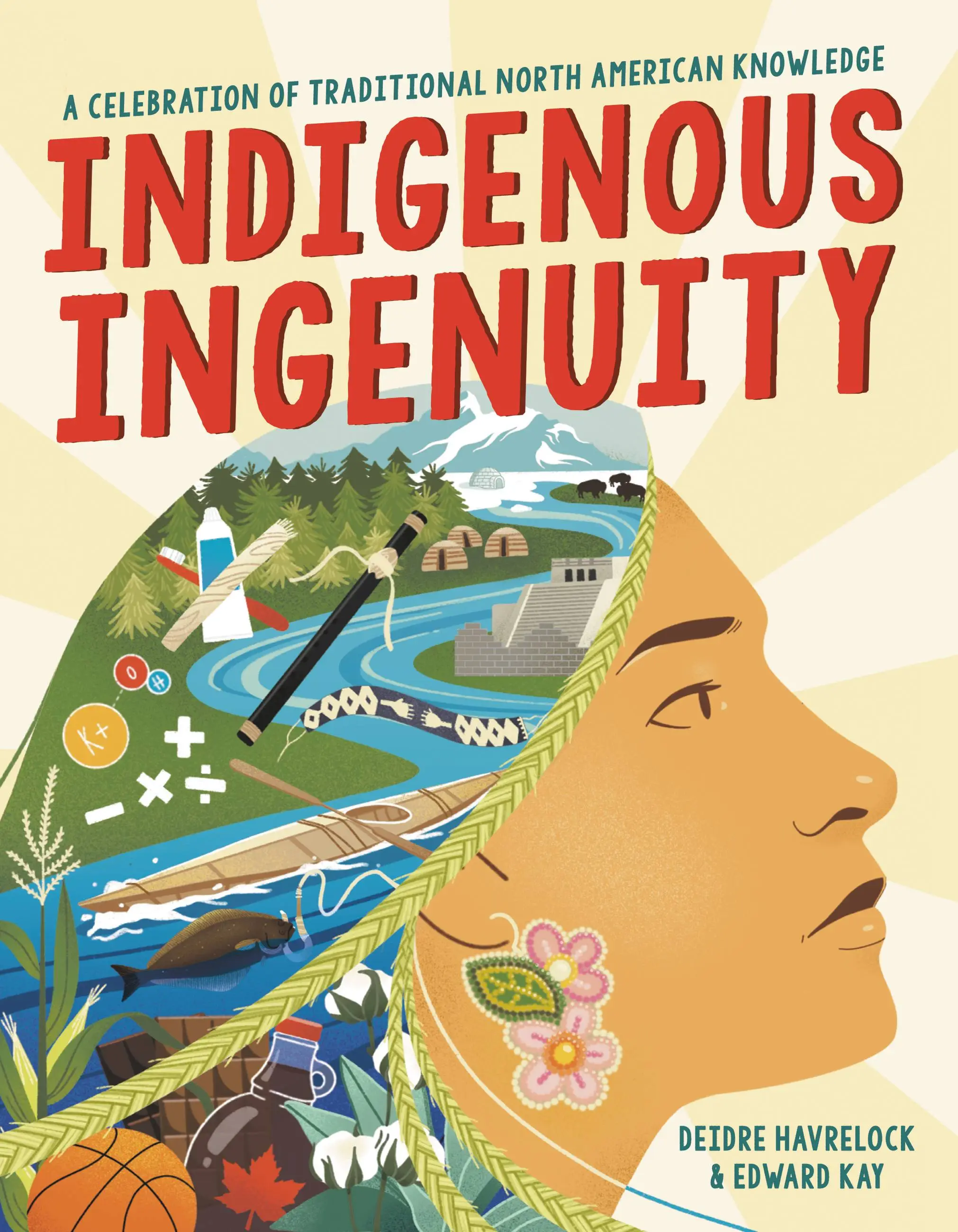
Indigenous Ingenuity: A Celebration of Traditional North American Knowledge by Deidre Havrelock and Edward Kay

Published by Christy Ottaviano Books

Summary:  Before making contact with Europeans, indigenous people had technologies to assist them with communication, transportation, agriculture, health care, and more.  While these innovations were designed to help people, they were created in ways that didn’t hurt the environment.  As their lands were increasingly taken over, they often hid these technologies, but today, as the author says, they are often hidden in plain sight: when we eat maple sugar, paddle a kayak, or marvel at astronomical wonders.  The text is divided into eleven chapters, with a final chapter that looks at how indigenous knowledge can help create a sustainable future.  Each chapter has activities to let kids try some samples of the technologies written about.  Includes a map showing cultural areas and peoples referenced, a glossary, a list of contemporary indigenous science organizations, a bibliography, source notes, and an index.  272 pages; grades 4-8.

Pros:  This meticulously researched, engagingly written book provides a fascinating look at indigenous technology, some of which we can see around us today.  Anyone curious about indigenous history or creating a sustainable future will find something of interest here, and the activities make this an excellent text to use for STEM curriculum.

Cons:  The book is pretty text heavy, with some black and white photos.  I felt like color photos and a more engaging layout would have made it more appealing to a wider audience.

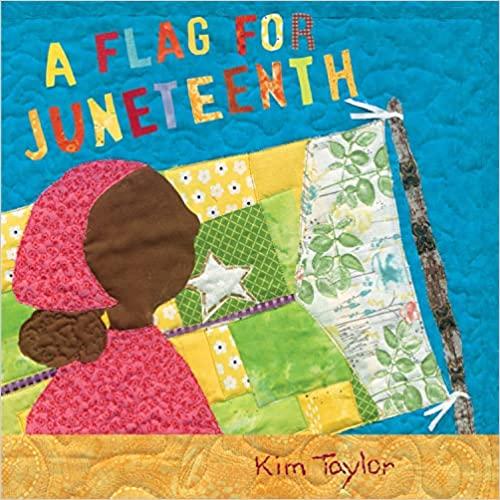
A Flag for Juneteenth by Kim Taylor

Published by Neal Porter Books

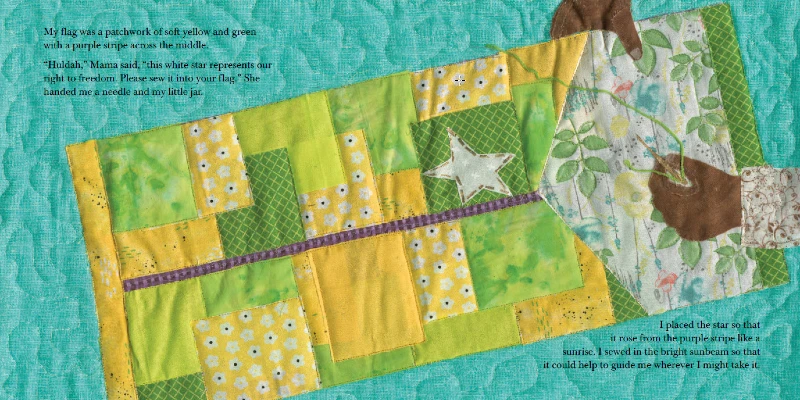
Summary:  Huldah is excited to be turning ten on June 19, 1865.  That excitement grows when, on the morning of her birthday, soldiers ride up to the Texas plantation where Huldah and her family live and announce that all slaves are free and have been since Abraham Lincoln signed the Emancipation Proclamation two years earlier.  All around her is a celebration, and a group of women begins to create freedom flags.  Huldah takes some time for herself, climbing a tree to capture a sunbeam in a jar.  When she returns, it’s time for her birthday celebration.  Her friends and family give her her own freedom flag; later, during a moonlit walk with her family, she wraps her baby sister in the flag, and the family celebrates this day of jubilee.  Includes an author’s note about how she came to create the quilts that illustrate this book.  40 pages; ages 4-8.

Pros:  With Juneteenth coming up in a few weeks, this is a great introduction for younger readers, illustrated with distinctive quilt-inspired illustrations.  Kids may want to design their own freedom flags after reading this.

Cons:  There’s not a ton of information about Juneteenth here, so you may want to supplement with some other resources.

A Year of Good News: 52 Good News Stories from Around the World by Martin Smatana

Published by Boxer Books

Summary:  Martin Smatana began collecting good news stories during the pandemic, illustrating them with textile collages created from cast-off clothing.  Whether local, (a man who drove his 85-year-old grandmother 40,000 miles so she could see mountains and the ocean for the first time) or international (the eradication of polio in Africa), these 52 stories and pictures are designed to lift the spirits of those weighted down by all the less positive news in the world.  Includes a QR code that takes you to a website with additional good news stories.  112 pages; ages 7 and up.

Pros:  These happy stories and whimsical illustrations will lift anyone’s spirits and send readers on a search for more news that is positive.

Cons:  While I appreciated the human-interest stories, I would have liked to have seen a few more stories with broader scope like the polio one.

From Here to There: A First Book of Maps by Vivian French, illustrated by Ya-Ling Huang

Published by Candlewick

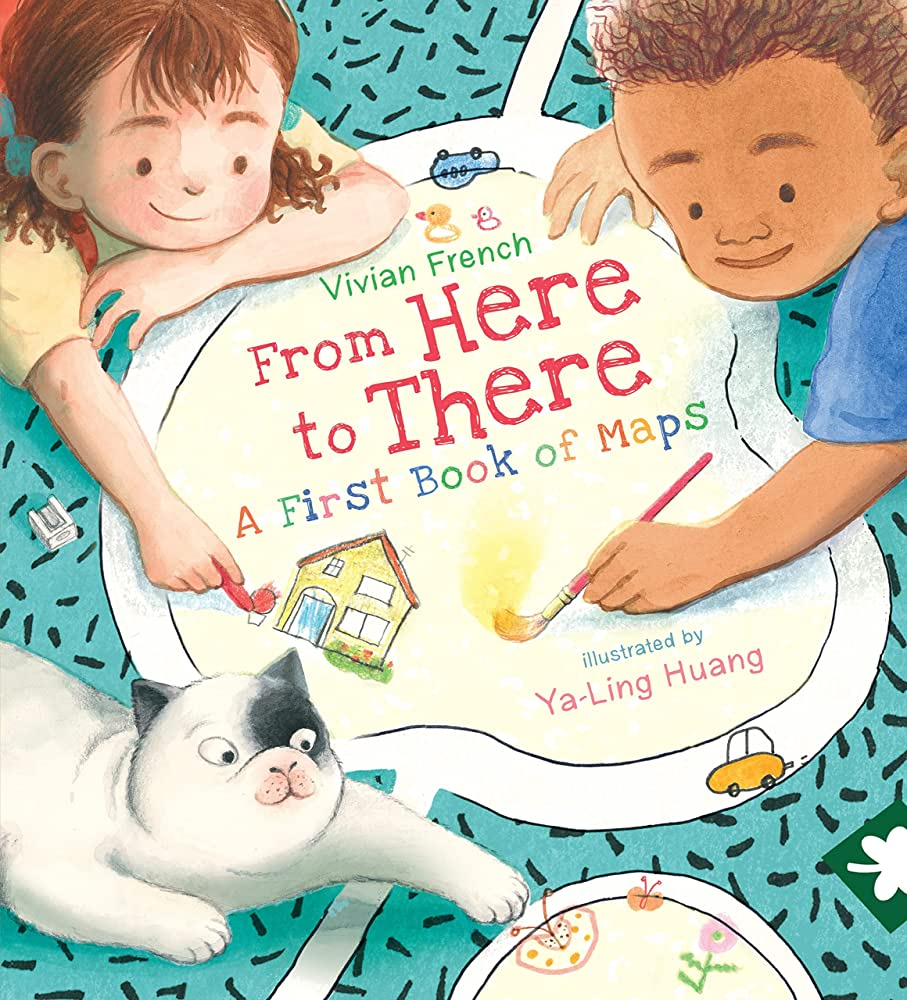
Summary:  When Zane sends Anna an invitation to his house with a map included, she’s annoyed that his house is in the middle of the map and hers is at the edge.  Dad suggests drawing her own map, but when Anna tries to include Grandma’s house, she runs out of paper.  Dad introduces her to the concept of a bird’s-eye view.  Once that map is completed, she draws one of her cat’s favorite places in the house, and Dad shows her a different kind of map he’s drawn: a family tree.  The next day, Anna and Dad follow Zane’s map to get to his house for the playdate.  Includes information about making your own map and an index with six terms.  32 pages; ages 4-8.

Pros:  Since maps are part of our kindergarten curriculum, I know there aren’t a lot of good introductory books for younger kids.  This book does a great job of expertly weaving map terms like scale and point of view into the story and encouraging readers to try to create their own maps.

Cons:  Introducing the family tree seemed a little confusing when all the other maps were about places.

Can We Please Give the Police Department to the Grandmothers? by Junauda Petrus, illustrated by Kristen Uroda

Published by Dutton Books for Young Readers

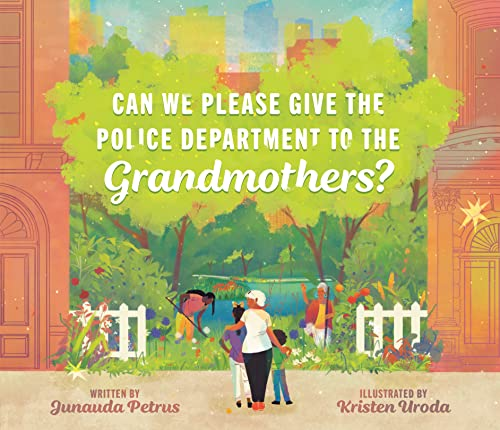
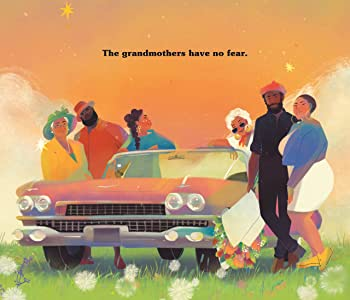
Summary:  If we give the police department to the grandmothers, they’ll patrol the streets in solar-powered cars like Corvettes, Jaguars, and Cadillacs, blasting “old school jams” from Patti LaBelle, Stevie Wonder, and Anita Baker.  If you get into trouble, the grandmas will give you a hard look but then take you home and feed you, help you with your homework, practice yoga, and rub your back while you fall asleep.  Grandmothers (some of whom look like grandfathers) “see the pain in our bravado, the confusion in our anger, the depth behind our coldness,” and know how to change people through unconditional love. Includes a playlist on both sets of endpapers. 32 pages; ages 4-8. 

Pros:  This book by writer and activist Junauda Petrus will bring a smile to your face but also make you think about what is lacking in our current society, particularly for young people of color.  Younger kids will enjoy it, but it could also be used as a text for older kids and adults to start a discussion about less harmful ways of policing.

Cons:  Some additional resources would have been useful.

Ancestory: The Mystery and Majesty of Ancient Cave Art by Hannah Salyer

Published by Clarion Books

Summary:  All over the world, ancient rock paintings, drawings, and etchings have been discovered.  Who made them?  How did they create the artwork?  This book looks at the answers to some of those questions, showing some of the works and looking at the materials ancient people might have used to make them.  A gatefold spread shows an amazing cave painting illuminated only by the lamps of the people who are looking at it.  The art is part of our “ancestory”–the story of humanity that continues with our own lives.  Includes a site map showing where rock art can be found around the world; the story of the discovery of the Lascaux Caves; an author’s note; a glossary; a timeline; and resources for further investigation.  48 pages; grades 2-5.

Pros:  Budding archaeologists will find this book fascinating and will want to dive into the additional resources to learn more.  The illustrations are gorgeous, using light and dark to highlight the artwork.

Cons:  I was curious to know if the art shown in the illustrations was based on real art and, if so, I wish there had been some labels to tell where it could be found.

Hidden Hope: How a Toy and a Hero Saved Lives During the Holocaust by Elisa Boxer, illustrated by Amy June Bates

Published by Harry N. Abrams

Summary:  Jacqueline Gauthier was a French teenager working with the Resistance during World War II.  She used a hollowed-out toy duck to smuggle papers to Jews who needed to change their identities to survive, eventually saving over 200 lives.  Jacqueline herself had changed her identity from Judith Geller to hide the fact that she was Jewish.  In addition to her work smuggling papers, she was hiding her parents and brother, having to find enough food to keep them all alive as she rode her bicycle for miles each day all over Paris.  Despite some close calls, Jacqueline/Judith survived to see the end of the war and the liberation of the people she had saved.  Includes two-page notes from both the author and illustrator with additional information about Judith and a list of additional resources.  48 pages; grades 3-6.

Pros:  This exciting story is told in spare, poetic text that conveys the danger Judith faced and the courage that kept her going for the long years of the war.  

Cons:  The only photo provided is from war-era identification papers.  I’m guessing there aren’t others available, but I would have loved to have seen more.

Dear Yesteryear by Kimberly Annece Henderson, hand lettering by Ciara LeRoy

Published by Dial Books

Summary:  “Dearest yesteryear, tell me your life’s story.”  Kimberly Annece Henderson, a historical researcher who specializes in genealogy and Black American lineages, directly addresses the people in the black-and-white photographs shown in the book.  Her poetic text asks them about their lives:  did they finish school?  Find love?  Achieve success?  She asks for their help and guidance in persevering, concluding, “I’ll walk within your shadow, until memory calls me home.  With love, Today.”  Includes an author’s note with additional information about her family and the work that she does, as well as thumbnails of each photo with a citation.  40 pages; grades 1-5.

Pros:  With the look of an old photo album, this unique book contains photos and text that are sure to be thought-provoking and discussion-inducing. The pictures would make great writing prompts and could lead readers to explore their own genealogies.

Cons:  The cover may not catch the eye of many kids.