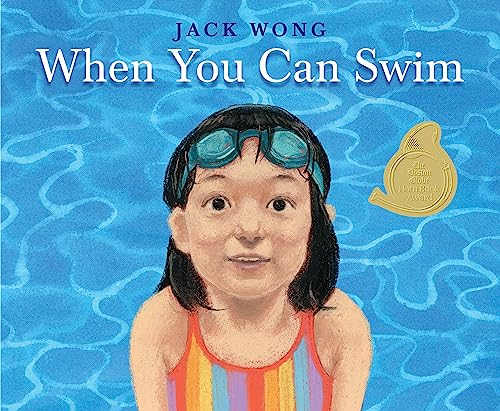
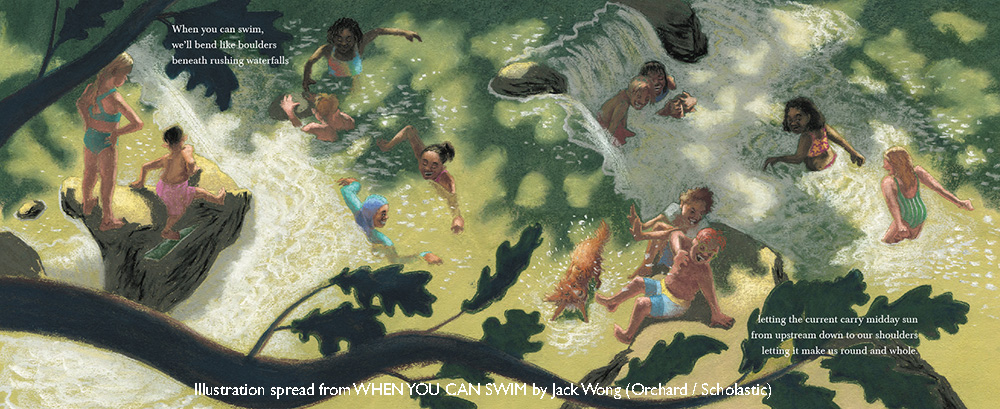
Summary: A family is enjoying some time at the pool. Mom, Dad, and the sister are all accomplished swimmers, but the youngest is still learning. Short rhymes describe the action (“Toe dip/Side grip”) as he tentatively explores the water. The other family members are encouraging, showing him the basics and staying nearby with a kickboard and noodle to keep him safe. By the end, he’s learned how to move his arms and legs and is thrilled to be starting to swim. They towel off, have a family hug, and “filled with pride/off I stride.” 40 pages; ages 3-6.
Pros: A perfect summer book and an empowering one that shows a Black family that loves swimming and is making sure their kids know how to swim too. I missed last year’s Together We Ride, which features the same family teaching the daughter how to ride a bike.
Cons: Seems like June 15 would have been a better release date for this book than August 15.
Summary: Drew and Mia were born on the same day at the same hospital in Half Moon Bay, California. When Drew wouldn’t stop crying, the two babies were put in the same bassinet, which calmed Drew down. Mia and her family moved to Sacramento, but the summer after sixth grade, her family is back for a few months, and she and Drew, initially not knowing their history, become friends. Their story is told in chapters that alternate between Drew’s prose journal entries and Mia’s verse ones as each one faces family difficulties: Drew’s father’s mysterious illness seems to be worsening, while Mia is dealing with the heartbreaking loss of a home that the family has dreamed of for years. When they decide to train together for a half marathon, each one has individual reasons for running, but they support each other to keep going, both during their early morning runs and on the day of the race itself. The end of the summer means Mia is moving back home, but the friendship promises to keep going through potentially difficult days ahead. 288 pages; grades 4-7.
Pros: A compelling story of two kids dealing with some pretty serious family difficulties who show readers how to cope with courage and grace. Their two distinctive voices, with the alternating prose and poetry narratives, keep the story moving along at a good pace.
Cons: The story about the two kids meeting as babies was cute but felt like a bit of an unlikely coincidence.
Summary: Alex has loved soccer since she was five, improving her game with her rec league teammates and their coach Jayda, who has always supported and inspired her. When Alex gets recruited by the elite Select team, she’s excited about the possibility of winning a national title and getting on a path to playing college soccer. But things are different on the Select team. Not only does Alex have to figure out a way to get to games in far-away towns, not easy with a somewhat irresponsible mother who works two jobs, but the coach turns out to be a bully. He favors the girls whose parents contribute financially to the team and unfairly punishes Alex, who’s on a scholarship. Alex isn’t afraid to stand up for herself, though, and as she slowly befriends some of her teammates, they begin to help each other in the face of Coach’s abuses. As the team piles up wins, their coach becomes more and more demanding, and a showdown between him and the team feels inevitable. Includes an author’s note about abusive coaches in youth sports a list of resources. 224 pages; grades 4-7.
Pros: This fast-paced sports story brings the issue of abusive coaches to light, with a courageous protagonist who must deal with difficult issues both at home and on the field. Her coach Jayda provides an example of good coaching while also serving as something of a stand-in parent.
Cons: There wasn’t a lot of subtlety in portraying who was good and who was bad. It would have made a more interesting story to give the coach a charming side rather than making him an abusive bully right off the bat.
Summary: The story opens with a key moment of the 1911 World Series: Charles Bender of the Philadelphia Athletics pitching to John Meyers of the New York Giants, who hits a double, then goes on to score the winning run of Game One. Both Charles and John were from Native Nations, and the book goes back to trace the stories of how each one got to play in the World Series. Charles grew up on the White Earth Reservation in Minnesota before being sent to an Indian boarding school in Philadelphia. John’s childhood was spent on the Cahuila reservation in California. Each endured poverty and racism as they pursued their love of baseball and eventually wound up in the major leagues. Together, they played in nine World Series; Charles was elected to the Baseball Hall of Fame in 1953, and both were inducted into the American Indian Hall of Fame when it opened in 1972. The book ends with a list of Native MLB players today, and the racism that’s still present with racist team mascots. Includes an author’s note, timeline, and list of sources. 48 pages; grades 1-5.
Pros: A fascinating look at two men who faced hardship and racism throughout their lives but rose above it to become excellent athletes who exemplified sportsmanship and teamwork.
Cons: Kids I work with seem to have no interest in professional baseball these days.
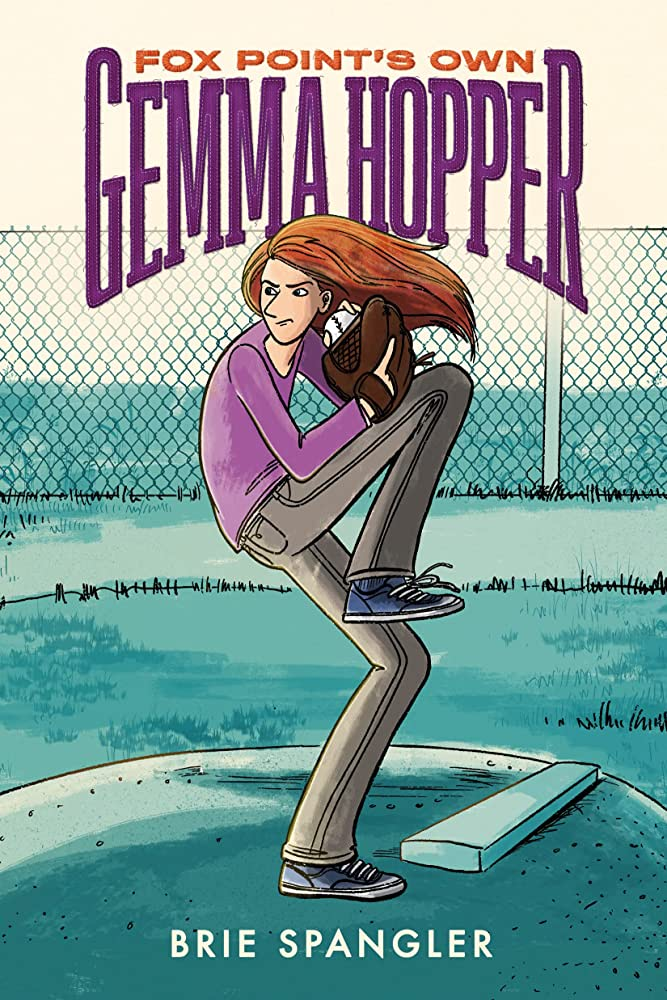
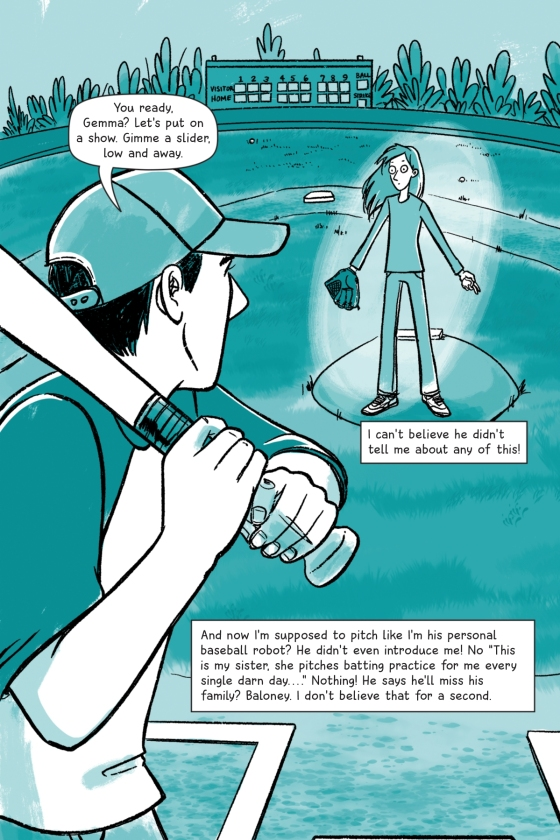
Summary: Gemma’s dealing with a lot at the beginning of seventh grade: her mom has recently abandoned the family, leaving Gemma to deal with taking care of her baseball star older brother, twin kid brothers, and her dad who spends most of his time working. At six feet tall, she can’t hide out at school, and her best friend’s attempts to get in with the popular kids make her feel like a loser. She loves baseball, but only gets to play when her brother needs batting practice. Usually, she pitches what he wants, but one day, she’s so fed up that she does her own thing. Her amazing pitches are captured on camera and go viral, catching the attention of the same scouts who discovered her brother. Suddenly Gemma is in the spotlight, and she discovers that, while it can be scary, it’s a more exciting place to be than where she’s been hiding. 272 pages; ages 4-7.
Pros: Readers will be rooting for Gemma as she deals with a family that doesn’t always appreciate her and the usual friend dramas of middle school. Accepting that her mom is gone helps her to move on, and the last few pages are completely emotionally satisfying.
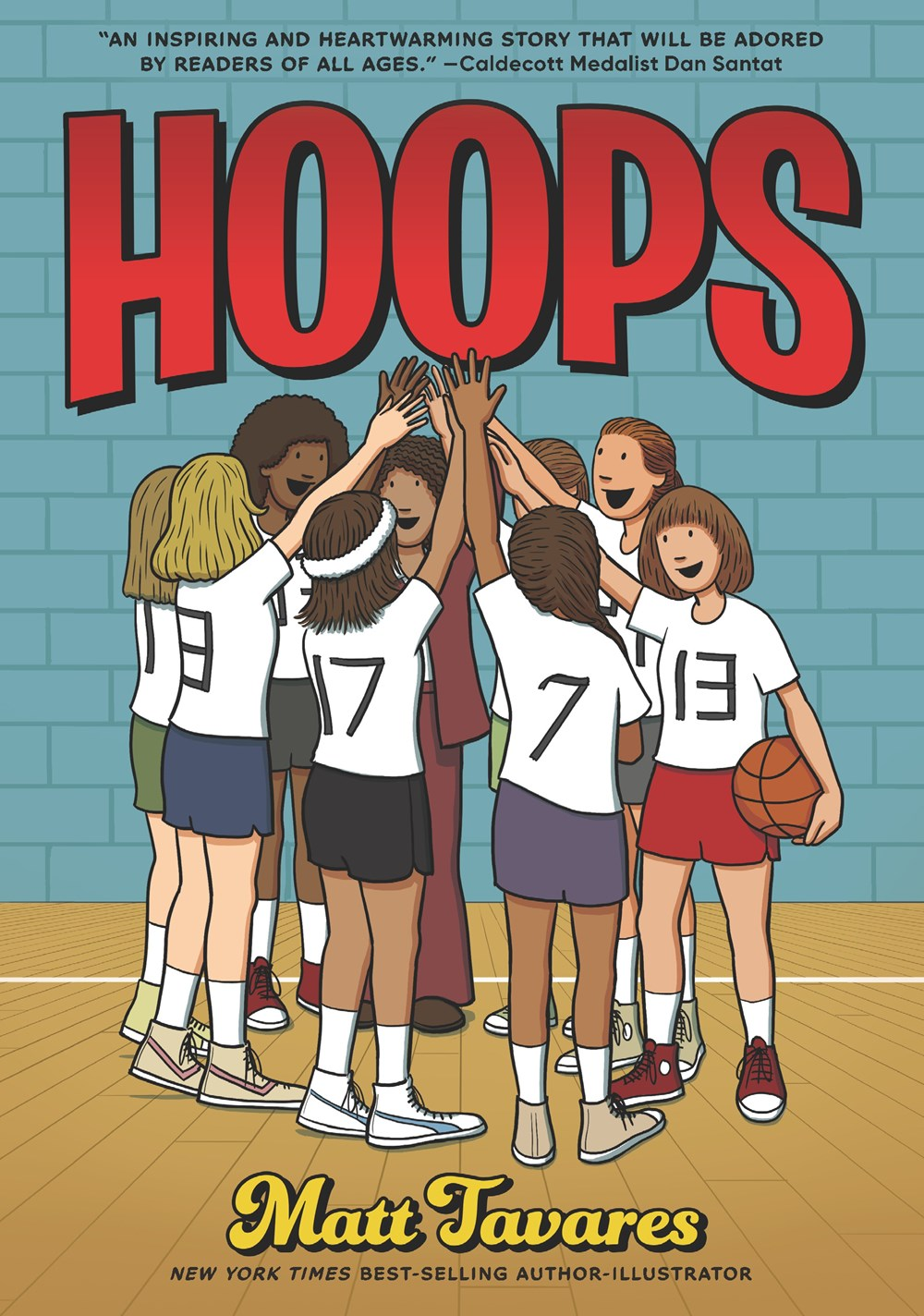
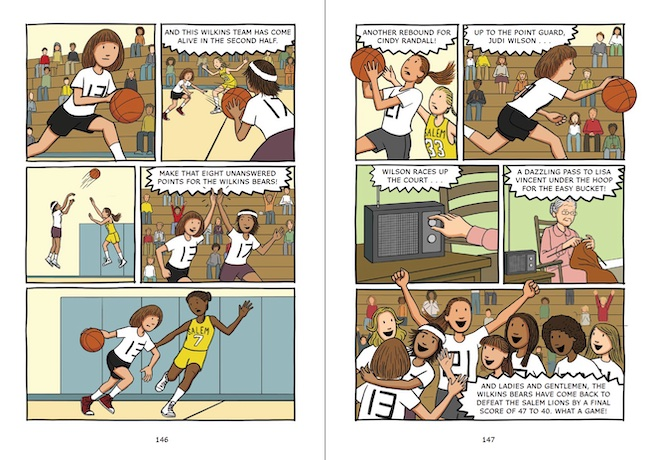
Summary: The story opens on a November evening in 1970. Judi Wilson is watching her older brother and his friends play basketball, while her friend Stacy practices cheers. When they head off to the high school game, Judi picks up the ball, dreaming of making the winning shot at a big game. Fast forward five years, and Judi and Stacy are senior co-captains of the cheerleaders, rooting on the boys’ basketball team. When Judi hears that a girls’ team is forming, she decides to try out, abandoning cheerleading and upsetting Stacy. Only eight girls show up, so they’re all part of the new team. Despite the lack of uniforms, a bus, meal money, or the use of the high school gym, the girls love playing and begin to win games. As they get better known, they’re allowed to use the gym when the boys are done with it, but they still have to wear t-shirts with their numbers taped on with electrical tape and drive to away games in their coach’s borrowed RV. Finally, when they make it to the state championship, the athletic director apologizes in front of the school for his shabby behavior, and the booster club gives them real uniforms. In the final game of the championship, the score is tied with just seconds left, and Judi gets a chance for the winning basket, bringing the story full circle to her early dream. Includes a 4-page author’s note about how he came to write this book and with additional information about Title IX. 224 pages; grades 3-7.
Pros: Based on a true story, this graphic novel is fun and fast-paced, showing the uphill battle female athletes faced in the early days of Title IX. Although it takes place in high school, the friendships and sports action will be enjoyed by elementary and middle school readers. While I love Matt Tavares’s picture books, I hope he’ll continue with graphic novels as well!
Cons: Judi’s sweatshirt on the last few pages indicates that she’s on a college basketball team, but I wish I found out for sure if she and her teammates got to play in college.
Summary: Six Black dancers, three men and three women, are profiled, each one given a few pages describing his or her career and the racism each one encountered and overcame to achieve groundbreaking success. The six are listed in chronological order, beginning with Essie Marie Dorsey, who lived from 1893-1967, and finishing with Michaela DePrince, born in 1995 and currently dancing with the Boston Ballet. The author’s note at the end lists eight other Black ballet dancers, with the years they lived and the companies they danced with. 40 pages; grades 1-5.
Pros: Dancers will find plenty to inspire them in these stories, timed perfectly to celebrate Black History Month. The illustrations capture the grace, strength, and beauty of the ballerinas.
Cons: I wish there was more historical context for the biographies.
Summary: As the youngest of seven children, Abby Wambach learned to be tough, especially on the soccer field. After a successful high school career that ended with a crushing state championship loss, Abby played at the University of Florida where she was recruited for the U.S. Women’s National Soccer Team. She toughened up even more with a personal trainer to become part of the team that won the gold medal at the 2004 Olympics. She was on track to win another medal when she broke her leg shortly before the 2008 Olympics, but her encouragement from the sidelines helped her team win gold again. After a year of rehab, she was back, scoring her 100th career goal in 2009. Includes additional information about Abby’s childhood and her post-2009 soccer career, a list of soccer terms with definitions, and a bibliography. 32 pages; grades K-4.
Pros: A lively introduction to Abby Wambach’s life with colorful illustrations and an eye-catching cover that will grab the interest of sports fans.
Cons: I wish there had been some information on Abby’s activism on behalf of the LGBTQ+ community and women in sports.
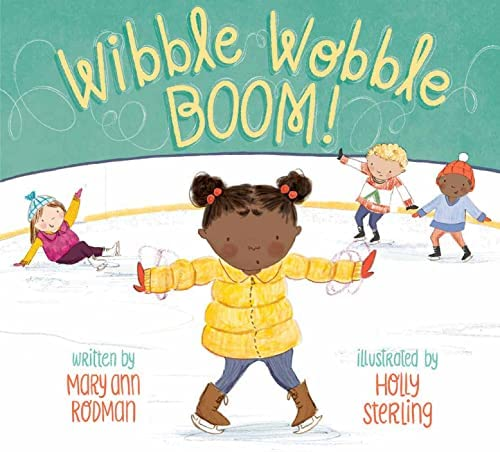
Summary: Claire is excited about her first skating lesson, but reality rears its ugly head when she’s placed in the beginners’ group called the Snowplows and given brown rental skates. The kids have to practice standing up off the bench before they’re even allowed onto the ice, and once they’re finally there, Claire is surprised at how hard it is to skate and how easy it is to fall. She’s a keen observer, though, and noticing how the teacher pushes and glides across the ice leads to her being the first in the class to do some real skating. Ultimately, Claire is glad to be a Snowplow, because snowplows work hard, and she’s excited for the next class and her dreams of being a real figure skater. 32 pages; ages 4-8.
Pros: An engaging story that I am going to add to my list of books about persistence and grit, as Claire keeps going through some disappointing turns of events to ultimately find some success. The cute illustrations portray a diverse cast of characters.
Cons: The “hockey boy” in Claire’s class who keeps heckling her when she falls. “Know why you’re called a Snowplow? ‘Cause you clean the ice with your bottom!” Let’s hope Claire checks him in the next class.
Published by Little, Brown Books for Young Readers
Summary: Rob Kearney was a strong kid who excelled at football and cheerleading, but his favorite sport was weightlifting. It made him feel like a superhero. At the age of 17, Rob learned about the Strongman competition and decided to become a weightlifting champion. Competition events involved lifting heavy logs, stones, and tires, so Rob got to work, running, swimming, and lifting the heaviest weights he could. Rob loved wearing bright, colorful clothing, but other competitors wore plain, dark colors, so Rob did, too. When he came in last at his first competition, he felt as dark and gloomy as his clothes. Falling in love with Joey, a fellow weightlifter, encouraged Rob to be himself, and before long he was dressing exactly the way he wanted to. Joey’s support and encouragement helped Rob in other ways, and he eventually won the North American Strongman championship. Includes a letter to readers from Rob, additional resources, and descriptions of all the Strongman events. 40 pages; ages 4-8.
Pros: The empowering be-yourself message will especially speak to LGBQT+ readers, as Rob defies stereotypes with his rainbow mohawk and unconventional clothing in a sport that is often associated with more traditional masculinity. The colorful illustrations bring the weightlifting events to life.
Cons: Although Joey offers to wear the same colorful clothes as Rob, he’s shown on the last page in blue pants and a plain white t-shirt.