Moletown by Torben Kuhlmann

Published by NorthSouth Books   

Summary: When a mole discovers a lush, green meadow, he decides to make his home there. He’s not alone for long.  Soon other moles join him, and the underground community grows.  As more and more moles make set up housekeeping, technology starts to move in as well, with machines helping the moles to move dirt, build infrastructure, and entertain themselves.  Eventually, the lush, green meadow has turned brown and barren, except for one small patch of green that still remains.  Is it too late to save it?  The endpapers show The Moletown Times headlining “Agreement on Green”, but it’s uncertain if that will save the moles’ world.  32 pages; ages 4-10.

Pros:  This nearly wordless picture book (there’s text only on the first and last pages) raises timely issues in a mole world that parallels humans’.  The illustrations are stunning, all done in shades of brown, picturing tons of details in Moletown.  Kids will have fun poring over the pictures, and the message is accessible enough to engender discussion with the youngest readers.

Cons:  Little brings me down faster than a global warming allegory.

Wait by Antoinette Portis

Published by Roaring Brook Press

Summary: There are only two words in this book. “Hurry,” says the mother. “Wait,” says the little boy. The mother clearly has an agenda, as she urges her son to keep up with her down streets and through the park. The little boy wants to stop and wave to the construction worker, pick a treat from the ice cream truck, and feed bread to the ducks in the park. The mother’s urgency increases as the rain starts, and finally they reach the train that is their destination. But just before they board, the boy says one more “Wait”, and the mother agrees, “Yes, wait” as they both admire the double rainbow in the sky.  Ages 3-6.

Pros: Every parent and teacher will connect with the conflicted feelings of needing to stick to a schedule and wanting to slow down and enjoy the world the way kids do. I like that the mother always keeps a smile on her face and relishes the moment the two of them finally got to share a beautiful moment.

Cons: There should be more wait and less hurry in the world.

Float by Daniel Miyares

Published by Simon and Schuster Books for Young Readers

Summary:  In this wordless picture book, a boy goes out on a rainy day with a paper boat he has just made with his dad.  He floats the boat in puddles, but eventually it gets away from him.  By the end of his adventure, he’s left with a soggy piece of newspaper.  Disheartened, he returns home, where Dad dries him off and gives him some hot chocolate.  They get to work with the newspaper again, and on the last page, he is heading out the door on a sunnier day with a paper airplane.  Folding directions for a boat are on the front endpapers and a plane, on the back.

Pros:  The simple, peaceful story is reminiscent of The Snowy Day by Ezra Jack Keats.  The illustrations are beautiful and may catch the attention of the Caldecott committee.

Cons:  My struggles to make a paper boat go all the way back to my first reading of Curious George Rides a Bike.

Pool by JiHyeon Lee

Published by Chronicle Books

Summary:  Imported from Korea, Pool is a wordless picture book in which two children meet at a crowded pool.  Diving under everyone’s feet, they swim off together into an underwater wonderland.  They explore schools of fish and other sea creatures, and even get close up to an enormous white whale.  Finally, they return to the legs and feet.  The crowd exits from one side of the pool, and the two of them get out on the other side.  At the end they take off their goggles and smile at each other, clearly the beginning of a beautiful friendship.

Pros:  A magical journey of imagination.

Cons:  Some may judge the book by its cover and decide it looks a little freaky.

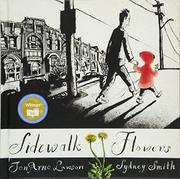
Sidewalk Flowers by JonArno Lawson, illustrated by Sydney Smith

Published by Groundwood Books

Summary:  In this wordless picture book, a little girl in a red coat is walking home from the grocery store with her busy, distracted (think cell phone) father.  As they walk, she finds flowers growing in sidewalk cracks.  Their trip through the city is drab and gray, with her coat and the flowers the only bits of color.  Halfway through, they enter a park, and she starts leaving the flowers as gifts—on a dead bird, with a man sleeping on a bench, tucked into a dog’s collar.  Arriving home, she distributes the rest to her family. As soon as she starts giving away the flowers, the pictures become filled with color.  On the last page, she tucks one final flower behind her ear as she watches a flock of birds overhead.

Pros:  More and more, I love wordless books.  This one has so much to look at, with multiple panels on many of the pages.  The message is simple but beautiful.

Cons:  I felt like there was some greater significance to the last page that I didn’t quite get.

The Grasshopper and the Ants by Jerry Pinkney

Published by Little, Brown Books for Young Readers

Summary:  Why do those ants work so hard?  The Grasshopper can’t understand it, and urges them to enjoy the spring, summer, and fall.  He’s a musician, traveling around with his banjo in his hands and a drum set on his back.  When winter comes, though, he’s out in the cold while the ants enjoy the cozy home they have made.  Finally, the Queen Ant ventures out into the snow to invite him in for a cup of tea.  A gracious guest, the Grasshopper repays her kindness by providing all the ants with music for a cold winter’s night.

Pros:  Jerry Pinkney doesn’t disappoint with another gorgeously illustrated fable that could be a Caldecott contender.  The story is simple, but the pictures are filled with details all rendered in beautiful watercolors. Kids will pore over all the activities in the ants’ winter home.

Cons:  Maybe it is the subject matter (grasshopper versus lion), but for me, this book is a notch below The Lion and the Mouse.