Kyle’s Little Sister by BonHyung Jeong

Published by JY

Kyle's Little Sister: Jeong, BonHyung: 9781975316549: Amazon.com: Books
Kyle's Little Sister by BonHyung Jeong, Paperback | Barnes & Noble®

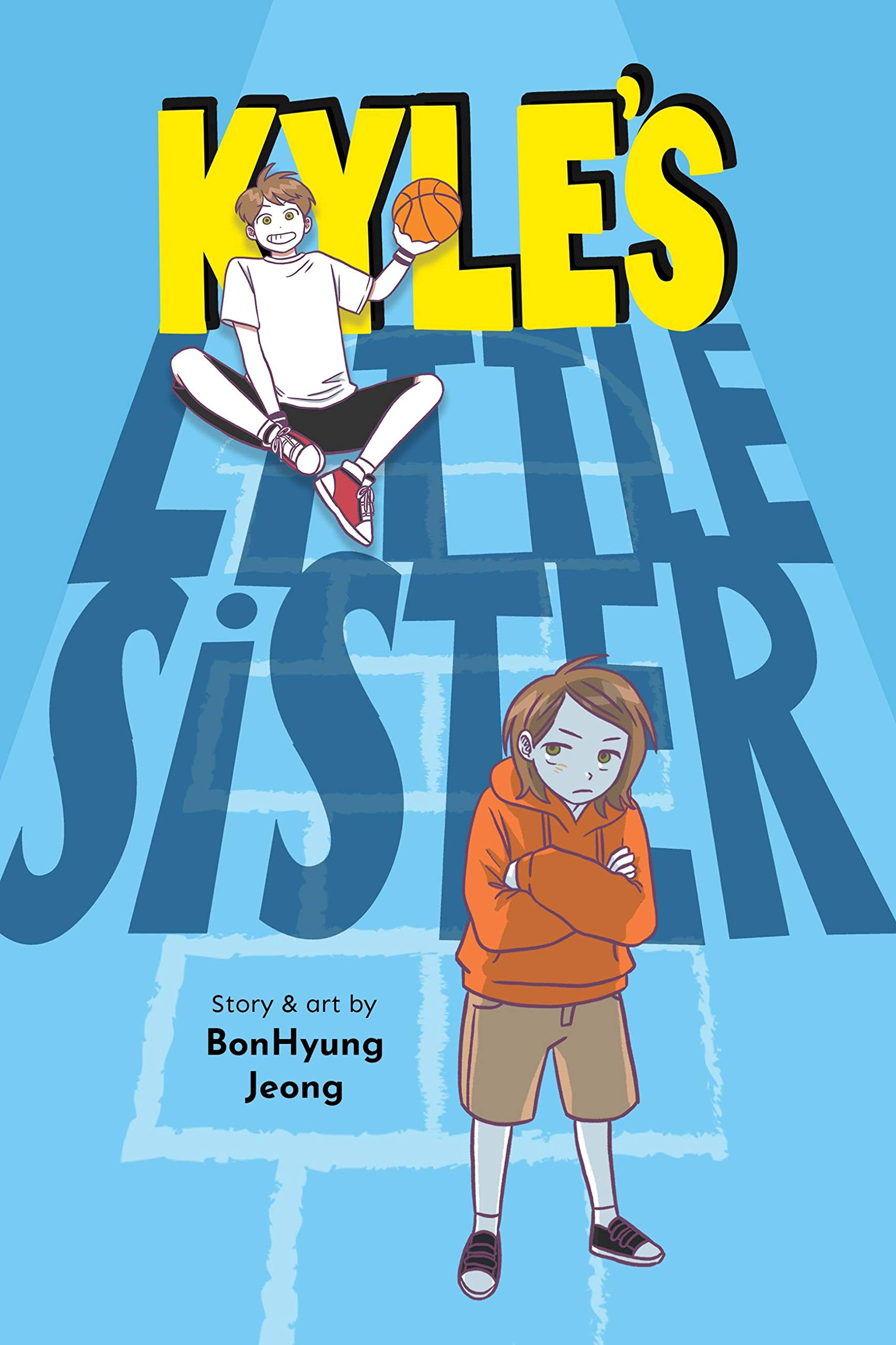
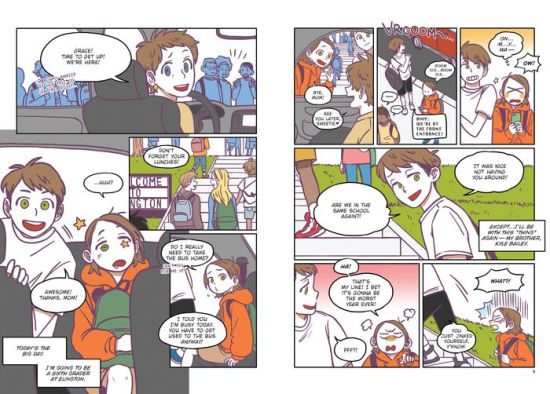
Summary:  Grace is excited to be starting middle school, but before long she’s dealing with what’s been a lifelong problem for her: living in the shadow of her popular, athletic brother Kyle.  One of her two best friends, Jay, has a crush on Kyle, and the other friend, Amy is trying to push the shyer Jay into telling Kyle how she feels about him.  Finally, Jay and Grace have had enough, and the whole friendship falls apart at a disastrous sleepover.  Feeling friendless, Grace welcomes the overtures of a more popular girl named Cam, and enjoys hanging out with her and her friends until she starts to notice what a bully Cam can be, particularly towards Amy.  When Grace learns that Cam has a crush on Kyle and is just using Grace to get to her brother, she realizes that Cam isn’t a real friend…and that Amy and Jay were.  Fortunately, the two other girls have come to a similar conclusion, and the friendship is soon back and better than ever (and even Kyle turns out to be not such a bad guy).  240 pages; grades 3-6.

Pros:  Did you follow all that?  There is a LOT of middle school drama in these 240 pages, but it is true to life, and fans of the realistic fiction graphic novel genre will love both the story and the anime-style art.

Cons:  At times, dialog was written in bubbles with no little tail indicating who was saying the words, which I found a bit confusing.
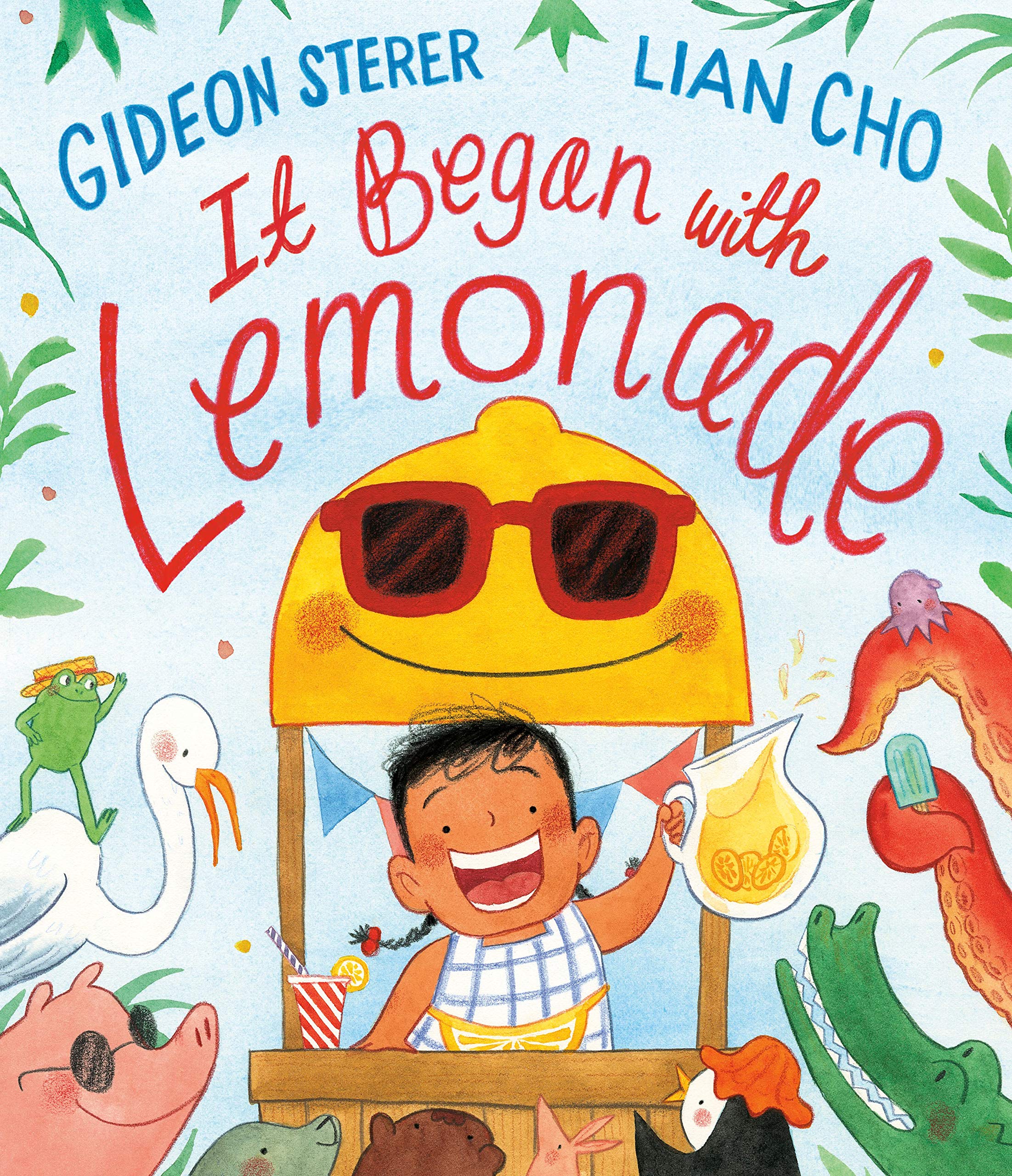
It Began with Lemonade by Gideon Sterer, illustrated by Lian Cho

Published by Dial Books

It Began with Lemonade: Sterer, Gideon, Cho, Lian: 9780735228283: Amazon.com:  Books

Summary:  An enthusiastic girl puts together a lemonade stand on wheels and heads out to make some sales, but soon finds that other lemonade sellers have gotten ahead of her.  She pushes her stand through the busy streets until suddenly it gets away from her, and she’s forced to chase it out of town and through the woods.  It finally lands by the river, where she sits, feeling terrible, until a man comes along in a boat.  She sells him a glass of lemonade, then starts hawking her wares.  Before long, she has an octopus, a bear, a couple of crocodiles, and a host of other animal customers lining up.  After selling out, she heads for home, where she falls asleep dreaming of another fantastic day of sales tomorrow. 40 pages; ages 3-8.

Pros:  Enjoy the last few weeks of summer with this imaginative tale that is literally about making lemonade when life gives you lemons.  

Cons:  I’m thirsty.

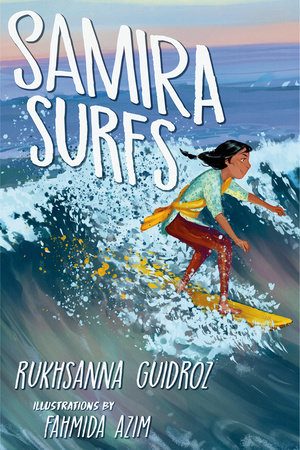
Samira Surfs by Rukhsanna Guidroz, illustrated by Fahmida Azim

Published by Kokila

Samira Surfs by Rukhsanna Guidroz: 9781984816191 | PenguinRandomHouse.com:  Books

Summary:  Samira and her family are Rohingya refugees from Burma, living outside a camp in Bangladesh because they are not allowed to officially register as refugees.  She spends her days selling hard-boiled eggs on the beach, and the friendships she forms with other girls selling there enrich her life.  Some of the girls surf, as does Samira’s brother Khalad, and Samira starts to get interested in trying it herself.  When a surfing contest is announced with a substantial cash prize, she daydreams about what a win could mean for her family.  She has to learn to surf in secret, though; her parents disapprove of swimming for girls, and fear the water after her mother’s parents drowned during their escape from Burma.  On the eve of the contest, it seems as though Samira’s surfing dreams have come to a crashing end, but her courage and the connections she has formed with friends and family ultimately save the day.  Includes an author’s note with additional information about the Rohingya, and a list of websites for learning more and getting involved.  416 pages; grades 4-7.

Pros:  This novel in verse brings to light a group of people that most of us probably know very little about.  Samira’s narration doesn’t shy away from her fears and worries, but also shows her courage and determination to create a new life for herself and her family.

Cons:  Looking at recent news, it appears that the Rohingya situation in both Burma Bangladesh hasn’t changed much since 2012, when this book takes place.

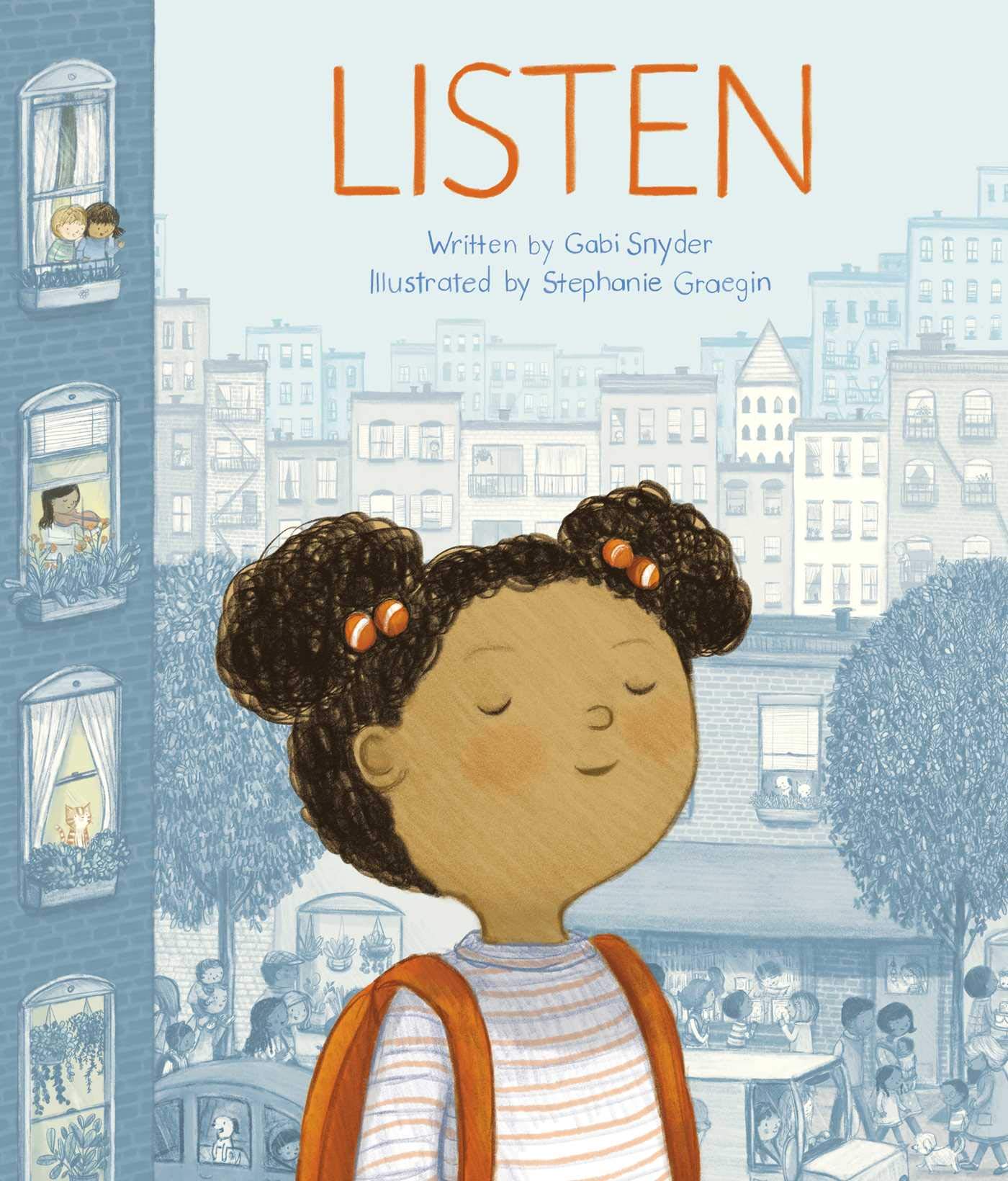
Listen by Gabi Snyder, illustrated by Stephanie Groegin

Published by Simon and Schuster

Listen: Snyder, Gabi, Graegin, Stephanie: 9781534461895: Amazon.com: Books

Listen: Snyder, Gabi, Graegin, Stephanie: 9781534461895: Amazon.com: Books

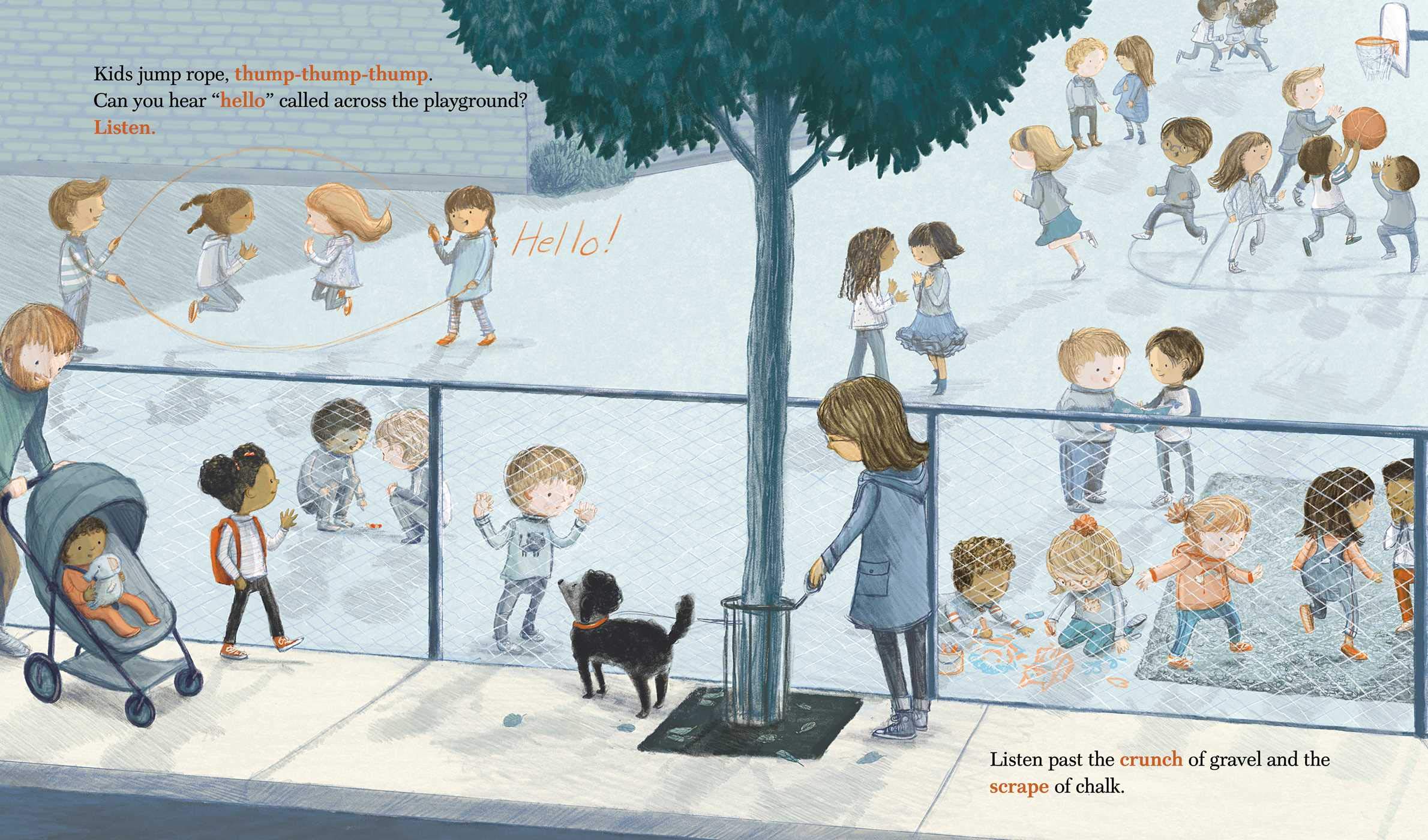
Summary:  The world is full of noise, but if you stop, close your eyes, and listen, you can hear each individual sound.  You can also listen to words: some are quick and snappy, others are long and leisurely.  Words can be filled with joy or painful to hear.  Sometimes if you listen carefully, you can hear the feelings of the person who is speaking the words.  Even when it’s night and time for bed, there are still plenty of sounds around that you can listen for before falling asleep.  Includes additional information about listening with definitions of terms like “startle response” and “bottom-up response”.  40 pages; ages 4-8.

Pros:  An excellent resource to teach a variety of listening, focusing, and mindfulness skills, all presented in a child-friendly way.  I loved the illustrations, which I realized were done by the creator of one of my favorite wordless picture books, Little Fox in the Forest

Cons:  A list of additional resources would have been nice,

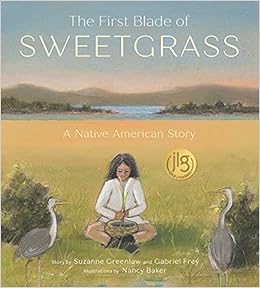
The First Blades of Sweetgrass: A Native American Story by Suzanne Greenlaw and Gabriel Frey, illustrated by Nancy Baker

Published by Tilbury House Publishers

The First Blade of Sweetgrass: Greenlaw, Suzanne, Frey, Gabriel, Baker,  Nancy: 9780884487609: Amazon.com: Books

Summary:  When Musquon goes with Grandmother to gather sweetgrass, she has to learn how to identify it among the other grasses.  Her grandmother gives her a lesson, but at first, Musquon just pulls up handfuls of grass.  Patiently, Grandmother goes through the steps again, then reminds her granddaughter that her ancestors are there to help.  Musquon closes her eyes and imagines her grandmother as a little girl with her grandmother.  When she looks at the grasses again, she can see which blades are sweetgrass.  She reaches to pick them, but then remembers her grandmother’s words: “If we never pick the first blade, we will never pick the last one.”  Musquon picks the next blade she sees, continuing until she has enough to show her grandmother.  Grandmother praises her, then says she will next teach her how to braid the sweetgrass into baskets. Includes an author’s note with additional information about sweetgrass and the Wabanaki Confederacy, and a list of the Passamaquoddy-Maliseet words used in the text, with a dictionary website for more information.  32 pages; ages 4-8.

Pros:  A beautiful story that celebrates sweetgrass, the Wabanaki, ecology, and the power of handing down stories and arts from one generation to the next.

Cons:  I would have enjoyed seeing a photo of the sweetgrass.

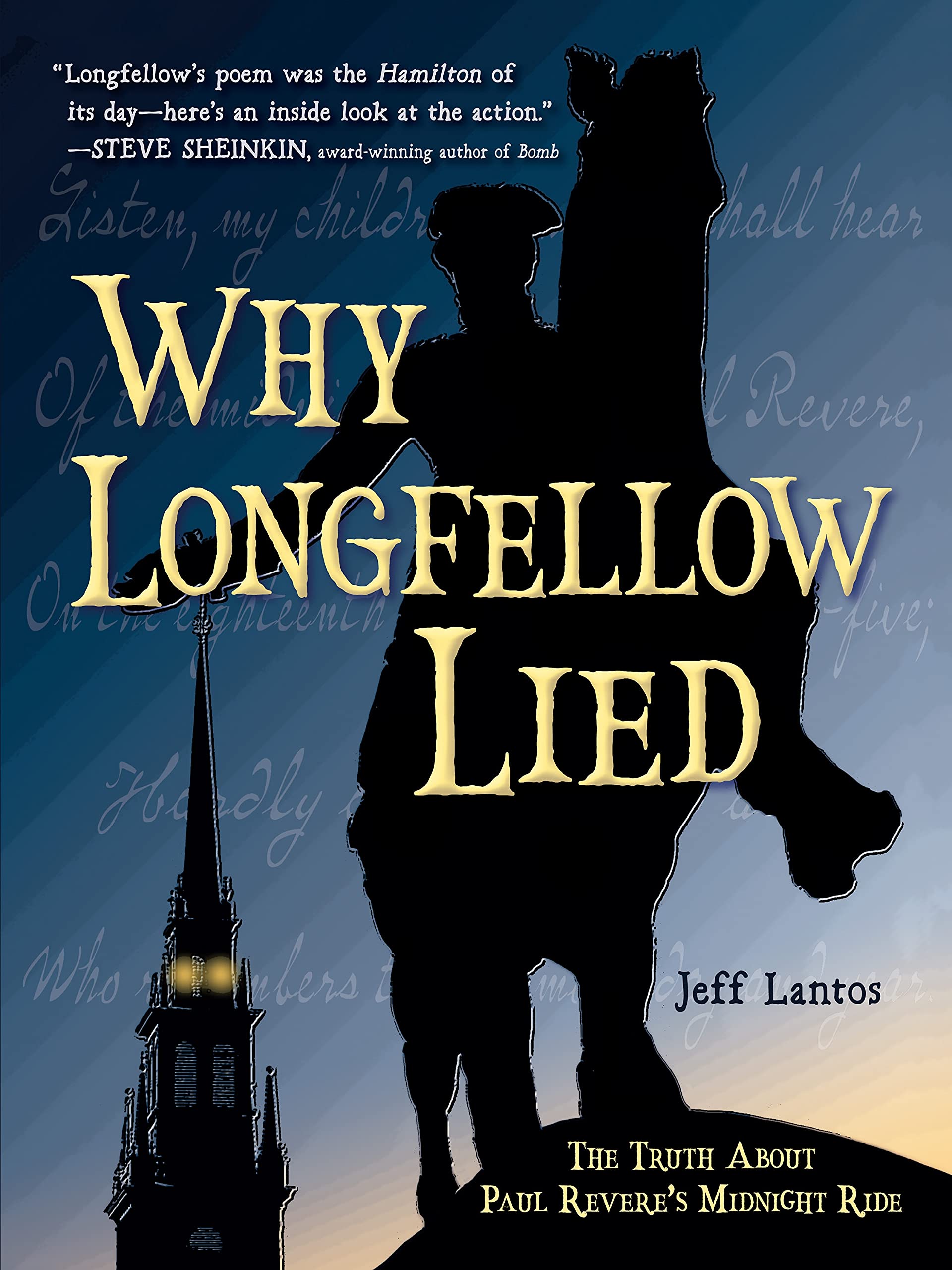
Why Longfellow Lied by Jeff Lantos

Published by Charlesbridge

Why Longfellow Lied: The Truth About Paul Revere's Midnight Ride: Lantos,  Jeff: 9781580899338: Amazon.com: Books

Summary:  Listen, my children: many of us have grown up with at least some knowledge of Henry Wadsworth Longfellow’s poem “Paul Revere’s Ride”.  Jeff Lantos takes a deeper look, going through it piece by piece with a retelling of the actual events and how they compare with the poem.  Both the prologue and the final chapter give additional context to the poem and the reasons that Longfellow wrote it in the early days of the U.S. Civil War.  Includes a cast of characters (the people mentioned in the book); the complete text of the poem; many illustrations, photos, maps, and sidebars; 18 pages of source notes; a six-page bibliography; and an index.  160 pages; grades 5 and up.  

Pros:  A lively addition to any American history curriculum, which not only presents the facts around the events of April 18-19, 1775, but also puts Longfellow’s poem in the context of the U.S. Civil War, and his fervent hope to end slavery and preserve the Union.  The plentiful illustrations and maps, the brief but interesting sidebars, and the extensive source material make this an excellent nonfiction resource.

Cons:  The title seems a bit of a harsh judgement on Longfellow, although I guess “Why Longfellow Used Artistic License in Recounting Historical Events in a Heartfelt Attempt to Preserve the Union” isn’t quite as catchy.  

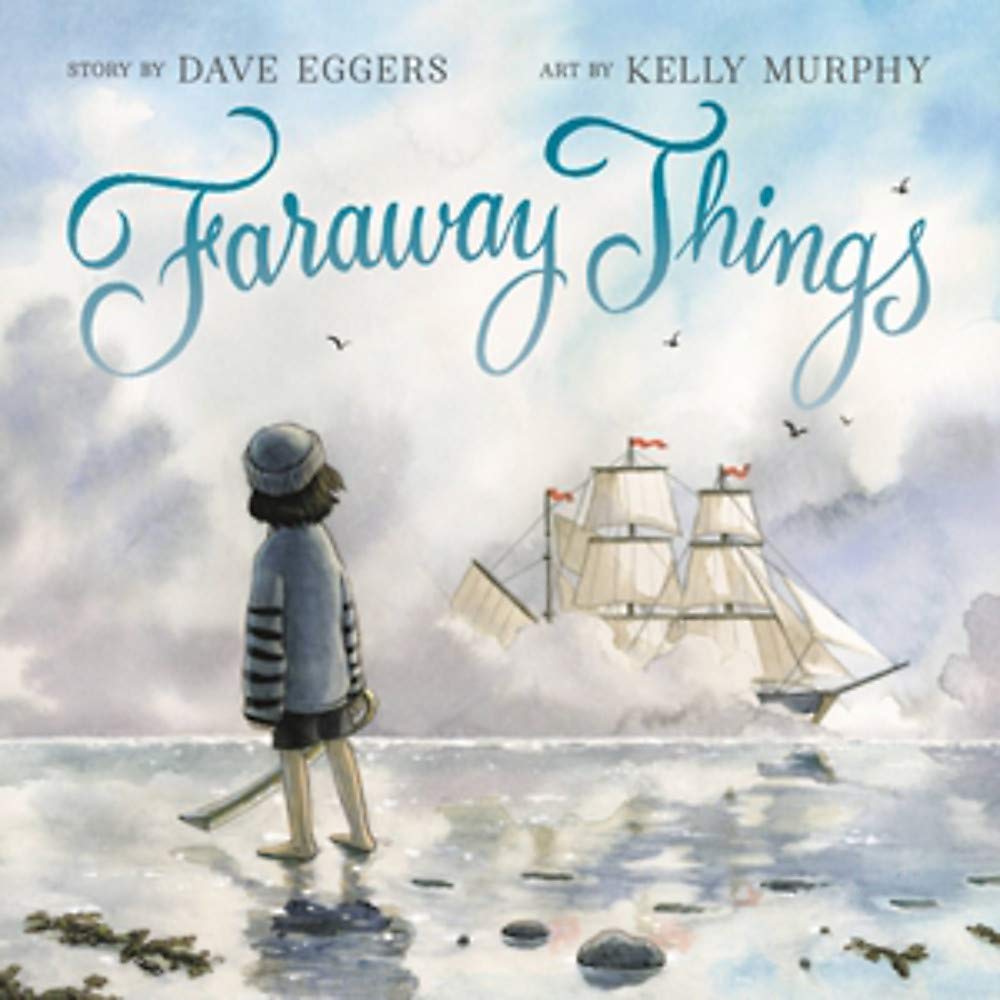
Faraway Things by Dave Eggers, illustrated by Kelly Murphy

Published by Little, Brown Books for Young Readers

Faraway Things: Eggers, Dave, Murphy, Kelly: 9780316492195: Amazon.com:  Books
Faraway Things by Dave Eggers, Kelly Murphy, Hardcover | Barnes & Noble®

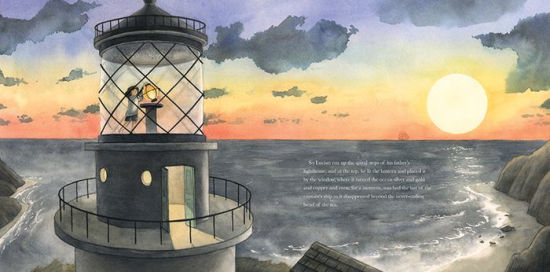
Summary:  Lucian lives with his mother in a lighthouse and loves exploring the beach, looking for what his late father used to call “faraway things”: items washed up from the sea.  One day he finds a beautiful cutlass, and hangs it on his wall, dreaming about it at night, and playing with it on the beach the next day.  In the afternoon, a ship sails into view, and when three men disembark, Lucian learns that his cutlass belongs to the captain.  The men are unhappy because their ship is stuck on a sandbar–something they couldn’t see in the dark because the lighthouse wasn’t working.  The captain makes a generous offer, though: he’ll trade Lucian anything from the ship’s treasure room for the cutlass.  Lucian rows out to the ship with the men, and chooses a new light for the lighthouse from the treasures.  The final page shows him fitting the new light into the lighthouse, its beam shining over the sea to the ship that’s sailing away. 40 pages; grades K-5.

Pros:  A beautifully told and illustrated story that has just the right touch of fantasy while also subtly dealing with grief and loss.  The length and themes of the story would make it an excellent choice for reading aloud to older elementary students.

Cons:  Parts of the story are pretty ambiguous: what happened to Lucian’s father and to the lighthouse?

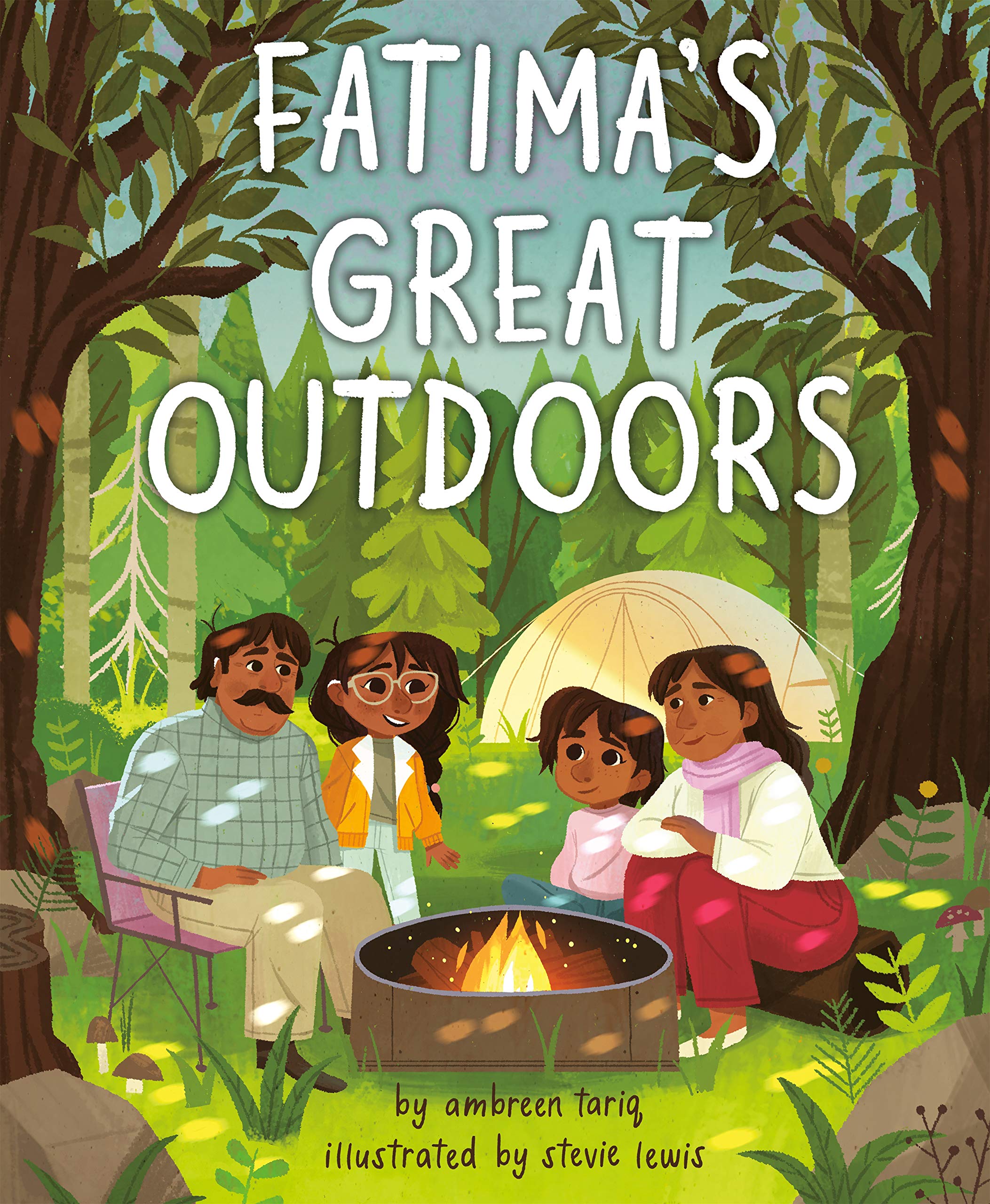
Fatima’s Great Outdoors by Ambreen Tariq, illustrated by Stevie Lewis

Published by Kokila

Fatima's Great Outdoors: Tariq, Ambreen, Lewis, Stevie: 9781984816955:  Amazon.com: Books
Fatima's Great Outdoors – We Are LIT!

Summary:  After a tough week at school, Fatima is ready to enjoy her family’s first camping trip, “a great American pastime”, as her father calls it.  Dad struggles to set up the tent (grumbling in Urdu) until Fatima suggests they read the instruction manual together.  A spider terrifies Fatima and her older sister, but their no-nonsense mother takes care of things.  In the morning, they decide to try cooking bacon over a fire like other American families.  Once again, Dad struggles, but Mom, who grew up using a wood-burning stove, shows the family how to make a fire.  Fatima is sad to leave, but the new experiences have given her confidence, and she enjoys sharing stories of her trip with her classmates.  Includes an illustration with a reference to @brownpeoplecamping, the organization founded by the author. 40 pages; ages 4-8.

Pros:  A thorough introduction to camping through Fatima’s eyes, with the message that it’s an activity for everyone.  The family enjoys Indian food, speaks Urdu, and observes their own traditions, but also is enthusiastic to try “a great American pastime”.  Pair with The Camping Trip by Jennifer Mann.

Cons:  I felt like the story could have benefited from some editing.  The many aspects of Indian culture included in the story started to feel a little didactic.

Bird Boy by Matthew Burgess, illustrated by Shahrzad Maydani

Published by Knopf Books for Young Readers

Bird Boy (An Inclusive Children's Book): Burgess, Matthew, Maydani,  Shahrzad: 9781984893772: Amazon.com: Books

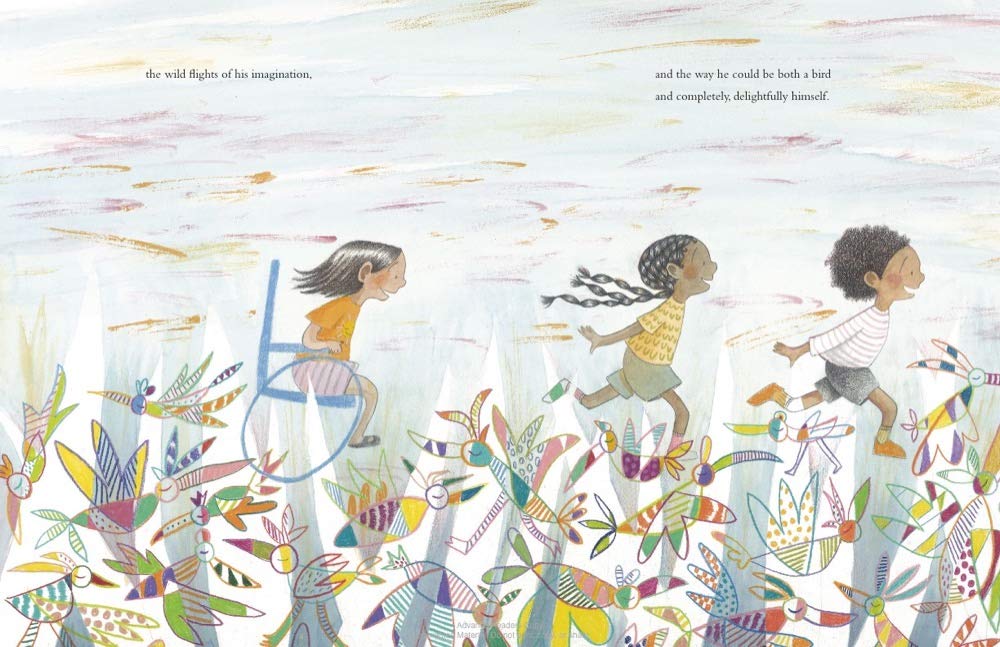
Summary:  Nico is nervous on his first day of school, and the reactions of the other kids don’t help much.  At recess, Nico’s not into sports or gossiping with friends, preferring to sit still and watch bugs crawling across the asphalt and the birds that gather around him.  When kids start calling him Bird Boy, Nico knows they’re making fun of him, but he embraces the name, imagining himself as an eagle, or a penguin, or a hummingbird.  Slowly, he makes a couple of friends, as some of the kids start to notice Nico’s kindness and vivid imagination.  At recess, playing on the swings with his new friends, Nico sometimes feels like he really can fly.  32 pages; ages 4-8.

Pros:  A beautiful book with a great “be yourself” message that will appeal to introverts and others who sometimes feel like they don’t fit into the mainstream.

Cons:  It seemed like a teacher or other adult could have provided some intervention with the name calling instead of letting Nico deal with it on his own.


Both Can Be True by Jules Machias

Published by Quill Tree Books

Both Can Be True: Machias, Jules: 9780063053892: Amazon.com: Books

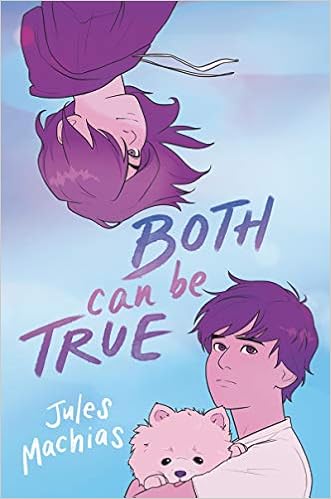
Summary:  Ash is starting at a new school after a bullying incident over their gender.  Daniel is tired of hiding the fact that he feels things deeply and cries easily.  The two of them bond over their shared love of a dog that Daniel is secretly trying to rescue.  When they meet, Ash is dressing and acting more like a girl, and a budding romance soon develops.  But, as has happened before, Ash begins to feel more like a boy, and has to decide how much to reveal to Daniel.  Both have to learn to stand up to parents and other kids who have certain expectations for them, and to learn that, even though each of them possesses seemingly contradictory parts of their personalities, both can be true.  368 pages; grades 5-8.

Pros:  Ash and Daniel are two well-developed characters with the daunting tasks of taking on gender norms and toxic masculinity in middle school.  Readers will be rooting for both of them as they gradually come to accept who they are and learn to speak up for what they need from those around them.  Their unconventional romance (which remains somewhat ambiguous to the end) is sweet and based on true friendship and caring about one another.

Cons:  The men, especially the dads, were pretty terrible throughout the book.  Daniel’s dad gets a bit of redemption at the end, and Ash’s mom is able to explain some of her dad’s clueless behavior, but it would have been nice to have some more nuanced portrayals.