Butterfly for a King by Susan L. Roth and Cindy Trumbore

Published by Lee and Low Books
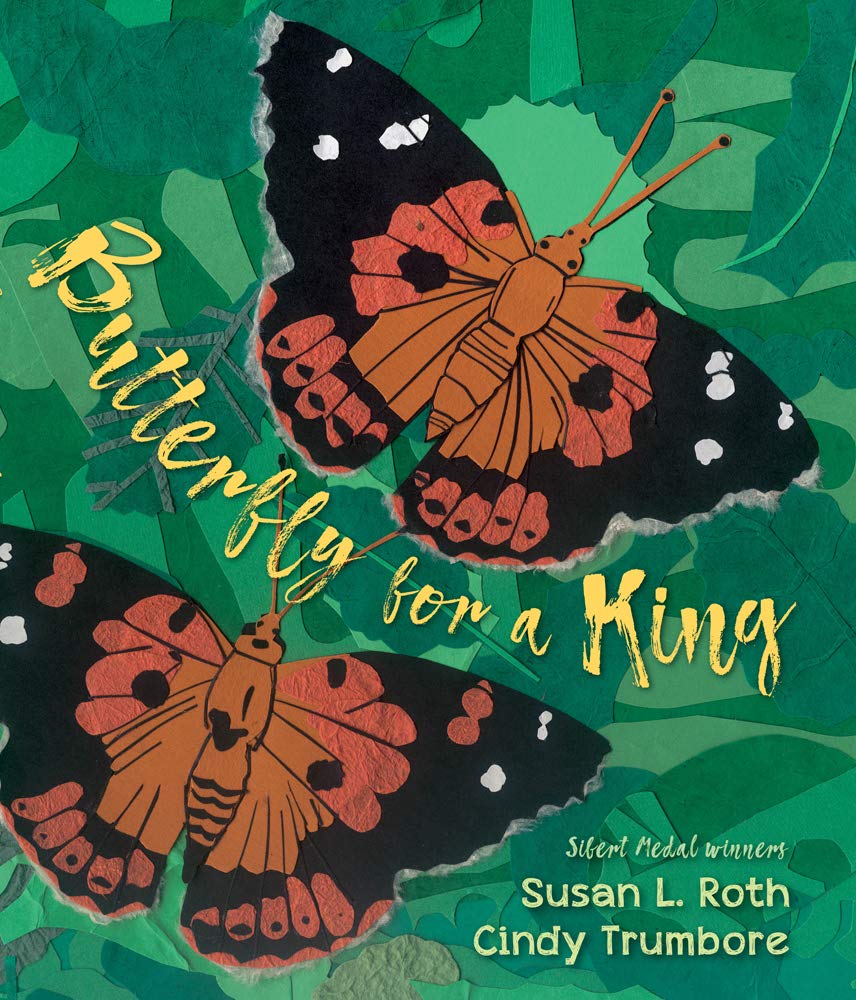
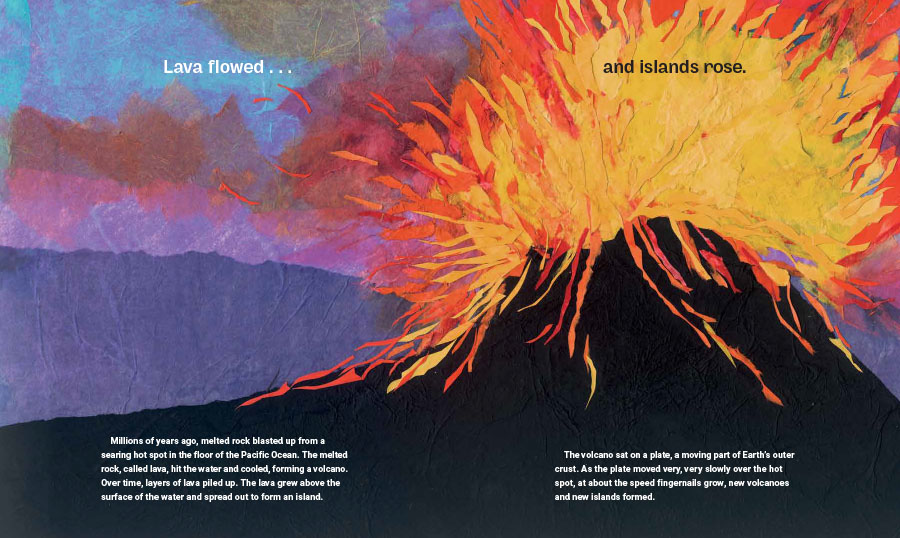
Image result for butterfly for a king amazon
Image result for butterfly for a king susan roth

Summary:  The isolation of the islands that make up Hawai’i means that they are home to plant and animal species that exist nowhere else on Earth.  One of these is the Kamehameha butterfly, named for the king who united all of the islands.  In 2009, a group of fifth grade students led a successful campaign to make this butterfly the state insect, hoping to bring attention to the endangered butterfly.  Soon scientists from the state and the University of Hawai’i started working together to help save the Kamehameha.  Citizen scientists helped collect data and photos.  Since then, thousands of butterflies have been raised in captivity and released all around Hawai’i.  Includes an afterword with a map and many photos; an illustrator’s note; and a list of sources.  48 pages; grades 2-5.

Pros:  Another excellent nonfiction book by the Sibert Medal winning team of Susan Roth and Cindy Trumbore.  Kids will be inspired by the way elementary students made a real difference in helping with an environmental issue.  The collage illustrations enhance the text, which includes information on the formation of the Hawaiian islands, the butterfly’s life cycle, King Kamehameha, and how the scientists carried out their project.

Cons:  Even with the pronunciation guides, I struggle with how to say some of the Hawaiian words.
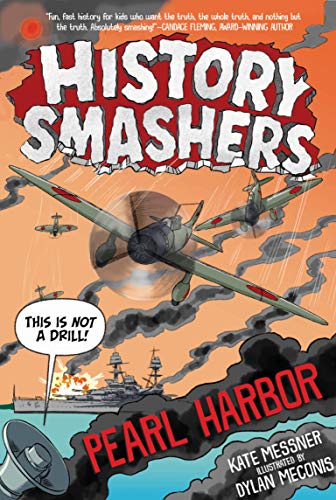
Pearl Harbor (History Smashers) by Kate Messner, illustrated by Dylan Meconis

Published by Random House Books for Young Readers

Image result for history smashers pearl harbor

Summary:  When Pearl Harbor was “suddenly and deliberately attacked” by Japan on December 7, 1941, it seemed as though it had come with no warning.  But Kate Messner shows that there were those who predicted an attack as far back as the 1920’s.  The declaration of war brought out the best and worst of America, as people came together to win, but also showed cruel racism against Japanese Americans and in the segregated military.  The narrative goes through Hiroshima and Nagasaki, all the way up to the 2016 visits of President Barack Obama to Hiroshima and Japanese Prime Minister Shinzo Abe to Pearl Harbor. Includes a timeline; author’s note; bibliography; index; and lists of books, websites, and museums to visit.  224 pages; grades 3-7.

Pros:  Somehow I missed this series’ debut in 2020, but I’m glad I caught up with this latest volume.  The premise is to show some of the history that hasn’t always been taught, presumably because it doesn’t portray the U.S. in the best way.  Filled with personal narratives, photos, and pages of comic panels in every chapter, the fast pace and human interest focus are sure to entice both history buffs and reluctant readers. Perfect for fans of Nathan Hale’s Hazardous Tales.

Cons:  The focus is mostly on the war with Japan, so the European side of World War II gets a bit of a short shrift, with the Holocaust receiving a mere four sentences.

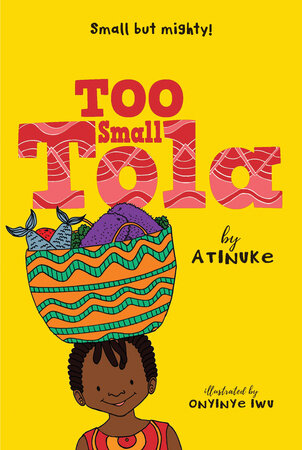
Too Small Tola by Atinuke, illustrated by Onyinye Iwu (Released March 2)

Published by Candlewick

Image result for too small tola

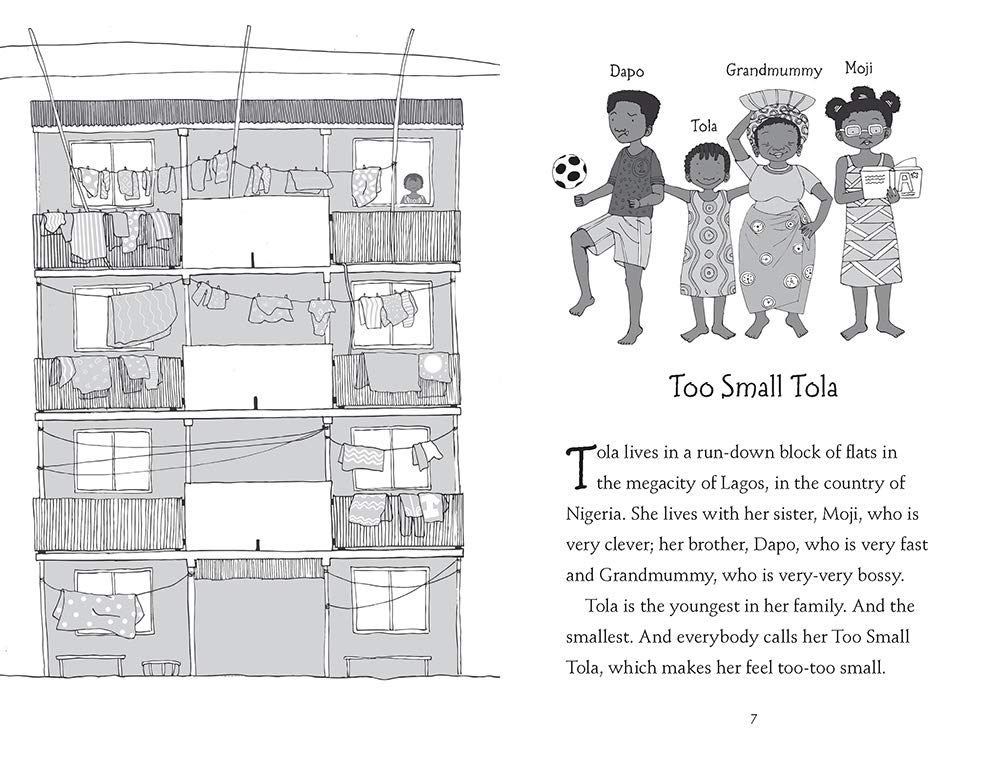
Summary:  Tola is the youngest of three children living with their grandmother in Lagos, Nigeria.  Because of her size and place in the family, Tola is often told she is too small and works hard to prove otherwise.  In the first story, she and Grandmommy go to the market and struggle to carry home all their purchases.  Next, Tola helps her siblings get water when the water in the apartment isn’t working.  She is almost thwarted by some older boys until some kind neighbors turn the tables on the bullies.  Finally, Tola saves her friend the tailor when he breaks his leg.  Tola has a talent with numbers, and she and her older brother bike all over Lagos to measure people for their new Easter and Eid outfits.  Tola is rewarded by the tailor with the beautiful ruffled dress that she has dreamed about.  96 pages; grades 2-4.

Pros:  These tales are completely charming, both the stories and the illustrations.  Tola and her family live in pretty impoverished circumstances, in a two-room apartment with unreliable water and electricity that is paid for by a father working in England.  But her circumstances are described in a very matter-of-fact way, with a much greater emphasis on the love and caring of Tola’s family and community.

Cons:  I was really hoping for a bit of backmatter on Lagos and Nigeria–at least a map.

I happened to listen to a TED talk recently that is the perfect complement to this book. If you have fifteen minutes, listen to The Danger of a Single Story by author Chimamanda Ngozi Adichie, who grew up in Lagos.

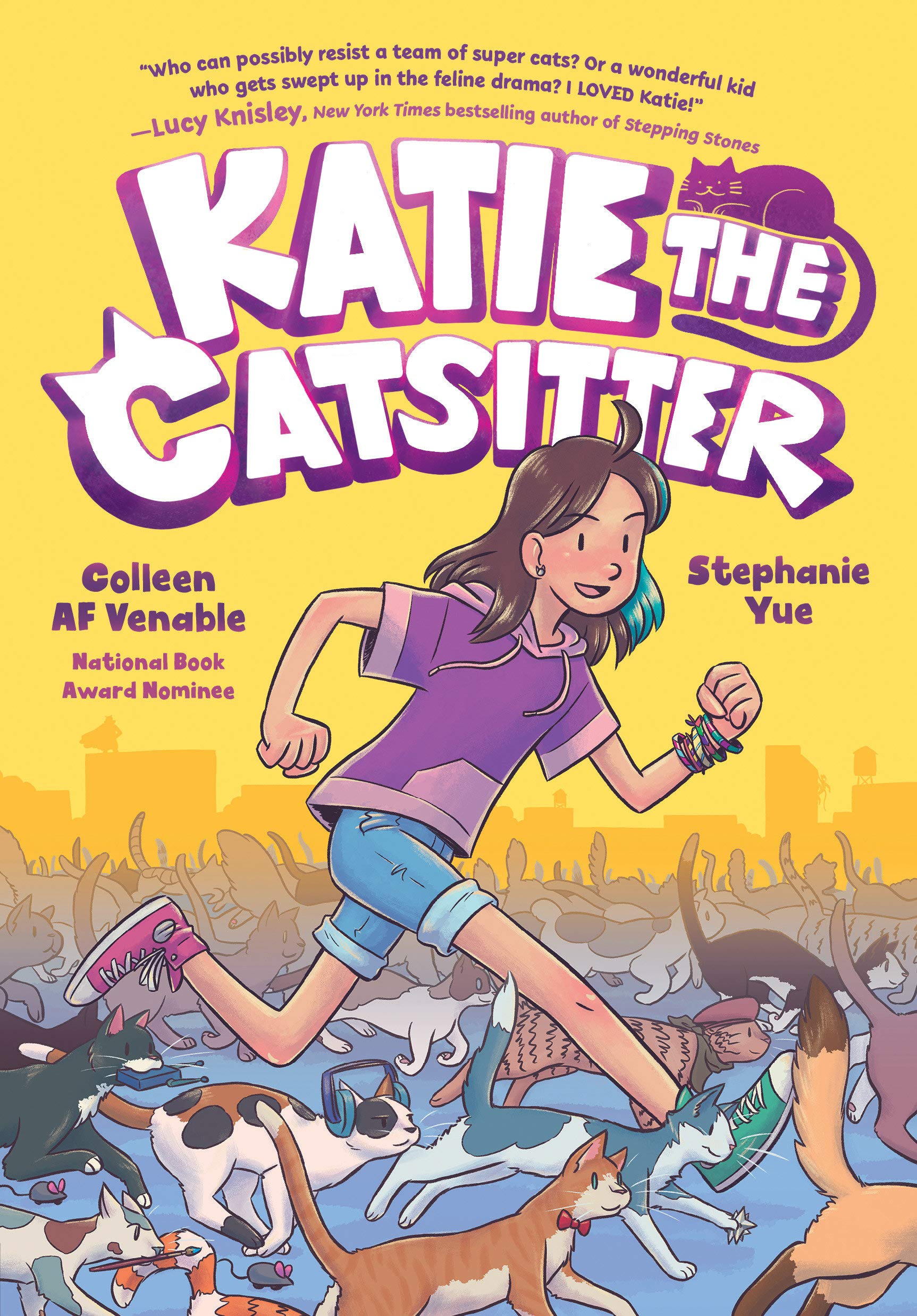
Katie the Catsitter by Colleen A. F. Venable, illustrated by Stephanie Yue

Published by Random House Books for Young Readers

Image result for katie the catsitter amazon

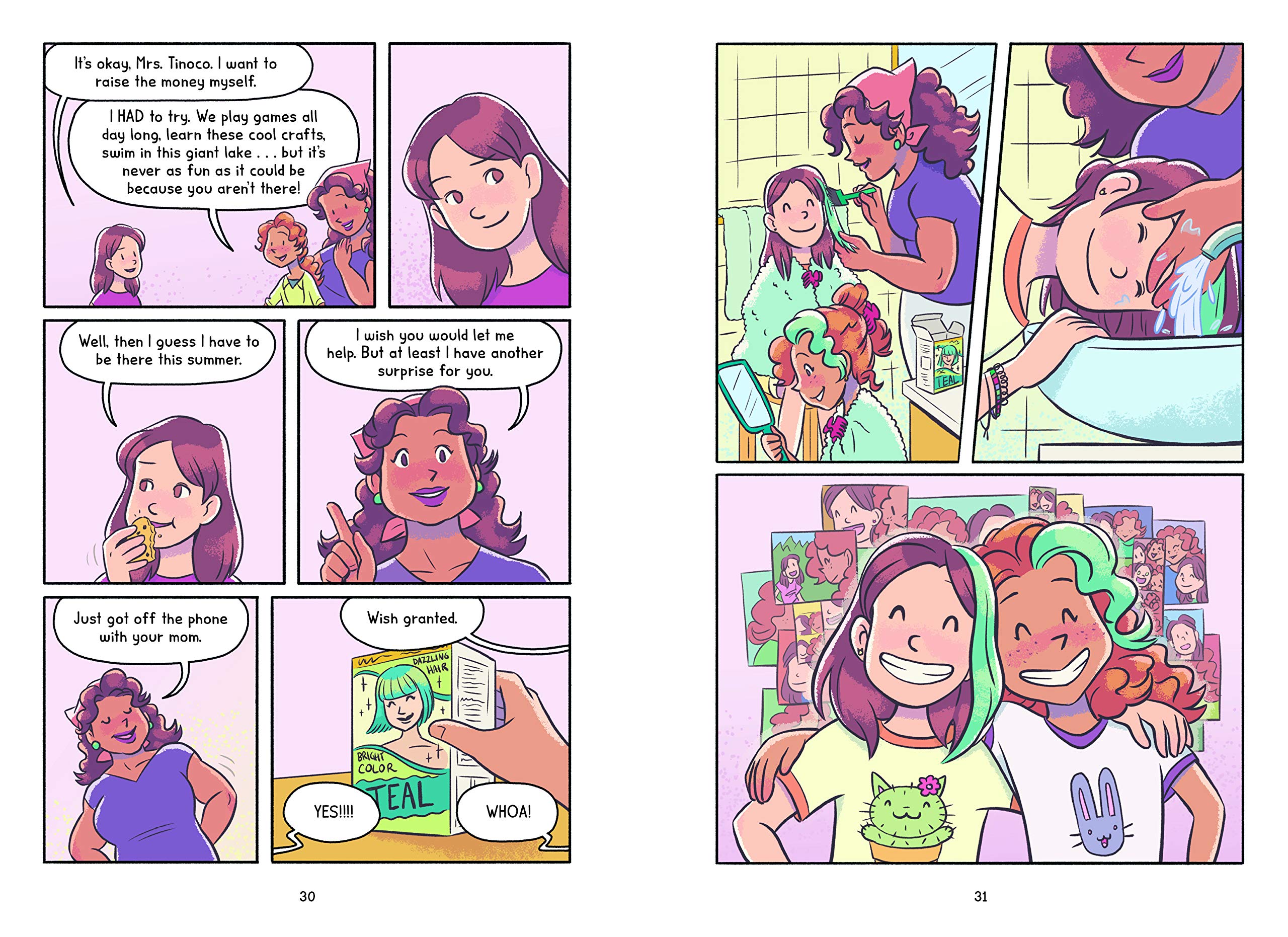
Summary:  Katie’s facing a boring summer when her best friend Bethany leaves for camp.  Hoping to join her for a one-week session, Katie advertises her pet-sitting services in her apartment building.  She’s hired by the mysterious Madeleine Lang to look after her 217 cats.  Every evening, Ms. Lang goes off to work until midnight, and Katie deals with the cats.  As she begins to learn the cats’ various amazing talents, Katie starts to suspect Ms. Lang’s true identity.  By the end of the summer, Katie’s interest in going to camp has been replaced with more heroic pursuits at home.  224 pages; grades 3-7.

Pros:  Hand this graphic novel to fans of Raina Telgemeier and company; they will be delighted by the magic realism of Katie’s world and the amazing cats whose individual personalities and superpowers are lovingly delineated.

Cons:  So many cats made me sneeze.

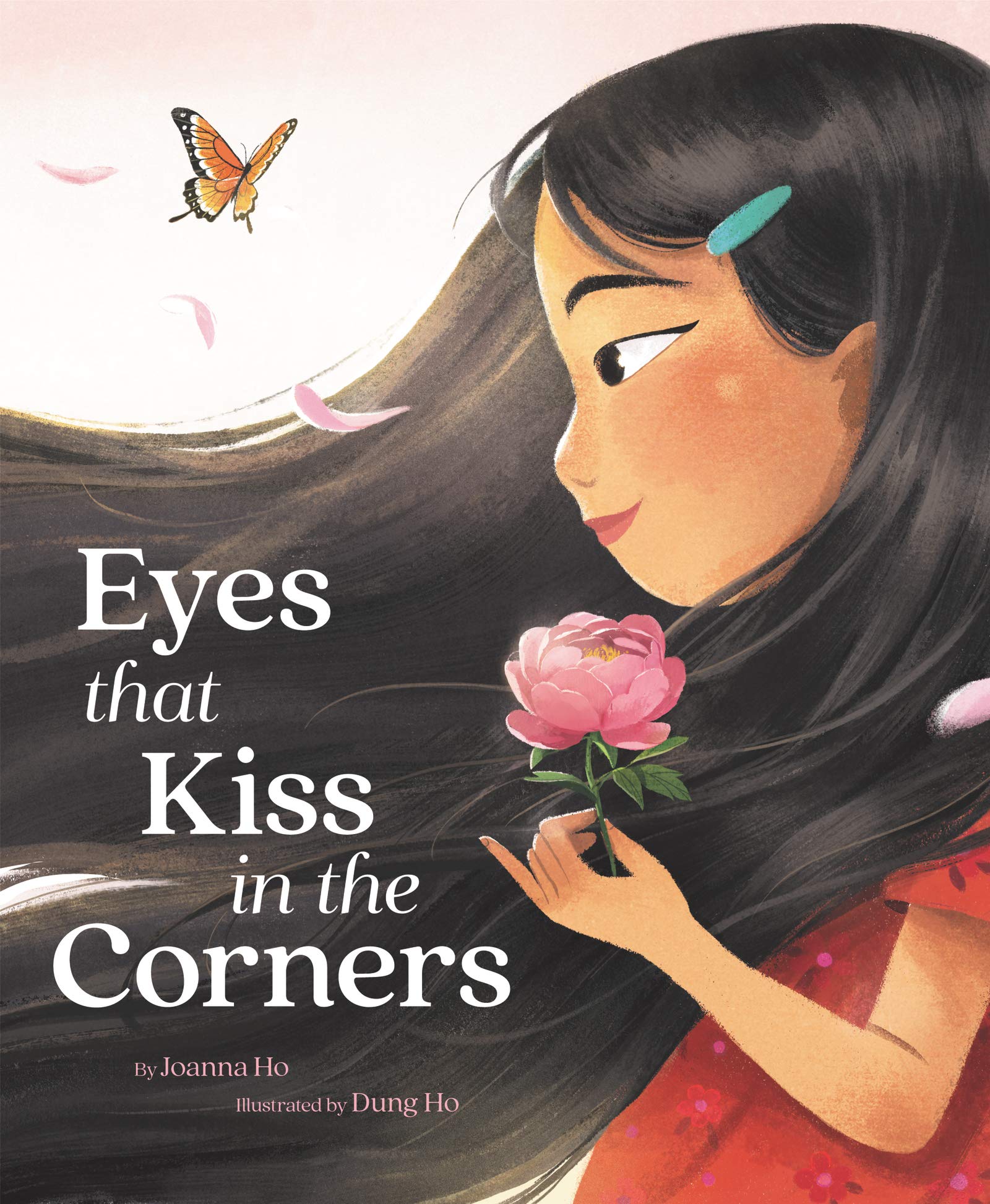
Eyes That Kiss in the Corners by Joanna Ho, illustrated by Dung Ho

Published by HarperCollins

Image result for eyes that kiss in the corners amazon

Summary:  “Some people have eyes like sapphire lagoons with lashes like lace trim on ballgowns,” a Chinese-American girl reflects.  “Not me.”  Her eyes “kiss in the corners and glow like warm tea.”  Her eyes are like her mother’s, her grandmother’s, and her little sister’s.  She reflects on how their eyes show their love and admiration as readers see the warm connections among all the girls and women in the family, and she concludes that all of their eyes are beautiful.  40 pages; ages 4-8.

Pros:  Both the text and illustrations are affirming of self-acceptance and family love, with the pictures showing beautiful spreads from Chinese folklore.

Cons:  I would have liked to have learned more about the images in an illustrator’s note.

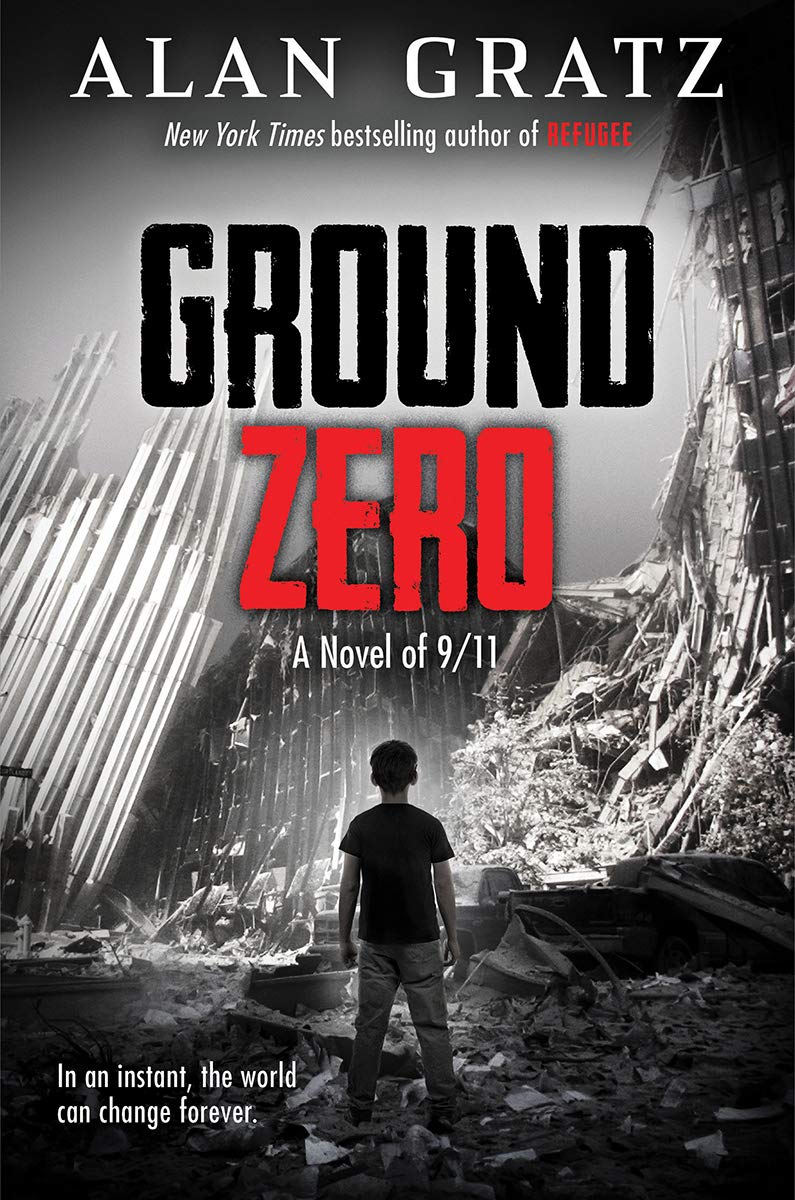
Ground Zero: A Novel of 9/11 by Alan Gratz

Published by Scholastic

Image result for ground zero gratz

Summary:  Brandon has been suspended from school and is spending the day of September 11, 2001 with his dad, who works at the Windows of the World restaurant in the World Trade Center.  When his father isn’t looking, Brandon sneaks out to buy a toy in the mall.  The World Trade Center is hit by a jet while Brandon is in the elevator, and he must find his way down 89 floors to escape–after trying to go back up to rescue his father.  In alternating chapters, readers spend the day of September 11, 2019 with Reshmina, a girl in Afghanistan who rescues an American soldier and pays a price when the Taliban finds out.  The two protagonists’ stories intersect at the end of the book, and each one gains a new perspective from meeting the other.  336 pages; grades 5-8.

Pros:  Alan Gratz has produced another historical fiction novel filled with compelling characters and heart-pounding action.  In his characteristic style, he ends each chapter with a cliff-hanger, then picks up the narrative of the other character.  In his author’s note he mentions that it has taken him 20 years to feel ready to write about 9/11, and I think he was wise to wait.  The takeaway message questioning the ongoing American presence in Afghanistan might have been quite different a decade ago.

Cons:  I found Brandon’s story much more compelling and suspenseful than Reshmina’s, which had to provide a lot of context about Afghanistan that took away from the action.

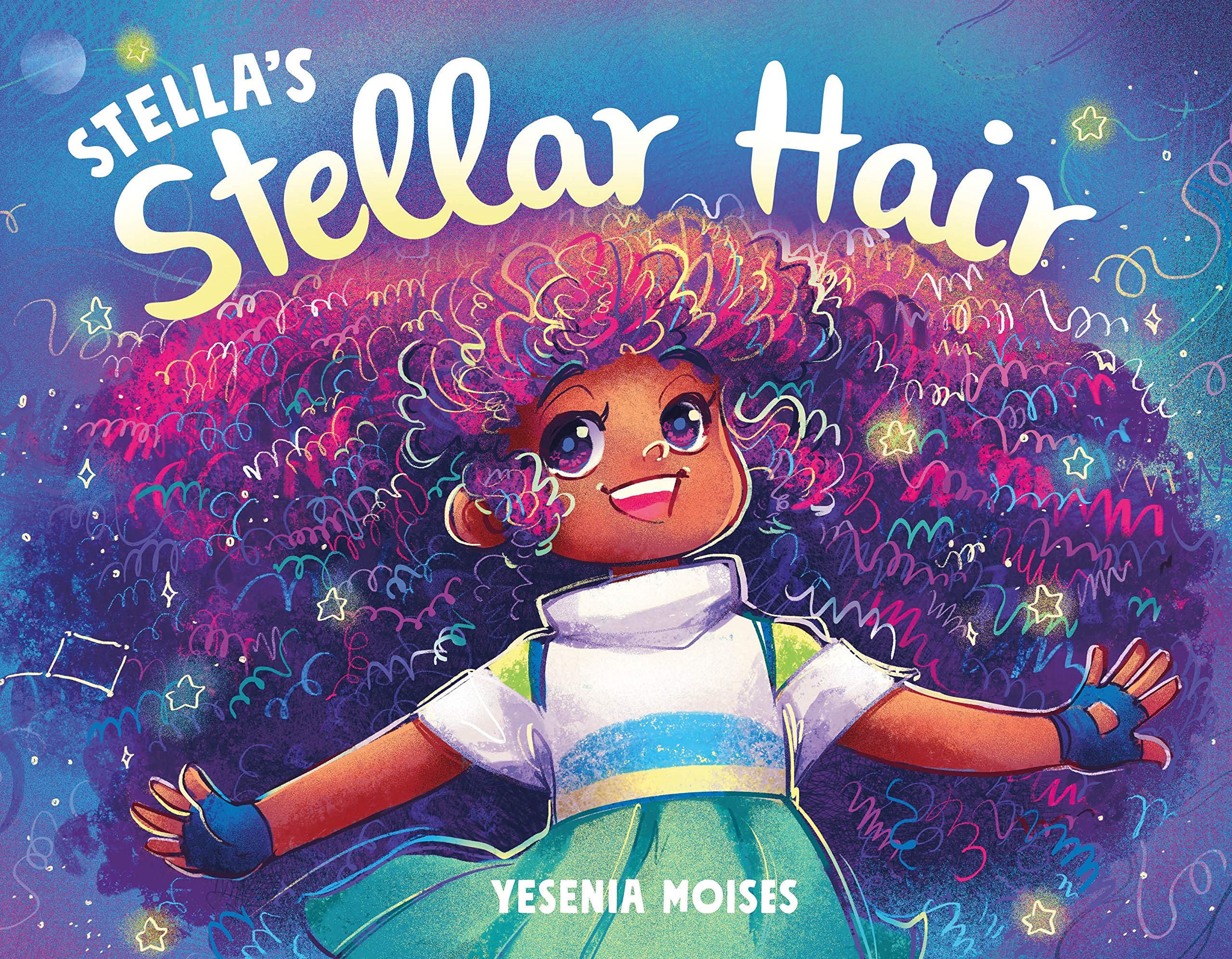
Stella’s Stellar Hair by Yesenia Moises

Published by Imprint

Image result for stella's stellar hair amazon

Summary:  It’s the day of the Big Star Little Gala, and Stella wants her hair to look just right.  But it’s twisting and turning, zigging and zagging, making loopity-loops and lots of curly Q’a.  Stella’s Momma sends her off to visit her aunt on Mercury.  Aunt Ofelia’s stay-smooth style isn’t quite right, so Stella goes to see Auntie Alma on Venus.  Each planetary aunt has different ideas about her hair, but none satisfies Stella.  Finally, Auntie Solana, the aunt over by the sun, has the best advice of all: just be yourself.  So Stella does her own hair, enjoying its twists, turns, and curls, and that turns out to be the best hair-do for the big event.  Includes two pages of information about the planets and why each one has its particular hairstyle.  40 pages; ages 4-8.

Pros:  The eye-popping art and be-yourself message are sure to resonate with anyone who’s ever had a bad hair day, and particularly celebrates Black hair.

Cons:  I still miss Pluto.

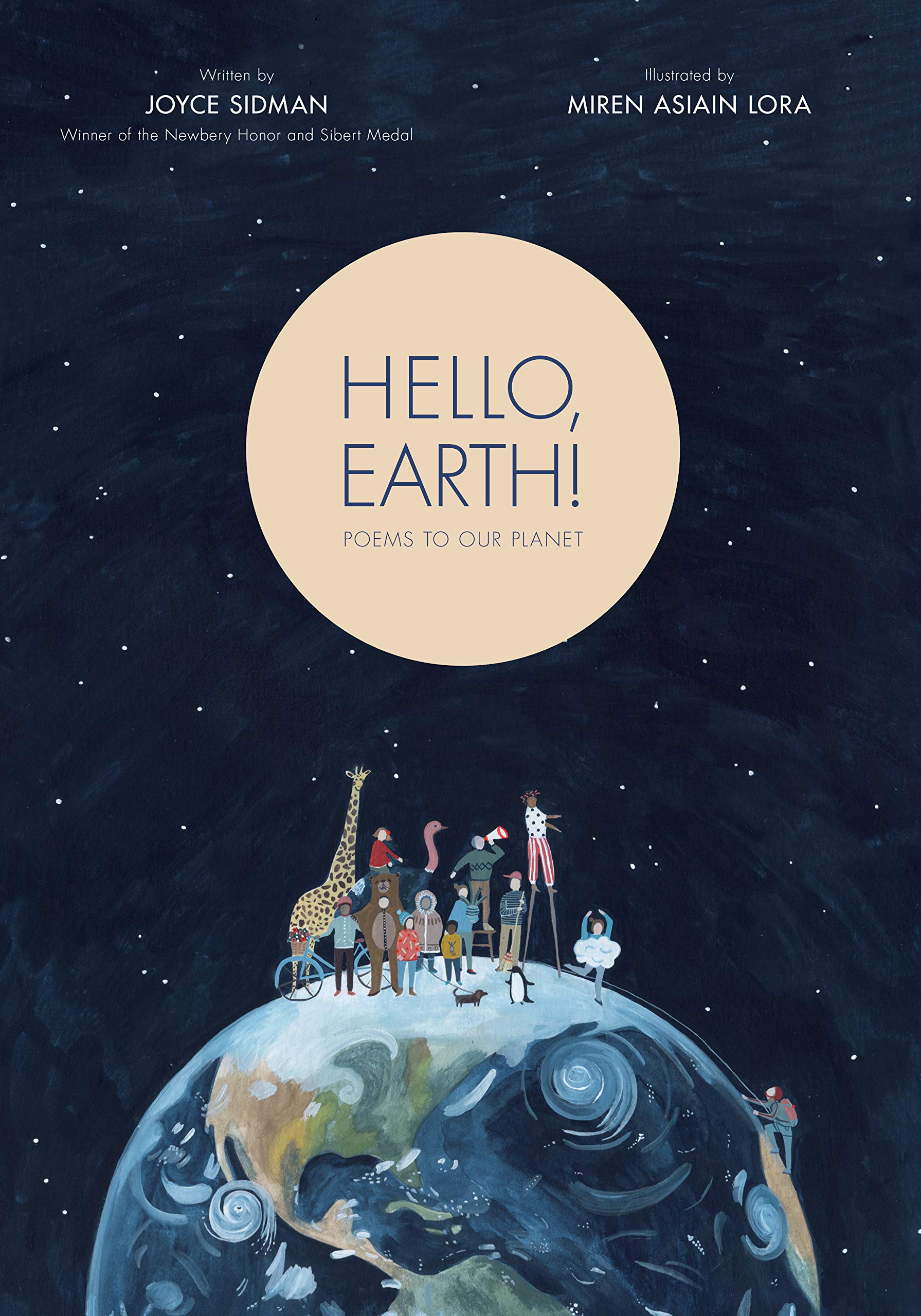
Hello, Earth! Poems to Our Planet by Joyce Sidman, illustrated by Miren Asiain Lora

Published by Eerdmans Books for Young Readers

Image result for hello earth joyce sidman

Summary:  Newbery Honor poet Joyce Sidman explores different aspects of Earth in these poems addressed to the planet itself.  There’s a sense of wonder, “How can we be here, climbing trees, walking paths, staring up at constellations…and also out in deepest space?”  There are poems about volcanoes, earthquakes, jungles, and mountains.  Taken together, the poems are a love letter to Earth, and a promise to take care of the planet.  Includes six pages of additional information about each topic addressed; resources about climate change, ways kids can help, and citizen science projects; and a list of books for further reading.  68 pages; grades 1-5.

Pros:  This beautifully illustrated book of poems celebrates Earth and many aspects of earth science.  The poems and illustrations are accessible to kids in primary grades, and the extensive back matter makes it useful for older kids to explore further.

Cons:  Earth doesn’t seem to have any answers for all the questions.

The Beak Book by Robin Page

Published by Beach Lane Books

Image result for beak book page

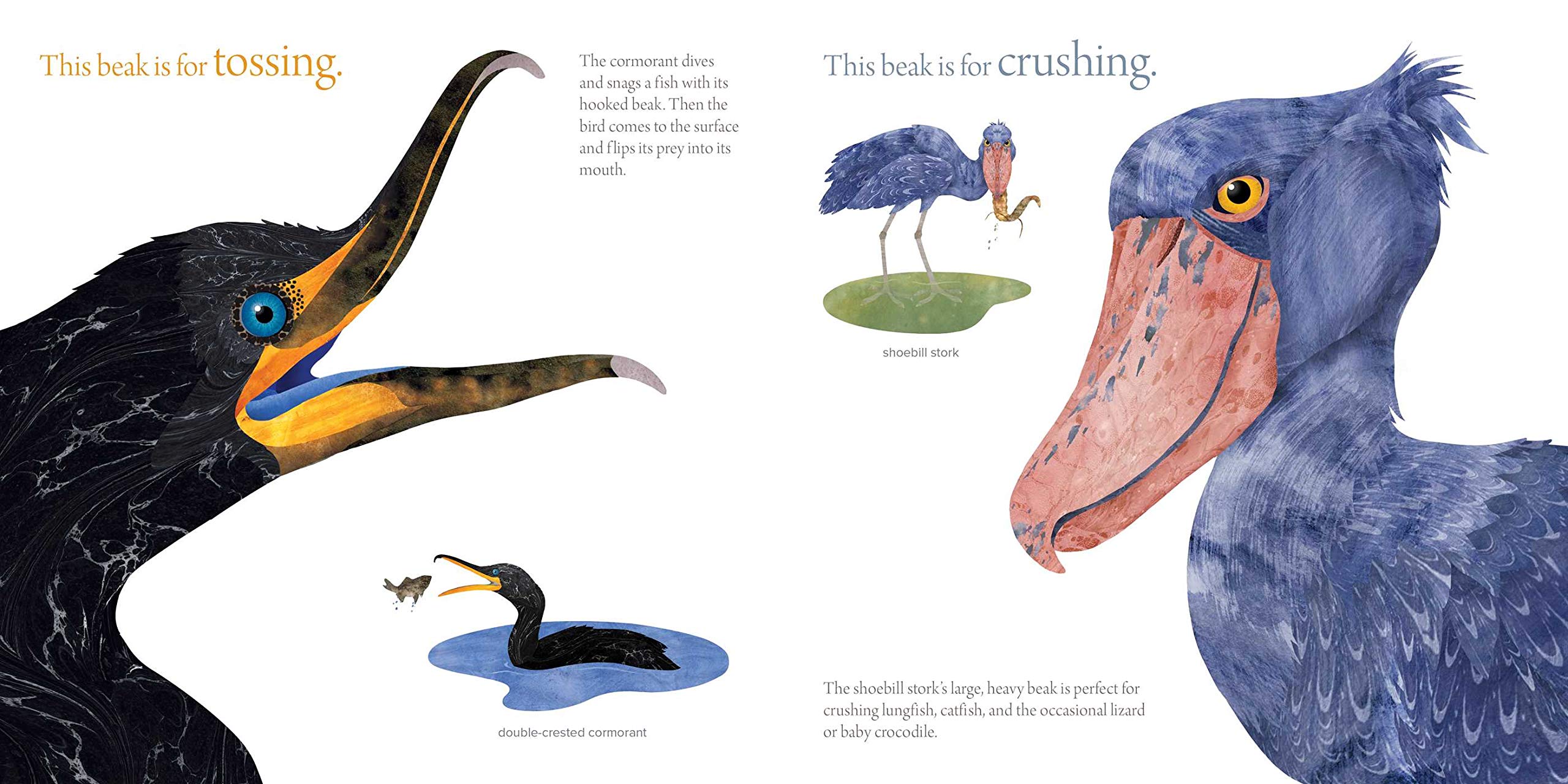
Summary:  Each page shows a large, colorful picture of a bird, a small picture of the bird using its beak, a sentence about how the bird uses its beak and a label identifying the bird.  Beaks are used for straining, tossing, crushing, and a host of other activities.  The final bird is a baby ruddy duckling who uses its beak, as do many birds, to break out of its egg.  Includes a two-page spread showing silhouettes of each bird relative to a human, where it lives in the world, and what its diet is; also a bibliography.  40 pages; ages 3-8.

Pros:  Over 20 birds are profiled, and the illustrations are striking.  Readers will be amazed at how many different uses there are for a beak.

Cons:  The information is pretty minimal; this is probably more of a read-aloud or a book to browse than something that will help much with research.

Time for Kenny by Brian Pinkney

Published by Greenwillow

Image result for time for kenny pinkney

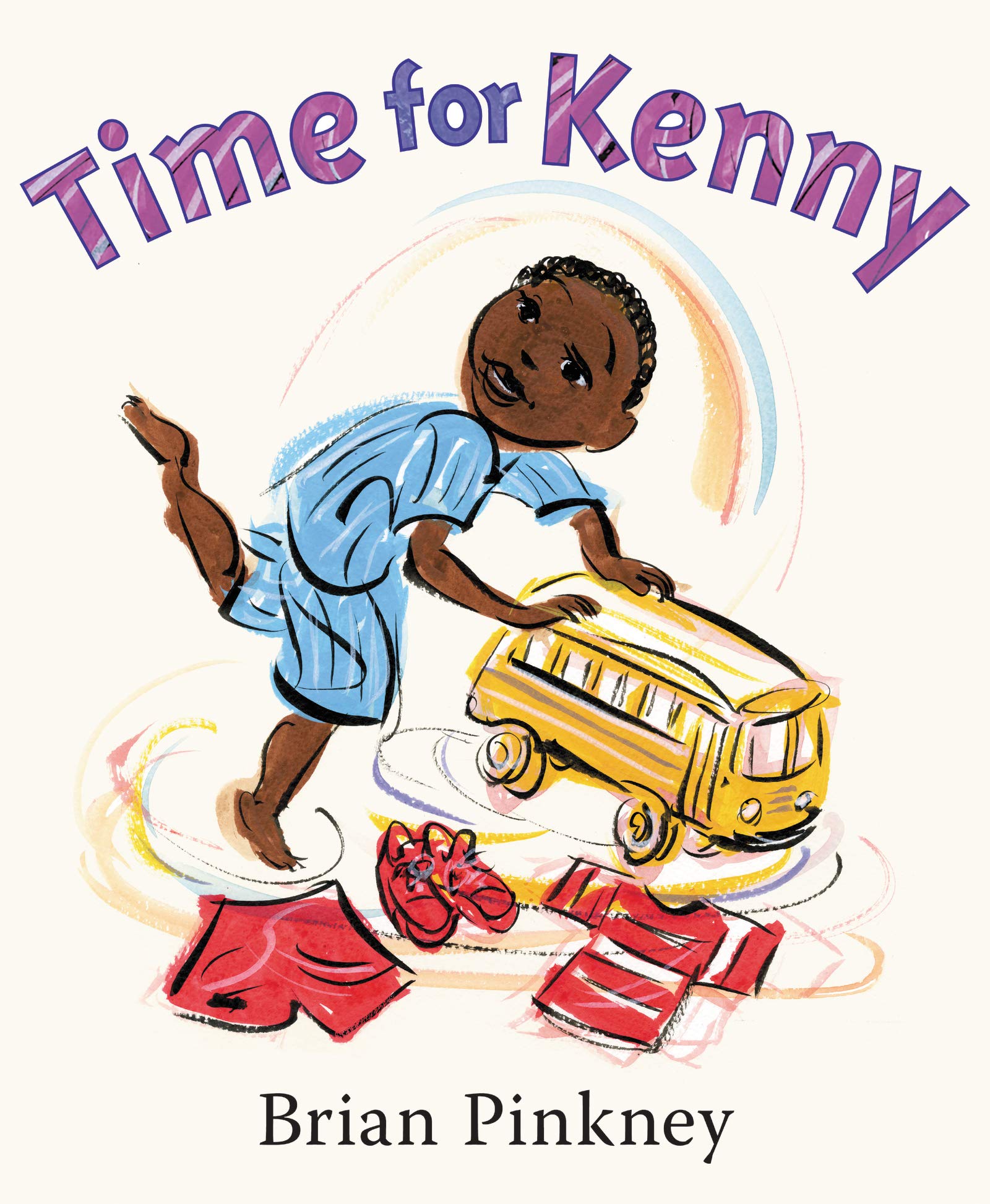
Summary:  Kenny’s day is described in four stories: getting dressed for school; overcoming his fear of the vacuum cleaner; practicing soccer with his sister; and getting ready for bed.  Each story is marked with a colored page, the color often showing up again through that story.  The final page has Kenny sleepily climbing into bed, making this a perfect bedtime story.  40 pages; ages 3-6.

Pros:  Even the youngest readers will relate to Kenny’s stories which include a loving family who enjoy Kenny’s humor and reassure him about his fears.  The illustrations are deceptively simple, with the same colors and objects appearing throughout the stories.

Cons:  Bedtime also appears deceptively simple.