Once Upon a Winter Day by Liza Woodruff

Published by Margaret Ferguson Books
Once Upon a Winter Day by Liza Woodruff: 9780823440993 |  PenguinRandomHouse.com: Books

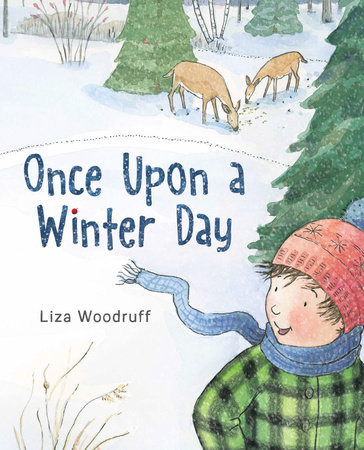
Summary:  Milo wants a story, but his mom is too busy.  “Why don’t you go play in the snow?” she suggests.  Grumpily, Milo heads out the door and stomps away from the house.  Under the birdfeeder, he notices tiny footprints that he deduces belong to a mouse.  Did the mouse have a story to tell? he wonders.  Turn the page for a two-page spread showing a mouse eating the bird feed that’s fallen in the snow.  Finding a feather in a tree has him imagining a flock of birds flying overhead.  Hemlock branches on the ground may have been caused by porcupines feeding in the tree.  Milo’s imagination takes off until he’s surprised to hear Mom calling him in for dinner.  When he gets inside, she offers to read him some stories after dinner, but he declines.  “This time,” he replies.  “I have stories for you.”  40 pages; ages 4-8.

Pros:  A great winter story which will encourage kids to sharpen their observation skills.  Since Milo notices clues on one page, and imagines the story on the next, this would make a fun participatory read-aloud, inviting kids to guess what happened before turning the page.  The illustrations are beautiful, and the animals are pictured and identified on both sets of endpapers.

Cons:  I’m not sure a fish skeleton belongs at the dinner table.

Wild Girl: How to Have Incredible Outdoor Adventures by Helen Skelton, illustrated by Liz Kay

Published by Candlewick

Wild Girl: How to Have Incredible Outdoor Adventures: Skelton, Helen, Kay,  Liz: 9781536212860: Amazon.com: Books

Summary:  Helen Skelton is a British TV personality who also enjoys taking on incredibly difficult outdoor challenges, usually for charity, such as kayaking the length of the Amazon River,  bicycling to the South Pole, and running three back-to-back marathons in under 24 hours in the Namibian desert.  Each chapter covers a certain type of terrain: adventures in the snow, the sand, the water, the mountains, the countryside, and the city.  Much of the chapter is taken up with an account of her own adventure, including preparation, training, gear, and the actual experience with all of its highs and lows.  At the end of each chapter, she suggests wild adventures and extremely wild adventures, with places around the world to enjoy each.  There’s also a “Wild Girl Wall of Fame” which gives short profiles of other women’s adventures in that chapter’s terrain.  144 pages; grades 5-8.

Pros:  Although most of us won’t attempt Helen’s feats, she’s an enthusiastic storyteller who may inspire girls (and boys) to step out of their comfort zones.  She’s also modest about her accomplishments, frequently citing mistakes she made and encouraging readers to tune out the types of naysayers she experienced.  The book, with its plentiful illustrations, photos, and sidebars, is engaging and will be an easy sell to middle schoolers.

Cons:  Some of the stories (the marathons in the desert comes to mind) were so harrowing they actually made me want to be less adventurous.

Every Little Letter by Deborah Underwood, illustrated by Joy Hwang Ruiz

Published by Dial Books

Every Little Letter: Underwood, Deborah, Ruiz, Joy Hwang: 9780525554028:  Amazon.com: Books
Every Little Letter by Deborah Underwood

Summary:  The letters are pretty happy living in their walled city, even though they are all H’s.  One little h, though, is a bit more adventurous.  When she finds a hole in the wall, she discovers an i, and together they make a friendly “hi”.  A big H seals up the hole, so the small h starts sending letters on paper airplanes flown over the wall.  Soon other small letters start participating, and more and more words are formed (and tic-tac-toe games become more interesting).  When the big letters put an end to things again, the h uses the two letters she has left to come up with a plan.  Finally, even the big letters start to cautiously reach out to one another.  “How do you tear down walls? With words at first. Then brick by brick.” 40 pages; ages 4-8.

Pros:  I thought this was going to be just another alphabet book, but there’s a deeper message, focusing on appreciating others’ differences and learning to live together.  Of course, the letter part is fun, too, seeing how the letters get together to form words.  Beginning readers will enjoy exercising their new skills and will come away with a positive message as well.

Cons:  Those are some cranky uppercase letters.

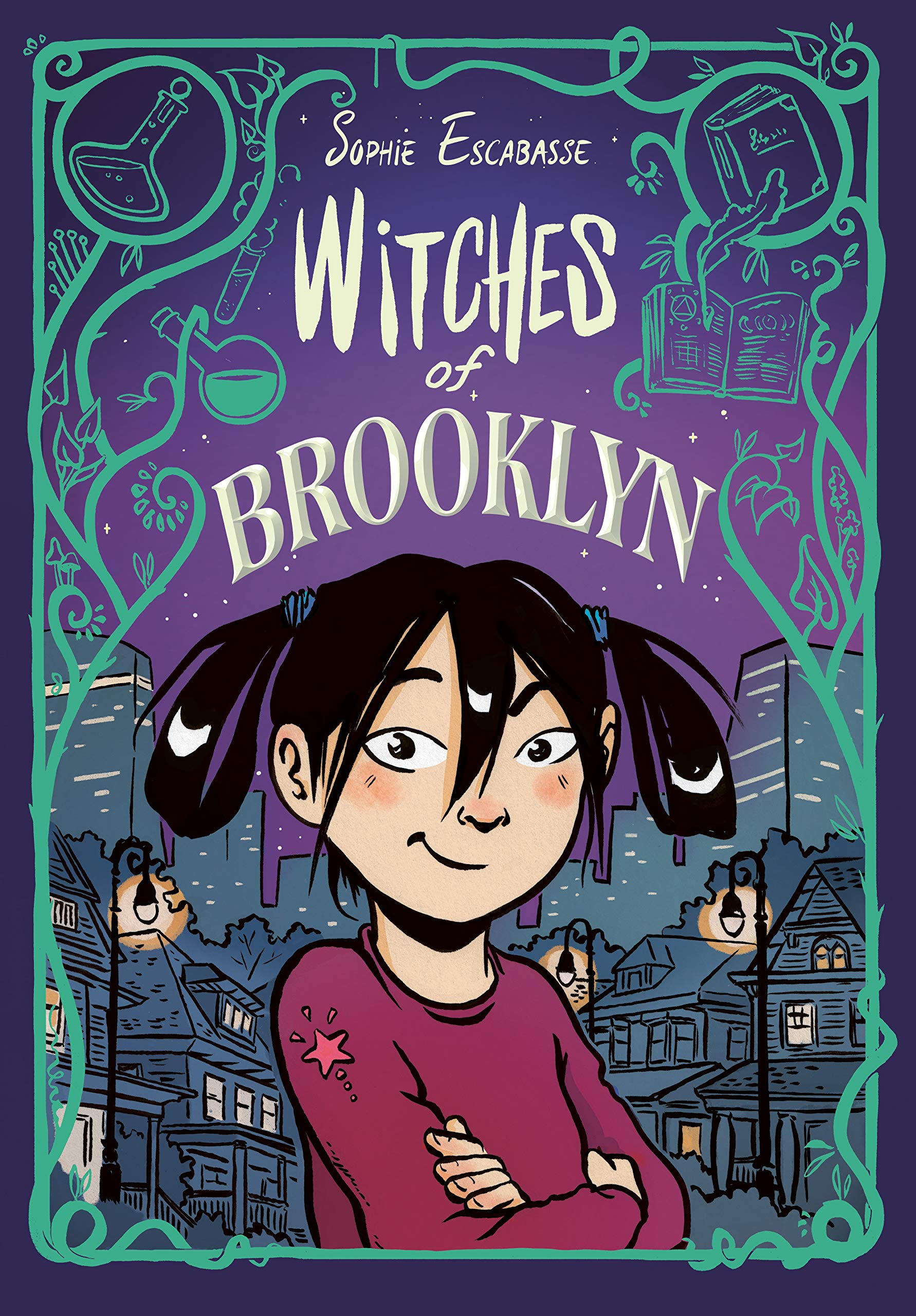
Witches of Brooklyn by Sophie Escabasse

Published by Random House Graphic

Witches of Brooklyn: Escabasse, Sophie: 9780593119273: Amazon.com: Books

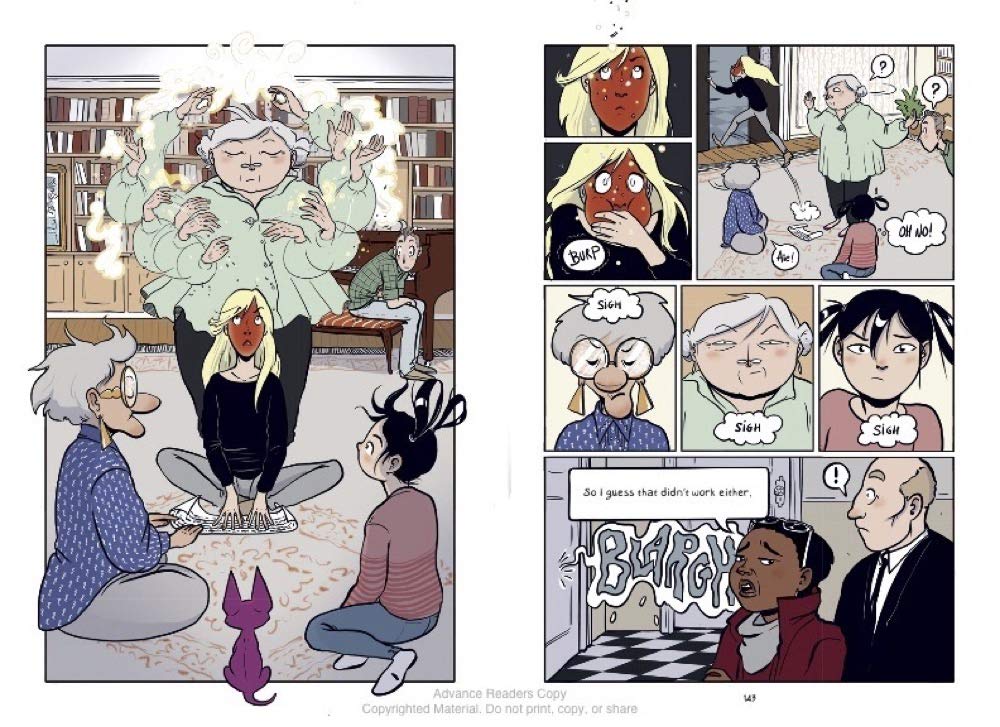
Summary:  When Effie is dropped off at her Aunt Selimene’s home in the middle of the night, neither one is happy about it.  But Effie has nowhere else to go, and Aunt Selimene is her only living relative.  Selimene’s partner Carlota makes Effie feel welcome, and within a few days everyone is feeling better about the situation.  Selimene and Carlota claim to be herbalists and acupuncturists, but Effie soon discovers they are actually witches.  Before long, her own magical powers emerge, although she has difficulty controlling them.  When celebrity singer Tily Shoo shows up needing the witches’ help, her #1 fan Effie gets in on the case as well.  It’s Effie who makes a key discovery that will help Tily Shoo reverse the curse that has been placed on her.  Things wrap up with a happy ending, but there’s a preview of book 2 at the end, and the author’s biography says she’s working on a trilogy.  240 pages; grades 3-6.

Pros:  A fun graphic novel for anyone who likes school and family stories with a touch of magic thrown in.  There’s a lot of action and many characters, but the pace is good and the characters are well-distinguished in the illustrations, making it easy to follow what’s going on.

Cons:  There’s not much told about Effie’s previous life or what happened to her mother.

Stand Up! Speak Up! A Story Inspired by the Climate Change Revolution by Andrew Joyner

Published by Schwartz and Wade

Stand Up! Speak Up!: A Story Inspired by the Climate Change Revolution:  Joyner, Andrew: 9780593301586: Amazon.com: Books

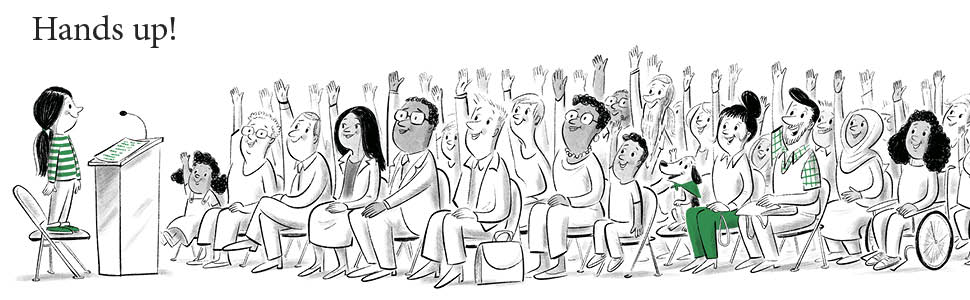
Summary:  Each sentence in this book has just two words: Wake up. Dress up.  Meet up.  The girl in the story is on her way to a rally about climate change.  She’s excited to hold a sign, listen to speakers, and cheer, and that evening she sees the rally on the news.  But the stories after hers are reporting on wildfires, floods, and hurricanes, and she goes to bed feeling discouraged.  Lying awake, she has some new ideas, and the next morning sets about putting them into action.  The final gatefold spread shows her working at a table with information, surrounded by other environmental activists.  Includes drawings and brief profiles of 14 young climate activists from around the world.  40 pages; ages 4-9.

Pros:  An inspiring book for young activists (the dust jacket is printed on the back to be used as a protest sign) with lots to look at.  The busy illustrations tell the story effectively with minimal words, and convey the message that making social change isn’t a one-day event.

Cons:  I was hoping that the real-life activists were hidden somewhere in the crowd scenes, but I couldn’t find any of them.

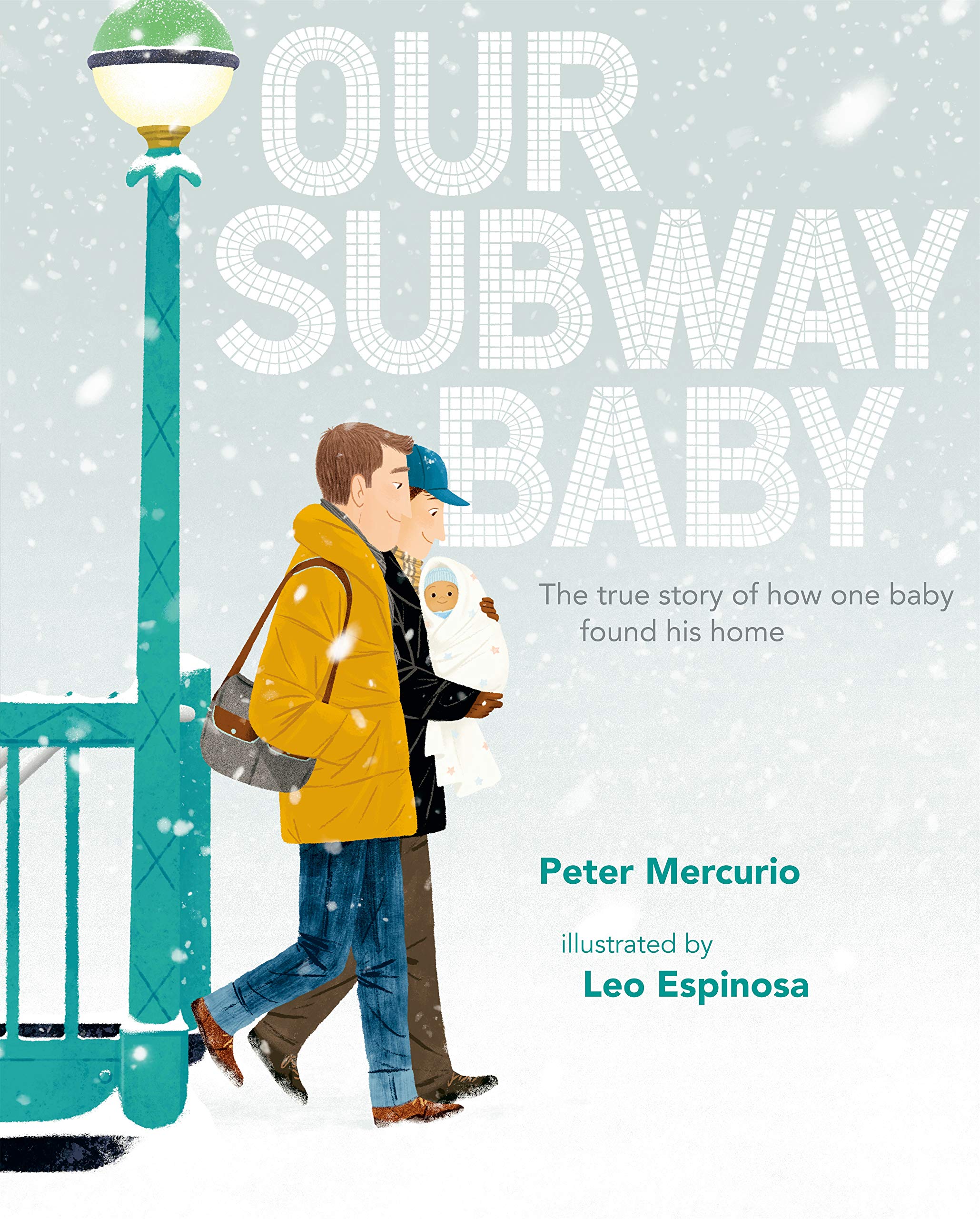
Our Subway Baby by Peter Mercurio, illustrated by Leo Espinosa

Published by Dial Books

Our Subway Baby: Mercurio, Peter, Espinosa, Leo: 9780525427544: Amazon.com:  Books

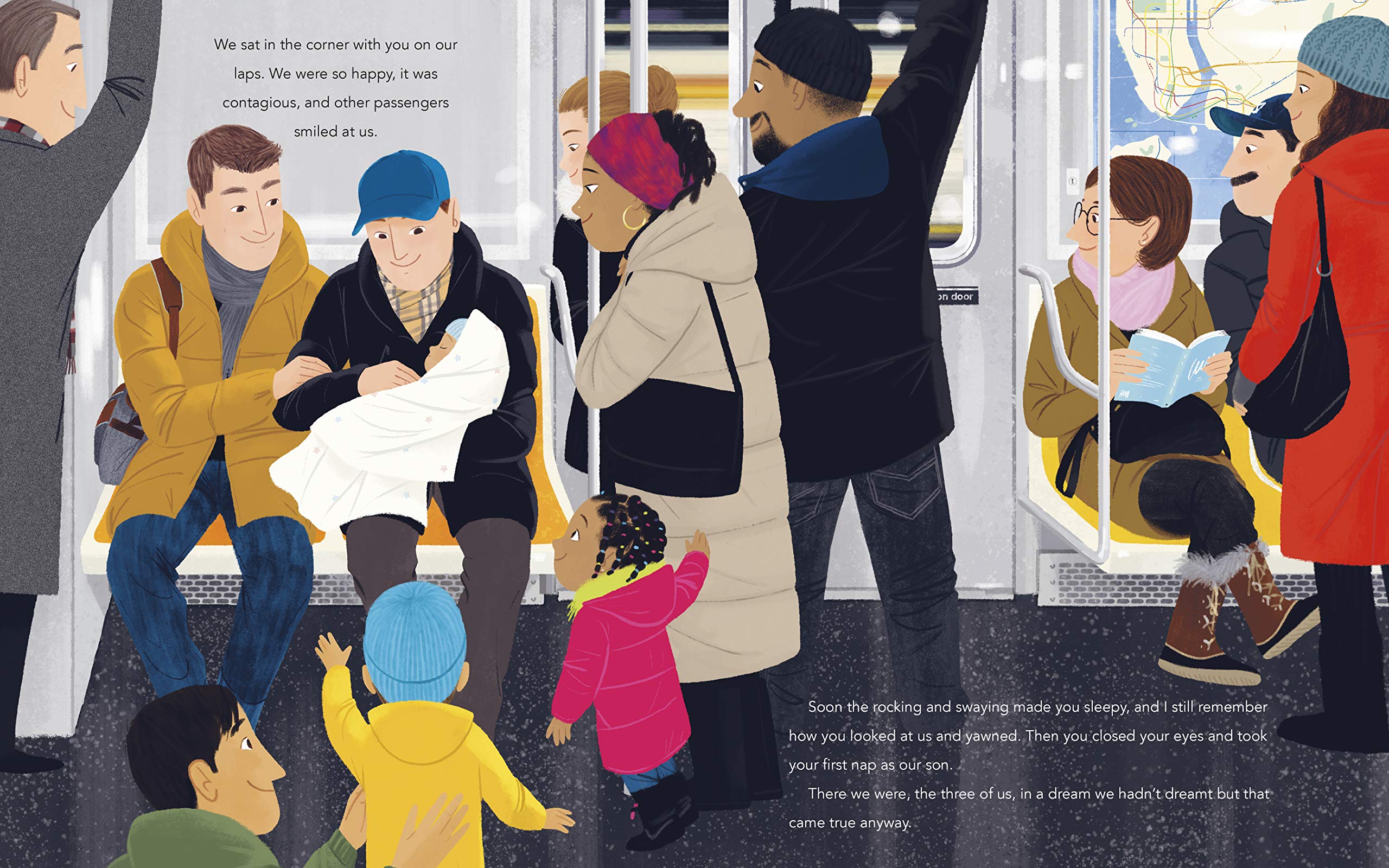
Summary:  Peter Mercurio tells his son Kevin the story of how he came to live with their family.  When Peter’s husband Danny found a baby in a New York City subway station, it seemed at first like the little boy would be spending a long time in foster care.  The two men lived in a small apartment, and their “piggy banks were empty.”  But they had fallen in love with this tiny baby, and a sympathetic judge speeded up the process, choosing a loving family for him over common concerns at that time about whether or not two men could raise a child together.  The ruling gave them just three days to prepare, but friends and family pitched in to get them what they needed for a baby.  They brought Kevin home just before Christmas….opting, of course, to take the subway to get there.  Includes an author’s note with three photos of Kevin as an infant, a toddler, and today as a college student.  40 pages; ages 4-9.

Pros:  Talk about heartwarming.  This book is written like a love letter from a father to a son, but manages to avoid sentimentality or mawkishness.  The colorful illustrations are engaging and perfectly capture the emotions of two people suddenly thrust into the spotlight…and parenthood.  A beautiful celebration of a unique family.

Cons:  Thinking of all the things that could have gone wrong for baby Kevin.  He is one lucky kid.

Curious Comparisons: A Life-Size Look at the World Around You by Jorge Doneiger, translated from the Spanish by Iraida Iturralde and The Screaming Hairy Armadillo and 76 Other Animals with Weird, Wild Names by Matthew Murrie and Steve Murrie, illustrated by Julie Benbassat

Published by Candlewick

Curious Comparisons: A Life-Size Look at the World Around You: Doneiger,  Jorge, Chouela, Guido, Sisso, David, Setton, Marcelo: 9781536200218:  Amazon.com: Books
Curious Comparisons: A Life-Size Look at the World Around You by Jorge  Doneiger, Guido Chouela, David Sisso, Marcelo Setton, Hardcover | Barnes &  Noble®

Published by Workman Publishing Co.

The Screaming Hairy Armadillo and 76 Other Animals with Weird, Wild Names:  Murrie, Matthew, Murrie, Steve, Benbassat, Julie: 9781523508112: Amazon.com:  Books

Summary:  For those kids who enjoy books filled with quirky facts, here’s a double dose.  Curious Comparisons is an import from Argentina showing true-to-size photos of an eclectic mix of animals and objects.  A pound of feathers and a pound of lead; the amount of water a lion can drink at once shown in empty water bottles; a pile of thread representing an unraveled shirt: each item is shown on a white page with a fact or two and often a question.  There are a few fold out pages: glasses filled with the amount of milk a cow produces and the flowers needed for a bee to make a pound of honey.  Includes 4 pages of additional facts about each page.  64 pages; grades K-5.

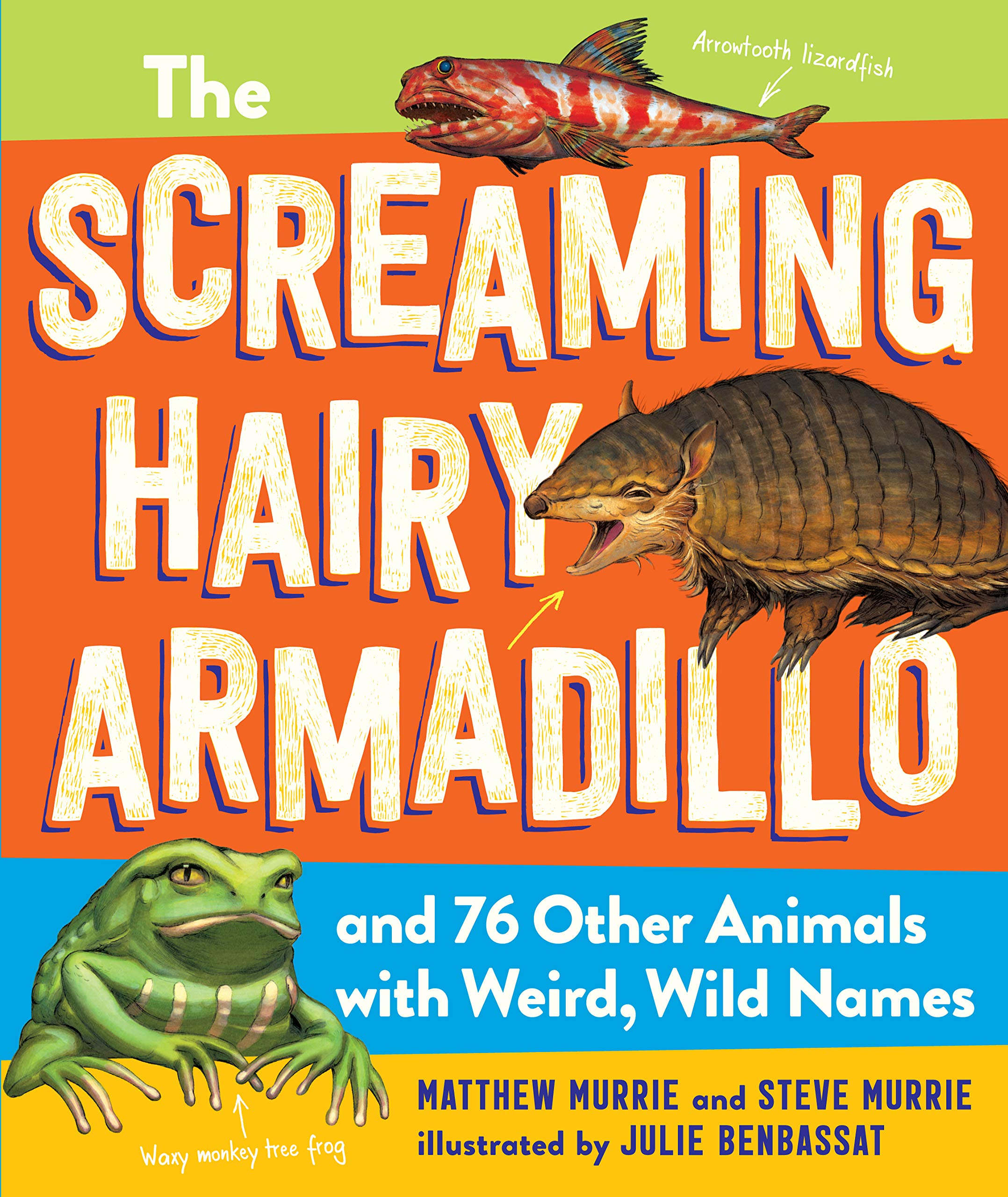
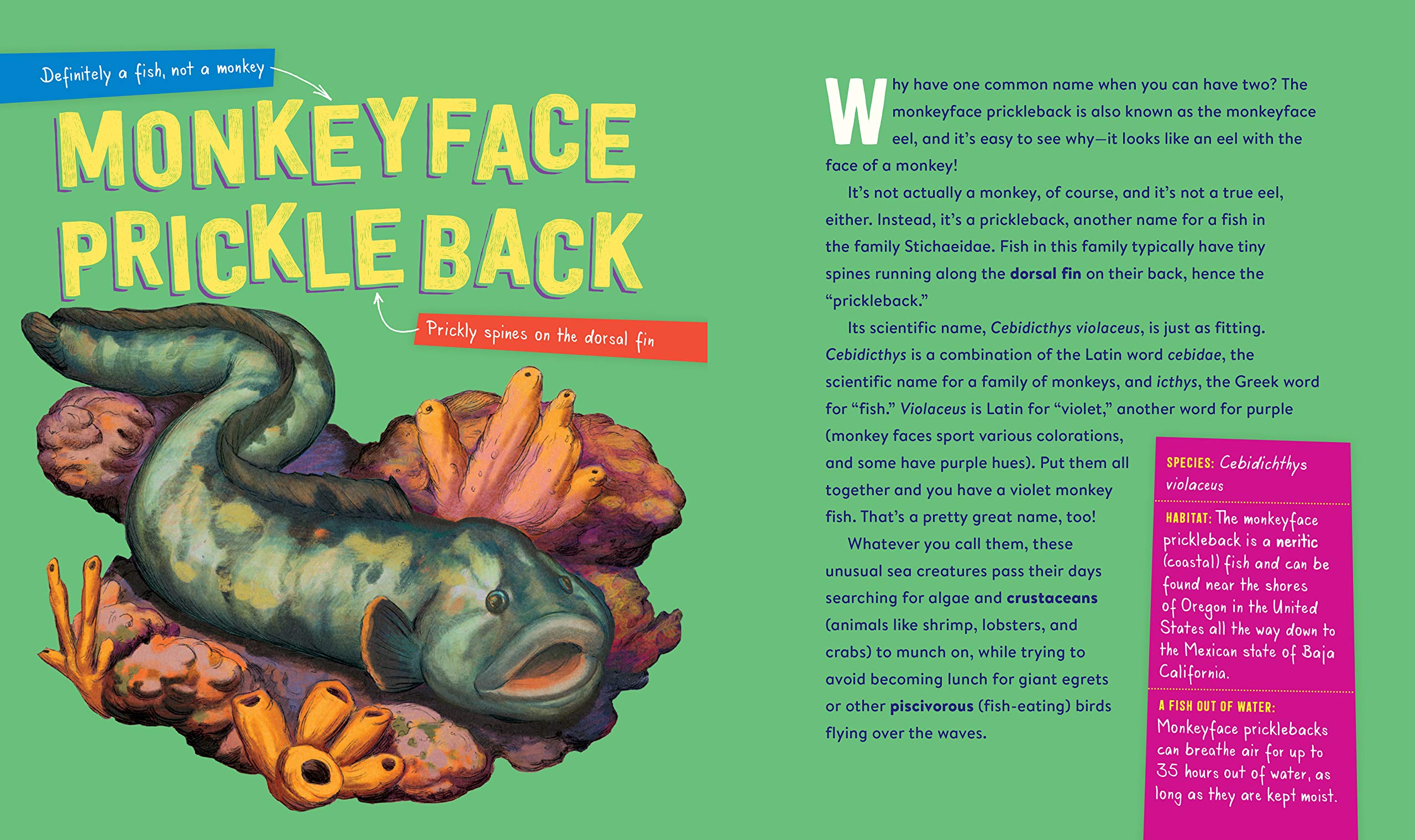
Screaming Hairy Armadillo starts off with several pages explaining how animals are named, including a description of scientific classification.  From there, the 77 animals are profiled, everything from the monkeyface prickleback to the bone-eating snot flower worm.  The animals are grouped by name: funny names, fierce names, magical names, delicious names, and just plain weird names (looking at you, headless chicken monster).  Each animal gets a page of information; a sidebar telling its species, habitat, and a fun fact; an illustration; and sometimes a photo.  Includes a couple pages of awards (for different name-related categories); how to discover and name an organism; a weird and wild name generator; a glossary; a list of websites for further research; and information on conservation organizations.  176 pages; grades 2-5.

Pros:  Books like these are almost too easy to book talk.  Just show a page or two, maybe read a fact or share a couple of weird names, and boom, kids are clamoring for them.  The photos and simple text in Curious Comparisons makes it a great choice for any elementary grade.  Screaming Hairy Armadillo will appeal to older kids, and contains a lot of great information in addition to the animal profiles.

Cons:  Curious Comparisons seemed a bit random to my well-ordered, Dewey-Decimal-trained brain.

William Still and His Freedom Stories: The Father of the Underground Railroad by Don Tate

Published by Peachtree Publishing Company

William Still and His Freedom Stories: The Father of the Underground  Railroad: Tate, Don, Tate, Don: 9781561459353: Amazon.com: Books
Review: William Still and His Freedom Stories - Mr. Alex's Bookshelf

Summary:  When William Still’s mother escaped from slavery, she was forced to leave her two sons behind.  She and her husband reunited in New Jersey, and they went on to have fifteen children, including William, the youngest, born in 1821.  When William was 23, he moved to Philadelphia, where he got a job as an office clerk at the Pennsylvania Anti-Slavery Society.  He worked his way up to manager, and helped freedom-seekers by making his home a stop on the Underground Railroad.  One day a middle-aged man came to the office.  When William heard his story, he realized the man was his long-lost brother, Peter.  This inspired William to start recording the stories of every person who came through the office, thinking these records might help reunite other families.  When the Fugitive Slave Act was passed, William’s stories became evidence of crimes, and he was forced to hide them in a cemetery vault.  After the Civil War, he published many of the stories in his book, The Under Ground Rail Road.  Includes a timeline, author’s note, and bibliography.  40 pages; grades 2-5.

Pros:  According to the author’s note, when white writers told the story of the Underground Railroad, they often made themselves heroes and left out the work of many of the black people.  This book does a fabulous job of rectifying that for William Still, who was a tireless worker for many years.  Don Tate has been a busy man this year, creating both the text and beautiful illustrations for this book, as well as the pictures for Swish!, the recent book about the Harlem Globetrotters.

Cons:  I was curious as to what happened to all the papers Sill was forced to hide in the cemetery vault.  Did they survive?  Are they still around today?  There didn’t seem to be an answer in either the story or the author’s note.

One of a Kind: A Story About Sorting and Classifying by Neil Packer

Published by Candlewick

One of a Kind: A Story About Sorting and Classifying: Packer, Neil, Packer,  Neil: 9781536211214: Amazon.com: Books
One of a Kind: A Story About Sorting and Classifying by Neil Packer,  Hardcover | Barnes & Noble®

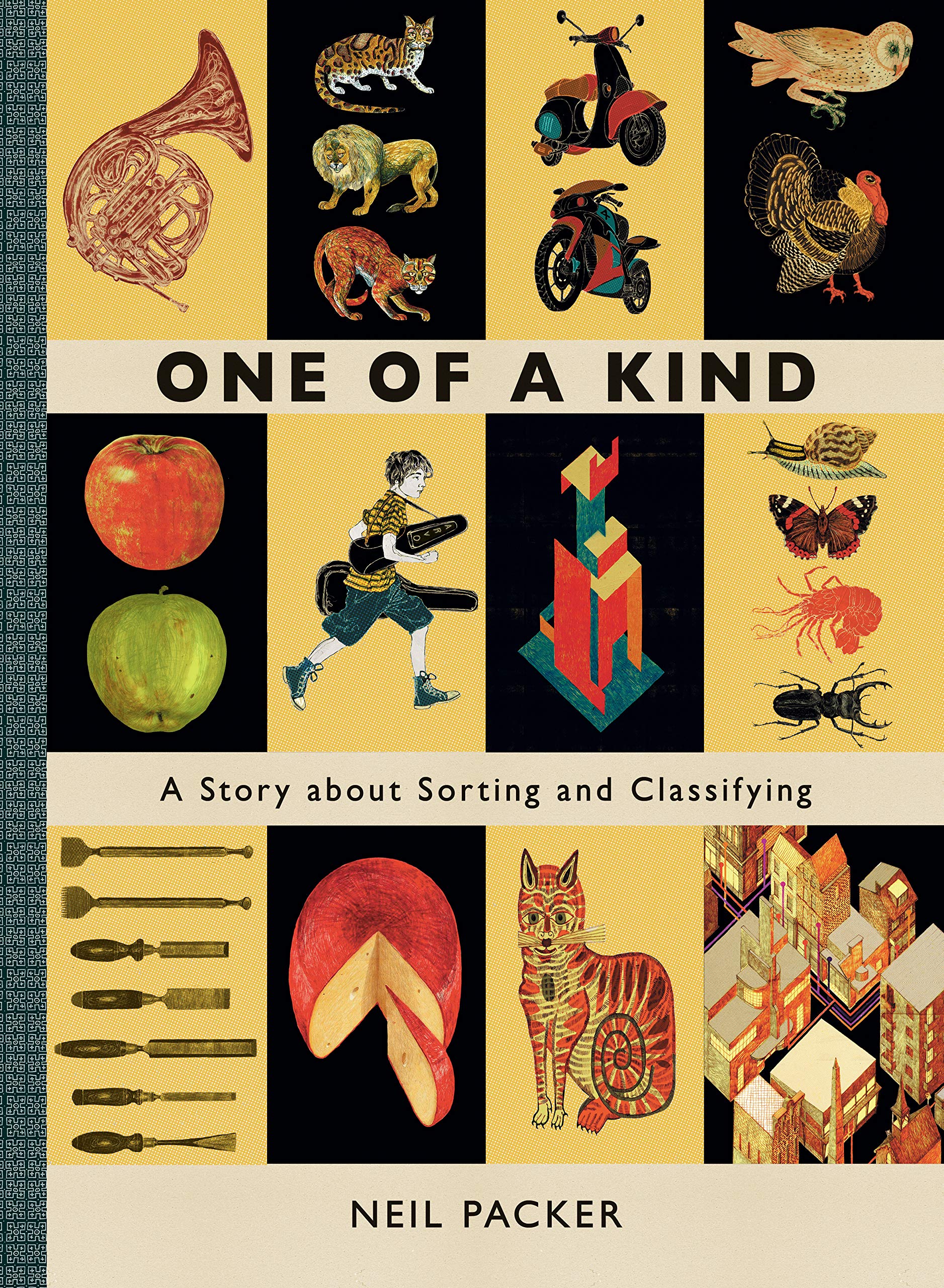
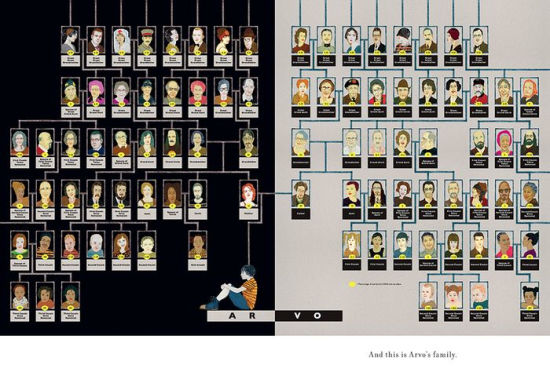
Summary:  On page 1, we meet Arvo.  On page 2, we meet Arvo’s family: a family tree going back to his great grandparents and to third cousins once removed, including the percentage of DNA each shares with Arvo.  Page 3 is Arvo’s cat Malcolm–and the family of cats, a.k.a. Felidae.  And so it goes throughout Arvo’s day.  His violin lesson is accompanied by an illustration of musical instrument classification; the car ride to the violin lesson includes vehicles and how they are grouped.  There are pages for clouds, foods, the library, and more.  When Arvo’s dad picks him up at the end of the day, though, he’s able to pick his son out of a crowd.  When Arvo asks him how, his dad tells him, “There is only one YOU!”  Includes an additional four pages giving more information on each of the classification systems.  48 pages; grades 2-5.

Pros:  Many years ago, when I worked at the Boston Museum of Science, I looked in vain for good children’s books on classification (my co-worker and I actually tried writing one).  I wish we had had this excellent oversized book to show kids how all kinds of objects in the world are sorted and classified into groups.  Readers will want to spend a lot of time with the detailed illustrations on every page.

Cons:  This is another large book that librarians may struggle to find space for.

The Little Mermaid by Jerry Pinkney

Published by Little Brown Books for Young Readers

Amazon.com: The Little Mermaid (9780316440318): Pinkney, Jerry: Books
Watery Fairy Tales - The New York Times

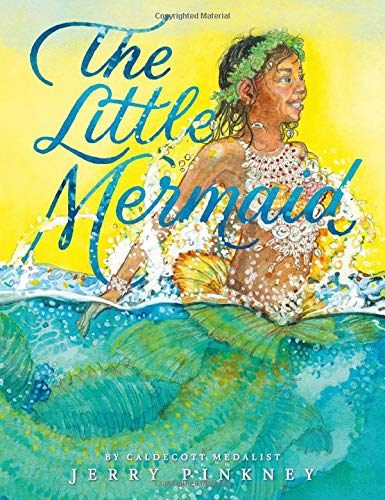
Summary:  Melody, the youngest daughter of the Sea King, has a beautiful singing voice and loves to go exploring.  One day she discovers the world above the sea and sees a girl named Zion.  When Melody starts to sing, Zion sees her, and the mermaid knows the two of them are meant to be friends.  Desperate to find a way to be with her new friend, Melody goes to the Sea Witch, who gives her legs in exchange for her voice.  Melody and Zion meet, but Zion is dismayed when she discovers her new friend can’t speak.  Melody draws pictures in the sand to tell her what happened, and Zion says she should never have given up her voice.  A disturbance in the sea alerts Melody to danger for her family, and she returns to the undersea kingdom in time to help defend it against the witch.  When she sees the shell with her voice in it around the witch’s neck, she manages to get it back and to use her voice to defeat her enemy.  Melody’s father realizes his daughter should be allowed to have adventures, so, even as a mermaid, she can visit with her new friend Zion.  48 pages; grades K-4.

Pros:  Usually, the story of The Little Mermaid kind of bums me out, but I love this retelling with a friendship instead of a romance, and a celebration of being adventurous and using your voice.  Add this to the cannon of beautiful fairy retellings at the hands of Jerry Pinkney.

Cons:  This story is a longer than some of Pinkney’s other folktales, and may be a bit of a stretch for reading aloud to preschoolers.