Published by Viking
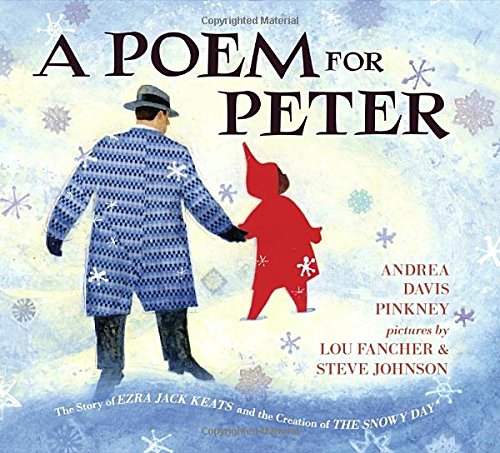
Summary: Andrea Davis Pinkney’s poetic homage weaves together biographical information about Keats with the story of the creation of his most famous book. Born Jacob Ezra Katz, the son of Polish immigrants, the artist grew up in a poor Brooklyn neighborhood with a father who faced job discrimination and a mother whose secret dreams of becoming an artist never came to fruition. Young Ezra loved art and won an art school scholarship, but when his father died of a heart attack the day before his high school graduation, his school days were over. He was helped by the New Deal’s WPA, and went on to become a comic book artist before moving to children’s book illustration. When he was asked to write and illustrate his own book, he thought of a little African-American boy whose picture in Life magazine had hung on Keats’s wall for many years. This boy became Peter and the book was The Snowy Day. Back matter includes “Ezra’s Legacy” with more information about the books that celebrated city life and the people from different cultures who lived there, and “Keats, the Collage Poet”, explaining how the verse narrative used for this book reflects Keats’ collage style of art. 60 pages; grades 2-5.
Pros: A beautiful celebration of a life and a book, illuminated with illustrations inspired by Ezra Jack Keats’s art.
Cons: I find the poetic biographies are a hard sell with the elementary crowd.




 Summary: Born in a Japanese fishing village in 1903, Misuzu Kaneko was fortunate enough to receive more education than most of her female contemporaries. She worked in her mother’s bookstore and published her poems in magazines. Then she made the unfortunate decision of marrying one of the bookstore clerks who was abusive, unfaithful, and passed on a devastating disease to Misuzu. She divorced him, but when he insisted on full custody of their daughter (a right given to fathers only at that time in Japan), Misuzu committed suicide. The first half of the book tells the story of her life, and the second half is a collection of her poems, written in both Japanese and English. An author’s note and translators’ note explain the careful work and research that went into creating this book. 64 pages; grades 2-7.
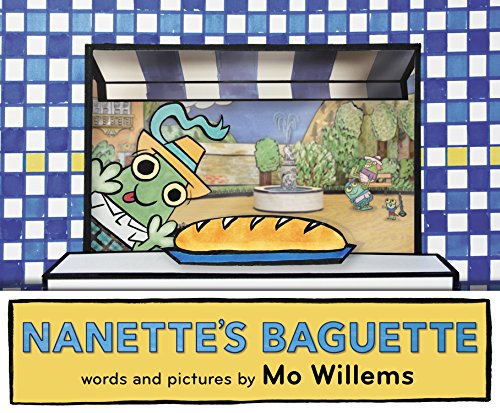

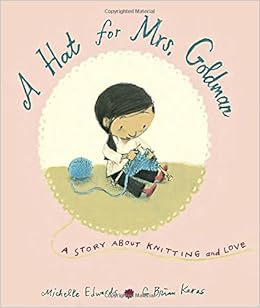
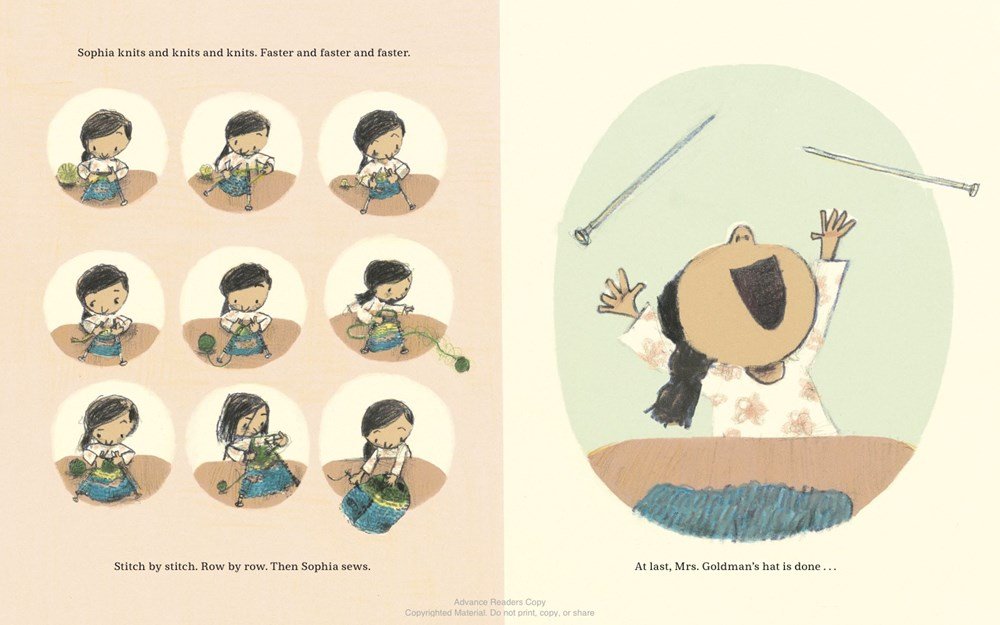 Summary: When Sophia was a baby, her neighbor Mrs. Goldman knit her a hat. Now that she’s older, she likes to make pom-poms to decorate Mrs. Goldman’s creations. Her friend is always knitting for others, giving them warm hats, mittens, and sweaters. She calls knitting her mitzvah, or good deed. When Sophia goes walking with Mrs. Goldman and her dog Fifi, she notices that Mrs. Goldman doesn’t have a hat. Snow accumulates on her hair, and her ears turn pink or red, depending on the temperature. Wanting to rectify the situation, Sophia pulls out her knitting needles and tries to remember what Mrs. Goldman taught her about knitting. She finally finishes a hat, but it’s full of holes. Fortunately, Sophia thinks of all those pom-poms she’s made, and creates a whole bunch of them to cover up the holes. She rushes next door to give her gift to Mrs. Goldman, who declares it Sophie’s mitzvah and happily wears it every day on her walks with Fifi. Includes instructions for knitting a simple hat and making a pom-pom. 40 pages; ages 4-8.