Follow the Moon Home: A Tale of One Idea, Twenty Kids, and a Hundred Sea Turtles by Philippe Cousteau and Deborah Hopkinson, illustrated by Meilo So

Published by Chronicle Books

Summary:  Viv is new in town, and unsure how she feels about her new home.  On her first day of school, her new teacher encourages the class to look for a problem in their community that the kids can work to solve.  Walking on the beach, Viv learns that sea turtles nest there, and that the babies often get disoriented by beach house lights and can’t find their way to the ocean.  Her own difficulties finding her way in a new place makes Viv sympathetic for the turtles.  Soon her whole class is involved in researching the turtles’ plight and spreading the word to turn out lights and close curtains at night.  Their hard work pays off, and on a night patrol, Viv gets to see a line of loggerhead turtles heading for the sea.  Back matter includes a letter to young activists, a note to parents and teachers on how to help kids make a difference in their communities, and additional information about sea turtles.  48 pages; grades K-4.

Pros:  Environmental activist Cousteau (grandson of Jacques) and award-winning write Hopkinson join forces for an inspiring tale about young kids making a difference, backed up with information readers can use themselves.

Cons:  I was hoping this was based on a true story, but it seems to be fictional.

Slickety Quick: Poems About Sharks by Skila Brown, illustrated by Bob Kolar

Published by Candlewick


Summary: 14 different types of sharks get a poem, along with a brief factual description and two-page illustration. There are well-known sharks, such as the great white and the whale shark, and some lesser known species, like the cookie-cutter shark and wobbegong. Some of the poems are only a few lines (“Whale Shark: In water she dangles, and bubbles and jangles, and blinks her mouth right up at me. Her back spots they shimmer, her tail getting dimmer, the silkiest wave of the sea.”); others are a few stanzas. All are descriptive and playful with language. 32 pages; grades K-4.

Pros: The Venn diagram showing the intersection of poetry readers and shark fans must be pretty close to the null set. Slickety Quick does its part to remedy this situation, with fun poems and interesting shark lore to appeal to both groups.

Cons: Back matter with additional shark information would have been a nice addition.

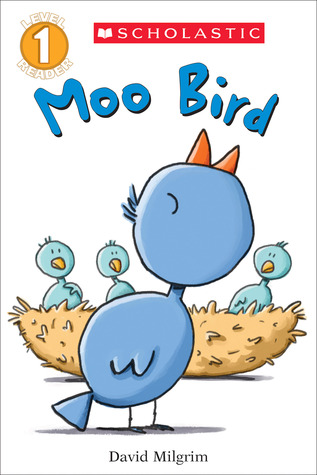
Moo Bird by David Milgrim

Published by Scholastic 

Summary: Four birds wake up in their nest; there are three “tweets”…and a “moo”! The moo bird is pushed out of the nest with the suggestion that he go find some cows. Off he goes, crossing paths with a pig, a horse, and a sheep, all of whom send him on his way. Even finding a cow proves disappointing, as she just thinks he’s confused. He starts to head back to the nest, wings drooping and black cloud over his head, when he finds another moo-er. It looks like the beginning of a beautiful friendship. 32 pages; ages 4-6.

Pros: With comic style illustrations and just a few words per page, this is a sure winner for those at the earliest stages of reading.

Cons: I am so busy painting my new house that Moo Bird is about the longest book I have time to read.

I Am Pan by Mordicai Gerstein

Published by Roaring Brook Press 

Summary: Which Greek god has the most kid appeal? Pan, of course, the fun-loving god of noise, confusion, sheep, shepherds, goats, goatherds, bees, and beekeepers. Mordicai Gerstein combed through Greek myths to find all the ones he could in which Pan played a role. So after recounting his own birth, Pan then goes on to tell different stories about himself, including his marriage to Echo (who knew?), how he invented his famous pipes, and his pivotal role in helping the Greeks at the Battle of Marathon. The ending suggests that Pan and his deity comrades are still living among us today, a “fact” Rick Riordan fans will appreciate. A brief author’s note explains how and why Gerstein came to write this book; a list of the mythology books he used for his research is included. 80 pages; grades 1-5.

Pros: Written in comic book form with illustrations by Caldecott Medalist Gerstein, this is a perfect introduction to mythology for elementary age kids. Those already familiar with the Greek pantheon will enjoy expanding on their knowledge.

Cons: Reading a book with a goofy goat-man on the cover, emblazoned with the large words, “I Am Pan!” may open you up to scorn and derision from offspring over the age of 10.

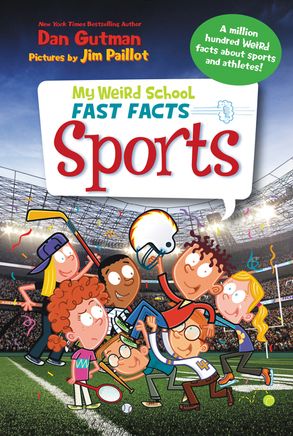
Sports (My Weird School Fast Facts) by Dan Gutman

Published by HarperCollins 

Summary: A.J. and Andrea, two of the wisecracking, squabbling kids from the My Weird School series, offer weird and interesting facts about a variety of sports. In addition to more well-known information, such as how different sports were invented, there are tidbits that will appeal specifically to elementary boys (some early hockey pucks were made of frozen cow poop) and some that are just bizarre (a hockey puck once hit a player in the chest, where he had a pack of matches, and his uniform caught on fire). Chapters include baseball, football, soccer, basketball, hockey, golf, car racing, the Olympics, and a couple chapters of miscellaneous facts. Includes lots of black-and-white illustrations by My Weird School illustrator Jim Paillot, as well as some photos. Look for a similar book with geography facts, and undoubtedly more on the way. 175 pages; grades 1-4.

Pros: Perfect for reluctant readers, this new series combines popular topics, interesting facts, and plenty of the humor that has made this series a favorite.

Cons: To my mind, the fast-fact format got a little old in the last few chapters. It wouldn’t have been a great loss to edit out the miscellaneous stuff.

A Year of Borrowed Men by Michelle Barker, illustrated by Renne Benoit

Published by Pajama Press


Summary: In 1944, when Greta was 7 years old, she and her family were told by the German government that they were getting three French prisoners of war to live on their farm. They were “borrowed men”, only there for the duration of the war, which Greta likened to the way her father has been “borrowed” to serve in the war. The men had to live in the barn with the pigs; when Greta invited them in for dinner one night, her mother was called into town and threatened with imprisonment. But despite the difficult living situation and the lack of a common language, the family and the prisoners became friends. Greta found a way to help them decorate their tiny Christmas tree, and they helped her when she accidentally melted the hands and feet of her new Christmas doll. A year later, the war ended and the prisoners were liberated, but the memory of the friendship continued on. An author’s note gives more information about her mother, Greta. 40 pages; grades 1-4.

Pros: A gentle and touching introduction to World War II. Although a few wartime atrocities are alluded to, all the characters in this story are kind, wanting to help each other despite being on different sides.

Cons: Kids will need some historical context before reading or hearing the story.

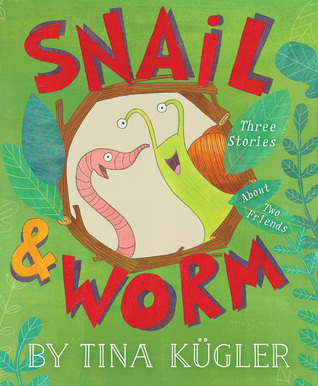
Snail & Worm: Three Stories About Two Friends by Tina Kugler

Published by Houghton Mifflin Harcourt

Summary:  As the title suggests, this book contains three brief stories about Snail and Worm, who find each other and become friends in the first tale.  The vocabulary and humor are perfect for beginning readers.  Each friend gets his/her own colored font to make it easy to keep track of the dialog.  The back cover says to look for more Snail & Worm adventures coming soon.  32 pages; grades PreK-1.

Pros:  An excellent choice for either a read-aloud or a first independent reader.  Kids will get a chuckle from both the cute, cartoon-style illustrations and the text.

Cons:  While five-year-olds will find the humor just right, it’s not quite up to Elephant & Piggie standards.

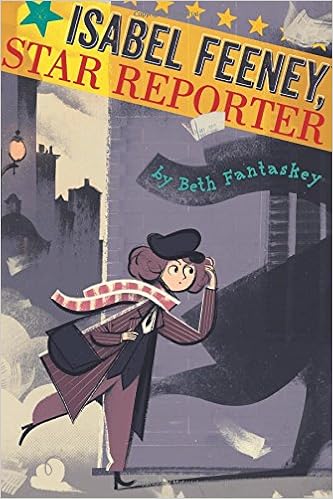
Isabel Feeney, Star Reporter by Beth Fantaskey

Published by Houghton Mifflin Harcourt 

Summary: Isabel Feeney is a newsgirl in 1920s Chicago. One night, she sells a paper to one of her favorite customers, Miss Giddings, who then walks off with her boyfriend. A few minutes later, shots ring out in an alley. The boyfriend is dead, and Miss Giddings is arrested for murder. Isabel’s sure she’s innocent, and sets out to prove it. She gets the reluctant help of her hero, Maude Collier, a reporter for the Chicago Tribune who covers Murderess’s Row at the Cook County Jail. There are red herrings aplenty—mob connections, an angry ex-husband, a jealous sister—and Isabel finds herself in real danger. As a key witness, she’s called in to testify at Miss Giddings’s trial, and it’s there that she finally realizes (and dramatically reveals) the true murderer’s identity. 352 pages; grades 4-7.

Pros: Historical fiction meets mystery in this tale of gangster-ridden Chicago. Isabel is a funny and feisty heroine, and the 97 short chapters, many with cliffhanger endings, keep the action going.

Cons: I wasn’t exactly shocked to learn the identity of the murderer.

School’s First Day of School by Adam Rex, illustrated by Christian Robinson

Published by Roaring Brook Press

Summary:  There’s a new school in town.  Every day, the janitor comes to visit him, but the janitor assures him others will be there soon.  School’s not sure how he feels about this, and the first day of school brings both bad and good.  There are a few kids with attitude who say they hate school (School manages to squirt one of them in the nose with one of his water fountains), and a little girl with freckles who is scared of school.  School feels bad when his fire alarm accidentally goes off.  But School learns some interesting stuff, and at the end of the day, the girl with freckles makes a beautiful picture of him, complete with glitter.  As School and the janitor watch the sun go down, School is pretty sure he’s ready for another day with the kids. 40 pages; ages 4-8.

Pros:  Is this a brilliant idea, or what?  I’ve been looking forward to reading this book since I heard about it, and it didn’t disappoint.  There’s plenty of humor, yet a sensitivity to how different kids might feel on the first day of school.  Caldecott Honoree Christian Robinson’s illustrations perfectly capture the elementary school feel.  This would be a great read-aloud for the first day of school.

Cons:  Teachers, I apologize for reminding you on June 26 that there WILL be a first day of school.

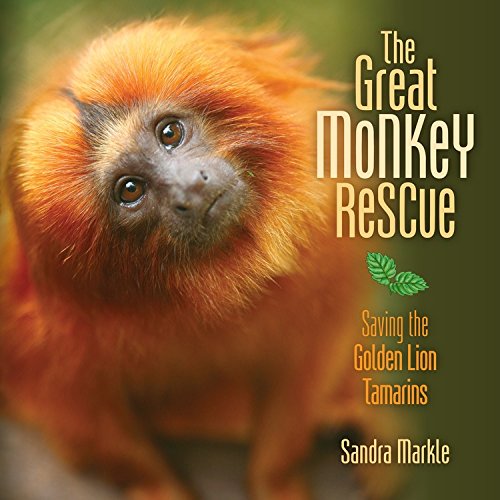
The Great Monkey Rescue: Saving the Golden Lion Tamarins by Sandra Markle

Published by Millbrook Press 

Summary: The story begins with a female golden lion tamarin trying to find a place to start a family. She’s rejected by groups of tamarins until she finally comes to the edge of the forest and realizes she has nowhere else to go. The narrative then moves to a look at the last few decades of human efforts to save this endangered Brazilian species. So much of the tamarins’ habitat has been destroyed that the animals were in danger of extinction. Tamarins in zoos weren’t breeding much, and if they did, the babies usually did not survive. Studying how the animals live in the wild led to greater success with zoo breeding programs, but challenges remained on how to introduce animals back into the rainforests. Slowly, over many years, scientists learned more about the golden lion tamarins and their environment, so that today the outlook for these animals looks positive. The female from the beginning discovers a tree bridge planted by scientists that leads her to a new home and family.   Includes a timeline, glossary, additional resources, and index. 48 pages; grades 4-7.

Pros: Packed with information, this book is written so engagingly that it’s hard to put down.  Plus, it has a happy ending.

Cons: The tamarins’ situation still seems somewhat tenuous.