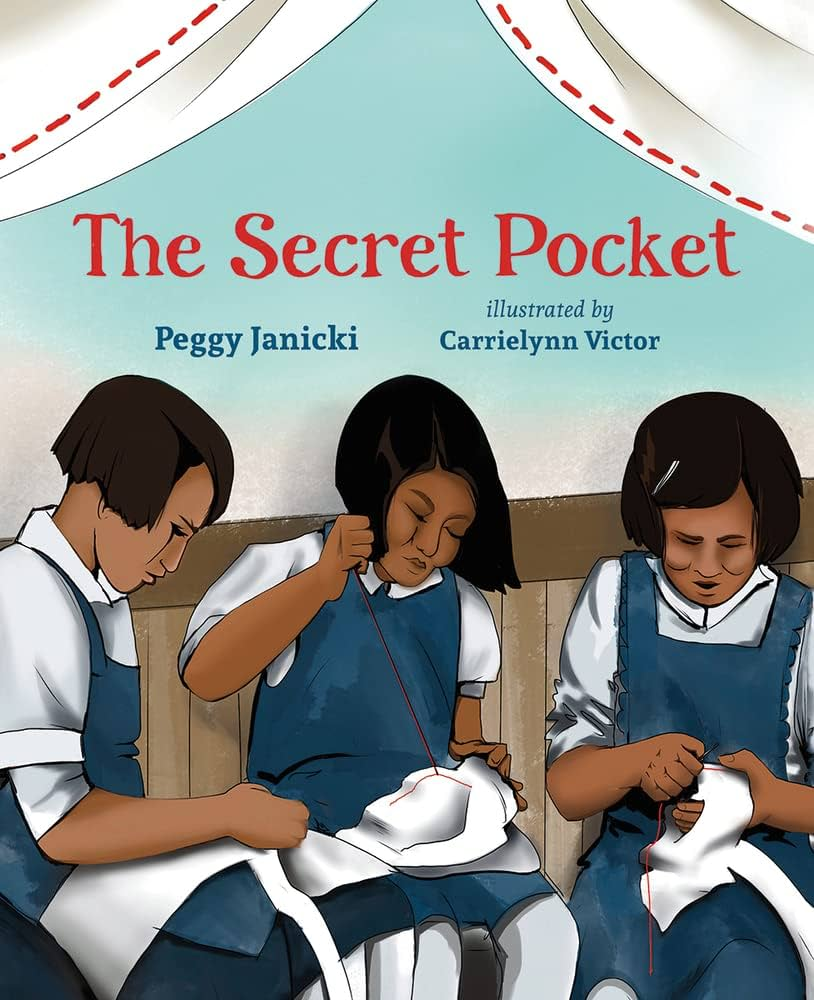
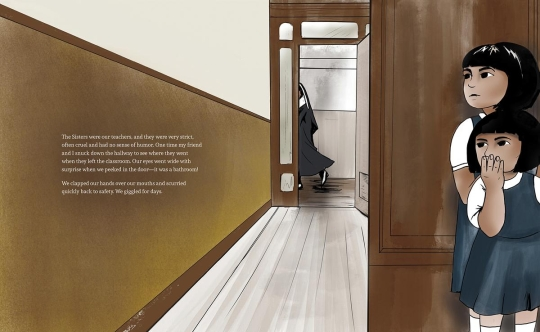
Summary: Mary shares her earliest happy memories growing up surrounded by a loving family. When she’s four, though, a priest and nun come to her grandparents’ home and suggest that she start attending their residential school with her older brother and sister. Lejac is far away, and there’s never enough food to eat. An older girl shows Mary how to eat toothpaste to make her hunger go away. The kids go home for summer break, where they learn traditional skills from their parents. Eventually, the girls use their sewing skill to add secret pockets to their uniforms so that they can sneak food from the kitchen. This small act of rebellion makes the girls feel like geniuses and gives them back some power over their difficult circumstances. Includes an author’s note about her mother, Mary, who shared this story near the end of her life, and how a secret pocket with her story is still sewn into the graduation robes at the University of Fraser Valley in Canada. 32 pages; grades 2-5.
Pros: An important story that celebrates ingenuity and teamwork in overcoming some extremely dark circumstances and shows readers the truth about indigenous boarding schools.
Cons: This story is pretty horrifying; the girls’ major victory was just getting enough food to eat.
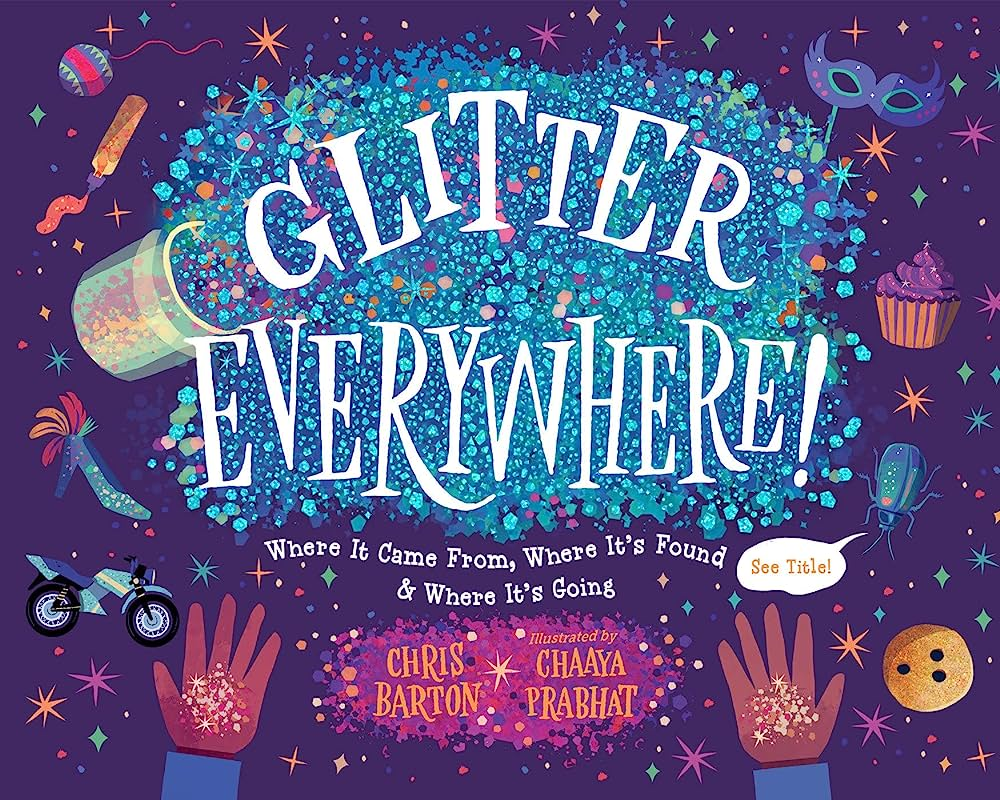
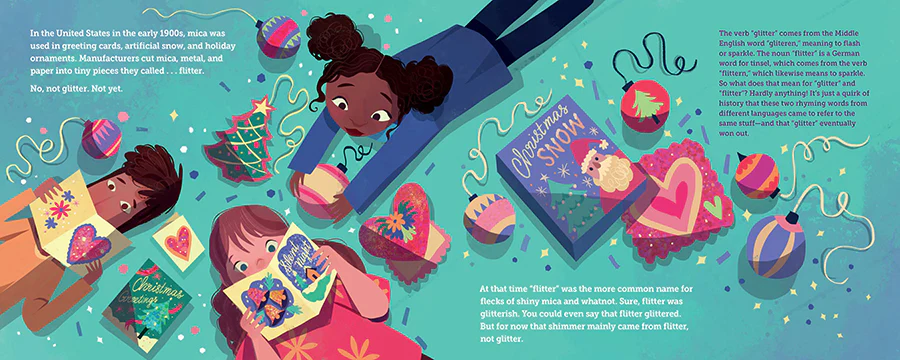
Summary: Since early times, humans have been attracted to things that are iridescent, like beetles and mica. In more recent history, people have learned to manufacture this iridescence, starting with “flitter”, a mix of ground-up mica, metal, and paper that was sold in the early 1900’s. During World War II, mica was needed for industry, so a man named Henry F. Ruschmann began making plastic glitter from his factory in Bernardsville, NJ. This product, which has become ubiquitous in our society, has its downsides, being the very definition of microplastic, a material that is wreaking all kinds of environmental havoc. Alternative glitters are being created, so it looks as though, one way or another, glitter is here to stay. Includes an author’s note that talks about how he researched the book, an illustrator’s note, books for further reading, and a bibliography. 48 pages; grades 2-5.
Pros: Chris Barton tells the story of glitter with some history, some science, and a lot of humor in this extremely engaging nonfiction book. The illustrations are lots of fun, and what kid is not going to want to read about glitter?
Cons: My vacuum cleaner and I have kind of a love/hate relationship with glitter.
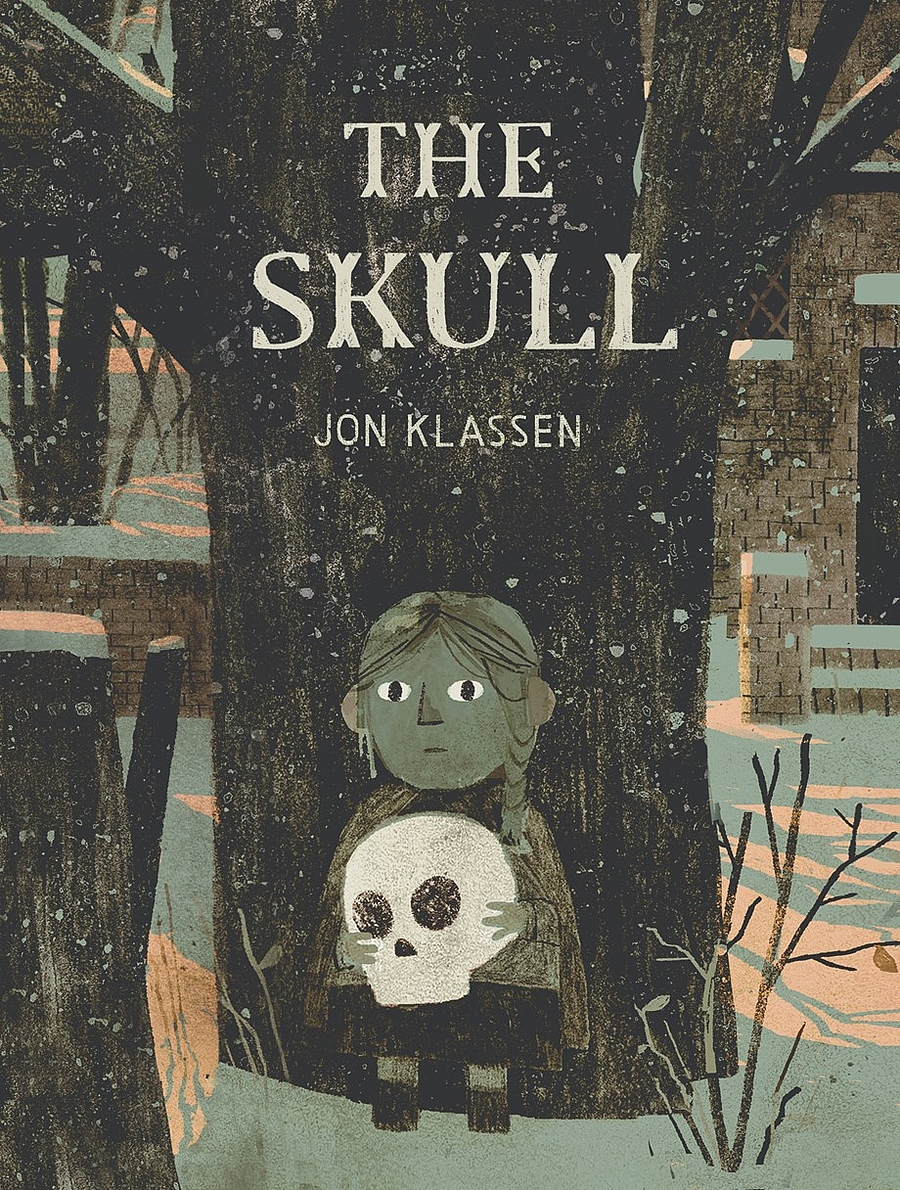
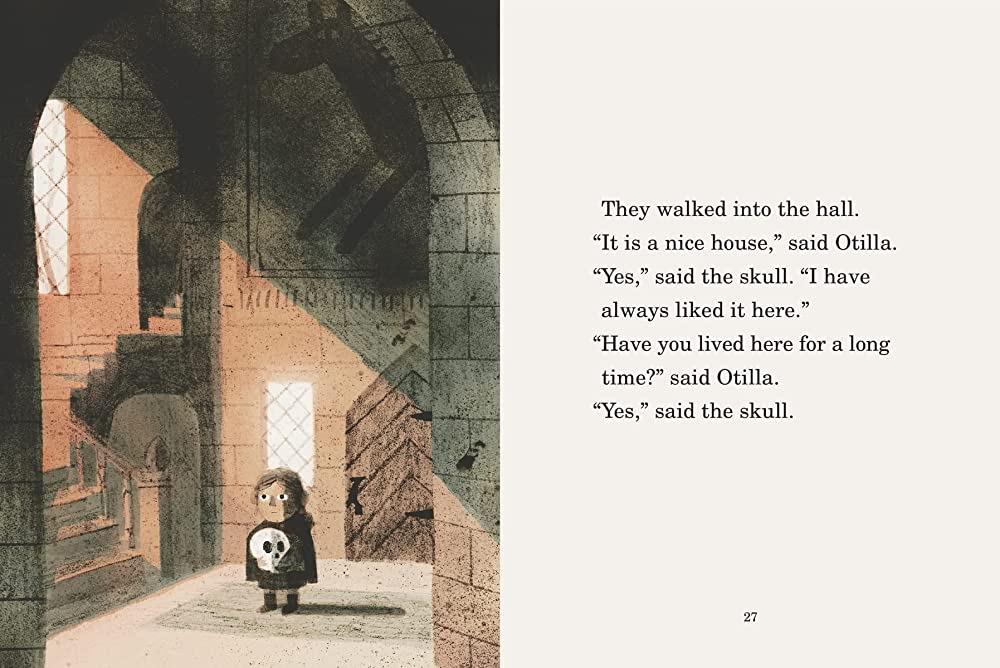
Summary: Otilla is running away and lost in the forest. She stumbles upon an old house that looks abandoned but turns out to be inhabited by a skull. The skull shows her around: there are creepy masks, a dangerously high tower, and a bottomless pit. He invites her to stay for the night but warns her of a headless skeleton that chases him every night, and “I am not as fast as I used to be.” Sure enough, the skeleton shows up in the middle of the night, but Otilla is ready. By the time the story ends, that skeleton will not be bothering anyone ever again, and the skull and Otilla have decided that she will stay in the house. Includes an author’s note about how he came to write this folktale retelling which gives a pretty interesting spin on the oral tradition. 112 pages; grades 1-4.
Pros: As usual with Jon Klassen, expect the unexpected. This book, which looks more like a chapter book than a picture book, is told in five parts, but can probably be read in one longish sitting. It’s creepy and funny and just dark enough to give kids the shivers. Perfect for the Halloween season, with the distinctive Klassen illustrations that I’m sure will be considered for a Caldecott. The author’s note, featuring a wise Alaskan librarian, would make a good addition to folktale units.
Cons: I’m always worried that Jon Klassen books are too dark and/or too weird for early elementary. Yet they never are.
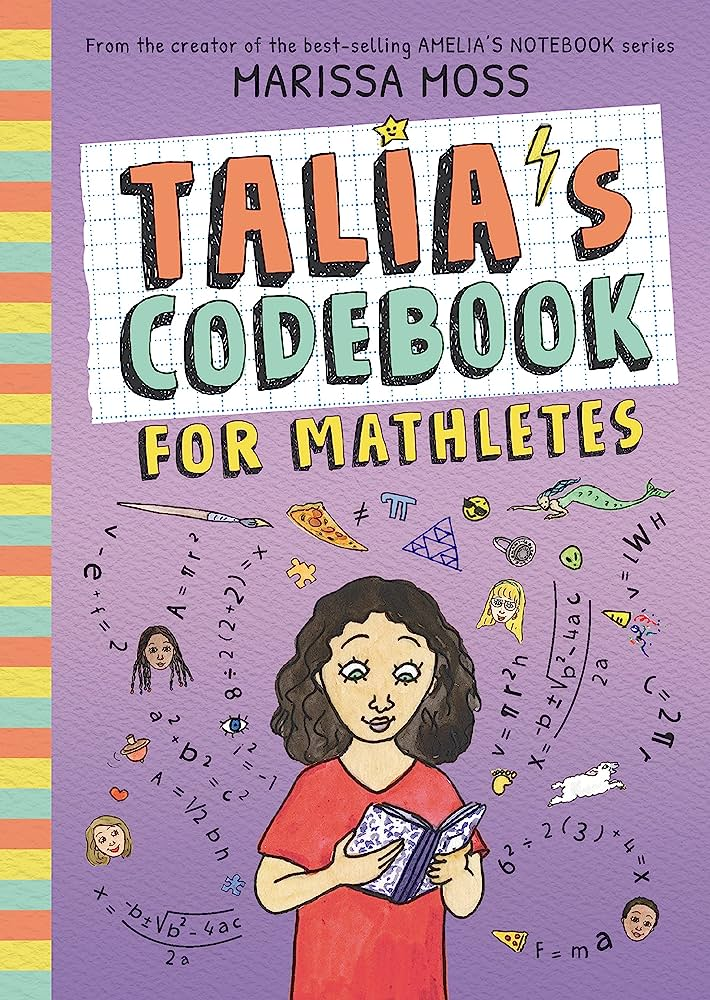
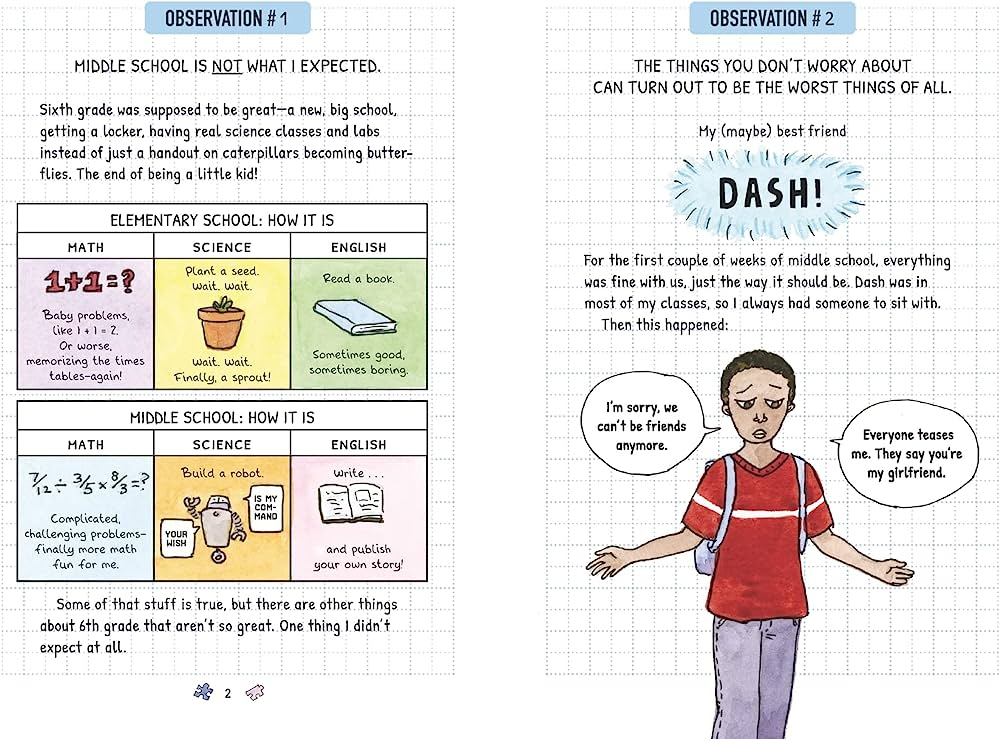
Summary: Talia’s dealing with lots of ups and downs at the beginning of middle school, but the worst is that her neighbor and best friend Dash doesn’t want to be seen with a girl at school. When Talia joins the mathletes, she learns that she’s the only girl, and the coach and some of the other boys treat her disrespectfully. Fed up, she decides to form her own girls’ mathletes team. Her two best friends aren’t interested in being on the team, but they’re supportive and help her get things going. Much to her surprise, sixteen girls show up to the first meeting, and before long, the Mathlete Mermaids are ready for competition. At the big meet, Talia messes up, but she learns from her mistake, and the rest of the team does well enough to win. The boys are shocked but see that their sexism has lost them some valuable teammates, and the two teams decide to merge. Talia has mixed feelings about this but is proud that she stepped up and created a way for girls to shine in math. Includes additional information about codes and an author’s note about her own experience with mathletes. 240 pages; grades 3-6.
Pros: Middle school graphic novel fans will enjoy this story of STEM girl power that includes a number of fun codes, and that does an excellent job of chronicling middle school friendship and family issues without neatly resolving them all.
Cons: I was hoping that Talia’s parents, who focused on her mistake at the competition instead of her team’s win, would learn a lesson or two, but no such luck.
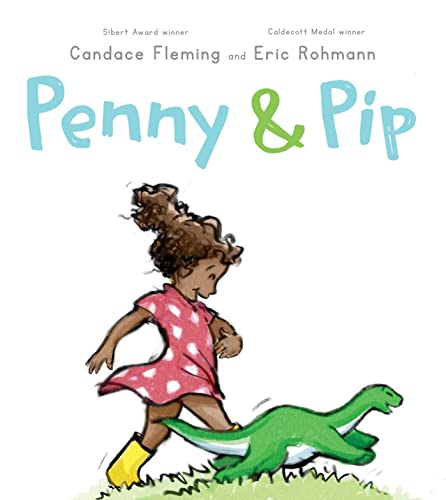
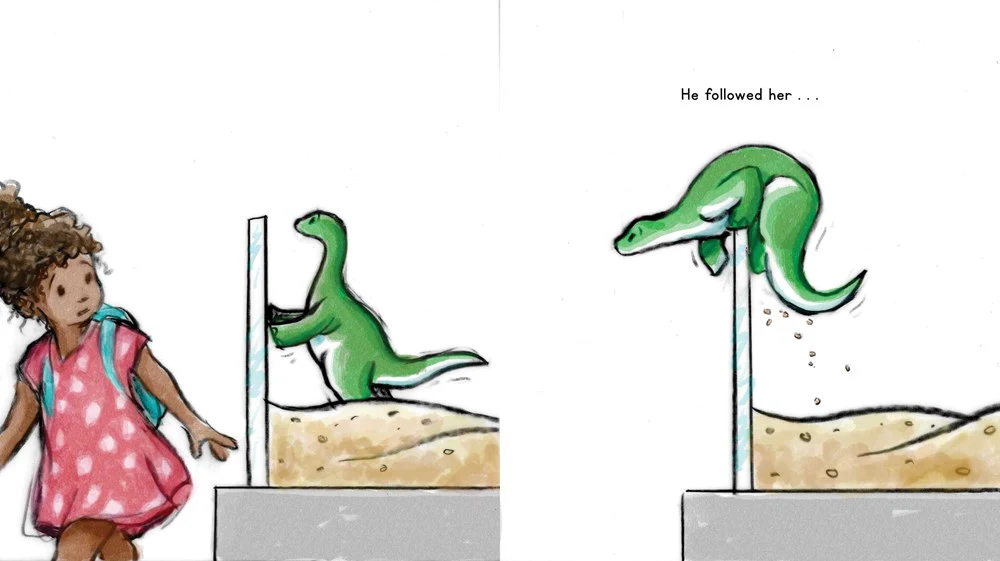
Summary: Penny’s on a field trip to the natural history museum when “something astonishing” happens: a baby dinosaur hatches from one of the eggs on exhibit. Only Penny notices; the baby notices, too, and it starts following Penny around the museum. She shares her lunch, and when the baby dinosaur makes a “pip, pip” sound, she names it Pip. When it’s time to go home, Penny doesn’t want to leave her new friend behind, but Pip doesn’t fit in her backpack. Pip hides in the pile of stuffed animals at the gift shop, Penny pays for her new “toy,” and the two are on their way. 40 pages; ages 4-8.
Pros: This award-winning team has produced another fun story with adorable illustrations that is sure to become a favorite of dinosaur aficionados.
Cons: I suspect that Penny & Pip: The Next Day might not end quite this happily.
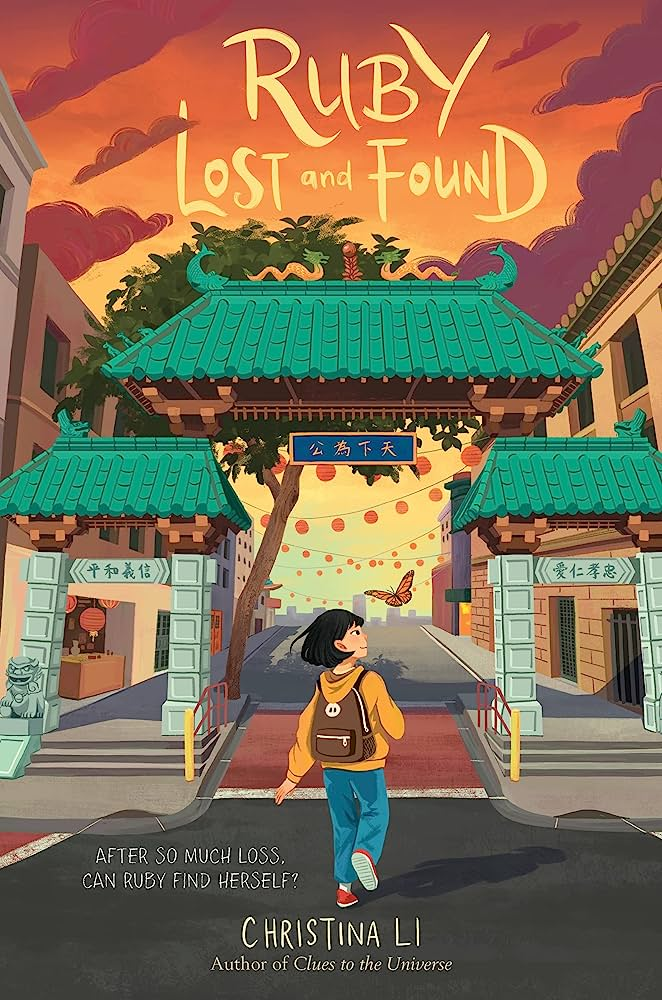
Summary: Ruby’s had a tough year in seventh grade: one friend moved away, another drifted away, and her beloved grandfather died. When Ruby’s caught sneaking out of school at lunchtime, she’s sent to her grandmother’s house every weekday during the summer. Nai-Nai spends her days at the senior center, where Ruby is forced to tag along. To her surprise, she finds a community there with the other old ladies and Liam, a classmate who also comes with his grandmother. As the summer goes on, Ruby slowly comes to terms with her grief over her grandfather, her changing friendships, and, most heartbreakingly, her grandmother’s signs of early dementia. As Ruby and Liam try, and fail, to save a beloved neighborhood bakery, Ruby learns that changes are inevitable, but that having a community of family and friends can help to navigate them. 304 pages; grades 4-7.
Pros: A beautifully written story of grief, loss, and community. Ruby struggles realistically with her emotions and with making choices that aren’t always great, but she also learns to make amends without compromising who she is. I’d love to see this book win some awards.
Cons: Until the very end, Ruby’s parents come across as pretty selfish and constantly exasperated with a daughter who is truly struggling.
Summary: Former U.S. Poet Laureate Joy Harjo’s poem celebrates life: the cosmos, the Earth, the plants and animals, and people, especially parents. “Remember you are the universe. And this universe is you. Remember.” Caldecott Medalist Michaela Goade’s illustrations depict a child traveling through the universe, with images inspired by traditions from her Tlingit culture. Includes an author’s note about poetry that encourages readers to write their own poems and an illustrator’s note with additional information about her inspirations for the pictures. 40 pages; ages 5 and up.
Pros: This beautiful book created by two Indigenous American artists celebrates the complexity of life and the universe, reminding the reader to stop and pay attention. A Caldecott contender for sure.
Cons: Young readers will need some adult guidance to fully appreciate both the text and the illustrations.
Published by Little, Brown Books for Young Readers
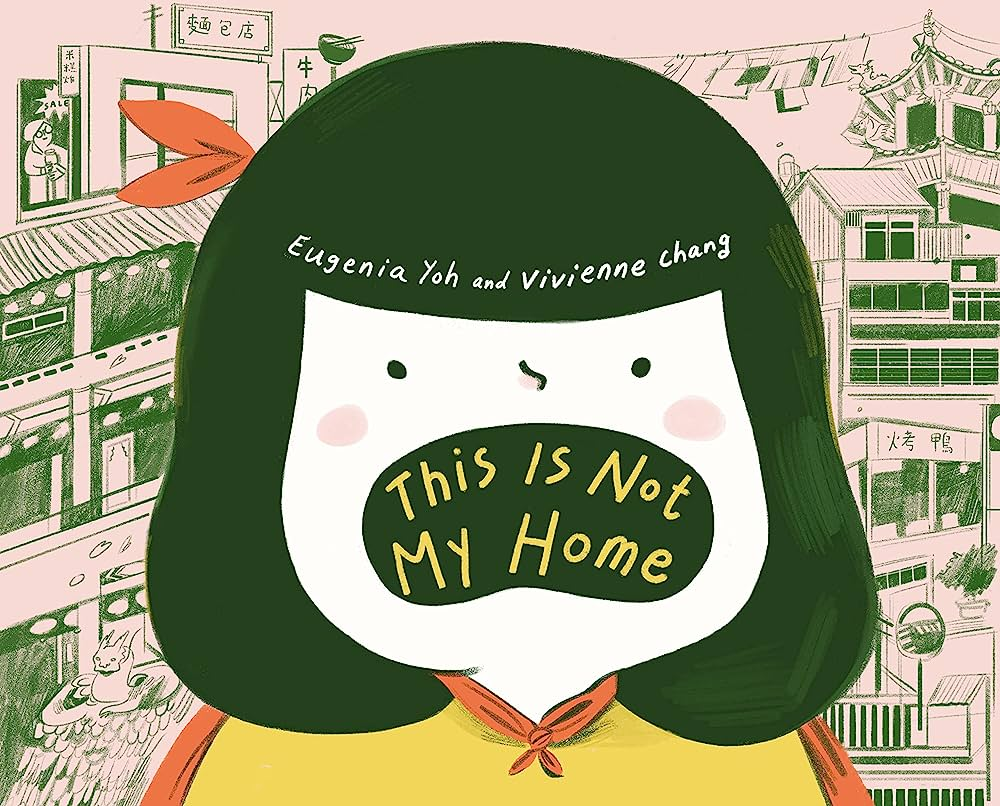
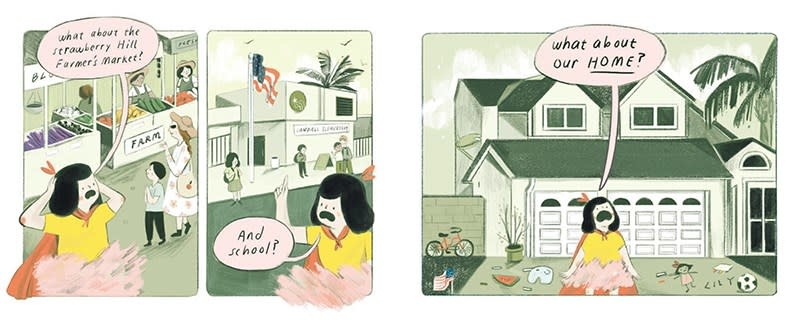
Summary: When Lily’s mother tells her they are moving back to Taiwan to take care of Ah Ma, Lily rebels. What about school? The farmers’ market? The fireflies in the park? Her friend Jill? Mom asks Lily to be understanding, but Lily refuses as they pack, get on the plane, and are greeted by Ah Ma. As Lily is reluctantly guided through her new neighborhood, she keeps up a steady narration, “This is not the farmers’ market! This is not my school! This is not my home!” A turning point comes when her mother calmly explains that it may not be Lily’s home, but it is her home. A few wordless spreads show Lily making a couple of friends at school and enjoying a moped ride through the city, as calendar pages mark the passage of several months. The last page declares, “This is my home,” in English and Mandarin. Endpapers show Lily’s American neighborhood at the beginning and her Taiwanese one at the end. 48 pages; ages 4-8.
Pros: A cute and funny debut picture book that poignantly captures the process of reverse immigration.
Cons: I’m not sure I could be as patient as Lily’s mother is.
The final leg of my trip took me back to Tennessee, first to Memphis and then to Nashville. I had a few issues with my accommodations in Memphis (let’s just say that I ended up repairing my Airbnb’s toilet with a piece of dental floss), so I only stayed one night instead of two.
I kicked off the morning with a visit to the National Civil Rights Museum. The website said to allow 1.5 hours, so I was there when the doors opened at 9:00, because I was meeting a friend for lunch at 11:00. I wished I had allowed more time, as I was hurrying through the last exhibit and didn’t get to visit the other buildings. Of all the museums I visited, this one had the most comprehensive history of the civil rights movement, and I would recommend putting aside at least two hours if you go.
I walked down Beale Street in Memphis and had plans to visit Sun Studio and Stax Records that afternoon, but honestly, I just wasn’t in the mood. Next time. I did take in some music history in Nashville, where I met up with my daughter Katherine. I benefited from her encyclopedic knowledge of music at the Country Music Hall of Fameand the National Museum of African American Music, and we both enjoyed our night at the Grand Ole Opry.
I’m going to briefly return to the beginning of the week to mention one other Nashville site I visited. It was July 4th, I had just realized that most places were closed, and I was trying to figure out how to spend the day. As I looked for a place to eat breakfast, I realized that I was near The Hermitage, home of U.S. President Andrew Jackson. I’m not a fan, but keeping in mind what I’ve been reading about public history in How the Word Is Passed (mentioned in yesterday’s Mississippi post), I decided to go to see how Jackson was portrayed at his homestead.
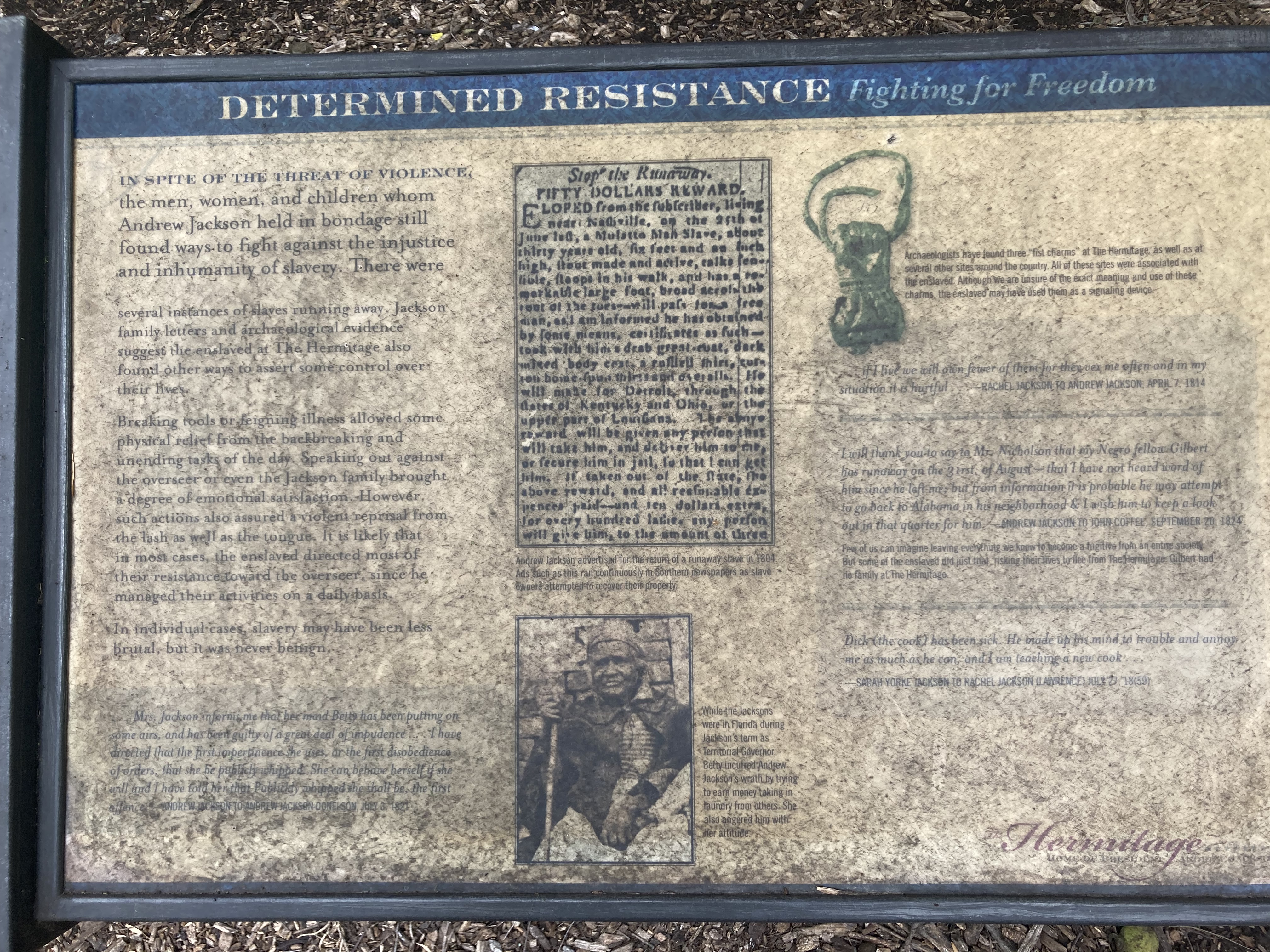
Unlike most places I went (except the Museum of the Mississippi Delta and the Grand Ole Opry), there was pretty much an all-white crowd, many dressed in red, white, and blue for the Fourth. I took the guided tour of the house, then walked around the grounds to the slave quarters. Compared to what I saw the next day at the Legacy Museum, slavery was portrayed in a pretty benign light, with Jackson represented as a man who tried to provide well for the enslaved people on his property. Interestingly, a sign describing slave life was half-hidden by an open door, and another one called “Determined Resistance” was covered by plastic so dirty and scratched it was difficult to read.
I include this, because as I traveled through the South for a week, I kept thinking about how history is the stories we tell, whether we are telling them to our children, to our students, or to ourselves. The stories can shine a light on certain people and events and keep others hidden away in the dark. They inform the way we move forward into the future, helping us decide who we want as leaders and which groups of people we want to lift up or to oppress.
One night in Alabama, looking for some comfort food after a long day, I stopped at an Applebee’s for dinner. My waitress was a young Black woman, cheerful but exhausted at 8 1/2 months pregnant. She told me that she was having a girl, and I asked her if she had a name picked out. Sincere, she said, a name she had chosen with her girlfriends years ago when they were back in school.
I’m sure Sincere has arrived by now, and I think of her, a Black girl growing up in Alabama, her mom full of hopes and dreams, working hard to support her. I hope Sincere can grow up learning the truth about her history, but also knowing the pride in her heritage, and with the confidence to pursue her dreams. And I know that if she does, it will be because of people like those Mississippi legislators who fought for more than a decade to get their civil rights museum, or the workers who replaced Emmett Till’s bullet-ridden sign for the fourth time, or the people (maybe you?) who write and promote books and fight to keep them in schools and libraries so that they can tell the truth about the past and offer hope for the future.
Thursday, July 6, and I was on the road from Newbern, Alabama to Jackson, Mississippi. Along the way, I stopped for lunch in Meridian, Mississippi, where I felt very Southern eating collard greens, summer squash, fried green tomatoes, cornbread, and the best macaroni and cheese I have ever tasted. The restaurant staff and clientele, like almost everywhere I went in the South, were far more racially integrated than anywhere I can think of in Massachusetts.
In Jackson, I spent most of the afternoon at the Mississippi Civil Rights Museum. Like the Legacy Museum and the National Memorial for Peace and Justice, this museum is less than a decade old, opening on December 9, 2017, after years of stalling by the Mississippi government (you can read the tortured history here). The $15.00 admission ticket gets you into both this museum and the adjacentMuseum of Mississippi History, but even I have a limited museum capacity and decided that one was enough for me. I spent about two hours learning about Medgar Evers, Fannie Lou Hamer, Emmett Till, and a host of other Mississippi people and events that shaped the civil rights movement.
I spent the night in Jackson then drove to the Museum of the Mississippi Delta in Greenwood, which was quite different from the other museums I’d been visiting. With a mission to “to collect, preserve, interpret and exhibit tangible artifacts which enable the Museum to educate the public about the art, history and natural history of the Mississippi Delta and its surrounding regions,” there was much less focus on civil rights.
Another family was visiting at the same time, two young white boys and their grandparents, and I overheard them in the military history room, the grandparents telling them about their ancestors who fought in the Civil War. There was a children’s area next door where kids could dress up as Confederate soldiers and pretend to be aboard the Star of the West, a Union-turned-Confederate ship that ultimately sank in the Tallahatchie River near Greenwood.
Over 600,000 people died in the Civil War, approximately 2% of the population, which would translate to roughly six million Americans today. We’re taught in history that wars have winners and losers, but who in America “won” in the Civil War? I thought about this as I listened to the family in the Mississippi Delta museum talk about their ancestors who fought in a war for a cause that now seems abhorrent and inhumane to many of us.
I was reading a book on my trip called How the Word Is Passed: A Reckoning of the History of Slavery Across America by Clint Smith (Little, Brown, and Company, 2021). Smith writes about his visits to historic sites around the country and his observations about how the history of slavery is told. Here’s a quote that captures some of my thoughts that day in the museum (page 142).
What would it take–what does it take–for you to confront a false history even if it means shattering the stories you have been told throughout your life? Even if it means having to fundamentally reexamine who you are and who your family has been? Just because something is difficult to accept doesn’t mean you should refuse to accept it. Just because someone tells you a story doesn’t make that story true.
It was a short trip from Greenwood to Money, the town where Emmett Till was brutally beaten and lynched by two white men in August of 1955, his body dumped in the same Tallahatchie River I read about earlier that day. His mother, Mamie Till, was another one of the unsung heroines of the civil rights movement, insisting that her son’s body be returned to Chicago, where his open casket funeral allowed people all over the world to bear witness to his savage murder. Overcoming unimaginable grief, she went on to graduate from college and worked for civil rights for the rest of her life, something I didn’t know until I read about it last year in the book Choosing Brave by Angela Joy.
Emmett was murdered for “flirting” with Carolyn Bryant, the 21-year-old white woman working in her family’s grocery store, an accusation Carolyn would deny later in life. I went looking for the ruins of the Bryant’s Grocery & Meat Market, which supposedly is still standing, but I couldn’t find them, although I did find the sign commemorating the event. Before I went on my trip, I read about another sign, marking the spot where Emmett’s body was found, that’s on its fourth version, the other three having been thrown into the river or shot full of bullet holes.
I felt a bit spooked when I turned off the highway in search of the store, and it felt like the landscape hadn’t changed much since 1955. There were acres of crops in all directions, and I realized from the puffy white stuff blowing around the sides of the road that these were cotton fields. The road turned to a mix of gravel and red dirt shortly before I spotted the sign, and I got out to take pictures and walk around a bit in my fruitless attempt to find the store. Like so many times during the week, it seemed almost unreal that I was standing in a place where history had been made–the Freedom Riders stepping off a bus at the Montgomery Greyhound Station where the Freedom Rides Museum now stands, people being put up for sale at slave markets on the same land the Legacy Museum is built on, and 14-year-old Emmett Till walking up the dirt path to buy candy at Bryant’s Grocery Store in the spot where I now stood across from endless cotton fields.
Books about Mississippi
Greenwood
That Flag by Tameka Fryer Brown (HarperCollins, 2023)






 A Kids Book A Day