How the Sea Came to Be (And All the Creatures In It) by Jennifer Berne, illustrated by Amanda Hall

Published by Eerdmans Books for Young Readers

Summary:  Rhyming quatrains describe the history of the sea in three parts: the birth of the sea, the birth of life, and the sea from then until now.  All are accompanied by colorful illustrations that sometimes show the sun-dappled waters of the sea and other times take readers down into the black ocean depths.  Includes notes from the author and illustrator; two pages of ocean creatures that include illustrations and a paragraph of information about each; a four-panel gatefold timeline showing seven eras of the Earth’s history; key terms and concepts with definitions; and two pages of additional resources. 56 pages; grades 1-5.

Pros:  A spectacular nonfiction book that should be considered for a Sibert award.  The rhyming text is both catchy and impressive, making this a great choice to read aloud, and the illustrations are truly spectacular, conveying both the powerful forces that created the seas and the incredible diversity of life within them.  The timeline is a masterpiece, and the rest of the back matter makes this an excellent resource for research.

Cons:  I would have liked the timeline to have also been incorporated into the text to show the eras of each of the three parts.

Behold the Octopus! By Suzanne Slade, illustrated by Thomas Gonzalez

Published by Peachtree

Summary:  The amazing octopus is introduced in a series of two-page spreads, each one portraying a different species of octopus with a verb (hunting, changing, graphing) or adjective (luminous, dangerous) and a paragraph of information inspired by that word.  Includes additional information about octopuses, several photos, a list of resources, and a bibliography.  32 pages; ages 4-8.

Pros:  This visually appealing book makes an excellent octopus introduction for preschoolers but provides enough information and back matter to make it a good research resource for older kids. Fans of the Candace Fleming/Eric Rohmann books, especially Giant Squid, will want to check this out.

Cons:  The last two very cool-looking octopuses in the photos at the end aren’t identified.

Parachute Kids by Betty C. Tang

Published by Graphix

Summary:  10-year-old Feng-Li is excited to be visiting America for the first time on what she thinks is a vacation, but a week in, she discovers her father packing to leave.  Turns out, her parents have decided that she and her older siblings Jia-Xi and Ke-Gāng will settle in America, where they’ll have more opportunities, and their parents will return to Taiwan and earn money to support the kids.  At first, nearby family friends help out, but when the father of that family gets transferred, the kids are really on their own.  Jia-Xi is trying to prepare for the SAT’s while taking care of the house and kids; Ke-Gāng is struggling with the fact that he’s gay and that the trouble he got into back home caused his parents to want the kids out of Taiwan; and Feng-Li is just trying to learn enough English to make a friend and to keep her siblings from their constant bickering.  As one catastrophe follows another, the kids try to keep things going, and Feng-Li is forced to grow up fast to keep her family from falling apart.  Includes an author’s note about her own experiences as a parachute kid, and how she used those experiences and those of other immigrant friends to create this story.  288 pages; grades 4-8.

Pros:  A compelling graphic novel about a family faced with some unimaginably difficult times, and the three brave kids who are able to admit their mistakes and work hard to make things better.  As Betty Tang says in the author’s note, “We need more diverse books, so eventually, everyone can find a piece of themselves reflected and their voices heard.”  The Lins’ story adds another voice to that canon.  

Cons:  I was hoping Ke-Gāng would be able to come out to his family by the end of the story, but it didn’t happen.

Grandad’s Pride by Harry Woodgate

Published by little bee books

Summary:  Grandad and Milly from Grandad’s Camper are back for another summer visit.  When Milly discovers Grandad’s old Pride flag in the attic, she gets to hear some reminiscences about how Grandad and the late Gramps traveled around the country in their camper, marching with groups that were calling for equality and respect and making new friends in the process.  When Grandad claims that his partying days are over, Milly convinces him to organize a Pride celebration in his village.  Before long, everyone is getting into the spirit, hanging flags and other decorations, creating book displays, and baking rainbow cakes.  On the big day, Grandad surprises Milly by leading the parade in the camper.  A sudden rainstorm fails to put a damper on the festivities, and the resultant rainbow makes Grandad think Gramps is with them in some way.  32 pages; ages 4-8.

Pros:  This upbeat story with its rainbow-hued illustrations makes a perfect addition to any Pride book list.

Cons:  Having a character say that each color of the Pride flag has a special meaning with no back matter to explain.

Show and Smell (Marshmallow Martians book 1) by Deanna Kent, illustrated by Neil Hooson

Published by Random House Graphic

Summary:  The Marshmallow Martians’ leader, G.L.O.W. (Galactic Learning Online Wizard), introduces them to P.E.E.P. (Polite Extraordinary Earth Portal), which can transport them down to Earth.  Due to a faulty transmission, the Martians believe that the Earth phrase “show and tell” is actually “show and smell,” and they plan a show and smell session for when they return from their trip to Earth.  An amusement park is chosen as the best place to collect smells, and the marshmallows collect odors from onions, shoes, burps, and a skunk.  Back on Planet Moop, the other marshmallows enjoy the show and smell presentation.  Includes instructions for drawing one of the characters (Snug). 72 pages; grades 1-3.

Pros:  Fans of Pizza and Taco, Narwhal and Jelly, and other early comics will get a big kick out of the Marshmallow Martians’ antics.

Cons:  If the marshmallows live on Planet Moop, why are they called Martians and not Moopians?

Contenders: Two Native Baseball Players, One World Series by Traci Sorell, illustrated by Arigon Starr

Published by Kokila

Summary:  The story opens with a key moment of the 1911 World Series: Charles Bender of the Philadelphia Athletics pitching to John Meyers of the New York Giants, who hits a double, then goes on to score the winning run of Game One.  Both Charles and John were from Native Nations, and the book goes back to trace the stories of how each one got to play in the World Series.  Charles grew up on the White Earth Reservation in Minnesota before being sent to an Indian boarding school in Philadelphia.  John’s childhood was spent on the Cahuila reservation in California.  Each endured poverty and racism as they pursued their love of baseball and eventually wound up in the major leagues.  Together, they played in nine World Series; Charles was elected to the Baseball Hall of Fame in 1953, and both were inducted into the American Indian Hall of Fame when it opened in 1972.  The book ends with a list of Native MLB players today, and the racism that’s still present with racist team mascots.  Includes an author’s note, timeline, and list of sources.  48 pages; grades 1-5.

Pros:  A fascinating look at two men who faced hardship and racism throughout their lives but rose above it to become excellent athletes who exemplified sportsmanship and teamwork.

Cons:  Kids I work with seem to have no interest in professional baseball these days.

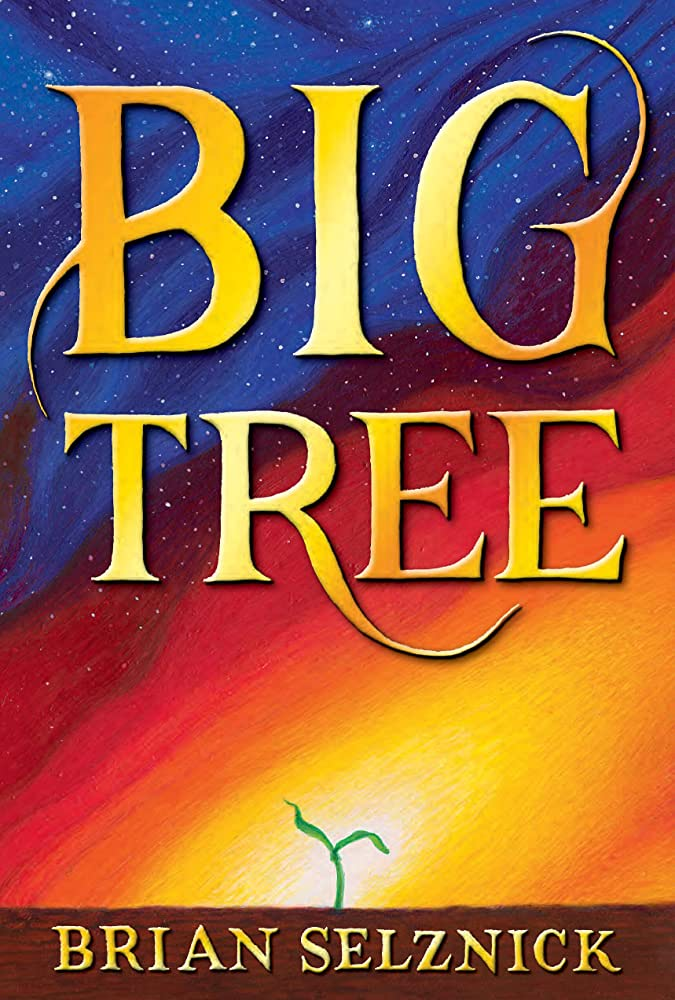
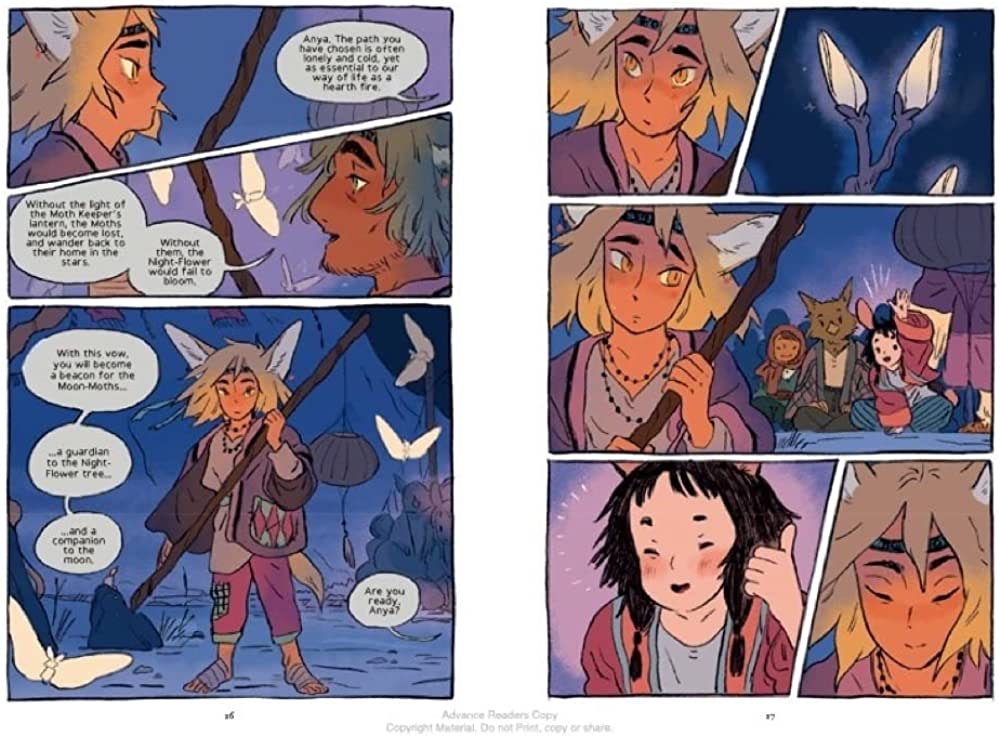
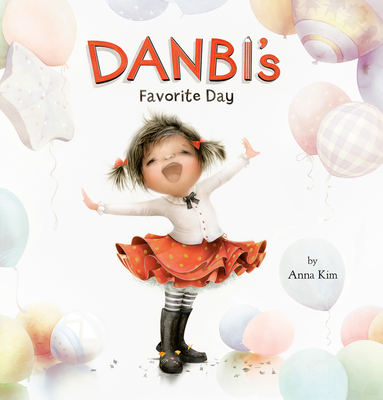
The Guardian Test (Legends of Lotus Island, book 1) by Christina Soontornvat, illustrated by Kevin Hong

Published by Scholastic

Summary:  Plum has grown up on her grandparents’ small island farm, so when she unexpectedly gets an invitation to attend Guardian Academy, her life changes dramatically.  The Guardians are an elite group of shapeshifters who keep all the islands safe, and Plum joins the other kids who are trying to pass their first test–learning to transform.  With only a month to prepare, Plum is worried that she isn’t progressing as quickly as her classmates and is tempted when she learns that one of the other girls has found a shortcut to passing the test.  But her love of nature and abilities to communicate with animals and plants serve her well and she moves on with most of her classmates in an adventure to be continued when book 2 comes out in July.  160 pages; grades 3-7.

Pros:  Kids not quite ready for Harry Potter will love this Thai-inspired fantasy about a magical school with some pretty intricate world-building.  The short chapters and illustrations keep things moving along, and readers will be eagerly anticipating Plum’s next adventure.

Cons:  The cover gave me a graphic novel vibe; kids might be surprised to discover that this is a chapter book.

Four Eyes by Rex Ogle, illustrated by Dave Valeza

Published by Graphix

Summary:  Rex’s transition to middle school is a rough one, with his best friend Drew abandoning him for the popular kids and his blurry vision giving him daily headaches and making school work tough.  He finally admits to his mom what’s going on, and the diagnosis that he needs glasses is a blow to both of them.  Rex worries (correctly) that the bullying at school will get worse, while his mom and stepdad can’t afford new glasses and are forced to call Rex’s real dad, who’s something of a bully himself.  As the year goes on, though, Rex makes a new friend who teaches him how to stand up for himself.  Sixth grade ends on a positive note, with the promise of a seventh grade sequel.  224 pages; grades 4-7.

Pros:  The multitude of middle school graphic novel fans will enjoy this new entry that perfectly captures the angst of both family and friend relationships.  Nice to see a boy main character in this type of book.

Cons:  Having read Rex Ogle’s Free Lunch, I know that his family life was much more troubling than what is portrayed here.

Make Way: The Story of Robert McCloskey, Nancy Schön, and Some Very Famous Ducklings by Angela Burke Kunkel, illustrated by Claire Keane

Published by Random House Studio

Summary:  Robert “Bob” McCloskey spent his childhood in Hamilton, Ohio, his active mind and hands always creating.  Nancy Schön spent hers–many years later–in Newton, Massachusetts, where she found solace in working with clay in art class.  Bob moved to Massachusetts to study art, and eventually wrote the classic Make Way for Ducklings.  Nancy struggled with her art for years, receiving one rejection after another, before being inspired to create a sculpture of Bob’s ducklings.  It wasn’t an easy process, but she was finally ready to unveil her project to Bob, who gave it a hesitant seal of approval.  When he saw kids interacting with the ducks, he became more enthusiastic.  The statues were installed in October 1987, and you can visit them in the Boston Public Garden today.  Includes an author’s note, timeline, and bibliography.  48 pages; ages K-4.

Pros:  A heartwarming story of two artists and the famous book and statues they created, with cozy illustrations that are reminiscent of Robert McCloskey’s books.  

Cons:  There’s a photo of several of the ducks (wearing rainbow sweaters for Pride) with the author’s note, but it would have been nice to include a photo of the entire family.

You Are Here: Connecting Flights edited by Ellen Oh

Published by Allida

Summary:  These twelve short stories are all written by different authors about different Asian Americans kids and their families, but the stories connect to one another.  Everyone is traveling through Chicago’s O’Hare airport on a busy, stormy Fourth of July weekend, with flights delayed and canceled.  Whether they’re traveling to see family, attend a basketball tournament, or move to another country, each protagonist experiences some form of racism or microaggression from a fellow traveler.  Characters from different stories appear throughout the book, often offering support or solidarity as the kids learn to stand up for themselves or their families.  In the final story, Soojin’s mother is ready to move back to Korea after the family store is vandalized with racial slurs, but she eventually sees how much Soojin loves America and how many Americans are kind and supportive, ending the book on a hopeful note.  Includes an editor’s note telling how the book was created and brief biographies of all the writers.  272 pages; grades 4-7.

Pros:  After Ellen Oh edited the short story collection Flying Lessons, she learned that there wasn’t enough Asian American representation in that book which led to the creation of this one.  It’s a great collection, with thoughtful, interesting characters and situations in stories that can stand alone or be enjoyed as an ensemble.

Cons:  I started to find the similar situations and setting a bit monotonous; I preferred the greater variety of Flying Lessons