In the Key of Us by Mariama J. Lockington

Published by Farrar, Straus and Giroux
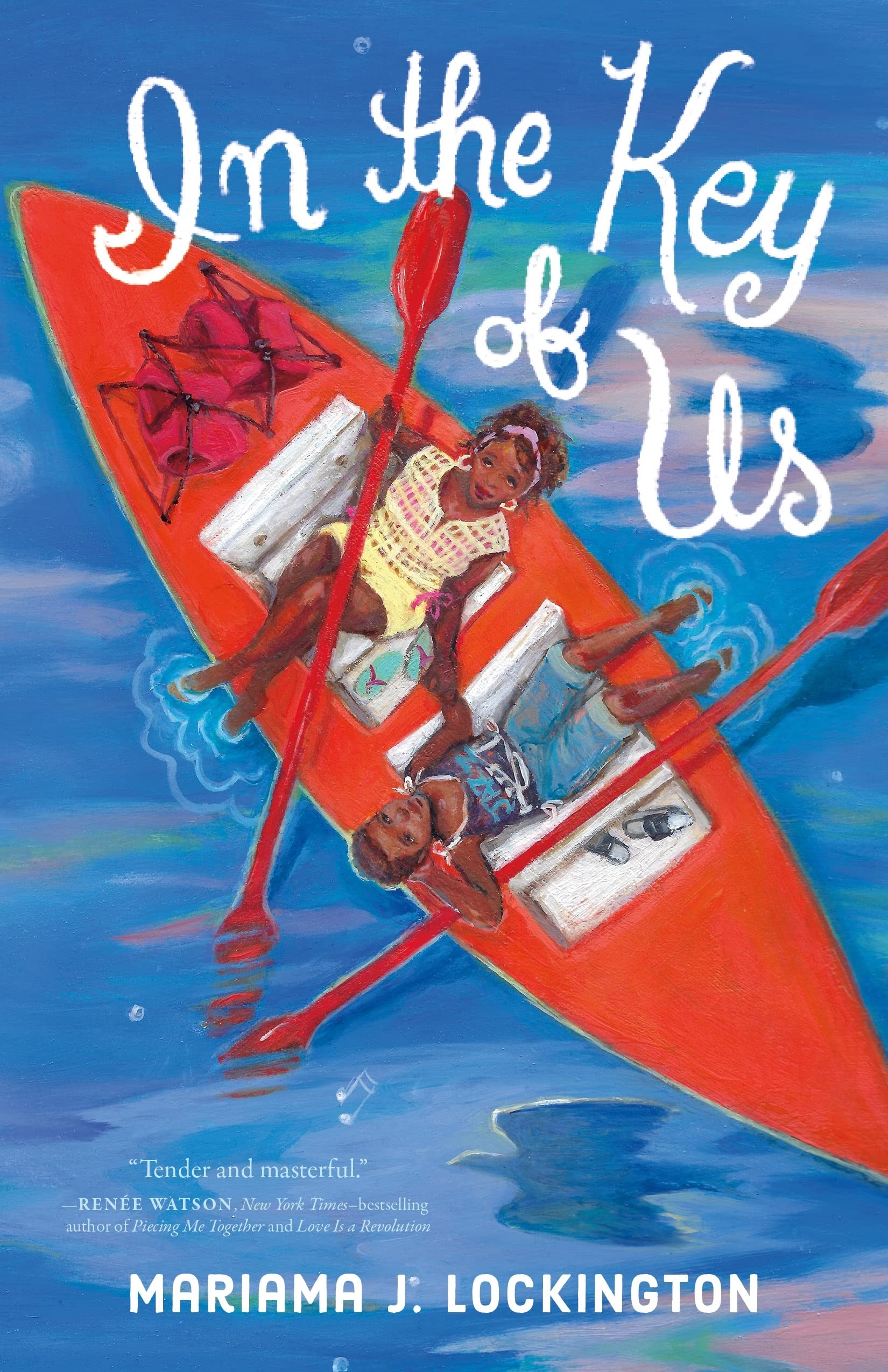
Summary:  Andi and Zora are two of the only Black girls at the prestigious Harmony Music Camp, and they get off to a bad start as bunkmates.  Andi has recently lost her mother in a car accident and carries a guilty secret around her death.  Zora is trying to live up to her parents’ expectations but is starting to think that dance may be her passion more than music.  Andi loves playing the trumpet, but her method of playing mostly by ear doesn’t work very well for the classical style of the camp orchestra, and Zora is assigned to be her mentor.  A friendship slowly grows, and Zora starts to wonder if they might be more than friends.  A climactic scene in which both girls get lost in the woods reveals Andi’s secret about her mom and allows the girls to reveal their feelings for each other.  There are still some issues to be worked out, but both girls head for home feeling a little more confident about who they are.  Includes an author’s note about growing up queer and Black.  354 pages; grades 5-8.

Pros:  A lovely summer romance (with a single kiss and some hand holding) that will resonate with any kid who has ever felt like they don’t belong.  The story is told in alternating voices of the girls, so readers get to gradually see what is going on with each character, both from her own point of view and from others’ perspectives.  Each section ends with a moving poem written in the voice of the camp itself.

Cons:  Death, self-harm, coming to terms with sexuality, bullying, racism: there are a lot of heavy topics dealt with in this book.  To me, though, the author handled them with a deft enough touch to make this an enjoyable summer read.

Free At Last: A Juneteenth Poem written by Sojourner Kincaid Rolle, illustrated by Alex Bostic

Published by Union Square Kids

Summary:  This free verse poem begins with the news arriving in Galveston, Texas: the war is over, and “all who live in bondage here shall from now until be free.”  The words and oil paintings depict Black people’s reactions.  Some head for their shacks, which they now declare home; some go to another farm to work “for a pittance and a little plot of space.”  Others pray, dance, or head farther away.  The last few pages depict their descendants celebrating that freedom, right up to the present day.  An author’s note tells how she was introduced to Juneteenth in the 1980’s and wrote this poem, originally published in 2004, and how Juneteenth has gained wider recognition, eventually becoming a national holiday in 2021.  32 pages; grades K-4.

Pros:  The beautiful words and pictures in this book make it an excellent addition to Juneteenth literature, and a perfect way to observe the holiday.

Cons:  It would have been interesting to get more information about the fate of the different people portrayed in the book, and how their decisions to stay close to home or travel affected their futures.

My Big Book of Outdoors by Tim Hopgood

Published by Candlewick Studio

Summary:  Each of the four seasons is explored with poetry, crafts, and science and nature information.  For instance, here is a sample of the section on spring includes: poems called “Splish-Splash!” and “Rainbow, Rainbow”; what you might find under a rock (illustrated); how to make a chocolate nest; constructing a bug hotel; different types of eggs and feathers; and how to tell a frog and a toad apart.  Everything is illustrated with collage-style illustrations.  128 pages; grades 2-5.

Pros:  A delightful mishmash of seasonal facts, poetry, and crafts with plenty of big, bold, colorful illustrations.  Parents and preschool teachers will find lots of ideas here, but the craft instructions and scientific information are simple and straightforward enough for early elementary kids to enjoy on their own.

Cons:  It’s kind of a big book to haul along on your outdoor explorations.

The Queen of Kindergarten by Derrick Barnes, illustrated by Vanessa Brantley-Newton

Published by Nancy Paulsen Books

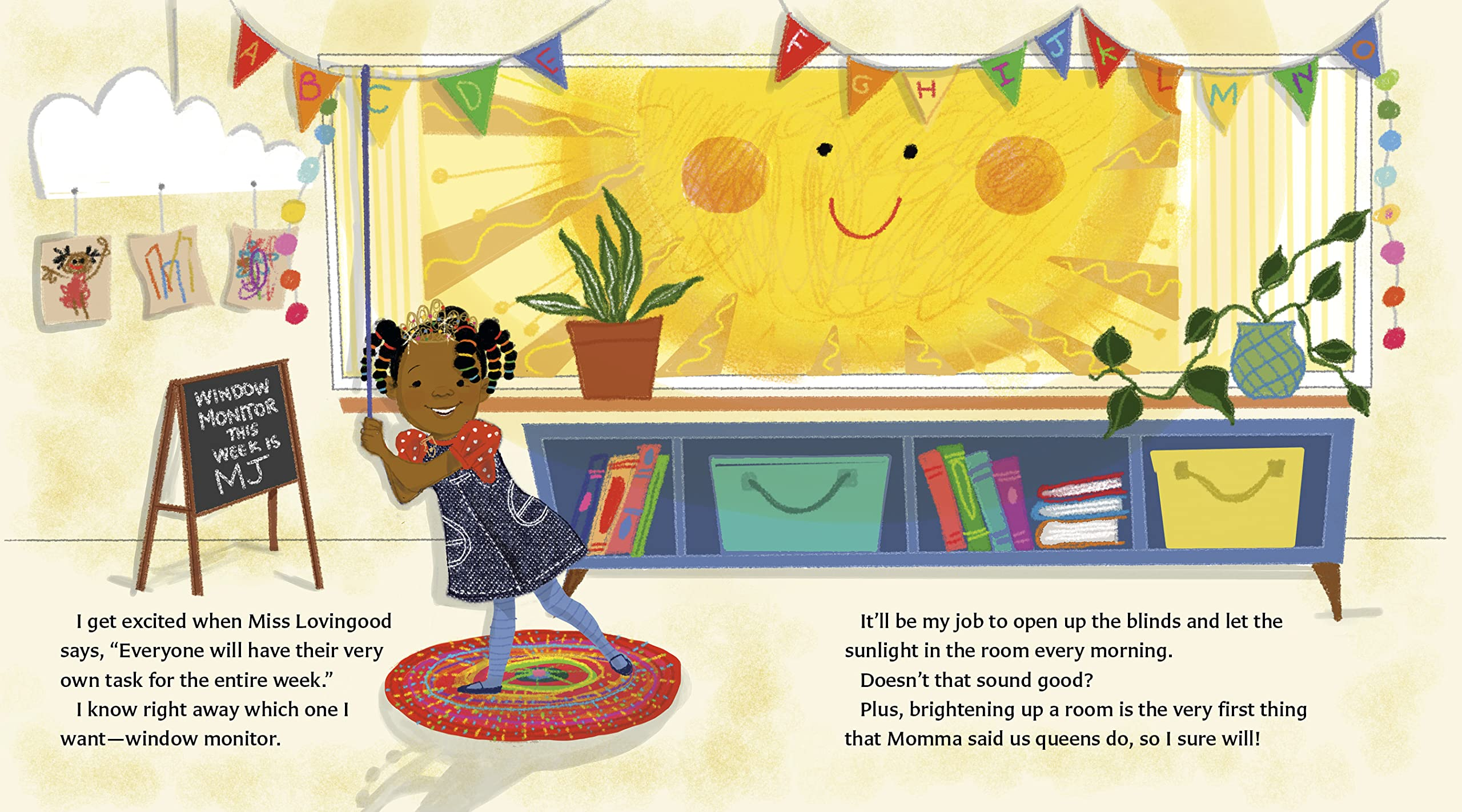
Summary:  From the team that brought you The King of Kindergarten comes this companion about MJ Malone, the Queen of Kindergarten.  She’s got a new dress, freshly braided hair, and a sparkly tiara.  Before she sets out for her first day, her mother reminds her that queens are caring, kind, and helpful.  MJ remembers those lessons when she gets to school, helping a girl who is homesick, promising to share her lunch with a boy (“sharing is my jam!”), and enthusiastically participating in every part of school.  That night she reports about her day to her parents, and her mother tells her she’s earned the right to keep the tiara.  32 pages; ages 3-5.

Pros:  It’s never too early to be thinking ahead to first-day-of-school read-alouds, and this book is perfect for those getting ready for kindergarten.  MJ’s enthusiasm and kindness are sure to inspire kids to try their best on their first day of school, and the illustrations make everything look like fun.

Cons:  Art, music, and gym all on the first day of school?  Sounds exhausting.

Who’s Looking? How Animals See the World by Carol Matas, illustrated by Cornelia Li

Published by Orca Book Publishers

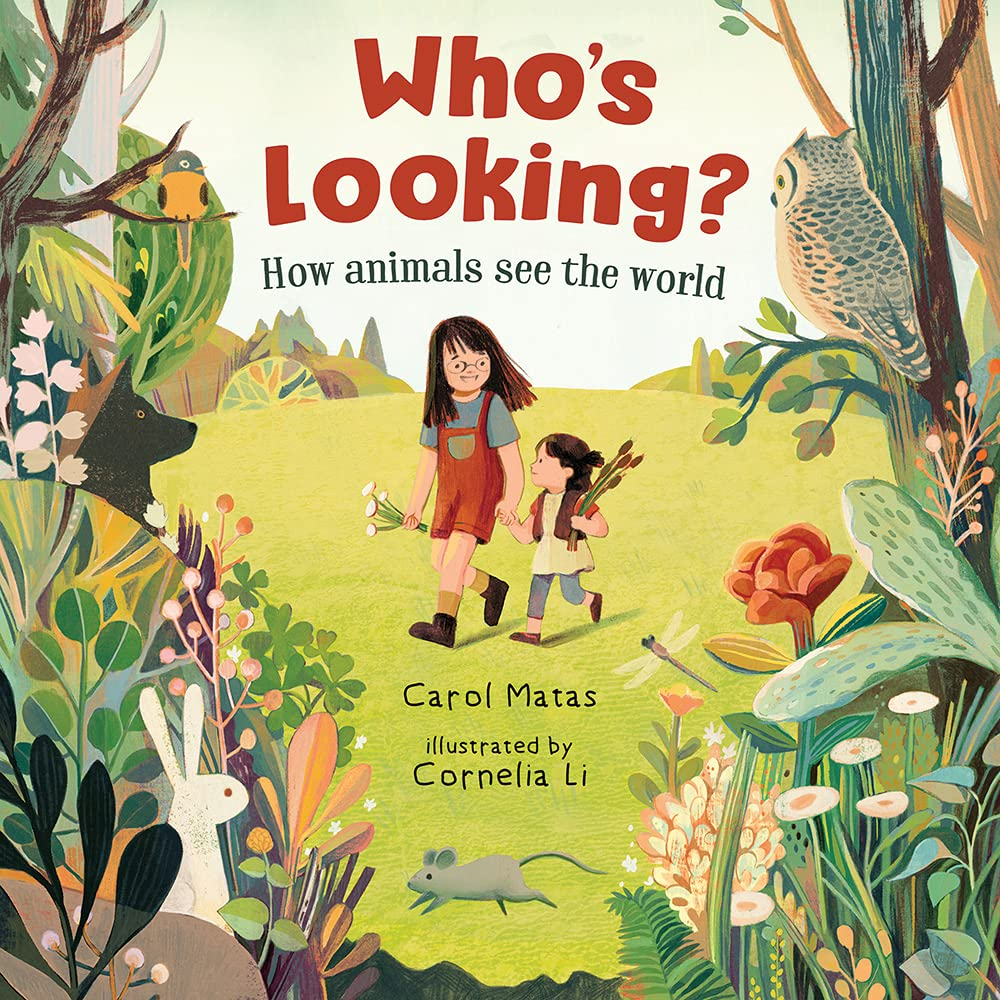
Summary:  As two sisters walk through various landscapes, the text and illustrations show how they are seen by different animals.  The first pages show how the younger sister saw the world as a baby and how the nearsighted older sister sees it without her glasses.  Other animals see fewer or more colors than humans, can see things from a greater distance, or have 360-degree vision.  Animals are shown on land, in the water, and flying in the sky.  The author’s note tells how a walk with her grandson inspired the book.  32 pages; ages 4-8.

Pros:  It’s very cool to see the world as other animals see it, and the illustrations bring this to life, particularly the ones that contrast what the animal sees with what the humans are seeing.  Kids are sure to find this fascinating.

Cons:  Some concepts, like seeing more colors than humans, were a little tricky to show in the illustrations.

Miss Quinces by Kat Fajardo

Published by Graphix

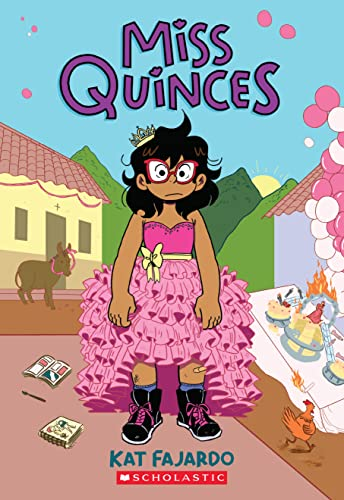
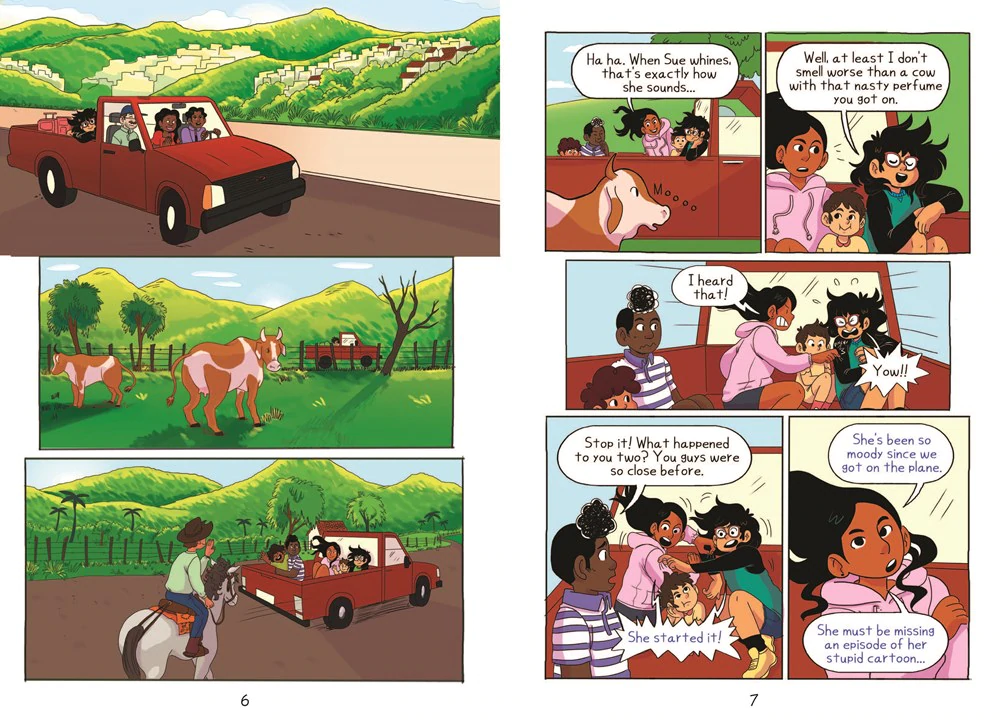
Summary:  Sue (or Suyapa to her family) just wants to draw, go to camp, and hang out with her friends all summer, but her family has other plans: the annual trip to visit relatives back in Honduras.  When they get there, Sue is horrified to learn that her mother has been secretly planning her quinceañera, an event Sue has made clear she does not want.  She reluctantly agrees if her mother lets her go to camp when they get back in the US.  Sue’s abuela encourages Sue by telling her how she kept her sense of style for her own quinceañera.  When Sue finds out her mother forgot to sign her up for camp, the deal is off.  But then abuela passes away, and Sue begins to realize how important her extended family is to her and decides to respect her grandmother by having the quinceañera after all.  She manages to pull off an event that honors her grandmother, keeps the family traditions, and includes her own special flair.  Includes a four-page note with photos about quinceañeras.  252 pages; grades 4-8.

Pros:  Here’s another great graphic novel for Raina fans that shows a loving Latine family with a girl struggling to figure out exactly where she belongs. 

Cons:  I would definitely get this for an elementary library, but a 15-year-old protagonist seems a little old for that audience.

Answers in the Pages by David Levithan

Published by Knopf Books for Young Readers

Summary:  Donovan is a fifth-grade student whose mother challenges the book his teacher assigns, The Adventurers, because she sees the two main characters as being gay.  Gideon and Roberto are two fifth-grade boys whose friendship turns into something more romantic.  Rick and Oliver are the two main characters in The Adventurers, who, along with their friend Melody, are trying to stop an evil genius from stealing the Doomsday Code.  Each story unfolds in alternating chapters until they come together at an important meeting of the school board to decide the fate of the book.  Includes a three-page author’s note acknowledging the work of other authors who write books about LGBTQIA+ characters (many of whom have characters named for them in the story) as well as the work of those defending challenged books.  176 pages; grades 3-7.

Pros:  This book could hardly be more timely, and I appreciate David Levithan’s nuanced writing about this issue. I liked how Donovan’s mother was able to change her position after an honest conversation with her son.  I totally did not see how the stories were coming together at the end and was delighted by that twist.

Cons:  I was reading this book kind of quickly, and it took me a while to figure out the structure with the three alternating stories.

Time to Shine: Celebrating the World’s Iridescent Animals by Karen Jameson, illustrated by Dave Murray

Published by Groundwood Books

Summary: The first page defines iridescence as “the rainbow-like shimmer seen on some bird feathers, fish scales, insect bodies and more.”  Each two-page spread after that shows a brilliantly-colored illustration of the iridescent animal with a rhyming couplet and a paragraph of additional information.  The final two pages show all the animals.  Includes additional information about iridescence (including the recent discovery of a dinosaur with iridescent feathers) and a list of sources.  32 pages; ages 4-8.

Pros:  The gorgeous illustrations are sure to catch kids’ eyes, and the brief but informative text will have them looking for iridescent animals wherever they go.

Cons:  Apparently there are no iridescent mammals.

Being a Dog: A Tail of Mindfulness by Maria Gianferrari, illustrated by Pete Oswald

Published by HarperCollins

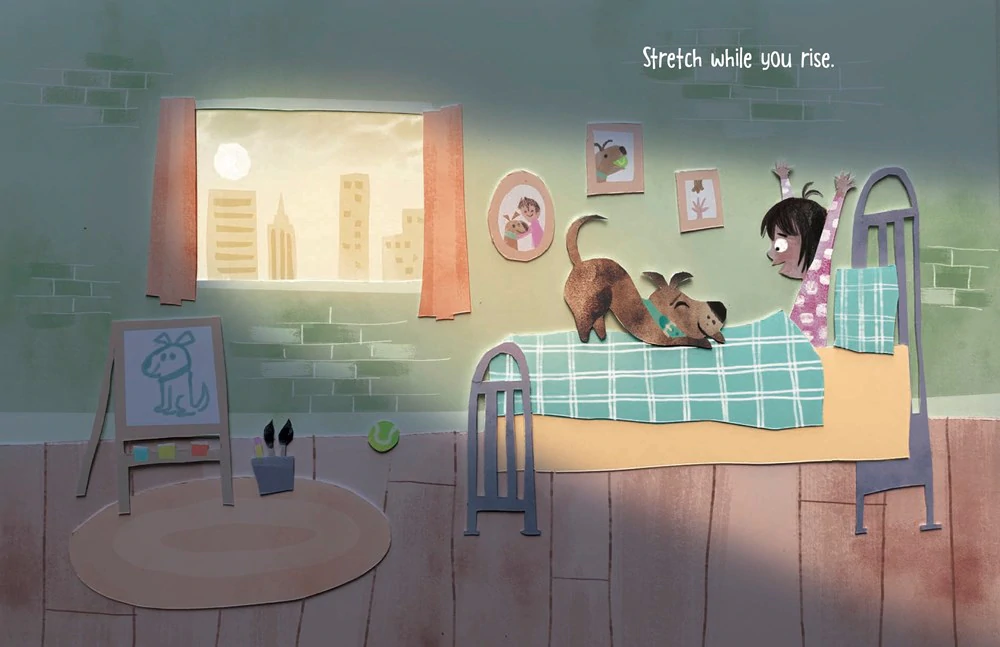
Summary:  Can you be like a dog?  Dogs are always in the present, not the past or the future. They stretch when they wake up, then greet the day and the people they love.   Dogs feel their feelings, then let them go.  They play every day, and sniff deeply wherever they go.  And at the end of the day, dogs notice the night, feel their fatigue, and drop and dream.  Includes lists of ways to use each of your senses on a mindfulness walk and a mindful breathing exercise.  40 pages; ages 4-8.

Pros:  A delightful way to teach mindfulness that kids will easily understand and relate to, with Pete Oswald’s fun dog illustrations providing the visuals.

Cons:  Not everyone lives in a climate where they’ll be able to find the things listed on the mindfulness walk.

Lily Leads the Way by Margi Preus illustrated by Matt Myers

Published by Candlewick

Summary:  Lily is a little sailboat who is excited to be greeting a visiting fleet of tall ships.  To get to the harbor, she needs the lift bridge to raise itself and let her through.  She calls out to the bridge, but bigger, louder ships get ahead of her.  She finally makes it through and meets up with the tall ships: a sloop, a schooner, a brig, and a barque.  But none of them has any way to alert the bridge that it needs to let them through again, and it’s up to Lily to find a solution to their dilemma.  Includes an author’s note about lift bridges and her personal experience with sailboats and bridges.  32 pages; ages 3-7.

Pros:  Budding engineers will enjoy seeing all the different types of bridges and ships, and all kinds of kids will appreciate that Lily is the heroine of the story, despite her small size.

Cons:  Some of those big ships were kind of obnoxious.