Catalina Incognito (book 1) by Jennifer Torres, illustrated by Gladys Jose

Published by Aladdin
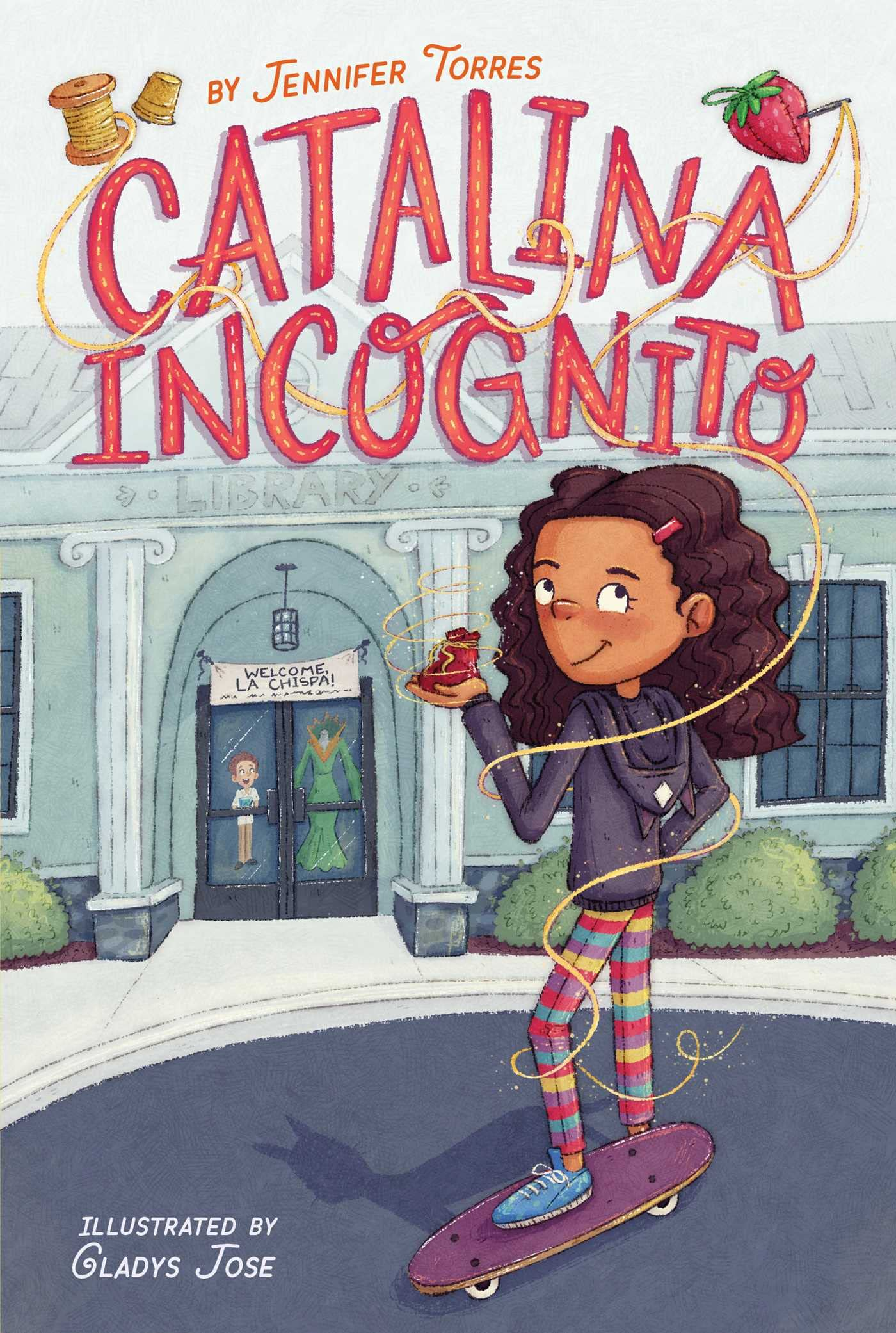
Summary:  Catalina’s a bit disappointed to receive a sewing kit from her Tía Abuela for her birthday.  Usually Tía, a former telenovela star who is also named Catalina, gives more exciting gifts.  For their first sewing lesson, Tía shows Cat how to fix her torn cat sweatshirt.  Later, Cat realizes the sweatshirt can temporarily transform her into a cat.  It turns out the sewing kit has magic in it that can change ordinary clothing into disguises.  Becoming a cat comes in handy when a ruby goes missing from one of Tía’s most famous gowns on display at the local library.  Cat and her frenemy Pablo combine forces to solve the mystery.  This is the first of a four-part series, simultaneously released with book 2 (there’s a preview at the end of this book).  Books 3 and 4 will be out later this year.  114 pages; grades 1-3. 

Pros:  There’s a lot going on in this early chapter book: magic, a mystery, and a few lessons about perseverance.  The illustrations and larger font make it an appealing choice for younger kids.

Cons:  The mystery didn’t start until about halfway through the book and wrapped up pretty quickly. I hope Pablo gets a bigger role in book 2.
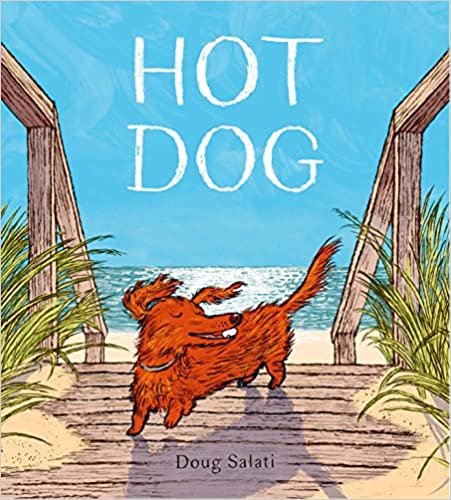
Hot Dog by Doug Salati

Published by Knopf Books for Young Readers

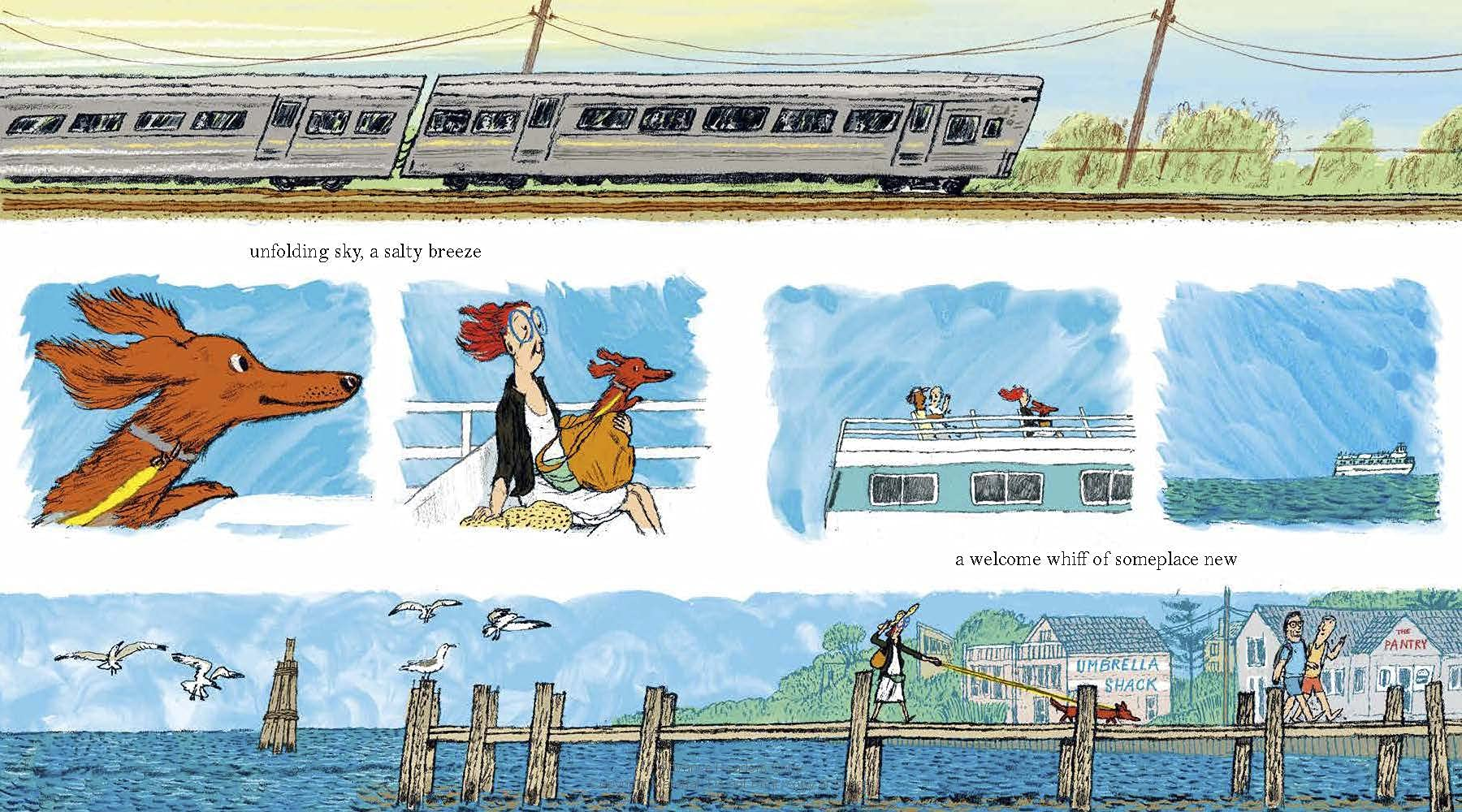
Summary:  “City summer, steamy sidewalks/concrete crumbles, sirens screech.”  Walking through the city with his owner, this dachshund is truly a hot dog!  Finally, he goes on strike, lying down in the middle of a busy street.  His owner scoops him up, hails a taxi, and heads to the train.  Before he knows it, the dog is cooling off on “an island…wild and long and low.”  The two have a refreshing afternoon there before heading back to the city where dusk has brought a welcome coolness.  Time for dinner and then “ready to leap into a deep ocean sleep” where he dreams about the seal he met on the beach.  40 pages; ages 3-8.

Pros:  An idyllic summer book where the illustrations perfectly capture the sweltering heat of the summer and the cool relief of a trip to the beach.  The words and illustrations transition from short phrases and hot colors to longer descriptions and cooler colors.  Not to be ruled out for Caldecott recognition.

Cons:  These two take a day trip from what appears to be New York City on a sweltering summer day to an island that appears to be populated only by seals, so we must definitely classify the story as a fantasy.

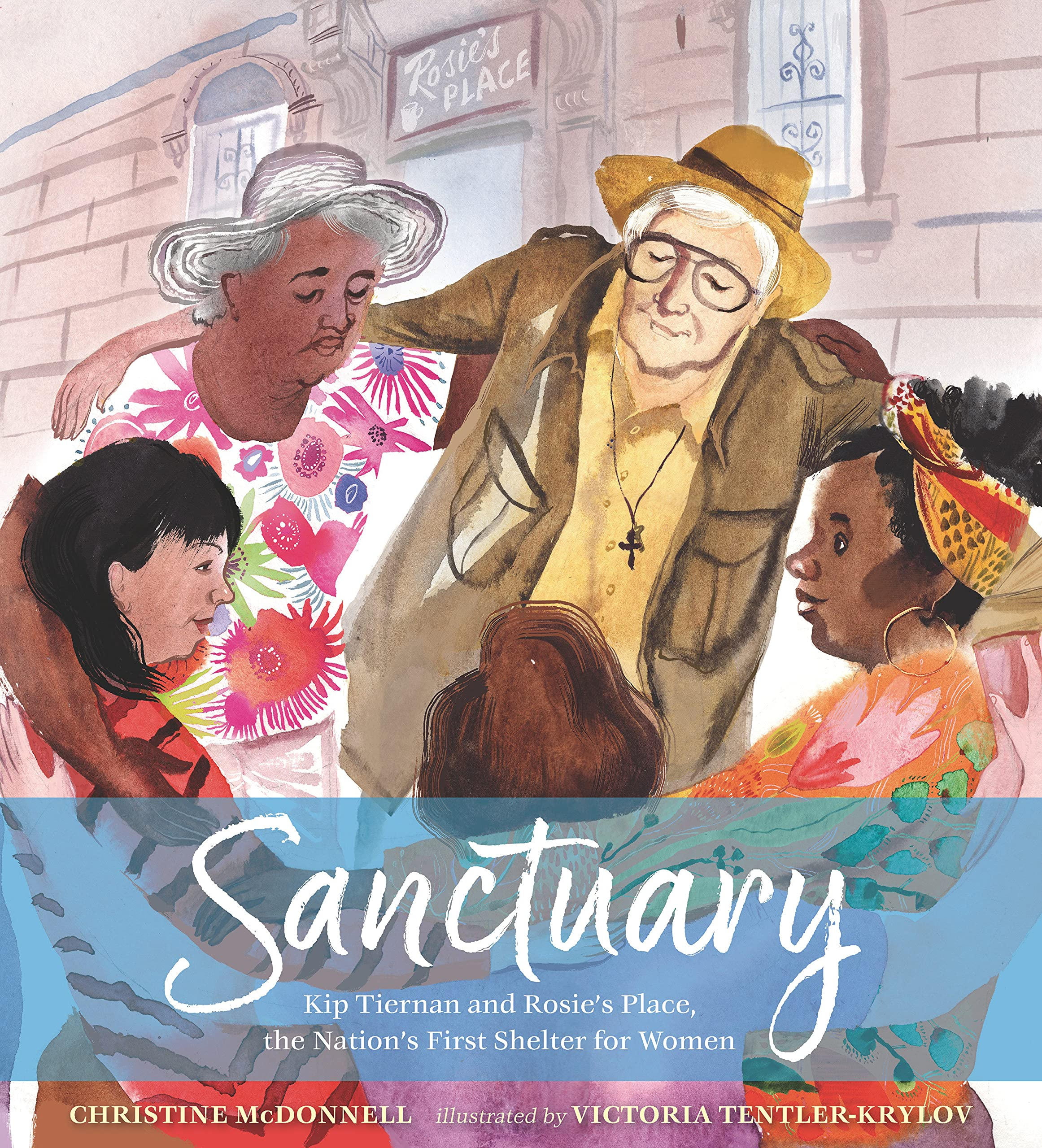
Sanctuary: Kip Tiernan and Rosie’s Place, the Nation’s First Shelter for Women by Christine McDonnell, illustrated by Victoria Tentler-Krylov

Published by Candlewick

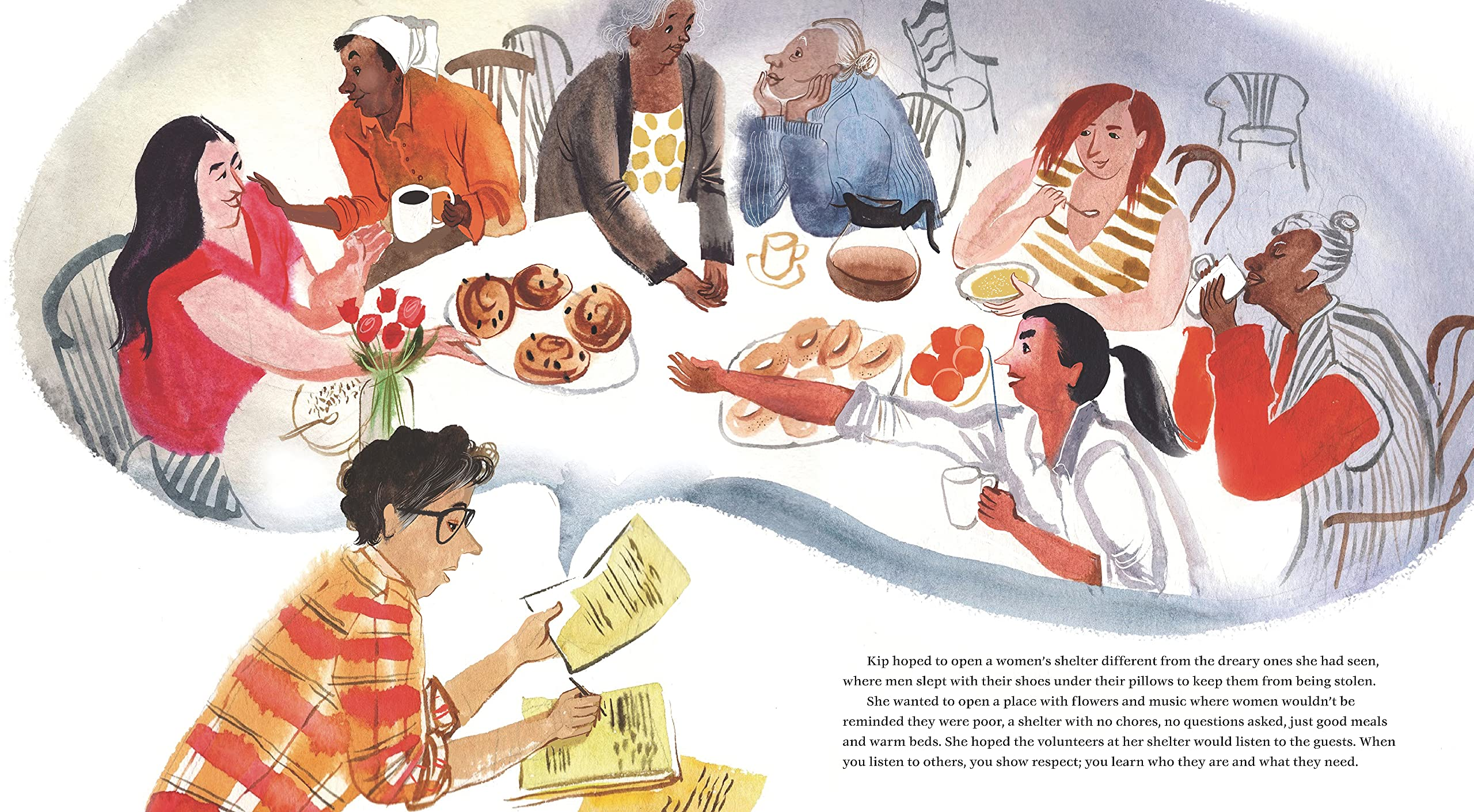
Summary:  Kip Tiernan learned about helping others as a child growing up during the Great Depression.  Her grandmother used to keep a pot of soup on the stove and would feed anyone who came to the door for a meal.  In the 1960’s Kip gave up her advertising business to help the poor.  While working in shelters, she saw that women had to disguise themselves as men to get a meal and a bed.  Noticing how many homeless women there were on the streets, she became determined to find a way to help them.  In 1974, she opened Rosie’s Place, the first homeless shelter in the country just for women.  Over the years she expanded the services offered there to help women become self-sufficient.  The book concludes with a story of Kip riding on a bus many years after starting Rosie’s Place.  The bus driver pulled over to thank her, stating that he would not have had food to eat as a child if it hadn’t been for her.  Includes additional information about Kip Tiernan and a list of quotations from her.  40 pages; grades 1-5.

Pros:  An inspiring story of a woman who worked tirelessly to provide the services she envisioned, and who truly saw the humanity of every individual.

Cons:  The story is a bit long to use as a read-aloud for younger kids.

Because of You, John Lewis: The True Story of a Remarkable Friendship by Andrea Davis Pinkney, illustrated by Keith Henry Brown

Published by Scholastic Press

Summary:  Tybre Faw grew up learning Black history and was particularly inspired by John Lewis.  In 2018, at the age of ten, he convinced his grandmothers to take him to Selma to be part of the commemoration of 1965’s Bloody Sunday.  Tybre met John on the Edmund Pettus Bridge, and the two became friends.  They walked together again in 2019 and in 2020 when John Lewis had been diagnosed with cancer.  Lewis died a few months later, and Tybre was invited to recite one of the congressman’s favorite poems, “Invictus” by William Ernest Henley at the memorial service.  Includes additional information about both John Lewis and Tybre Faw, a timeline of Lewis’s life, a list of sources and resources for further reading, photos from both the 1960’s and the interactions between John and Tybre, and the text of “Invictus”.  40 pages; grades 2-5.

Pros:  I marvel at the way this book is written, using beautiful poetry and watercolor illustrations to weave together the lives of both John Lewis and Tyre Faw, and showing the intersection between the civil rights and Black Lives Matter movements.  The back matter adds a lot and gives resources for further exploration.

Cons:  I found it a little difficult to figure out when and at what age Tybre met John; it would have been helpful to me to have those dates included in the timeline.


Tisha and the Blossoms by Wendy Meddour, illustrated by Daniel Egnéus

Published by Candlewick

Summary:  Every time Tisha tries to slow down and enjoy something, someone tells her to hurry up: catch the bus to school, go to an assembly, get to lunch, clean up at the end of the day.  When Mom picks her up and says they have to catch another bus, Tisha finally rebels against all the hurrying.  Her mother suggests they walk home instead. As they do, they notice everything around them.  At home, when her father says he has to hurry up and get dinner Mom suggests a picnic.  They eat under a tree, savoring the food and the blossoms that blow off the branches.  “I think my favorite days,” says Tisha, “are full of blossoms and a bit of slowing down!”  32 pages; ages 3-8.

Pros:  A story of mindfulness and slowing down that both kids and adults will relate to and embrace.  The illustrations are gorgeous, especially the big, colorful flowers. 

Cons:  A little more information about mindfulness at the end would have been nice.

Little Houses by Kevin Henkes, illustrated by Laura Dronzek

Published by Greenwillow Books

Summary:  A girl visiting her grandparents ponders what she sees at the beach with a sense of wonder.  She and her grandmother collect shells, which her grandmother calls little houses.  That makes her wonder about what used to live there, which leads her to think of everything under the sea.  Her grandfather says, “The world is so big and there is so much to know.  And someday you’ll know it all.”  She thinks about all the things she would like to know.  One thing she does know is that she’ll take home all the shells–the little houses–back to her house and keep them on a shelf with all her favorite things.  40 pages; ages 3-8.

Pros:  Another beautiful collaboration by the husband and wife team of Kevin Henkes and Laura Dronzek.  The text and illustrations help foster a sense of wonder and curiosity in young children, and make a perfect story for a summer day.

Cons:  I’m always happy to see a new book by Kevin Henkes, but sometimes I miss Lilly and the rest of the mice.

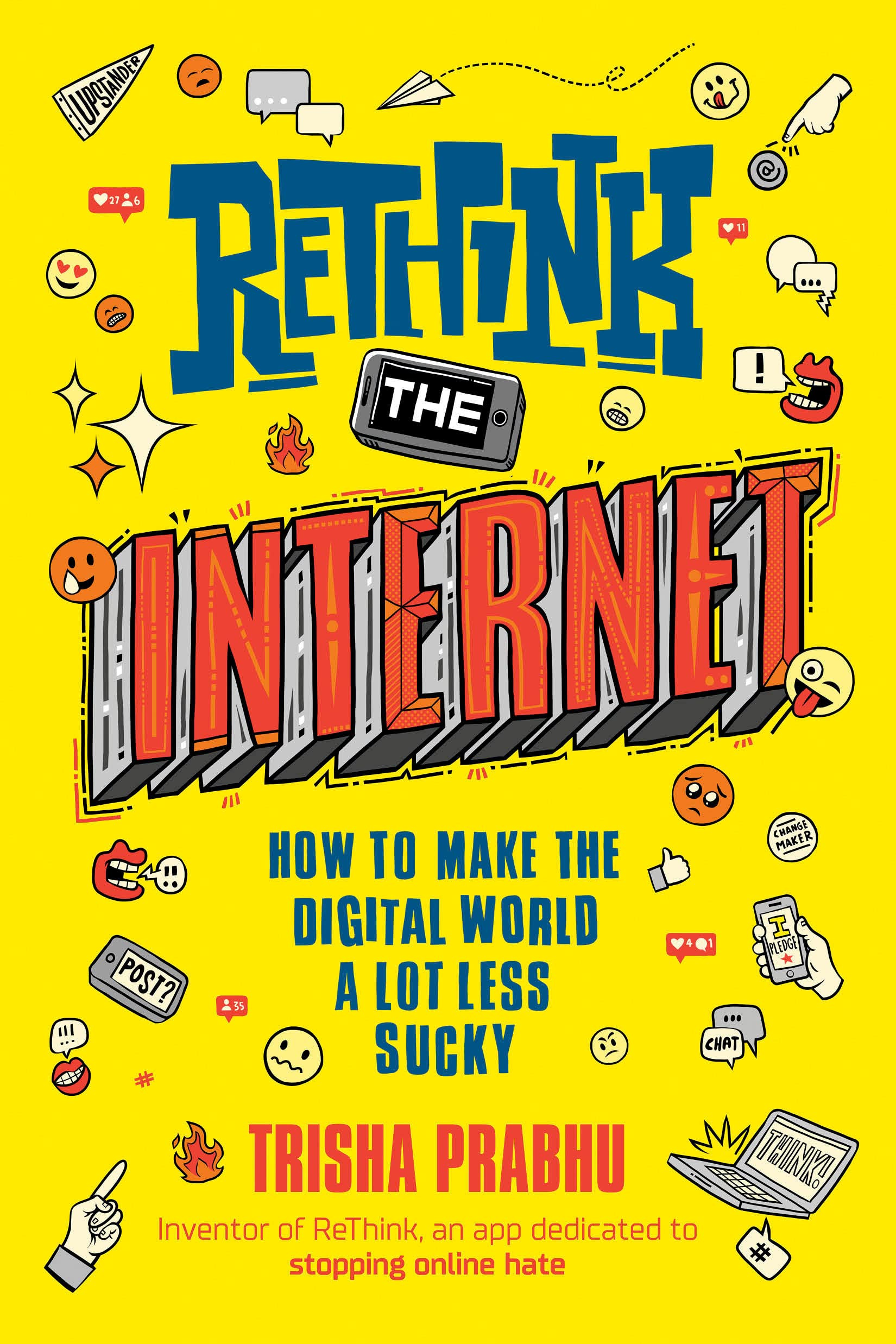
Rethink the Internet: How to Make the Digital World a Lot Less Sucky by Trisha Prabhu

Published by Philomel Books

Summary: After experiencing cyberbullying in middle school, Trisha Prabhu has dedicated herself to stopping online hate.  She offers several stories here of kids’ experiences with the Internet and social media, both bad and good.  Yes, people can post cruel messages online, but they also can use the wide reach of social media to make the world a better place.  At the end of each chapter is an Internet Challenge for kids to practice the skills they’ve learned.  Includes a Digital Citizen Code for kids to sign and a section for educators that has a recap of each chapter and challenge along with lists of skills taught and discussion questions.  175 pages; grades 4-8.

Pros:  An excellent resource for those working with upper elementary and middle school kids to communicate the perils and promises of online life.  The stories are engaging, and the resources at the end will help teachers, parents, and others who work with kids get the most out of them.

Cons:  The tone sometimes made me feel like the author, who is only 21 years old, was trying a little too hard to sound middle-school cool.

The Rainbow Parade by Emily Neilson

Published by Dial Books

Summary:  Emily is traveling with her two moms to the Rainbow Parade.  They see all kinds of people on the train and in the crowds lining the streets, wearing “whatever makes them feel most like themselves.” They wait and wait.  Finally the parade starts, with people marching, juggling, singing, dancing, and chanting.  When they see a banner that says LGBTQ+ Families, Emily’s moms hop over the fence to join them.  Emily feels shy, but her mothers assure her that pride takes practice, and this is the perfect way to get that practice.  Marching with the families is lots of fun, and Emily enjoys seeing families that are similar to her own.  On the train ride home, she declares that she is going to practice pride all year long.  Includes three photos and a note explaining that this story is based on the author’s childhood.  32 pages; ages 4-8.

Pros:  Another excellent book for Pride month (or any month) that captures the fun and “be yourself” spirit of a Pride parade while also showing that it can be a little intimidating sometimes to show that pride.

Cons:  I wish there had been a longer author’s note and some resources at the end.

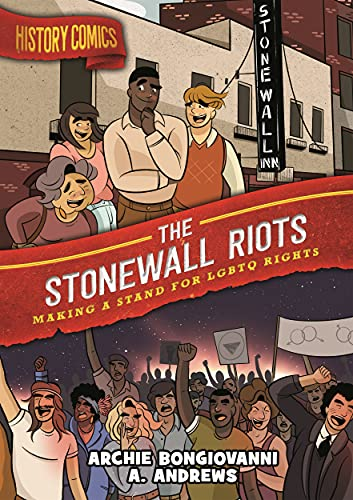
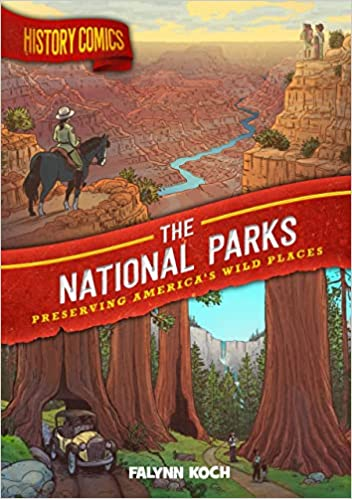
The Stonewall Riots: Making a Stand for LGBTQ Rights by Archie Bongiovanni, illustrated by A. Andrews and The National Parks: Preserving America’s Wild Places by Falynn Koch

Published by First Second

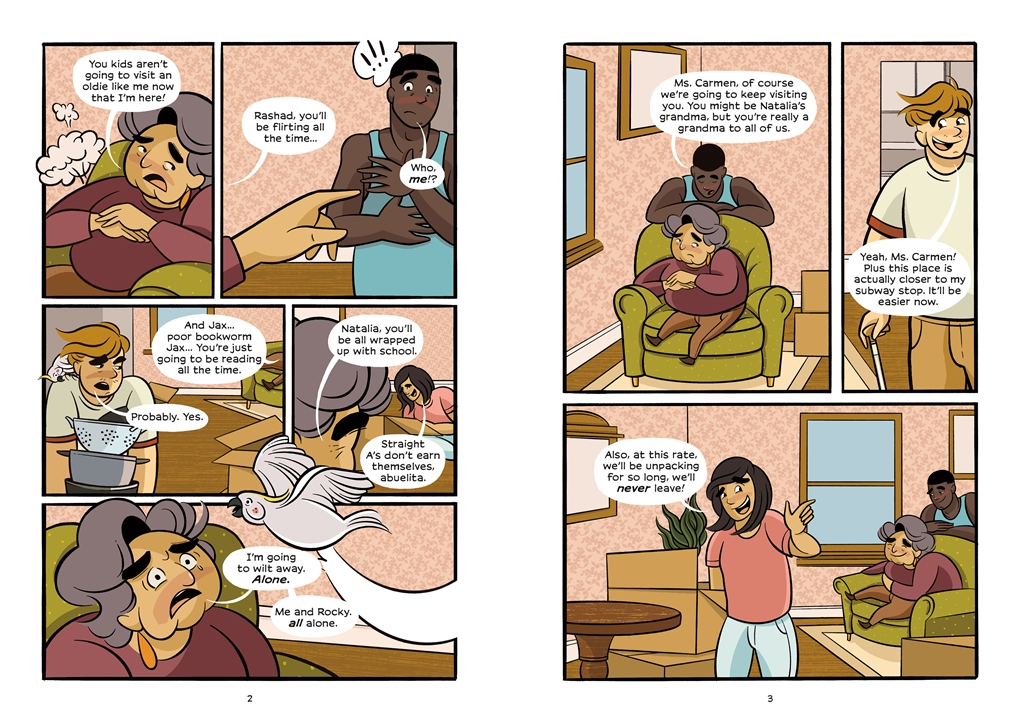
Summary: These two entries into the History Comics series tell the story of the 1969 Stonewall Riots that helped bring gay rights into the national spotlight and the history of the National Parks System that helped preserve natural wonders and historical artifacts in the United States.  In The Stonewall Riots, Natalia’s abuela takes teen Natalia and her friends Jax and Rashad back in time to the night of the first protest.  Abuela had a girlfriend at the time, and the three kids, all part of the LGBTQIA+ community, get some lessons about the people and events of that time.  The National Parks features two narrators, a bigfoot and an eagle, who look at the patchwork history of the National Parks System, going all the way back to the early 19th century.  Each book starts with a foreword and includes an author’s note with additional information and resources at the end.  128 pages; grades 4-8.

Pros:  Both books make history accessible through the graphic format and the fun narrators (abuela and Bigfoot).  The additional resources at the end make these a good introduction that could lead to further research.

Cons:  I thought this format worked better for a specific incident (Stonewall Riots) than a longer period of time (National Parks).  I could see kids losing interest in such a sprawling history that included so many different people and places.

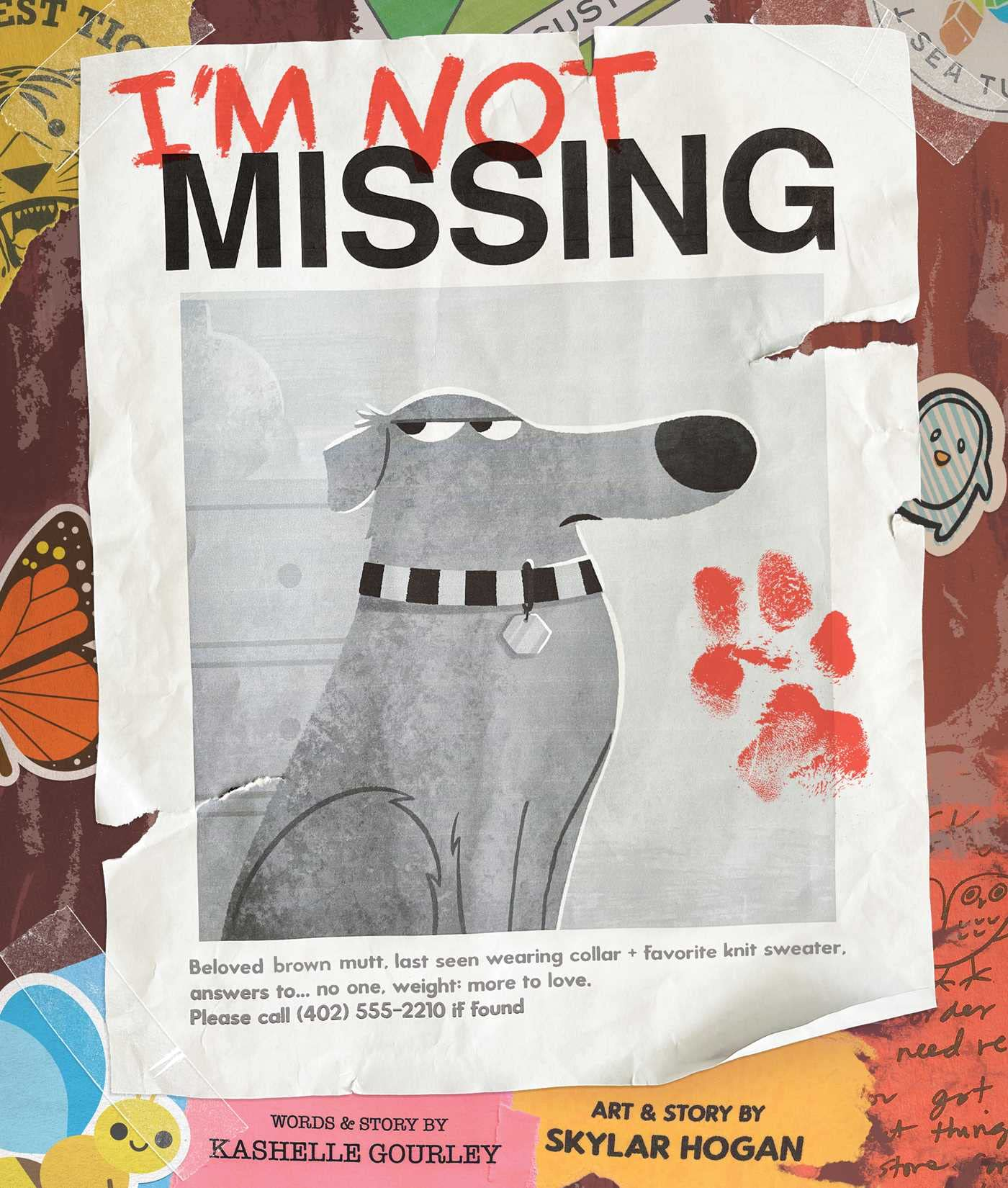
I’m Not Missing by Kashelle Gourley, illustrated by Skylar Hogan

Published by little bee books

Summary:  A dog explains why he left home to become a “lone wolf”.  Trying to be a good boy all the time, getting dressed up in silly costumes, pooping in public with everyone watching…he’s definitely better off on his own.  But then he sees his owner out walking a new dog. They’re playing, sharing treats, and taking selfies.  It turns out she’s only dog sitting, but the jealousy serves a purpose.  Pretty soon he’s back on the couch, dressed in a pullover sweater, and enjoying some scratches behind the ears.  After all, “relationships are all about compromise.”  40 pages; ages 4-8.

Pros:  I could definitely relate to the dog’s struggles between needing people and wanting to be a lone wolf, and I’m guessing others–both kids and adults–will as well.  There’s plenty of sly humor, and a reassuring message about taking a break but returning to those you love.

Cons:  Some of the humor may be a little over the heads of the intended audience.