Climb On! by Baptiste Paul, illustrated by Jacqueline Alcántara

Published by NorthSouth Books

Summary:  Dad thinks it’s a great day for watching futbol, but his daughter has another idea, to take a hike up the mountain.  They fill backpacks with snacks, water, and a camera and head out.  At first, she’s the energetic one, scrambling up rocks, swinging from a vine, and encouraging her father, but as the day goes on, their roles are reversed.  As they approach the summit, she climbs onto his back, and finally they make it to the top, where an amazing vista awaits them.  The last page shows them both swinging from a vine, watched by a group of animals that the reader is invited to go back and find in the illustrations.  32 pages; ages 3-8.

Pros:  The team that brought you The Field has produced another winning story about a fun day in what I am guessing is St. Lucia, the setting for The Field.  The brief text is all dialog between the girl and her dad, sprinkled with Creole words.  The brilliant illustrations that capture the flora and fauna of the hike should be considered for some sort of award recognition.

Cons:  There was no back matter explaining the setting of the story, and, although the words were translated in the text, a Creole glossary would have been nice.

Honestly Elliott by Gillian McDunn

Published by Bloomsbury Children’s Books

Summary:  Elliott loves to cook and is good at it, with an ability to focus in a way that he struggles with at school.  His ADHD makes schoolwork difficult and social interactions awkward at times.  After almost failing the first semester of sixth grade, Elliott has to endure lectures from his high-achieving, sports-loving dad who is expecting a new baby with his new wife Kate.  For a project at school, Elliott finds himself unexpectedly partnered with popular girl Maribel, whose revelations about her struggles with celiac disease make Elliott realize that her life isn’t as perfect as it seems.  By the end of the story, he’s realized that no one’s life or family is perfect and that he has more love and support around him than he realized.  Includes recipes for Desperation Pie and Elliott’s Crumb Crust that are the centerpiece of Elliott’s and Maribel’s project.  263 pages; grades 4-6.

Pros:  Elliott is an extremely likable character who has friend, family, and school problems that many readers will relate to.  He handles those problems with humor and a certain amount of grace and manages to connect with those around him without giving up on being himself. 

Cons:  There are way more accomplished kid chefs in children’s books than I actually seem to meet in real life.

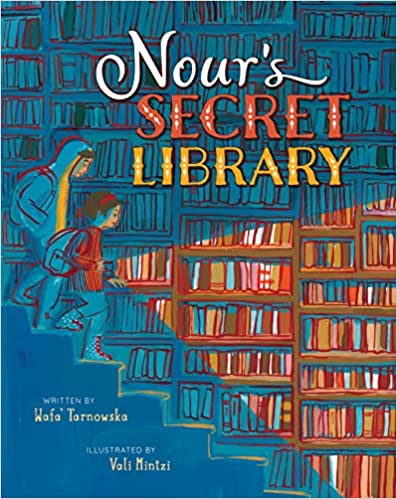
Nour’s Secret Library by Wafa’ Tarnowska, illustrated by Vali Mintzi

Published by Barefoot Books

Summary: Nour and Damir are cousins living in Syria with big plans to start a secret society for themselves and their friends.  Those plans are destroyed when the war moves to their city and they have to hide in a basement.  During lulls in the fighting, Damir goes out on his bike to look for food and begins to rescue books that he finds in the rubble.  The kids find an empty basement in a mostly-abandoned building and set up a library there.  With the help of neighbors, they build shelves and move their books into the basement.  Before long, people are coming from all over the city to borrow books.  Reading and books provide a respite for people as they endure the long war.  Includes a glossary, information about Syria, a list of 8 famous libraries in the Middle East, information about the real secret library, and notes from the author and illustrator.  32 pages; grades 1-5.

Pros:  An inspiring story based on real events that celebrates reading, books, and innovative kids who found a way to bring joy to their war-torn city.

Cons:  It wasn’t exactly clear which parts of the book were fact and which were fiction.

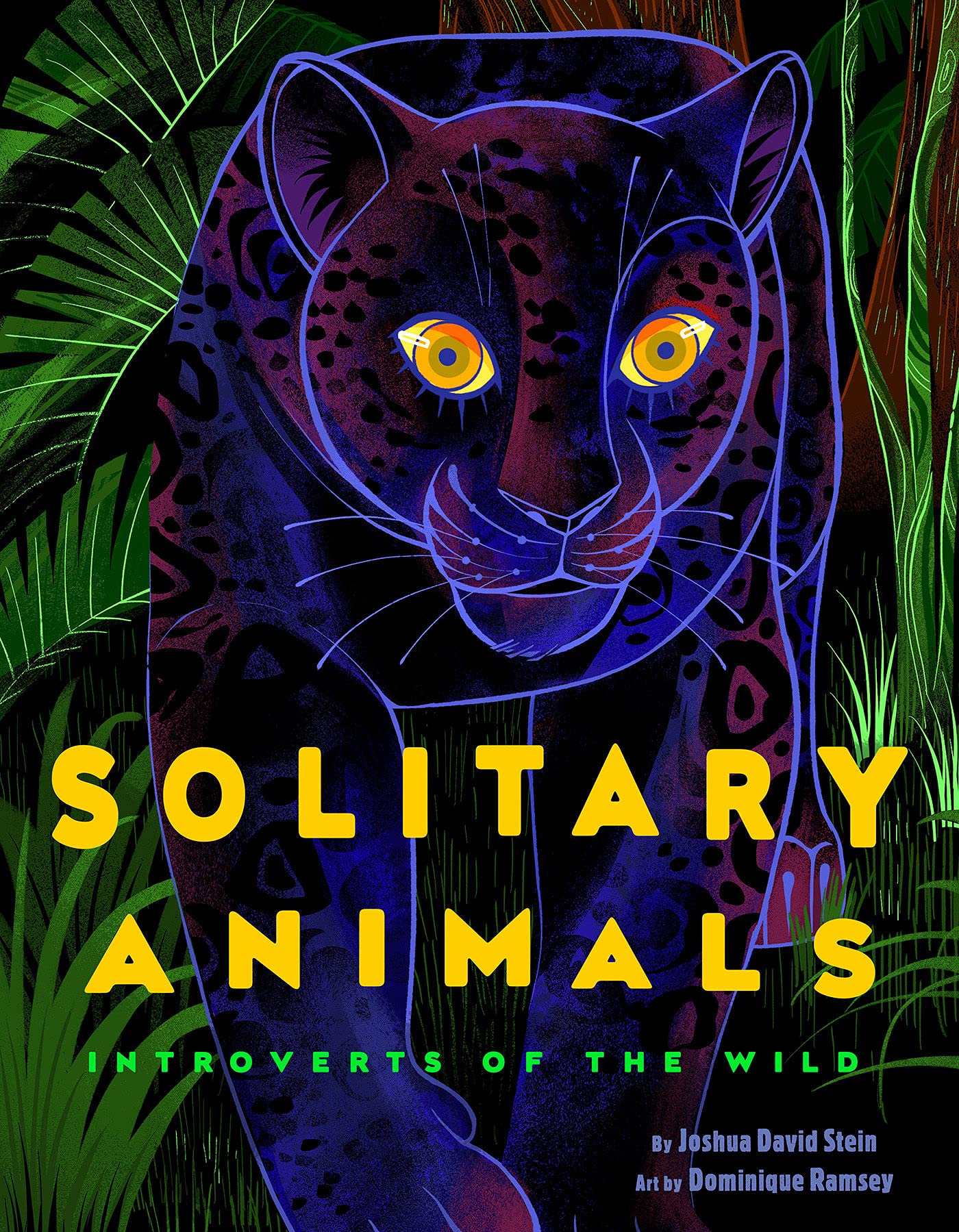
Solitary Animals: Introverts of the Wild by Joshua David Stein, illustrated by Dominique Ramsey

Published by Rise x Penguin Workshop

Summary:  While many animals live in groups–a parade of elephants, a tower of giraffes, a pod of whales–there are some that live alone.  The panther at the watering hole, the octopus in the ocean, the sloth in the jungle, and the bald eagle high in the sky are all solitary animals who have evolved to survive best on their own.  A final page gives additional information about solitary animals, including a comparison with humans that concludes, “All creatures find their own balance.”  48 pages; ages 4-8.

Pros:  The amazing digital illustrations of this book highlight animals both in groups and alone.  The text emphasizes that different animals do well with different amounts of sociability, a lesson that kids may apply to themselves as well.

Cons:  Is it just me, or is the word “introverts” becoming a bit hackneyed?

Be the Change:  Rob Greenfield’s Call to Kids – Making a Difference in a Messed-Up World by Rob Greenfield and Antonia Banyard

Published by Greystone Kids

Summary:  Environmental activist Rob Greenfield has lived in an off-grid tiny house, bicycled across the country, gone without showering for 1,000 days, and worn a “trash suit” through the streets of New York City to show people how much garbage they generate in a month.  Diving into different environmental issues like energy, food waste, and transportation, he encourages kids to think about changes they can make in their lives and profiles young environmental activists.  He includes sections on disconnecting from technology and building community, and how living more simply can encourage growth in both areas.  Includes a glossary, list of resources, and index.  87 pages; grades 3-7.

Pros:  An inspiring and accessible read, with lots of photos, infographics, and short sections of text that encourage kids to see how making small (and big) lifestyle changes can have a real impact.

Cons:  The tiny font.

Pink, Blue, and You! Questions for Kids About Gender Stereotypes by Elise Gravel with Mykaell Blais

Published by Anne Schwartz Books

Summary:  The book starts off with a series of questions: Are some things more for girls and some for boys?  Who made those rules?  What happens if we don’t follow them?  The text and pictures then show differences in sex and explain what gender identity is.  Different families and gender roles are portrayed, with an emphasis on treating others with respect and love, no matter how they identify or choose to raise a family.  A few people are profiled, like the Army’s first male nurse (Edward T. Lyon), the first openly transgender state senator (Sarah McBride of Delaware), and the first woman in space (Valentina Tereshokova).  The final page asks, “Won’t it be nice to live in a world where we can all just be ourselves?”.  Includes two pages of fun facts about gender and clothing.  40 pages; ages 4-8.

Pros:  The authors do an excellent job of presenting a complicated subject in a way that young children will understand.  Elise Gravel’s illustrations are fun and help to further illuminate the topics covered.  An outstanding resource all around (although I wish it had a list of additional resources).

Cons:  I’m sure it’s just a matter of time before the cultural warriors get this into their book-banning crosshairs.

People Are Wild by Margaux Meganck

Published by Knopf Books for Young Readers

Summary:  A series of animal parents and offspring observe humans from a distance.  “Mama, what’s that?” asks a young elephant.  “Don’t get too close,” a frog warns.  “Why not?” asks the smaller frog.  “Because people are wild.”  They’re loud, messy, smelly, and nosy.  But, the younger animals point out, people are also funny, cuddly, and cute.  When the young elephant begs to keep a human, the parent says no.  “People are wild.  And all wild creatures should be free.”  Includes facts about each animal shown, a map showing where they live, and each one’s endangered status.  40 pages; ages 4-8.

Pros:  Kids will get a kick out of hearing animals describe humans in the same way people often talk about animals, and in the process may also absorb an important lesson about wild creatures.  Everyone will be drawn in by the beautiful illustrations.

Cons:  Wouldn’t a young frog be a tadpole?

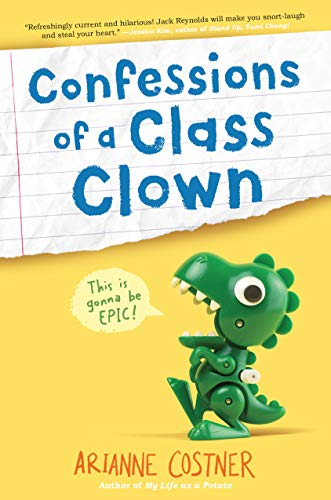
Confessions of a Class Clown by Arianne Costner

Published by Random House Books for Young Readers

Summary:  Jack has been a class clown since first grade and has a big following for the stunts he posts on MyTube, but finding real friends proves to be a lot harder.  He stops by an after-school speed friendshipping club, ostensibly for the free donuts, and gets to talk to three kids: Mario, Brielle, and Tasha.  After the club meeting, the three share their perspectives with readers, which prove to be quite different from Jack’s impressions of them.  Despite Jack’s apparent confidence, he actually has a lot of doubt about his ability to make friends and often assumes that other kids don’t like him.  The reader gets to see all four kids’ insecurities and misperceptions as they slowly move toward a better understanding of each other.  Although there’s no guarantee that they’ll remain friends in eighth grade, each one develops compassion and gets some tools that will come in hand in future friendships.  288 pages; grades 4-7.

Pros:  Diary of a Wimpy Kid fans might be willing to take a chance on this book with its appealing cover and grayscale illustrations.  Jack experiences a bit more personal growth than Greg Heffley, but the author’s light touch and insightful portraits of each character provide plenty of fun along with some learning.

Cons:  The kids were quick to come to some pretty adult conclusions about social media which might not ring quite true with tweens.

Knight Owl by Christopher Denise 

Published by Christy Ottaviano Books

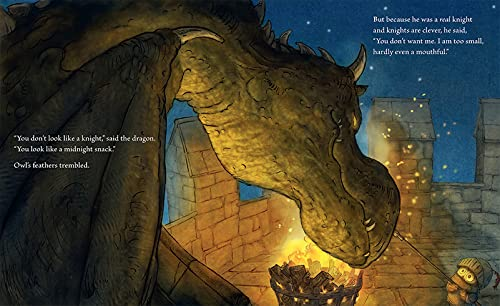
Summary:  Young Owl has always dreamed of becoming a knight, and when knights start disappearing from the castle, his dream comes true.  He’s accepted to Knight School where he struggles to overcome his small stature.  But he works hard and graduates “with honor, as all knights do.”  Owl gets assigned to Night Knight Duty, which he excels at thanks to his ability to stay awake all night.  When a dragon attacks the castle, though, it looks like Owl might become a midnight snack until some quick thinking and preparation turn things around.  Before long, Owl is hosting late-night (knight) parties for the dragon and other new friends.  48 pages; ages 3-8.

Pros:  Kids will love this adorable story and illustrations that celebrate the power of hard work, courage, friendship, and pizza.

Cons:  I wish Owl had a more original name.

Born Hungry: Julia Child Becomes “the French Chef” by Alex Prud’homme, illustrated by Sarah Green

Published by Calkins Creek

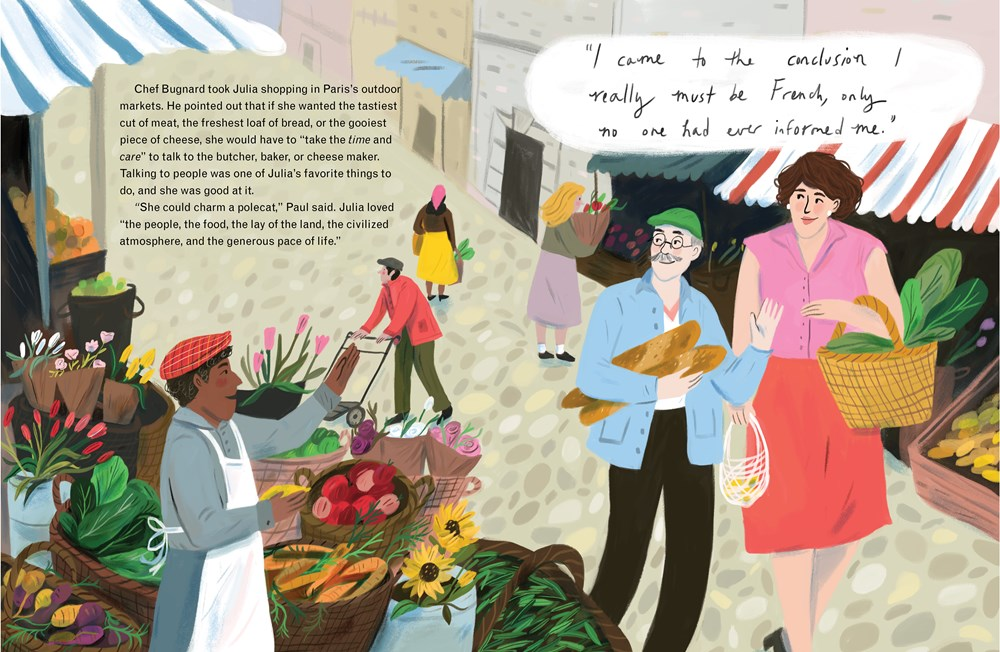
Summary:  “I was born hungry, not a cook,” Julia Child said of her early days.  Her family employed a cook, so young Julia never had to learn to prepare food.  With a hunger for adventure, Julia volunteered for the Office of Strategic Services (OSS) during World War II, where she was sent to Ceylon (now Sri Lanka) and met her future husband, Paul Child.  Paul had lived in France and introduced Julia to fine food and wine.  After getting married, the couple moved to Paris, where Paul worked at the US embassy and Julia threw herself into learning French cooking.  She signed up for classes at Le Cordon Bleu and read French cookbooks at night.  The book ends with her opening L’Ecole des Trois Gourmandes (The School of the Three Hearty Eaters) with two French friends and a picture of Julia on TV.  Includes a two-page author’s note with photos that gives more information about Julia’s television career, an extensive list of resources, and a recipe for scrambled eggs (Oeufs Brouillés) .  40 pages; grades 1-5.  

Pros:  Alex Prud’homme’s grandfather was Paul Child’s brother, and he worked with Julia Child on her memoirs.  His intimate knowledge of her life makes for an engaging picture book, with mouth-watering descriptions of food that are enhanced by the illustrations (often accompanied by the word “Yum!”).

Cons:  I was sorry that the story ended just as Julia’s career as the French Chef was beginning.