Serengeti: Plains of Grass by Leslie Bulion, illustrated by Becca Stadtlander

Published by Peachtree Publishing Company

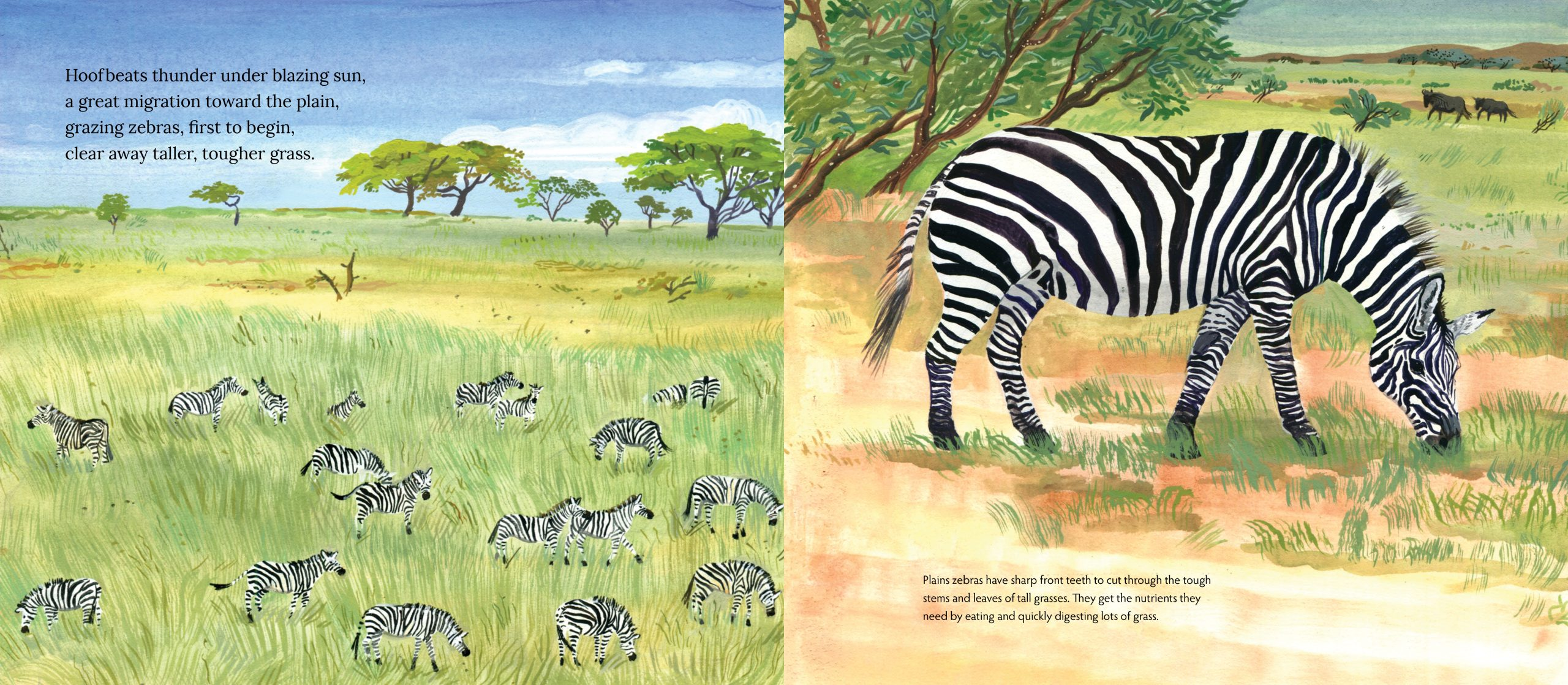
Summary:  Each two-page spread depicts a scene from the Serengeti, with a four-line poem and a paragraph of additional information.  An introductory page describes the ecosystem of the Serengeti, and a note at the end gives additional information about the poetic form, which is derived from an East African form called the utendi.  Also includes a glossary, a reading list, and information on Serengeti stewardship, including three organizations that are working to preserve the Serengeti.  48 pages; grades 2-6.

Pros:  A beautiful science and poetry book, with gorgeous paintings of the Serengeti that will catch the eye of any animal lover.  The additional information about the poems and the Serengeti makes this an excellent resource for language arts, geography, and science.

Cons:  I wish there had been some information about the humans who live in that area.

Happily Ever After Rescue Team (Agents of H.E.A.R.T., book 1) by Sam Hay, illustrated by Genevieve Kote

Published by Feiwel and Friends

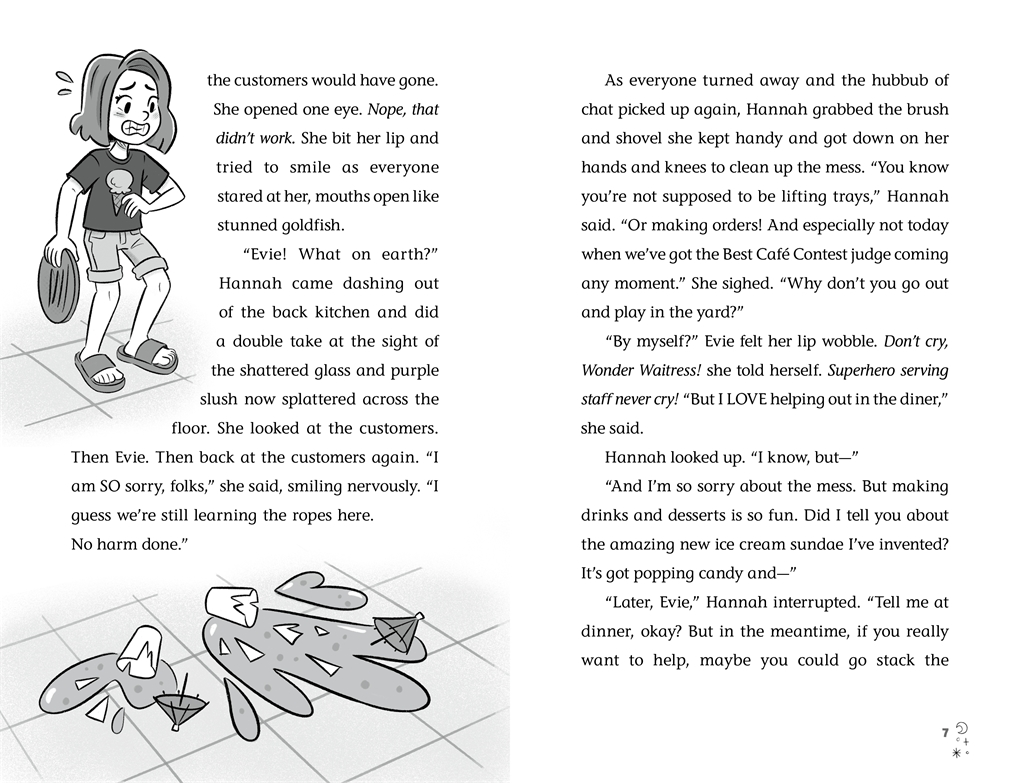
Summary:  Evie wants nothing more than to be allowed to help out in her parents’ new diner, especially on the day a judge for the Golden Coffee Cup Best Café Contest is supposed to stop by.  But despite her creativity with food (especially ice cream), Evie is accident prone, and after spilling two large blueberry smoothies, her stepmother sends her outside.  A girl Evie’s age has left an old book of fairy tales in the diner, and when she opens it, Agents C (Cinderella), R (Rapunzel), and B (Beauty) come to rescue her.  They have their own ideas about granting wishes, though, and Evie desperately needs some help controlling them.  That help comes in the form of Iris, the original owner of the book, and her cousin Zak.  The three have a series of madcap adventures as they try to undo the damage the fairy tale agents have done and get them to understand what it is Evie wants.  In the end, all of Evie’s wishes come true…except for one, which will undoubtedly be the premise for book number two.  226 pages; grades 2-4.

Pros:  This illustrated chapter book provides lots of laughs and adventures.  Woven into the story are recipes, crafts, and other activities that kids will enjoy.  Perfect for elementary kids who are ready to move on from early chapter books but still like plenty of illustrations.

Cons:  The princesses were pretty annoying.

Donors Choose for Summer Reading

As I’ve written here before, I am finishing up my second year at an elementary school in Springfield, Massachusetts. According to the Massachusetts Department of Education profile, 93% of the students at my school are low-income, 95% high needs, and for 30%, English is not their first language.

This is the first year the school library has been open in quite a few years, and these students love their new library. They often stop me in the hall to share with me how much they enjoyed their library book or to tell me how excited they are about their upcoming visit to the library. It’s been a joy to watch them develop as readers and to see some of them get hooked on a series or fall in love with a particular book.

I have two Donors Choose projects active right now to try to get funding so I can give every student in grades PreK-2 a new book at the end of the school year. In June I plan to share with them different summer reading programs, and I would like to kick off their summer reading with a new book.

Donors Choose is an organization that matches teachers’ projects with donors. I’ve had nine projects funded in the last two years, all for library books, and it has made a huge difference for my collection. I don’t usually ask for personal donations, but this summer reading project is particularly important to me.

If you’d like to make a donation, you can click here to give to the PreK and kindergarten students and here for grades 1 and 2 (click on the blue “Give” button when you get to the site). Thank you in advance, and I assure you your contribution will make some young child in Springfield very happy.

Dog Says, Cat Says by Marilyn Singer, illustrated by Sonia Sánchez

Published by Dial Books

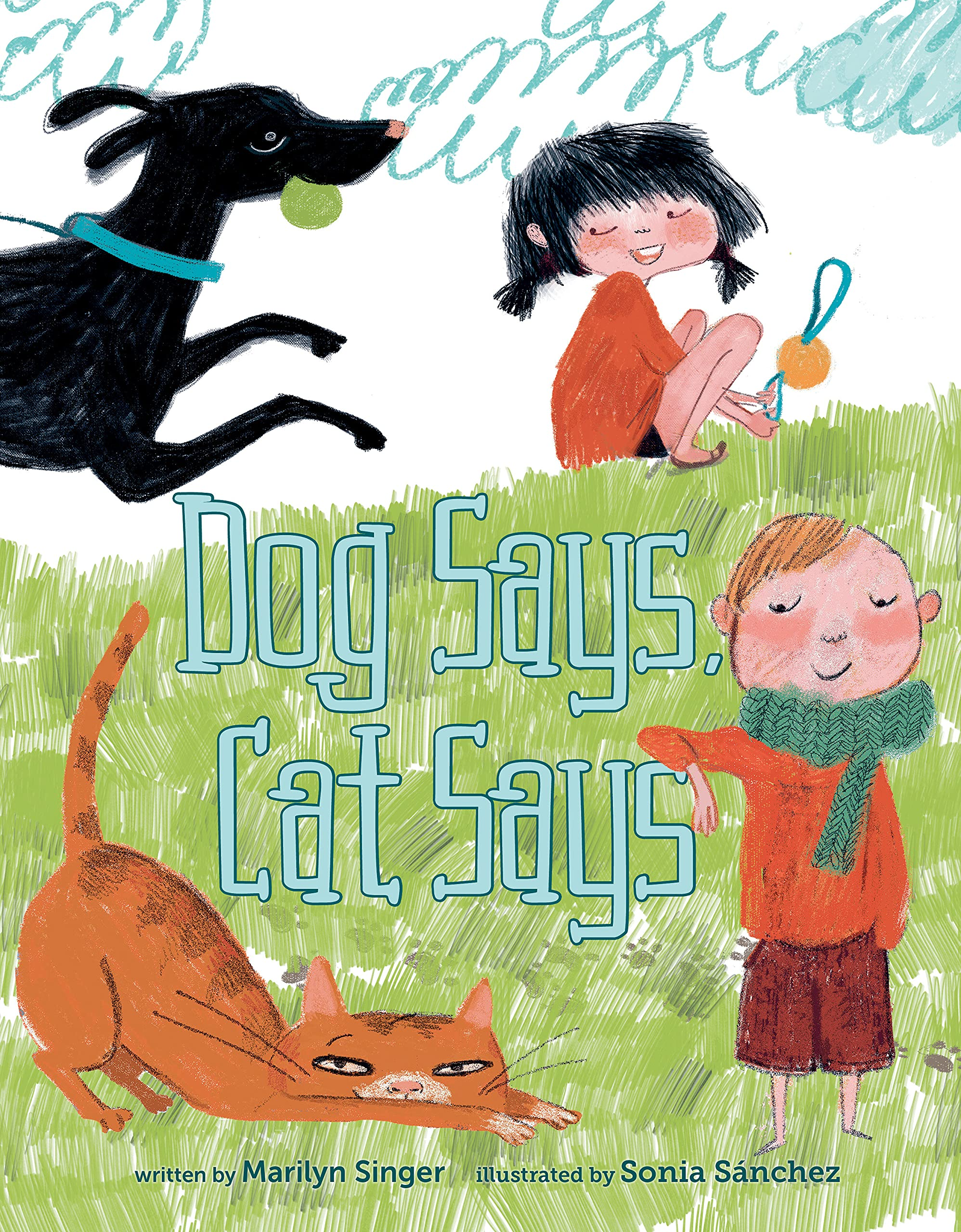
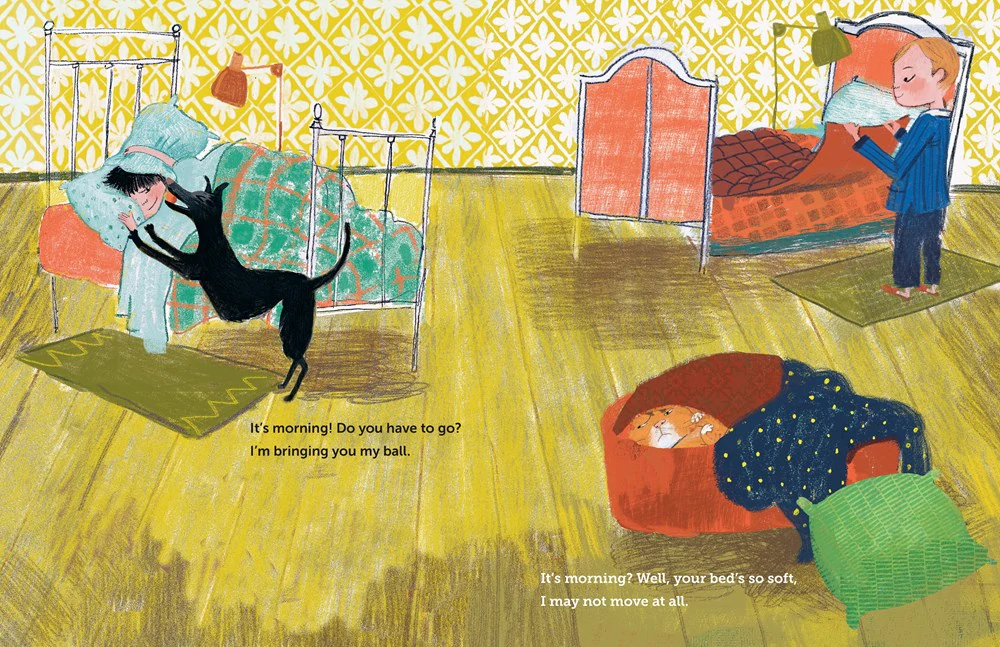
Summary:  In rhyming text, a dog and cat alternate talking to their owners throughout the day: “It’s morning! Do you have to go? I’m bringing you my ball/It’s morning? Well, your bed’s so soft, I may not move at all.”  The dog enthusiastically leaps into all things dog-gy: barking at the mailman, playing fetch, and rolling in the mud, while the cat perfects the art of standoffishness and showing superiority to the dog.  When nighttime comes, the dog is ready to settle down in his bed, while the cat prowls through the house, then finally snuggles in with the dog.  32 pages; ages 4-8.

Pros:  A fun book for pet lovers that reminded me of Elisha Cooper’s Yes and No, with the dog and cat leading very different lives but coming together as night falls.  The bouncy rhymes and illustrations capture both the high energy of the dog and cat’s more languid nature.

Cons:  Failed to change my opinion that dogs make superior pets.

A Perfect Fit: How Lena “Lane” Bryant Changed the Shape of Fashion by Mara Rockliff, illustrated by Juana Martinez-Neal

Published by Clarion Books

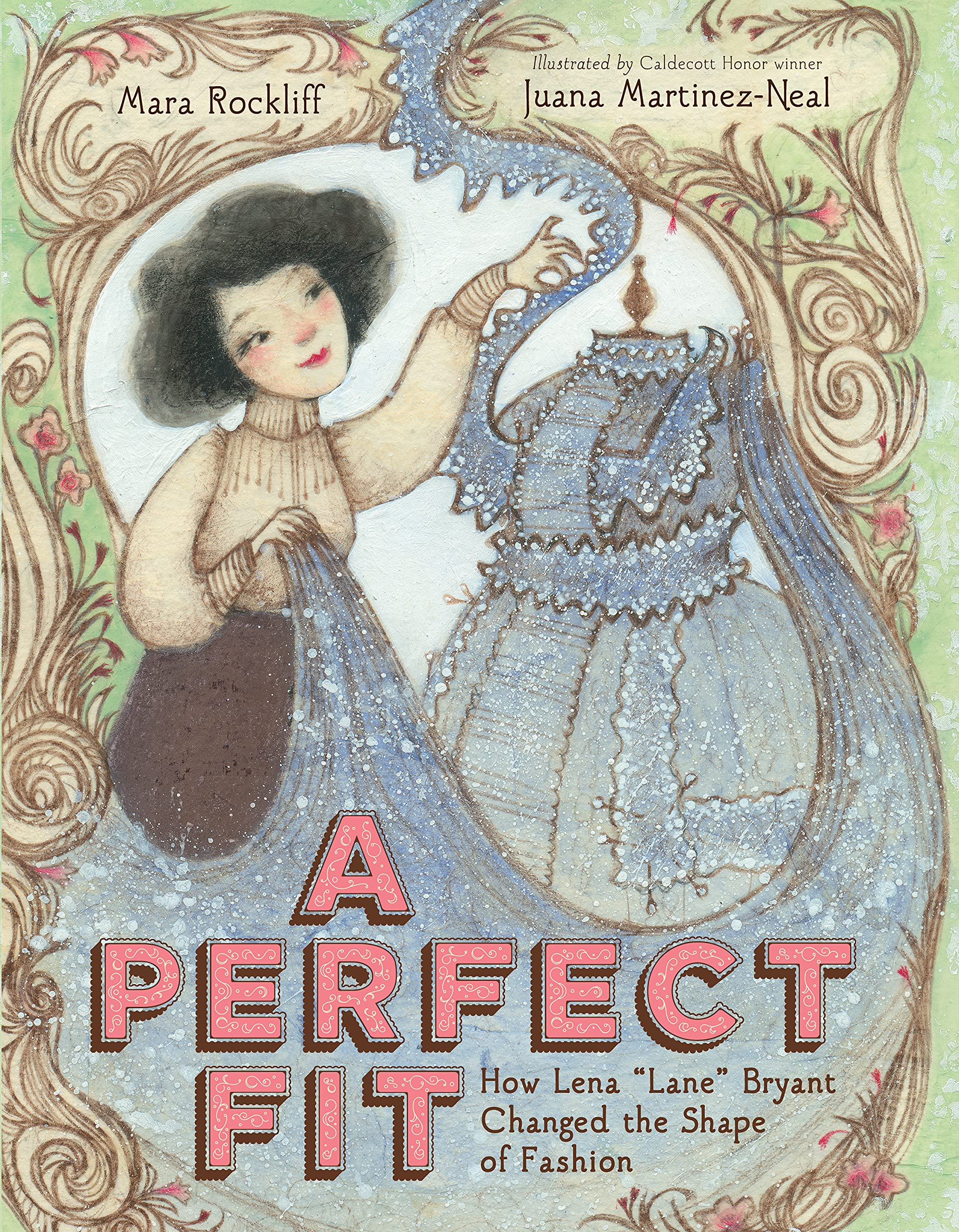
Summary:  Raised by her grandparents in Lithuania, Lena Himmelstein learned sewing from her grandmother and from her grandfather, the definition of real success: helping another person.  When she was 16, Lena followed her older sister to America, where she got a job as a seamstress.  She studied English and fashion and married a man named David Bryant, who died shortly after the birth of their son.  To support the family, Lena bought a sewing machine and started her own business.  When a pregnant woman asked for a gown that would grow with her, Lena remembered her grandfather’s advice and found a way to help her customer.  Her reputation grew, and soon she opened her own shop and a bank account.  At the bank, she accidentally signed her name as “Lane” instead of Lena.  Lane Bryant became famous for clothes made to help women of all sizes and shapes.  “Everyone said Lena was a great success.  And when she thought about her grandfather, she knew that it was true.”  Includes an author’s note and a list of sources.  32 pages; grades K-4.

Pros:  Mara Rockliff’s engaging writing and Juana Martinez-Neal’s fashionable illustrations bring Lena Himmelstein Bryant’s story to life, with a heartwarming emphasis on how helping others is the true definition of success.

Cons:  Too bad this wasn’t released in time for Women’s History Month.

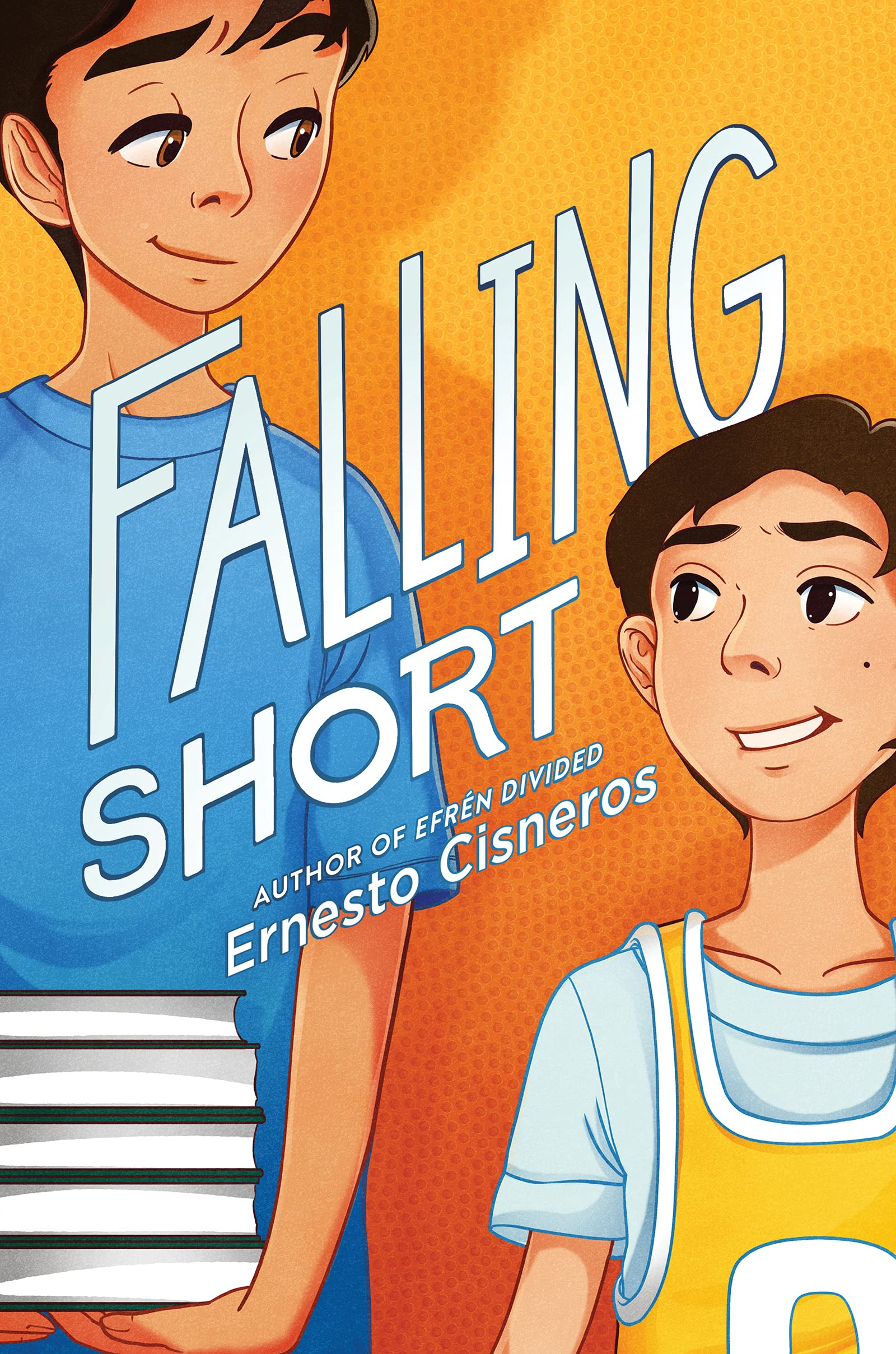
Falling Short by Ernesto Cisneros

Published by Quill Tree Books

Summary:  Isaac and Marco are neighbors and best friends, but could hardly be more different: Isaac is a gifted basketball player who struggles with schoolwork, while Marco aces every test but is small and unathletic.  One thing they have in common is complicated relationships with their fathers.  Isaac’s mom has forced his dad to move out due to a drinking problem.  Marco constantly feels like he is a disappointment to his sports-crazy father, who is remarried with a stepson and hardly ever gets in touch.  The two tell the story of their early middle school days in alternating voices, as Marco becomes determined to make the basketball team, and Isaac focuses on becoming a better student.  The final showdown at a basketball tournament allows them to help each other and to come to terms with who their fathers really are.  292 pages; grades 4-7.

Pros:  While this follow-up to the Belpré Award-winning Efrén Divided is about Latino characters, the story is quite different, focusing more on issues that many kids will relate to: school, sports, friends, and family.  The alternating points of view allow readers to share the perspectives of both main characters, who are both trying to overcome shortcomings with hard work and a tremendous amount of heart.

Cons:  Both main characters were almost too good to be true for a couple of sixth graders.  It also seemed unrealistic that Marco would be able to master enough basketball skills in a week to make the team and that Isaac would ace Marco’s honors math homework through sheer hard work and determination to help his friend.

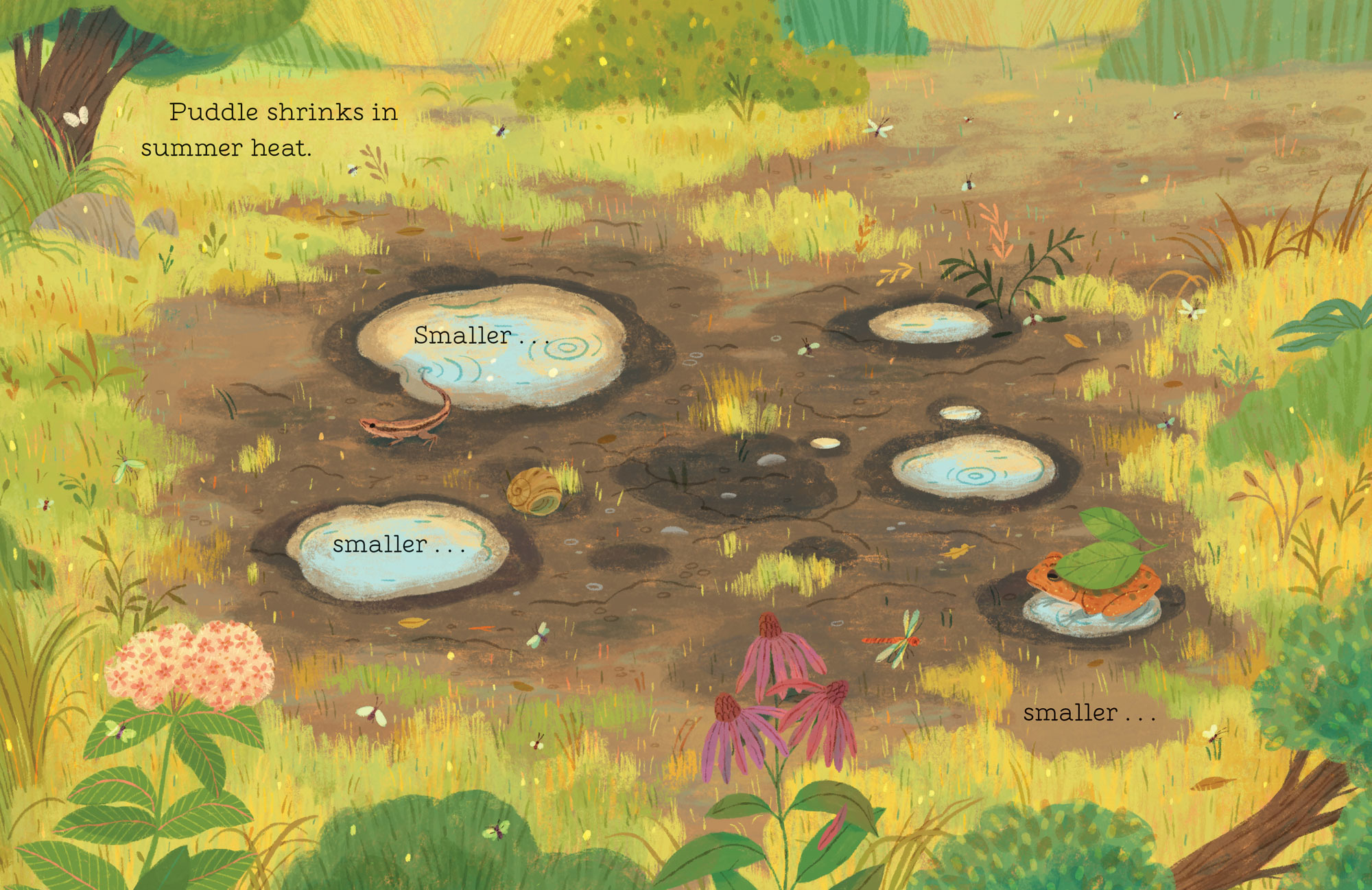
Hello, Puddle! By Anita Sanchez, illustrated by Luisa Uribe

Published by Clarion Books

Summary:  A young girl observes a puddle throughout the year.  Spring brings tadpoles, turtles, and plants growing near the edges.  Squirrels cool off in the summer heat, which also causes the puddle to shrink.  There’s still enough water for mosquitoes to lay their eggs, and when they hatch, bats swoop in to eat them.  Deer stop by for a drink as the puddle fills up with falling leaves.  Finally, it ices over, and the girl bids it farewell until spring comes again.  Includes an author’s note about the real puddle on which the story is based; additional puddle facts and directions for making your own puddle; a list of the animals in the book and how to find signs of them; a glossary; and a list of additional resources.  40 pages; ages 4-8.

Pros:  Who would have thought the humble puddle could draw such a wide variety of wildlife?  This book is perfect for giving young naturalists an introduction to animals they can observe in their own backyards, and the back matter can lead them to further explorations.

Cons:  I got a little nervous there in midsummer that the puddle was going to disappear.

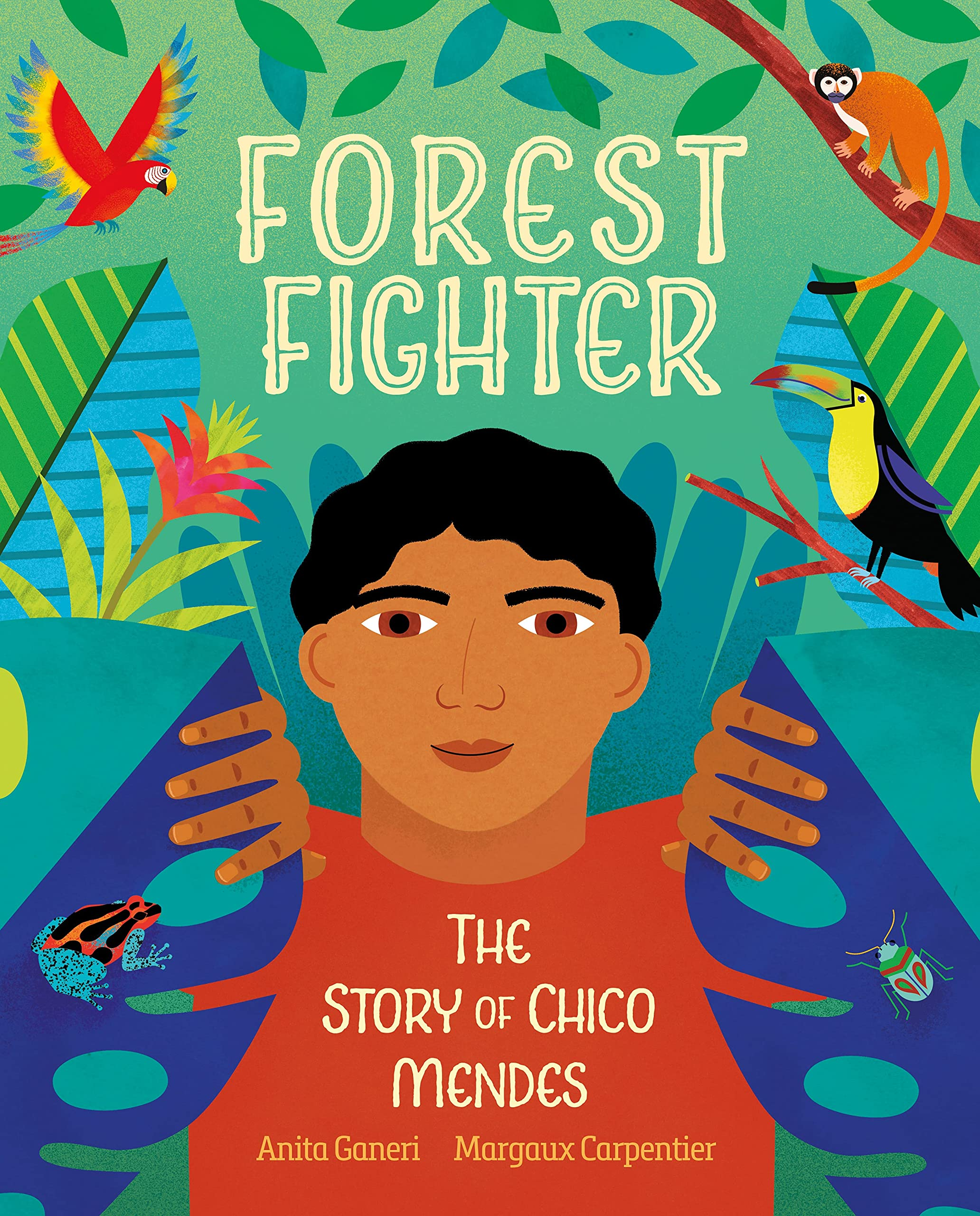
Forest Fighter: The Story of Chico Mendes by Anita Ganeri, illustrated by Margaux Carpentier

Published by Crocodile Books

Summary: Born into a family of Brazilian rubber tappers, Chico Mendes loved the Amazon rainforest where he grew up.  He was fortunate to receive some education, and when the government shifted its economic priorities from rubber production to agriculture, Chico became one of the leaders in the movement to stop the burning of the rainforest.  He and other rubber tappers organized protests and gained some victories in their movement to slow the forest’s destruction.  His outspokenness antagonized the wealthy ranchers, and he began receiving death threats.  On December 22, 1988, he was assassinated outside his home.  His legacy continues with the worldwide attention he brought to the destruction of the Amazon rainforest.  Includes facts about the rainforest, a glossary, and an index.  48 pages; grades 2-5.

Pros:  This biography of Chico Mendes does an excellent job of putting his work and life in the context of this history of the region.  The brilliant colors of the illustrations are a perfect way to portray the Amazon rainforest.

Cons:  The cover and format of this book led me to believe it would be a picture book, but it’s a longer nonfiction book with a fair amount of text.

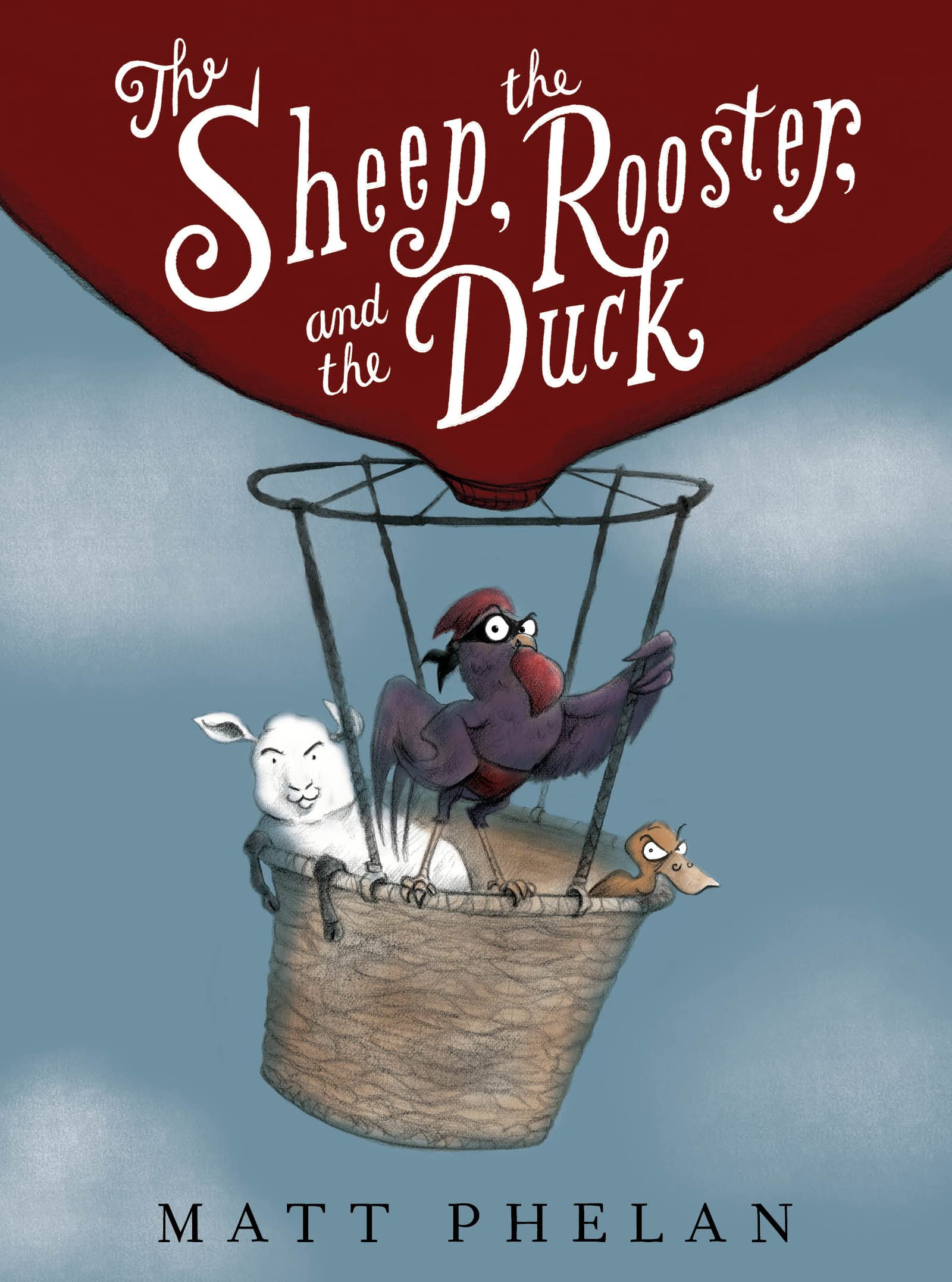
The Sheep, the Rooster, and the Duck by Matt Phelan

Published by Greenwillow Books

Summary:  Bernadette the sheep, Pierre the rooster, and Jean-Luc the duck are based on the real animals that piloted the first hot-air balloon in 1783.  Among those in attendance were King Louis XVI, Marie Antoinette, and Benjamin Franklin.  This story takes place after that flight, when Emile, a young boy who works as a servant for Franklin, discovers the sheep, the rooster, and the duck and a girl named Sophie.  The four of them have become balloon experts, and their knowledge comes in handy when Franklin is kidnapped by Count Cagliostro.  They thwart Cagliostro’s plot to launch a war between England and France and take over the government of the newly-formed United States.  Includes an author’s note with historical information.  221 pages; grades 3-7.

Pros:  This engaging historical fiction story is told with both text and several sections of comic-style illustrations.  Kids will love the brilliant animals and cheer on Sophie and Emile as they work together to foil the evil schemers of 18th century France.  

Cons:  Readers may find the large number of characters and historical events at the beginning of the book confusing.

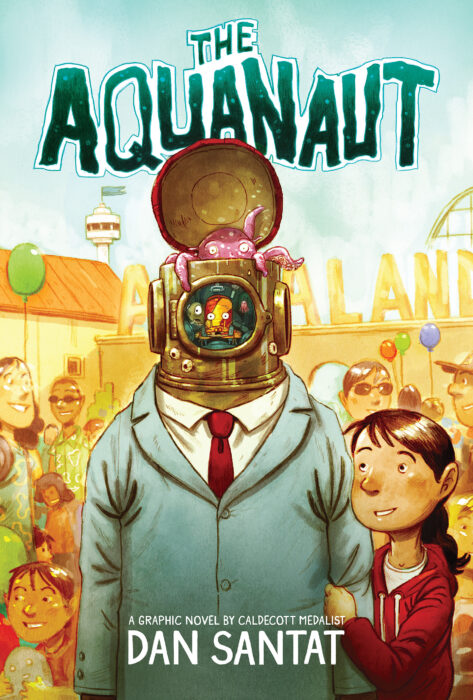
The Aquanaut: A Graphic Novel by Dan Santat

Published by Graphix

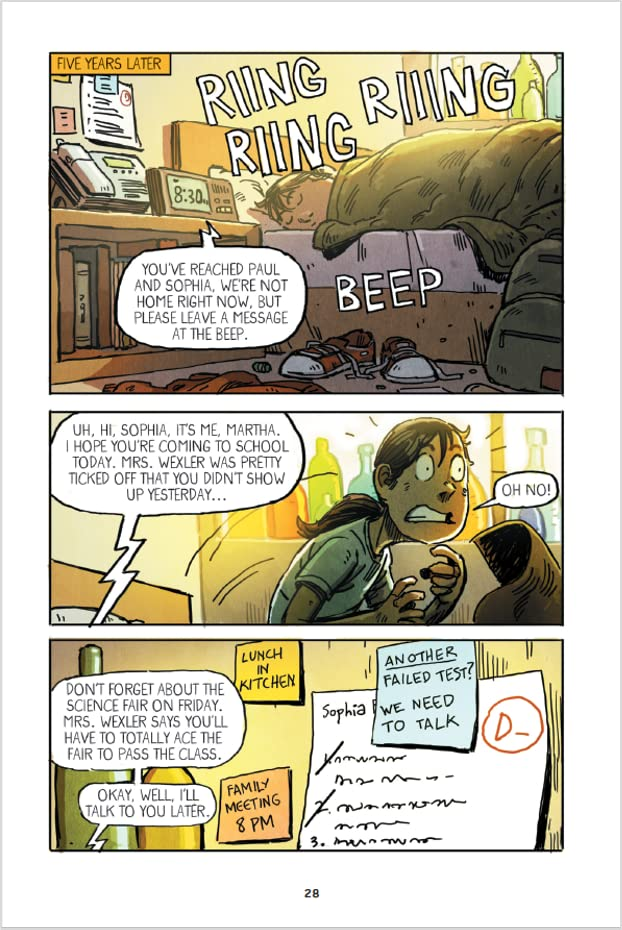
Summary:  In the prologue to the story, brothers Paul and Michel are struggling to survive as their research vessel fills with water.  Paul makes it; Michel does not.  Five years later, Paul is raising Michel’s daughter Sophie and trying to keep their research going at a San Diego theme park called Aqualand.  One day a mysterious being dressed in an old diving suit rises out of the ocean and pays a visit to Sophie.  It turns out to be a group of small ocean animals seeking refuge from the dangers of the sea.  Things get chaotic when they make it to Aqualand, where they rescue an orca whale and try to help Uncle Paul from a greedy investor who wants to capitalize on the brothers’ research.  As the Aquanaut’s crew races to escape the bad guys, they wind up back in the ocean in a scene that seems to be playing out the same way Michel’s ship sank.  There are happy endings for everyone, though, as the animals learn that love can overcome fear and the humans realize that family is more important than careers or money.  Includes an author’s note with additional artwork and some explanations about the genesis and development of the story.  256 pages; grades 3-7.

Pros:  The nonstop action, compelling story, interesting sea creatures, and especially the gorgeous illustrations by Caldecott Medalist Dan Santat make this a book that is sure to be embraced and savored by a wide range of graphic novel fans.

Cons:  The plot was a bit convoluted, and I’m not sure I got all the nuances of it.