Isabel and Her Colores Go to School by Alexandra Alessandri, illustrated by Courtney Dawson

Published by Sleeping Bear Press
Isabel and her Colores Go to School (English and Spanish Edition):  Alessandri, Alexandra, Dawson, Courtney: 9781534110632: Amazon.com: Books

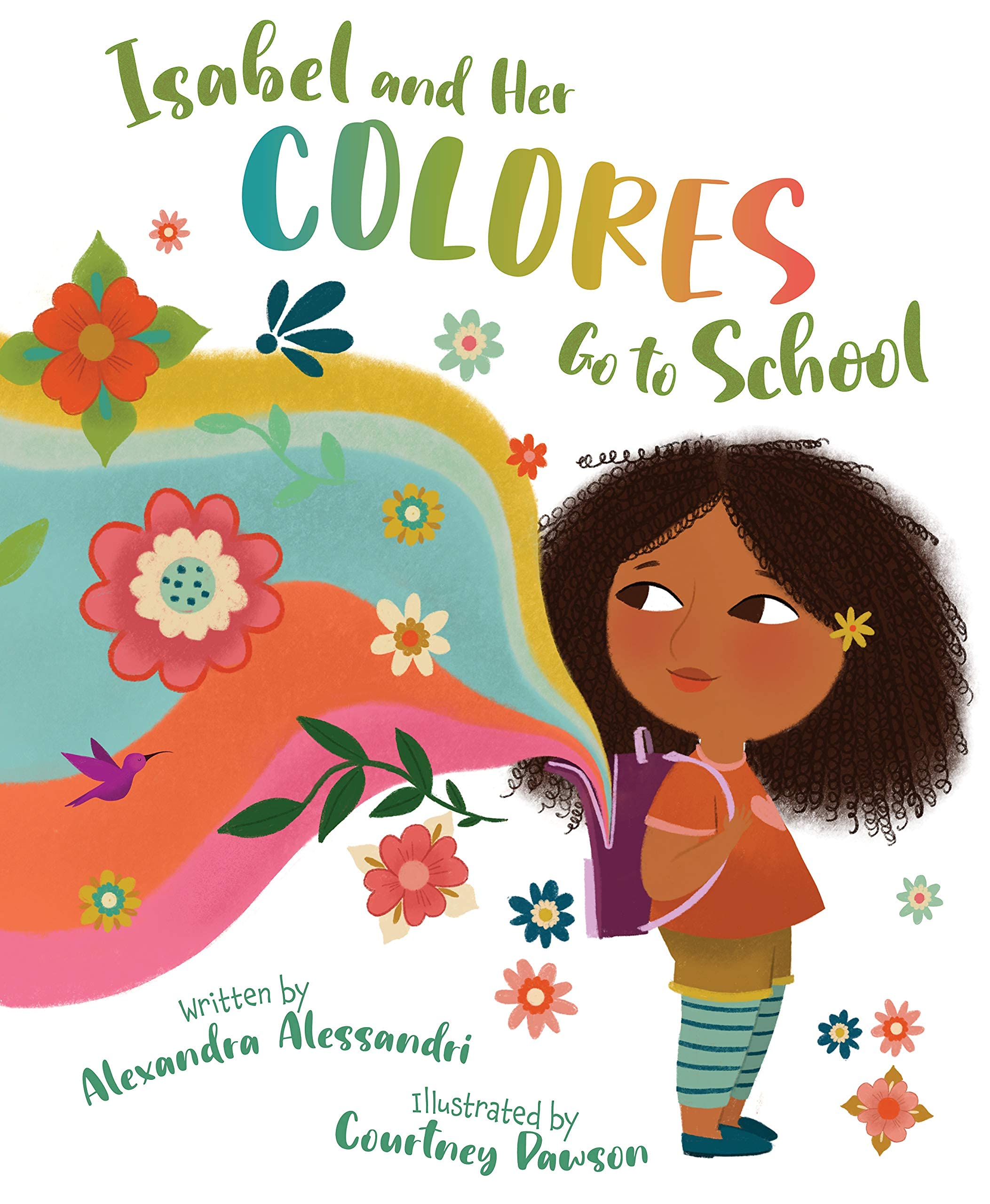
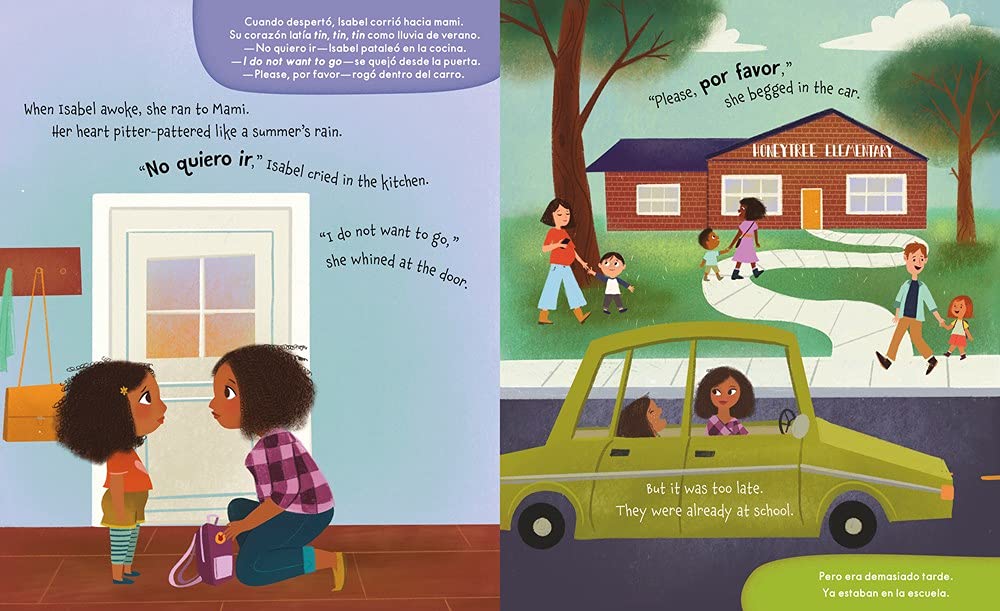
Summary:  Isabel’s got the typical first-day-of-school jitters, but she has an additional worry: she doesn’t speak much English.  She begs not to go; her mother is understanding but insistent, offering her this advice: “Al mal tiempo, buena cara.  To bad times, a good face.”  Things are tough at first, and when a girl named Sarah offers to be her friend, Isabel doesn’t understand and shakes her head.  In the afternoon, though, there’s time to draw, and Isabel loves using all the colors.  Remembering Mami’s advice, she draws two faces and shows them to Sarah, along with the word “Amigas”.  The rest of the class enthusiastically admires Isabel’s picture, and Isabel ends up thinking that maybe school won’t be so bad after all.  The story is told in both English and Spanish and includes two pages of Spanish to English translations for the words used in the story.  40 pages; ages 4-8.

Pros:  A perfect back-to-school book for ELL students, particularly those who speak Spanish.  The story captures the worries of learning a new language and fitting in, with a realistically hopeful ending.

Cons:  I hope Isabel can get some good ELL services at school.
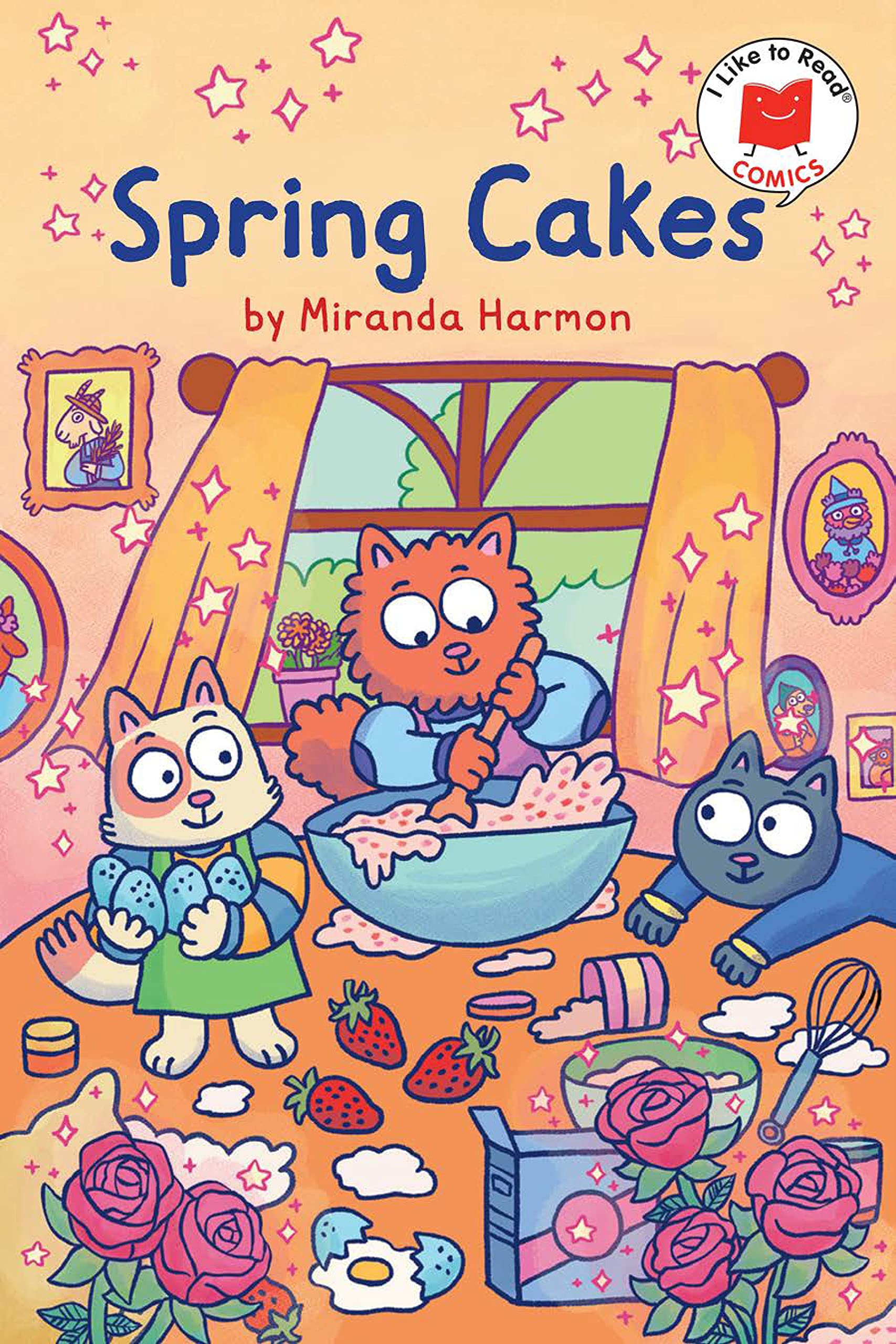
Frog and Ball by Kathy Caple and Spring Cakes by Miranda Harmon (I Like to Read Comics series)

Published by Holiday House

Frog and Ball by Kathy Caple: 9780823443413 | PenguinRandomHouse.com: Books
Bound To Stay Bound Books, Inc. - Bookstore
Amazon.com: Spring Cakes (I Like to Read Comics): 9780823449354: Harmon,  Miranda: Books

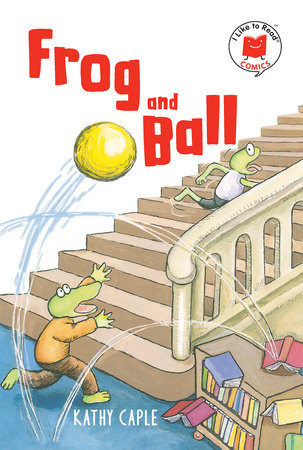
Summary:  In Frog and Ball, Frog checks out a book about magic from the library.  On the way home, he comes across a deflated ball, and decides to try out the book to bring the ball back to life.  His magic works a little too well when the ball really does come to life and starts chasing him all over town, including a chaotic return to the library.  Frog finally manages to subdue the ball back into deflated submission, but when Rabbit comes along, it looks like things are going to start up again.

A family of cats has big cooking plans in Spring Cakes, but first they have to gather the ingredients: flour, honey, eggs, strawberries, and some magic roses.  Each item requires going to the source, so the kitties get a series of adventures, including a visit to the witch who has the roses.  Finally, it’s time to bake, and everyone who helped out gets to enjoy a picnic with some spring cakes.  Both books are 40 pages; ages 4-8.

Pros:  I’ve long been a fan of the I Like to Read books, and was excited to hear that there was a new comic series (and grateful to Holiday House for the free copies!).  These are sure to be a hit with kids learning to read: the comic format is, of course, hugely popular and the stories are well-crafted with cute illustrations.

Cons:  One of the things I love about the I Like to Read series is that it includes books that look like “real books” (not like early readers) that are written at the earliest Fountas and Pinnell levels (A, B, C).  These comic books are at a higher F&P level (Frog and Ball is I and Spring Cakes is L).  I’m hoping Holiday House will come out with some that are for those earlier levels.

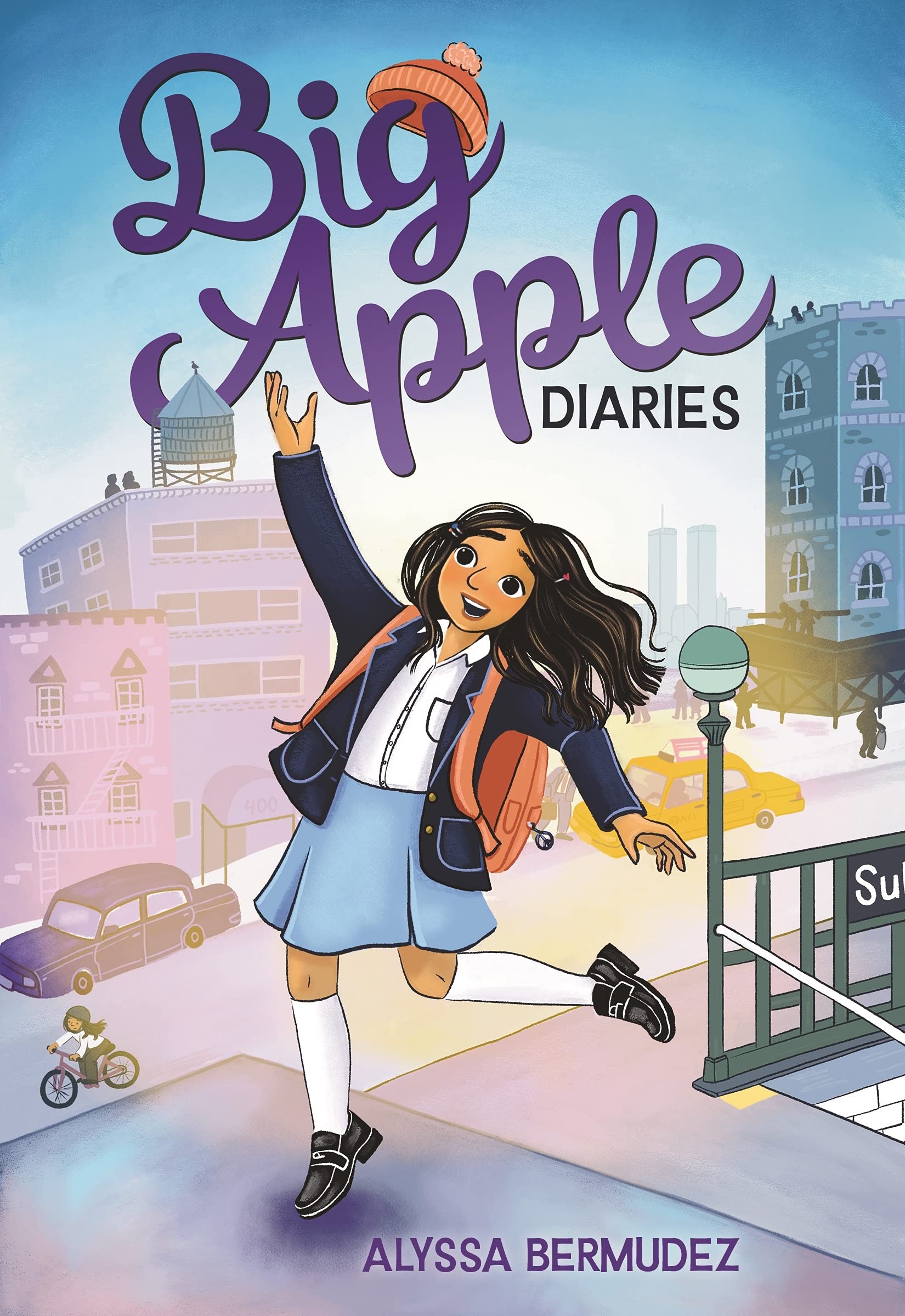
Big Apple Diaries by Alyssa Bermudez

Published by Roaring Brook Press

Amazon.com: Big Apple Diaries: 9781250774279: Bermudez, Alyssa, Bermudez,  Alyssa: Books
Big Apple Diaries Book - Comics and Illustration Portfolio — Alyssa Bermudez

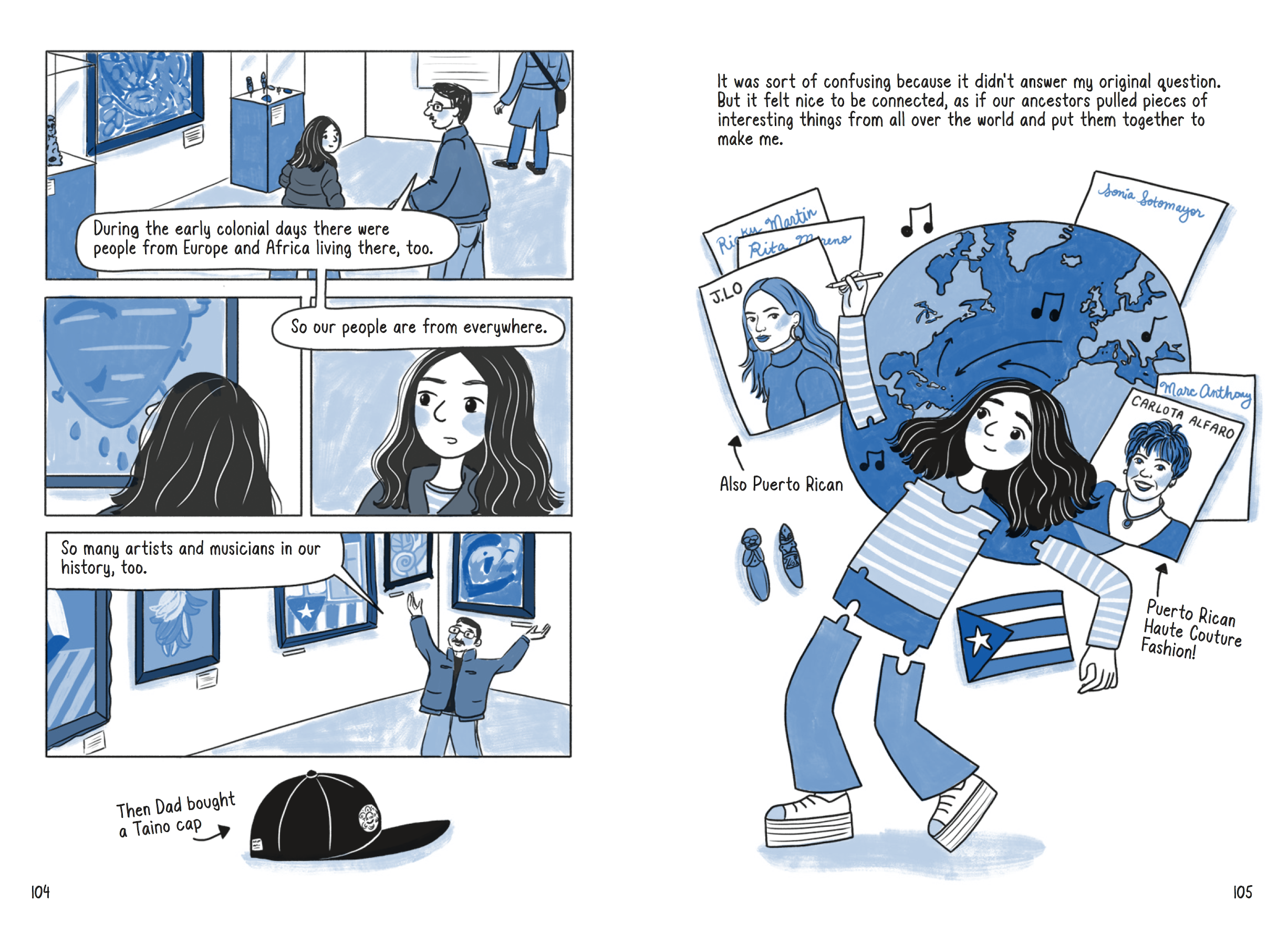
Summary:  Alyssa Bermudez used her real diaries from seventh and eighth grade to create this graphic novel that takes place in New York City from 2000 to 2002.  Her main concerns starting seventh grade are dealing with the popular kids, her crush on Alejandro, and owning as many pairs of funky shoes as her parents and Catholic school will allow.  She slowly matures through the next two years, a process that is hastened by 9/11 (her parents both work in the financial district), her father’s illness, and a desire to get into the best high school she can.  By graduation time, it’s clear she’s ready for the new challenges that lie ahead in high school.  Includes a 4-page author’s note with lots more information and photos about her life during those years.  288 pages; grades 4-7.

Pros:  Fans of the Raina Telgemeier graphic novel genre will love the real-life story of Alyssa that includes many light moments (shaving her eyebrows, accidentally dyeing her hair orange), as well as the very serious ones engendered by being so close to the events of 9/11.  

Cons:  The art is all done in blue and black…I prefer the full-color illustration of Telgemeier and Victoria Jamieson.

Book lists

I wanted to let you know about a new feature on my blog: lists of books that I’ve reviewed over the years, arranged by topic. I think we can all agree that my blog has a certain amateurish charm, and I’m sure there’s a better way to make these lists accessible there. However, we all have to live with my limited tech skills, so for the moment, here’s how to find the lists: under the “A Kids Book a Day” title, you’ll see three links: Home, About me, and Book lists. If you move your cursor over the book lists one, a drop-down menu will appear with all the lists I’ve created so far.

The ones that are probably of most interest right now are: Back to school, Fall, Kindness and community (for building classroom communities), Labor Day, Persistence and grit, and September 11 (9/11). Other lists are: Book clubs for grades 2-4, Covid pandemic, Fables, and Food and eating.

I have lots of other ideas, and will be adding more as the year goes on; I’ll also update these lists as I review new books.

If you have suggestions of lists that would be helpful to you, please feel free to comment below or email me at akidsbookaday@gmail.com.

I’m hoping to put these on Pinterest, and am just starting to learn about the world of Pinterest and how to create pins. If anyone has any sort of Pinterest expertise, or WordPress expertise to improve the look of my blog, I’d love to talk to you.

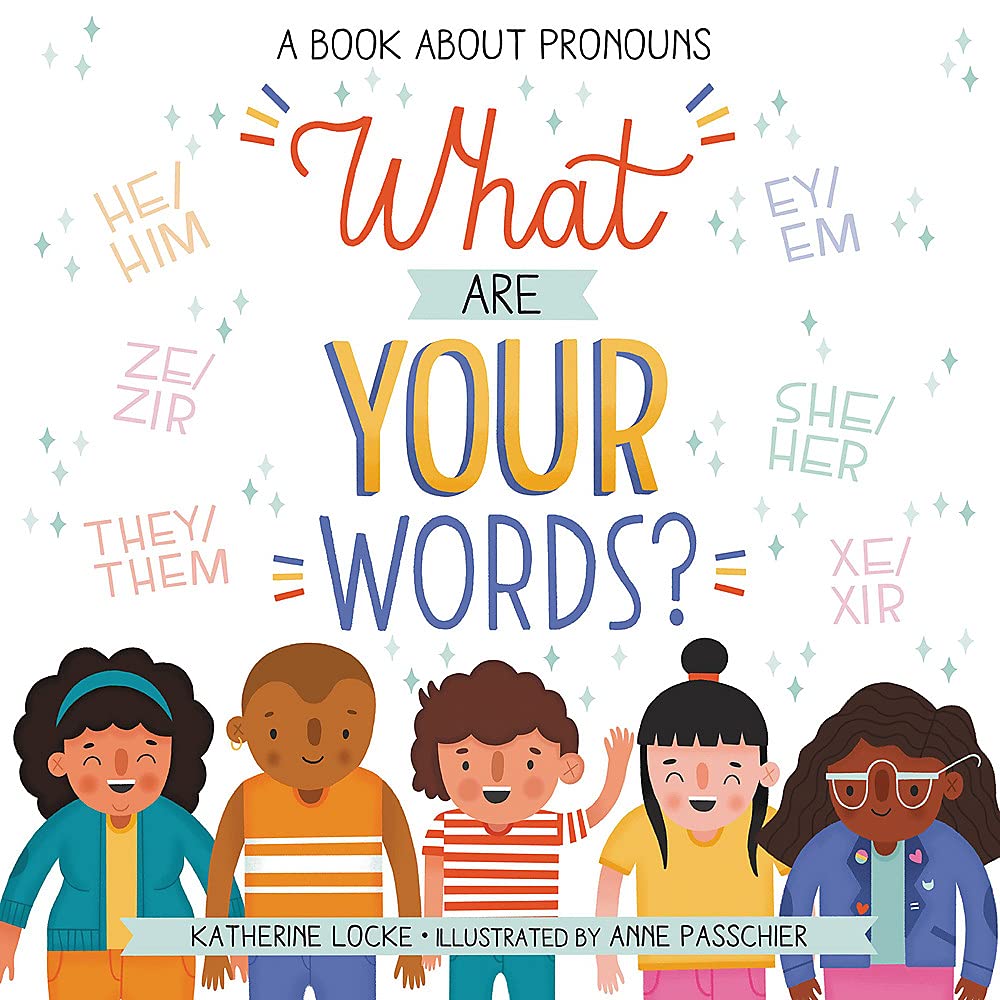
What Are Your Words? A Book About Pronouns by Katherine Locke, illustrated by Anne Passchier

Published by Little, Brown Books for Young Readers

What Are Your Words?: A Book About Pronouns: Locke, Katherine, Passchier,  Anne: 9780316542067: Amazon.com: Books
Andy Passchier Illustrates Children's Book 'What Are Your Words?' | Arts &  Culture | Ideastream Public Media

Summary:  Ari is excited that Uncle Lior is coming for a visit.  Uncle Lior uses they/them pronouns, and they always ask Ari, “What are your words?”  Usually Ari knows right away; it may be “Happy! Creative! Funny! He/him” or “Thoughtful! Athletic! Silly! She/her.”  Today, though, nothing quite seems to fit.  Ari worries about it as the day progresses, with more introductions (including pronouns) around the neighborhood, finishing up with a barbecue and fireworks.  As the first ones burst across the sky, Ari suddenly discovers the words for today: “Impatient! Excited! Colorful! They/them.”  Uncle Lior tells them, “That’s definitely you, Ari.”  40 pages; ages 4-8.

Pros:  This book will be a valuable resource to anyone working with transgender, nonbinary, or gender fluid kids and will help others to understand the importance of pronouns.  The illustrations are cheerful and colorful; I especially liked the endpapers that showed a variety of people and pronouns.

Cons:  The story was definitely secondary to the lessons being taught.

Without Separation: Prejudice, Segregation, and the Case of Roberto Alvarez by Larry Dane Brimner, illustrated by Maya Gonzalez

Published by Calkins Creek

Without Separation by Larry Dane Brimner: 9781684371952 |  PenguinRandomHouse.com: Books
Without Separation: Prejudice, Segregation, and the Case of Roberto Alvarez  by Larry Dane Brimner and Maya Gonzalez

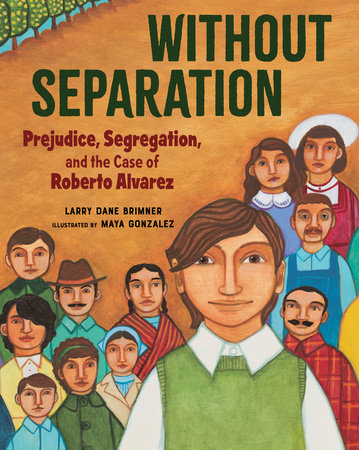
Summary:  When Roberto Alvarerez returned to school from Christmas vacation on January 5, 1931, he was told he was no longer a student at the Lemon Grove Grammar School in Lemon Grove, California.  He and the other Mexican American children were supposed to go to the new Olive Street School.  Most of the kids headed home, as they had been instructed to do by their parents when rumors of the new school started to make their rounds in the neighborhood.  Families filed a lawsuit with Roberto’s name on it against the Lemon Grove School District.  On March 12, a judge ruled that there could be no separate school for Mexican children, and the students were allowed to return to Lemon Grove.  Includes a six-page author’s note with additional information and photos; and sources and source notes.  40 pages; grades 2-5.

Pros:  This straightforward picture book tells a story of standing up to school segregation that happened years before Brown vs. Board of Education.  While the story and folk art style illustrations could be understood and appreciated by a second-grader, there’s enough information in the author’s note to get a good start on a middle school project.

Cons:  90 years later, de facto school segregation is still prevalent all over the United States.

Escape: One Day We Had to Run by Ming & Wah, illustrated by Carmen Vela

Published by Lantana Publishing

Escape: One Day We Had to Run . . . by Wah, Ming &, Vela, Carmen - Amazon.ae

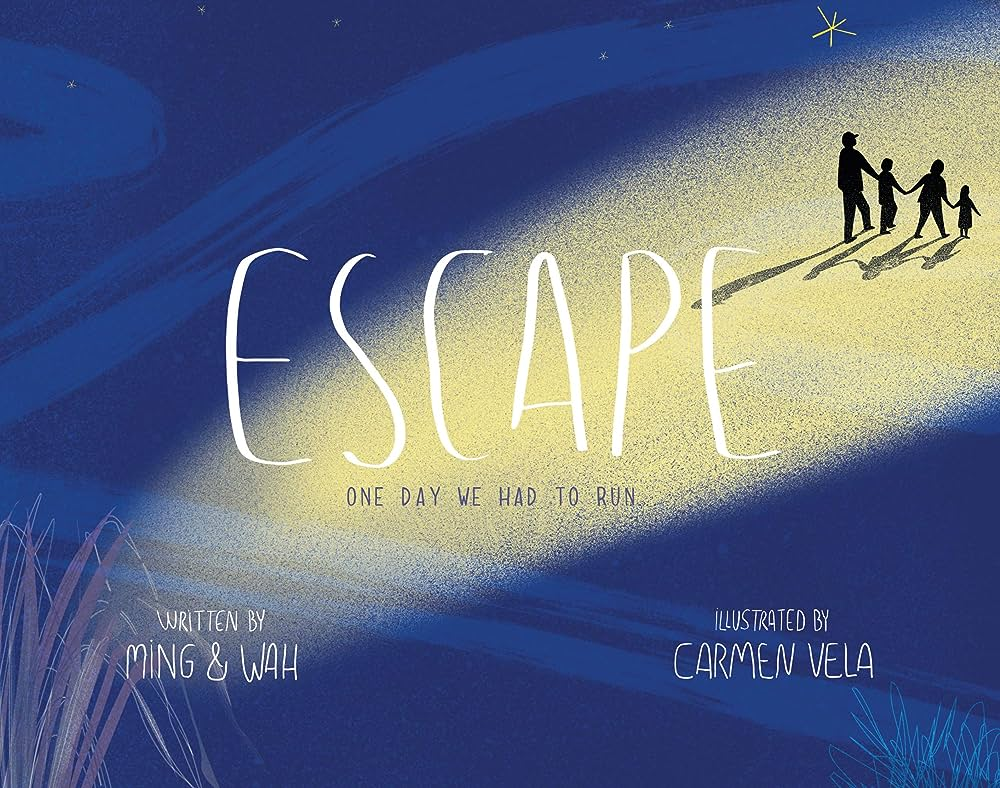
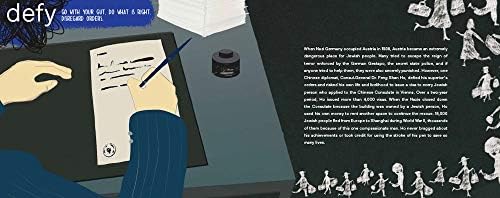
Summary:  “Escape (verb) – To avoid a threatening evil”: that’s the definition given on the title page.  Each spread has another verb–cling, defy, swim–with a story of refugees escaping danger.  Yusra and Dara Mardini cling to their boat as  they escape from Syra; Yusra goes on to swim for the Refugee Olympic Team in 2016.  Chinese diplomat Dr. Feng Shan Ho defies orders and issues over 4,000 visas to Jews escaping Germany during World War II.  Chan Hak-chi and Li Kit-hing swim for six hours through shark-infested waters in a typhoon to make it from mainland China to Hong Kong.  Each story is accompanied by a somewhat abstract illustration showing the escape.  Includes Articles 13 and 14 from The Universal Declaration of Human Rights and a link for more information.  40 pages; grades 2 and up.

Pros:  Each story is brief and compelling, making it a gripping read-aloud for older elementary or middle school kids.  The brief text, abstract illustrations, and even slightly mysterious authors (identical twins known simply as Ming & Wah) add an air of suspense that is perfect for the topic.

Cons:  I definitely wanted to know where I could find out more information about every one of the stories.

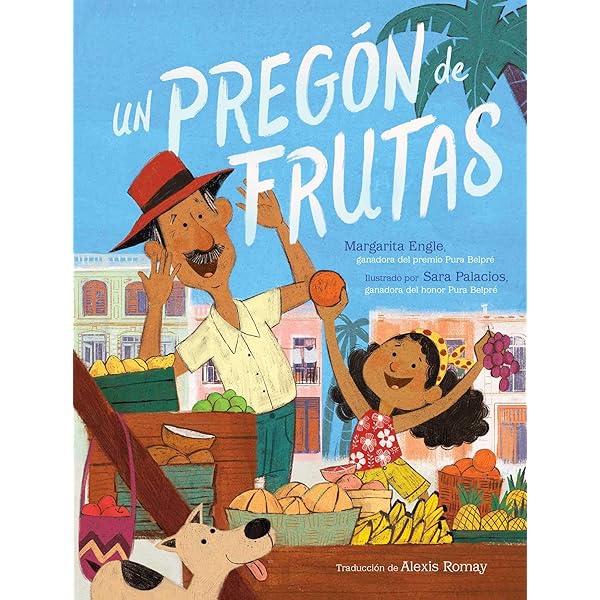
A Song of Frutas/Un Pregón de Frutas by Margarita Engle, illustrated by Sara Palacios

Published by Atheneum Books for Young Readers

A Song of Frutas: Engle, Margarita, Palacios, Sara: 9781534444898: Amazon.com:  Books

Un pregón de frutas (Song of Frutas) (Spanish Edition): Engle, Margarita,  Palacios, Sara, Romay, Alexis: 9781534494763: Amazon.com: Books

A Song of Frutas: Engle, Margarita, Palacios, Sara: 9781534444898: Amazon.com:  Books

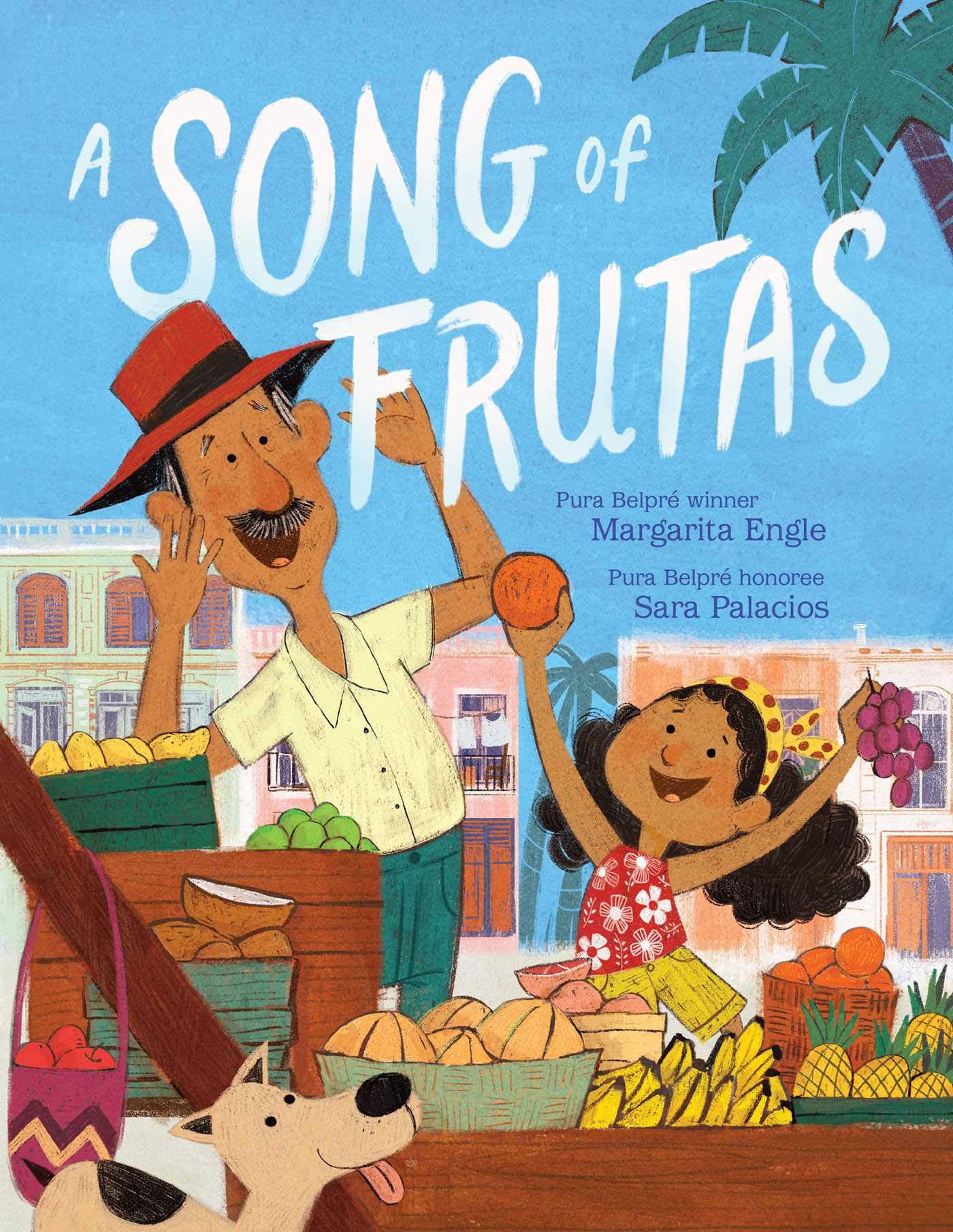
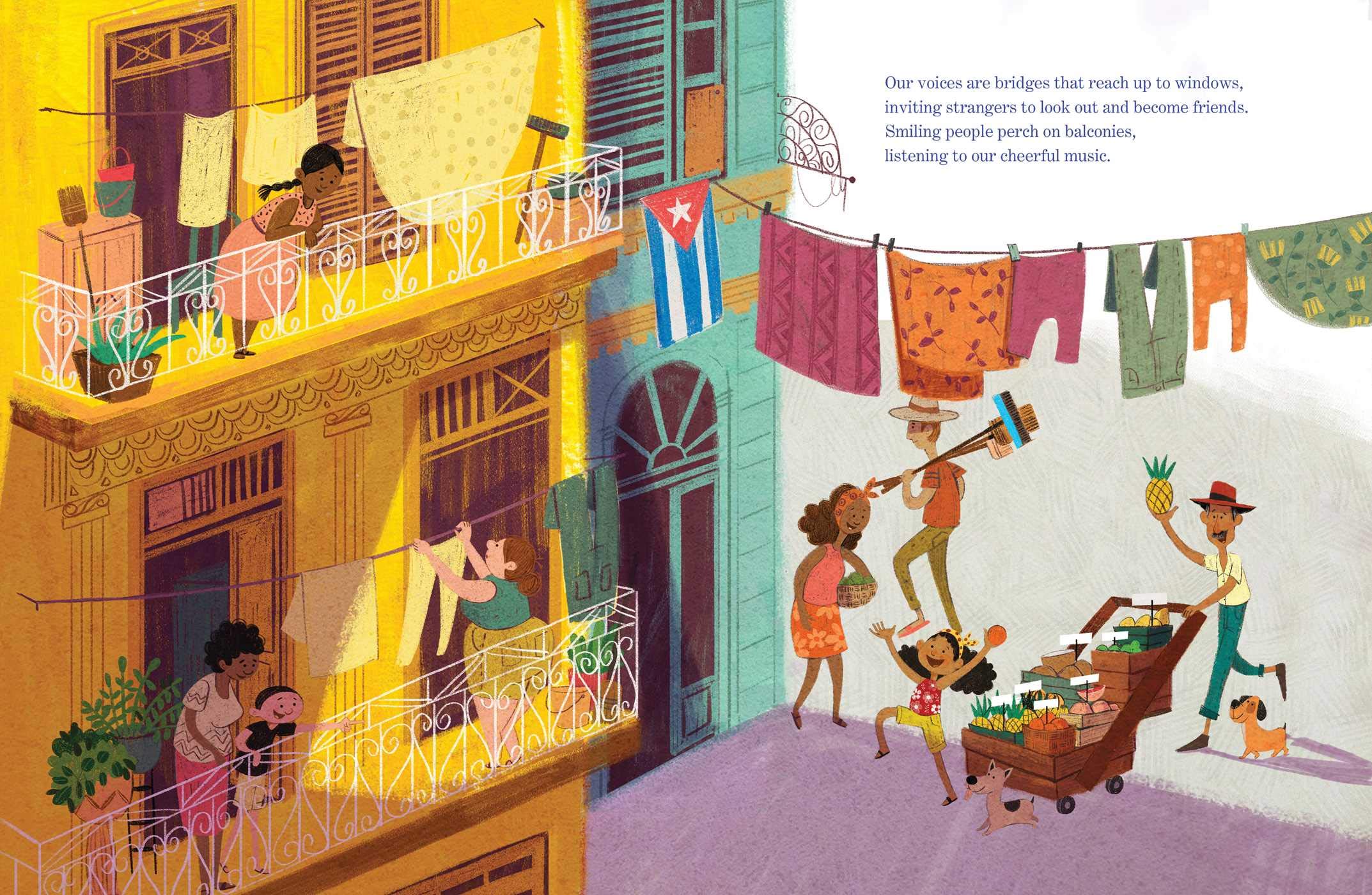
Summary:  When the narrator visits her abuelo, she loves helping him sell fruit.  Together they make up a song to let people know the fruits they have, “Mango, limón, coco, melón, naranja, toronjo, plátano, piña.”  On New Year’s Eve, many customers buy grapes so they can gobble up twelve at midnight, making a wish for each chime of the clock.  The girl’s last wish is always to be able to visit her grandparents more often, but much of the time they have to make do with letters that travel between the U.S. and Cuba.  Includes an author’s note with additional information about Spanglish, travel restrictions to Cuba, los pregoneros or the singing vendors, and New Year’s Eve. Available in Spanish and English. 40 pages; ages 4-8.

Pros:  The lively narration and colorful illustrations present an inviting portrayal of Cuba that would pair well with All the Way to Havana for a Cuban/Margarita Engle story hour. Well deserving of some Pura Belpré recognition.

Cons:  Eating twelve grapes on the stroke of midnight sounds challenging.

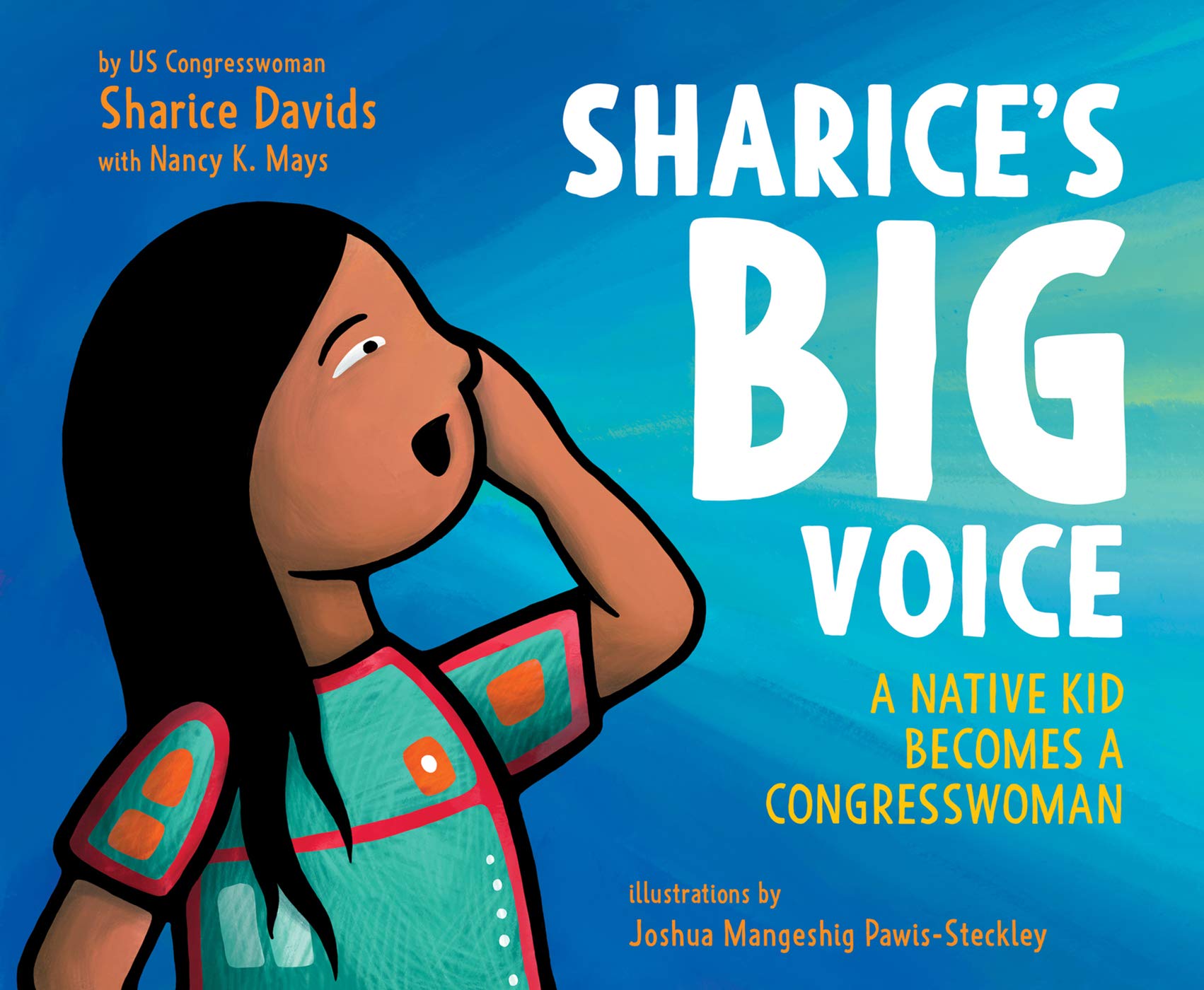
Sharice’s Big Voice: A Native Kid Becomes a Congresswoman by Sharice Davids with Nancy K. Mays, illustrated by Joshua Nageshig Pawis-Steckley

Published by HarperCollins

Sharice's Big Voice: A Native Kid Becomes a Congresswoman: Davids, Sharice,  Mays, Nancy K., Pawis-Steckley, Joshua Mangeshig: 9780062979667:  Amazon.com: Books

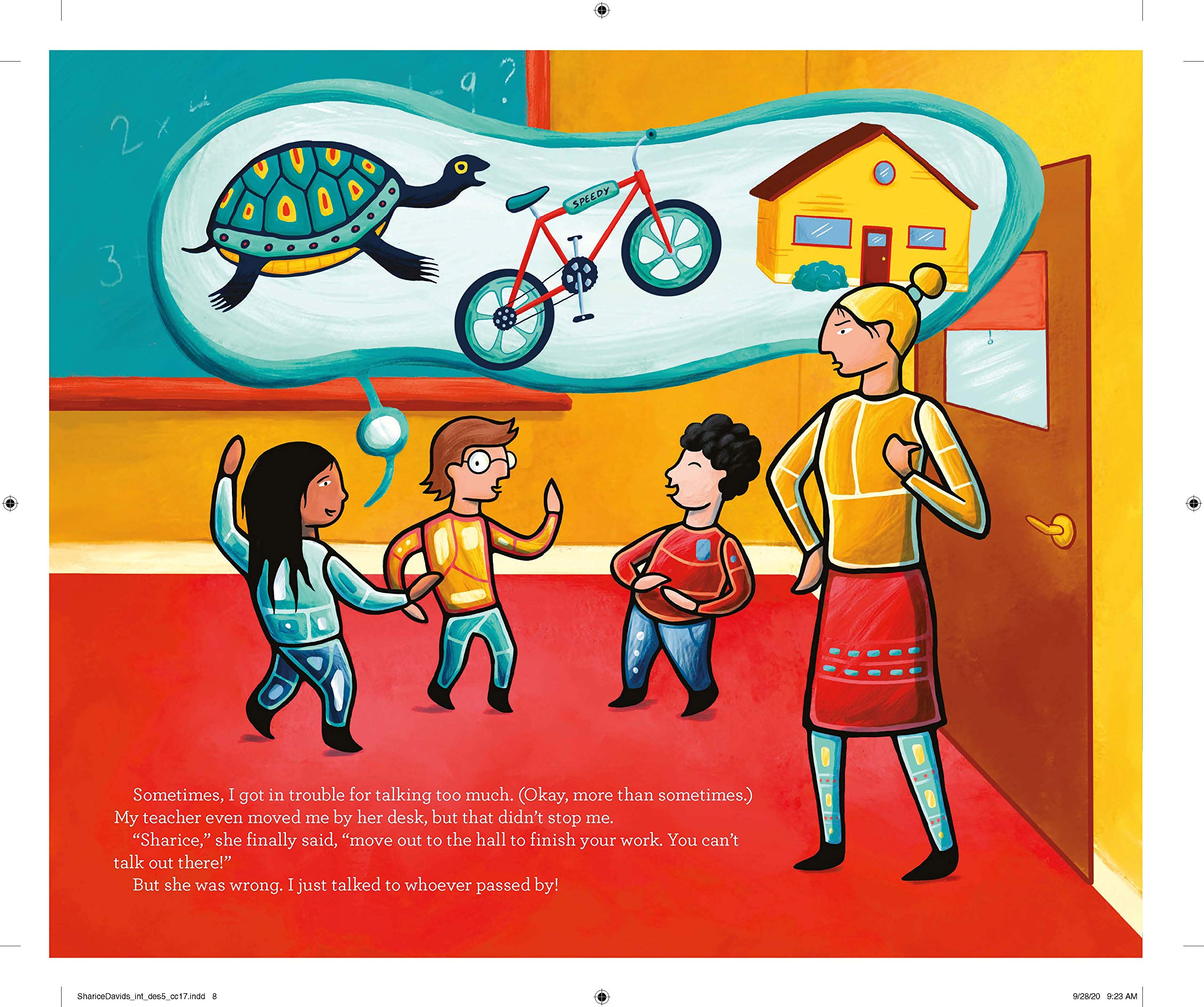
Summary:  In 2018, Sharice Davids became one of the first two Native American women in Congress.  From a young age, Sharice loved to talk and used her big voice to make friends when her single mother’s army career forced them to move several times.  She worked hard to get through college and law school and to pursue a passion for martial arts.  Her law degree led her to a South Dakota reservation, where she helped people start small businesses, and eventually to a career at the White House.  In Washington, she noticed that there weren’t a lot of people who looked like her, and decided to try to change that by running for Congress.  Her victory made her not only one of the first Native women in Congress, but also the first LGBTQ Native American there.  Includes an author’s note, an illustrator’s note, and additional information about Davids’ Ho-Chunk tribe.  40 pages; grades K-4.

Pros:  The chatty, informal tone of the writing makes Sharice seem like an old friend, and like pursuing your dreams is a real possibility.  I loved the art for this book, created by Ojibwe Woodland artist Pawis-Steckley. I want to mention that this is the third book I’ve reviewed in the last week that’s by a Native American author with Native main characters. Things sure have changed since I started this blog in 2015, and it’s about time.

Cons:  I wish there were more photos with the author’s note.  I think the one there is of Sharice with her mom, but it wasn’t labeled, so I’m not sure.