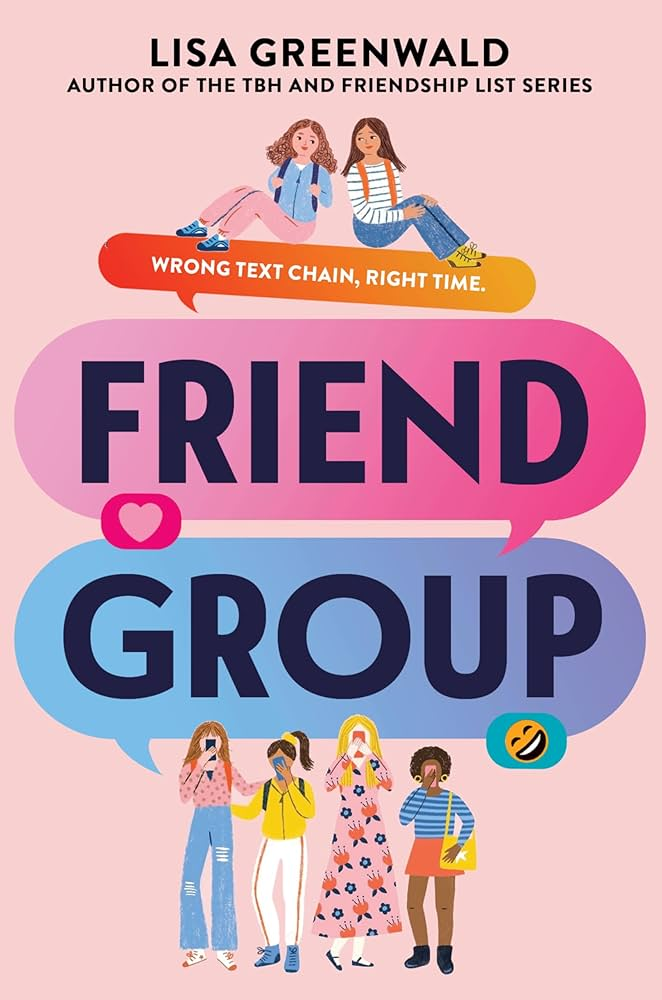
Friend Group by Lisa Greenwald (HarperCollins, 352 pages, grades 4-8). Sadie and her best friend Olive are nervous about starting middle school, which in their district begins with seventh grade. Olive is shyer and reaches out to Sadie for reassurance that they’ll stay friends, while Sadie is more outgoing and interested in finding a friend group. So when she finds herself accidentally added to the most popular girls’ group chat, she knows she should get off, but she also can’t stop reading this insider’s look at what popularity looks like. She finally reveals to Olive how she’s getting her information but will only let her friend see a few of the texts. As Sadie learns how the group works, she finds herself becoming friends with some of the members, driving even more of a wedge between her and Olive. Adding to the drama is Sadie’s crush on Eli, who just so happens to be the crush of one of the popular girls. Told in chapters that alternate between Sadie’s narration and various texts, the story ends with some loose ends tied up, but also with many of the issues realistically unresolved.
I’m not going to lie, books like this are just pure brain candy for me. Lisa Greenwald does an amazing job of realistically portraying seventh graders, which meant that I didn’t always love Sadie, who could be a bit of a mean girl herself. I kept wanting Olive to stand up for herself or make some new friends, and ultimately, she did a little of both, but she also acted like a shy, uncertain seventh grader right up until the last page. This would be a great choice for reluctant middle school readers, and I’m sure they’ll be looking forward to the sequel which will focus on the boys’ group chat.
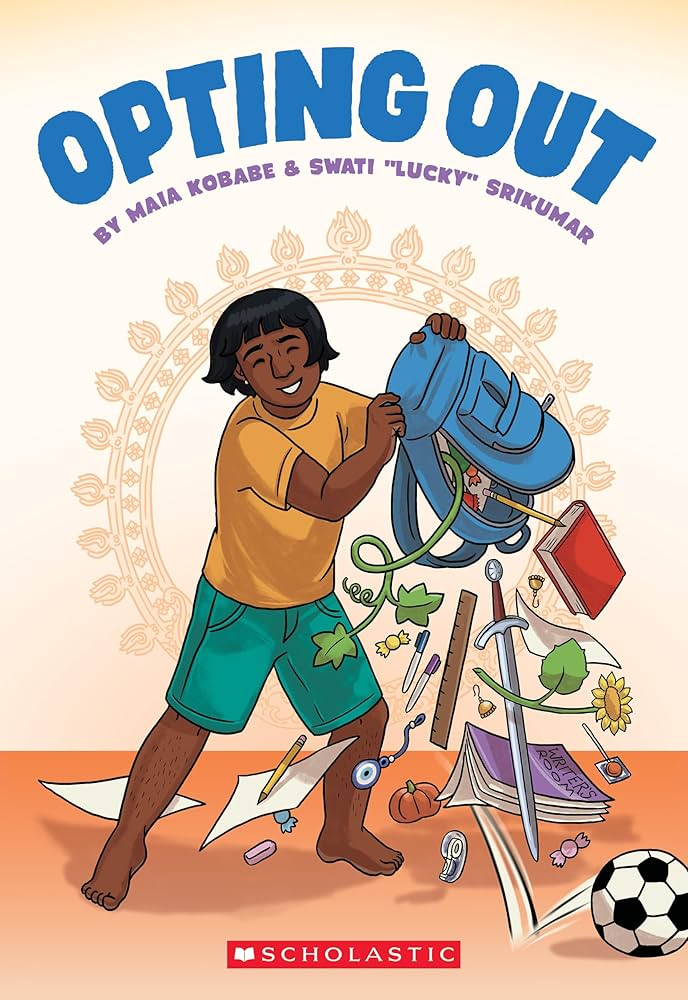
Opting Out by Maia Kobabe and Swati “Lucky” Srikumar (Graphix, 256 pages, grades 5-9). As Saachi moves through middle school, she finds herself struggling more and more with puberty and the social changes surrounding her. Getting her period is extremely upsetting, as is her need for a bra, and she hates the way kids start dating, especially when one of them is her best friend. She learns about a cousin who’s come out as transgender, but that label doesn’t feel quite right either. As she explores her identity through conversations with her parents, younger sister, and a new friend, and especially through her writing, she starts to realize that she doesn’t identify with either gender. Reading an interview with a nonbinary author inspires Saachi to write more honestly about both her struggles and her Indian heritage, and the resulting poem ends up getting accepted for publication in a magazine for teen writing, creating an opportunity to fully come out to her family.
This honest and engaging graphic novel is an important contribution to LGBTQ+ literature, but will also be embraced by all sorts of adolescent readers struggling with identity and fitting in. Saachi’s family, especially her dad, are models of accepting and openly communicative parents. The story and the art also pay homage to the family’s Indian heritage and Hindi religion. Maia Kobabe is the author-illustrator of Gender Queer, one of the most banned books in America, so be prepared for some challenges to this one

