Celebrating Black history and culture

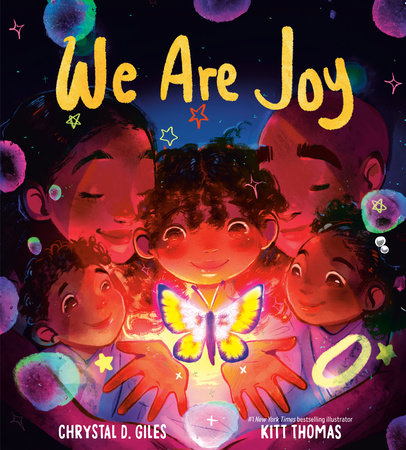
We Are Joy by Chrystal D. Giles, illustrated by Kitt Thomas (Random House Books for Young Readers, 32 pages, ages 4-8). Each spread shows an extended family celebrating joy in some way: “We are joy-filled” as they enjoy dinner together, “We are joy-inspired” as they sing together in church. Even difficult times, when words are ignored or the promise of justice is late, “We are joy-starved.” But Pop-Pop says, “Joy comes in the morning,” and the family focuses on education and their “created culture” that “moves the world.” From connecting with family to connecting with allies who support and lift them, this is a celebration of Black joy.

This is a great introduction to Black history and culture, with text and illustration that could prompt lots of discussions. It doesn’t gloss over more difficult issues, but there is also a sense of resilience and returning to joy.

Black Hands: Builders of Our Nation by Carole Boston Weatherford, illustrated by R. Gregory Christie (Crown Books for Young Readers, 40 pages, grades K-5). Black hands are the theme of this poem, from those “clutching memories” and that “reached for kinfolk” after being torn away from their homes and sold into slavery. They helped build a nation, forging iron, stitching clothing, and growing crops. Black hands played music, wrote literature, built colleges, and helped explore space. They broke chains, elected leaders, and were raised in protest, and now Black hands point the way to liberty and justice for all. Includes additional information about those pictured on each page.

This award-winning (multiple times!) author and illustrator team are sure to be considered for more recognition for this beautiful book that traces Black history through Black hands, looking at both literal and metaphorical accomplishments. Students of Black history will enjoy looking for familiar scenes and faces in the illustrations, and the back matter provides information on those they may not recognize.

Making stuff

Turtle with a Toolbox by Beth Ferry, illustrated by Dudolf (HarperCollins, 32 pages, ages 3-6). Turtle’s toolbox (which is kind of weirdly built into his shell) contains everything he needs to start building. Although he starts working alone, before long he’s joined by a whole team of friendly animals who help him plan, saw, hammer, and refine their work. By the end of the story, the group is ready to celebrate in their new treehouse fit for a king.

This adorable book will be loved by any preschoolers fascinated by tools and construction. The rhyming text and cute illustrations include some pretty advanced construction terms, like laying joists for a floor, framing windows and doors, and plastering walls. This is billed as book 1, so hopefully we’ll get to see more adventures of these industrious animals.

Stubby: A Pencil’s Journey by Sydra Mallery, illustrated by John Hare (Greenwillow Books, 40 pages, grades 1-4). Stubby may be small now, but he used to be one of the biggest things in the forest, an evergreen tree. He loves his life in nature, but sometimes every day seems the same. So when some big machines invade the quiet and chop him down, he’s excited for the chance to travel. All kinds of things happen to him until he winds up as a pencil in a box with nine new friends. A girl with sparkly unicorn nail polish grabs him off the shelf, and Stubby finds himself in a new place: school. There, he bounces from one owner to another, even getting a chance to visit one of the kids at home. Each time he gets sharpened, he can feel himself getting smaller. Just as things seem like they might get existential, a new boy grabs him. “You saw me for who I really am.” Stubby tells him. Now his name is written on his side in permanent marker, and he seems to have found his forever home.

Whew, this is quite the adventure with many interesting stops along the way, including detailed drawings of how a tree is transformed into a pencil. Readers will recognize the journey a pencil can take once it’s in the classroom. It’s a bit long for a group read-aloud, but hopefully the cartoon illustrations, technical details, and humorous situations will keep kids engaged.

Understanding neurodivergence

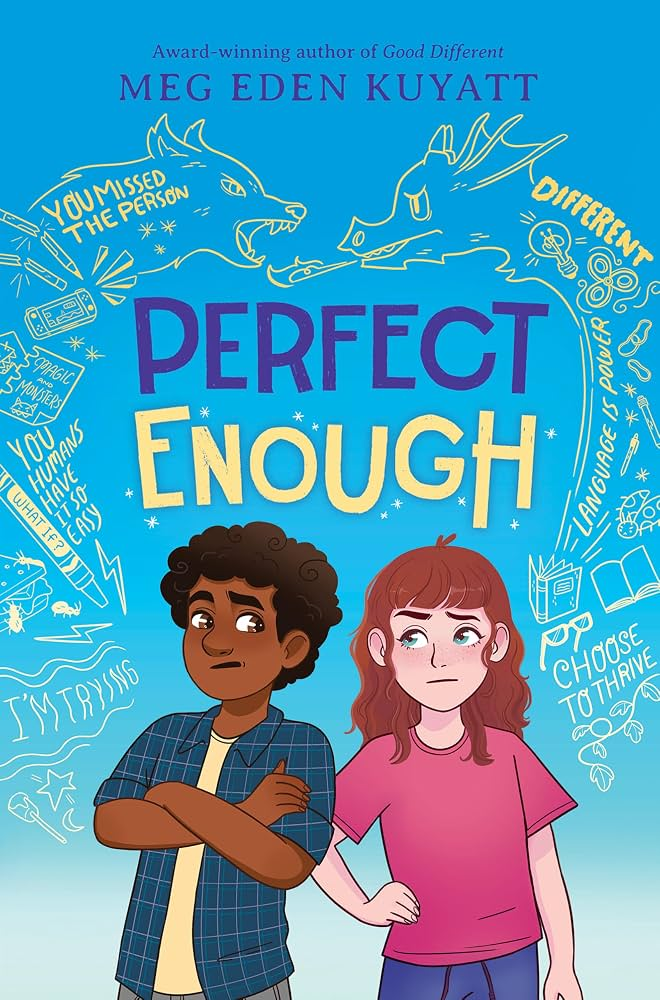
Perfect Enough by Meg Eden Kuyatt (Scholastic Press, 352 pages, grades 4-7). In this follow up to Good Different, we meet Seleh as she’s preparing for some big changes in her life. Not only has she recently been diagnosed with autism, but she’s starting a new school in the fall. For the summer, though, she has big plans for her three weeks at Writer’s Camp, including working on her poetry and hanging out with her two new friends Rheya and Brooklyn. Seleh’s mom is nervous about her taking this big step, but Seleh is sure with her new coping mechanisms and tools she’s ready for anything. The first few days are amazing, but before long, Seleh is struggling. Her roommates like to stay up late, and Seleh needs lots of sleep. She takes on two big group projects, even though she doesn’t like working in groups. Some of the counselors don’t understand her need for breaks and using some of her other strategies. By the end of week two, Seleh has completely crashed, and she faces the difficult decision whether to stay and see her commitment through or go home early and take care of herself. Her mom, grandfather, new friends, and a sympathetic counselor help her figure things out and to see that there’s value in trying new things even if they don’t go perfectly. Includes an author’s note and some other resources for readers.

I don’t usually review sequels, but I actually forgot that I had read the first until I was about halfway through this one, and by that point I was too invested to stop! It’s a great look at a girl figuring out how to survive and thrive with her new diagnosis, while developing empathy for her new friends who are dealing with their own issues. I also liked the message at the end of the book (spoiler: Seleh leaves camp early) that it’s okay not to finish things sometimes if it means taking better care of yourself. Note: this is currently at #12 on the Goodreads Newbery 2027 list.

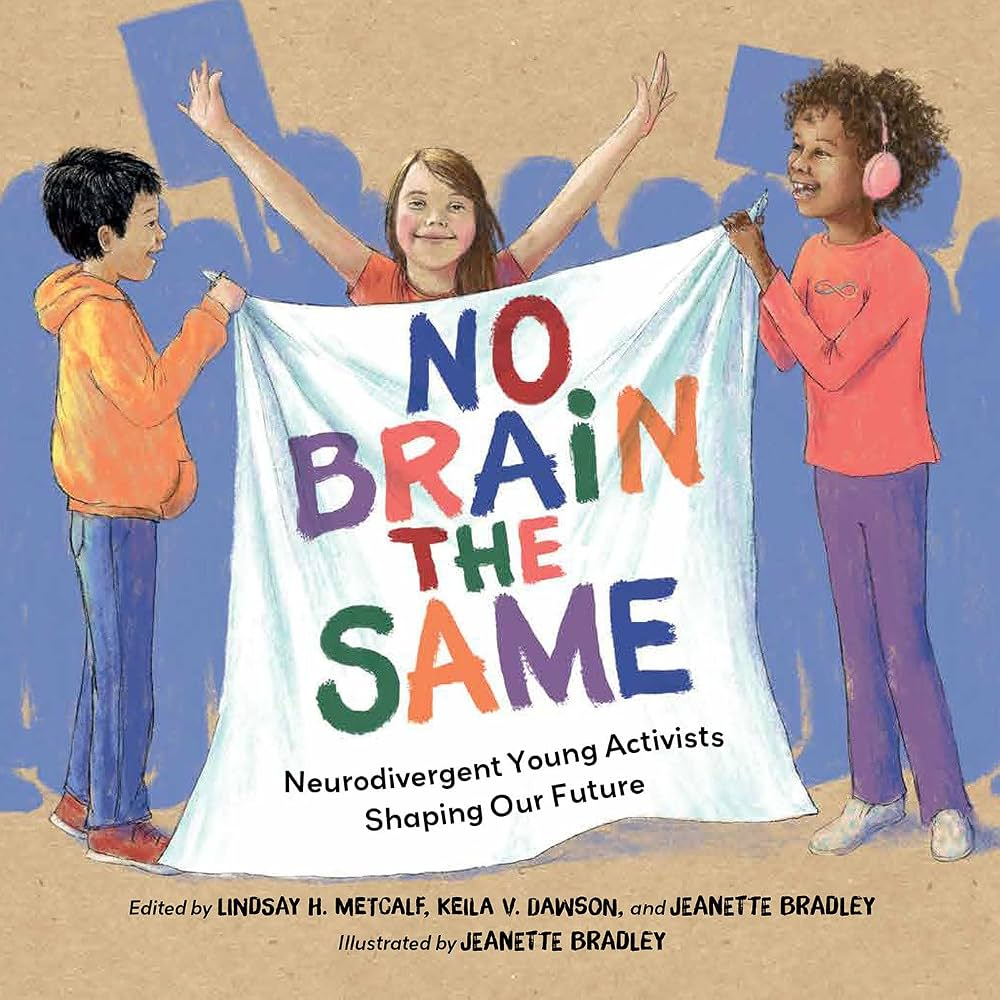
No Brain the Same: Neurodivergent Young Activists Shaping Our Future edited by Lindsay H. Metcalf and Keila V. Dawson, and Jeanette Bradley, illustrated by Jeanette Bradley (Charlesbridge, 40 pages, grades 2-5). Like their books celebrating kids who are making history and fighting climate change, this collection looks at neurodivergent kids working to make a better world for everyone. Whether it’s Tourette’s, ADHD, autism, Down syndrome, or some other form of neurodivergence, these young people have learned to not only navigate the world, but to thrive in it, creating music, books, videos, and inventions to help others like them. Each spread has an illustration of the subject, a poem, and additional information about the person and their achievements. Includes a glossary, a list of the poetry forms, and additional information about the poets.

This inspiring book serves multiple purposes, introducing both a variety of poetic forms and an inspiring group of young people who have already achieved a lot in their lives despite living with disabilities. This is a great introduction to poetry as well as a good “mirrors and windows” book to learn about neurodivergent kids.

Let’s take a look at the 2026 Boston Globe/Horn Book Awards!

The 2026 Boston Globe/Horn Book Awards were announced on June 15, and I was thrilled that Nicholas Day won the nonfiction award for A World Without Summer, and Julie Leung and Angie Kang won the picture book category for Navigating Night. The fiction award went to Lisa Greenwald’s A Scar Like a River, which I am hoping to get to before the summer is over. I’ve read a couple of the honor books, but I hadn’t heard about these two.

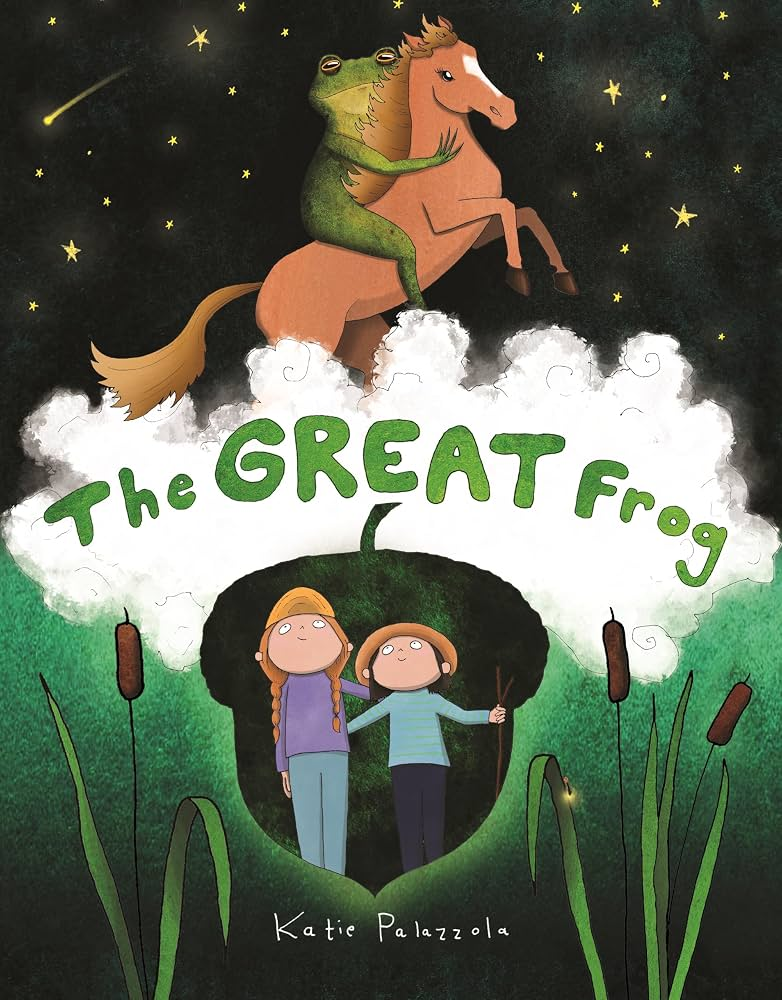
The Great Frog by Katie Palazzola (Neal Porter Books, 40 pages, ages 4-8). Two siblings contemplate a blob of frog eggs; younger brother Peedie wants to stay outside and watch over them while his sister Kit knows that it’s time to go inside. “But don’t worry,” she tells him. “The Great Frog will take care of the eggs.” When they return, the eggs have hatched into tadpoles, and Kit expands on the Great Frog story. He rides a horse named Tarnation and lives in a moon castle in the sky. Still later, the tadpoles have grown legs, and Kit predicts the Great Frog will arrive to choose his successor in another week. But when the day arrives, Kit admits to Peedie that she made the whole thing up. Peedie takes it in stride, understanding the importance of stories, and the two agree to be looker-afters, just like the Great Frog. Includes information on the frog’s life cycle, a list of websites to learn more, and an author’s note encouraging readers to dream and have big ideas.

This quirky debut picture book celebrates stories and sibling relationships, mixed in with a bit of scientific information. Kit and Peedie have a warm and understanding relationship, and readers may be inspired to become looker-afters of the natural world themselves.

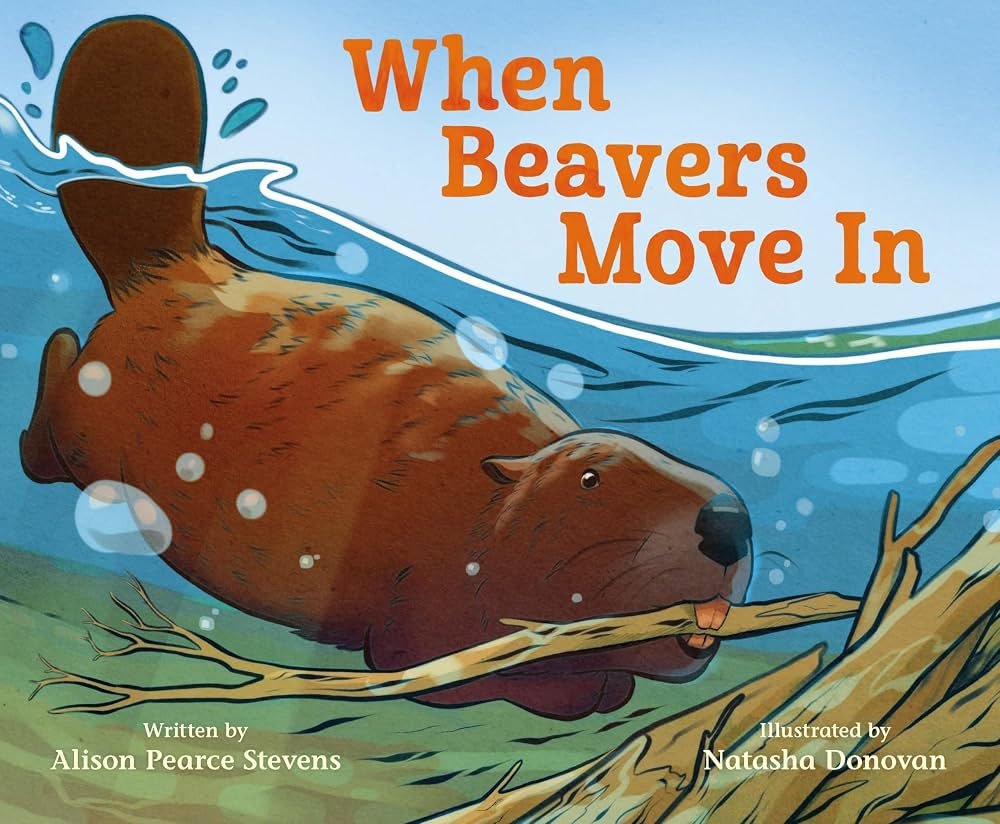
When Beavers Move In by Alison Pearce Stevens, illustrated by Natasha Donovan (Godwin Books, 48 pages, grades K-3). When beavers more into areas populated by humans, they can be a nuisance and cause flooding, leading humans to kill the beavers. But the Tulalip Tribes of Washington State take a different approach. When they’re called in to help, members of the tribe trap the beavers and move them to their tribal land. High up in the mountains, the beavers cut down trees and build dams, starting a chain of events that increases fish populations, creates a wetland, and ultimately, helps protect land from forest fires. Includes an author’s note with additional information about beavers and the Tulalip Tribes’ beaver project, including ways readers can help.

This excellent nonfiction picture books emphasizes ways to create balance in nature, allowing beavers to improve land in a way that doesn’t harm humans, and celebrates Indigenous methods of land management. It would make an excellent companion to Kristen Tracy’s 2024 picture book When Beavers Flew.