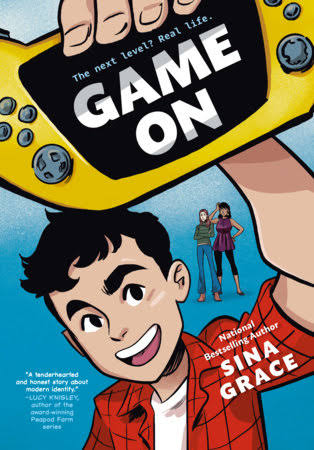
Game On by Sina Grace (Random House Graphic, 208 pages, grades 4-7). Sasan takes his Persian heritage for granted–his mom is from Iran, and his absent dad is white. Sasan’s far more interested in video games, and when the other kids start talking about the new RadBox gaming console, Sasan begs his mom to buy him one. She makes him a deal: if he learns Farsi, she’ll buy the RadBox. He reluctantly agrees, and the two begin regular lessons together. On top of that, Sasan has the big “Who Am I?” school project to work on, making him consider the influences that have made him who he is. His older sister is disgusted that he’s focusing on video games and superheroes more than culture and family, and Sasan has to give some careful consideration about what’s important to him. He makes some selfish decisions along the way, disappointing his family, his friends, and himself, but by the end, he’s starting to realize that being Persian is an important part of him and beginning to appreciate his family and culture more. Includes an author’s note about how his own adolescence influenced the creation of this story.
I liked that Sasan is a typical middle school kid, often making misguided decisions based on what his friends were doing and wanting to fit in. His mom is pretty awesome, walking the line between holding him accountable and understanding what it’s like to be in middle school. There aren’t enough graphic novel middle school stories with boy main characters, and this would be a great addition to any elementary or middle school library.
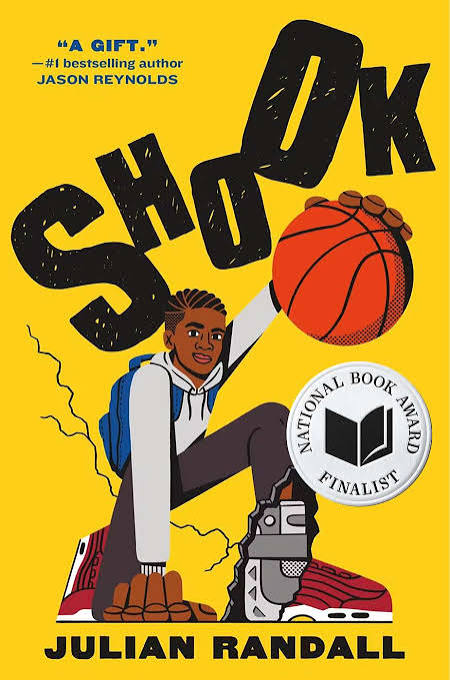
Shook by Julian Randall (Henry Holt and Co., 256 pages, grades 4-8). Malik “Shake” Page has his future mapped out for him: after making the varsity basketball team in eighth grade, he’ll go on to star in high school, college, and finally, the NBA. But in his final summer game, he fractures his ankle and has to take a break from basketball. Sitting things out and watching his parents struggle to pay his medical bills trigger his anxiety, and he starts having panic attacks. On top of that, his basketball friends seem to be moving on without him, and his oldest friend, Kyla, has been acting distant lately. With the help of a compassionate therapist, Shake starts to see the pressure he’s been putting on himself and learns some strategies for coping with anxiety, including asking for help from his friends and family.
This novel in verse National Book Award finalist has been aptly compared with Kwame Alexander’s The Crossover. Shake’s voice is true to his West Chicago community, and his love of basketball, his struggles with anxiety, and his discovery about family and friends are all elements that will resonate with upper elementary and middle school readers.

