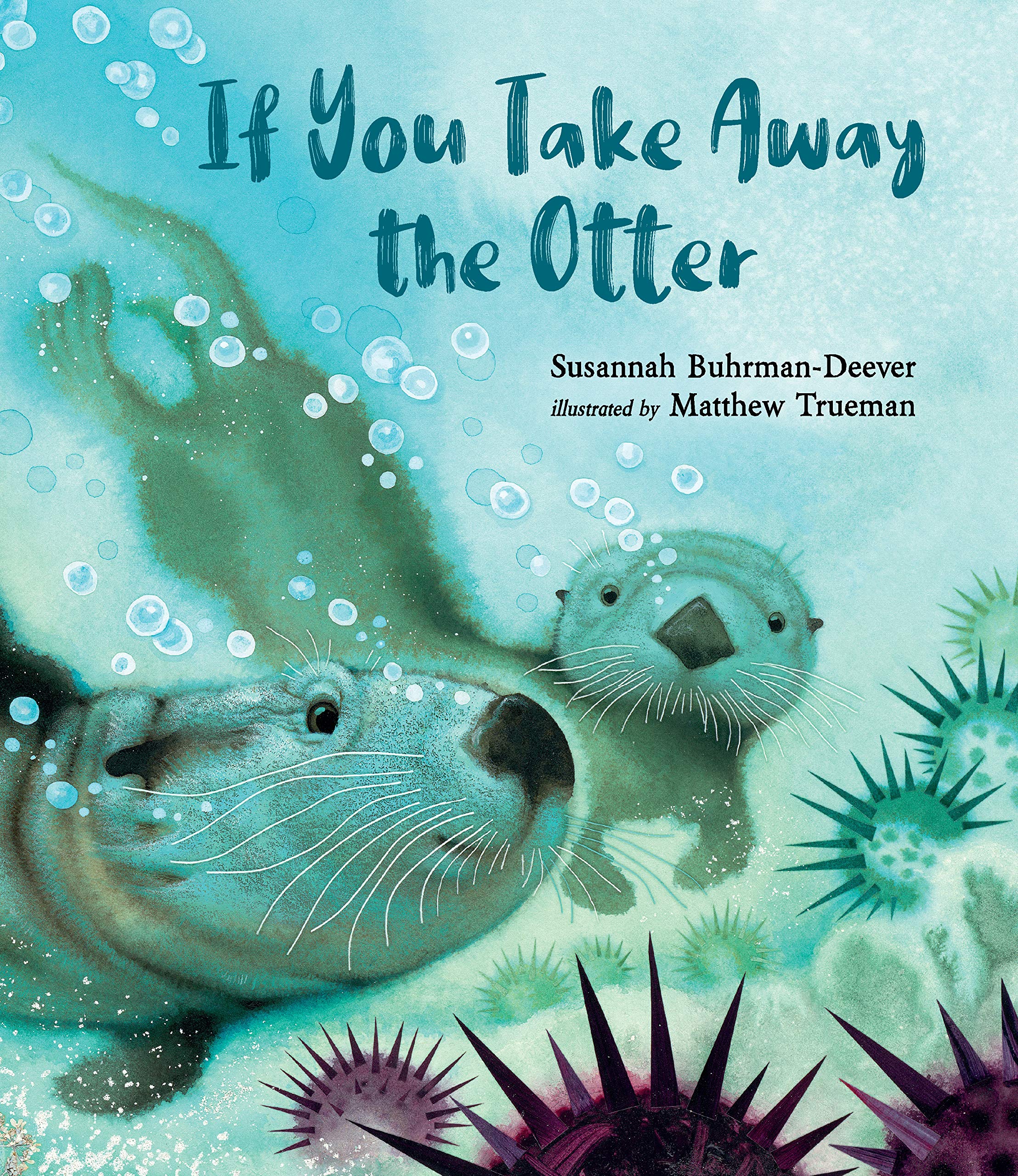
If You Take Away the Otter by Susannah Buhrman-Deever, illustrated by Matthew Trueman

Published by Candlewick (Released May 26)
If You Take Away the Otter: Susannah Buhrman-Deever, Matthew ...

If You Take Away the Otter: Susannah Buhrman-Deever, Matthew ...

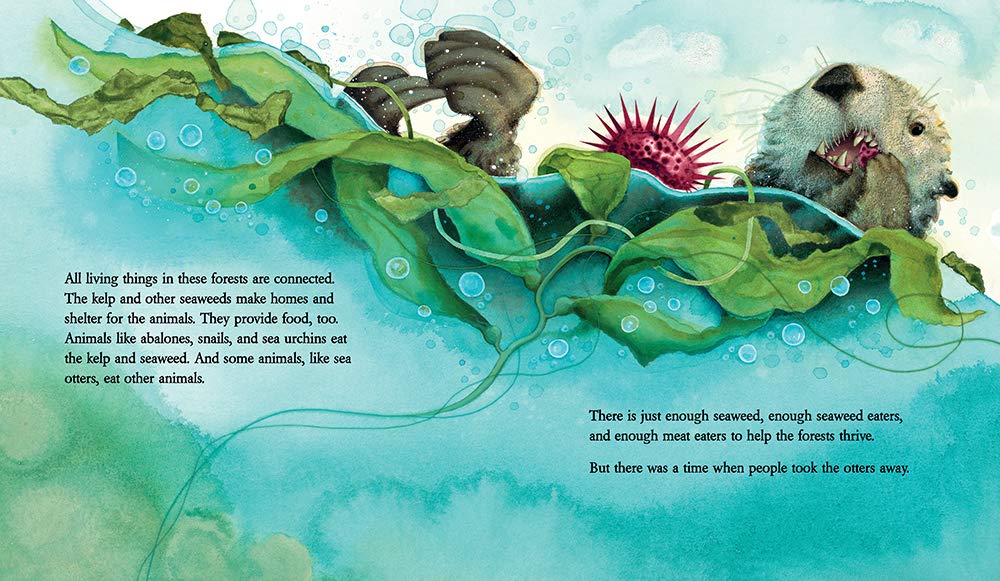
Summary:  Kelp forests, like any habitat, are home to a web of living creatures that keep the whole ecosystem in balance.  Otters do their part by eating the fish, shellfish, and sea urchins that live in these forests.  But a demand for the otters’ fur, beginning in the eighteenth century, reduced the otter population on the Pacific coast from between 150,00 and 300,000 to fewer than 2,000.  Without the otters, sea urchins flourished, eating the base of the kelp and eventually destroying the forests.  In 1911, laws were passed to stop the fur trade, and the otters slowly began to return.  As the otter population went up, the sea urchins’ went down, until balance was restored once again.  Includes additional information about kelp forests, sea otters, and people; a bibliography; and a list of additional resources.  32 pages; grades 1-4.

Pros:  Another book that shows the importance of maintaining the balance of an ecosystem, how humans often mess that up, and how laws and other regulations can help to restore it.  The text is simple enough for primary grades without being condescending, the watercolor illustrations of the kelp forest world are beautiful, and the sea otters are adorable.

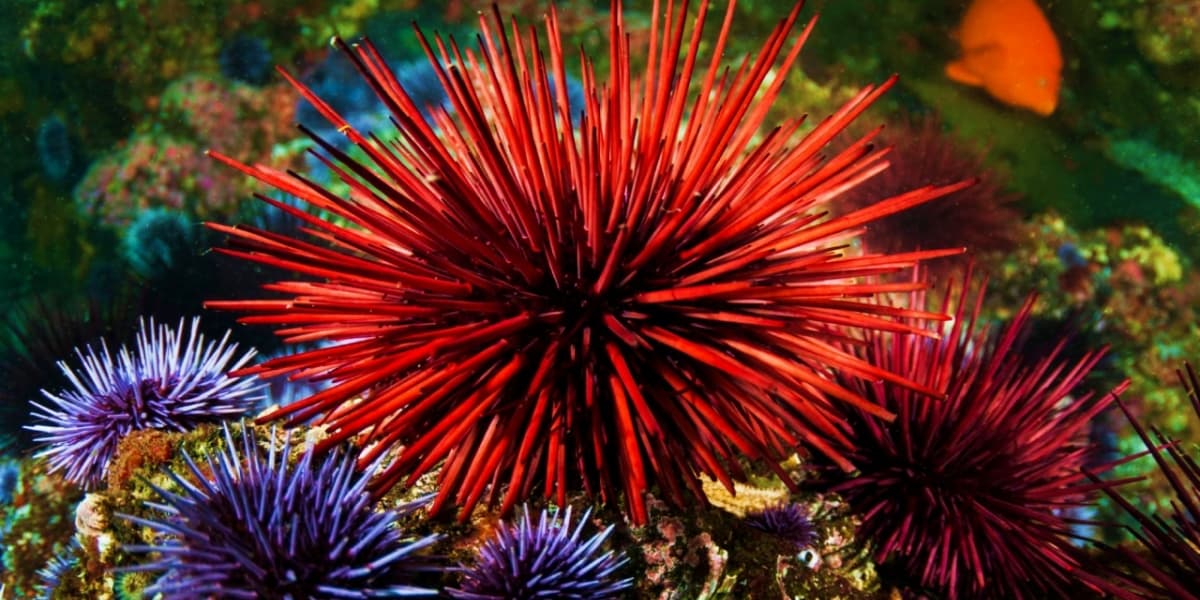
Cons:  There’s a little too much anthropomorphized good-versus-evil in the world of the kelp forest, with the sea otters being described as “the kings of these forests” without any evidence to back that claim.  Meanwhile, the sea urchins, who were really just doing their thing, are portrayed as “an army”.  It doesn’t help that they look a bit like a well-known virus. 

Links to COVID-19 Resources – Copyright Clearance Center     40 Animal Species that Outlive the Rest

Is there a resemblance, or am I just starting to see coronavirus everywhere?

If you would like to buy this book on Amazon, click here.
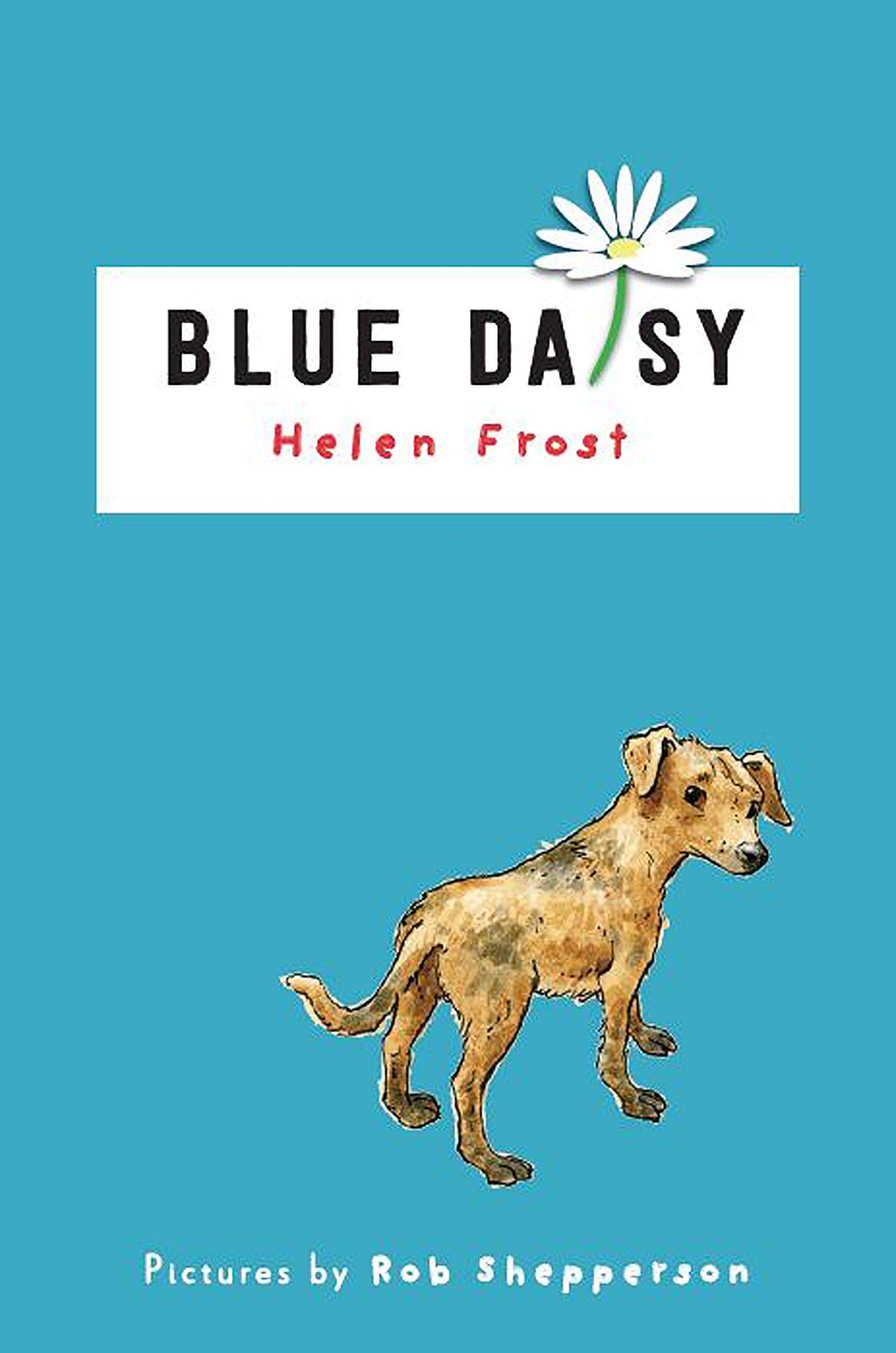
 

Blue Daisy by Helen Frost, illustrated by Roy Shepperson

Published by Margaret Ferguson Books

Amazon.com: Blue Daisy (9780823444144): Helen Frost, Rob ...

Summary:  Neighbors Sam and Katie want to befriend the stray dog that’s been wandering around their neighborhood.  She’s starting to trust them when one afternoon she falls asleep under a table that Sam’s dad has been painting.  Thoughtlessly, the kids experiment with using some of the paint on the dog, who wakes up in the middle of their fun.  She’s then marked with a “blue daisy” which gives her her name, but causes her to be mistrustful of the two kids.  They immediately regret their actions, and are dismayed when Blue Daisy starts hanging out with the mean Tracy twins.  The two have to come up with a way to win back the dog’s trust…and that just might mean reaching out to their enemies as well.  Includes recipes for the snickerdoodles and dog biscuits that are part of the story.  96 pages; grades 2-5.

Pros:  Sam’s narration is in the form of poetry, while Katie’s is prose (although quotes are in italics without quotation marks, more like poetry), making this a good introduction to reading novels in verse.  Readers will relate to Sam and Katie’s mistake, and who doesn’t like a dog story with a happy ending?

Cons:  Kids who have only read traditional chapter books may struggle with the unusual format at first.

If you would like to order this book from Amazon, click here.

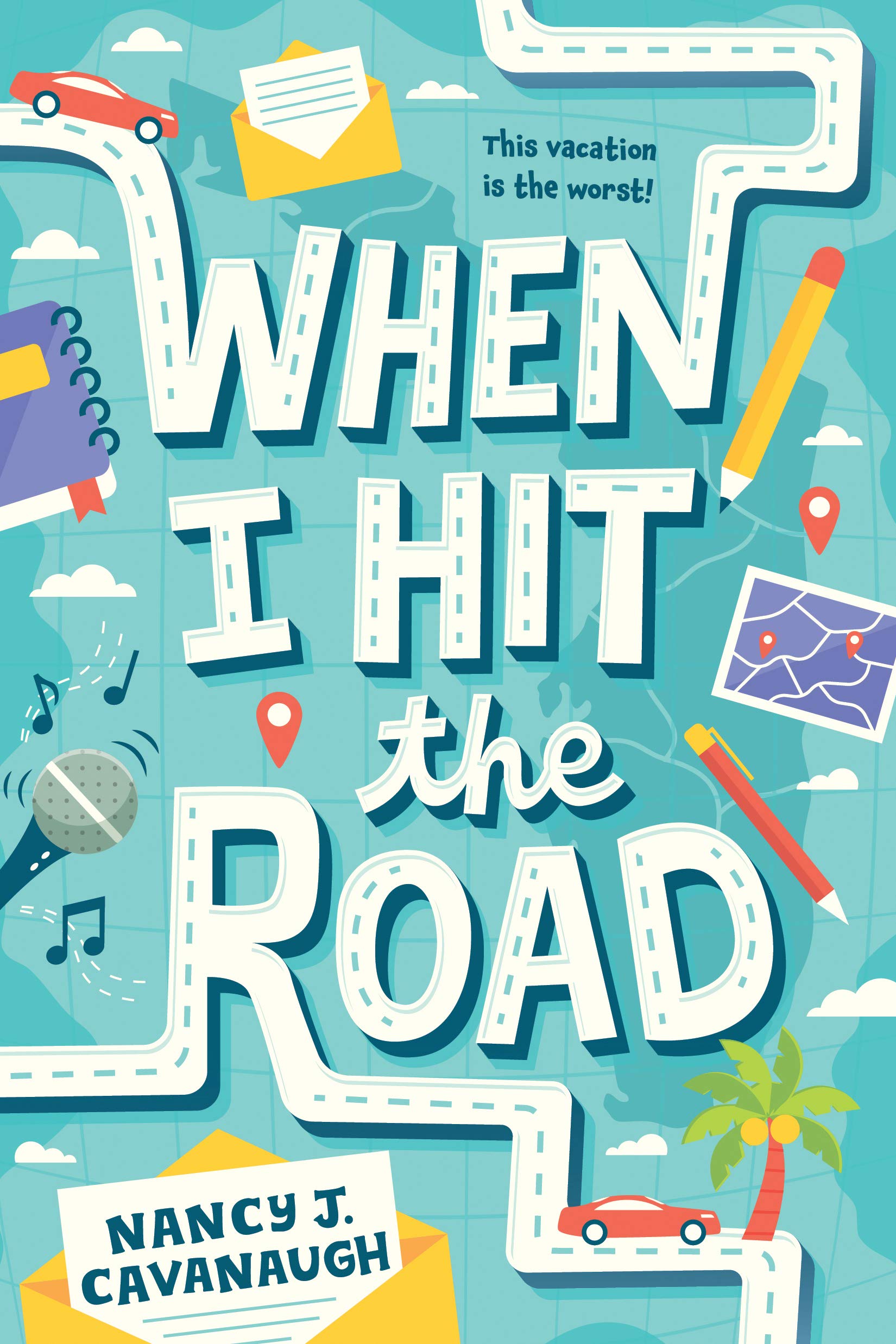
When I Hit the Road by Nancy J. Cavanaugh

Published by Sourcebooks Young Readers

When I Hit the Road: Nancy J. Cavanaugh: 9781492640257: Amazon.com ...

Summary:  Samantha is not excited to be starting her summer taking a road trip with her grandmother, Gram’s friend Mimi, and Mimi’s grandson Brandon.  Coming off of a tough sixth grade year, Sam is intimidated by Brandon’s coolness and certain that he finds her a complete dork.  Sam’s high-powered mother is concerned about the newly-widowed Gram, but when they visit her in Florida, they discover she’s trying all kinds of new things, including competing in a karaoke contest.  Mom gets called home for business, leaving Sam to watch over Gram and keep a record of the trip in her new journal.  The four have a series of mishaps, including getting stuck in a ditch on a remote back road, being forced to sleep in a leaky cabin in a rainstorm, and trips to both urgent care and the emergency room.  But when the trip ends, Sam has made some interesting discoveries about herself that may help her in seventh grade and decides she wouldn’t have traded the trip for anything.  304 pages; grades 3-7.

Pros:  This will definitely get on my “recommendations for summer reading” list.  Why not?  It takes place over summer vacation, it’s about a road trip, it’s written in a fun-to-read journal format, and it has a hint of romance with nothing objectionable for readers as young as 8 or 9.  

Cons:  Gram and Mimi checked all the boxes for stereotypical Florida Golden Girl retirees.

If you would like to buy this book on Amazon, click here.
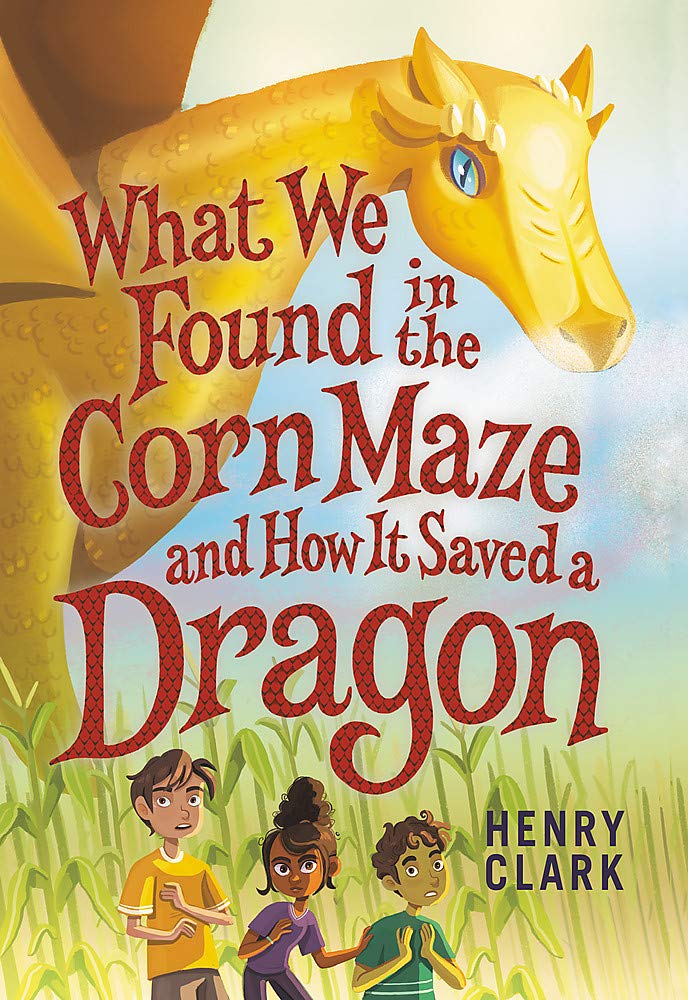
What We Found in the Corn Maze and How it Saved a Dragon by Henry Clark

Published by Little, Brown Books for Young Readers

What We Found in the Corn Maze and How It Saved a Dragon: Henry ...

Summary:  When Cal and his friend Drew see a bunch of coins walking toward a girl in their class named Modesty, they want to know more.  It seems as though Modesty is practicing magic, but when they get their hands on her book of spells, it’s not much.  They can make a few of the more mundane spells work for one minute at a time during five minutes of the day…or night, in a few cases.  What Cal wants most is to find a spell that will repair the expensive harvester he accidentally set on fire and to help save the family farm from the inventor who has found a way to create vegetables with a 3-D printer.  When a portal opens up into another world, the three kids find themselves in the midst of an effort to save that world from global cooling–with the help of a green-skinned kid librarian named Preface (Pre for short).  When Drew accidentally gets trapped in the other world, and Pre ends up back with Cal and Modesty, it’s up to the kids to save Drew, save the farm, and quite possibly save the world.  352 pages; grades 3-7.

Pros:  Fun doesn’t begin to describe this madcap magic adventure with an intriguing parallel universe, clever wordplay, and a few zings about fake news, corrupt leaders, and climate change deniers.  The adventures and laughs never stop; this will be an easy book to promote for summer reading.

Cons:  I’d love to see more of Cal, Drew, Modesty, and Pre, but everything wrapped up so neatly, I fear there will be no sequel.

If you would like to buy this book on Amazon, click here.
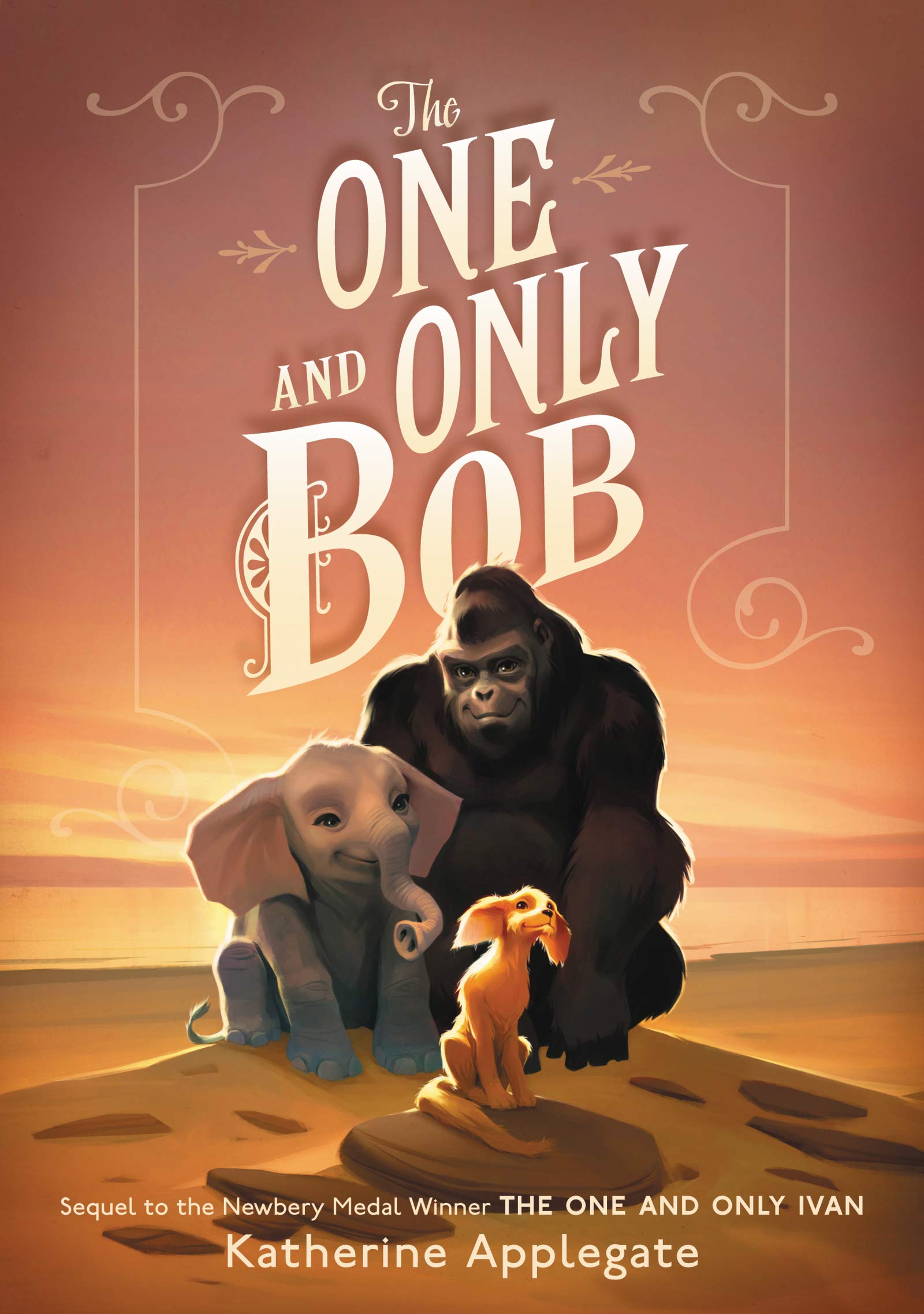
The One and Only Bob by Katherine Applegate, illustrated by Patricia Catelao

Published by HarperCollins (Published May 5)

The One and Only Bob (One and Only Ivan): Applegate, Katherine ...

Summary:  Bob, the stray dog who befriended Ivan and Ruby in The One and Only Ivan has his own story to tell now that he’s been adopted by Julia and her family.  For the first time in his life, he has two meals a day, a comfortable bed, and people who love him.  But Bob has been through enough to be wary about getting too attached, refusing to do what he’s supposed to at obedience training.  He’s still close to Ivan and Ruby, often visiting them in their new zoo home, and happens to be there one day when a tornado strikes, followed by a hurricane.  After flying for the first time during the tornado, Bob gets to work in a series of harrowing rescues, both at the zoo and the animal shelter down the street.  The life-threatening situations help Bob to realize what is important to him and to learn the value of his friends and family.  352 pages; grades 3-7.

Pros:  It doesn’t much matter what I say here, this book will be a runaway bestseller as the many fans of The One and Only Ivan (soon to be a major motion picture) wil clamor to find out what happened to Ivan, Ruby, Bob, and the rest.  Those fans won’t be disappointed, and will enjoy getting to know the funny, feisty Bob a bit better.  The short chapters, action, and humorous narration will hook Ivan’s old friends and new readers alike.

Cons:  While the second half of the book (once the weather hit) had plenty of action, I found the first part a little meandering.  Not quite Newbery caliber, in my opinion, but then again, I’m an iconoclast who prefers Applegate’s Wishtree to the award-winning The One and Only Ivan

If you would like to buy this book on Amazon, click here.
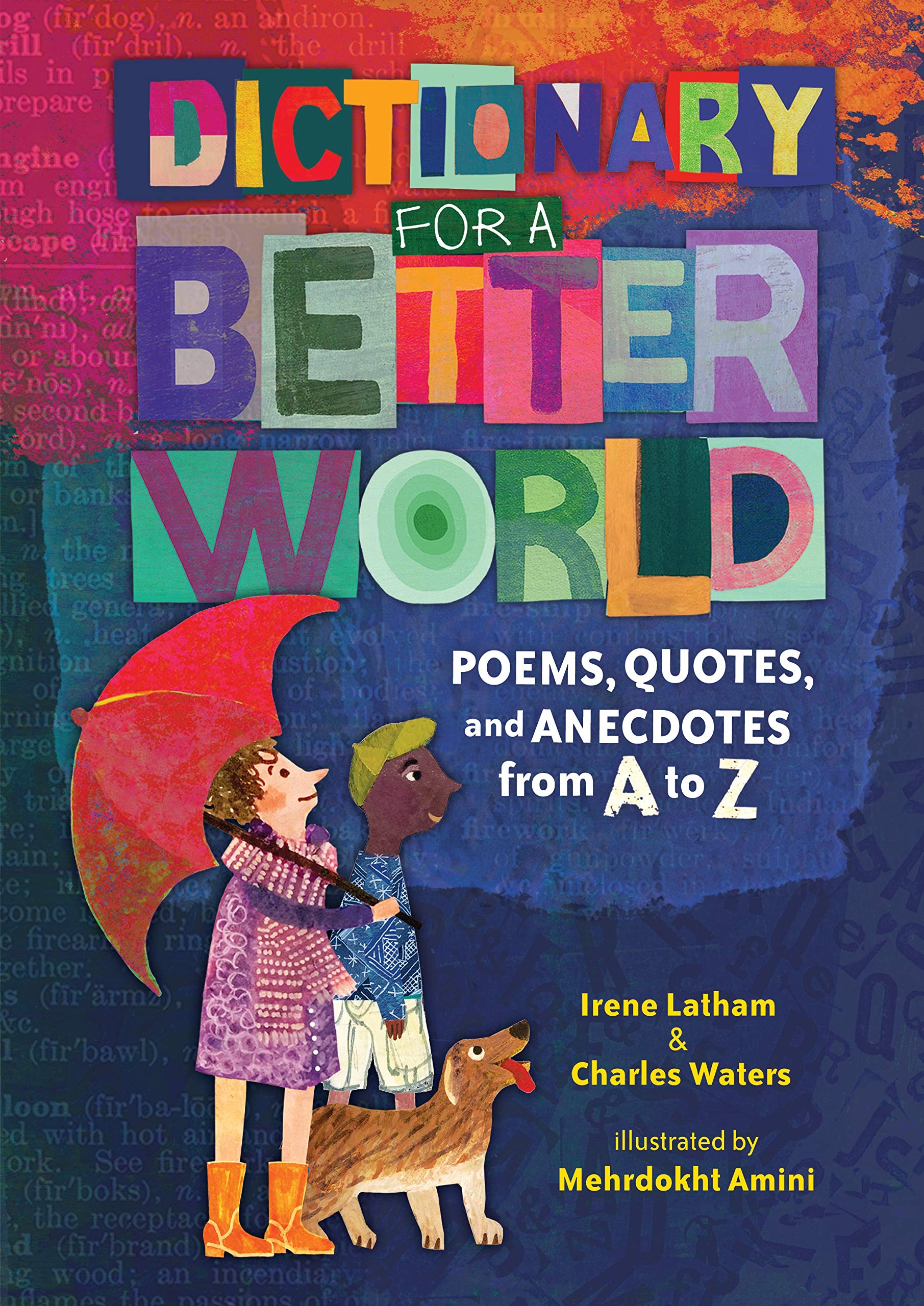
Dictionary for a Better World: Poems, Quotes, and Anecdotes from A to Z by Irene Latham and Charles Waters, illustrated by Mehrdokht Amini

Published by Carolrhoda Books

Dictionary for a Better World: Poems, Quotes, and Anecdotes from A ...

The Art of Dictionary for a Better World

Summary:  From “acceptance” and “ally” to “yes” and “zest”, Latham and Waters take readers through an alphabet of words designed to make them think about how to make the world a better place.  Each page features a poem about the word, a personal anecdote written by one of the authors, an appropriate quote, and a definition of the poetic form used. There’s also a “Try It!” suggestion for an activity that focuses on the concept.  Includes a note from the authors; materials referenced in the quotes; additional recommended books; poetry resources; and an index of poetic forms.  120 pages; grades 3-7.

Pros:  The team that brought you Can I Touch Your Hair? has created a beautifully illustrated book that could be used to teach poetry or to begin a discussion on any of the words.  The anecdotes and “Try It!” suggestions could lead to some writing activities.  

Cons:  I wasn’t super excited to read a book entitled Dictionary for a Better World; seems like the authors or editors could have thought of a title with a little more zing.

If you would like to buy this book on Amazon, click here.
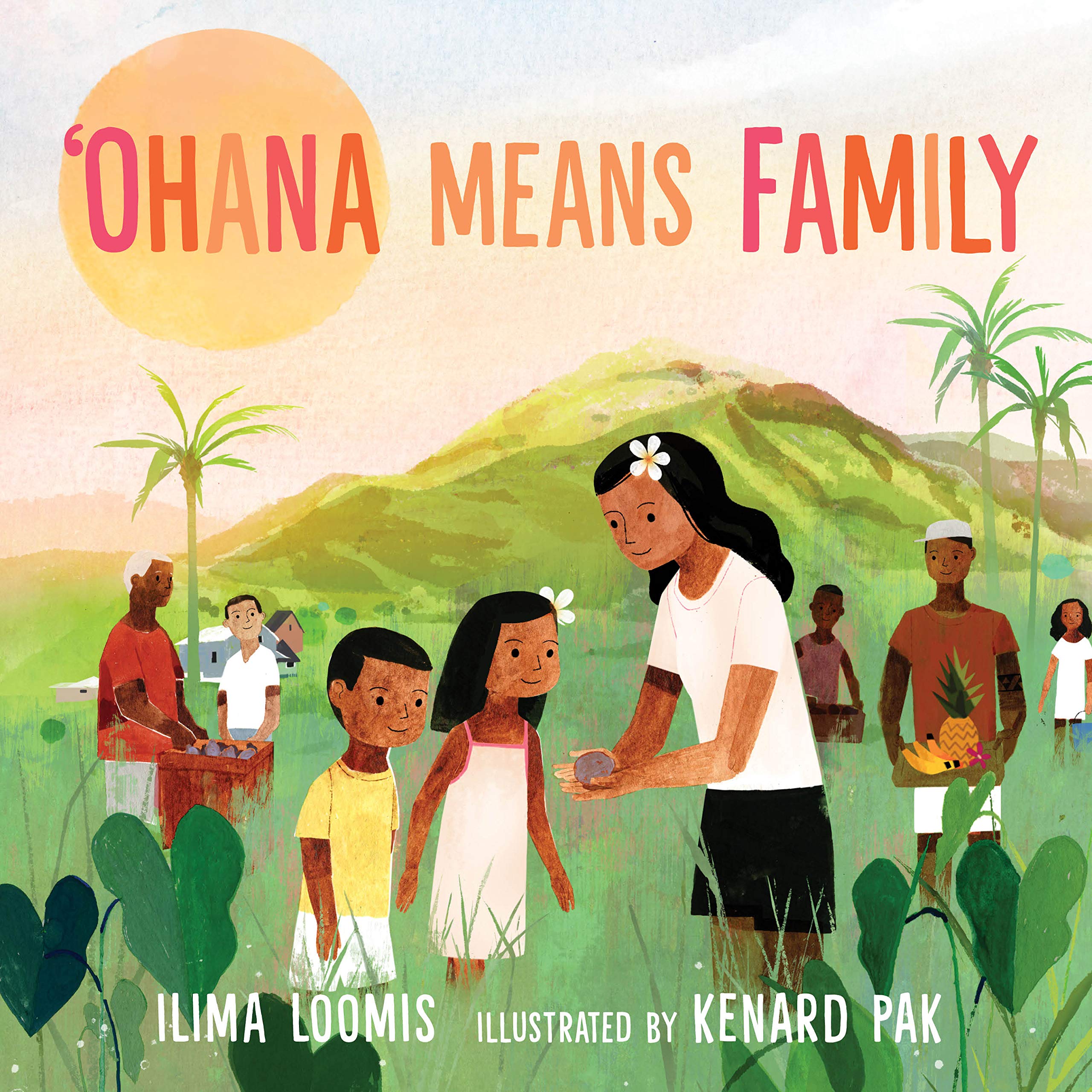
Ohana Means Family by Ilima Loomis, illustrated by Kenard Pak

Published by Neal Porter Books

Ohana Means Family: Loomis, Ilima, Pak, Kenard: 9780823443260 ...

Summary:  In a “This is the house that Jack built” cumulative style, the author recounts the steps necessary to get the poi for the family’s (‘ohana’s) lu’au.  The poi comes from the kalo plant, which is the starting point for the verse.  From there, the narrative moves outward to the mud that the plant grows in, the “land that has never been sold”, the stream that waters it, the sun, and the wind.  The final lines include the ‘ohana that gives thanks for all of the elements that have created the food for their lu’au.  Includes notes about kalo, poi, and ‘ohana as well as a glossary.  40 pages; ages 4-8.

Pros:  A fascinating introduction to native Hawaiian culture.  The illustrations are spectacular and will make you want to be on the beach eating poi with this ‘ohana.  The back matter helps readers understand what is going on in the story.

Cons:  Since I’m sure many readers have as little knowledge of Hawaiian culture as I do, it would have been helpful to have some explanation on each page of what was going on, rather than having it all at the end.

If you would like to buy this book on Amazon, click here.
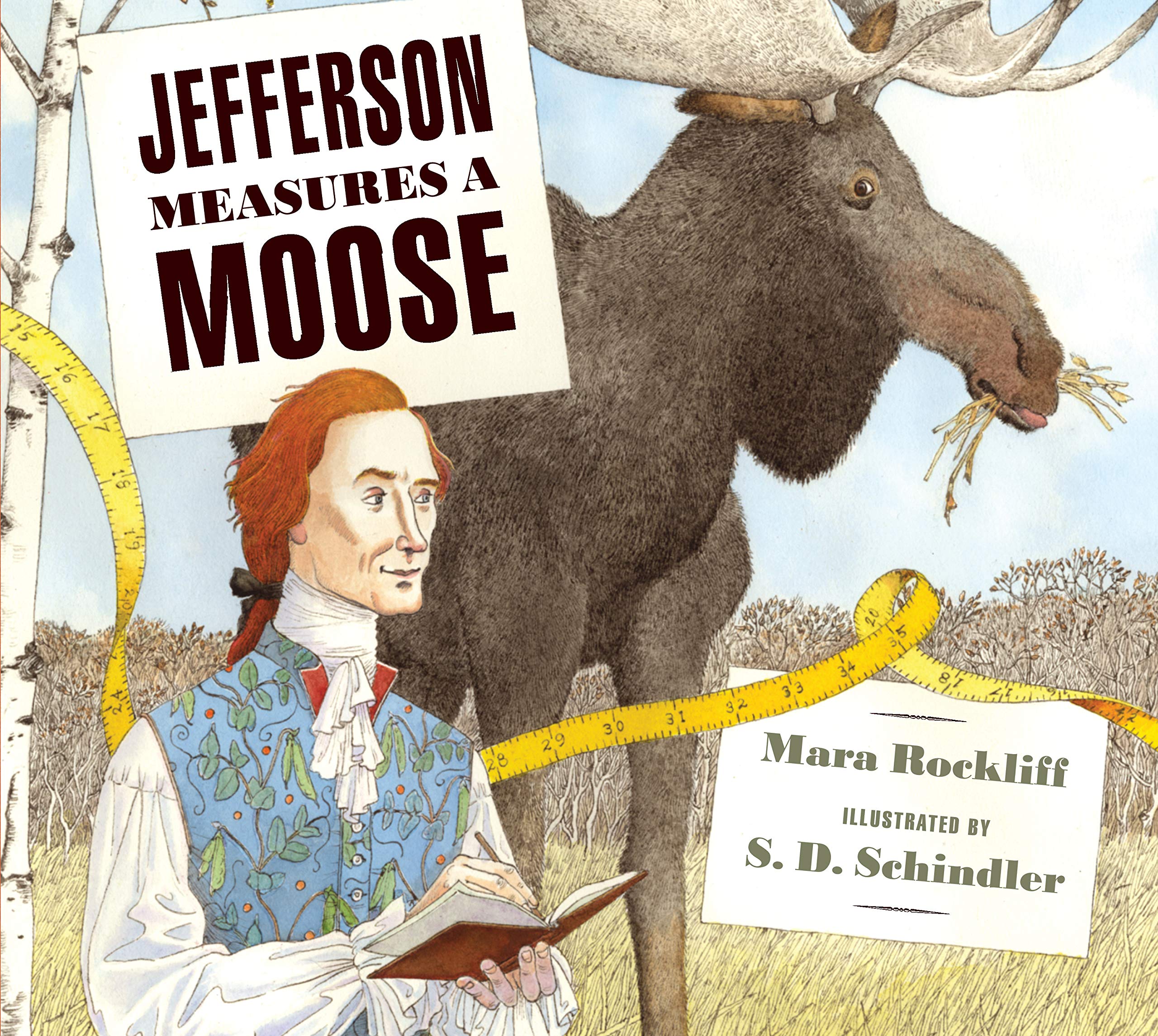
Jefferson Measures a Moose by Mara Rockliff, illustrated by S. D. Schindler

Published by Candlewick (Released August 4)

Jefferson Measures a Moose: Mara Rockliff, S. D. Schindler ...

Jefferson Measures a Moose: Mara Rockliff, S. D. Schindler ...

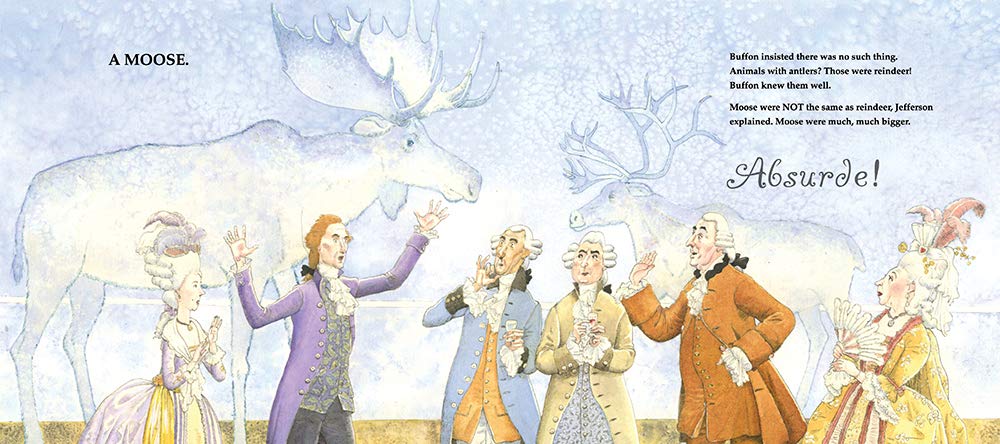
Summary:  Thomas Jefferson loved numbers and was always measuring, observing, and jotting down all things quantitative.  So when he read a book by a French naturalist named Buffon, claiming that America was a terrible place populated with weak and puny animals, Jefferson was determined to set the record straight.  He wrote a book of his own, filled with measurements of different American animals.  But when he presented this book to Buffon in person, the Frenchman was unimpressed.  Jefferson was living in France at the time, so he put his friend James Madison to work back home measuring moles and weighing weasels.  He even got a friend from New Hampshire to ship him a dead moose (which arrived in France a bit worse for the wear).  Buffon died before printing a retraction, but Jefferson continued his work to prove to Europeans that Americans and their animals were healthy and robust.  Includes an afterword with additional information; some examples of Jefferson’s numbers; and lists of both primary and secondary sources.  48 pages; grades 2-5.

Pros:  As she did in Mesmerized: How Ben Franklin Solved a Mystery That Baffled All of France, Mara Rockliff has written a fun, well-researched, and informative picture book in which a Founding Father takes on a Frenchman and blinds him with science.  The excellent back matter makes this a great starting point for research.

Cons:  While the illustrations were fun and perfectly adequate, I preferred the more distinctive ones in Mesmerized done by Iacopo Bruno, who also illustrated Rockliff’s Anything But Ordinary Addie.

If you would like to buy this book on Amazon, click here.
Frog Meets Dog (Frog and Dog book 1) by Janee Trasler

Published by Scholastic (Released May 5)

Frog Meets Dog: An Acorn Book by Janee Trasler

Summary:  Dog wants to be friends with three frogs, but he can’t hop or leap like they can.  When a poorly-aimed leap results in a collision between Dog’s head and a bee’s nest, the frogs send him on his way.  But when a bear appears, Dog does a repeat with the bees and saves the day.  The frogs learn to appreciate Dog for who he is, and the four become friends.  48 pages; ages 3-6.

Pros:  This is another entry into the Scholastic Acorn imprint for emergent readers.  This series is quite a bit simpler than others I’ve seen, probably a Fountas and Pinnell level C or D versus the G/H levels of other series.  The silly (in a good way) cartoon-style illustrations tell a lot of the story, which will appeal to readers at this level.

Cons:  This book seems to be only available in paperback or the $20+ library bound format, which is ridiculous for a simple book like this.  Follett has a version for $10.91, but that’s more geared to the library market.

If you would like to order this book from the Odyssey Bookshop, click here.

When the Shadbush Blooms by Carla Messinger with Susan Katz, illustrated by David Kanletakeron Fadden

Published by Lee and Low Books (Released May 5)

Amazon.com: When the Shadbush Blooms (9781582461922): Messinger ...

Native American Heritage Month Kid Lit Review of “When the ...

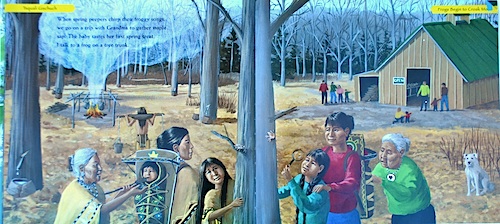
Summary:  Two girls from a Lenni Lenape tribe, Traditional Sister and Contemporary Sister describe their lives with their families through the course of one year.  Each illustration has the name of a moon, with the Lenape name on the left and the English name on the right.  The Traditional Sister and her family are portrayed on the left of each illustration and the Contemporary family on the right, showing them as they move through the seasons, growing and harvesting crops.  The last few pages give additional information on the history of the Lenni Lenape people, who lived in what is now the Mid-Atlantic states, as well as some of the cultural features portrayed in the book.  32 pages; ages 4-8.

Pros:  This beautifully illustrated book portrays the Lenni Lenape culture as vibrant and living, tying the past to the present.  Readers will be able to connect with many of the activities the Contemporary Sister describes, while learning more about the Lenape history and culture.

Cons:  The format of the two families being portrayed side by side may be a little confusing to younger kids.

If you would like to order this book from the Odyssey Bookshop, click here.