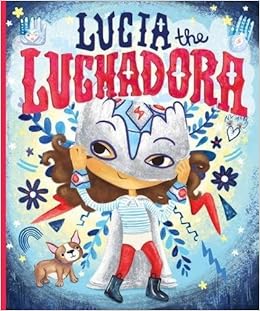
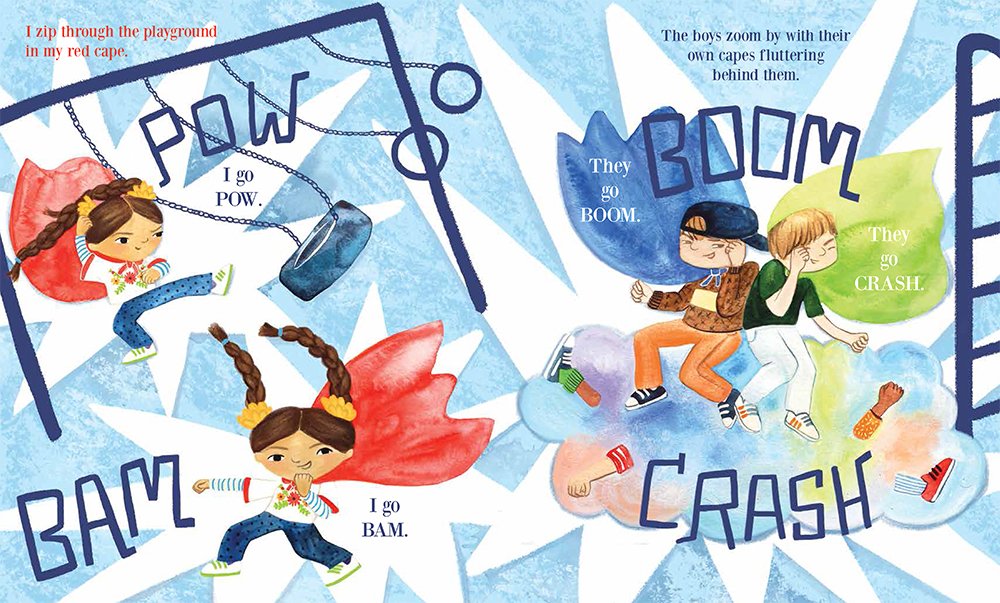
Lucia the Luchadora by Cynthia Leonor Garza, illustrated by Alyssa Bermudez

Published by POW!

Summary:  Lucia loves to pretend she’s a superhero, running and jumping all over the playground.  But she’s sad when some of the boys say that girls can’t be superheroes.  Her abuela comforts her with the gift of a cape and shiny silver mask, and a story of how she used to dress up as a luchadora, a masked wrestler with swift moves.  Lucia tries it the next day, and loves the anonymity the mask gives her.  Pretty soon, other luchadores appear on the playground.  The rescue of a dog encourages Lucia to unmask; when others follow her example, she is surprised to see many of them are girls, too!  The boys see that girls can be superheroes or luchadoras, and everyone plays together.  An author’s note gives more information about luchadores and the world of lucha libre, popular in Mexico. 32 pages; ages 4-8.

Pros:  Girl power with a Mexican twist, and a happy ending that includes everyone.  The colorful illustrations include some spectacular masks.

Cons:  As a former first grade recess monitor, I can’t condone jumping from the top of the monkey bars.

Clayton Byrd Goes Underground by Rita Williams-Garcia

Published by Amistad

Summary:  Clayton Byrd is happiest when he’s playing the blues with his grandfather, Cool Papa Byrd.  Cool Papa gives Clayton a harmonica, or blues harp, and lets him play it in his band; Clayton dreams of the day he’ll be allowed to play a solo.  When his grandfather suddenly passes away, Clayton is overcome with grief, intensified by his mother’s apparent lack of caring.  When she declares, “no more blues”, and takes away his blues harp, Clayton knows he has to do something.  He takes a day off from school, steals back his harmonica, and boards the subway in search of Cool Papa’s old band.  Along the way he loses both his blues harp and the treasured hat that belonged to his grandfather, falls in with a group of hip-hop artists that take their music onto the subway cars, and almost ends up in jail.  His mother comes through for him in the end, and the two of them develop a new appreciation and understanding of each other.  An author’s note tells more about blues, hip-hop, and how she came to write this book.  176 pages; grades 3-7.

Pros:  Newbery and Coretta Scott King honoree Williams-Garcia has created another sympathetic character in Clayton Bird, exploring the richness of blues and hip-hop cultures through his experiences and interactions with other fascinating characters.

Cons:  The story was too short to be as fully developed as One Crazy Summer and its sequels.

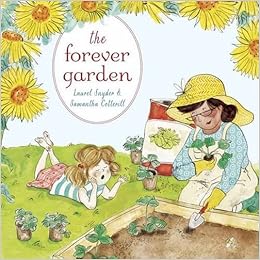
The Forever Garden by Laurel Snyder and Samantha Cotterill

Published by Schwartz & Wade Books

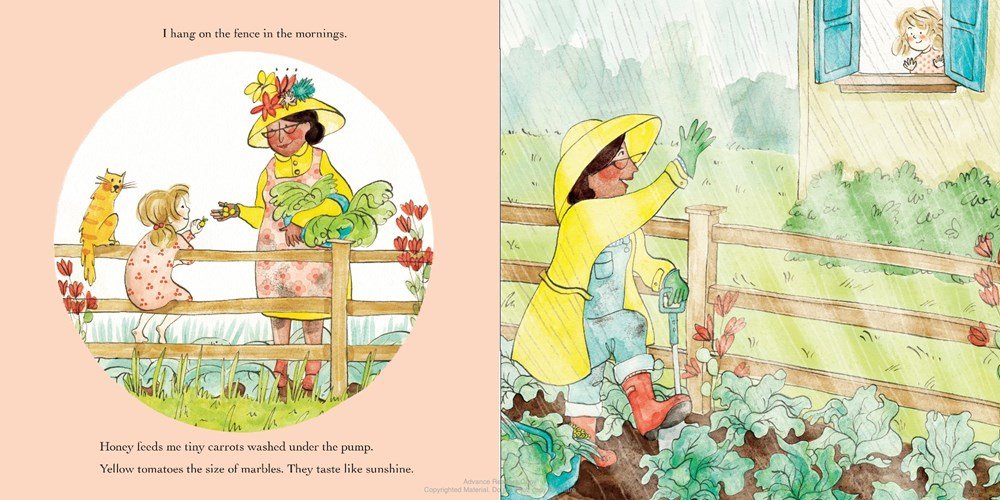
Summary:  Laurel loves hanging out with her neighbor, Honey, who works in her garden rain or shine.  She also enjoys the Friday nights when Honey comes to dinner, bringing with her the fruits of her labors.  Sometimes the two of them picnic in the garden, staying there until the stars come out.  Then one terrible day, a “For Sale” sign appears in Honey’s front yard.  Honey has to move to take care of her mother.  Laurel is heartbroken, but she helps Honey plant strawberries and an apple tree that her neighbor says will be enjoyed by the new people.  When a new family appears, with lots of young kids, Laurel puts on Honey’s old straw hat and goes out to help them find their way around their garden.  An introductory author’s note describes the Talmudic story that inspired this book.  40 pages; ages 4-8.

Pros:  A beautiful story of friendship and creating something positive that will carry down to those who come after you.

Cons:  Honey seems to do a lot of her gardening in a dress, which seems a bit impractical.

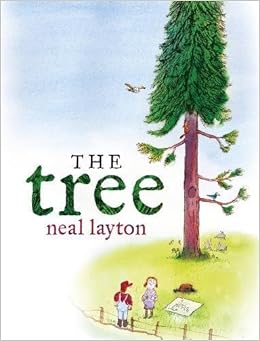
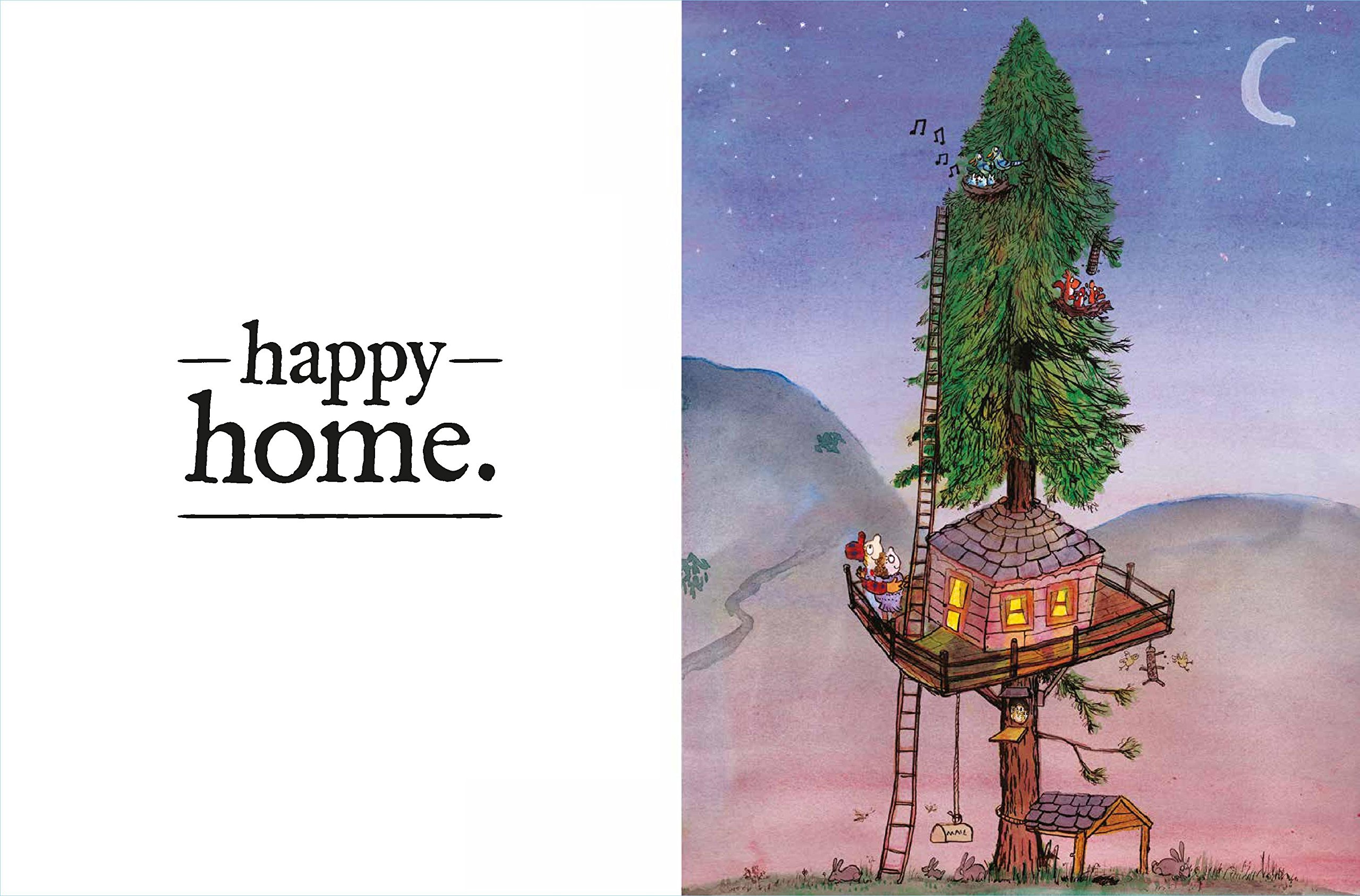
The Tree: A Fable by Neal Layton

Published by Candlewick Press

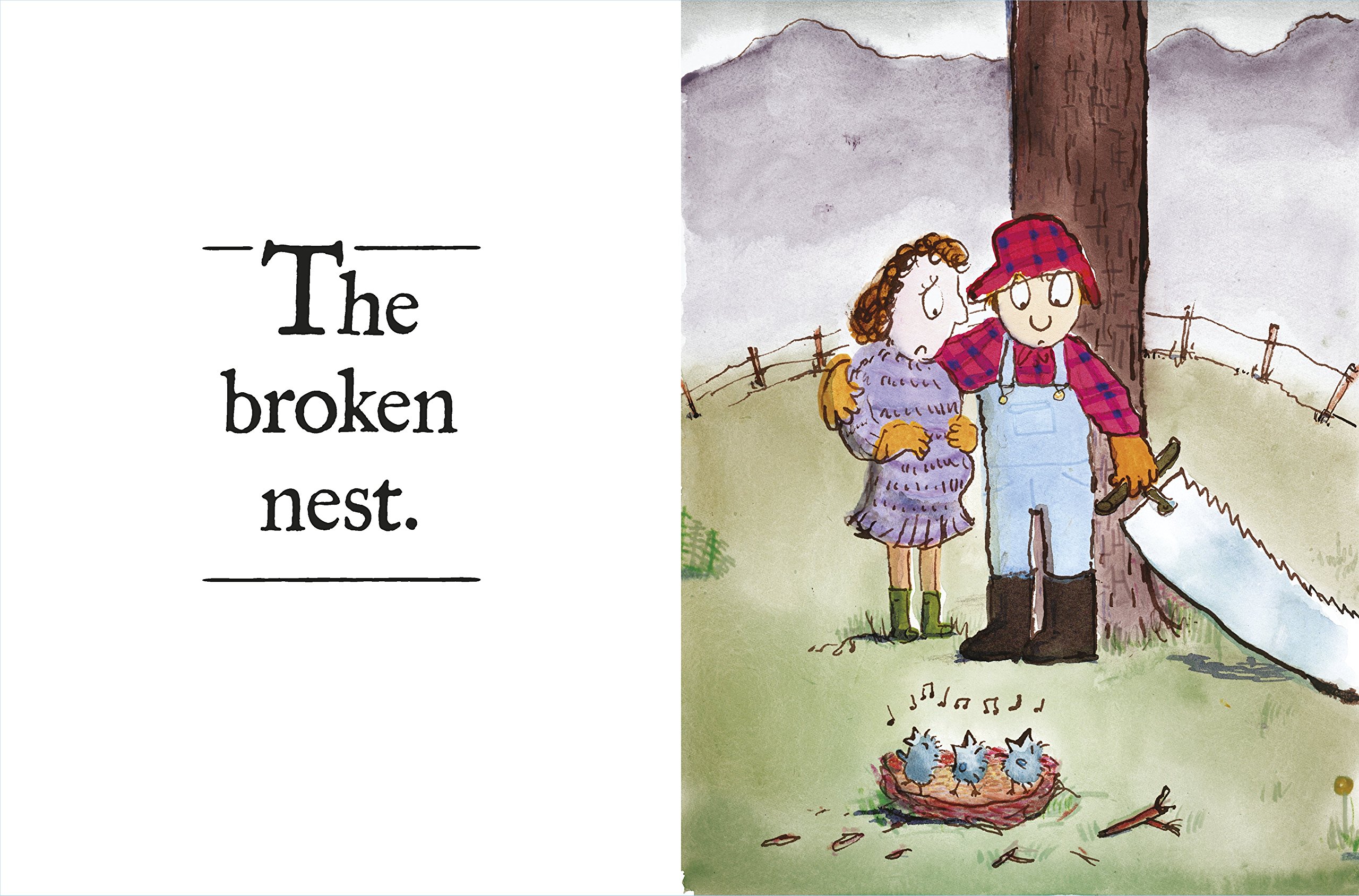
Summary:  Told in just 60 words, the pictures tell much of the story about the life in a tree.  “A tree,” starts the first page, followed by a birds’ nest, a squirrels’ nest, an owls’ hollow, and a rabbits’ burrow.  Along comes a couple in a car with big plans for a new house.  They start to cut down the tree, but are startled by birds, rabbits, squirrels, and an owl all falling out. When they see the broken nest, it’s back to the drawing board, and a new home emerges that meets the needs of everyone.  40 pages; ages 3-6.

Pros:  A deceptively simple story that could be a good discussion starter about humans’ responsibilities for the environment.

Cons:  If only it were that simple.

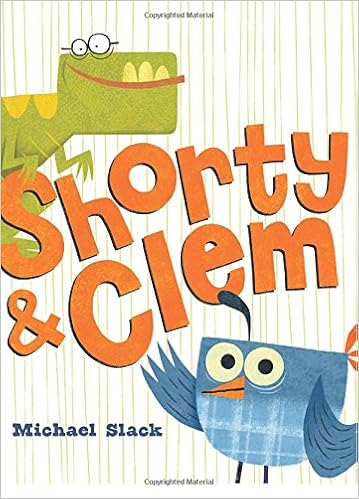
Shorty & Clem by Michael Slack

Published by HarperCollins

Summary:  When Clem (a quail) steps out for a while, his friend Shorty (a short dinosaur called a shortysaurus) discovers a package addressed to Clem. Shorty vows not to open it, but can’t help guessing the contents, then treating the package as if it contained that item.  He guesses a race car and tries to drive it, then a trampoline and tries to jump on it.  Finally, he decides there are monkeys in the package, and that’s too much.  He loves monkeys so much that he rips open the box, and discovers a pair of monkey slippers inside!  Excitement turns to shame as he realizes he opened his friend’s package. When Clem returns, he tells Shorty he ordered the slippers for Shorty, knowing his dinosaur friend would open the box.  Shorty declares his love for the slippers, and even more, for Clem.  40 pages; ages 4-8.

Pros:  Lots of laughs, not to mention a celebration of friendship, for the preschool and primary set, with the whole story being told in dialogue.

Cons:  Yet another Elephant & Piggie-inspired friendship story told in cartoon bubble dialogue.

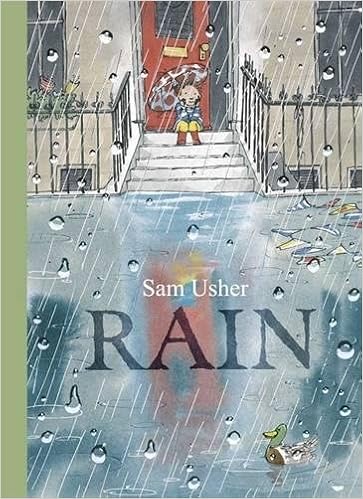
  Rain by Sam Usher

Published by Templar

Summary:  The narrator gets a lesson in patience when he wakes up to a rainy day.  He is ready to go outside, but hi grandfather insists it’s better to wait until the rain stop.  While Granddad writes letters, his grandson dreams of floating cities and sea monsters.  Finally, the rain has stopped, and Granddad is ready to mail his letters.  On the walk to the mailbox, the two imagine adventures that continue even when the rain picks up again.  At home with warm socks and hot chocolate, the two agree that the best things are worth waiting for.  40 pages; ages 3-7.

Pros:  This follow-up to Sam Usher’s Snow celebrates rainy days, intergenerational relationships, and the power of imagination.  The watercolors are the perfect medium to capture the colors and reflections of a rainy day.

Cons:  Written letters and a mailbox?  What child will recognize those antiquities?

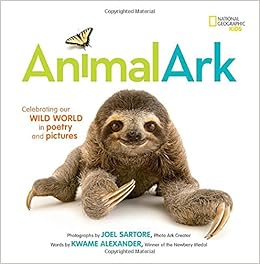
Animal Ark: Celebrating our wild world in poetry and pictures photographs by Joel Sartore, words by Kwame Alexander

Published by National Geographic

Summary:  The National Geographic Photo Ark is a project in which Joel Sartore is photographing every captive species.  Thirty two of these photos are showcased here, along with brief poems by Kwame Alexander.  The photos are close-ups on plain black or white backgrounds.  More animals appear on two sets of pull-out pages, along with their IUCN status indicating how endangered that species is.  Notes from the photographer and the writer give more information about their work, how this book came to be, and what kids can do to help the animals pictured here.  48 pages; ages 4-8.

Pros:  Kids will fall in love with the photographs in this book, and may even be inspired to try writing haikus inspired by them.

Cons:  While Kwame Alexander calls his poetry haikus, and defines haikus as having 17 syllables in the traditional 5-7-5 arrangement, these poems don’t seem to fit the definition.

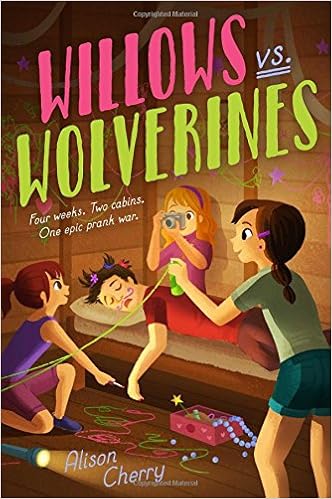
Willows vs. Wolverines by Alison Cherry

Published by Aladdin

Summary:  Izzy Cervantes is apprehensive about her month at Camp Foxtail, even though her best friend Mackenzie is going with her.  Things seem a lot different from Camp Sweetwater, where Izzy has been a leader for the past several summers.  For one thing, she and Mackenzie are put in different cabins.  But she’s excited to learn that her cabin, the Willows, has a traditional prank war with the Wolverines, one of the boys’ cabins.  At Camp Sweetwater, Izzy was known as a prank queen, but the other Willows, all Foxtail veterans, don’t seem interested in her ideas.  So Izzy invents an older brother, Tomas, claiming he was a Wolverine and a pranking champion.  She pulls off a pranking victory, and finds herself in the middle of a popular group of Willows.  But their friendship comes with a price, and Izzy can’t understand why Mackenzie is acting so cool toward her.  By the end of the month, Izzy has learned a lot about friendship, telling the truth, and herself.  352 pages; grades 3-7.

Pros:  A highly readable summer book, filled with a host of diverse characters, and a narrator whose voice rings true.  Readers will be ready to sign up for summer camp after reading about the activities and hijinks and Camp Foxtail.

Cons:  There are a lot of characters to keep track of.

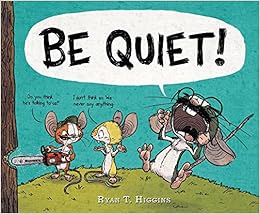
Be Quiet! by Ryan T. Higgins

Published by Disney-Hyperion

Summary:  Rupert the mouse has the brilliant idea to write a wordless picture book.  His friends Nibbs and Thistle want to help, but the can’t stop talking about the book.  And that means words.  They have other ideas, like about what makes a “strong” illustration (it involves lots of bicep flexing), and what characters to have in it (a strong, silent bear; a cute kitten; a cucumber?).  Finally, Rupert is so frustrated, he lets loose with a page full of words, venting to his two friends.  They inform him that he needs to be quiet in a wordless book, and he storms off in a huff.  40 pages; ages 3-6.

Pros:  Sure to be a hit at storytime, this is purely silliness, told mostly through the cartoon dialogue of the three mice.  Kids who enjoy this will also want to try Higgins’ previous book, Hotel Bruce, that introduces Rupert, Thistle, and Nibbs.

Cons:  I love wordless picture books.

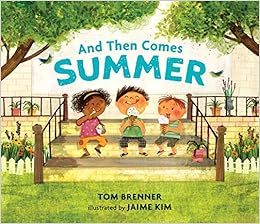
And Then Comes Summer by Tom Brenner, illustrated by Jaime Kim

Published by Candlewick

Summary:  The sights, smells, and sounds of summer vacation are celebrated, starting with the cookie crumbs and eraser bits cleaned out of a cubby and end-of-year hugs given on the last day of school.  Then it’s time to enjoy the Fourth of July with a parade down Main Street and fireworks at night.  Small pleasures are savored, like the ice cream truck, evening games of hide-and-seek, and lemonade stands.  When the weather gets too hot, it’s time to head out to the lake for some swimming and camping.  The family snuggles down in the tent on the last page, planning the next day’s adventure.  32 pages; ages 4-8.

Pros:  The brilliant acrylic paintings and cute kids will draw readers in to this happy celebration of a favorite time of year.

Cons:  Many readers will have a very different experience of summer than the idyllic, lazy-days-at-home one pictured here.