A Place to Land: Martin Luther King Jr. and the Speech That Inspired a Nation by Barry Wittenstein, illustrated by Jerry Pinkney

Published by Neal Porter Books
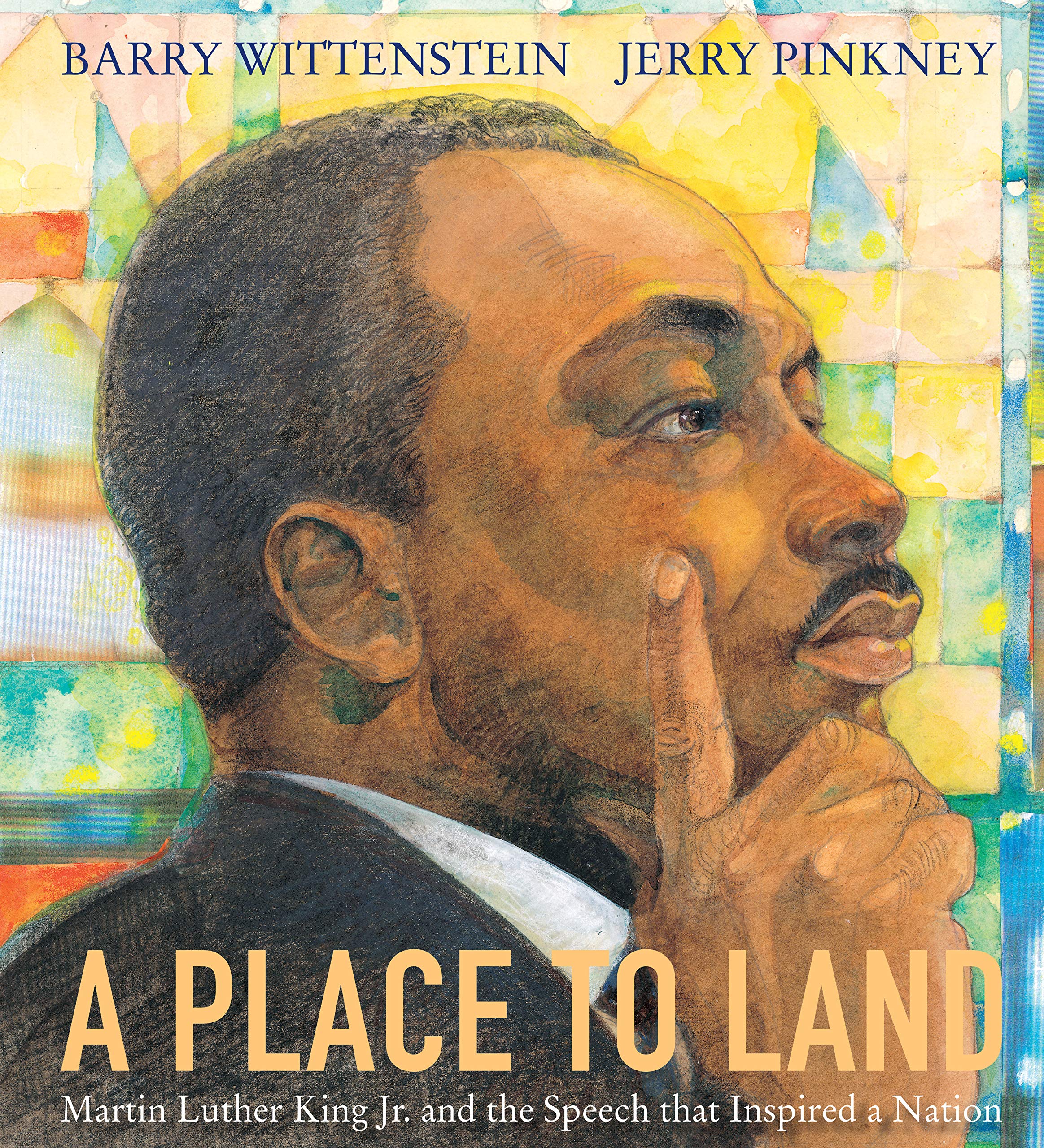
Image result for place to land martin

Summary:  Martin Luther King Jr.’s “I Have a Dream” speech is such an integral part of American history, it’s difficult to believe that it almost didn’t happen.  This book starts the night before the speech, when King sat down with his closest advisors to hash out what he was going to say the next day.  The focus was on jobs and economic justice, and one friend even advised, “Don’t use the line about ‘I have a dream.’ You have used it too many times already.”  King then retired to his room to meditate and pray about what he was going to say. Shortly after 3:00 the next afternoon, he delivered his speech. It went well, but didn’t seem quite powerful enough to him.  So when singer Mahalia Jackson called to him, “Tell them about the dream, Martin!”, he put his notes aside and spoke from his heart. Back at the hotel, he and his friends celebrated the speech, knowing that it was just the beginning of a long struggle ahead. Includes notes from the author and artist; thumbnail sketches of who was in the hotel that night; a list of who spoke at the March on Washington; and a bibliography.  48 pages; grades 2-6.

Pros:  So many picture books have been written about Martin Luther King, Jr. and “I Have a Dream”, but this one adds to the narrative, giving background to the speech and placing it in the context of the Civil Rights Movement.  Jerry Pinkney’s illustrations not only add beauty and color to the story, but label the different people that were there and who inspired King while writing his speech.

Cons:  There’s no additional information about some of the people labeled in the illustrations.
If you would like to buy this book on Amazon, click here.

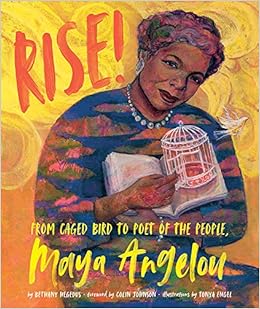
Rise! From Caged Bird to Poet of the People by Bethany Hegedus, foreword by Colin Johnson, illustrations by Tonya Engel

Published by Lee and Low Books

Image result for rise from caged

Image result for rise from caged

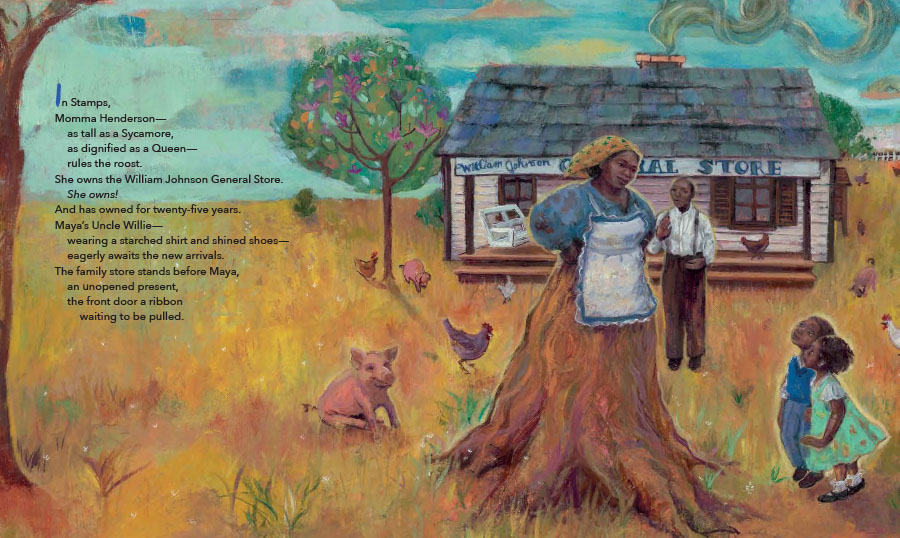
Summary:  Beginning with young Maya’s journey south to live with her grandmother in Arkansas, the narrative describes her early experiences of blatant racism in the deep south, and continues as she and her brother went to live with their mother in St. Louis.  Her rape by her mother’s boyfriend is described indirectly: “One day, Maya, left alone with Mr. Freeman, is anything but free. After a visit to the hospital, Maya calls out Mr. Freeman’s name as the one who hurt her.” Soon after, he was murdered, and Maya stopped speaking for several years, burying herself in books until she slowly emerged to become a dancer, actress, cable car driver, mother, and finally, a writer and activist. Ending with her death at age 86, the author assures readers that Maya’s words will “always rise rise rise”.  Includes a foreword by Angelou’s grandson; a timeline; resources for children who have been sexually abused; and a bibliography. 48 pages; grades 1-5.

Pros:  Gorgeous acrylic illustrations and poetic text detail the many different aspects of Maya Angelou’s incredible life.  Due to the horrific events of her childhood, it can be tricky to share her story with children, but Hegedus does a good job not shying away from Maya’s rape and its aftermath in a way that’s appropriate for the intended audience.  

Cons:  I had no idea Maya Angelou did so many different interesting things in her life.  It’s hard to cram it all into one picture book.

If you would like to buy this book on Amazon, click here.

You Are My Friend: The Story of Mister Rogers and His Neighborhood by Aimee Reid, illustrated by Matt Phelan

Published by Harry N. Abrams

Image result for you are my friend phelan amazon

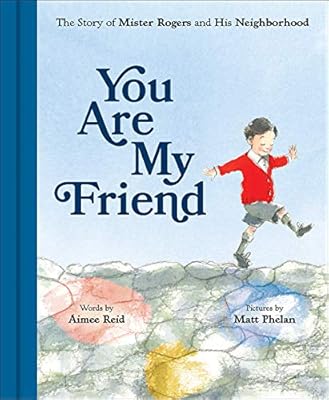
Summary:  For those familiar with Mister Rogers’ Neighborhood, this book explains how Freddie Rogers’ childhood created the adult Fred Rogers that millions loved to watch on his TV show.  Freddie was a sickly child who had to learn to entertain himself during long periods indoors. He loved surrounding himself with puppets and telling them how he was feeling.  Bullied at school, Freddie appreciated the love and safety of his Grandfather McFeeley, who assured him he was special just being himself. When Fred grew up, he saw people fighting on TV and wanted to create a program that showed people helping each other.  The result was his own neighborhood where both people and puppets could express their feelings and learn how to care for one another. Includes additional biographical information, notes from both the author and the illustrator, and a bibliography. 40 pages; grades K-3.

Pros:  With the new Tom Hanks movie coming out this fall, this provides an excellent introduction to Fred Rogers and all he stood for, and will serve to introduce a new generation to the neighborhood.  Matt Phelan’s gently muted illustrations provide a perfect complement to the text.

Cons:  I’m pretty sure it’s a federal offense to say anything negative about Mister Rogers.

If you would like to buy this book on Amazon, click here.

Image result for you are my friend matt phelan

A Song for Gwendolyn Brooks by Alice Faye Duncan, illustrated by Xia Gordon

Published by Sterling Children’s Books

Image result for song for gwendolyn brooks

Image result for song for gwendolyn brooks

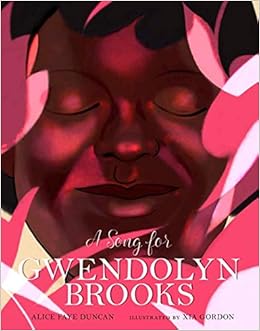
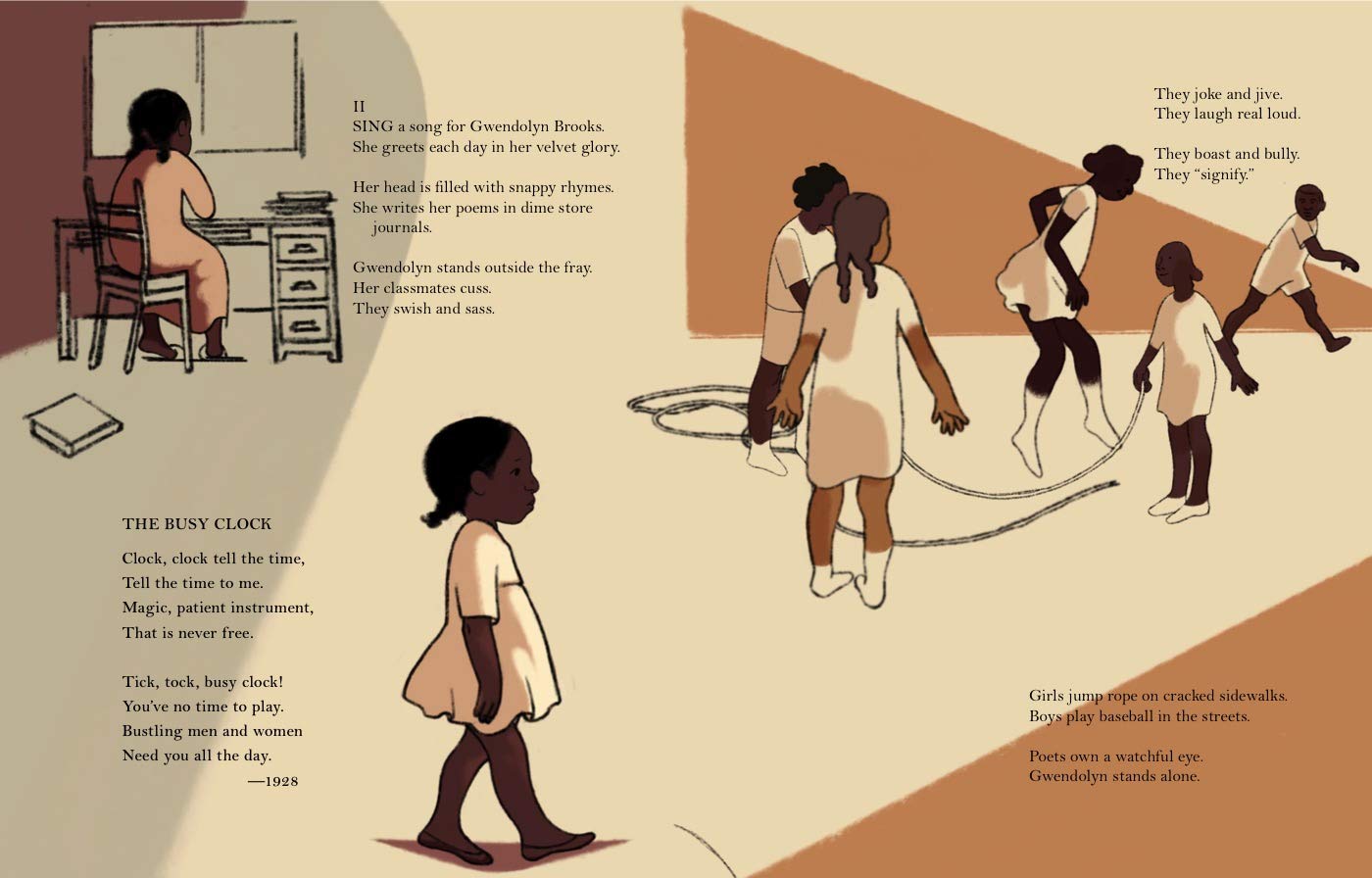
Summary:  From an early age, Gwendolyn loved words and poetry.  Fortunately, her parents were supportive of her interests and allowed her to opt out of chores if they knew she was working on a poem  When a teacher accused her daughter of plagiarism, Gwendolyn’s mother marched to the school and had Gwendolyn write a poem on the spot to prove her talent.  As an adult living on the South Side of Chicago, Brooks didn’t let marriage and family stop her from writing, and in 1950 she won a Pulitzer Prize for her poetry collection Annie Allen.  Includes an author’s note with additional information about Gwendolyn Brooks; a timeline; a list of some of her poetry books; and a bibliography.  48 pages; grades 2-6.

Pros:  Although this beautifully illustrated book is suggested for elementary ages, it would also make an excellent text to use in a middle school introduction to poetry.  Brooks’ poems are sprinkled throughout the story, and older kids might resonate with the poet’s more introverted nature.

Cons:  The fonts used for the main text and the poems were so similar, it was sometimes difficult to distinguish the difference between the two.

If you would like to buy this book on Amazon, click here.

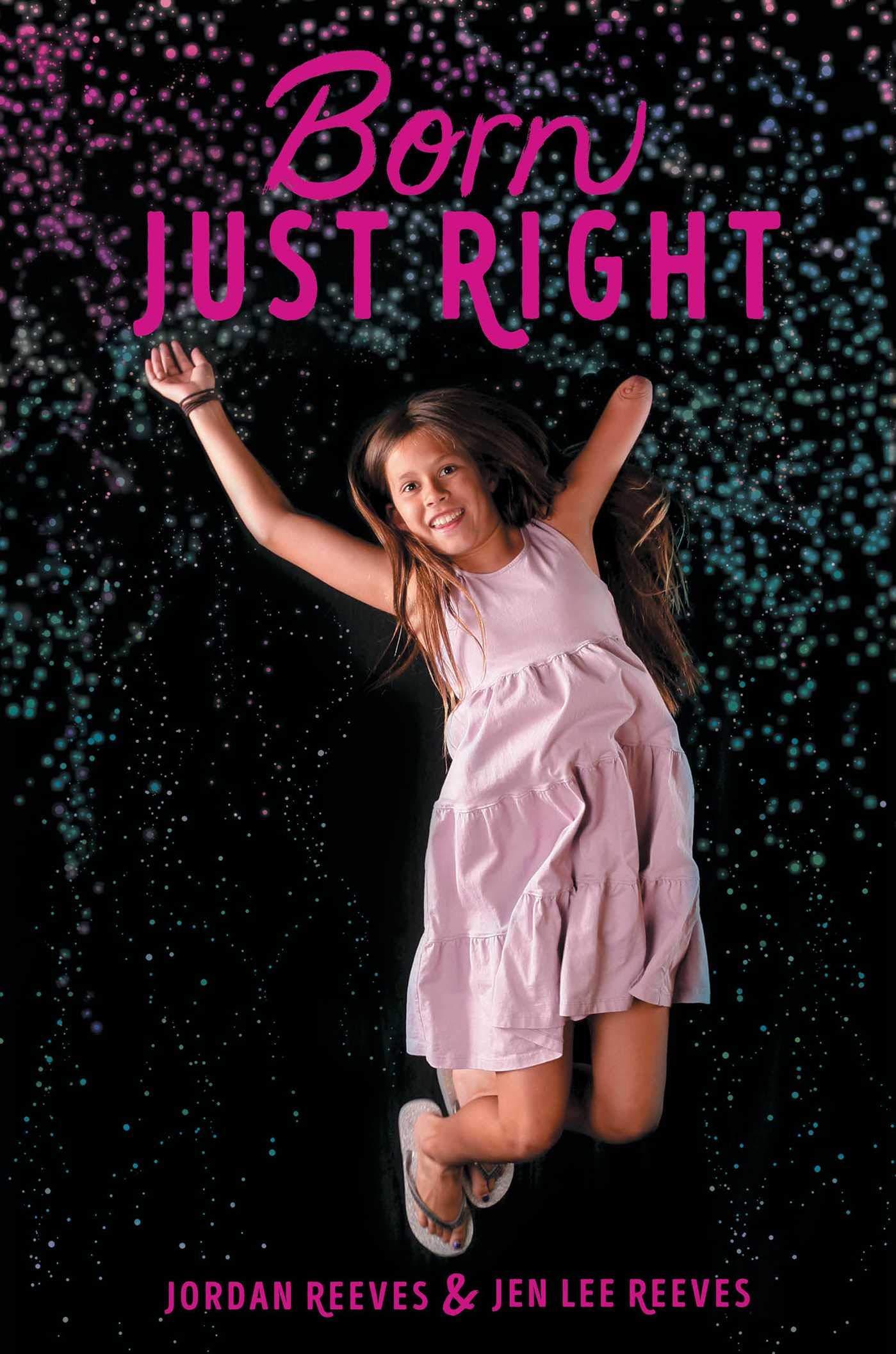
Born Just Right by Jordan Reeves and Jen Lee Reeves

Published by Jeter Publishing

Image result for born just right

Summary:  Jordan Reeves was born with what she calls a “little arm”; her left arm ends just above the elbow.  Her mom has become her strongest advocate, making sure she participates in every area of life she can, including dance, soccer, softball, and Crossfit.  Jordan also has become passionate about design and STEAM, launching her Project Unicorn, a device she invented that can fit onto her left arm to shoot glitter.  Through her design work, she has become a spokesperson for people with disabilities, including working with Mattel to help design Barbies and American Girl dolls with limb differences. She and her mom cover a variety of topics in this book, not only their family’s story, but also what it’s like to have a disability, how to talk to a person about their disability, and resources for getting involved with design and the maker movement.  Includes a list of websites. 160 pages; grades 4-7.

Pros:  Kids will learn a lot about what it’s like to have a disability and how to interact with people with disabilities.  Jordan is unfailingly upbeat, but also honest about her occasional frustrations and sadness about her arm. Her mom has written a few sections giving her perspective which makes this a useful resource for parents as well as kids.

Cons:  It was hard for me to get as excited about a glitter shooter as Jordan seems to be about it.

If you would like to buy this book on Amazon, click here.

Image result for born just right

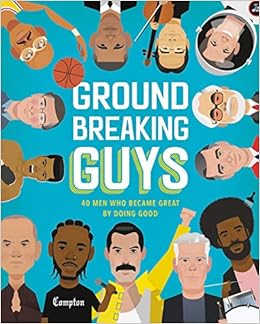
Groundbreaking Guys: 40 Men Who Became Great By Doing Good by Stephanie True Peters, illustrated by Shamel Washington

Published by Little, Brown Books for Young Readers

Image result for groundbreaking guys

Summary:  From John Stuart Mill to Kendrick Lamar, these 40 men have become great by being good people.  As the author states in her introduction, “These men served their communities. They treated people with respect.  They lifted up others. They chose to listen and to care, even when doing so meant giving up control or feeling nervous or standing out.”  The men are from a variety of countries, mostly the United States and Great Britain, but also others like Japan, China, and Bangladesh. They contributed in all sorts of areas, including politics, literature, art, and music.  Some names will undoubtedly be familiar to readers, while others will be new, but all will inspire and possibly lead to further research. Includes source notes for each subject. 96 pages; grades 3-7.

Pros:  There have been a lot of collective biographies of women lately, so it’s nice to see this collection of interesting men, particularly with the theme of men who contributed positively to the world.  Each profile has a head shot of the subject. The interesting profiles and endnotes would make this a great resource to begin a biography research project.

Cons:  A timeline would have been a nice addition.

If you would like to buy this book on Amazon, click here.

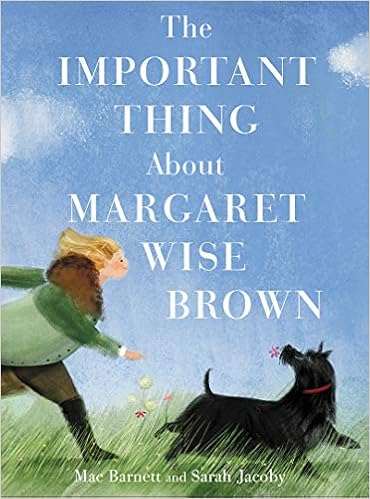
The Important Thing About Margaret Wise Brown by Mac Barnett, illustrated by Sarah Jacoby

Published by Balzer + Bray

Image result for important thing about margaret wise brown amazon

Summary:  “The important thing about Margaret Wise Brown is that she wrote books.”  And some of the important things about this book about Margaret Wise Brown are that it’s 42 pages because she lived 42 years.  That it celebrates the quirkiness of both Brown and her books. That the illustrations pay homage to many of Brown’s works. That critics of her works are humorously but firmly put in their place (Anne Carroll Moore, New York City’s children’s librarian, does not fare well here).  That you may not learn everything there is to know about Margaret Wise Brown, but you will learn interestingly odd facts like that every copy of the first edition of Little Fur Family were covered in fur.  That “sometimes you find a book that feels as strange as life does…Margaret Wise Brown wrote books like this, and she wrote them for children, because she believed children deserve important books.”  42 pages; grades K-5.

Pros:  Mac Barnett is not afraid to go way outside the box in this picture book that pays tribute to Margaret Wise Brown, her art, and her books.  It is full of the kinds of details that kids will love, like the fact that, as a child, Brown skinned one of her pet rabbits after it died and wore the pelt around her neck.  Or that she bought every flower on a flower cart after selling her first book, then had a big party in her flower-filled house. Any readers who aren’t familiar with Brown’s books will want to go looking for them after reading this one.

Cons:  Some will definitely find this book odd.  On the other hand, isn’t that kind of the point?

If you would like to buy this book on Amazon, click here.

Image result for important thing about margaret wise brown jacoby

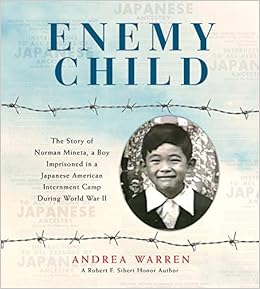
Enemy Child: The Story of Norman Mineta, a boy imprisoned in a Japanese American internment camp during World War II by Andrea Warren

Published by Margaret Ferguson Books

Image result for enemy child andrea warren amazon

Summary:  Norman Mineta spent his first decade living a happy middle class life with his family in San Jose.  His father sold insurance and his mother was a housewife. Both his parents were born in Japan, but second-generation Norm felt very much an American.  After World War II started, though, all Japanese Americans were seen as suspect, and in May of 1942, the Mineta family was forced to leave behind their home and business for the Heart Mountain Internment Camp in Wyoming.  They were more fortunate than most: Norm’s father eventually got a job in Chicago, and after a little over a year in the camp, the family was able to relocate there. They rented their San Jose house, and moved back at the end of the war.  During his time at the camp, Norm met a local boy named Alan Simpson at a Boy Scout gathering; the two became friends, and later reunited when both served in Congress as adults. Extensive back matter tells more about the Japanese American experience during World War II and lists many resources for further research.  224 pages; grades 5-8.

Pros:  The story of Norm’s journey from a seemingly all-American childhood to being held prisoner by his own country is an eye-opening one that is told in terms many young readers will relate to.  The Mineta family’s unwavering optimism and courage is inspiring.  Andrea Warren should receive some Sibert award consideration.

Cons:  It would have been interesting and informative to hear more details about some of the Japanese American families who didn’t fare so well at the end of the war.

If you would like to buy this book on Amazon, click here.

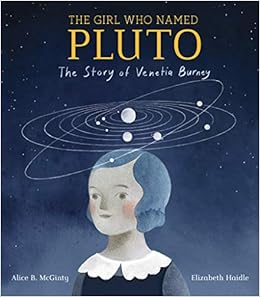
The Girl Who Named Pluto: The Story of Venetia Burney by Alice B. McGinty, illustrated by Elizabeth Haidle

Published by Schwartz + Wade

Image result for girl who named pluto amazon

Image result for girl who named pluto elizabeth haidle

Summary:  Growing up in Oxford, Venetia Burney loved learning.  Her grandfather, the former head librarian at Oxford University, encouraged her curiosity.  When Grandfather shared a news item with 11-year-old Venetia about the discovery of a new planet beyond Neptune, she thought of how frozen, dark, and lifeless it must be.  It reminded her of the underworld in Greek mythology, and so she suggested naming it Pluto. Her grandfather sent a letter with her suggestion in it to a friend at the Royal Astronomical Society; he liked it, and eventually the name was voted on by astronomers.  Fast forward more than 70 years later: on the day before her 89th birthday, Venetia, still active and curious, gets an invitation to the Observatory Science Centre, where she finally gets a chance to see the planet she named. Includes an author’s note with additional information about Venetia and Pluto–including the change in its designation from plant to dwarf planet–and a bibliography. 40 pages; grades 1-4.

Pros:  A fun story for kids learning about space; they will be inspired to hear how a planet was named by a kid, albeit one with a wealthy, connected grandfather.

Cons:  I think we all still feel a little sad about the fate of former planet Pluto.

If you would like to buy this book on Amazon, click here.

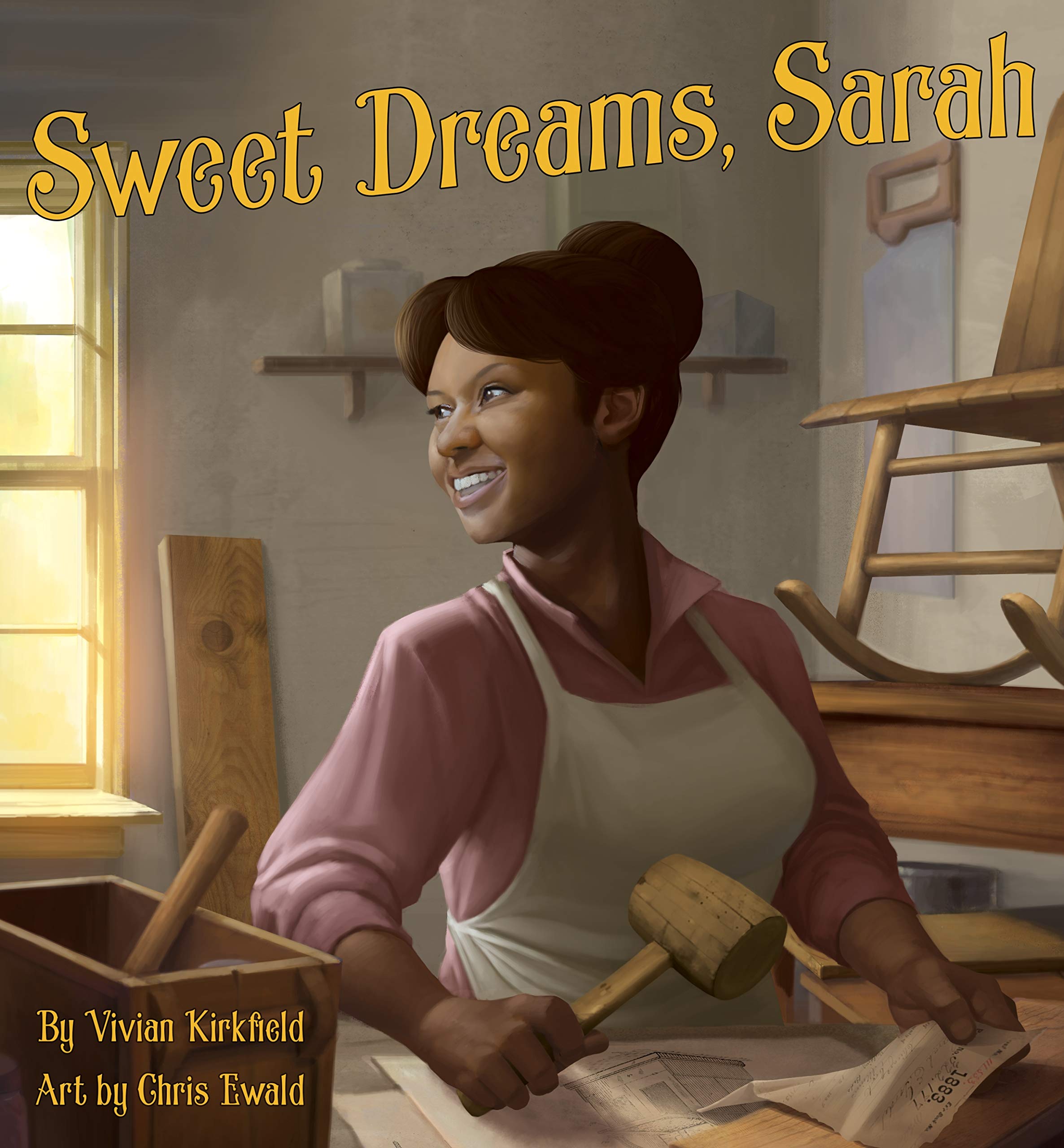
Sweet Dreams, Sarah by Vivian Kirkfield, illustrated by Chris Ewald

Published by Creston Books

Image result for sweet dreams sarah amazon

Image result for sweet dreams sarah kirkfield

Summary:  Born into slavery, Sarah dreamed of having a family and doing work that she loved.  After the Civil War, she moved to Chicago, where she married Archibald Goode and started her family.  The daughter of a carpenter, Sarah decided to open her own furniture store. When customers told her of the cramped spaces they lived in, she had the idea to build a cabinet that turned into a bed.  It took plenty of determination and perseverance to build it and to apply for a patent (her first application was rejected), but on July 14, 1885, Sarah Goode became one of the first black women to receive a patent.  Includes an author’s note, additional information on patents, a timeline of what is known of Sarah’s life, a timeline of black women patent holders, and a list of selected sources. 32 pages; grades 1-5.

Pros:  Although the timeline reveals some sad aspects to Sarah’s life (she eventually lost her business and died at age 49), both the text and illustrations are hopeful and uplifting, with a well-delivered message about following your dreams.

Cons:  There was no author or illustrator information anywhere in the book.

If you would like to buy this book on Amazon, click here.