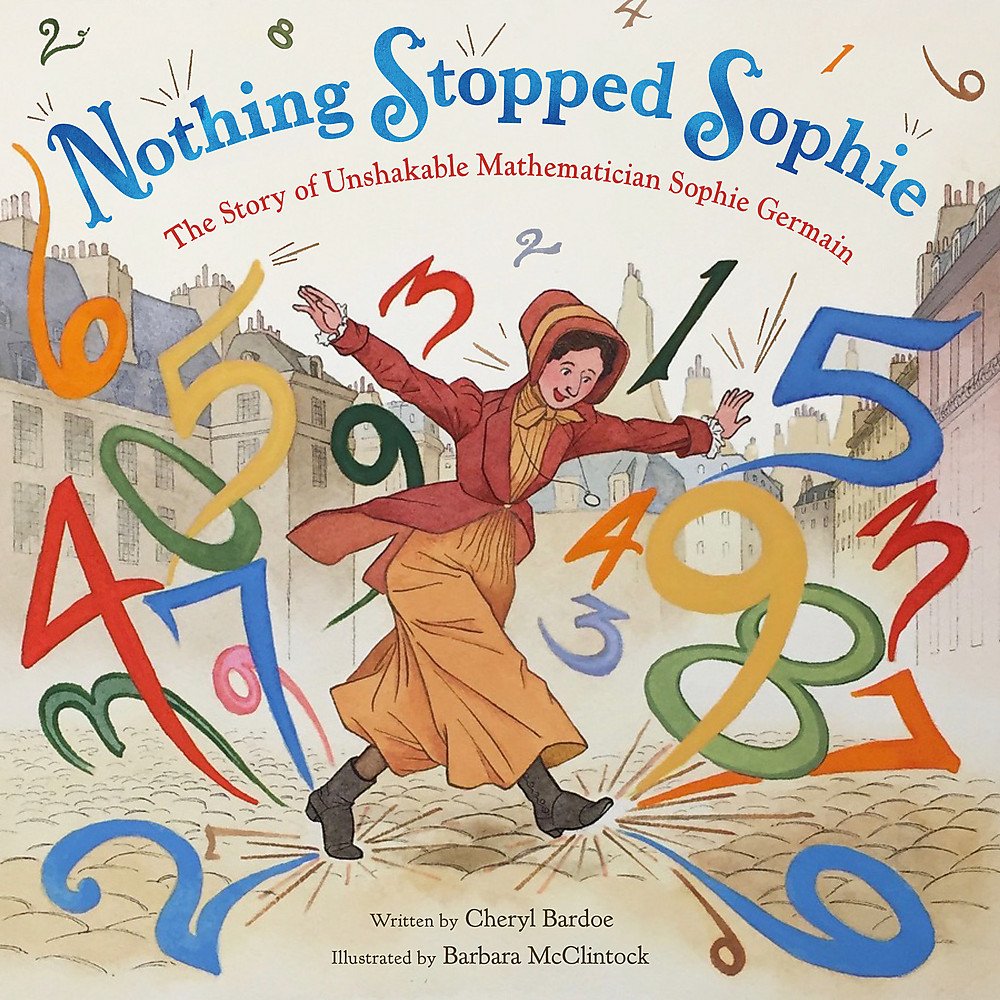
Nothing Stopped Sophie: The Story of Unshakable Mathematician Sophie Germain by Cheryl Bardoe, illustrated by Barbara McClintock

Published by Little, Brown Books for Young Readers

Image result for nothing stopped sophie mcclintock

Image result for nothing stopped sophie mcclintock

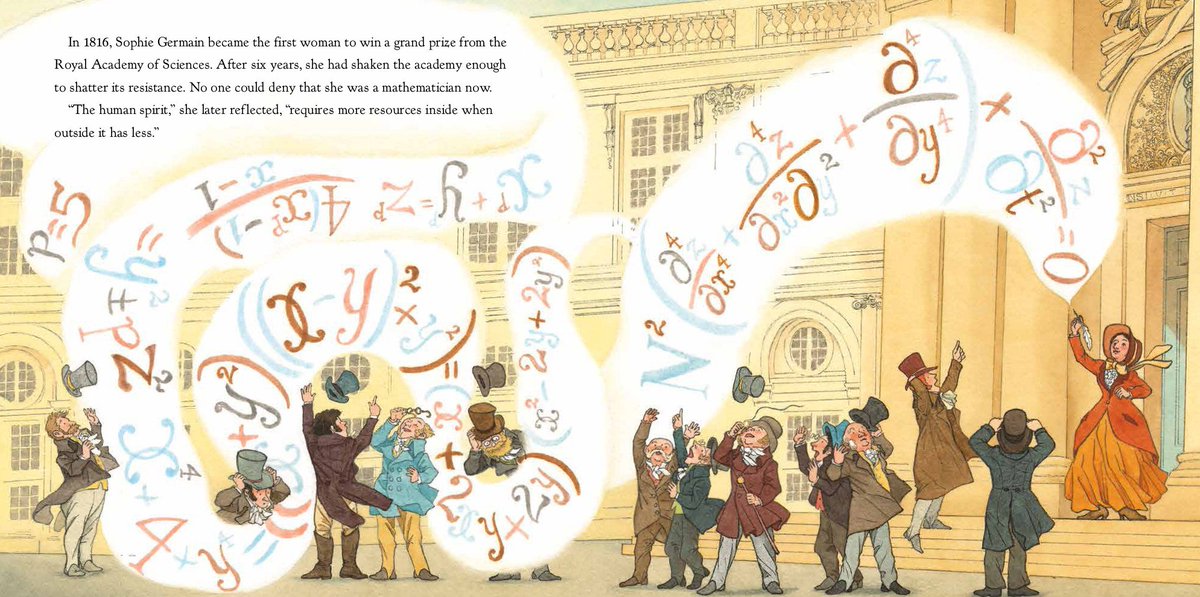
Summary:  Growing up during the French Revolution, Sophie Germain faced a number of obstacles to a career in mathematics.  Girls received little education, and Sophie’s parents tried discourage her late-night studies by taking away her candles and warm clothing.  She was undaunted, though, and they finally realized there was no way to stop her from studying math. When she grew up, she corresponded with other mathematicians under a pen name, but they tended to lose interest when they discovered she was a woman.  She kept studying any way she could, and when the Academy of Sciences offered a medal worth 3,000 francs to find a mathematical formula that would predict patterns of vibration, Sophie was determined to find a solution. It took her several years, but in 1816, she became the first woman to win a grand prize from the Royal Academy of Sciences.  Her work helped other mathematicians and engineers build modern skyscrapers, including the Eiffel Tower. Includes additional information about Sophie and the problem of vibration she solved. 40 pages; grades 2-5.

Pros:  Perseverance is the theme of Sophie Germain’s story, and readers will enjoy learning of her eventual success in the face of daunting obstacles.  The illustrations do an amazing job of incorporating numbers and mathematical formulas into Sophie’s world.

Cons:  I really didn’t understand the vibration problem that Sophie was working on.

If you would like to buy this book on Amazon, click here.

Unsinkable: From Russian Orphan to Paralympic Swimming World Champion by Jessica Long with Hannah Long

Published by HMH Books for Young Readers

Image result for unsinkable jessica amazon

Summary:  Jessica Long started life in Siberia as Tatiana Kirillova; she was adopted by the Long family at the age of 13 months.  Born without fibular bones, Jessica underwent surgery shortly after arriving in the U.S. to remove both legs below the knee.  She learned to walk with prosthetics, and soon became active in a variety of sports. Swimming eventually won out over the others, and Jessica began competing as a Paralympian.  She has participated in Paralympic events in Athens, Beijing, London, and Rio de Janeiro, winning 23 medals to make her the second-most decorated Paralympian of all times. She tells her story as a series of life-changing moments (“The moment I won my first gold”, “The moment I lost my confidence”, etc.), that cover the highs and lows of her life and athletic career.  Jessica has enjoyed working as a model, and the text is illustrated with many photos of her, her family, and her friends. Looking at her Facebook page, it seems as though she is making plans to compete in Tokyo in 2020. 112 pages; grades 5-8.

Pros:  Jessica tells her story in a chatty, upbeat style that, along with the many photos, will appeal to upper elementary and middle school readers.  Even her struggles with anxiety, OCD, and bulimia are covered with a pretty positive spin.

Cons:  The format of life-changing moments, which were not in exact chronological order, made the story seem a little disjointed. Also, not a con, but a heads-up that Jessica and her family are devout Christians, which is sometimes mentioned in the story, particularly “The moment I found peace”.

If you would like to buy this book on Amazon, click here.

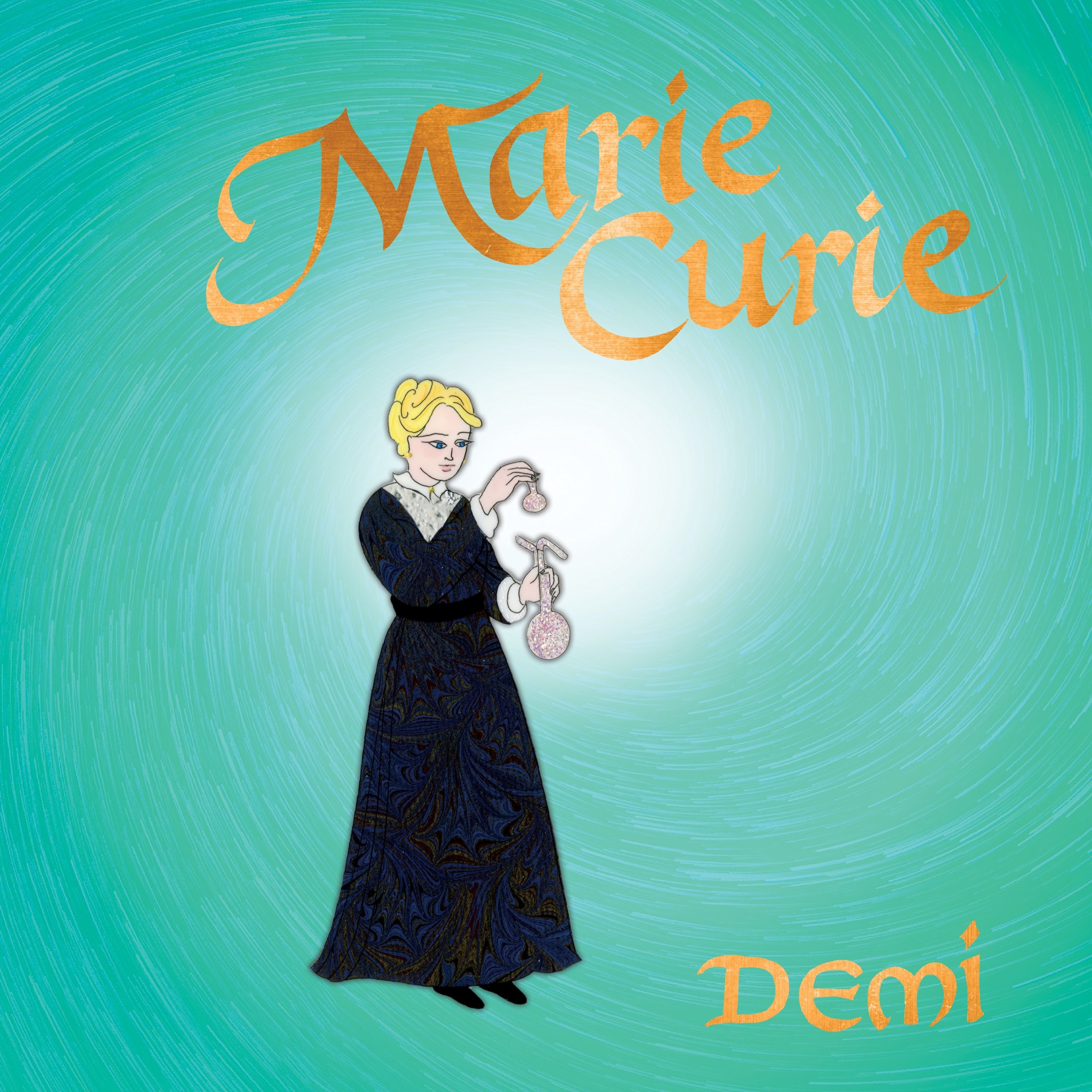
Marie Curie by Demi

Published by Henry Holt and Co.

Image result for marie curie demi

Image result for marie curie demi

Summary:  When Marie Curie was born in 1867 Poland, life was difficult.  She had a loving family, but her mother and older sister died when she was still a child.  She and another sister, Bronya, wanted to go to the Sorbonne in Paris, but the family could only afford to send one of them.  Bronya went first, became a doctor, and supported Marie when she was through. Not only did Marie complete degrees in physics and math at the top of her class, but she met another brilliant scientist, Pierre Curie.  They married and pursued their work together, unlocking the secrets of uranium and radium. They won the Nobel Prize in physics; after Pierre’s tragic death, Marie continued their work and won another Nobel in chemistry. The dangers of radiation were unknown at the time (illustrated on the two pages showing women drinking radium and using it in beauty products), and Marie eventually died at the age of 66 from her long exposure to it.  40 pages; grades 1-5.

Pros:  An excellent introduction to Marie Curie’s life; complete, but straightforward enough for primary graders.  Demi’s illustrations are gorgeous, especially the patterns she uses for clothing, curtains, and carpets.

Cons:  Spending four years trying to determine the atomic weight of radium sounds like kind of a drag.

If you would like to buy this book on Amazon, click here.


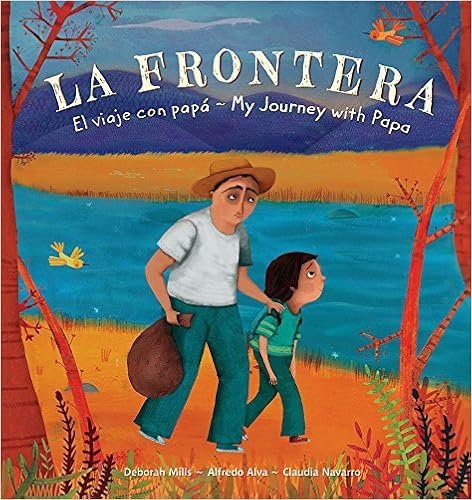
La Frontera/The Border: El Viaje Con Papa/My Journey With Papa by Deborah Mills and Alfredo Alva, illustrated by Claudia Navarro

Published by Barefoot Books

Image result for la frontera deborah mills amazon

Image result for la frontera claudia navarro

Summary:  Alfredo tells the story of his life in Mexico, how his father was no longer able to support the family, and his parents’ decided to send him and papa north to the United States.  A coyote led the two of them to the Rio Grande, gave them an inner tube to float across, then disappeared with their money.  After a grueling week of traveling on foot, they found a shack to sleep in, and a friend of Alfredo’s grandfather picked them up and drove them to Texas.  They settled in to the Embassy, a collection of broken-down vehicles parked behind a factory.  When Alfredo started school, his father gave him a $100 bill to buy a bus ticket back home if he was picked up by immigration officials and sent back to Mexico.  After a difficult transition, Alfredo enjoyed school.  President Reagan granted amnesty to immigrants, and Alfredo and his father were able to start the path to citizenship.  Best of all, four years later, the rest of the family was able to come to the United States.  Includes photos of Alfredo and his family, and extensive information on Alfredo’s story, borders and culture, and immigration.  In English and Spanish.  48 pages; grades 1-5.

Pros:  A grittily realistic story of a family seeking a way out of desperate poverty in the United States.  Although it takes place more than 30 years ago, the story is more relevant than ever to readers today.  Putting a face on “illegal immigrants” will help students have greater empathy for others in a similar situation, and those who have experienced a journey like Alfredo’s will feel a connection to him and his father.

Cons:   Too bad certain government officials in Washington, D.C. aren’t reading this.

If you would like to buy this book on Amazon, click here.


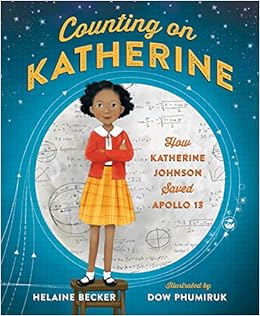
Counting on Katherine: How Katherine Johnson Saved Apollo 13 by Helaine Becker, illustrated by Dow Phumiruk

Published by Henry Holt and Co.

Image result for counting on katherine amazon

Summary:  Katherine Johnson became more widely known with the book and movie Hidden Figures.  This picture book biography covers her life from her childhood in West Virginia through her role in helping to rescue the Apollo 13 crew.  In between, she graduated college at age 18, became a teacher, then moved on to NASA, beginning her career as a “computer”. Her brilliance in math earned her promotions, allowing her to work on Project Mercury, where astronaut John Glenn requested her calculations before flying.  She then moved on to calculating the flight paths for the Apollo missions, which is how she came to be called on when Apollo 13 was in trouble. Her assignment was to calculate a flight path that would bring the astronauts home with the little fuel they had left. She succeeded; the final page shows her gazing into space, a path of calculations connecting her to the moon, with the sentence, “She was now a star herself.”  Includes additional biographical information and sources. 40 pages; grades 1-5.

Pros:  A good overview of Katherine’s life through 1970, with additional information in the back matter.  Both the text and the illustrations emphasize the importance of math in Katherine’s life and work.

Cons:  A timeline would have been useful.

If you would like to buy this book on Amazon, click here.

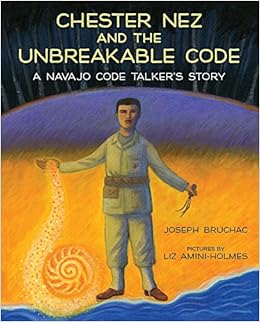
Chester Nez and the Unbreakable Code: A Navajo Code Talker’s Story by Joseph Bruchac, pictures by Liz Amini-Holmes

Published by Albert Whitman and Co.

Image result for chester nez and the unbreakable amazon

Summary:  When 8-year-old Betoli left his home and family in 1929 to go to Fort Defiance School, his hair was cut, his name was changed to Chester, and he was made to speak English.  If he spoke Navajo, his mouth was washed out with soap. He lived a double life through his school years, speaking Navajo and practicing his religion at home, and speaking English and practicing Catholicism at school.  In April 1942, Marine recruiters came to the school looking for Navajo speakers to help them create a code the Japanese couldn’t break. Chester was one of 29 men who created the code, then went to the Pacific to serve as a Navajo Code Talker.  He fought in the war until January 1945, when he came home, sick and traumatized by his military experience. Returning to his Navajo ways helped him to heal, and he went on to become an artist, living to the age of 93. Includes an author’s note, timeline, and the alphabet in the Navajo code.  32 pages; grades 2-5.

Pros:  A fascinating biography of Chester Nez, that includes a history of the Navajo Code Talkers and touches on Indian schools and the trauma they inflicted on the students.

Cons:  I would have liked to have seen a photo of Chester and/or other Code Talkers, so I give you this:

Image result for chester nez

If you would like to buy this book on Amazon, click here.

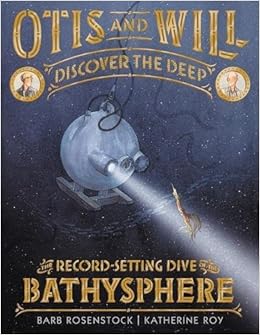
Otis and Will Discover the Deep: The Record-Setting Dive of the Bathysphere by Barb Rosenstock, illustrated by Katherine Roy

Published by Little, Brown Books for Young Readers

Image result for otis and will discover amazon

Image result for otis and will discover the deep

Summary:  Otis Barton loved the ocean from childhood, and dreamed of inventing a contraption that would allow him to explore deep water.  Will Beebe was a scientist who studied the natural world and became enamored of undersea life on a diving trip off the coast of the Galapagos Islands.  The two men decided to build the Bathysphere, a 5,000-pound, four-and-a-half foot enclosure that would descend to the depths and allow them to see what was there.  On May 27, 1930, they made their first trip, aware of the dangers of leaks, explosions, and the wrong amount of oxygen. They succeeded, though, reaching a depth of 800 feet, and being the first to see what the ocean looked like at those depths.  Includes a lengthy author’s note with photos and additional information about both men and the Bathysphere, as well as additional sources. 48 pages; grades K-5.

Pros:  The story is simple and straightforward, yet the author’s note adds enough information to make it a good read for fourth and fifth graders.  The rich illustrations bring the undersea world to life, including a foldout page of Otis and Will’s view at 800 feet.

Cons:  Including a date or two in the main story would have helped place it in historical context.  I had to turn to the author’s note to figure out when it was happening.

If you would like to buy this book on Amazon, click here.

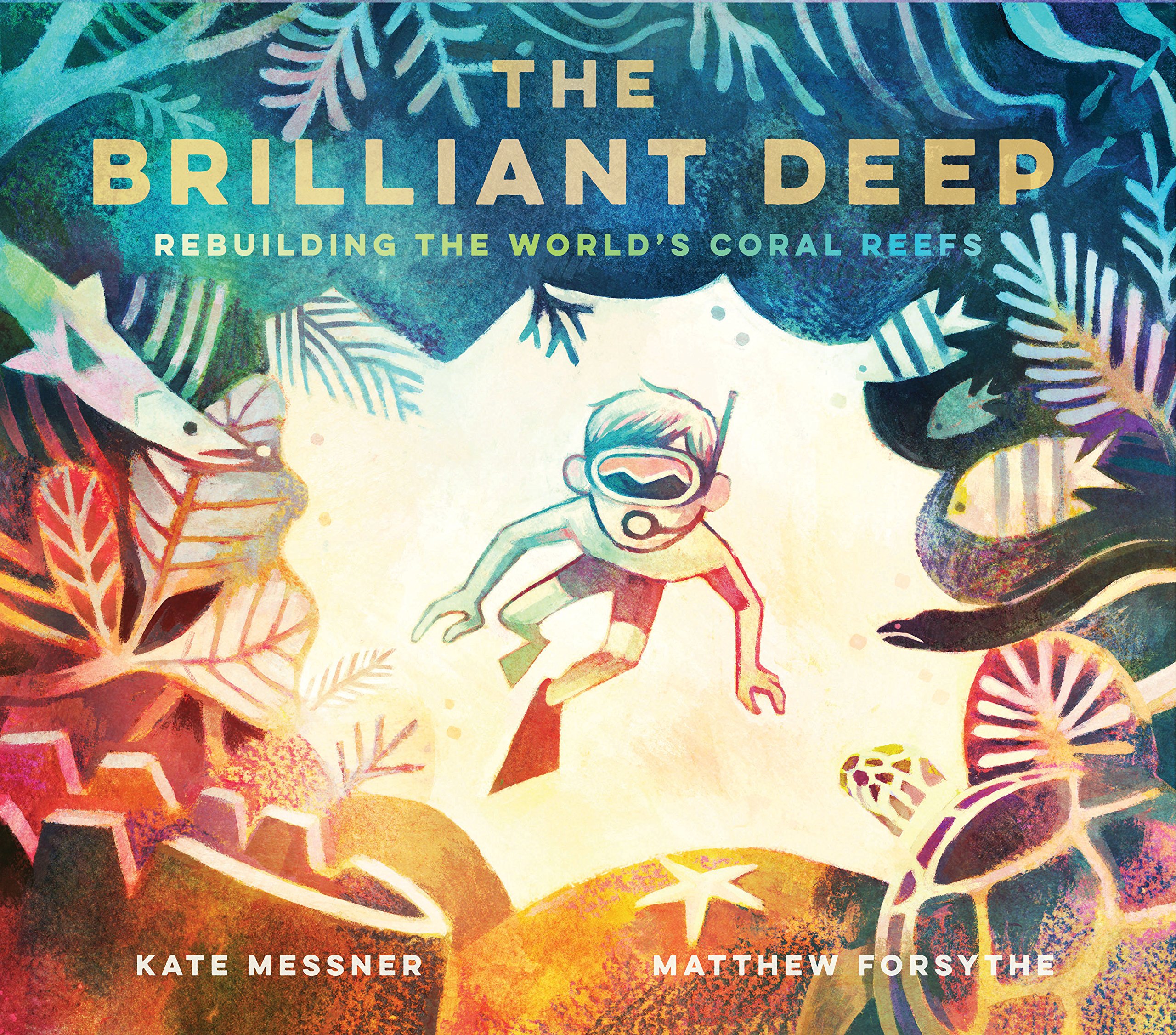
The Brilliant Deep: Rebuilding the World’s Coral Reefs by Kate Messner, illustrated by Matthew Forsythe

Published by Chronicle Books

Image result for brilliant deep kate messner

Image result for brilliant deep kate messner amazon

Summary:  Growing up near Kennedy Space Center, the son of a NASA engineer, Ken Nedimyer was surrounded by science.  Ken loved science, too, but he was more interested in the ocean, enjoying TV shows featuring Jacques Cousteau and exploring the coral reefs off the Florida Keys. As he got older, though, Ken was saddened to see the coral reefs dying.  As an adult, he owned a live rock farm, a business where he sold rocks covered with invertebrates like mollusks and sponges to keep saltwater aquariums healthy. When he found coral growing on his rocks, he experimented with gluing them onto undersea rocks where the coral reefs used to be.  The success of this experiment led to a group called the Coral Restoration Foundation that has restored some of the reefs in the Keys and is now spreading its message around the world. Includes additional resources, vocabulary, and some ways kids can help. 48 pages; grades 1-4.

Pros:  An inspiring story of one person making a big difference in the world, illustrated with beautiful pastels that capture the subtle colors of the coral reefs.

Cons:  Saving the coral reef seemed to be no more difficult than a simple craft project.

If you would like to buy this book on Amazon, click here.

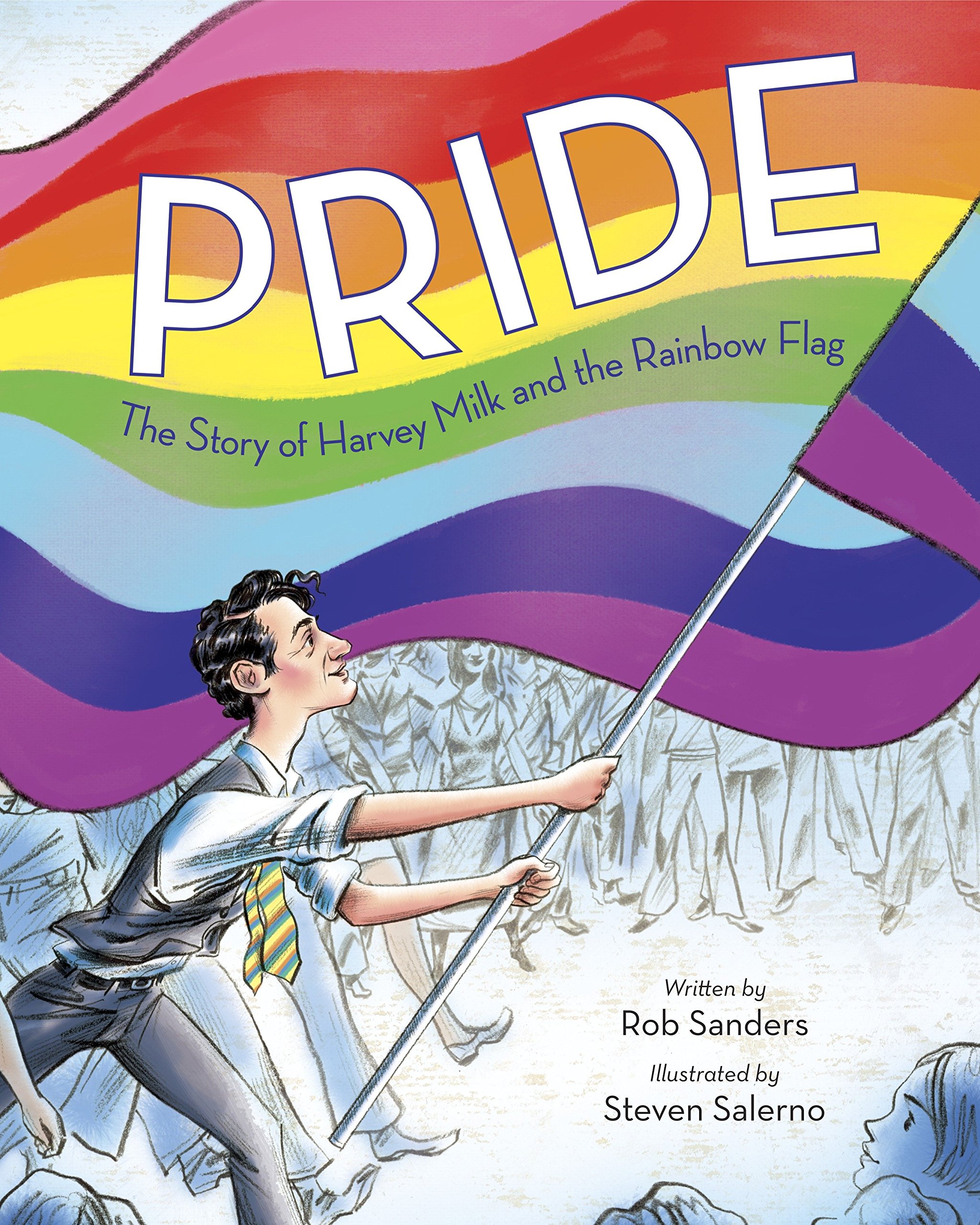
Pride: The Story of Harvey Milk and the Rainbow Flag by Rob Sanders, illustrated by Steven Salerno

Published by Random House Books for Young Readers

Image result for pride harvey milk amazon

Image result for pride harvey milk salerno

Summary: In the 1970’s, when Harvey Milk was advocating for gay rights, he decided the movement needed a symbol that promoted hope and equality.  He asked artist Gilbert Blake for help. Blake designed a rainbow flag, and volunteers helped create it in time for a march on June 25, 1978.  Five months later, Milk and San Francisco mayor George Moscone were assassinated. His dream lived on, though, and continued to grow. The rainbow flag spread across the country, and eventually around the world.  On June 26, 2015, the White House was lit up like the colors of the rainbow flag, celebrating the legalization of gay marriage across the U.S. Harvey Milk’s dream of equality and love had truly been realized.  Includes biographical notes on Harvey Milk and Gilbert Blake, timelines for Milk and the rainbow flag, and a list of resources. 48 pages; grades 1-4.

Pros:  A good introduction to the gay rights movement, as well as the history of the flag that came to symbolize that movement.

Cons:  The biographical information on Harvey Milk was somewhat sketchy.  

If you would like to buy this book on Amazon, click here.

Grandma Gatewood Hikes the Appalachian Trail by Jennifer Thermes

Published by Abrams Books for Young Readers

Image result for grandma gatewood hikes the trail amazon

Image result for grandma gatewood hikes the trail thermes

Summary:  After reading a National Geographic article describing the Appalachian Trail as “easy”, Emma Gatewood decided at age 67 to become the first woman to hike it in its entirety.  Starting off in a skirt and canvas sneakers, with a sack that weighed less than 20 pounds, she headed from her home in Ohio to the end of the trail in Georgia to begin on May 3, 1955.  Dealing with rocky trails, bugs, injuries, a hurricane, and a bear, Emma kept plugging along. Wearing all the clothes she had, barely able to see through her cracked eyeglasses, Emma reached the end of the trail on September 25.  She celebrated by loudly singing “America the Beautiful” from the top of Maine’s Mount Katahdin, then hiked the trail again less than two years later. Back matter includes additional information about Emma Gatewood and the Appalachian Trail, a list of sources, and a timeline on the back endpapers.  48 pages; grades 2-5.

Pros:  If this doesn’t inspire you to stay active in your old age, nothing will.  The beautiful maps every few pages show Emma’s progress up the trail, with landmarks labeled and interesting facts about the region.  

Cons:  I would have loved to have seen a few photos of Emma, particularly on the trail.

If you would like to buy this book on Amazon, click here.