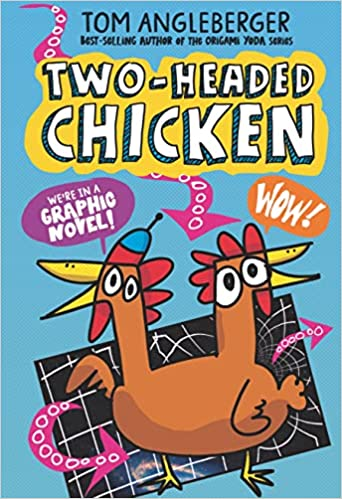
Summary: This is a graphic novel about a two-headed chicken being chased through the multiverse by a fried chicken-loving moose. Each time it/they is/are about to be eaten, the chicken(s) use its/their Astrohat to escape to another universe. Along the way, there are quizzes, the world’s longest knock-knock joke, and a fish who wants to talk to you about your feelings. Just when you feel like you can’t handle another universe, you are suddenly in the book, telling the chicken(s) to hurry up and defeat the moose already. Which they do. Using the world’s longest knock-knock joke. 208 pages; grades 2-5.
Pros: It’s funny, it’s ridiculous, it’s annoying in a good way, and kids will love it.
Cons: Sadly, I didn’t have jury duty, so I couldn’t run the experiment I tried with Tom Angleberger’s The Rat With the Human Face.
Summary: Best friends Norrie, Hazel, and Sam are mystified by the new rider at Edgewood Stables. Hazel recognizes her as Victoria, a girl she saw compete in a show at the more elite Waverly Stables. Impetuous Norrie is certain that she’s a spy, sent over to check out the competition, but as the three get to know her, they learn the truth. Victoria loves to ride but is not as a hardcore a competitor as her former best friend Taylor. When Taylor refused to let Victoria ride her new horse, they had a falling out, and Victoria left Waverly. The new group at Edgewood bonds over horses, of course, but also their favorite cheesy sci-fi TV show Beyond the Galaxy. Between preparing for an upcoming competition and planning a stunt to celebrate the revival of BTG after a 20-year hiatus, the four friends have a busy time of it and come to appreciate the power of their friendship. Includes an author’s note about her experiences growing up around horses. 224 pages; grades 3-7.
Pros: Graphic novel fans are going to love this story of Victoria and her new friends at Edgewood. The story line is engaging and moves easily between the past and present to slowly reveal what brought Victoria to the new stable, and the artwork is gorgeous, especially the portrayals of horses.
Cons: I hope the author won’t wait as long as the Beyond the Galaxy producers to create a sequel.
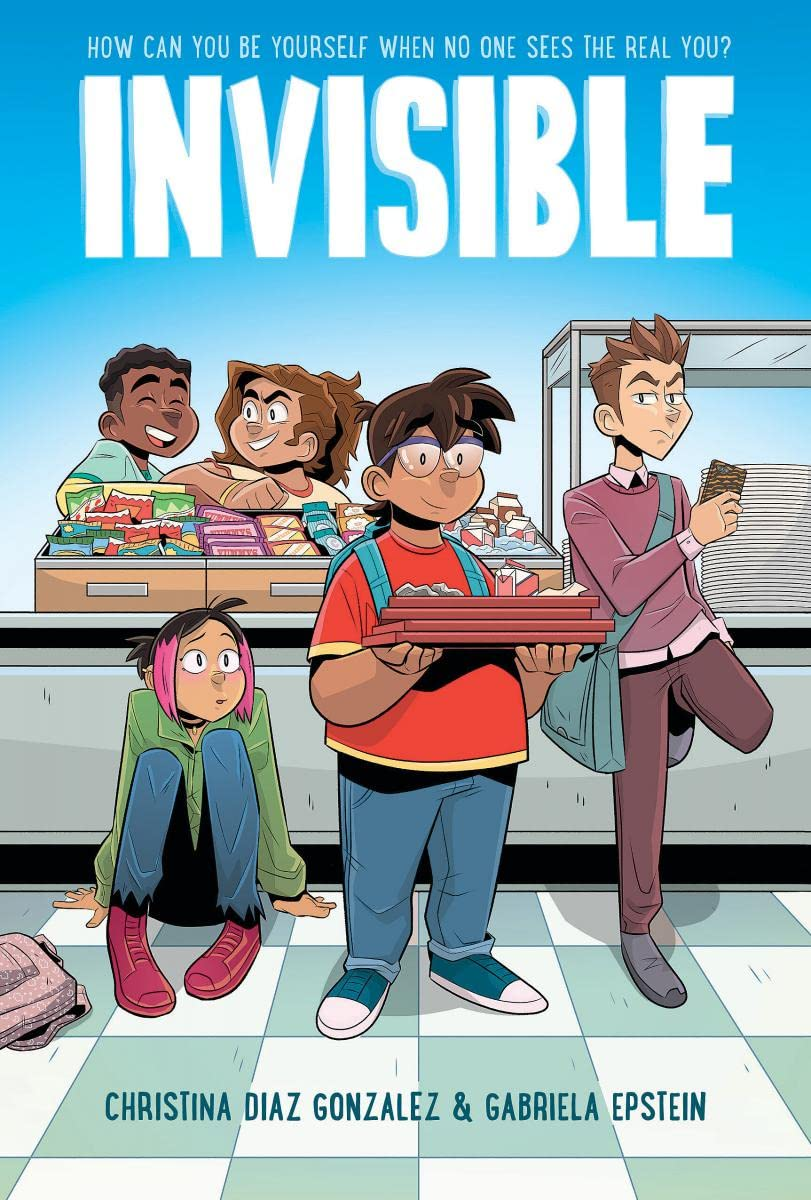
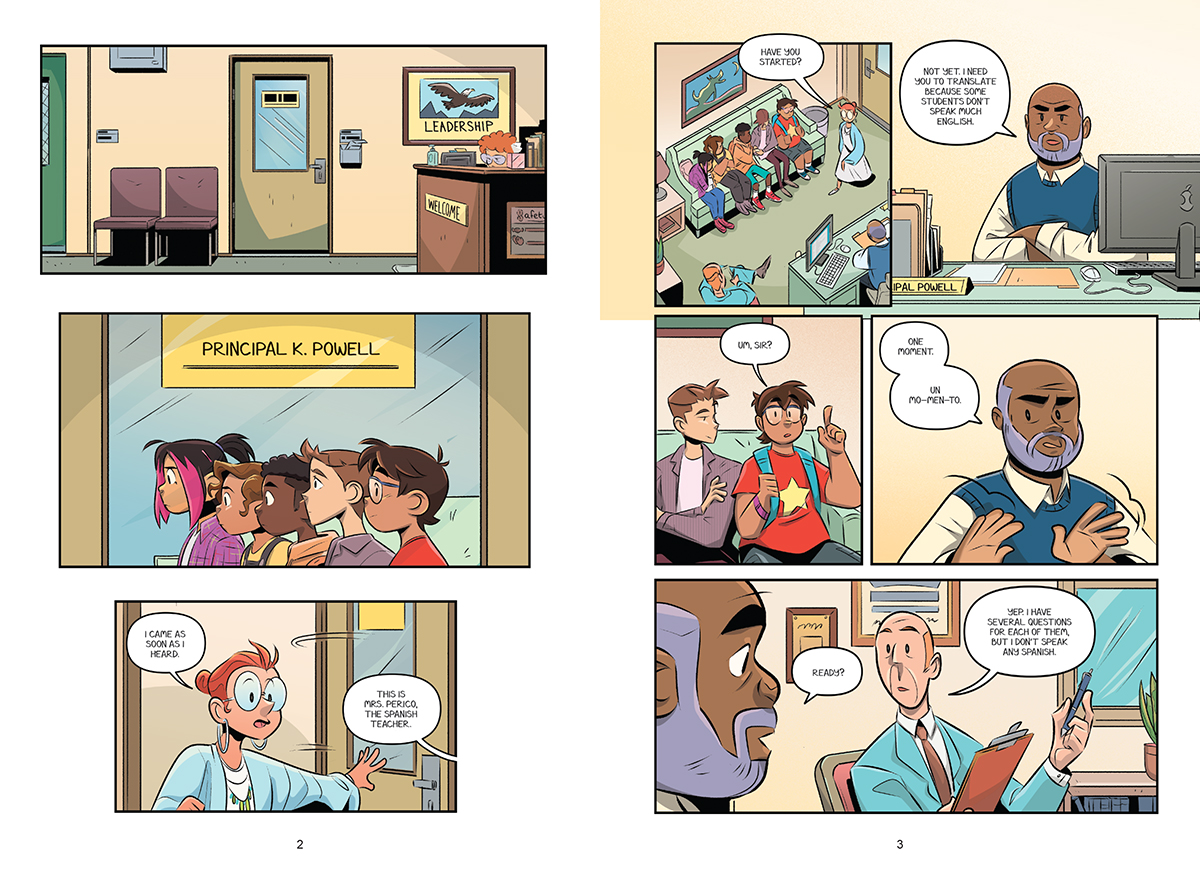
Summary: The story opens with five middle school students gathered in the principal’s office, clearly in some kind of trouble and being asked to tell what happened. Jorge, or George, begins. When he’s assigned a community service stint in the cafeteria, he’s told he’ll be with “kids like him”. He assumes that means other gifted students, but it turns out it’s a group of Latinx kids, many of whom, unlike George, speak Spanish as their first language. While they’re often lumped together, each student is from a different country and has a distinctive personality: George is Puerto Rican, Dayara is from Cuba; Miguel is Dominican; Nico, Venezuelan, and Sara, Mexican. Although each one has a typical middle school label (smart, tough, jock, snob, loner), as they take turns recounting their story, a very different picture emerges that shows each of them struggling with both family and school issues. By the end, the principal has heard a story of compassion, helping a little girl and her mother who have been living in a van near the school. The mean cafeteria lady is reprimanded and sent on her way, while the five kids celebrate their accomplishment and the beginning of a new friendship. Includes notes from the author and illustrator. 208 pages; grades 4-7.
Pros: There’s a lot packed into this graphic novel, with five unique and well-drawn (in both senses of the term) characters who help dispel the notion that Latinx kids all have similar backgrounds. Most of the students speak Spanish throughout the story, with the English translation added with a dashed-line cartoon bubble. Sure to be a big hit with all the fans of graphic novels set in middle school.
Cons: I was hoping for a little redemption for the mean cafeteria lady.
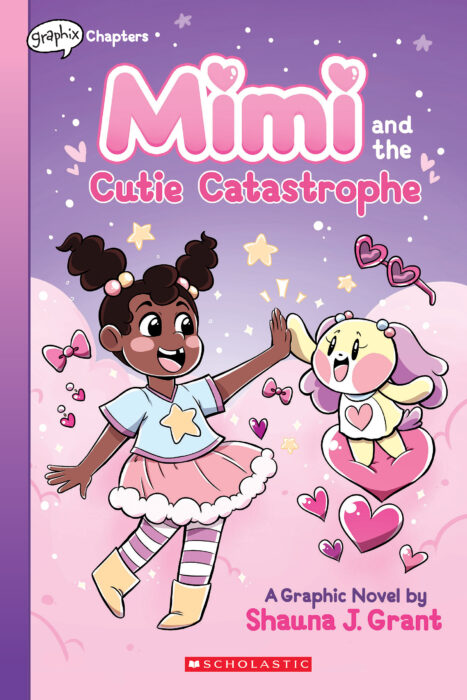
Summary: Mimi loves pink and purple, dressing up, and playing with her magical stuffie, Penelope. An unfortunate consequence of this is that she often gets called “cute”. To counter this, she tries on different personalities that Penelope is able to create for her: a superhero, a smart teacher, and a cool kid. Each one fails for one reason or another, and by the end she’s decided to be herself and to speak up for what she wants. To her happy surprise, those around her see her as strong, smart, and cool.80 pages; grades K-3.
Pros: Kids will relate to Mimi’s wish to be seen as more grown up, and the repeating structure of the story makes this a good choice for beginning readers.
Cons: The girly-girl cuteness was a little thick, as per usual with Scholastic series marketed to girls.
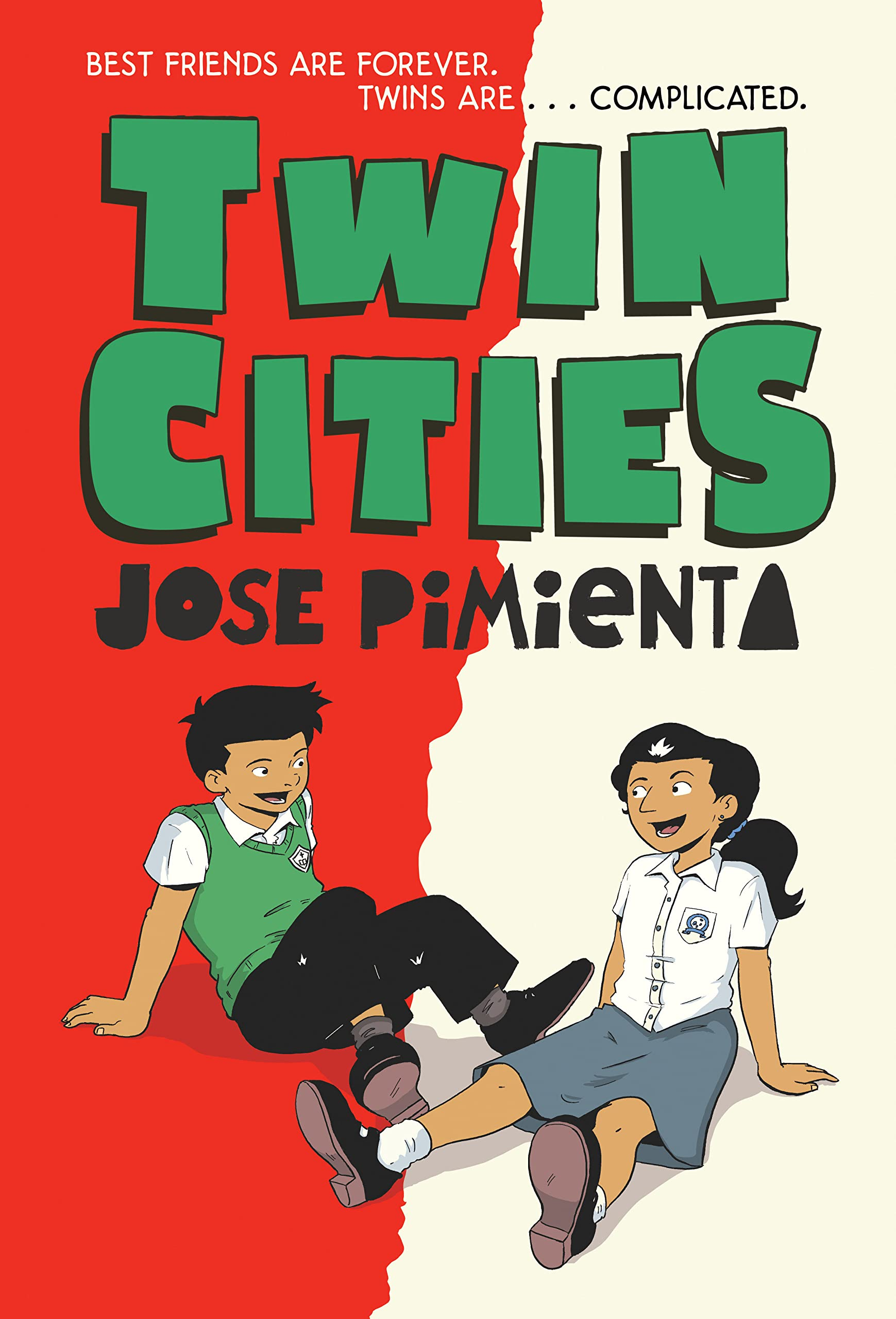
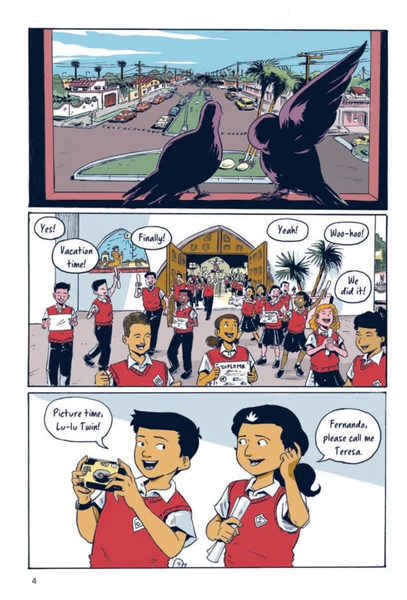
Summary: Luisa Teresa and Luis Fernando are twins collectively known as the Lu-Lu’s. When they get to sixth grade, though, they are eager to seek their own identities. They start going by Teresa and Fernando, but more importantly, Teresa heads to school across the border in Calexico, California, while Fernando continues on in Mexicali, Mexico, where the family lives. Each finds sixth grade to have its struggles. Teresa’s workload is tough, and she has to get up early to make it to her carpool in time. Fernando’s friends are at Teresa’s school, and he feels lonely until he befriends eighth-grader Alex who tries to recruit him to sell weed. This activity leads to a showdown between the twins, but it also finally gets them talking about what they’ve been going through. By the last few pages, Teresa finally has gotten her own room to work in, and Fernando is starting to make some friends his own age. 256 pages; grade 4-7.
Pros: This fascinating look about life at the border is richly illustrated with many pictures that show what is going on in each twin’s life simultaneously. Kids will relate to Teresa and Fernando’s struggles and learn about life in an area that may be unfamiliar to them.
Cons: The sixth-grade protagonists make this a great elementary read, but the weed storyline may raise a few eyebrows.
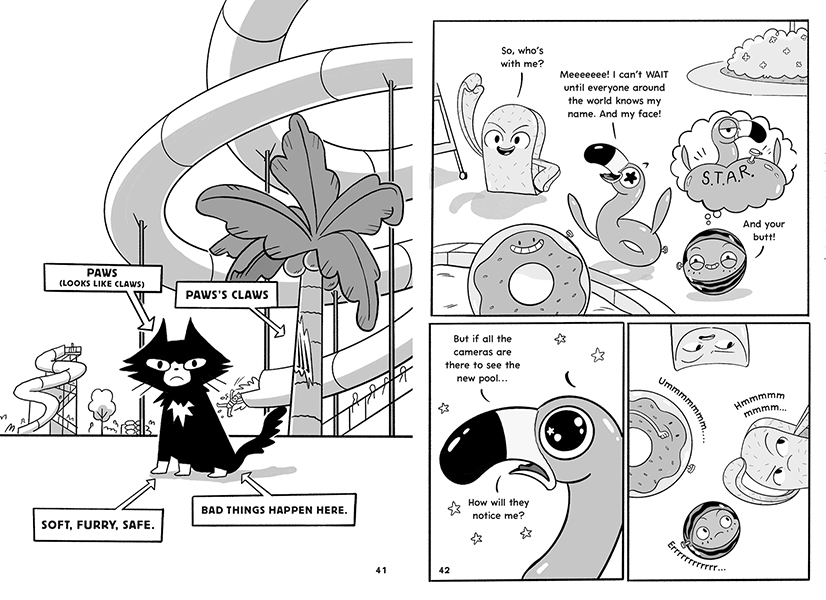
Summary: A group of inflatable toy friends (flamingo, donut, cactus, watermelon, and raft) live in a water park and help each other out in all kinds of situations, like when they hear there’s a new wave pool opening on the other side of the park. Seems like inflatables wouldn’t be able to travel, but where there’s a will there’s a way for this crowd. When they get to the pool, though, Flamingo discovers that his worst nightmare is living there, and they all have to quickly find a way back home again (spoiler alert: this involves a helium tank). There’s a happy ending for all, and I’m not full of hot air when I tell you book 2 is available now, and book 3 will arrive in October. 128 pages; grades 2-5.
Pros: Summer may be coming to an end, but you can pretend you’re still at a pool party with this funny group of inflatable friends. This is sure to be a hit with fans of Dog Man and other graphic novels.
Cons: This has the look of a Branches book, but it’s more of a graphic novel than those are. I think a larger format with color would have worked better.
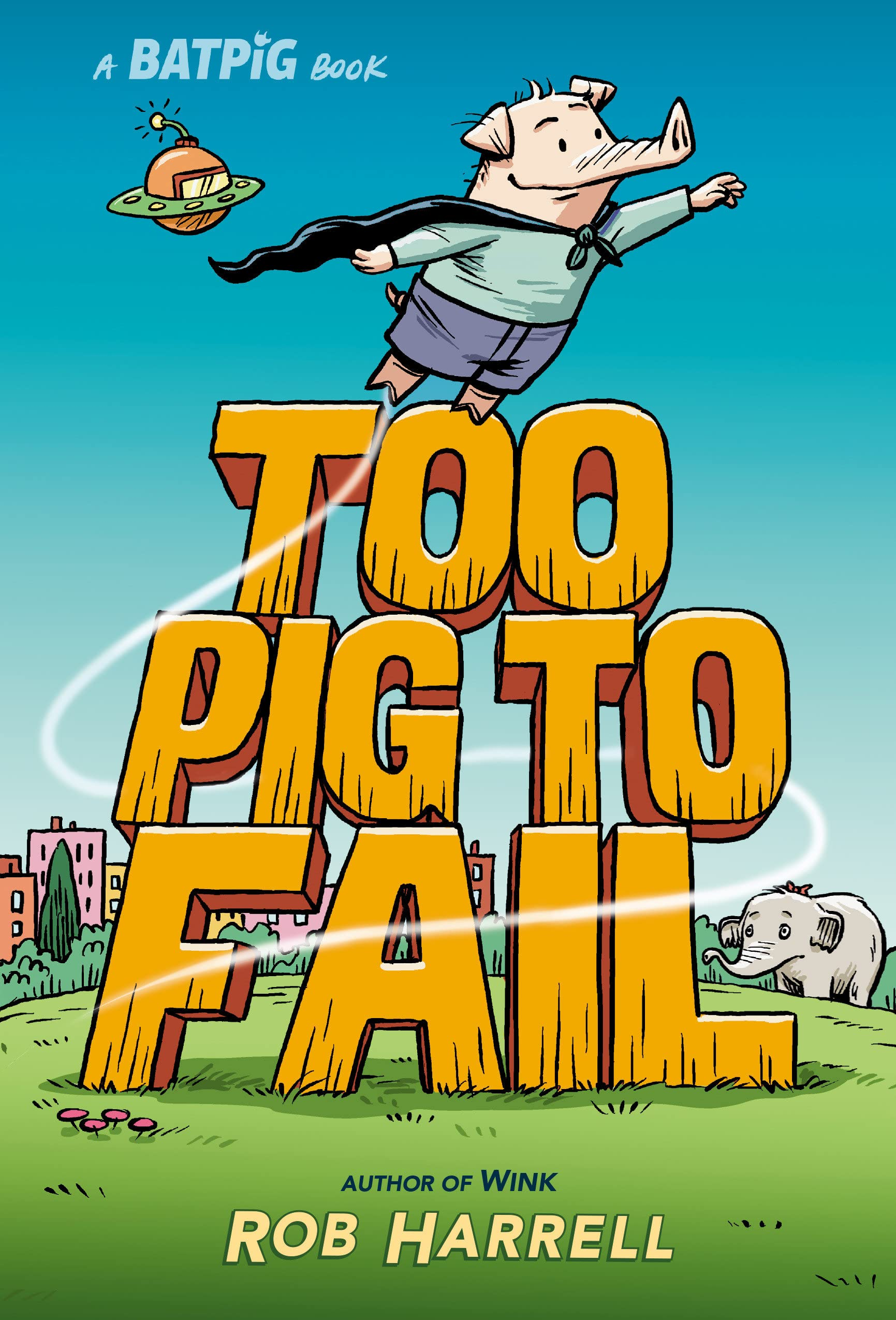
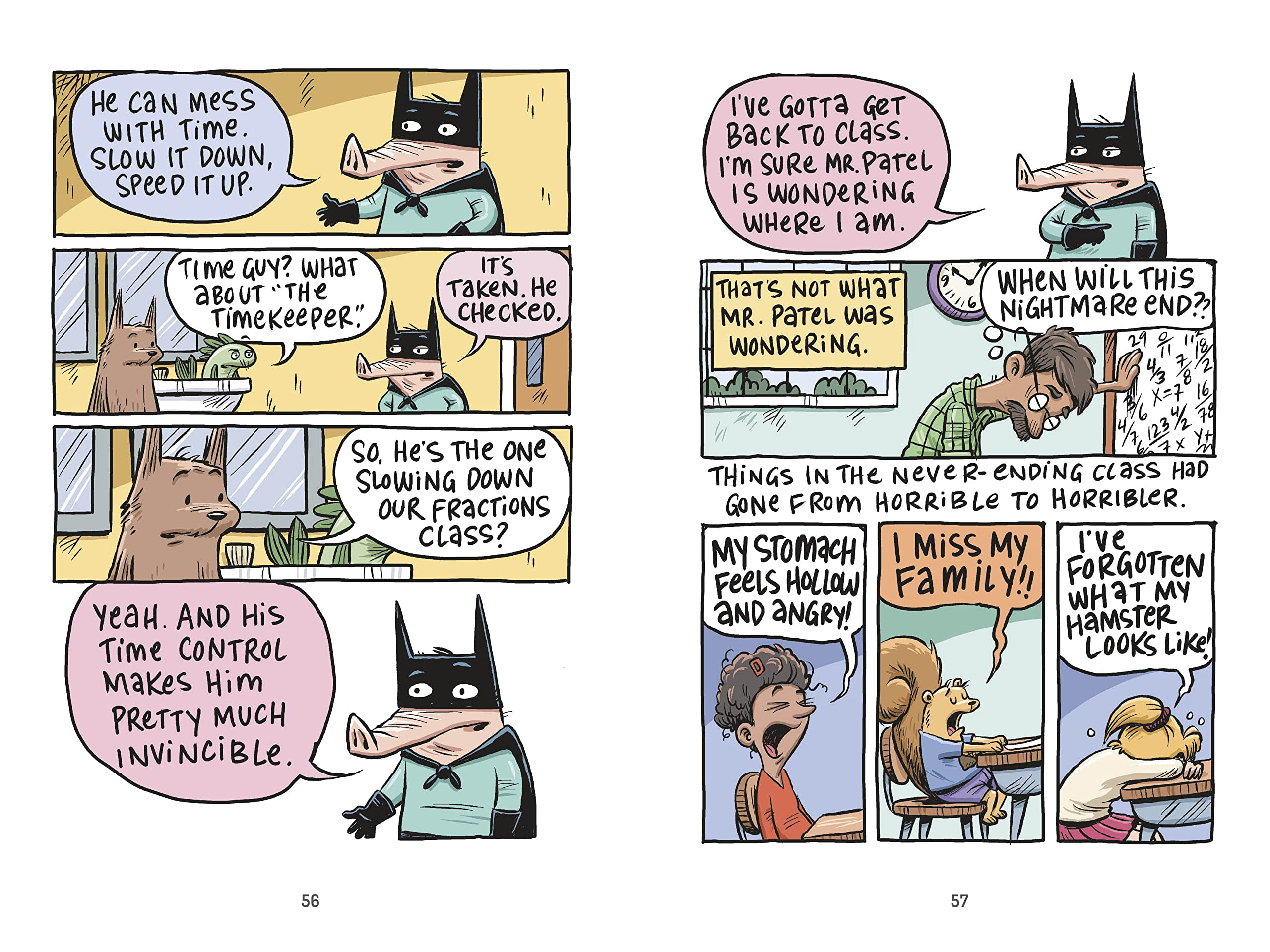
Summary: In this second installment of the Batpig series, Gary uses his superpowers in two stories. First, math class seems interminable for him and his friends, and eventually they discover it’s not just their imaginations. Kindly janitor Mr. Guffen has turned into evil villain Time Guy and has complete control of the passage of time. Batpig finds a way to rescue the hapless math students and turn Time Guy back to his old self based on the idea that time flies when you’re having fun. The second story sees Gary/Batpig foiling an attack by evil aliens who unleash a shower of smelly gym socks and a half-bumblebee-half-kitten monster on the town. 248 pages; grades 2-5.
Pros: Another entry in the “for fans of Dog Man” genre that will have kids laughing and quickly turning the pages to see how Gary and his friends defeat the bad guys. You might want to direct them to When Pigs Fly (book 1) before reading this one.
Cons: It’s embarrassing how frequently I laughed out loud at the humor meant for 8-year-olds.
Published by Simon and Schuster Books for Young Readers
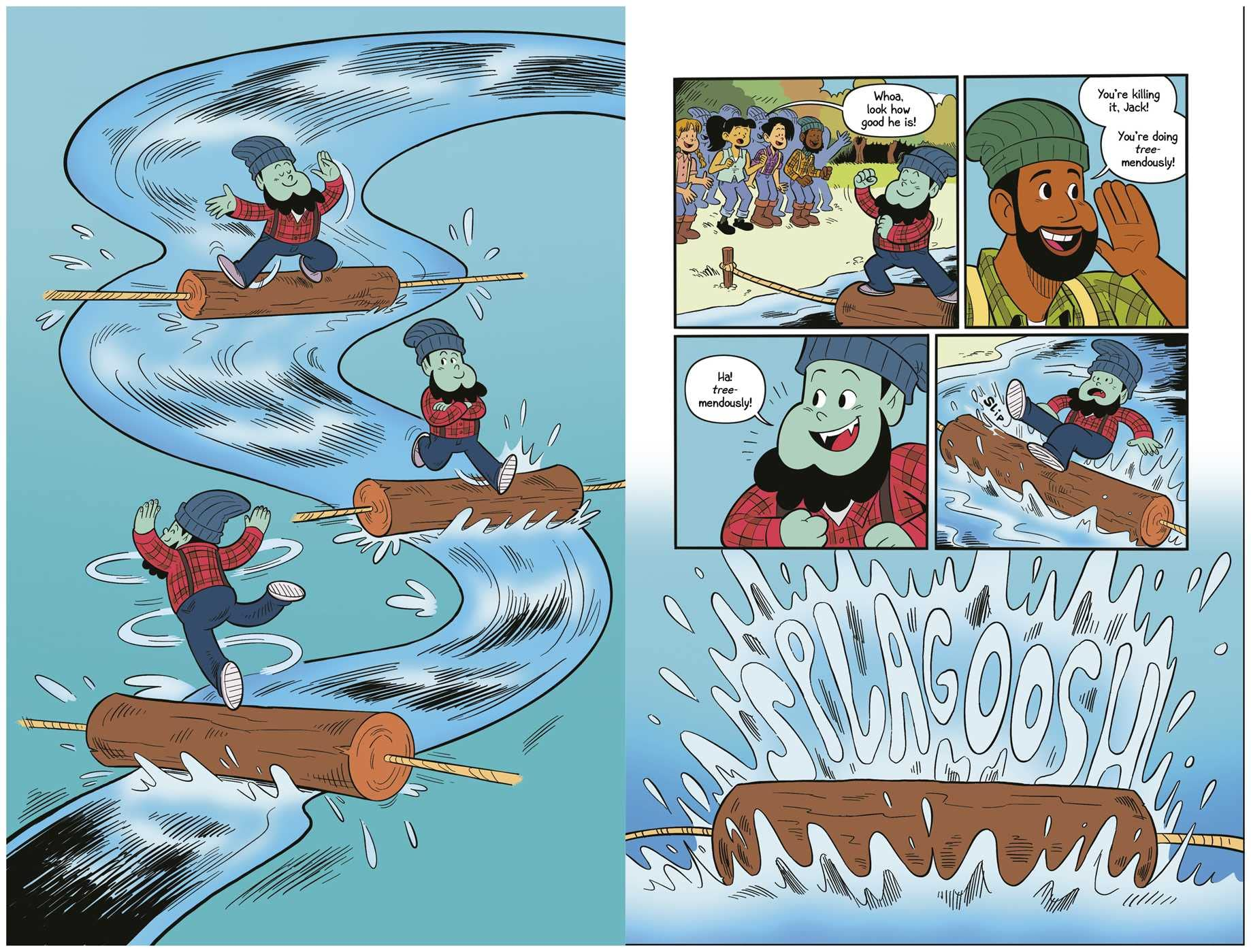
Summary: Jack’s ready to pick a secondary school, but he’s torn between following in his lumberjack mom’s bootsteps or choosing the eerier path of his vampire dad. He tries out both of their alma maters, but neither feels like a great fit. When he accidentally stumbles upon a school for dancers, it seems perfect for his talents, but he’s afraid he’ll disappoint his parents. Finally, a wise teenage manatee rescues Jack from a near-drowning and gives him some good advice about being himself. He finally gets up the courage to tell his parents what he wants, and they proudly cheer him on to become a great dancer. 152 pages; grades 3-6.
Pros: Elementary kids will happily snap up this quirky graphic novel with lots of fun characters and a good “be yourself” message.
Cons: There wasn’t a lot of suspense since it was pretty evident early on what Jack’s decision was going to be.
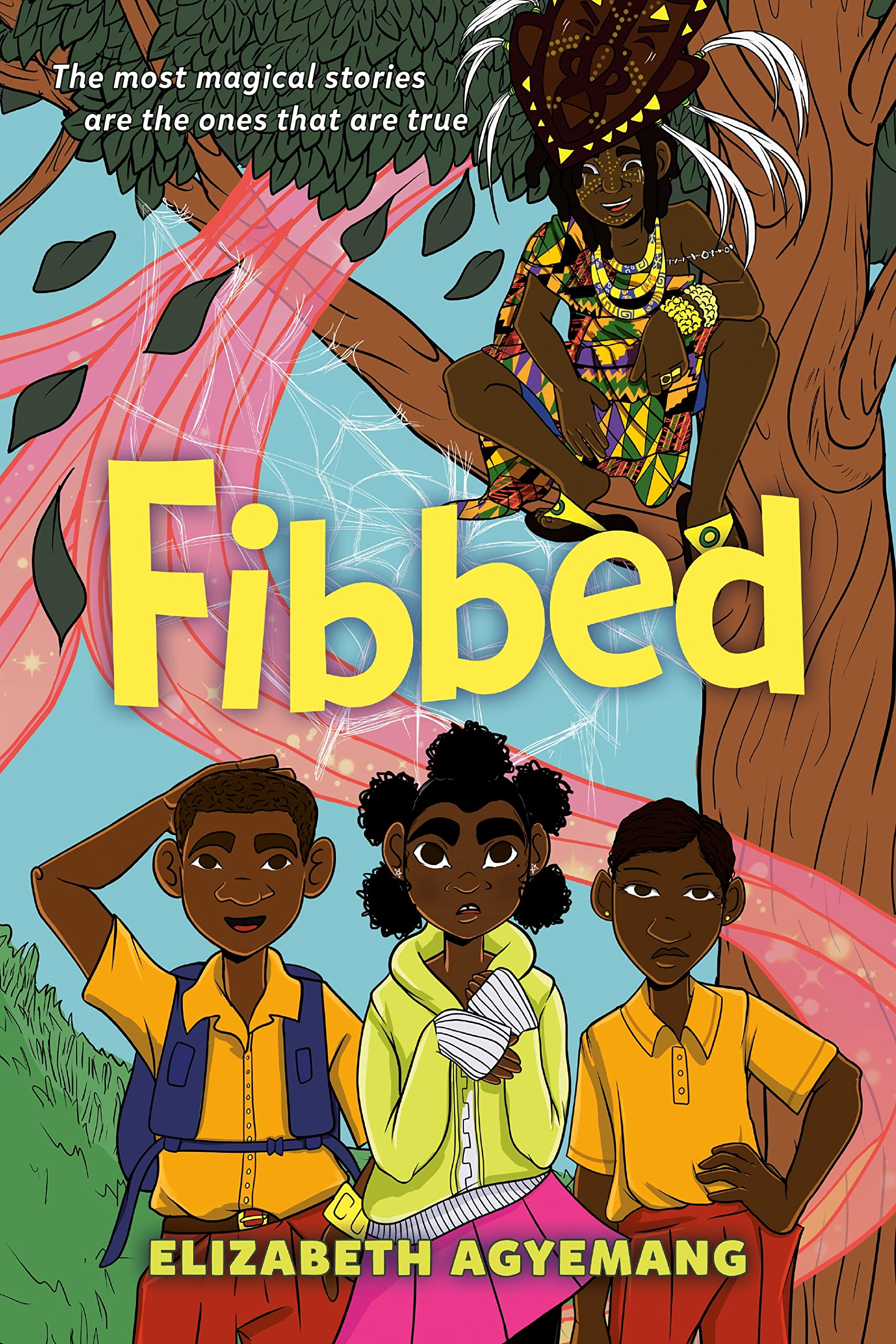
Summary: Nana’s in trouble again for lying, even though she swears her story about how her teacher’s toupee disappeared is true. Her parents have had enough, however, and they decide to send her to stay with family in Ghana for the summer. There she meets relatives and learns about the trickster spider Ananse who exchanges favors and magic for stories. When Nana, her cousin, and a classmate discover men who are destroying a local forest by stripping it of magic, they end up working with Ananse to defeat the villains and save the forest. As a reward, Nana gets a wish granted and is happy that her stories are finally believed by family members in both Ghana and the U.S. Includes four pages of additional information about Ananse. 256 pages; grades 4-7.
Pros: This graphic novel cleverly weaves together a realistic family story and folklore. The artwork is gorgeous, particularly the wordless pages that show the Ghanian countryside.
Cons: There’s a lot going on in the story, and I was a little confused about some of the details.
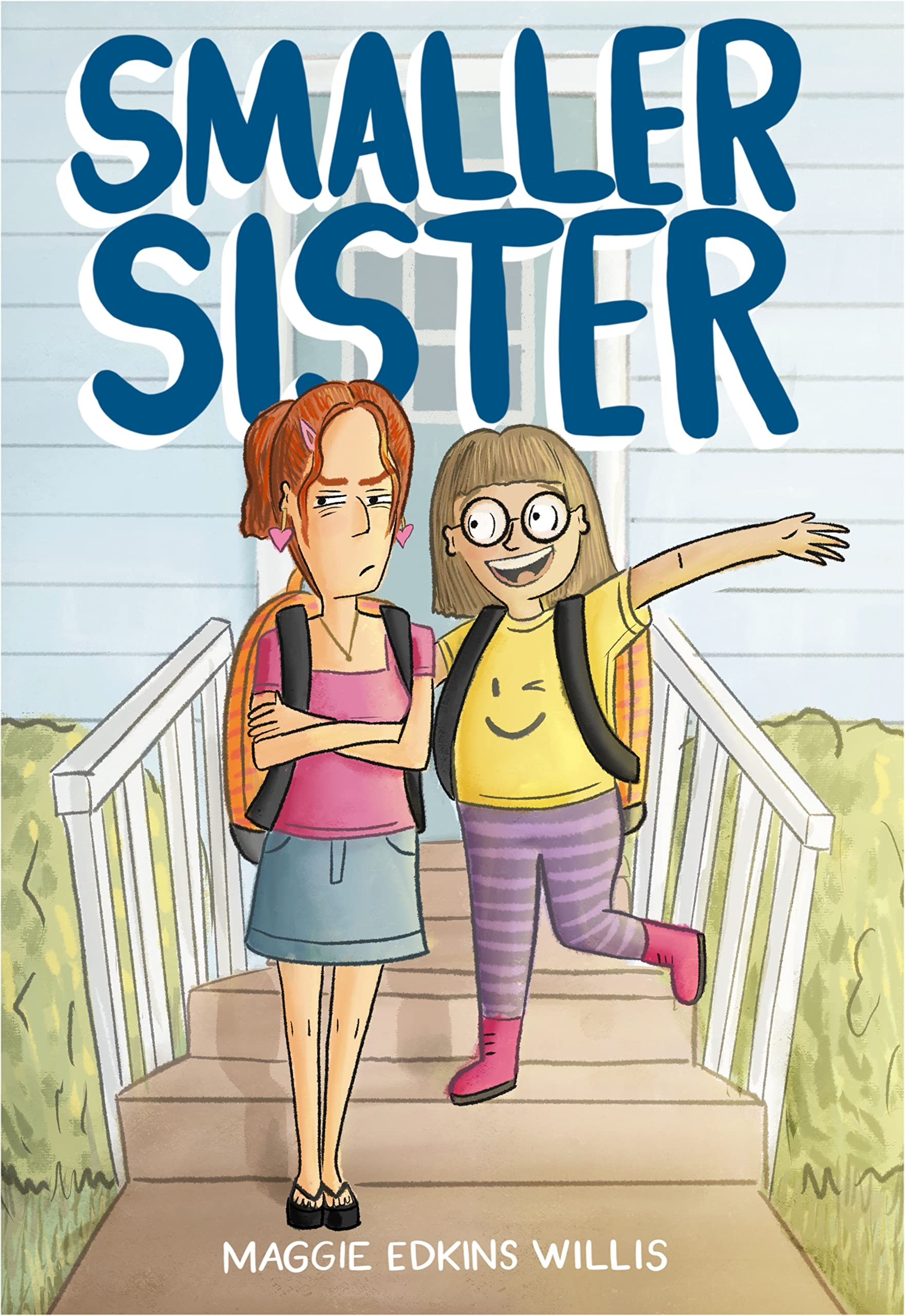
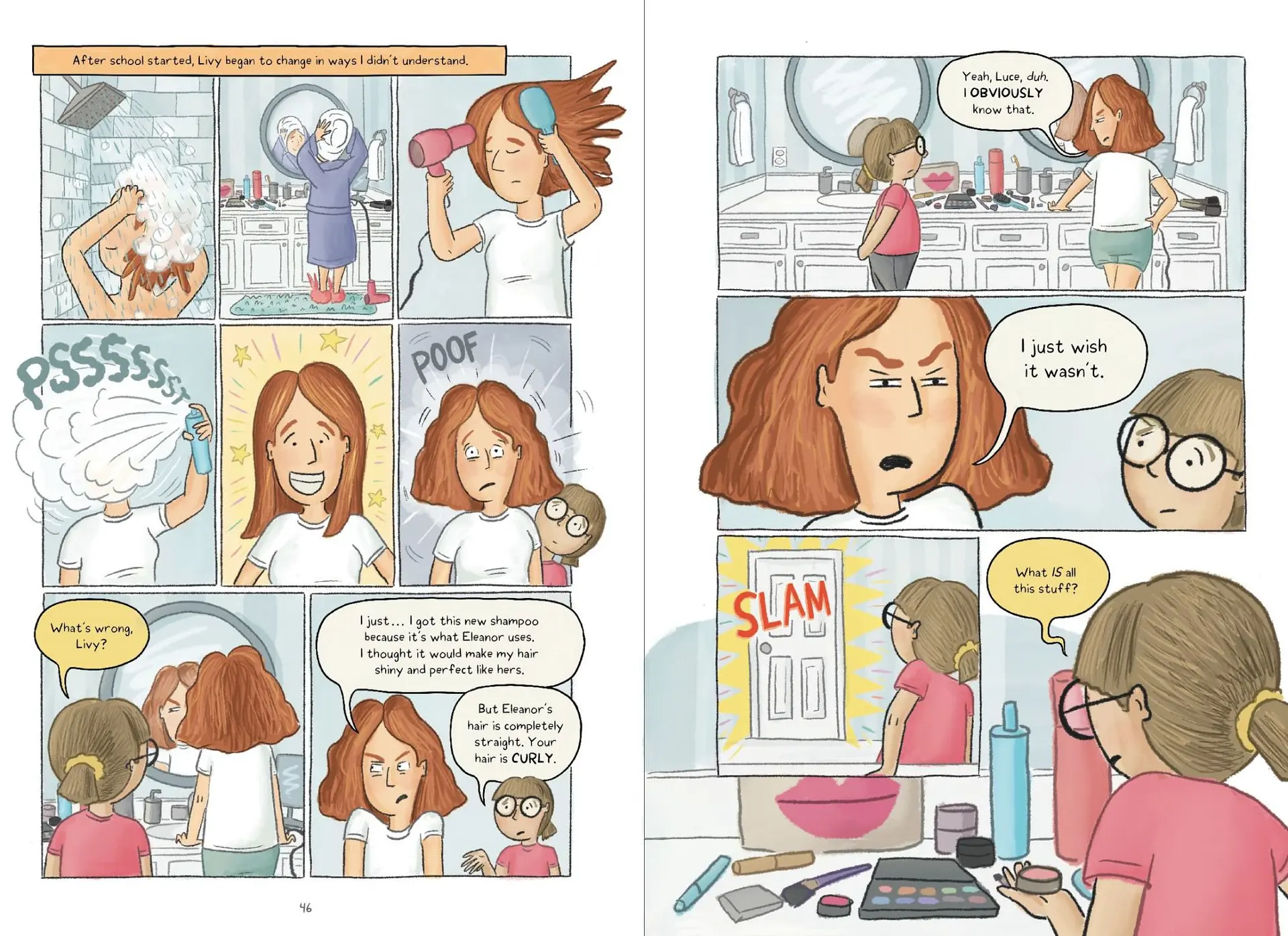
Summary: Lucy and her older sister Olivia have always been close, but when they switch schools right before fifth and sixth grades, things start to unravel. Olivia develops an eating disorder, and Lucy struggles to try to understand the unhappy person her sister has become and the difficult changes her whole family is going through. Just as Olivia is starting to recover, the family moves from Indiana to Massachusetts, a transition that proves difficult for both of the girls. As Lucy faces peer pressure and mean girls, she begins to doubt herself and to adopt some of Olivia’s techniques for losing weight. Fortunately, Olivia and their parents have learned a lot in the last couple of years and are able to intervene. Two weeks at a theater camp between sixth and seventh grade give Lucy a huge boost in confidence, helping her to start seventh grade on a much more positive note. Includes an author’s note telling of her experiences that inspired this book. 320 pages; grades 4-7.
Pros: Another middle school girl graphic memoir that will undoubtedly be popular with the many readers who love this genre. The topics of eating disorders and girls’ struggles with body image are addressed sensitively and in an appropriate manner for upper elementary and middle school readers. I’d love to see how seventh grade goes for Lucy, so I’m hoping for a sequel.
Cons: The parents, who were sensitive in other ways, seemed kind of oblivious about how tough it was for the girls to change schools twice in two years.