Two books about mindfulness

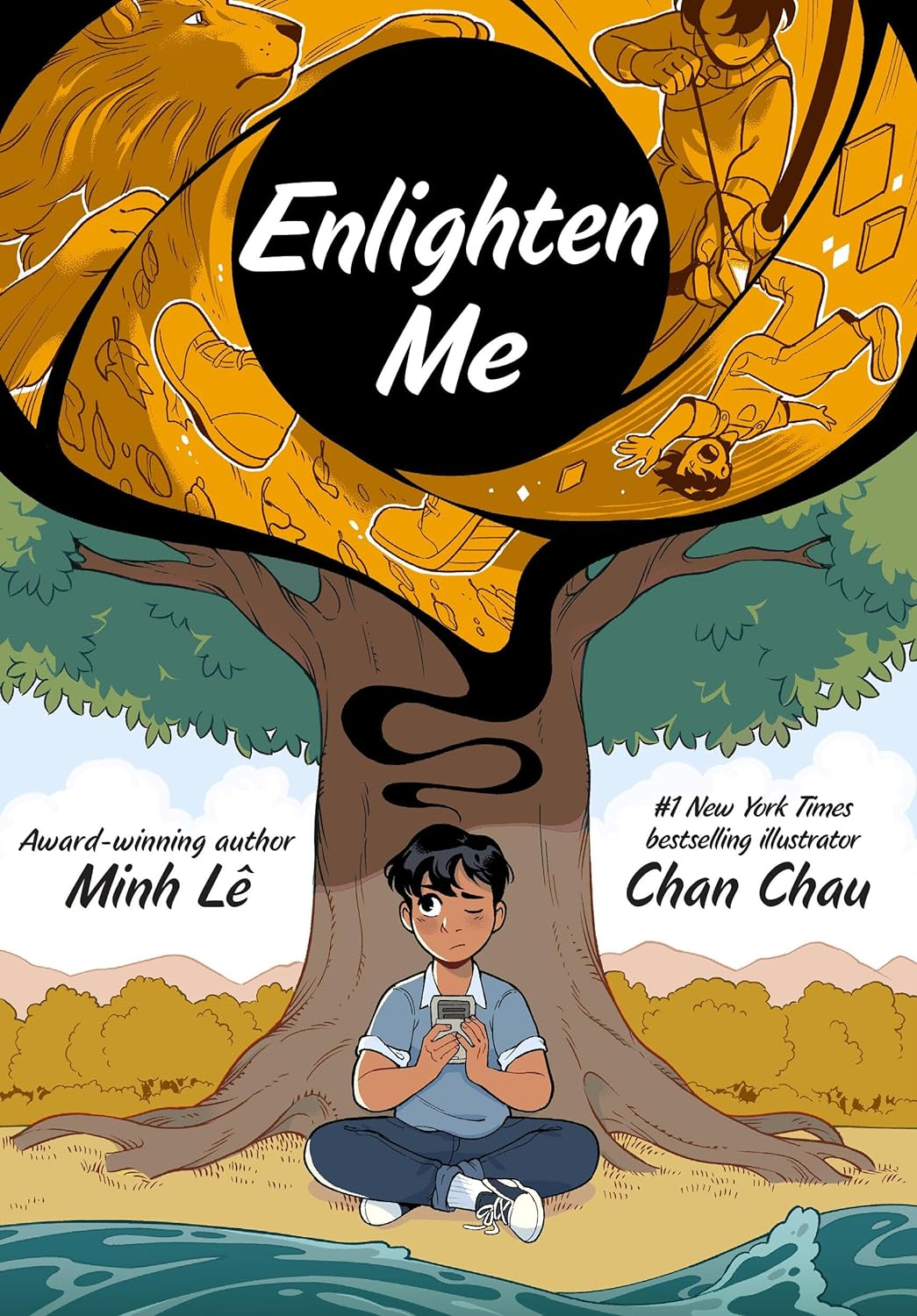
Enlighten Me by Minh Lê, illustrated by Chan Chau

Published by Little Brown Ink

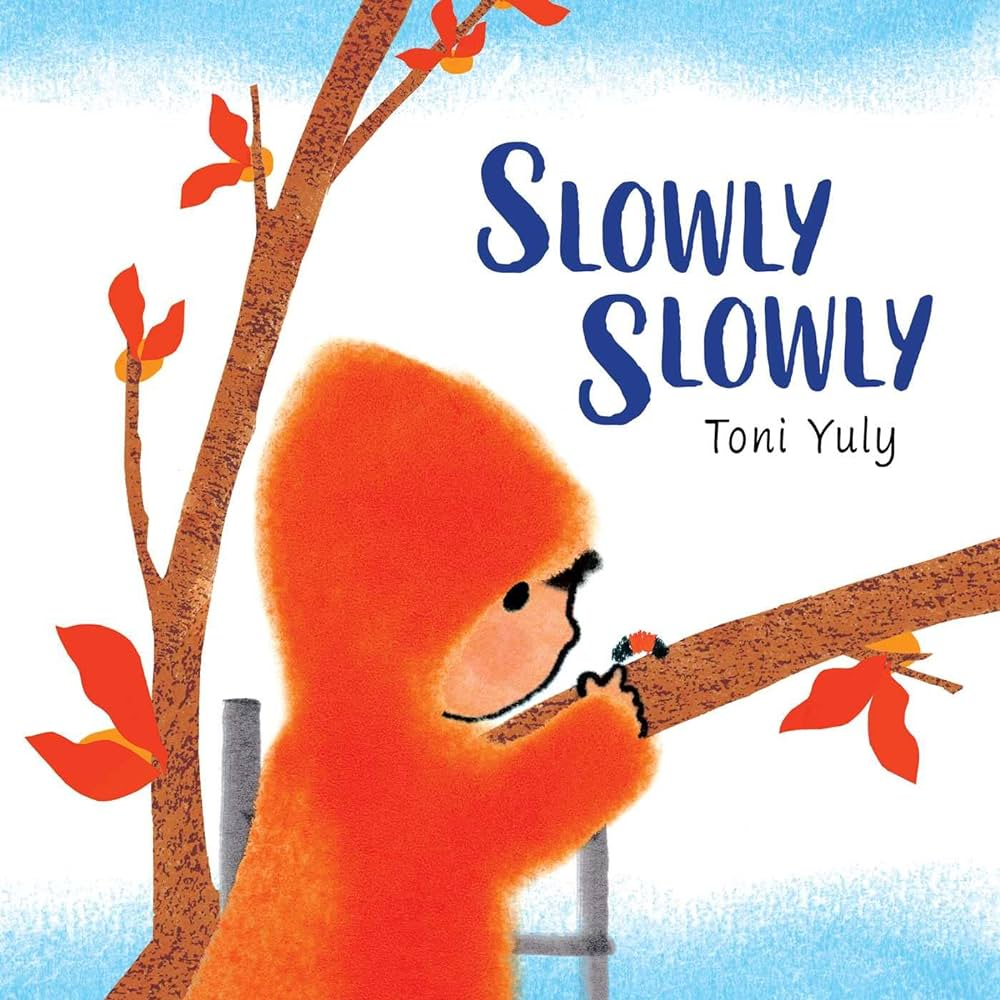
Slowly Slowly by Toni Yuly

Published by Atheneum Books for Young Readers

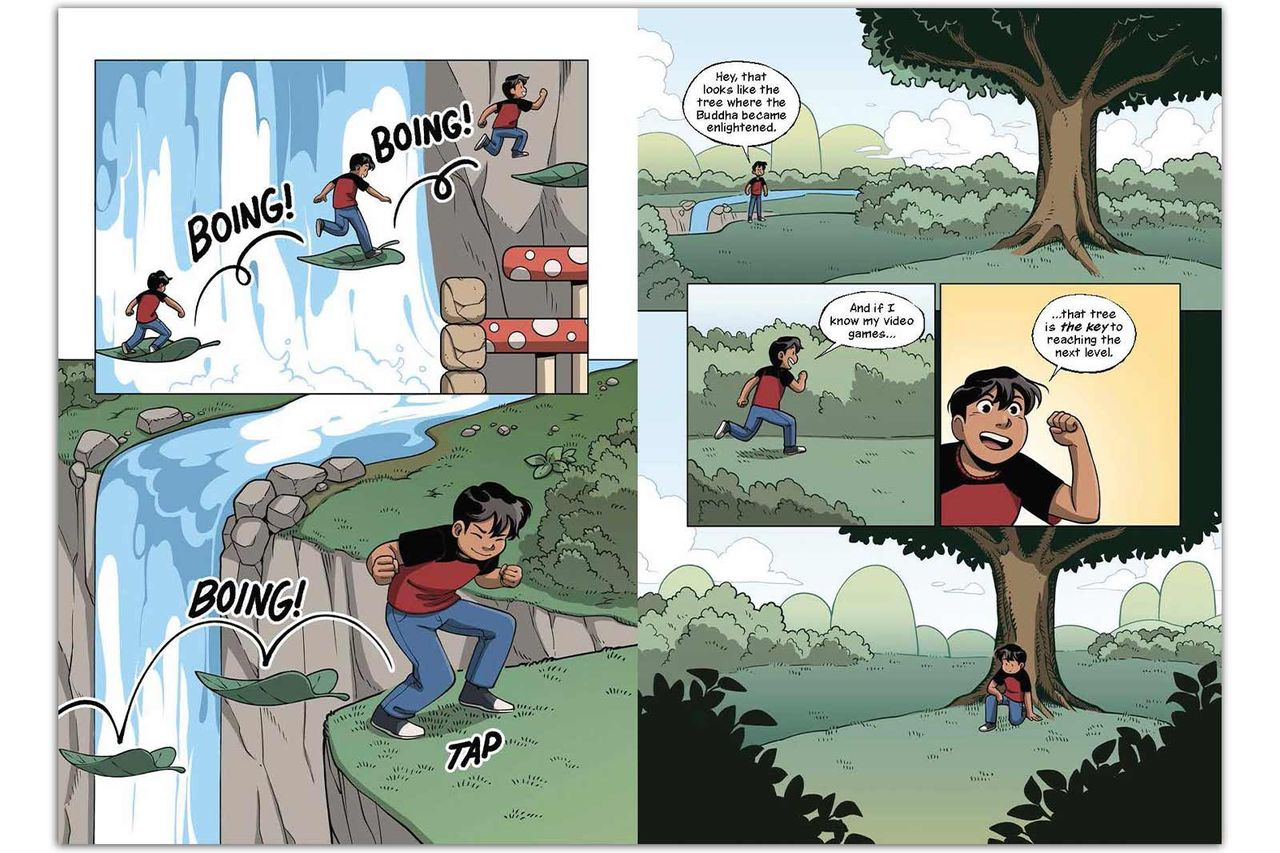
Summary: Binh and his family are off to a silent Buddhist retreat in Enlighten Me. During meditation times, Binh struggles with a recent memory of racist bullying at school. When he fought back, he ended up being the one to get in trouble. In between meditation sessions, a monk named Sister Peace shares stories about the Buddha with the kids that teach Binh some lessons about dealing with his issues. Those issues don’t get resolved, but by the time the family is heading for home, it’s clear that Binh is seeing things in a new light.

“When you slow down…you see more,” begins Slowly Slowly, as a child and dog explore the natural world. They observe winter turning to spring, and a persimmon tree slowly, slowly, slowly, slowly, slowly, slowly, slowly, slowly makes persimmons. With each page of “slowly”, readers can look for other changes going on in the child’s world. Enlighten Me is 140 pages; grades 4-7; Slowly Slowly is 40 pages; ages 4-8.

Pros: Both books focus on mindfulness through beautiful artwork and kids’ experiences. Minh Lê uses Binh’s story and love of video games to tell some tales of the Buddha while offering some kid-friendly insights Binh has about meditation and enlightenment. Readers of Slowly Slowly will want to take the time to notice all that is happening in the busy yet peaceful illustrations and to reflect on how slowing down can help us notice the world around us.

Cons: Both books are pretty spare, offering more of an opportunity for reflection than a fleshed-out story.

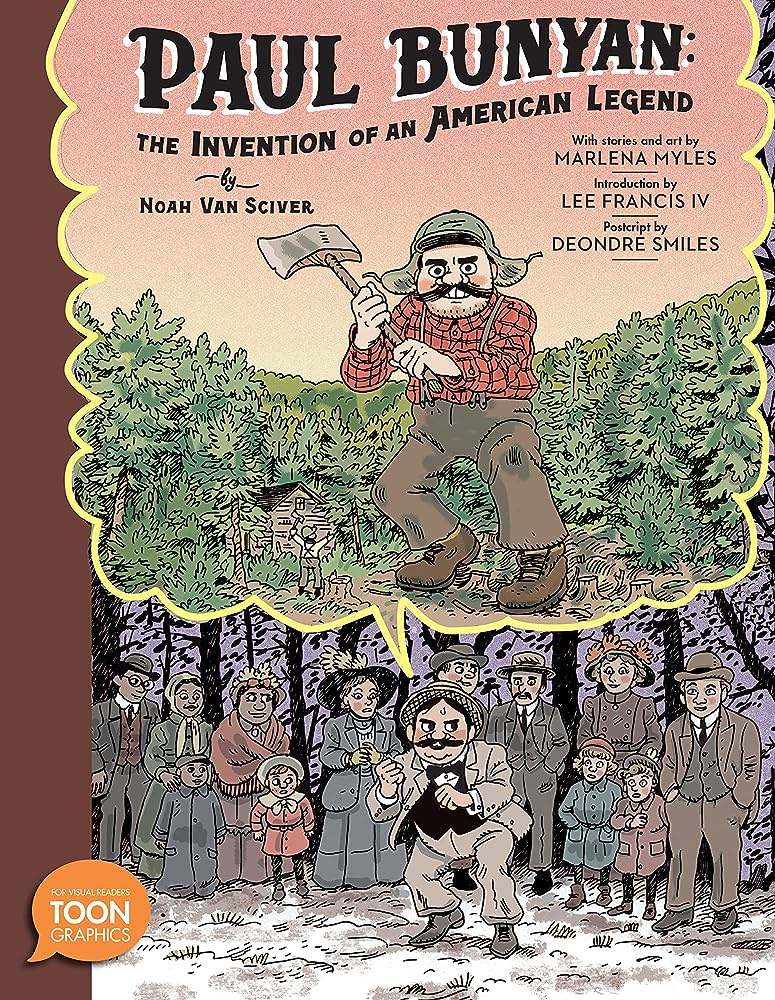
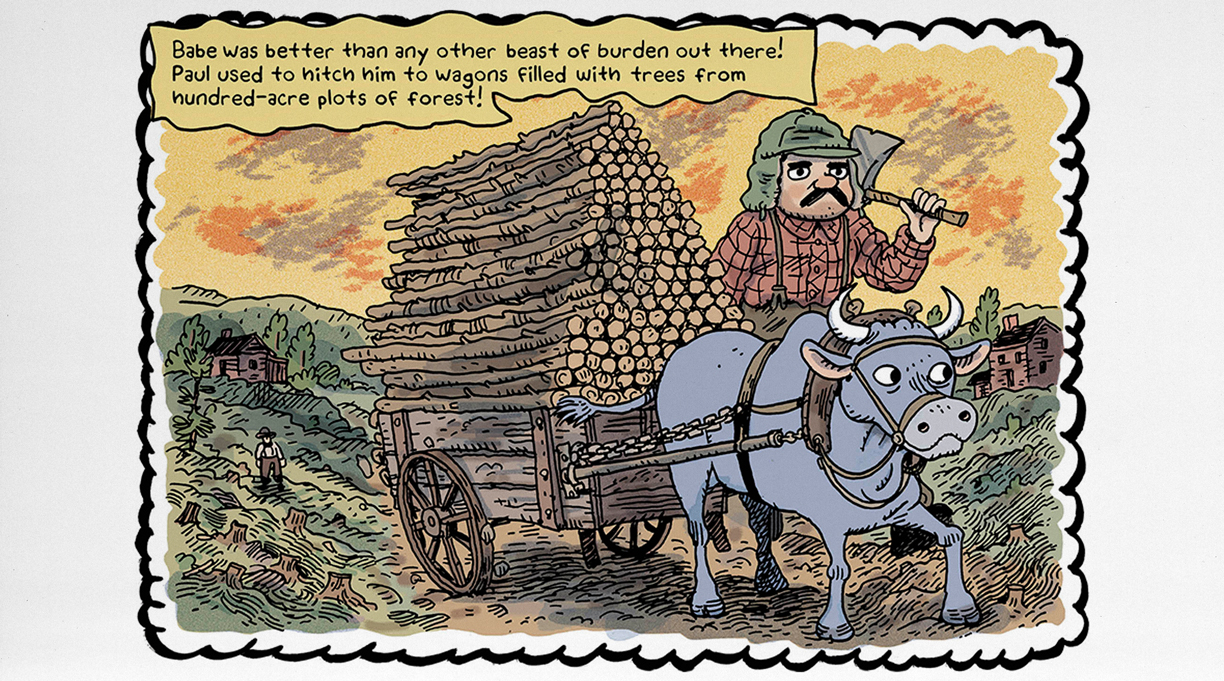
Paul Bunyan: The Invention of an American Legend by Noah Van Sciver and Marlena Myles

Published by TOON Books

Summary:  A logging executive is traveling west when his train breaks down, stranding him and the other passengers in the middle of a snowy forest.  Someone manages to build a fire, and everyone gathers around to hear stories of famous lumberjacks.  The logging man tops them all with his tales of Paul Bunyan and his blue ox Babe.  Most of the audience loves the stories, but another man who’s spent his career working in the lumber industry tells of the devastation of clear-cutting forests, then moving west.  He describes how the land was taken from the Native Nations, whose people honored the spirits of each tree.  Includes a foreword and two afterwords by indigenous scholars about their experiences with Paul Bunyan stories and Native stories about trees.  48 pages; grades 3-6.

Pros:  Some interesting context is given to the Paul Bunyan tall tales so many of us grew up with, offering insights into the logging industry he was created to promote and its impact on indigenous lands.  

Cons:  I’m guessing that many in the intended audience will skip the foreword and afterwords, which is too bad, because they contain a lot of interesting information. I wish that the graphic novel part had been expanded on to include more of that information.  The tall tales were well done, but the ending felt rushed.

Two Tribes by Emily Bowen Cohen

Published by Heartdrum

Summary:  Mia lives with her mother and stepfather, observing her Jewish faith both at home and at her Jewish day school.  When a boy at school tells her she’s not a “real Indian,” Mia goes on a quest to discover her Muscogee culture, passed down to her from her father’s side.  She and her best friend hatch a plan in which Mia uses some of her bat mitzvah money to take a bus from L.A. to Oklahoma.  She manages to pull it off and spends a few days with her dad and his family, learning more about her heritage, before her mother discovers where she is and flies down to get her.  Back home, Mia must face the consequences of her actions, but her new discoveries have given her courage to talk to her mother and stepfather about making some changes to allow her dad and her Muscogee family to be part of her life.  Includes a note from the author about her own Jewish-Muscogee heritage, a glossary of Muskvoke terms used, and a note from Heartdrum author-curator Cynthia Leitich Smith.  256 pages; grades 4-7.

Pros:  This debut graphic novel offers an interesting look at a unique heritage and the difficulties of embracing that when divorce separates a family.  Readers will empathize with Mia and enjoy learning about her Jewish and Muscogee cultures alongside her.

Cons:  I was a bit stressed about Mia’s secret 24-hour bus trip on her own.

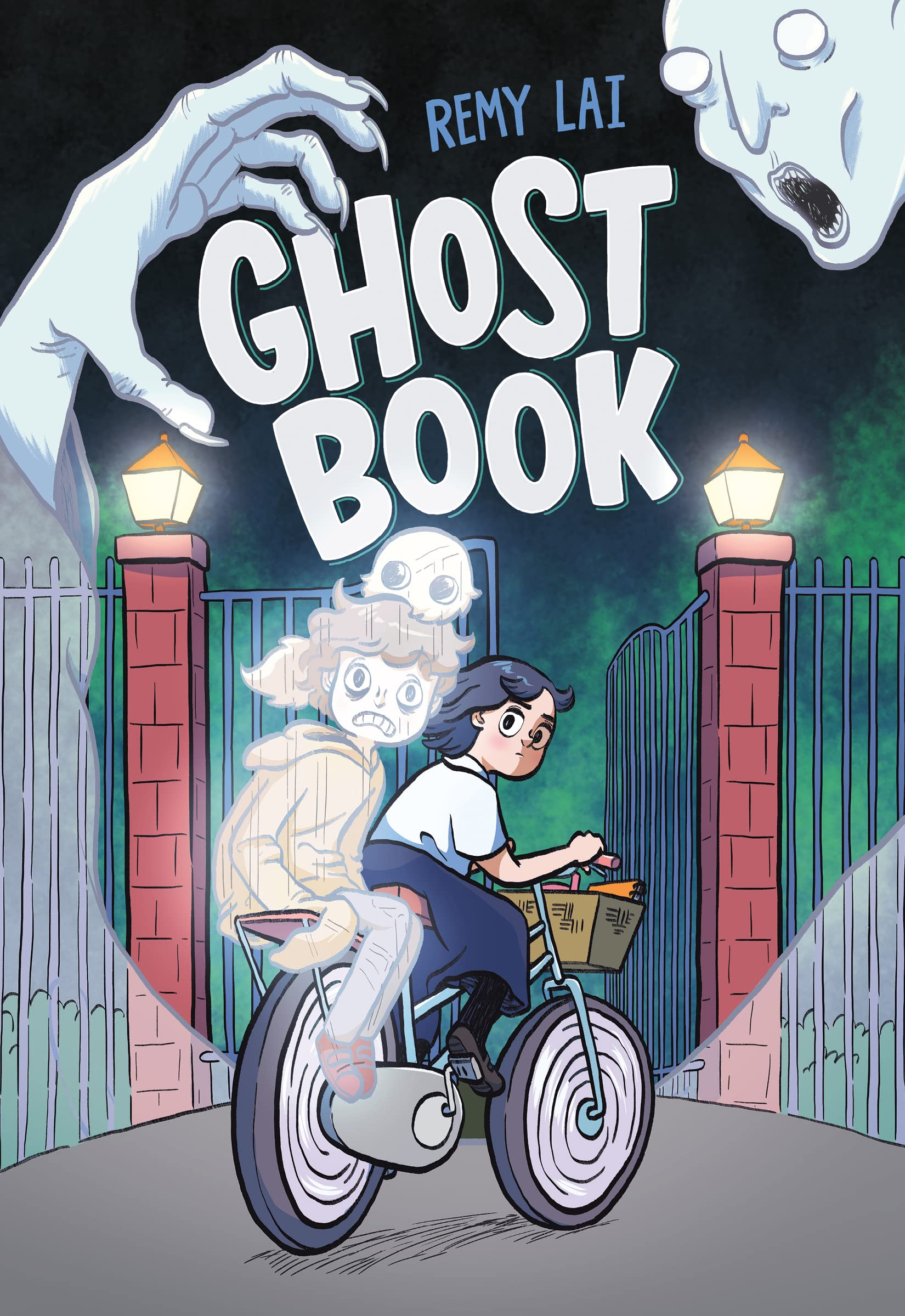
Ghost Book by Remy Lai

Published by Henry Holt

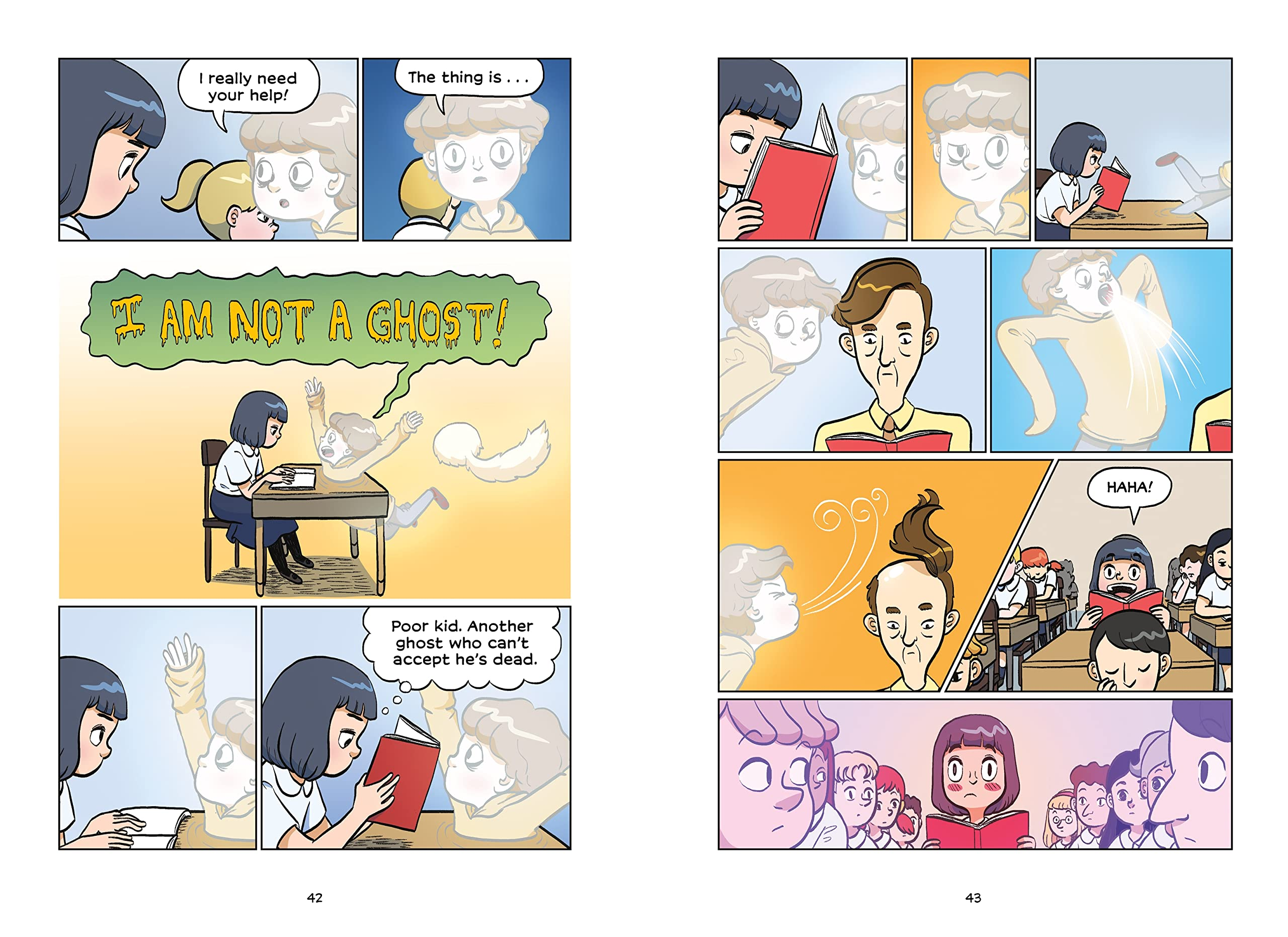
Summary: July has “yin-yang eyes”, meaning that she can see ghosts, but she feels as invisible as a ghost most days.  Her mom died when she was born, her dad is too preoccupied with work to pay much attention to her, and teachers and kids at school often overlook her.  Desperate for a friend, she tries to summon a ghost.  William shows up instead–a boy who is in a coma, and whose spirit is wandering around trying to figure out if he is dead or alive.  As the two kids do some investigating, they discover that they have a life-long connection, and that only one of them is meant to be alive.  Their explorations take them into the underworld, where they hope to change fate so that they can both live.  There, they are pursued by a variety of spirits bent on their destruction, but their friendship saves the day and helps them to figure out a way forward for both of them.  320 pages; grades 3-6.

Pros:  I’m a big fan of Remy Lai’s graphic (and semi-graphic) novels, and her latest one does not disappoint.  Part ghost story, part friendship story, part adventure, this will keep kids turning the pages until the surprising but totally satisfying conclusion.

Cons:  This is a bit darker than Lai’s previous books.

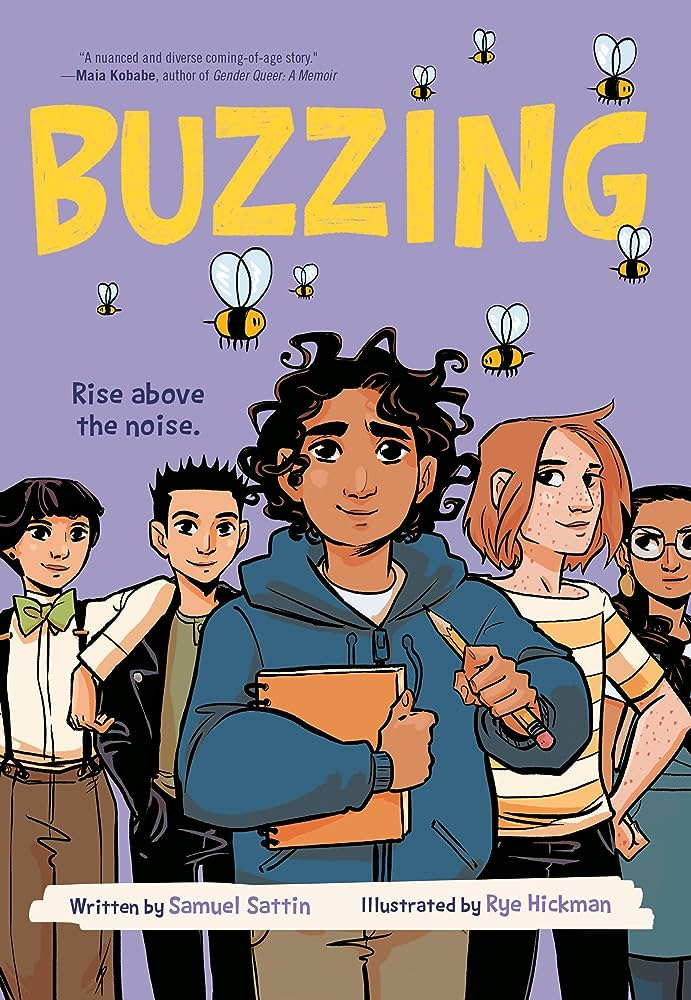
Buzzing by Samuel Sattin, illustrated by Rye Hickman

Published by Little, Brown Ink

Summary:  The bees swarming around Isaac’s head represent the thoughts brought on by his obsessive-compulsive disorder (OCD).  They’re constantly reminding him that if he doesn’t tug his ear five times or keep the foods on his plate from touching, his house may burn down, or his car may crash.  When another kid at school makes friendly overtures, the bees remind Isaac how worthless and weird he is.  His overprotective mom keeps him on a strict regimen of therapies, causing his older sister Miriam to feel ignored and resentful.  Isaac’s talent for drawing fantasy creatures catches a classmate’s eye, and Micah invites Isaac to join a group playing Swamps & Sorcery, a role-playing game (think Dungeons & Dragons).  Isaac loves the group immediately, but his mother is less sure.  When she eventually prohibits him from playing the game, Isaac’s world goes into a tailspin.  Fortunately, Miriam is perceptive enough to see what is happening, and the siblings work together to finally break through to their mother and help her to accept Isaac exactly as he is.  Includes an author’s note about his own OCD and neurodivergence. 224 pages; grades 5-8.  

Pros:  This graphic novel perfectly captures the vibe of a group of middle school outsiders who have fully embraced their weirdness (their word).  Isaac’s joy at finding the group is shown by the switch from monochromatic illustrations at home to full color when he’s with his friends.  

Cons:  RPG fans will undoubtedly enjoy the fantasy subplot based on the kids’ game that’s woven throughout the main story, but I found those sections to be more of a distraction.

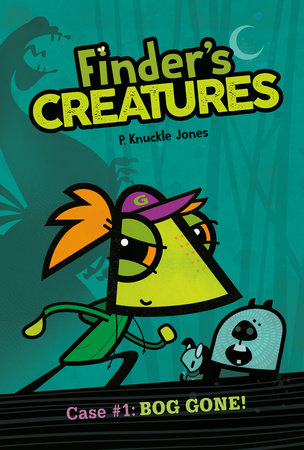
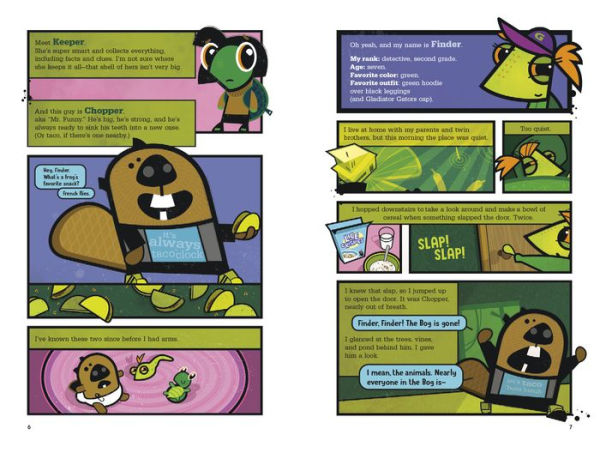
Bog Gone! (Finders Creatures, Book 1) by P. Knuckle Jones

Published by Penguin Workshop

Summary:  Second grader Finder (frog) and his friends Keeper (turtle), and Chopper (Beaver) have their hands/paws full when the other animals from Belly Acre Bog disappear.  Finder’s hero is Seymour Warts, a brilliant detective based on Sherlock Holmes, who solves his own mystery during the course of the story.  A series of misadventures ensues, but both Finder and Seymour manage to crack their cases.  112 pages; grades 2-4.

Pros:  The many fans of early graphic novels like The Bad Guys, Max Meow, and The InvestiGators will enjoy this mystery, which includes plenty of madcap humor.  The word choices and color-coded speech bubbles makes this a good choice for newly independent readers.

Cons:  No sign yet of book 2.

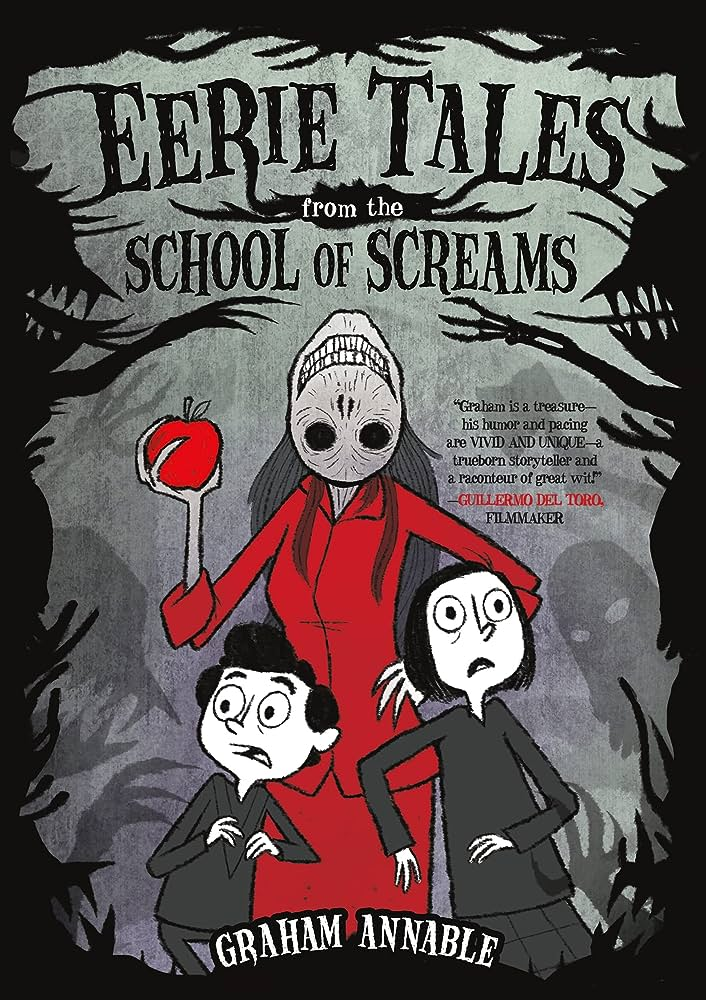
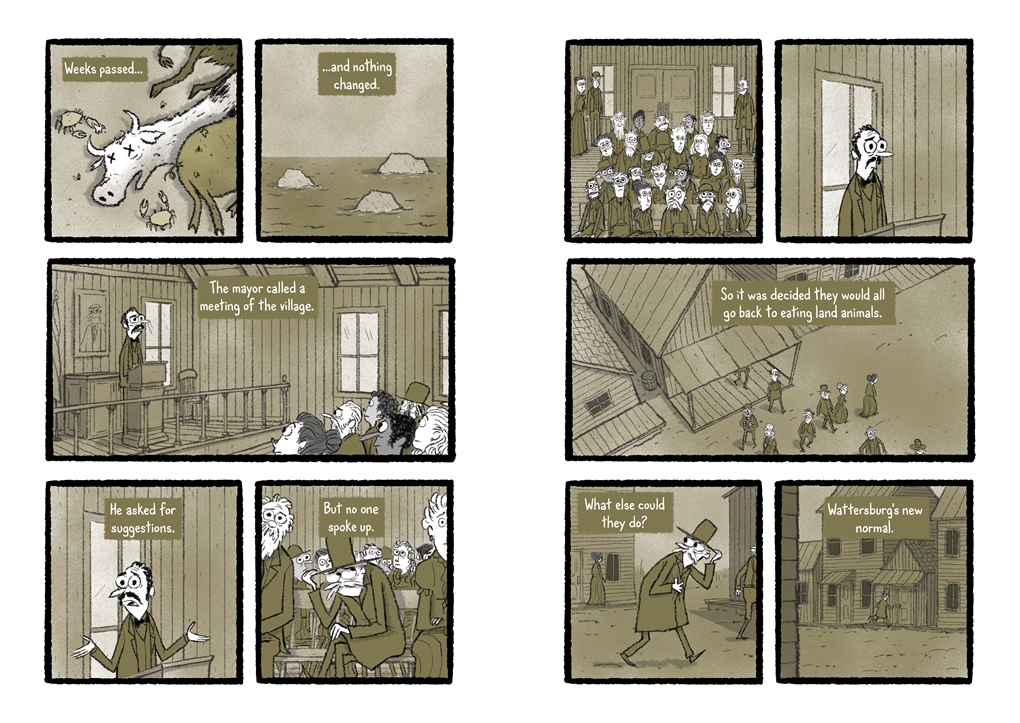
Eerie Tales from the School of Screams by Graham Annable 

Published by First Second

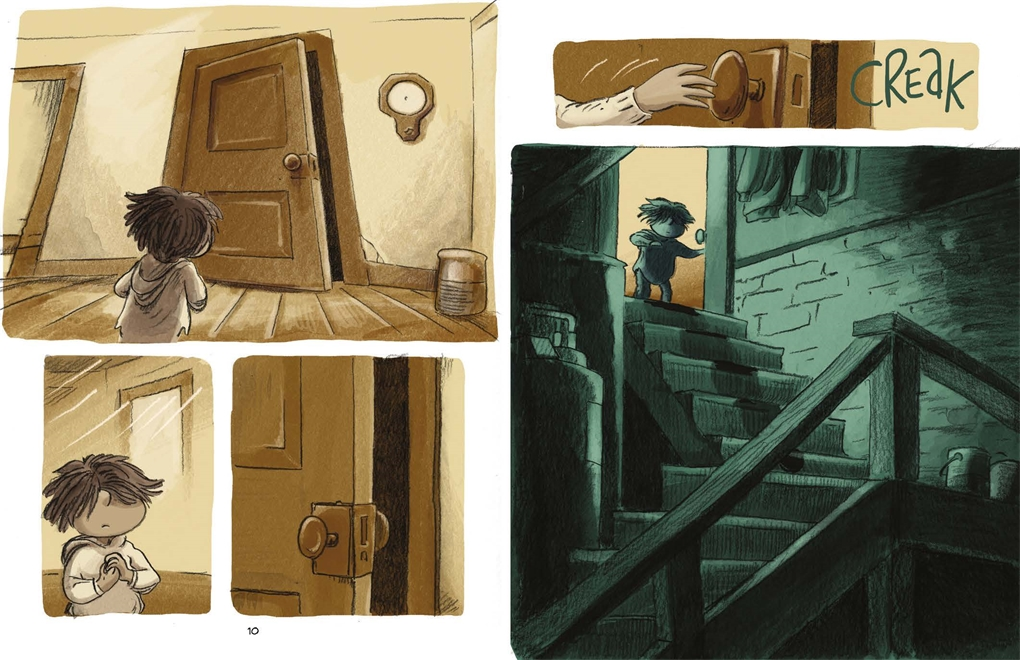
Summary:  Ms. Nomed has her students come up one by one to share a scary story with the rest of the class.  Each tale is illustrated with various shades of a single color to help differentiate one from the other.  Humorous commentary from the other kids at the end of each one lightens the mood a bit before plunging back into another creepy world where things are not always what they seem and monsters, ghosts, and zombies are real.  The final story turns out to be true, and the class has to join forces when Ms. Nomed reveals her true self.  368 pages; grades 4-7.

Pros:  A graphic novel scary story collection?  Someone has a finger on the pulse of elementary students!  Plan on buying multiple copies for the library, as this is sure to be a huge hit.  The artwork is excellent, and the stories are genuinely creepy.

Cons:  As always with scary stories for elementary kids, be aware that these may be disturbing for some readers.

Mexikid: A Graphic Memoir by Pedro Martin

Published by Dial Books

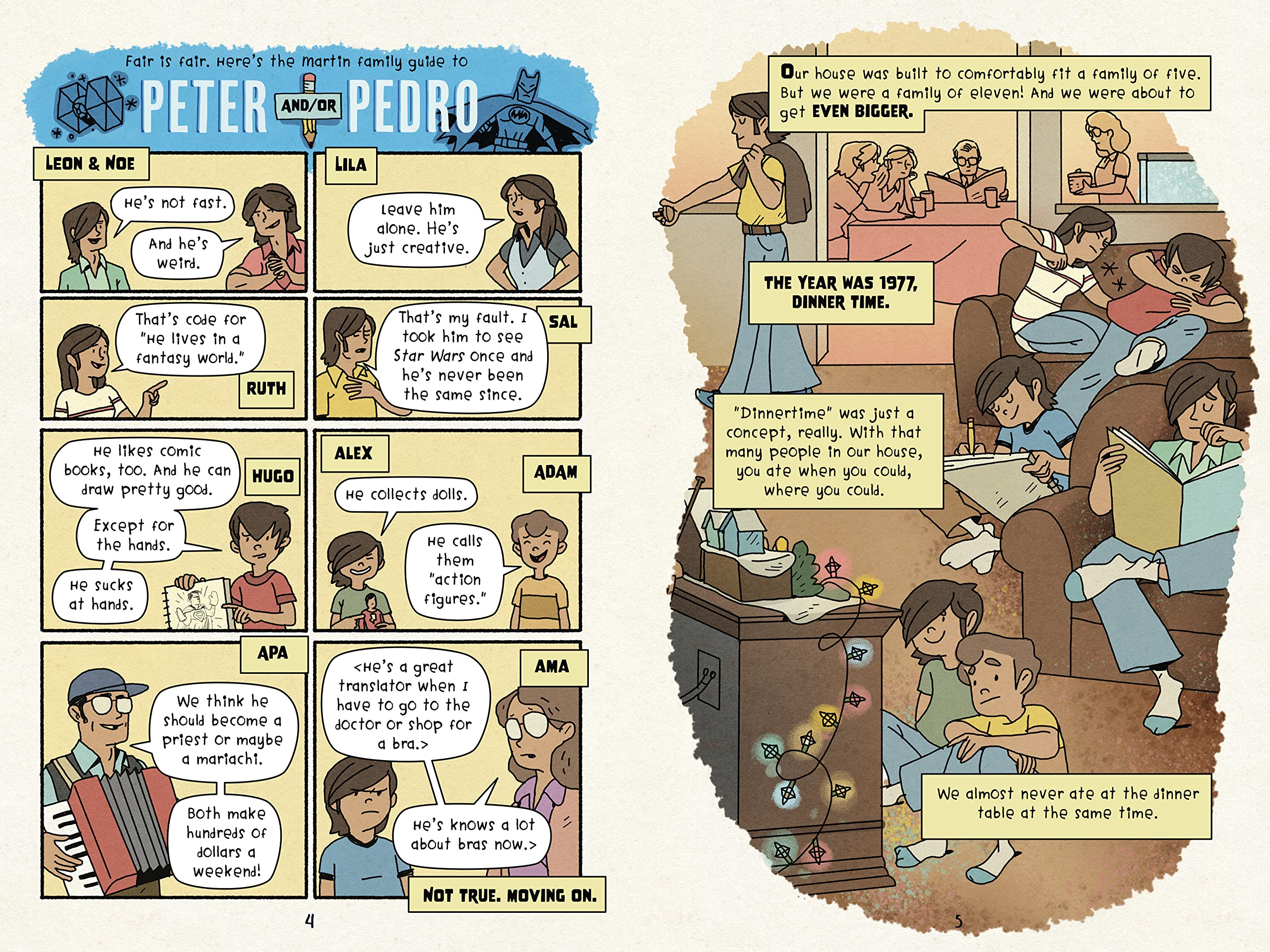
Summary:  Pedro’s house feels pretty small with his parents and eight brothers and sisters, so when he learns that his grandfather is coming to live with the family, he’s not happy.  Not only that, but the whole family has to travel to Mexico to pick up Abuelito.  The kids are divided into two groups: the five oldest were born in Mexico, and the younger four, including Pedro, arrived after the family had moved to California.  The older group takes a pick-up truck for the big road trip, and the rest of the family travels in a used RV.  There are plenty of adventures both on the trip and during the weeks they spend in Mexico with their extended family.  Pedro is in awe of his grandfather, who was part of the Mexican revolution, but by the end of the trip, he’s shown he has a few heroic qualities of his own.  Available in both English and Spanish language editions.  320 pages; grades 4-8.

Pros:  This road trip graphic novel strikes the perfect balance between funny and poignant, featuring a memorable immigrant family with ties to both Mexico and the United States.  Readers of a certain age will appreciate the loving references to Star Wars, Fleetwood Mac, Happy Days, and other 1970’s touchstones.

Cons:  I found the font a little hard to read, particularly the lowercase d’s that looked more like a’s.

Picture Day by Sarah Sax (Brinkley Yearbooks)

Published by Knopf Books for Young Readers

Summary:  Although her mom urges her to keep a low profile in middle school, Olivia wants to be seen.  Renaming herself Viv to differentiate herself from all the other Olivias, she takes to heart the words of a social media follower to be true to herself.  She chops off her hair right before school pictures are taken, causing a buzz around school.  Encouraged, Viv begins staging spectacles that get her noticed by the cool kids.  But her old friends Milo and Al feel left behind, and when Viv tries to include them in one of her spectacles, it’s a disaster.  Viv is forced to do some soul searching to decide where her loyalties lie, and ultimately she’s able to find a way to keep her old friends while being true to herself.  Includes an author’s note about an interesting way she generated story ideas that led to this graphic novel.  288 pages; grades 3-7.

Pros:  Another fun middle school graphic novel with a positive message about being yourself but not at the expense of others’ feelings and with some good observations about social media.  The author’s website says this book one of a planned series of four.

Cons:  Creating spectacles in middle school = extremely cringy.

Talia’s Codebook for Mathletes by Marissa Moss

Published by Walker Books

Summary:  Talia’s dealing with lots of ups and downs at the beginning of middle school, but the worst is that her neighbor and best friend Dash doesn’t want to be seen with a girl at school.  When Talia joins the mathletes, she learns that she’s the only girl, and the coach and some of the other boys treat her disrespectfully.  Fed up, she decides to form her own girls’ mathletes team.  Her two best friends aren’t interested in being on the team, but they’re supportive and help her get things going.  Much to her surprise, sixteen girls show up to the first meeting, and before long, the Mathlete Mermaids are ready for competition.  At the big meet, Talia messes up, but she learns from her mistake, and the rest of the team does well enough to win.  The boys are shocked but see that their sexism has lost them some valuable teammates, and the two teams decide to merge.  Talia has mixed feelings about this but is proud that she stepped up and created a way for girls to shine in math. Includes additional information about codes and an author’s note about her own experience with mathletes.  240 pages; grades 3-6.

Pros:  Middle school graphic novel fans will enjoy this story of STEM girl power that includes a number of fun codes, and that does an excellent job of chronicling middle school friendship and family issues without neatly resolving them all.  

Cons:  I was hoping that Talia’s parents, who focused on her mistake at the competition instead of her team’s win, would learn a lesson or two, but no such luck.