My Big Book of Outdoors by Tim Hopgood

Published by Candlewick Studio

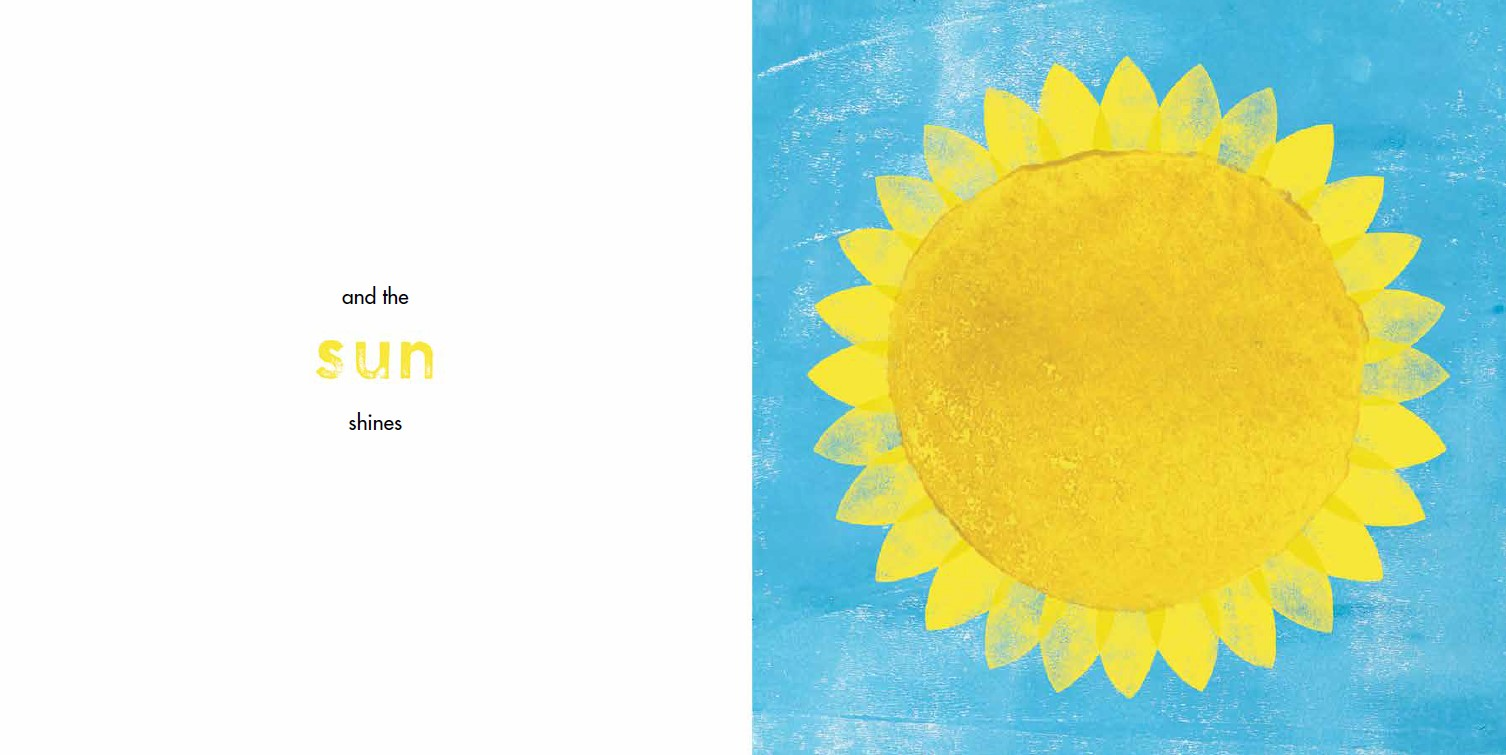
Summary:  Each of the four seasons is explored with poetry, crafts, and science and nature information.  For instance, here is a sample of the section on spring includes: poems called “Splish-Splash!” and “Rainbow, Rainbow”; what you might find under a rock (illustrated); how to make a chocolate nest; constructing a bug hotel; different types of eggs and feathers; and how to tell a frog and a toad apart.  Everything is illustrated with collage-style illustrations.  128 pages; grades 2-5.

Pros:  A delightful mishmash of seasonal facts, poetry, and crafts with plenty of big, bold, colorful illustrations.  Parents and preschool teachers will find lots of ideas here, but the craft instructions and scientific information are simple and straightforward enough for early elementary kids to enjoy on their own.

Cons:  It’s kind of a big book to haul along on your outdoor explorations.

Who’s Looking? How Animals See the World by Carol Matas, illustrated by Cornelia Li

Published by Orca Book Publishers

Summary:  As two sisters walk through various landscapes, the text and illustrations show how they are seen by different animals.  The first pages show how the younger sister saw the world as a baby and how the nearsighted older sister sees it without her glasses.  Other animals see fewer or more colors than humans, can see things from a greater distance, or have 360-degree vision.  Animals are shown on land, in the water, and flying in the sky.  The author’s note tells how a walk with her grandson inspired the book.  32 pages; ages 4-8.

Pros:  It’s very cool to see the world as other animals see it, and the illustrations bring this to life, particularly the ones that contrast what the animal sees with what the humans are seeing.  Kids are sure to find this fascinating.

Cons:  Some concepts, like seeing more colors than humans, were a little tricky to show in the illustrations.

Time to Shine: Celebrating the World’s Iridescent Animals by Karen Jameson, illustrated by Dave Murray

Published by Groundwood Books

Summary: The first page defines iridescence as “the rainbow-like shimmer seen on some bird feathers, fish scales, insect bodies and more.”  Each two-page spread after that shows a brilliantly-colored illustration of the iridescent animal with a rhyming couplet and a paragraph of additional information.  The final two pages show all the animals.  Includes additional information about iridescence (including the recent discovery of a dinosaur with iridescent feathers) and a list of sources.  32 pages; ages 4-8.

Pros:  The gorgeous illustrations are sure to catch kids’ eyes, and the brief but informative text will have them looking for iridescent animals wherever they go.

Cons:  Apparently there are no iridescent mammals.

Hilde on the Record: Memoir of a Kid Crime Reporter by Hilde Lysiak

Published by Chicago Review Press

Summary:  Readers familiar with the Hilde Cracks the Case series will already be acquainted with Hilde Lysiak, who wrote this memoir at the age of 14.  The daughter of a New York Daily News reporter, she started tagging along with her dad when she was 4.  When the family moved to suburban Pennsylvania, Hilde knew enough about journalism to start her own newspaper.  She started off with human interest stories, but was soon reporting on more serious issues, including a local murder that she got an exclusive on (and also described how police were trying to cover up the crime).  Hilde and her somewhat unconventional family were targeted by social media critics, and she has dealt with depression and an eating disorder.  Ultimately, she opted to discontinue her journalism career, but has continued to speak out about the importance of a free press.  163 pages; grades 4-8.

Pros:  This book came to me via interlibrary loan right before I came down with Covid, and it was a perfect read while I was home.  Hilde is an engaging writer who doesn’t shy away from difficult times she’s had, and I found her determination and hard work inspiring.  I also admired her family’s do-your-own-thing approach to raising their kids, which seems to have been successful.

Cons:  I was a little sad to learn that Hilde has discontinued her journalism career and look forward to hearing about what she does next.

The Adventures of Dr. Sloth: Rebecca Cliffe and Her Quest to Protect Sloths by Suzi Eszterhas

Published by Millbrook Press

Summary:  Wildlife photographer Suzi Eszterhas teams with Dr. Rebecca Cliffe (a.k.a. Dr. Sloth or Becky) to introduce kids to sloths, including different sloth species, their habitats, diets, behavior, and babies.  Readers learn about dangers to sloth, which mostly come from their interactions with the human world.  Becky’s work is described, from her childhood interest in nature and biology to the groundbreaking techniques she has used to observe sloths, becoming one of the first scientists to study these animals in-depth.  The organization she founded, Sloth Conservation Foundation, focuses on saving sloths in the wild, and readers get some tips on how they can help.  Includes a glossary and additional resources.  40 pages; grades 3-6.

Pros:  I’m a big Suzi Eszterhas fan because her books are so appealing to young readers.  Her wildlife photography is amazing, and she tends to write about animals with a lot of kid appeal.  This book is no exception, and I look forward to adding it to my library.

Cons:  Can’t wait for the first kid to learn the fascinating facts about sloths’ elimination:  they only pee and poop once a week and lose about 30 percent of their body weight when they do.

Mushroom Rain by Laura Zimmerman, illustrated by Jamie Green

Published by Sleeping Bear Press

Summary:  Mushrooms can suddenly pop up anywhere, especially after a rain.  With a wide variety of colors and scents, the mushrooms are often used as food, including by humans.  The mushrooms may seem to disappear, but they continue to grow underground, the largest stretching for miles after growing for thousands of years.  Mushrooms reproduce by spores, which can even seed clouds and produce the rain that encourages the growth of new mushrooms.  Includes four pages of information about mushrooms, including a craft and additional resources.  32 pages; grades K-3.

Pros:  A fascinating look at something many of us may take for granted, with gorgeous close-up illustrations of a wide variety of mushrooms.

Cons:  Is it just me, or are mushrooms just a little bit creepy?

Surviving the Wild (series) by Remy Lai

Published by Henry Holt and Company

Summary:  Each book in this new graphic novel series tells a true story of survival from an animal’s perspective.  Star and her mother and aunt seek a new home due to deforestation.  They swim to an island where they’re captured by humans and sent to an elephant sanctuary.  Rainbow survives a wildfire in the Australian bush country and is taken to a koala hospital before being released back into the wild.  Both books include several pages at the end that tell more about the animals, their story, and what kids can do to help the environment.  108 pages; grades 1-4.

Pros:  A perfect trifecta of cute and funny animals, graphic novel format, and important environmental information.  Book 3, Sunny the Shark, will be available in August.

Cons:  The ways to take action feel like such tiny drops in the whole climate change bucket.

Sun in My Tummy by Laura Alary, illustrated by Andrea Blinick

Published by Pajama Press

Summary:  Oatmeal, blueberries, and milk may seem like a ho-hum breakfast, but there is magic in the foods we eat.  The oats and the blueberries grew out of the soil, warmed by the sun, and watered by the rain.  They make food from sunlight, creating seeds which can be used to grow new plants.  The cow was able to make milk because she ate grass that grew with the help of sun and rain as well.  “Inside everything, if you look deep enough, you will find the sun. Warm-hearted. Generous. Giving.”  Includes additional information about photosynthesis.  32 pages; grades K-3.

Pros:  This is an excellent science book for primary grades, starting with a concept everyone will recognize and using free verse and whimsical illustrations to foster a sense of wonder about the natural world.

Cons:  I felt like this book could use a subtitle, since “Sun in My Tummy” may not immediately call to mind photosynthesis.

I Begin With Spring: The Life and Seasons of Henry David Thoreau by Julie Dunlap, illustrated by Megan Elizabeth Baratta

Published by Tilbury House Publishers

Summary:  This biography of Henry David Thoreau looks like a nature journal, with lots of watercolor sketches of the flora and fauna Henry observed through a year in Concord.  A timeline running along the bottom of all the pages takes the reader through changes he would have seen through the seasons.  Beginning with his childhood and continuing through his years as a teacher, writer, activist, and naturalist, the story of Henry’s life is closely tied to Concord and the surrounding countryside. Includes additional information about Thoreau’s Kalendar that he was working on at the time of his death which was a record of his observations of nature over many years, and which has been used recently to track climate change.  There are also instructions for making your own Kalendar and a fairly extensive list of resources.  96 pages; grades 3-6.

Pros:  This beautiful volume combines lots of illustrations with an engaging narrative that integrates the seasons of the year with the story of Thoreau’s life. The additional information makes his work relevant today and encourages kids to pursue their own explorations of the natural world.

Cons:  While Henry’s abolitionist work is celebrated here, there’s no mention of the disturbingly racist ideas of his mentor Louis Agassiz.

Serengeti: Plains of Grass by Leslie Bulion, illustrated by Becca Stadtlander

Published by Peachtree Publishing Company

Summary:  Each two-page spread depicts a scene from the Serengeti, with a four-line poem and a paragraph of additional information.  An introductory page describes the ecosystem of the Serengeti, and a note at the end gives additional information about the poetic form, which is derived from an East African form called the utendi.  Also includes a glossary, a reading list, and information on Serengeti stewardship, including three organizations that are working to preserve the Serengeti.  48 pages; grades 2-6.

Pros:  A beautiful science and poetry book, with gorgeous paintings of the Serengeti that will catch the eye of any animal lover.  The additional information about the poems and the Serengeti makes this an excellent resource for language arts, geography, and science.

Cons:  I wish there had been some information about the humans who live in that area.