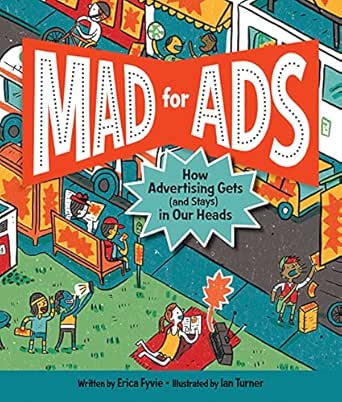
Mad for Ads: How Advertising Gets (and Stays) in Our Heads by Erica Fyvie, illustrated by Ian Turner

Published by Kids Can Press

Amazon.com: Mad for Ads: How Advertising Gets (and Stays) in Our Heads  eBook: Fyvie, Erica, Turner, Ian: Kindle Store

Summary:  Using two fictional ad campaigns, one for a new bubble gum and one for a recycling service, the author takes readers through the steps of how products and services are marketed and advertised (which, I learned, are not the same thing).  From traditional ads to social media, kids will learn the various insidious methods companies use to get their loyalty…and their dollars.  There’s a chapter about digital footprints, tracking, and privacy, which at this point seems like kind of a lost cause, but is still good to be aware of.  Includes a glossary, bibliography, and index. 64 pages; grades 4-8.

Pros:  This would be a great text to use for a media literacy class.  The writing and cartoon-style illustrations are engaging, with plenty fascinating facts and information that kids will recognize from their everyday lives.

Cons:  While the fiction advertising campaigns worked well to teach about different aspects of marketing, it would have been nice to have some real-world examples as well.

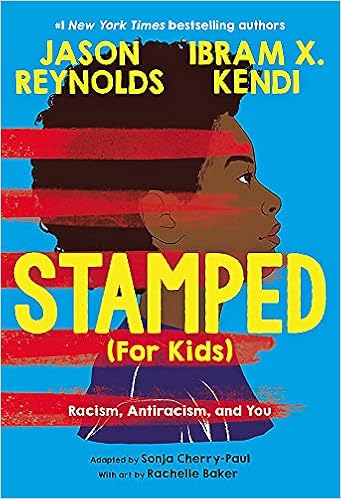
Stamped (For Kids): Racism, Antiracism, and You illustrated by Rachelle Baker and adapted by Sonja Cherry-Paul, from Stamped: Racism, Antiracism, and You by Jason Reynolds, a remix of Stamped from the Beginning by Ibram X. Kendi

Published by Little, Brown and Company

Stamped (For Kids): Racism, Antiracism, and You: Cherry-Paul, Sonja,  Reynolds, Jason, Kendi, Ibram X., Baker, Rachelle: 9780316167581:  Amazon.com: Books

Summary:  It started with Ibram X. Kendi’s book Stamped from the Beginning.  Then Jason Reynolds did a “remix” for teens: Stamped: Racism, Antiracism, and You, and now there is this version for elementary kids.  In keeping with Reynolds’ assertion that Stamped isn’t a history book, Cherry-Paul writes that her book talks about history but is “directly connected to our lives as we live them right this minute.”  She suggests using rope as a metaphor when learning about race: a rope can lift climbers, join people together, or be used as a weapon.  In 24 chapters she traces the history of racism in America from 1415 to the present.  Throughout the narrative there are boxes inviting readers to pause and think more deeply about an idea that’s been introduced and how it relates to them.  The final section, “An Antiracist Future” calls kids to lead their generation in learning all they can about the “tree of racism” and to finally be the ones to chop it down.  Includes a timeline, glossary, and lists for further reading.  176 pages; grades 3-6.

Pros:  Every bit as compelling as Jason Reynolds’ book, written at a level that will be accessible to kids as young as eight or nine.  Essential reading for kids, teachers, and parents.

Cons:  Similar to my “Con” for the Reynolds book, this felt like a whirlwind tour through history; readers will only get a taste of many different interesting people and events. Hopefully, they’ll be inspired to use the reading lists to learn more.

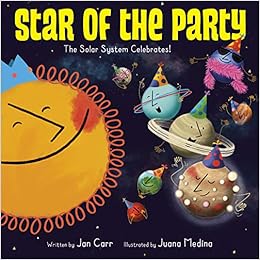
Star of the Party: The Solar System Celebrates! by Jan Carr, illustrated by Juana Medina

Published by Crown Books for Young Readers

Star of the Party: The Solar System Celebrates!: The Solar System  Celebrates!: Carr, Jan: 9781524773137: Amazon.com: Books
Star of the Party: The Solar System Celebrates!: The Solar System  Celebrates!: Carr, Jan: 9781524773120: Amazon.com: Books

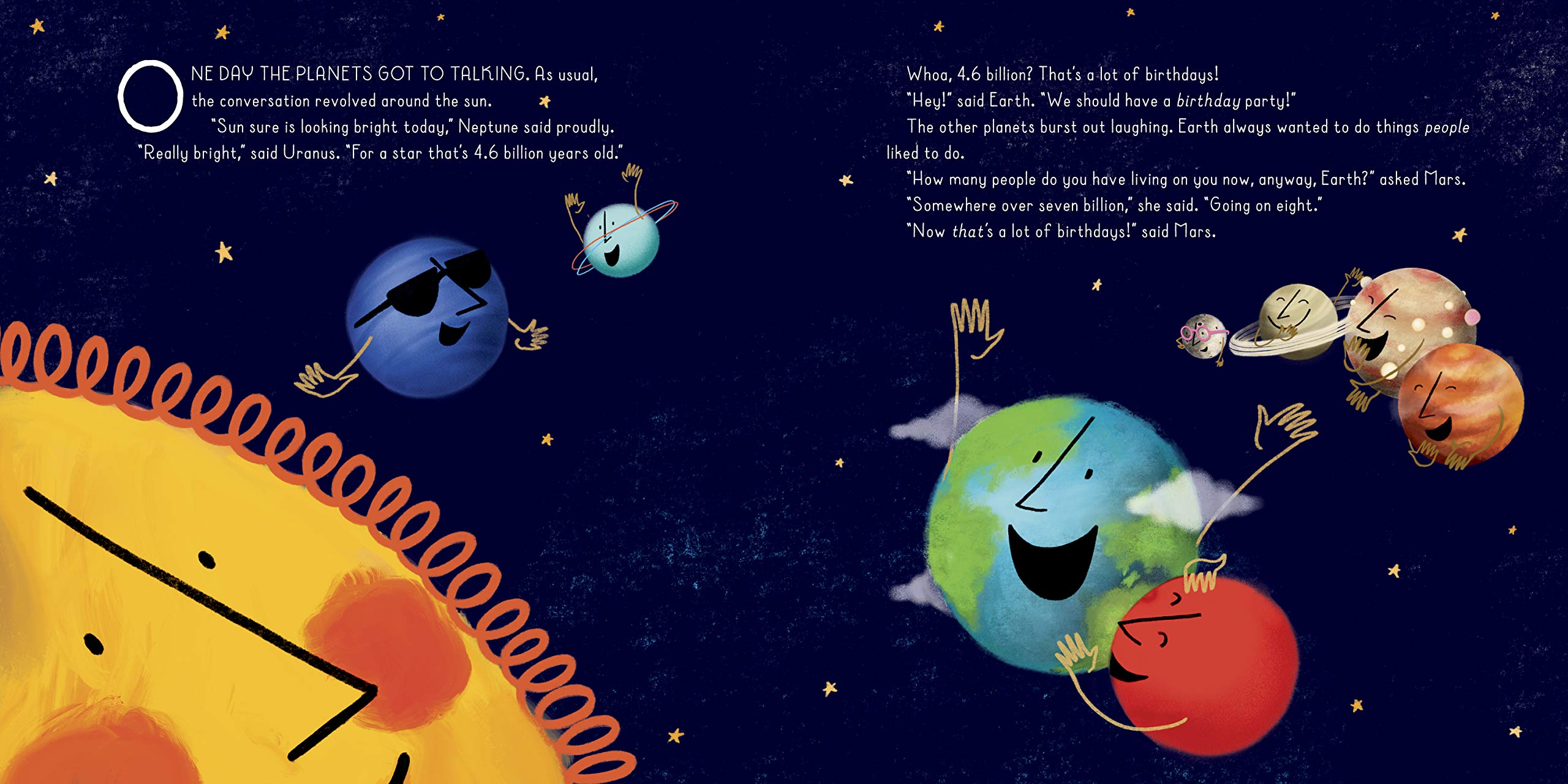
Summary:  The sun is 4.6 billion years old, and the planets have decided to throw a birthday party.  They consider the guest list (if they invite Pluto, will they have to include the other dwarf planets?  Can a moon be counted as a plus-one if a planet has over 70 moons?) and what to give as a gift, finally settling on a testimonial from each one of them.  When the big day arrives, each one has a touching message, and as a surprise, the mysterious voice of Planet X is heard, wishing the sun a happy birthday from a great distance.  The sun is pretty reserved, but she declares the party “Stellar”, while looking both beaming and radiant.  Includes a list of websites, with the note that scientists are constantly learning new facts about the solar system, so the web can provide the most up-to-date information.  40 pages; grades K-3.

Pros:  A great combination of a fun story and lots of facts about the planets that would make a good companion to Adam Rex’s Pluto Gets the Call.  I liked the acknowledgement that science changes so fast that books can go out of date quickly.

Cons:  Pluto got left off the guest list.

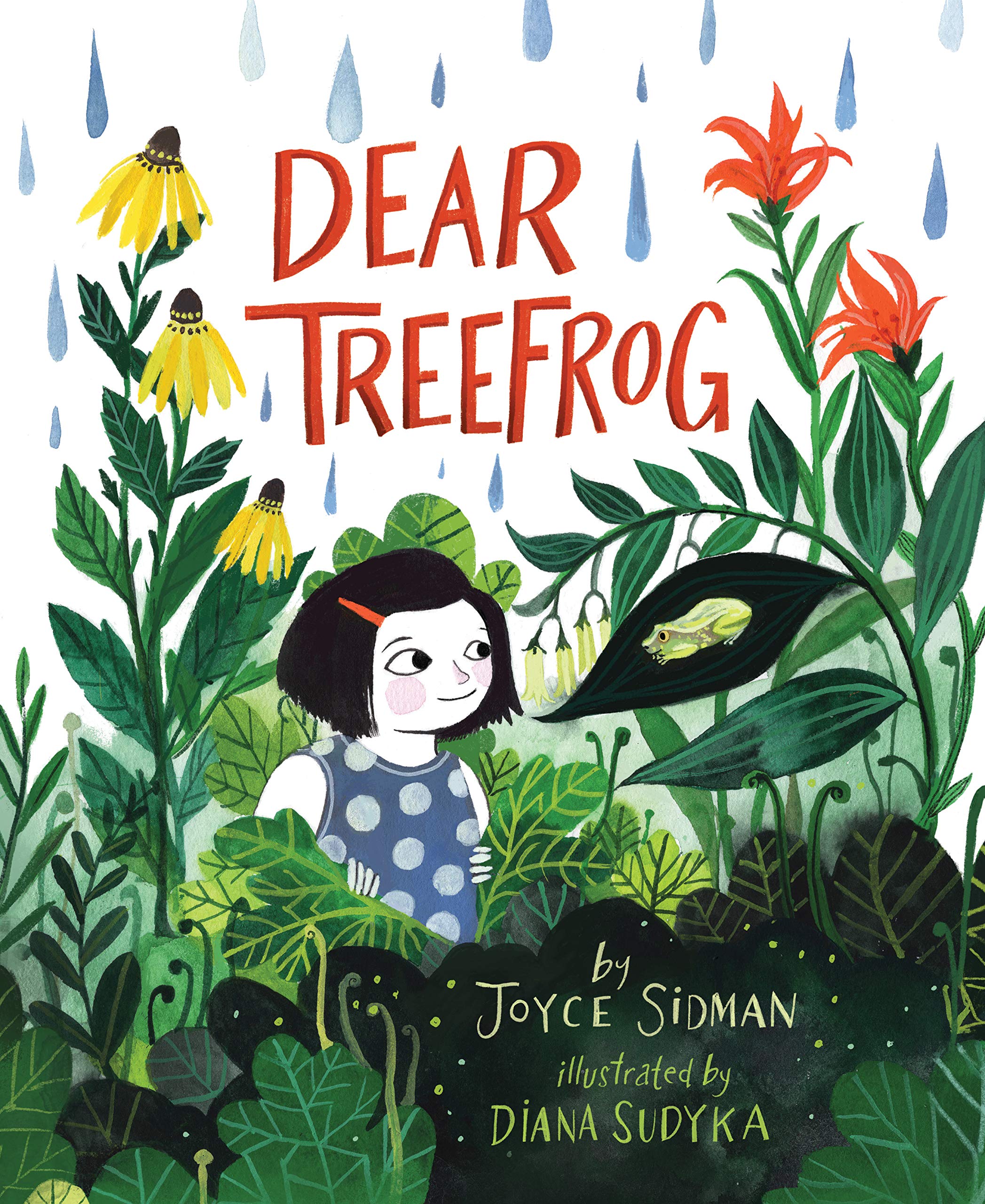
Dear Treefrog by Joyce Sidman, illustrated by Diana Sukyka

Published by HMH Books for Young Readers

Dear Treefrog: Sidman, Joyce, Sudyka, Diana: 9780358064763: Amazon.com:  Books
Bound To Stay Bound Books, Inc. - Bookstore

Summary:  A young girl discovers a treefrog in the garden outside her new home.  As the two travel through the seasons together, she makes discoveries about both the frog and herself.  It’s summer when she moves in. Some kids come to play, but they’re too noisy for both her and the frog.  When school starts, she meets a boy who feels like more of a kindred spirit, and she brings him to meet the frog.  The two friends enjoy winter, and in the spring, their patience is rewarded when they see the treefrog once again.  Each page offers some treefrog facts as well as a poem and illustration. Includes a page of questions and answers that gives more treefrog information. 40 pages; ages 4-8.

Pros:  This delightful picture book functions as both a friendship story and a nonfiction book about treefrogs…and is narrated with Joyce Sidman’s simple but beautiful poetry.

Cons: No additional resources for further research.

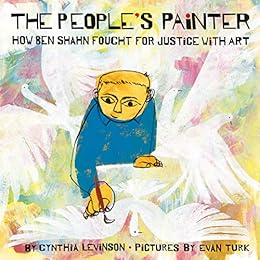
The People’s Painter: How Ben Shahn Fought for Justice with Art by Cynthia Levinson, pictures by Evan Turk

Published by Abrams Books for Young Readers

The People's Painter: How Ben Shahn Fought for Justice with Art - Kindle  edition by Levinson, Cynthia, Turk, Evan. Children Kindle eBooks @  Amazon.com.
Bringing Unsung Heroes to Light: Talking about The People's Painter with  Cynthia Levinson and Evan Turk - A Fuse #8 Production

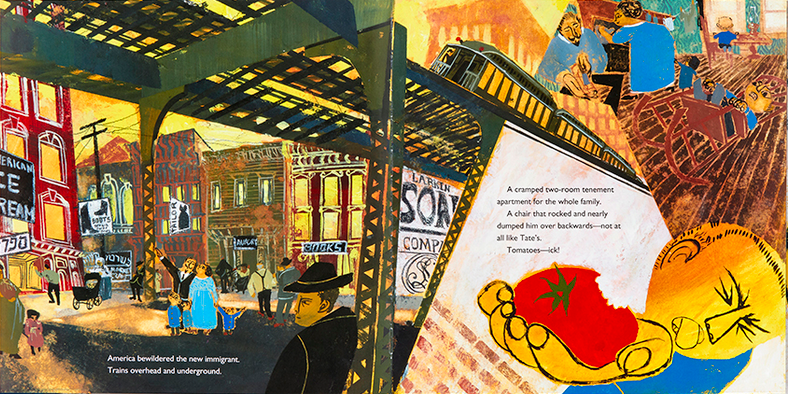
Summary:  As a child growing up in Lithuania, Ben Shahn had two passions: art and justice.  These continued after he and his family immigrated to America when he was 8 years old.  Lacking the funds to attend college, Ben apprenticed himself to a lithographer and studied art at night.  He worried that the art that he learned about in school was different from what he wanted to paint: stories.  In 1927, outraged by the trial of Sacco and Vanzetti, Ben created 23 paintings to tell their stories.  Later he was hired by the U.S. government to document the poverty of the Great Depression through photographs and paintings. He continued to create stories with his art through the civil rights movement and the Vietnam War until his death in 1969.  Includes notes from the author and illustrator; a photo of Ben Shahn; a timeline of his life; and a bibliography and source notes.  48 pages; grades 1-5.

Pros:  An engagingly written story of Ben Shahn’s life, focusing on both his art and his passion for justice.  His work influenced the illustrations of Evan Turk, whom I think we can all agree should finally get some Caldecott recognition.

Cons:  None of Shahn’s art was included.

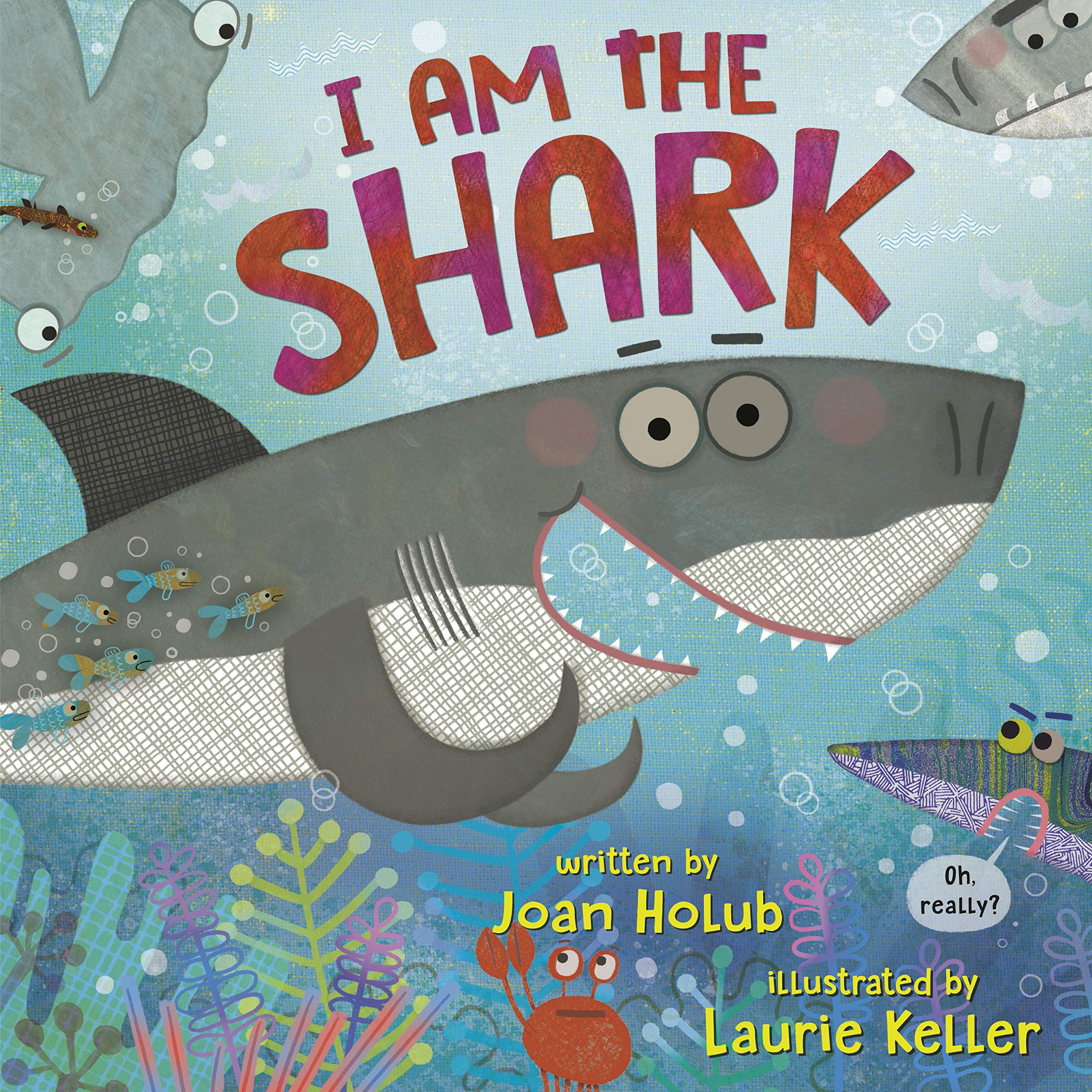
I Am the Shark by Joan Holub, illustrated by Laurie Keller

Published by Crown Books for Young Readers

I Am the Shark: Holub, Joan, Keller, Laurie: 9780525645283: Amazon.com:  Books

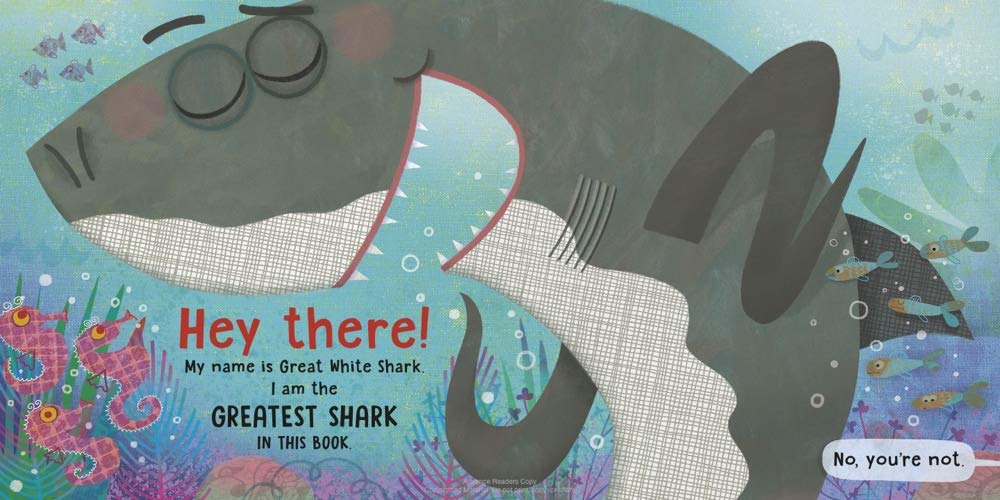
Summary:  A great white shark makes the case that he is the greatest.  Or is he?  Turns out, there are other sharks that are bigger, smaller, faster, and every other superlative he tries to be.  By the end, he’s ready to change his name to the just-okay white shark or the not-so-great white shark.  But then a little fish comes along and tells him there’s always going to be someone who is bigger, faster, smarter, or whatever than you are, and it’s best being happy to be you.  That makes the great white happy, and he concludes by flashing his 300-tooth-grin…the greatest smile in the book.  Includes thumbnails of all sharks mentioned with additional information and “More Books to Sink Your Teeth Into”.  48 pages; ages 4-9.

Pros:  It’s a no-brainer that any book featuring sharks is going to be hugely popular, and the funny premise of this one, combined with Laurie Keller’s humorous illustrations will only add to that.  Don’t be misled by all the jokester sharks, though…there is also plenty of information to fill your hammerhead shark-size-brain.

Cons:  I thought the pages with a labelled diagram of the great white shark and the shark facts in the middle of the book kind of interrupted the story; they seemed more like back matter.

The Floating Field: How a Group of Thai Boys Built Their Own Soccer Field by Scott Riley, illustrated by Nguyen Quang and Kim Lien

Published by Millbrook Press

The Floating Field - By Scott Riley (hardcover) : Target
The Floating Field: How a Group of Thai Boys Built Their Own Soccer Field  Book Review |

Summary:  Prasit Nemmin and his friends could only play soccer a couple of times a month, since the sandbar they played on in their island village of Koh Panyee, Thailand was underwater the rest of the time.  Watching the World Cup on TV made them want to play every day, inspiring their plan to build a floating field.  Using cast-off wood and old barrels, they were able to build a platform that could stay afloat on top of buoys.  They practiced just about every day, and their persistence paid off with a third-place win at a local tournament.  Includes a two-page author’s note with photos and maps, and a note from Prasit about how and why he and his friends built the field back in 1986.  His love of soccer endures, and his son has played on the national champion Panyee Football Club.  Also includes some soccer words in Thai and a bibliography.  40 pages; grades 2-6.

Pros:  A great read for soccer fans and anyone who enjoys a good underdog story, with an emphasis on the importance of teamwork and persistence.  The back matter adds extra dimensions to the story.

Cons:  It looked like a huge nuisance to have to go into the water any time the ball went out of bounds. 

Wilbur Wright Meets Lady Liberty by Robert Burleigh, illustrated by Wendell Minor

Published by Henry Holt and Co.

Wilbur Wright Meets Lady Liberty | Robert Burleigh | Macmillan

Summary:  On September 29, 1909, Wilbur Wright flew for six and a half minutes around the Statue of Liberty, the first time either of the Wright Brothers had flown over a body of water.  His feat was witnessed by a large crowd of New Yorkers, including 10-year-old Juan Trippe, whose conversation with his father bookends the main narrative of this story; Trippe would grow up to found Pan Am Airways.  The story is supplemented by extensive back matter, including an author’s note with additional information about the Wright Brothers and their New York flights (a few days later, Wilbur took a longer flight down the Hudson River).  There’s also a list of facts about other aspects of the story, an illustrator’s note, and a bibliography.  Front end papers show a newspaper article reporting the event, and back papers show a map of the flight.  40 pages; grades K-5.

Pros:  This veteran author-illustrator team has created a picture book that perfectly captures the tension and excitement of Wilbur Wright’s flight, while also conveying the peacefulness of flying.  The extensive back matter adds a lot of information, and is written in a way that is accessible to younger readers.

Cons:  I wish the back matter had included a few photos.

This Very Tree: A Story of 9/11, Resilience, and Regrowth by Sean Rubin

Published by Henry Holt and Co.

Amazon.com: This Very Tree: A Story of 9/11, Resilience, and Regrowth  (Audible Audio Edition): Sean Rubin, Jennifer Ceci, Macmillan Young  Listeners: Audible Audiobooks
This Very Tree: A Story of 9/11, Resilience, and Regrowth: Rubin, Sean:  9781250788504: Amazon.com: Books

Summary:  A Callery pear tree narrates its experiences, beginning with its earliest days in a plaza near the World Trade Center.  It was buried on 9/11, and near death when discovered in the rubble several weeks later.  Moved to a different location, it survived against expectations, and in December 2010, it was dug up and replanted in a new plaza near its former location.  Surrounded by other trees that give it strength, the Survivor Tree helps the people who come to see it by giving them peace, hope, and the promise that spring will always come again.  Includes an author’s note; a two-page history of the World Trade Center, 9/11, and the Survivor Tree; a note on the illustrations; and a list of six sources.  48 pages; grades K-5.

Pros:  A beautifully written and illustrated story that makes a unique introduction to the events of 9/11 and also speaks to anyone who has survived a traumatic event.

Cons:  The events of 9/11 are not described at all (“It was an ordinary morning.  Until it wasn’t”), so kids will definitely need an introduction before reading this book.

Fearless World Traveler: Adventures of Marianne North, Botanical Artist by Laurie Lawlor, illustrated by Becca Stadtlander

Published by Holiday House

Fearless World Traveler: Adventures of Marianne North, Botanical Artist:  Lawlor, Laurie, Stadtlander, Becca: 9780823439591: Amazon.com: Books

Summary:  Growing up in Victorian England, Marianne North was never encouraged in her passions for art and botany.  Self-taught in both, she stayed home and cared for her “irritable, demanding” father until his death when she was 40.  When an elderly widow invited her to be a traveling companion to North America, Marianne jumped at the chance.  This trip led her to Jamaica and the tropics she had long dreamed of seeing.  She eventually circumnavigated the world several times, seeking out exotic plant species that she could paint.  When her paintings crowded her London flat, she arranged to have a gallery built for them as part of the Royal Botanic Gardens.  The Marianne North Gallery opened in 1882 with 627 paintings on display.  She spent the last few years of her life at home in the English countryside, gardening, painting, and writing her memoirs before her death in 1890 at the age of 59.  Includes additional information on her legacy and writings, as well as sources and a who’s who of people Marianne encountered throughout her life.  44 pages; grades 2-5.

Pros:  This fascinating account of a woman who defied social expectations to lead an adventurous life makes for an inspiring read.  Her single-minded passions, preference for being alone, and discomfort with social situations made me wonder if she was neurodivergent.  The brilliant illustrations capture the spirit of North’s work, and make sure to check out the endpapers for reproductions of some of her paintings (identified in the back matter).

Cons:  The small font of the text.