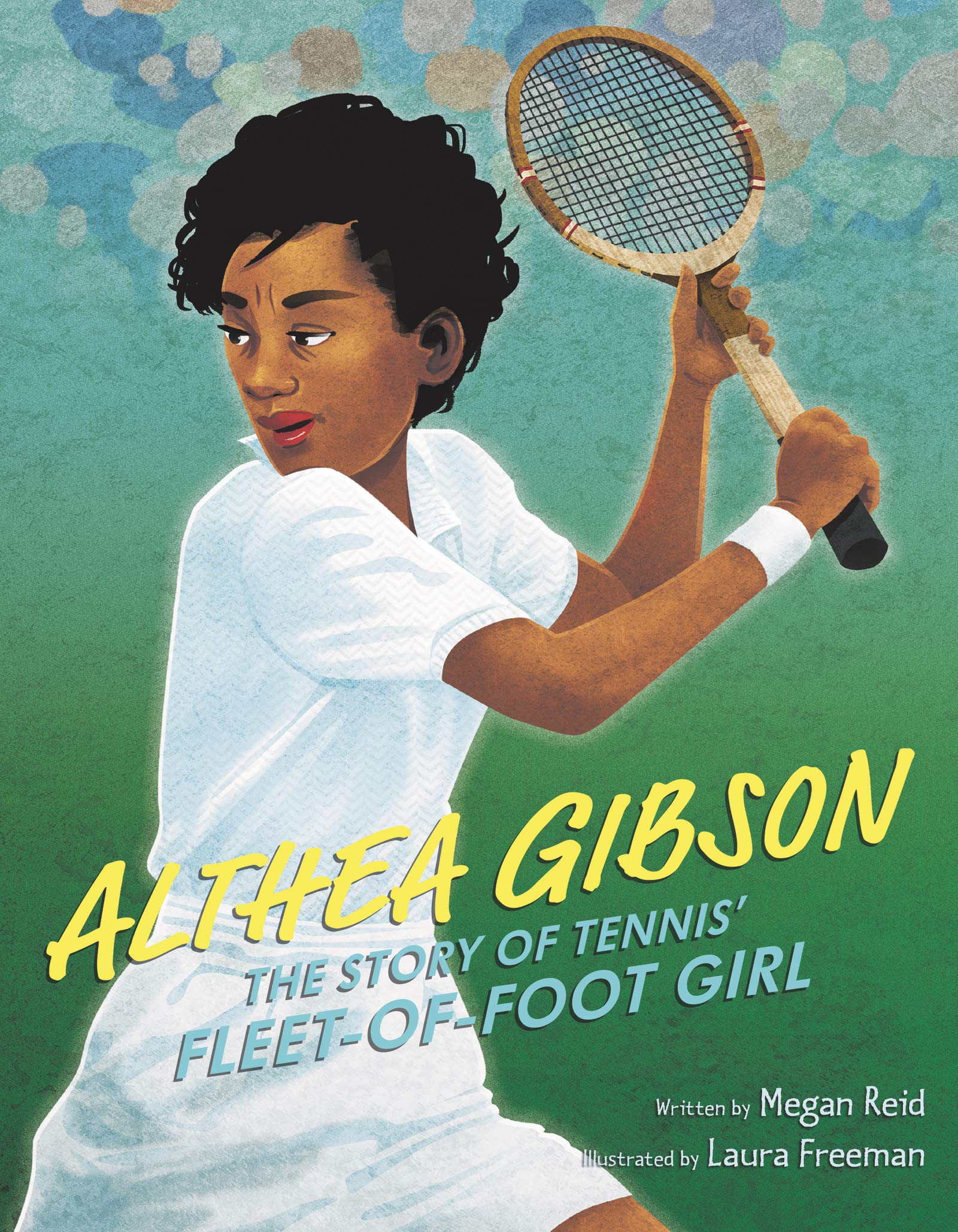
Althea Gibson: The Story of Tennis’ Fleet-of-Foot Girl by Megan Reid, illustrated by Laura Freeman

Published by Balzer + Bray

Image result for althea gibson the story of tennis' fleet-of-foot girl

Summary:  From a young age, Althea Gibson excelled at all sports.  Growing up in Harlem, she didn’t know much about the world of tennis, but when she started hanging out at the Cosmopolitan Tennis Club (tennis club for black people in her neighborhood), people immediately took notice.  She worked at the club in exchange for lessons, and before long she was traveling with the all-black American Tennis Association. But Althea had higher aspirations, and, in 1950, she courageously moved to the all-white world of professional tennis.  She lost a lot at first and was not always a gracious loser, but she decided to learn from her defeats, and slowly started moving up the ranks. In 1957 and 1958, she made history with back-to-back Wimbledon wins, opening the door for other black players to compete at the top levels of tennis.  Includes an author’s note, timeline, and a list of additional resources. 40 pages; grades 1-5.

Pros:  An inspiring picture book biography of a natural athlete with a big personality who refused to accept the social norms of her day.  The back matter makes it an excellent choice for research–although the author’s note only hints at Althea’s post-tennis life which sounds pretty interesting.

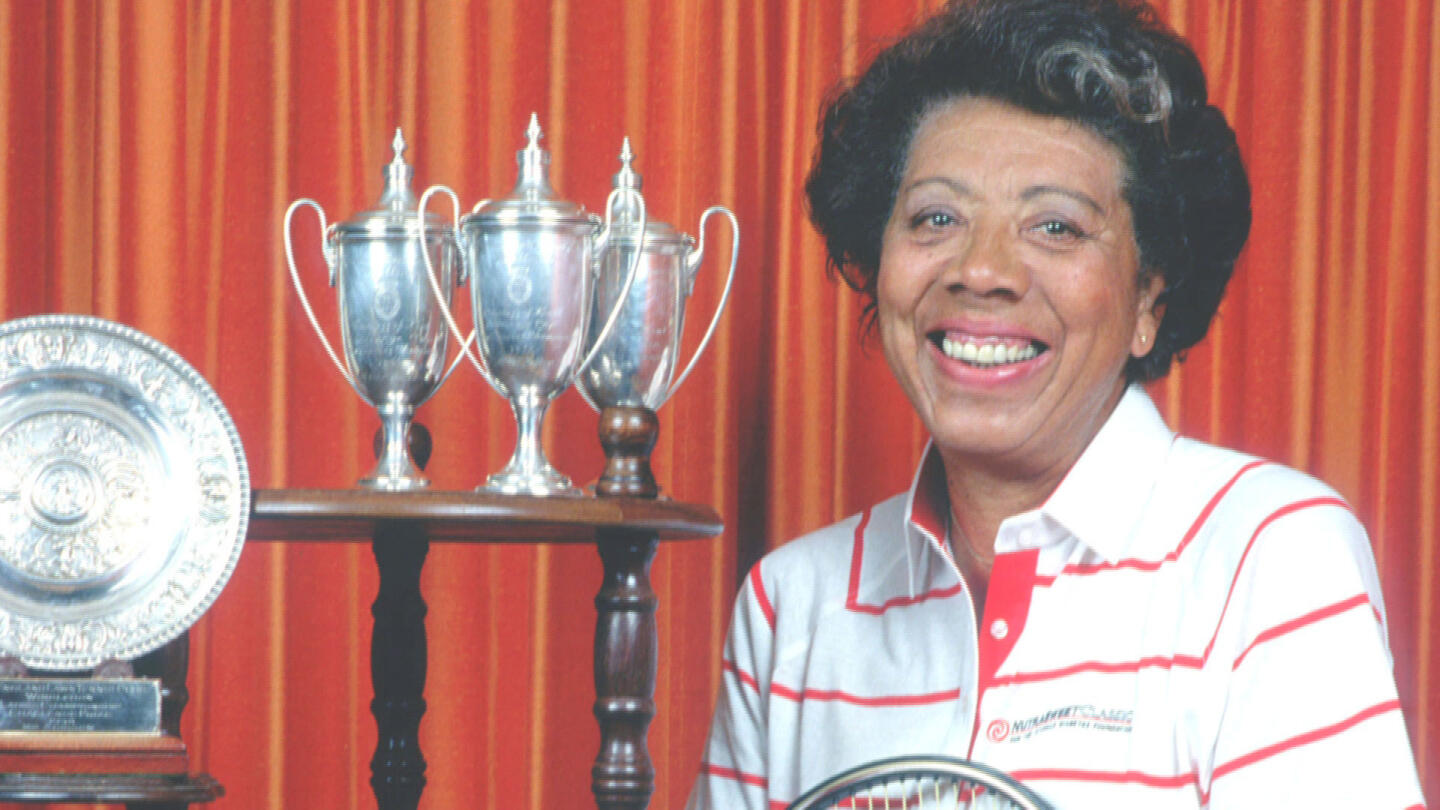
Cons:  Once again, no photos.  Here’s a woman who lived into the 21st century, for crying out loud, there must be a ton of photographs of her.  

If you would like to buy this book on Amazon, click here.

Image result for althea gibson     Image result for althea gibson      Image result for althea gibson


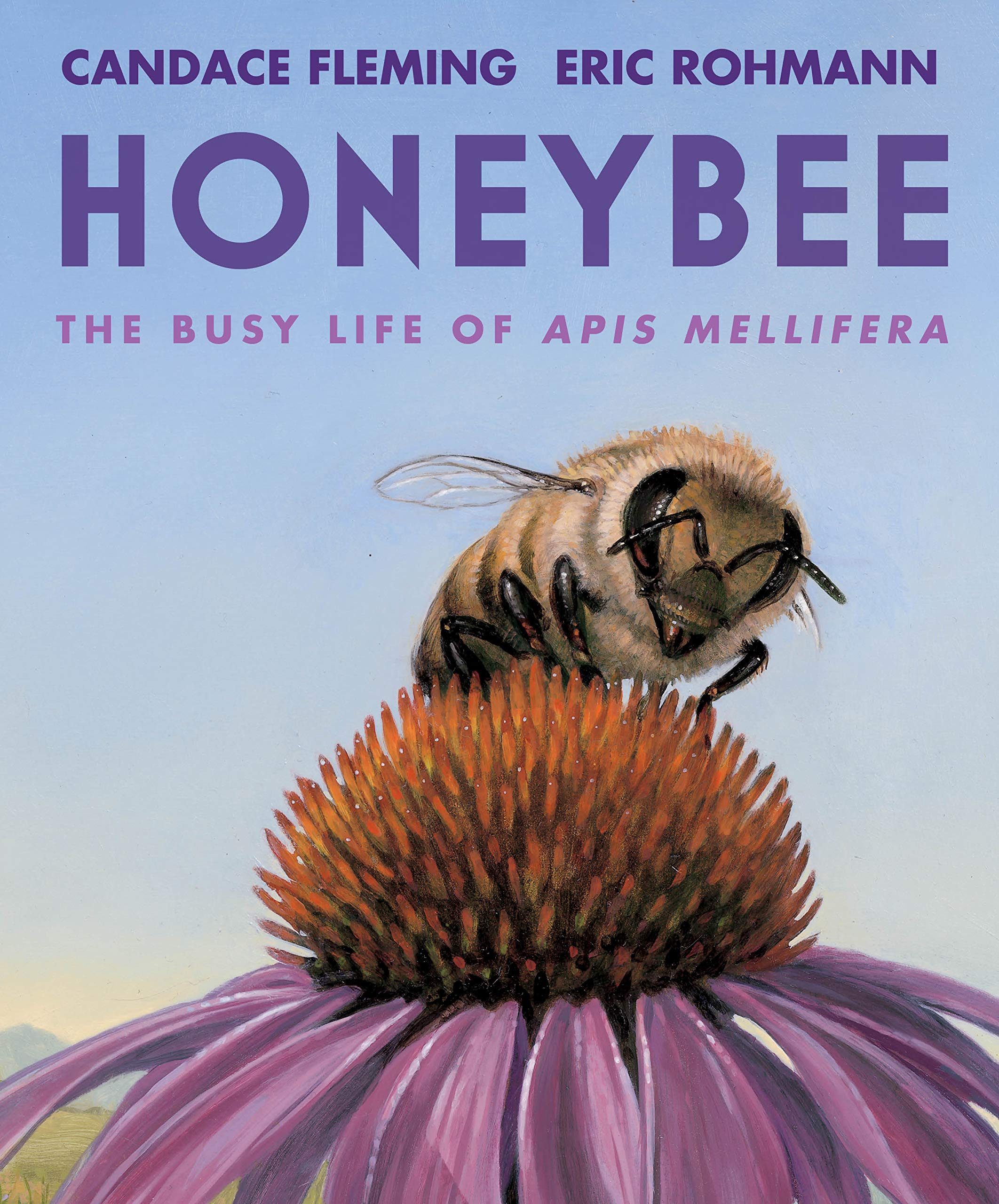
Honeybee: The Busy Life of Apis Mellifera by Candace Fleming, illustrated by Eric Rohmann

Published by Neal Porter Books

Image result for honeybee candace fleming amazon

Summary:  A new worker bee pushes her way out of her cell on the pages before the title page.  Apis Mellifera, or Apis for short, she gives new meaning to the phrase “busy as a bee” as she cleans up the hive, feeds the larvae, cares for the queen, and builds and protects the hive.  Finally, on day 25 of her life, she is ready to fly to the fields, where she spends the next ten days collecting nectar from 30,000 flowers before her life is over.  As she falls to the ground, back in the next, a new Apis Mellifera emerges from a cell.  Includes a detailed diagram of a bee’s anatomy; additional information about bees and how to help them; and additional books and websites for further research.  40 pages; grades 1-5.

Pros:  The award-winning team that brought you Giant Squid has created another marvelous nonfiction book.  The poetic text, amazingly lifelike illustrations, and extensive back matter make this an outstanding resource for research or reading for enjoyment.

Cons:  I started getting impatient for Apis to fly already.

If you would like to buy this book on Amazon, click here.

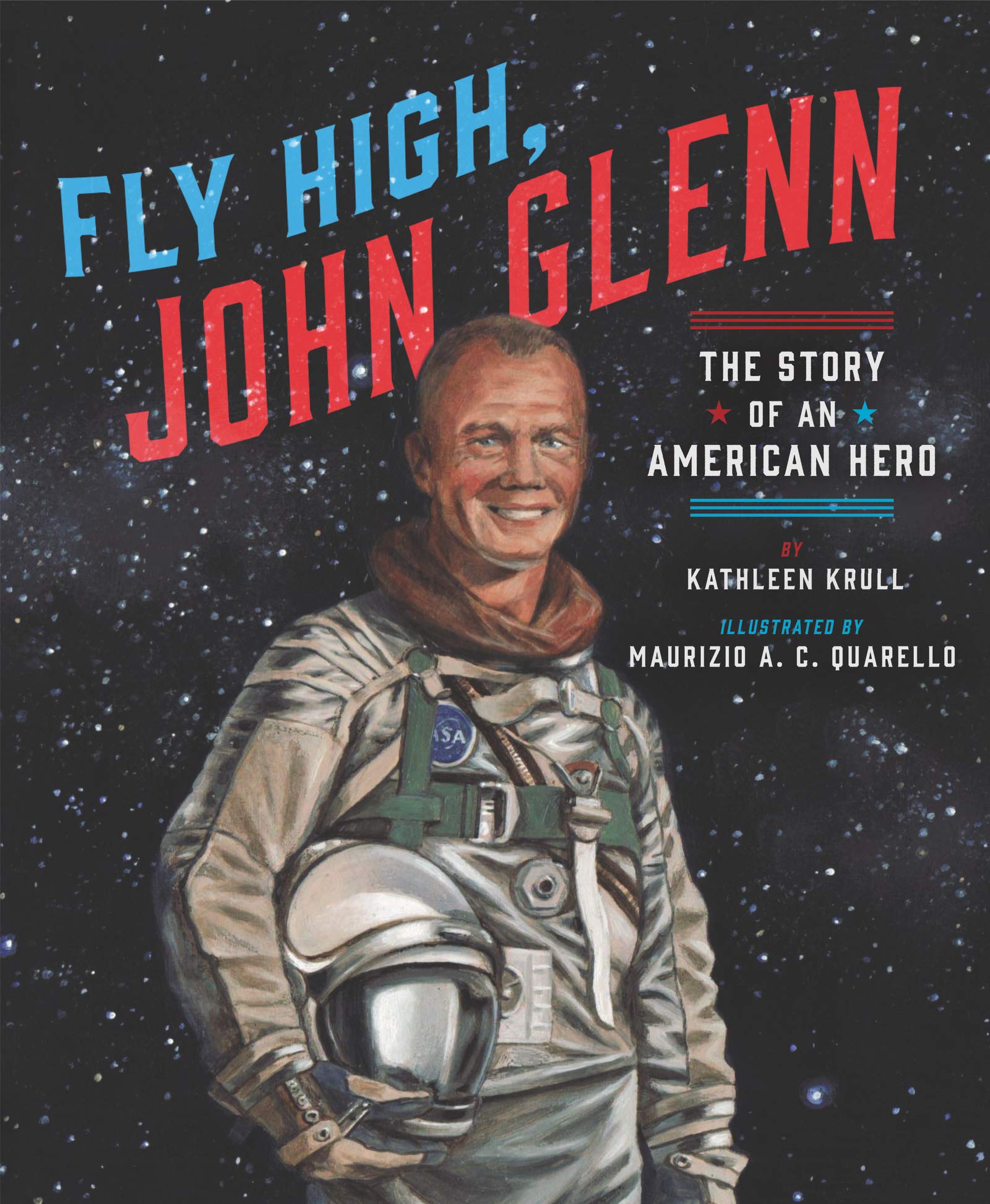
Fly High, John Glenn: The Story of an American Hero by Kathleen Krull, illustrated by Maurizio A. C. Quarello

Published by HarperCollins

Image result for fly high john glenn

Summary:  John Glenn dreamed of flying from his early days growing up in Ohio.  He earned his pilot’s license at age 20, becoming a fighter pilot during World War II.  He kept flying after the war, flying the first supersonic flight across the United States. When NASA announced Project Mercury, a mission to launch a man into orbit around the Earth, candidates were selected from the country’s 508 test pilots.  Glenn was one of the seven chosen, and on February 20, 1962, he became the first man to orbit the Earth aboard his space capsule Friendship 7.  Despite a few glitches, the mission went well, and Glenn returned to a hero’s welcome.  He continued to serve his country as a U.S. senator, and in 1998, became the oldest person to fly in space at age 77.  Includes additional information, a timeline, and a bibliography. 48 pages; grades 2-5.

Pros:  This is quite a complete biography for a picture book, including plenty of information on John’s career and family.  The realistic paintings are beautiful, particularly the ones of outer space.

Cons:  Due to the length, primary-grade audiences might get a bit antsy before the last page.

If you would like to buy this book on Amazon, click here.

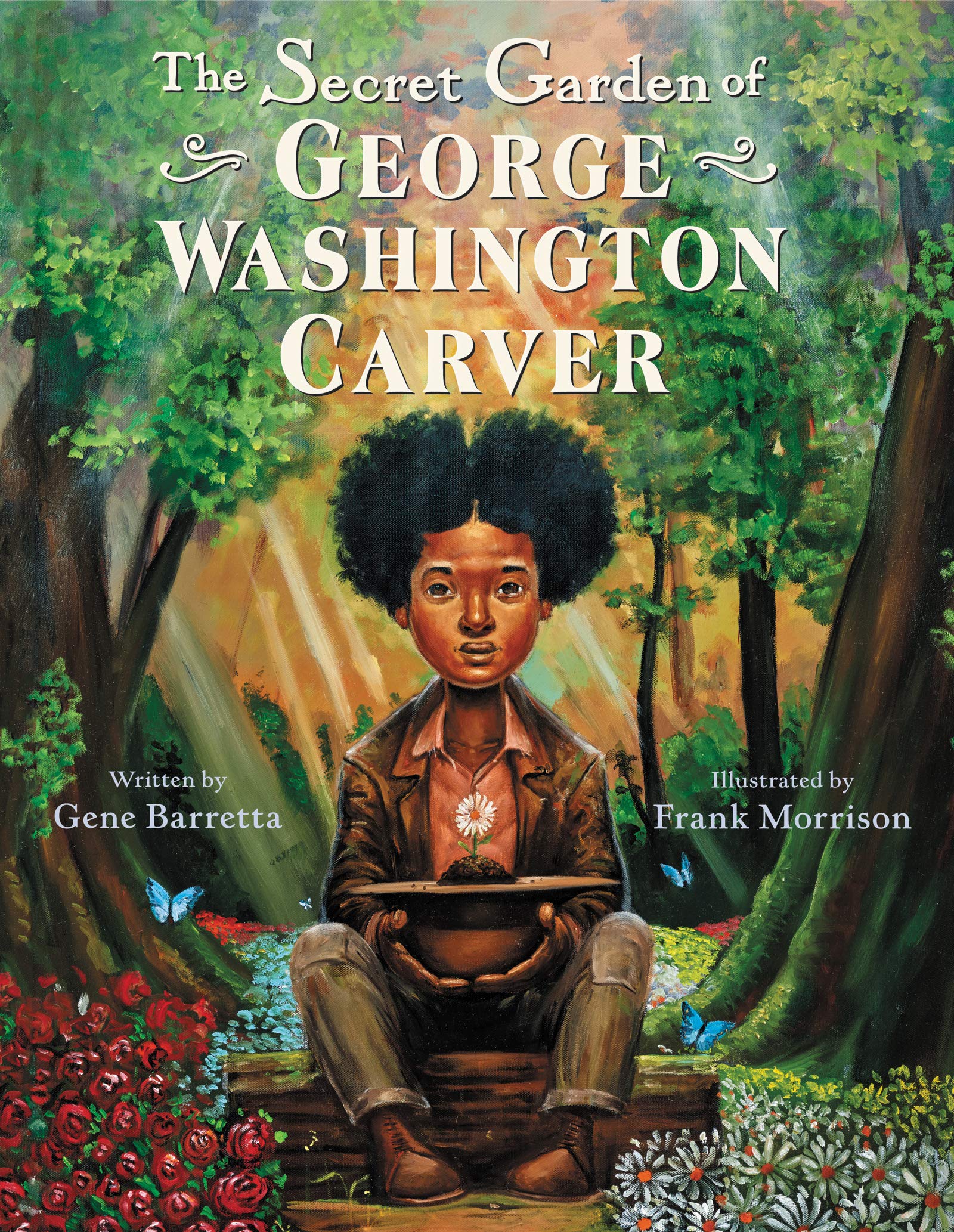
The Secret Garden of George Washington Carver by Gene Barretta, illustrated by Frank Morrison

Published by Katherine Tegen Books

Image result for secret garden of george washington carver

Summary:  Born into slavery in 1864 (his father died before he was born; he and his mother were kidnapped when he was a baby, and she was never seen again), George Washington Carver showed an early love of plants and nature.  Unable to go to school, he decided to teach himself all he could from the woods. He started a secret garden to study plants and soon developed a reputation for his ability to grow things and restore sickly plants to health.  Later, he was able to go to school and became the first black graduate of Iowa Agricultural College. He was hired by Booker T. Washington to teach agriculture at Tuskegee Institute, and became well-known for his work with peanuts as a crop to replace cotton.  He also traveled to farms to teach people how to improve their crops and their own health. Carver preached the lessons he had learned in his garden as a child: “Regard nature. Revere nature. Respect nature.” Includes a timeline, a bibliography, and a list of books for further reading.  40 pages; grades 1-5.

Pros:  This beautifully-illustrated biography of George Washington Carver opens in 1921 with him testifying to U.S. Congress on the many uses of the peanut, then goes back to show his amazing journey to reach that point.  There’s a fair amount of detail for a picture book, making this an engaging story as well as a good tool for elementary research.

Cons:  I would have liked to see a few photos included at the end.

If you would like to buy this book on Amazon, click here.

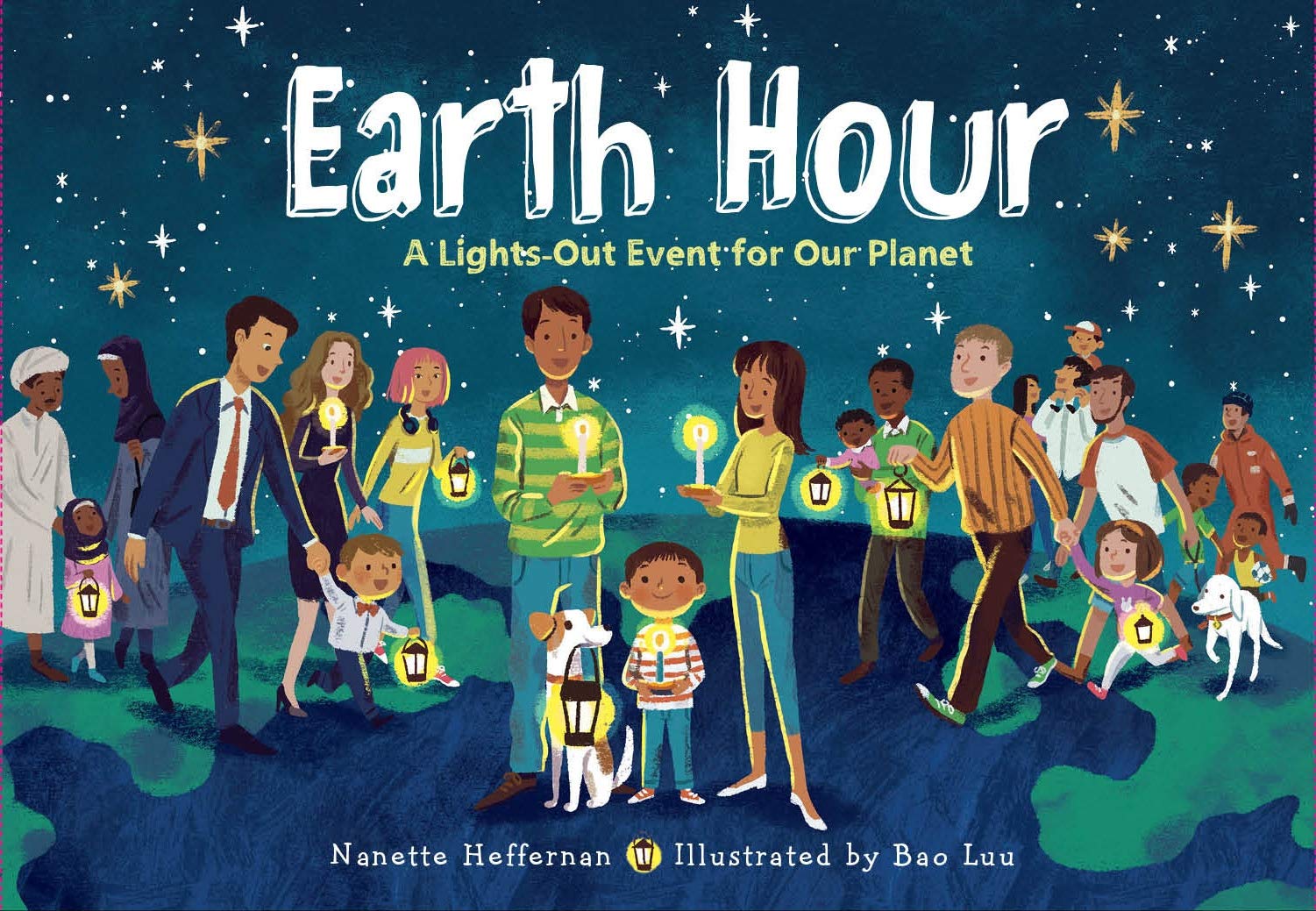
Earth Hour: A Lights-Out Event for Our Planet by Nanette Heffernan, illustrated by Bao Luu

Published by Charlesbridge

Image result for earth hour nanette heffernan

Image result for earth hour nanette heffernan

Summary:  All over the world, people use energy to light up the nighttime.  Kids and their families are shown enjoying this illumination at the Sydney Opera House, the Eiffel Tower, the pyramids of Egypt, and other places around the globe.  “Energy is a wonderful resource from Earth–a gift from nature we respect and conserve.” To honor this, people around the world observe Earth Hour at 8:30 p.m. in late March, when they turn off their lights for 60 minutes.  “Alone we are one…but together we have power. United, we are Earth Hour.” Includes additional information about Earth Hour, and how our energy use is leading to climate change; also, an author’s note about how she came to write this book.  32 pages; ages 3-7.

Pros:  A simple but effective introduction to an event I was not aware of.  I like how the illustrations portray kids and their families at famous landmarks around the world to show that Earth Hour and energy conservation are global concerns.

Cons:  There were no additional resources listed or websites to find out when Earth Hour is this year (it’s March 28, 2020).


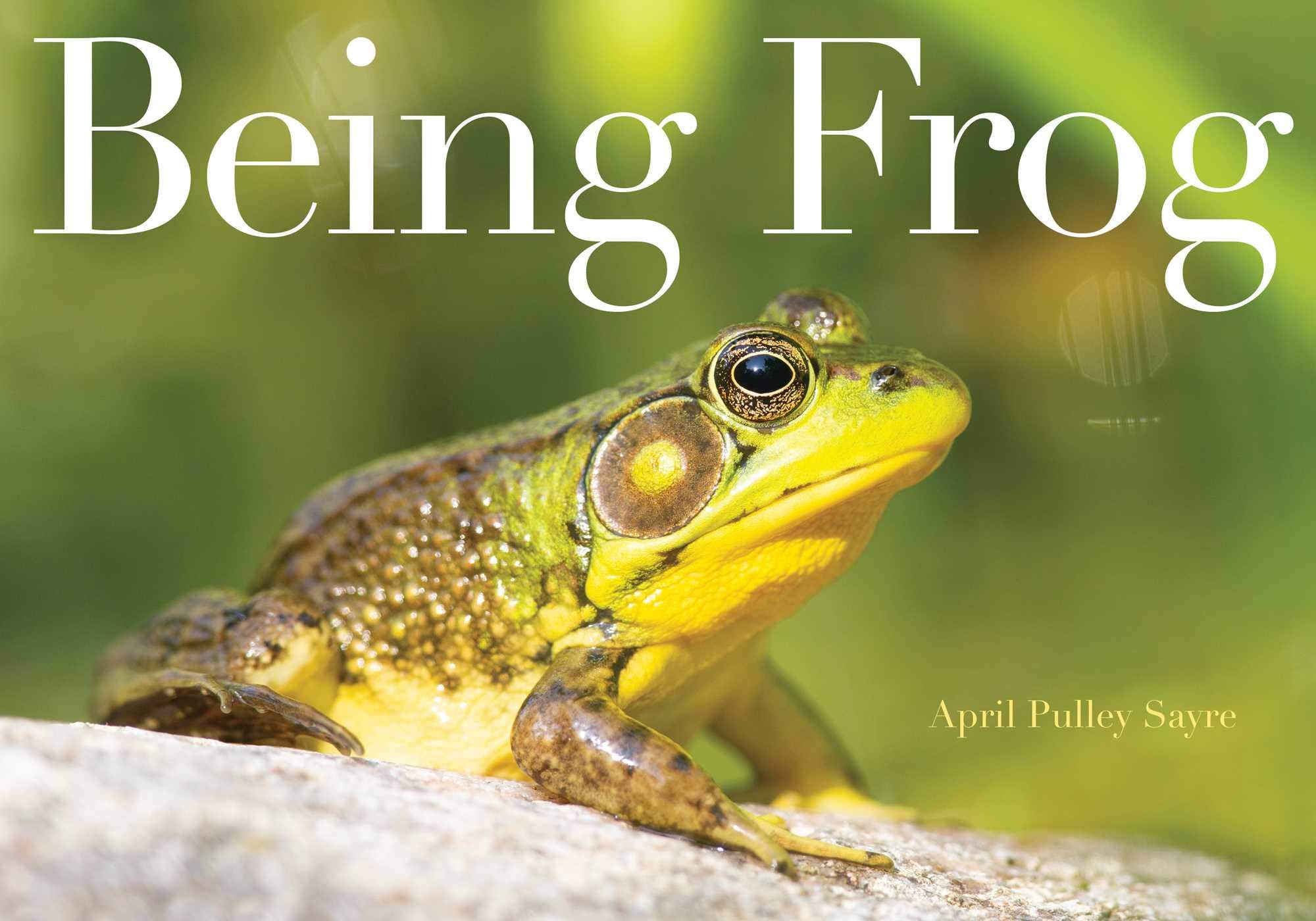
Being Frog by April Pulley Sayre

Published by Beach Lane Books

Image result for being frog april pulley sayre

Image result for being frog april pulley sayre

Summary:  “A frog is a being./It is watching./It is seeing.”  The rhyming text follows a frog as it sits on a log, hunts for food, cools off in the water, and leaps into the air.  Questions are asked: does a frog remember its tadpole days? Does time move fast or slow for the frog? No one knows; the text simply concludes: “A frog has a life./A frog is a being.”  Includes a two-page author’s note in which Sayre talks about fictional frogs and how real frogs are different. She discusses things she imagines about the frogs she observes at a local pond (a favorite frog responds to her) versus what science teaches us about frogs.  Also includes resources for further exploration. 32 pages; ages 3-8.

Pros:  It’s always a pleasure to discover a new science book by April Pulley Sayre, with her gifts for photography and rhyme.  I particularly liked her author’s note introducing kids to various topics dealing with science and scientists.

Cons:  There’s not enough information to use this as a research resource.

If you would like to buy this book on Amazon, click here.

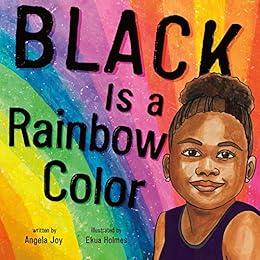
Black Is a Rainbow Color by Angela Joy, illustrated by Ekua Holmes

Published by Roaring Brook Press

Image result for black is a rainbow color amazon

Summary:  A girl looks at the colors in her crayon box and in a rainbow, and realizes there’s no black in rainbows.  But her color is black, and she looks at what else is black: a feather in the snow, her best friend’s hair, her bicycle tires.  From there, she moves to the black in Black culture: Thurgood Marshall’s robe, birds in cages that sing, raisins and dreams left out in the sun to die.  Finally, she moves on to the history, family, memory, and love that are all part of her and her community. “So you see, there is no black in rainbows.  No black in green or blue.  But in my box of crayons, Black is a rainbow, too.”  Includes an author’s note; a playlist of 11 songs; two pages with further information on some of the allusions in the main text; 3 poems; a timeline of black ethnonyms (words that have been used to refer to Black people) over the course of American history; and a bibliography.  40 pages; ages 4 and up.

Pros:  This beautiful poem with its stunning illustrations (they reminded me of stained glass) is a deceptively simple introduction to Black culture and history.

Cons:  Most sources recommend this book for ages 4-8, but the references in the main text and the extensive back matter could make this a useful resource for any age and would be even more meaningful for older kids.

If you would like to buy this book on Amazon, click here.

Fred’s Big Feelings: The Life and Legacy of Mister Rogers by Laura Renauld, illustrated by Brigette Barrager

Published by Atheneum Books for Young Readers

Image result for fred's big feelings amazon

Image result for fred's big feelings amazon

Summary:  As a sickly child, Fred Rogers often felt alone and misunderstood.  He appreciated his grandfather’s unconditional love and acceptance, and learned to express himself through music and playing with puppets.  He planned to attend seminary to become a minister, but when he saw a children’s TV show filled with pranks and gags, he was inspired to try to do better.  Beginning with a local show in Pittsburgh, Fred’s show eventually grew to the universally loved Mister Rogers’ Neighborhood on PBS.  Recalling his own childhood, he acknowledged children’s feelings and accepted and loved them for being themselves, using music and make-believe to get his message across.  When Congress threatened to cut funding for public television, Fred went to Capital Hill and used a similar message to convince a Senate panel of the importance of his show. He continued to produce his show for more than 30 years, airing almost 900 episodes.  Includes a lengthy author’s note. 40 pages; ages 4-8.

Pros:  Similar in scope to You Are My Friend, this picture book biography emphasizes feelings, italicizing the different emotions that Fred Rogers experienced over the years.  This book includes Mister Rogers’ testimony to Congress that helped preserve PBS funding. Young fans of the show are sure to enjoy learning more about their favorite neighbor.

Cons:  Still socially unacceptable to say anything bad about Mister Rogers.

If you would like to buy this book on Amazon, click here.

Consent (For Kids!): Boundaries, Respect, and Being In Charge of YOU by Rachel Brian

Published by Little, Brown Books for Young Readers

Image result for consent for kids amazon"

Summary:  With chapters on such topics as “You Rule”, “Trust Your Gut”, and “Giving and Getting Consent”, this short graphic book uses a light tone to help kids understand inappropriate behavior and how to maintain boundaries.  Without getting into explicit details, the author covers inappropriate touching, whether it’s tickling or something more sexual, and helps kids understand what they should do in such situations. The comic panels explore different scenarios to allow kids to see their roles in making sure they stay safe and happy.  For a sample of Rachel Brian’s adult work (contains the f-word and is about consensual sex), take a look at her Youtube video Tea Consent.  240 pages; grades 1-7.

Pros:  This is an amazing resource for anyone who works with kids.  The tone is light and fun, the messages are clear, and the graphic format will appeal to children of all ages.  

Cons:  A list of additional resources would have been a great addition.

If you would like to buy this on Amazon, click here.

Normal: One Kid’s Extraordinary Journey by Magdalena and Nathaniel Newman

Published by HMH Books for Young Readers

Image result for normal magdalena newman"

Summary:  When Nathaniel Newman was born with the craniofacial condition called Treacher Collins, his parents were overwhelmed.  Magda tells how she and her husband struggled to keep Nathaniel alive in his early days when he had to to breathe through a tracheostomy tube and be fed through another tube in his stomach.  She and her husband Russel struggled to give Nathaniel and his younger brother Jacob as normal a childhood as possible. Their lives were affected by the publication of R. J. Palacio’s book Wonder, about a boy much like Nathaniel.  Not only did they get to meet Palacio (who had been influenced in her creation of Auggie by photos of Nathaniel), but they found a greater acceptance from people after the publication of the book.  Despite over 60 surgeries for Nathaniel and two cancer diagnoses for Magda, their family has emerged stronger and with a new definition of the word “normal”. 336 pages; grades 4-8.

Pros:  Those who have read Wonder or seen the movie (which Nathaniel auditioned for) will gain a much greater appreciation for all that Augie and his family had to go through before the opening scene of the story.  Nathaniel’s upbeat, matter-of-fact tone about his life is pretty impressive, and Magda’s honesty about her emotions throughout Nathaniel’s childhood make her a mom many will connect with.  The black-and-white cartoon-style illustrations make a fun addition to the story.

Cons:  The structure of the narrative is a bit disjointed; for instance, Magda alludes to her cancer about halfway through the book, but the story of it (which happened when Nathaniel was 2) doesn’t come until almost the end.

If you would like to buy this book on Amazon, click here.