On Our Street: A First Talk About Poverty by Dr. Jillian Roberts and Jaime Casap, illustrated by Jane Heinrichs

Published by Orca Book Publishers
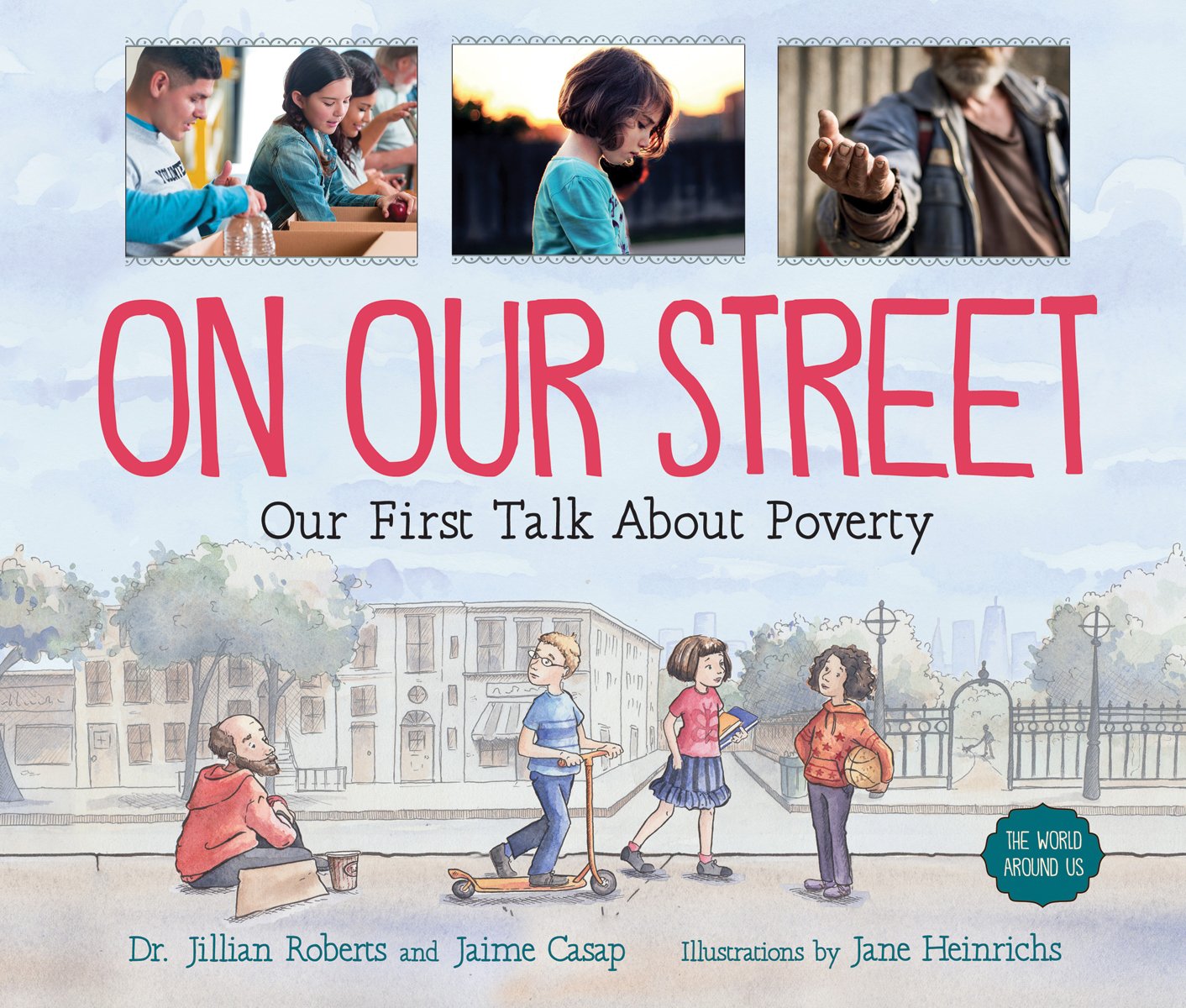
Image result for poverty on our street amazon

Summary:  Poverty and homelessness are explained for young children, using a question and answer format for such queries as “What is it like to live on the streets?” and “Are there children who are homeless?”  Each question is answered on a two-page spread, with stock photos of different people, illustrated with drawings of the same three kids who seem to be the ones having the discussions.  International poverty is addressed, with information about refugees and fundamental human rights. Readers are given suggestions of how to help those who need it, and there is a list of Internet websites at the end, along with notes from both the authors.  32 pages; grades K-3.

Pros:  Simple, straightforward information is given about topics that are not often addressed in children’s literature.  The authors, a child psychologist and the educational evangelist at Google (who grew up in poverty) make an interesting combination of writers.

Cons:  The stock photos somewhat depersonalize the issues; it would have been more effective to follow the same people or family throughout the book.
If you would like to buy this book on Amazon, click here.

All That Trash: The Story of the 1987 Garbage Barge and Our Problem With Stuff by Meghan McCarthy

Published by Simon and Schuster

Image result for all that trash meghan mccarthy amazon

Image result for all that trash meghan mccarthy amazon

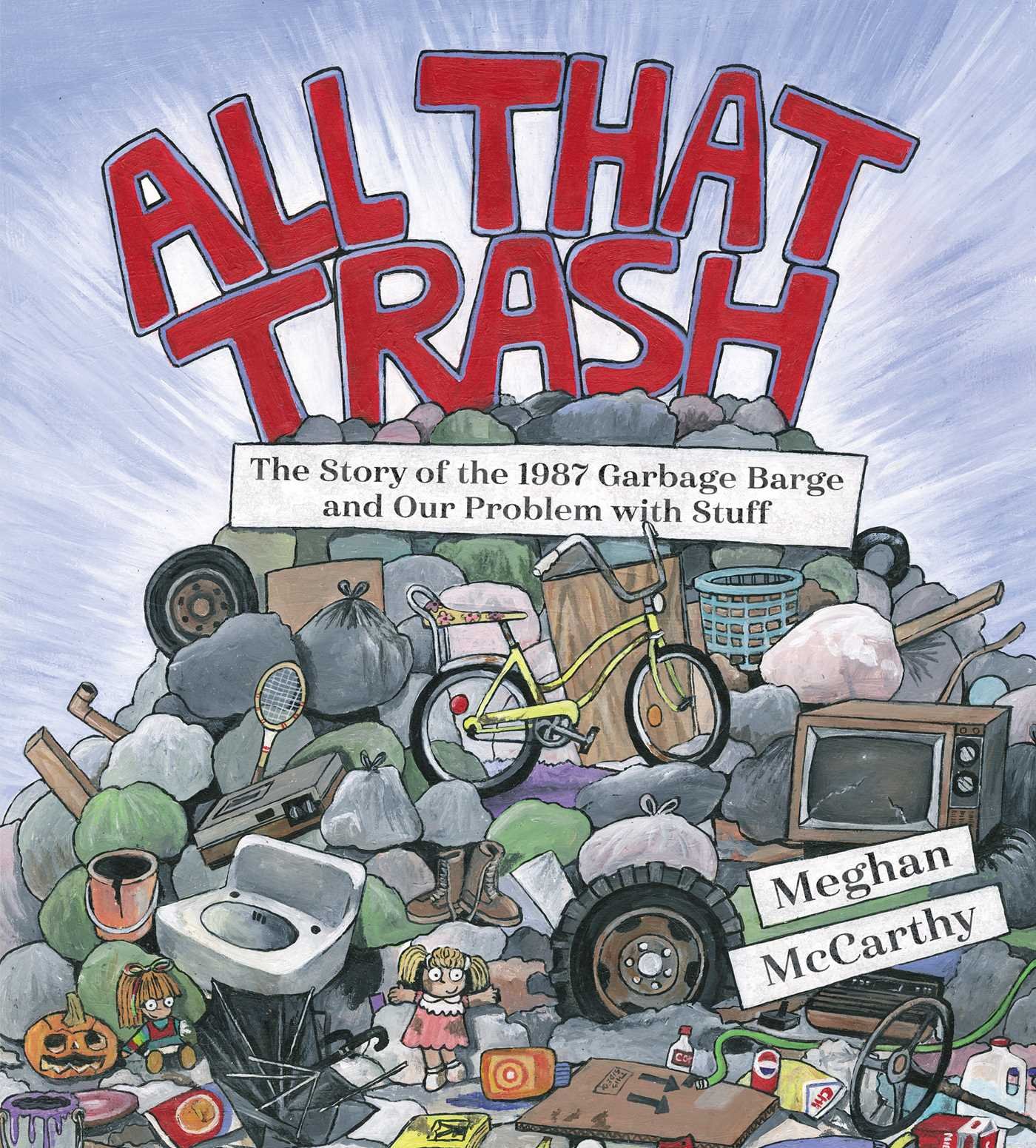
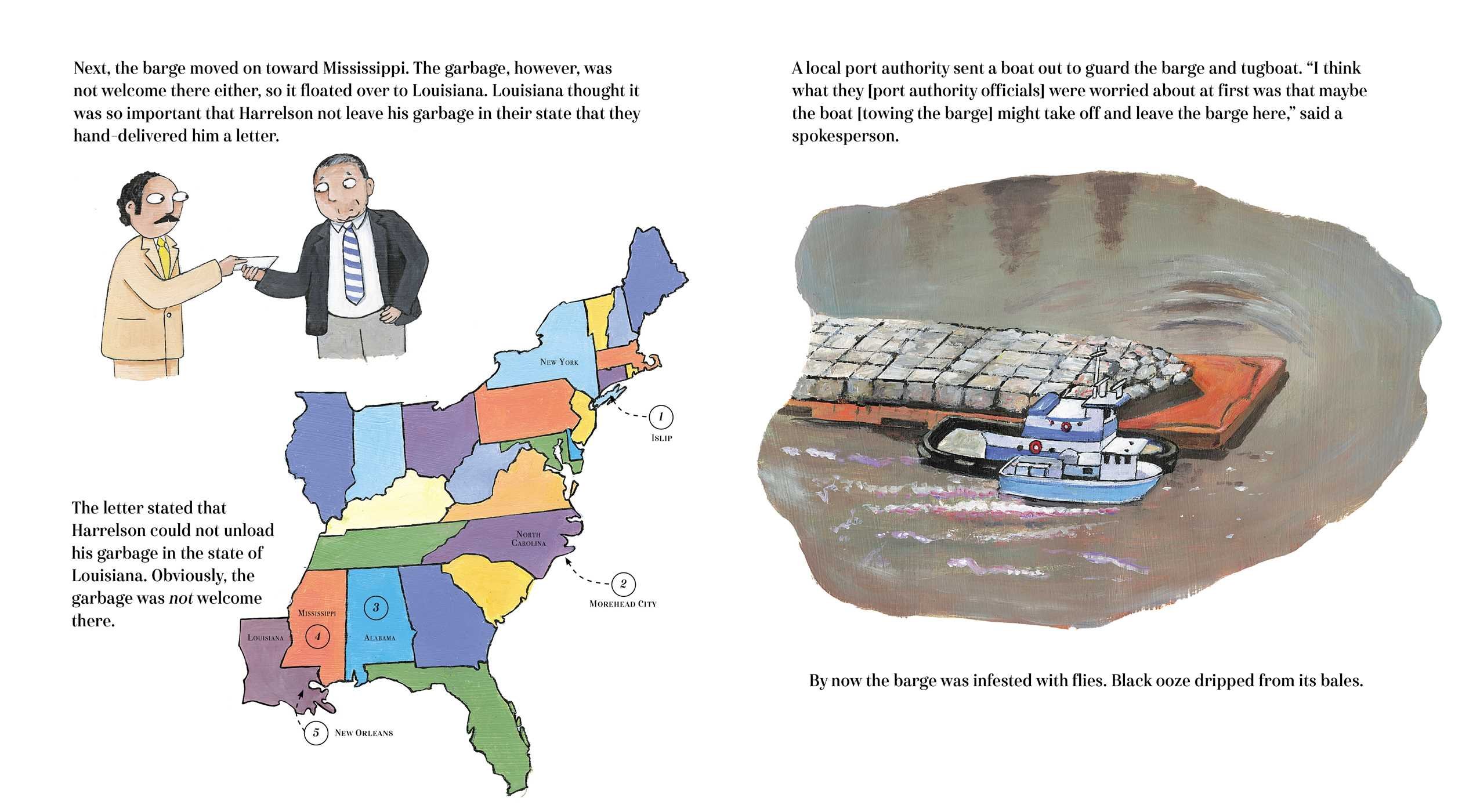
Summary:  In 1987, Lowell Harrelson had the brilliant idea to make electricity from the methane gas released by decomposing garbage.  He rented a barge, hired two tugboat drivers, and loaded over 3,000 tons of garbage to be hauled from New York to North Carolina.  When the (incorrect) rumor got out that there was medical waste on the barge, officials in North Carolina refused to let the trash into the state. Thus began a saga that continued for five months and over 6,000 miles as one state after another (and a few countries) refused the barge entry.  Unbelievably, the trash ended up back in New York, where sanitation workers burned it. The news media picked up the story and ran with it, raising awareness about the problem of overflowing landfills and giving momentum to the recycling movement. Includes additional facts about the barge, garbage, and recycling, as well as a very complete bibliography.  48 pages; grades 2-5.

Pros:  Meghan McCarthy has a knack for finding obscure stories and bringing them to life, making them relevant to today’s readers.  Her bug-eyed portraits and cartoon bubbles make this entertaining and highly readable, while the text imparts plenty of information.

Cons:  Five months hauling a barge with 3,000 tons of garbage.  Eww.

If you would like to buy this book on Amazon, click here.

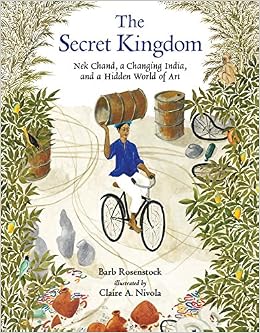
The Secret Kingdom: Nek Chand, a Changing India, and a Hidden World of Art by Barb Rosenstock, illustrated by Claire A. Nivola

Published by Candlewick

Image result for secret kingdom nek amazon

Image result for secret kingdom nivola

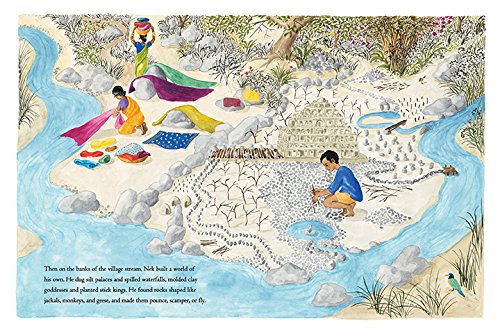
Summary:  Nek Chand grew up in a tiny village in the Punjab region of Asia, collecting stories from family members and the traveling minstrels who visited during holidays.  Those stories inspired him to create his own world from rocks, sticks, and clay.  As a young man, he was forced to leave his home in 1947 when the Punjab was divided into India and Pakistan, and those who practiced the Hindu religion had to leave Muslim Pakistan.  Nek settled in the city, but longed for his home.  He found a deserted plot of government land and created a secret kingdom from trash that he found along the roads.  He kept his creation hidden for 15 years until government officials discovered it and threatened to tear it down.  When people from the city came to see it, though, they knew it was a work of art worth saving.  They convinced the officials to preserve it, and have continued to do so following Chand’s death in 2015.  Includes an author’s note about Nek Chand and an extensive bibliography.  48 pages; grades 2-5.

Pros:  A fascinating story of an artist who worked to create his vision without much hope of ever profiting from it or even being able to share it with others.  The beautiful illustrations bring the story to life, including a foldout page with photos of the actual “secret kingdom”.

Cons:  A map of the region and additional historical information about India and Pakistan would have been useful.

If you would like to buy this book on Amazon, click here.

Thank You, Earth: A Love Letter to Our Planet by April Pulley Sayre

Published by Greenwillow Books

Image result for thank earth sayre amazon

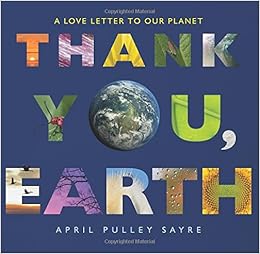
Summary:  April Pulley Sayre writes a thank you note to planet Earth with poetry and photographs.  She looks at the materials that make up Earth (air, rocks, water), the shapes (curves, lines, and patterns), and living things (plants, animals).  Every part of earth is celebrated, even storms and things that sting, with a conclusion of “Thank you for beginnings, for endings, for lifetimes. Thank you for being our home.”  Back matter includes two pages of suggestions on how kids can turn their thank you’s into action for the earth, including a list of resources and organizations.  40 pages; ages 4-8.

Pros:  As always, Sayre’s nature photography is up close and gorgeous.  This would be a perfect book to share with young kids on Earth Day, maybe with some follow-up action.

Cons:  The poem seemed a little clunky to me.

If you would like to buy this book from Amazon, click here.

Rising Above: Inspiring Women in Sports by Gregory Zuckerman with Gabriel and Elijah Zuckerman

Published by Philomel Books

Image result for rising above zuckerman amazon

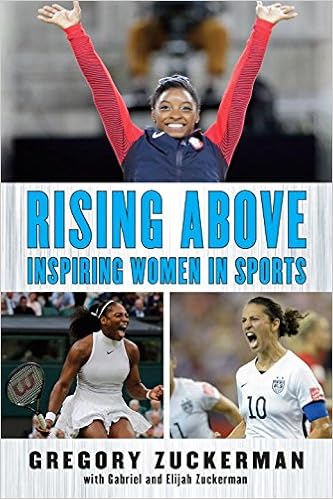
Summary:  When I reviewed the book Rising Above in 2016, one of my “Cons” was that it only included one woman.  From my lips to the Zuckermans’ ears, apparently, because they’re back with more inspiring sports stories, this time profiling 10 women in 9 chapters (Serena and Venus Williams share).  A variety of sports is included: gymnastics, soccer, basketball, baseball, track, surfing, and mixed martial arts (a sport I was blissfully unaware of until I read this book). The common element in all the stories is the difficulty each athlete had to overcome to reach her full potential.  These include racism (Wilma Rudolph), losing a limb (Bethany Hamilton), an eating disorder (Ronda Rousey), and being one of the only females in a sport (Mo’ne Davis in Little League). An afterword summarizes the personality traits that helped all of these women succeed. Includes an extensive bibliography and an index.  224 pages; grades 4-8.

Pros:  Based on the heavy circulation of the first book in my libraries, I have no doubt this one will fly off the shelves.  Even non-sports fans like myself can’t help but be inspired by these athletes’ stories.

Cons:  My other “con” for the first book was that there were no pictures, and that remains true for this one.  I had never heard of some of these women, and had to keep going to YouTube for visuals.

If you would like to buy this book on Amazon, click here.

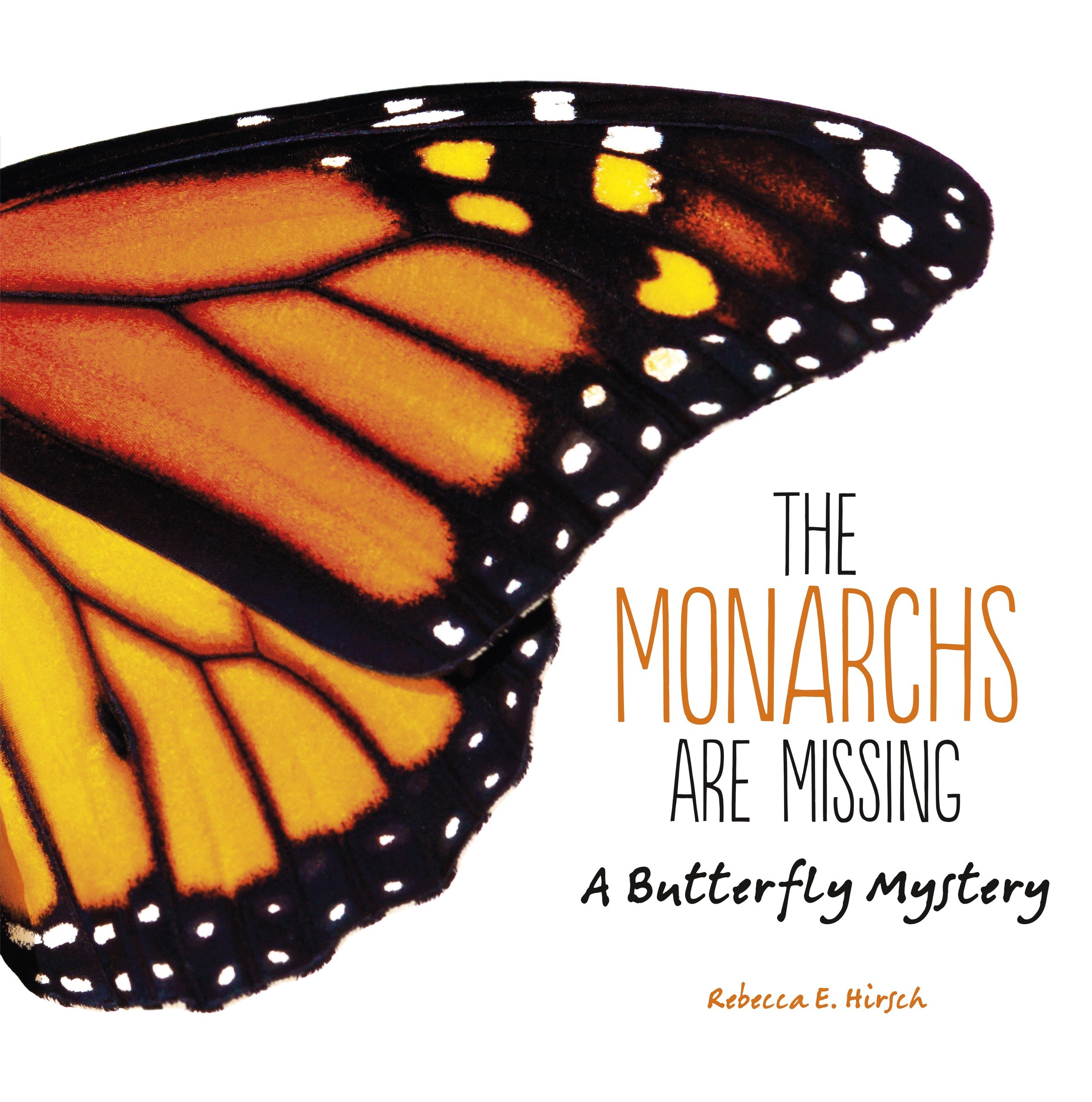
The Monarchs Are Missing: A Butterfly Mystery by Rebecca E. Hirsch

Published by Millbrook Press

Image result for monarchs missing hirsch amazon

Summary:  The monarchs are missing?  Some of them are, anyway.  In the last two decades, the monarch butterfly population has steeply declined.  How can we even know how many monarchs there are?  The answer to that goes back to the 1960’s when scientists first discovered the areas in Mexico where monarchs spend the winter.  Since then, they’ve taken annual measurements of the area the butterflies inhabit to get a rough estimate of the population.  There’s no agreement in the scientific community about why there are so many fewer monarchs today, but some theories include climate change, new pesticides, and agricultural methods that have impacted milkweed, the butterflies’ main food source.  Kids can help by planting milkweed and other wildflowers that provide nectar for the monarchs during their migration south.  Includes an author’s note, glossary, 3 books for further reading, an index, instructions for planting a butterfly garden, and several websites to help kids become citizen scientists.  56 pages; grades 3-7.

Pros:  A fascinating look at science at work, with plenty of photos and kid-friendly ideas for making a difference.

Cons:  The introduction profiled two kids catching and tagging butterflies; it would have been interesting to read more about kids acting as citizen scientists.

If you would like to buy this book from Amazon, click here.

The Bee Book by Charlotte Milner

Published by DK Children

Image result for bee book milner amazon

Image result for bee book milner

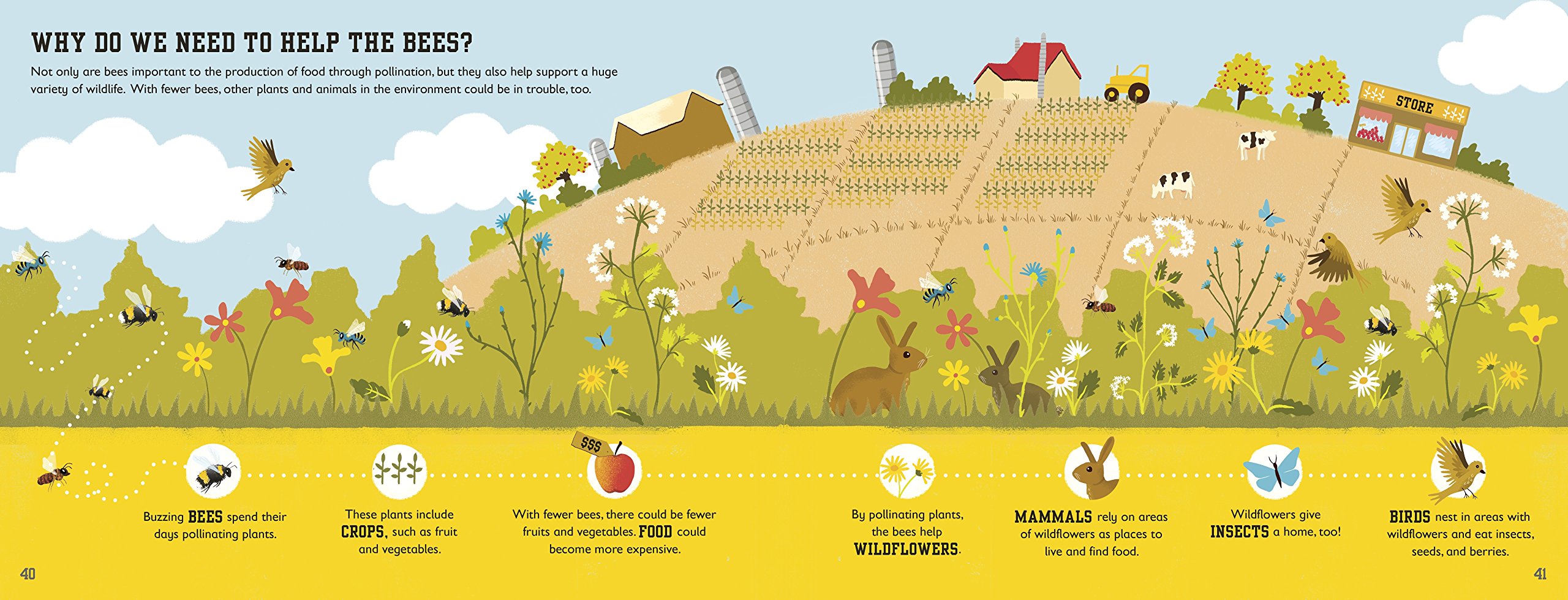
Summary:  What’s the buzz about bees?  This book seeks to answer this and quite a few more questions like “Where does honey come from?”, “What would we do without bees?”, and “What can you do to help?”.  Turns out the whole “busy as a bee” thing is real; you might appreciate that spoonful of honey more when you know it’s the lifetime’s work of 12 honeybees (a jar of honey represents 55,000 miles of flying).  Why should humans be concerned about the disappearance of bees?  One-third of our food comes from crops pollinated by animals.  Scientists are working to develop a robot bee, but it’s not quite the same, is it?  Activities at the end include making a bee hotel and planting a garden to help bees in their pollination efforts.  48 pages; grades K-5.

Pros:  Interesting information combined with lots of graphics make this an appealing choice to learn more about all kinds bees, with a focus on honeybees.

Cons:  The whole bee situation is a lot more serious than I realized.

If you would like to buy this book from Amazon, click here.


Bad Princess: True Tales from Behind the Tiara by Kris Waldherr

Published by Scholastic

Amazon.com: Bad Princess: True Tales from Behind the Tiara eBook: Waldherr,  Kris, Waldherr, Kris: Kindle Store

Summary:  For centuries, princesses have captured the public’s imagination.  From the “princess wars” between Henry VIII’s daughters Mary and Elizabeth to the 21st century obsession with Kate Middleton, princesses have long been in the public eye.  This book looks at some of history’s “bad” princesses who have been surrounded by scandals ranging from divorce to murder.  Many are European, but there are also appearances by other nationalities like Hawaii’s Princess Ka’iulani and Maitha bint Mohammed bin Rashid al Maktoum, a Dubai sheikha who competed in the 2008 Summer Olympics in tae kwon do.  Sidebars give interesting additional information about real-life princesses and their fairytale counterparts.  The book ends with a tournament of historical and storybook princesses (you’ll have to find out for yourself if Diana or Cinderella takes it all) and a princess board game.  Includes resources for further reading.  128 pages; grades 4-7.

Pros:  A heavy dose of history is handled with a light touch, complete with pink-tinged black-and-white illustrations and plenty of humor.  

Cons:  So many princesses to keep track of.

If you would like to buy this book through Amazon, click here.

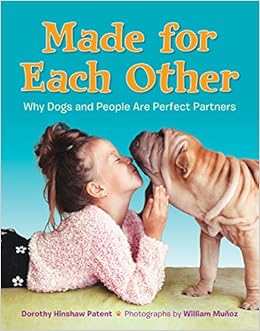
Made for Each Other: Why Dogs and Puppies Are Perfect Partners by Dorothy Hinshaw Patent, photographs by William Munoz

Published by Crown Books for Young Readers

Summary:  Man’s best friend gets a closer look in the three sections of this book.  The first discusses the history of dogs, and how they evolved from wolves to partner with humans.  Part two, “The Science of Love” looks at how dogs’ brains work and what their body language and barks can communicate to humans.  The final section shows how contemporary humans and dogs share lives. The topics change quickly, with each two-page spread featuring a new heading and lots of adorable and sometimes funny photos.  Includes a long list of additional resources and source notes.  64 pages; grades 1-4.

Pros:  This book will be irresistible to dog lovers, not only because of the incredibly cute photographs, but also the interesting and relevant information (who doesn’t want to know what their dog is thinking?).  A perfect STEM title for all readers.

Cons:  Sorry, I just can’t think of anything negative in the presence of all those cute puppies.

If you would like to buy this book on Amazon, click here.

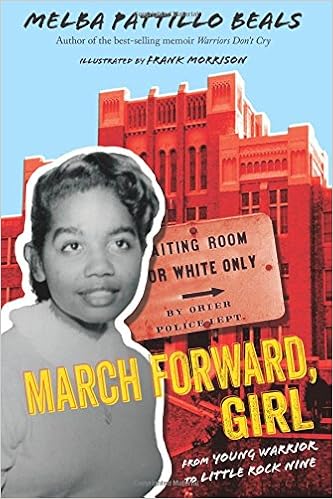
March Forward Girl: From Young Warrior to Little Rock Nine by Melba Beals, illustrated by Frank Morrison

Published by Houghton Mifflin Harcourt

Summary:  Melba Beals, who told her story of helping to integrate Little Rock’s Central High School in Warriors Don’t Cry, recounts her early days, growing up in Jim Crow Arkansas.  At the age of three, she observed her family making the house quiet and dark each night, hoping the Ku Klux Klan would leave them alone.  She raged at seeing her beloved parents and grandmother slighted and scolded whenever they went into town, and at having to use inferior facilities everywhere, while white people got the best of everything.  As she grew up, her fear and anger turned into a determination to change things and to get out of Arkansas.  She jumped at the chance to go to Central High School, a huge, beautiful school that she had admired for years.  The main part of the book ends right before she starts high school; an epilogue describes the violent and frightening experience of integration.  The text is illustrated with drawings and a few photographs.  224 pages; grades 6-9.

Pros:  Readers will gain a better understanding of what it was like for African Americans living in the South in the 1940’s.  Beals’ conversational tone draws the reader in, and her story is so powerful and compelling (and at times, horrifying) that the book is hard to put down.

Cons:  This book is recommended for grade 5 or age 10 and up.  Be aware that there is a scene in which the KKK storms into a prayer meeting, and 5-year-old Melba witnesses a lynching from the church rafters; at age 11, she gets lost on a dark, isolated road and narrowly escapes being raped and/or murdered by a group of Klansmen.

If you would like to buy this book on Amazon, click here.