They Lost Their Heads: What Happened to Washington’s Teeth, Einstein’s Brain, and Other Famous Body Parts by Carlyn Beccia

Published by Bloomsbury
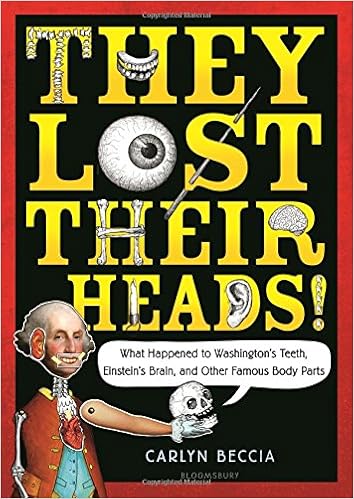
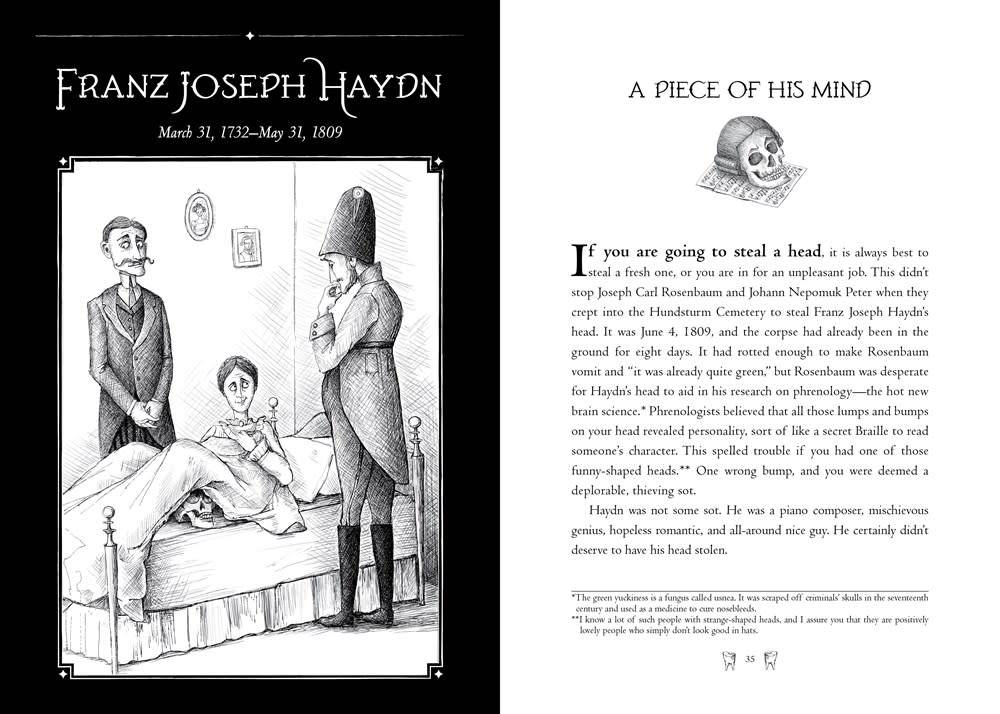
Image result for they lost their heads amazon

Image result for they lost their heads carlyn becchia

Summary:  17 chapters recount the fates of the body parts in the title, as well as Sarah Bernhardt’s leg, Vincent Van Gogh’s ear, Elvis’s wart, and more.  Each chapter is followed by several more short tales of relevant anatomy.  20+ pages between the last two chapters go into greater detail about cloning, stealing body parts, and some pretty disgusting food and beverage trivia.  The writing is breezy and irreverent, with lots of humorous footnotes, and there are plenty of illustrations throughout.  Includes an extensive bibliography and index.  192 pages; grades 5-8.

Pros:  The humor targets the age group perfectly; readers will enjoy grossing out their peers and elders while inadvertently learning some history and science.  The black and white etchings reminded me a little bit of Edward Gorey’s art.

Cons:  Some of the stories, particularly those involving ingesting body parts and fluids, were a little over the top for me.  But then, I am not a 12-year-old boy.

If you would like to buy this book on Amazon, click here.
 

The Triumphant Tale of the House Sparrow by Jan Thornhill

Published by Groundwood Books

Image result for triumphant tale sparrow thornhill amazon

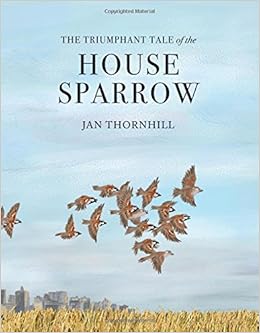
Summary:  As she did in The Tragic Tale of the Great Auk, Jan Thornhill tells the story of the interaction between birds and humans.  This one has a happier ending, though, as house sparrows have proven to be incredibly adaptable, often becoming pests that feed on agricultural grains.  The birds have spread around the globe with humans, traveling on ships with Roman soldiers to Great Britain and being introduced to the United States by homesick immigrants.  Despite their peskiness, sparrows also eat a lot of insects, as Chairman Mao discovered in 1958; his campaign against the Eurasian Tree sparrows led to a devastating famine in China. In the early 1980’s, the population of sparrows began to fall, and the author offers several theories–all of them based on human factors–for this decline.  In some places, this is starting to level off, offering hope that the house sparrow’s adaptability is helping it to survive in a changing world. Includes a map showing where the house sparrow lives; its life cycle; a glossary; and additional resources. 44 pages; grades 3-6.

Pros:  Beautifully illustrated and engagingly narrated, this informational book will help students learn more about animal adaptation and the relationship that exists between humans and animal species.

Cons:  I’ve always thought sparrows were kind of cute, and didn’t realize they are considered “the most despised bird in human history.”

If you would like to buy this book on Amazon, click here.
Eat This! How Fast-Food Marketing Gets You to Buy Junk (and how to fight back) by Andrea Curtis, illustration by Peggy Collins

Published by Red Deer Press

Image result for eat this curtis amazon

Image result for eat this andrea curtis

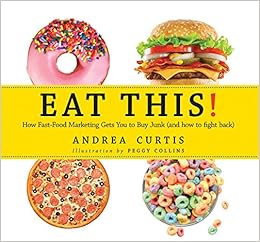
Summary:  If you’ve ever chuckled at the antics of Ronald McDonald or felt a kinship when your favorite movie star drank a Diet Coke, you’ve been the target of junk food marketing.  This book explains how kids are a big market and how food companies try to get inside their young heads to persuade them to purchase their products.  From cartoon characters to apps and online games to signs around your favorite stadium, advertising is everywhere.  The author helps kids, parents, and teachers understand the insidious ways of the marketers so that they can have an awareness of what is being sold to them and make informed decisions.  Includes a list of activities, glossary, sources, and an interview with the author.  40 pages; grades 4-7.

Pros:  Liberally illustrated with photos (ironically, many look mouth-wateringly delicious), this is an effective message for kids and their parents and teachers to use, and gives them tools to make healthier choices when it comes to food.

Cons:  The pages are pretty text-heavy, so this may be used more for research than for browsing or recreational reading.

If you would like to buy this on Amazon, click here.

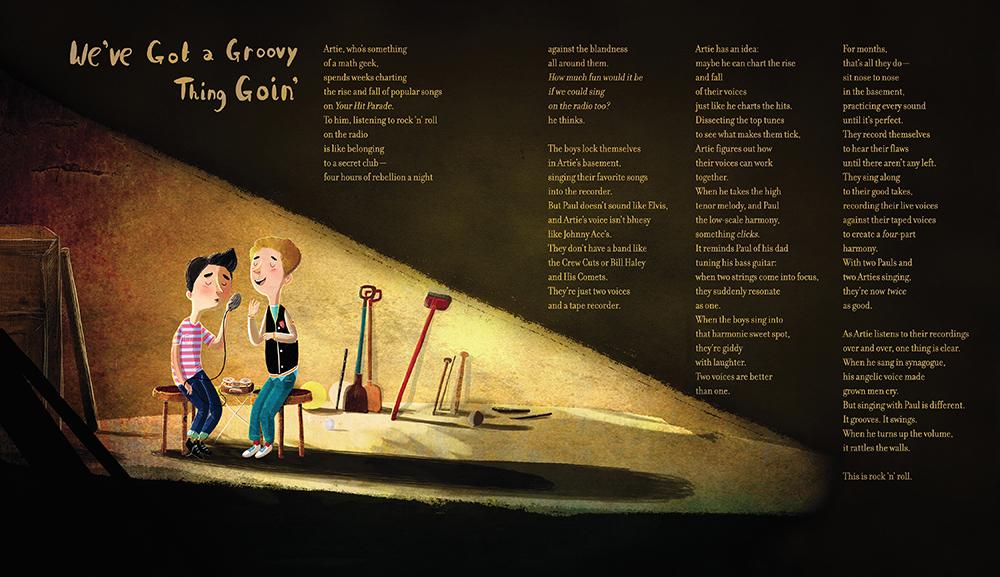
When Paul Met Artie: The Story of Simon and Garfunkel by G. Neri, illustrated by David Litchfield

Published by Candlewick

Image result for when paul met artie amazon

Image result for when paul met artie amazon

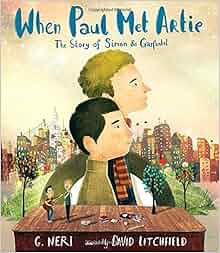
Summary:  This story of Paul Simon and Art Garfunkel begins at their Central Park concert on September 19, 1981, then travels back in time 30 years to when the two boys were growing up in 1950’s Queens.  They became friends in a sixth-grade production of Alice in Wonderland, and were inspired by Elvis and other early rockers to try harmonizing, later adding Paul on guitar. At 15, they had their first hit record as Tom and Jerry (Simon and Garfunkel was deemed to Jewish-sounding for 1950’s America), but later recordings failed to catch on.  They met up again in the early 1960’s and released another record, Wednesday Morning, 3 A.M., another flop, except that one song, “The Sound of Silence”, slowly started climbing the charts.  The book ends on New Year’s Day, 1966, when that song reached number one. Includes an afterword, discography, bibliography, and list of musical connections.  48 pages; ages 10 and up.

Pros:  An absorbing history of one of the greatest duos of the rock and roll era.  Each page is a poem titled with one of Simon and Garfunkel’s songs, beginning with “My Little Town”, describing the suburb of Queens where the two grew up.  The illustrations are occasionally goofy, as the two boys were, but really capture the changing times from the 1950’s to the 1960’s. Any fan of their music will enjoy this history and undoubtedly learn a few things as well.

Cons:  Although this looks like an elementary school purchase, it would probably be more interesting to middle schoolers and older, and definitely requires some familiarity with Simon and Garfunkel’s music to be fully appreciated.

If you would like to buy this book on Amazon, click here.

Baby Animals Moving by Suzi Eszterhas

Published by Owlkids

Image result for baby animals moving eszterhas amazon

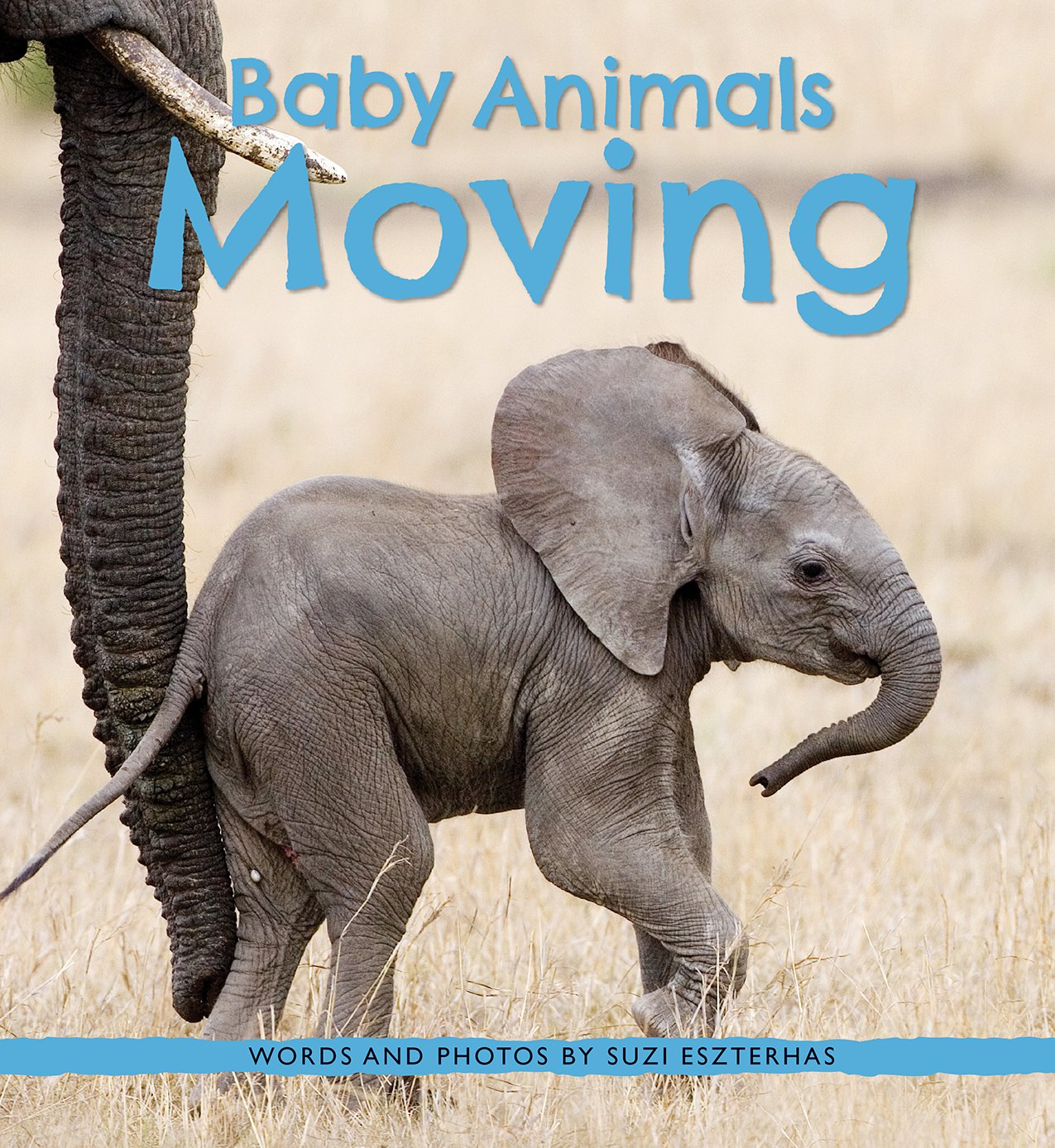
Summary:  Young animals are shown on the move.  Some, like the zebra, can move independently practically at birth, while others, like kangaroos, get a ride with parents.  Each two page spread shows one or two animals moving with their parents, and includes a sentence or two of text describing what’s going on.  Suzi Eszterhas introduces herself on the last two pages, showing additional photographs taken for this book, and explaining a bit about her work as a wildlife photographer.  24 pages; ages 3-8.

Pros:  Another work of almost unbearable cuteness by Suzi Eszterhas.  Kids will love looking at the pictures, and the text is accessible for preschoolers.  Look for other books in this series: Baby Animals Eating and Baby Animals Playing.

Cons:  There’s not a lot of information if readers are doing any kind of research.

If you would like to buy this book on Amazon, click here.
Hello Lighthouse by Sophie Blackall

Published by Little, Brown Books for Young Readers

Image result for hello lighthouse blackall amazon

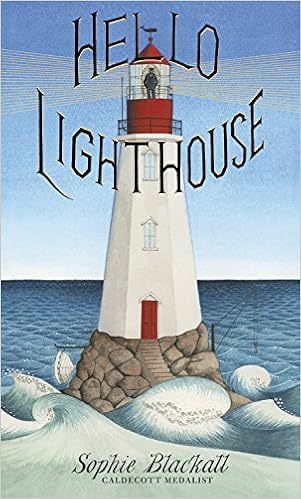
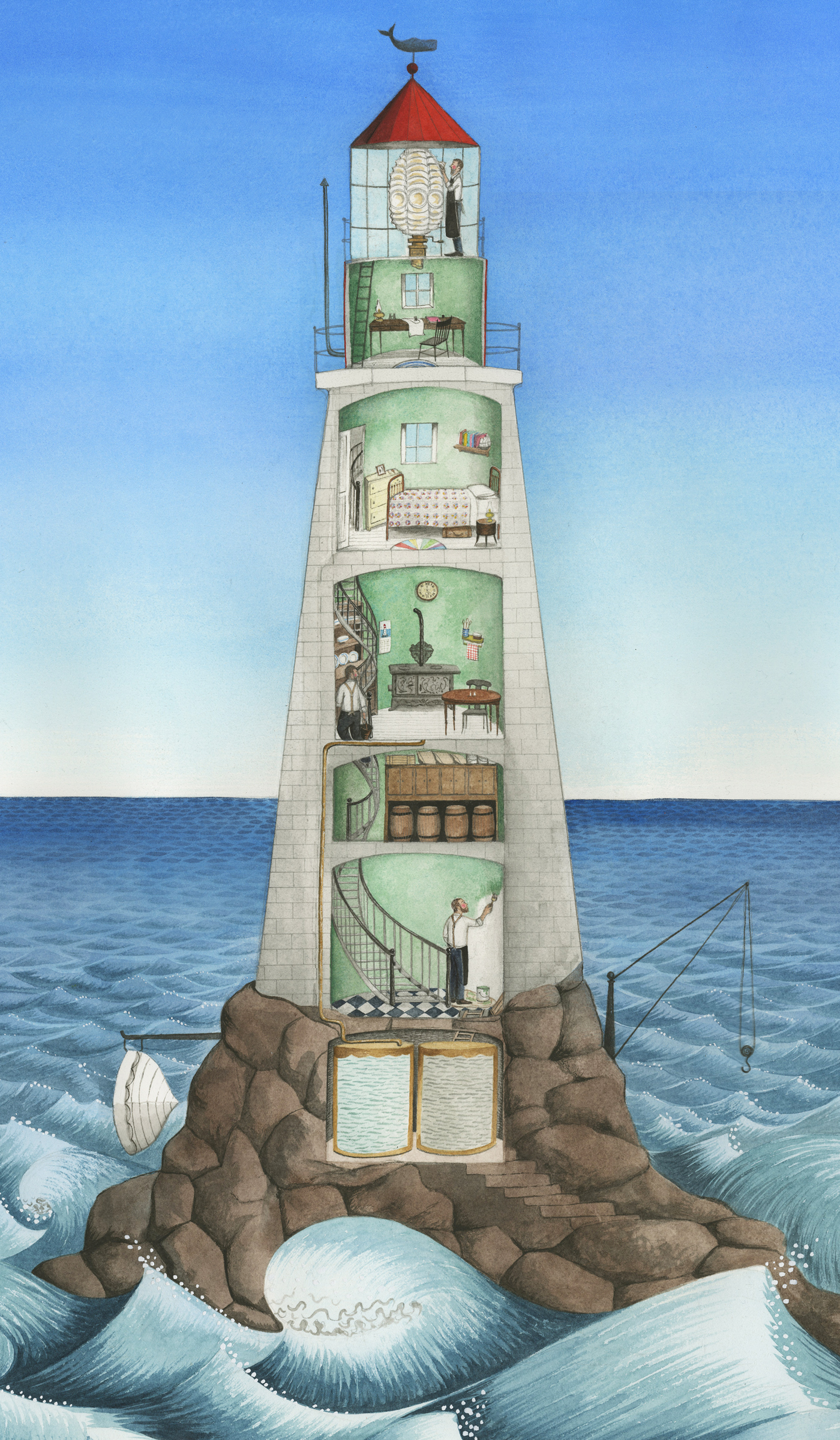
Summary:  A man arrives at a lighthouse to take his new job as its keeper.  A cutaway illustration shows him busy, tending the light, painting the walls, and cooking food.  Despite his activity, he’s lonely, and often writes messages that he puts in bottles and tosses into the sea.  After awhile, a tender arrives, bringing supplies and the man’s wife.  They are happy together in the lighthouse, and eventually they’re joined by a third person, their new daughter.  Several years later, electricity comes to the lighthouse, and the family moves away.  A fold-out final page shows a little house on the coast, lights from its windows shining to meet the light coming from their old lighthouse home.  Includes additional information about lighthouses and the people who kept them going.  48 pages; ages 4-10.

Pros:  A lovely blend of fact and fiction, Caldecott winner Sophie Blackall makes life in a lighthouse seem indescribably cozy, while presenting each scene creatively (I especially admired the lighthouse cutaway, the shipwreck, and the circular images of the wife in labor).  Hello, my new favorite picture book of 2018!

Cons:  I suspect real life in a lighthouse was not this idyllic.  This sentence in the author’s note about foghorns particularly caught my attention: “Some lighthouse keepers learned to sleep through the din of the horn; others nearly went mad when the fog lasted for days.”

If you would like to buy this book on Amazon, click here.
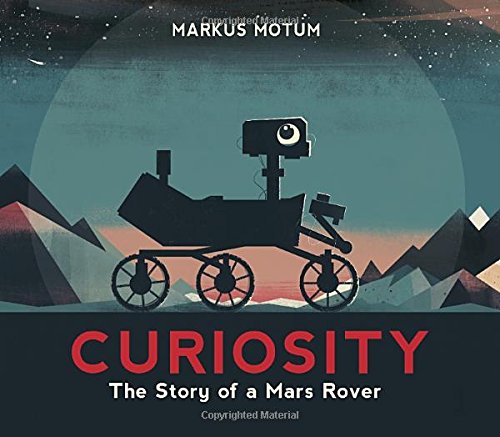
Curiosity: The Story of a Mars Rover by Markus Motum

Published by Candlewick

Image result for curiosity mars rover motum amazon

Summary:  In a first-person narration, the Mars rover Curiosity tells her story, beginning before she was built, when scientists at NASA started designing probes to learn more about Mars.  Curiosity (she was named by a sixth grader from Kansas) was to be larger and more advanced than any of the previous probes.  Labeled illustrations show the processes of designing and building her in Los Angeles, then flying her to Florida, where she was launched on November 26, 2011.  After 253 days of space travel and a somewhat precarious landing, Curiosity began the work of exploring Mars that she continues today.  Includes additional information about Mars rovers, a timeline, and a glossary.  56 pages; grades 2-6.

Pros:  The personification of the rover makes it accessible for elementary school kids; the text, illustrations, and labeled diagrams provide a lot of information.

Cons:  Two design issues: the book is so large it feels a bit unwieldy, and some of the black-on-blue or blue-on-black type/background combinations are difficult to read.

If you would like to buy this book on Amazon, click here.
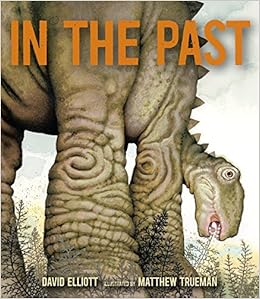
In the Past by David Elliott, illustrated by Matthew Trueman

Published by Candlewick

Image result for in the past elliott amazon

Image result for in the past matthew trueman david elliott

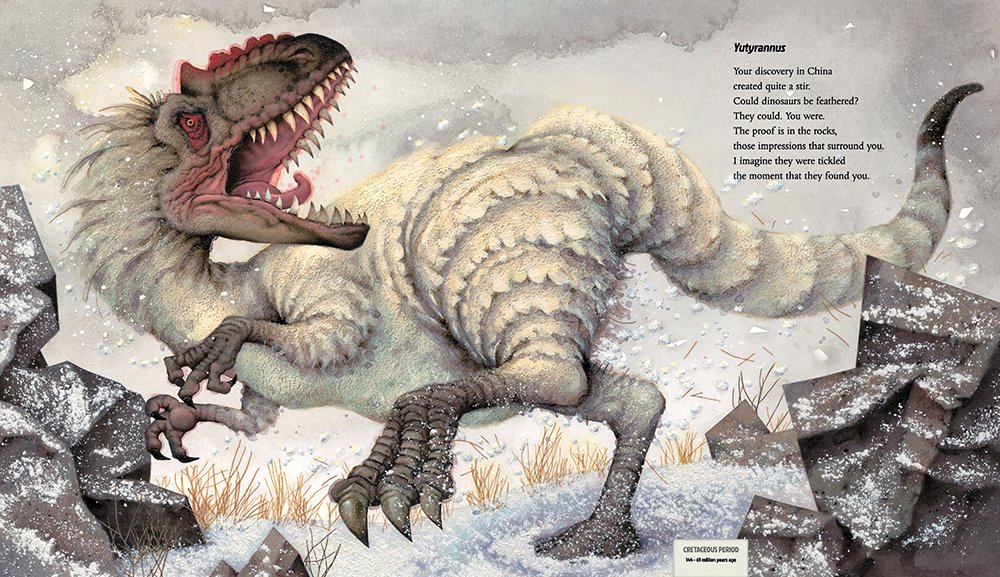
Summary:  Twenty poems are illustrated with oversized paintings of a variety of prehistoric creatures from the trilobite (“So many of you./So long ago./So much above you./Little below.”) to Tyrannosaurus Rex.  (You thought/(if you could think)/you’d live forever./The great T. rex/would never die!/But even kings/are vanquished/when stars fall/from the sky.”).  Early mammals like the smilodon (a.k.a. Saber-tooth tiger) and mammoth are included.  Each illustration is labeled with the geological period when that animal lived.  Back matter includes a note from the author and information about the animals that inspired the poems. 48 pages; ages 3-8.

Pros:  Dinosaur fans will love the giant (and appropriately ferocious) illustrations as well as the brief, funny poems.

Cons:  Additional scientific information on each page would have made some of the poems more understandable.

If you would like to buy this book on Amazon, click here.
Dream Big: A True Story of Courage and Determination by Dave McGillivray, with Nancy Feehrer, illustrated by Ron Himler

Published by Nomad Press

Image result for dream big feehrer amazon

Image result for dream big feehrer

Summary:  As a child, Dave McGillivray aspired to be an athlete, but he was too small for most sports.  On his 12th birthday, he decided to try a new sport, running, and ended up running 12 miles.  Encouraged by his grandfather, he ran 13 miles on his 13th birthday, and continued that pattern for four more years.  At age 17, he announced he was ready for the Boston Marathon, but his lack of training caught up with him, and he collapsed at mile 18.  His grandfather encouraged him again, advising him that big dreams require hard work, and Dave promised him he’d cross the finish line the following year.  Sadly, his grandfather died before that marathon, and Dave almost gave up before the end of the race.  Taking a break at mile 21, he realized he was resting next to his grandfather’s cemetery.  This inspired him to finish the race, and he has continued to run it every year since.  Now he runs it two ways, as the director of the race and as the final runner, traversing the course at night after everyone else has finished.  Includes a challenge to run 26 miles, read 26 books, and do 26 acts of kindness in 26 weeks.  32 pages; grades 1-5.

Pros:  Just in time for marathon day, this inspiring story encourages kids to work hard and challenge themselves in a variety of ways.

Cons:  Reading 26 books seems a LOT easier than running 26 miles.

If you’d like to buy this book on Amazon, click here.
The Boo-Boos That Changed the World: A True Story About an Accidental Invention (Really!) by Barry Wittenstein, illustrated by Iris Hsu

Published by Charlesbridge

Image result for boo boos that changed amazon

Summary:  When Earle Dickson married Josephine in 1917, he noticed she was accident prone, often cutting or burning herself in the kitchen, then trying to clean up with the nearest rag.  As the son of a doctor, Earle didn’t want her injuries to get infected, so he stuck some sterile gauze on a long strip of adhesive tape.  Josephine would cut off what she needed to bandage her wound.  Earle convinced his boss, James Johnson, to mass produce these bandages, calling them Band-Aids, but they didn’t really catch on until they were turned into individually-wrapped bandages and distributed for free to Boy Scouts and World War II soldiers.  After the war, Band-Aids really took off, and today they come in all kinds of sizes and designs and are used around the world.  Includes an author’s note, timeline, and additional resources.  32 pages; ages 4-8.

Pros:  A cute story of the invention of something we all take for granted with appealing illustrations that have the feel of a retro magazine ad.

Cons:  I didn’t really enjoy reading about the details of Josephine’s kitchen injuries.

If you would like to buy this book on Amazon, click here.