In the Past by David Elliott, illustrated by Matthew Trueman

Published by Candlewick

Image result for in the past elliott amazon

Image result for in the past matthew trueman david elliott

Summary:  Twenty poems are illustrated with oversized paintings of a variety of prehistoric creatures from the trilobite (“So many of you./So long ago./So much above you./Little below.”) to Tyrannosaurus Rex.  (You thought/(if you could think)/you’d live forever./The great T. rex/would never die!/But even kings/are vanquished/when stars fall/from the sky.”).  Early mammals like the smilodon (a.k.a. Saber-tooth tiger) and mammoth are included.  Each illustration is labeled with the geological period when that animal lived.  Back matter includes a note from the author and information about the animals that inspired the poems. 48 pages; ages 3-8.

Pros:  Dinosaur fans will love the giant (and appropriately ferocious) illustrations as well as the brief, funny poems.

Cons:  Additional scientific information on each page would have made some of the poems more understandable.

If you would like to buy this book on Amazon, click here.

Dream Big: A True Story of Courage and Determination by Dave McGillivray, with Nancy Feehrer, illustrated by Ron Himler

Published by Nomad Press

Image result for dream big feehrer amazon

Image result for dream big feehrer

Summary:  As a child, Dave McGillivray aspired to be an athlete, but he was too small for most sports.  On his 12th birthday, he decided to try a new sport, running, and ended up running 12 miles.  Encouraged by his grandfather, he ran 13 miles on his 13th birthday, and continued that pattern for four more years.  At age 17, he announced he was ready for the Boston Marathon, but his lack of training caught up with him, and he collapsed at mile 18.  His grandfather encouraged him again, advising him that big dreams require hard work, and Dave promised him he’d cross the finish line the following year.  Sadly, his grandfather died before that marathon, and Dave almost gave up before the end of the race.  Taking a break at mile 21, he realized he was resting next to his grandfather’s cemetery.  This inspired him to finish the race, and he has continued to run it every year since.  Now he runs it two ways, as the director of the race and as the final runner, traversing the course at night after everyone else has finished.  Includes a challenge to run 26 miles, read 26 books, and do 26 acts of kindness in 26 weeks.  32 pages; grades 1-5.

Pros:  Just in time for marathon day, this inspiring story encourages kids to work hard and challenge themselves in a variety of ways.

Cons:  Reading 26 books seems a LOT easier than running 26 miles.

If you’d like to buy this book on Amazon, click here.

The Boo-Boos That Changed the World: A True Story About an Accidental Invention (Really!) by Barry Wittenstein, illustrated by Iris Hsu

Published by Charlesbridge

Image result for boo boos that changed amazon

Summary:  When Earle Dickson married Josephine in 1917, he noticed she was accident prone, often cutting or burning herself in the kitchen, then trying to clean up with the nearest rag.  As the son of a doctor, Earle didn’t want her injuries to get infected, so he stuck some sterile gauze on a long strip of adhesive tape.  Josephine would cut off what she needed to bandage her wound.  Earle convinced his boss, James Johnson, to mass produce these bandages, calling them Band-Aids, but they didn’t really catch on until they were turned into individually-wrapped bandages and distributed for free to Boy Scouts and World War II soldiers.  After the war, Band-Aids really took off, and today they come in all kinds of sizes and designs and are used around the world.  Includes an author’s note, timeline, and additional resources.  32 pages; ages 4-8.

Pros:  A cute story of the invention of something we all take for granted with appealing illustrations that have the feel of a retro magazine ad.

Cons:  I didn’t really enjoy reading about the details of Josephine’s kitchen injuries.

If you would like to buy this book on Amazon, click here.

Midnight Teacher: Lilly Ann Granderson and Her Secret School by Janet Halfmann, illustrated by London Ladd

Published by Lee and Low

Image result for midnight teacher amazon

Image result for midnight teacher london ladd

Summary:  As a young child working in the master’s house, Lilly Ann Cox was sometimes included in games of school with the other children.  She learned how to read and write, and enjoyed teaching other slaves when the master’s family went visiting on Sundays.  When the master died, Lilly was sold to a plantation in Mississippi, where she was forced to work in the cotton fields, often beaten for not being able to keep up.  When she became ill, she was moved into the kitchen.  On her trips to the market, Lilly discovered an abandoned cabin, and eventually opened a school there.  Slaves would sneak out in the middle of the night.  The penalty if they were caught was 39 lashes with a whip; however, when they were finally found out seven years later, they were miraculously allowed to keep the school going with no punishment.  After the Civil War, Lilly married and raised three children, while continuing her career as a teacher.  An afterword describes her work in greater detail and how it positively influenced her descendants, including great-grandson Charles C. Diggs, Jr., who became a Congressman and helped found the Congressional Black Caucus.  40 pages; grades 2-5.

Pros:  A fascinating story about one woman’s courage to improve the lives of others that had an impact for generations after her.  The acrylic paintings nicely illustrate Lilly’s story.

Cons:  Be prepared to answer questions about Lilly’s difficult days working in the cotton fields of Mississippi.

If you would like to buy this book on Amazon, click here.

The Girl Who Drew Butterflies: How Maria Merian’s Art Changed Science by Joyce Sidman

Published by HMH Books for Young Readers

Image result for girl who drew butterflies amazon

Image result for maria merian paintings

Summary:  Maria Merian faced some tough obstacles to studying science in the 17th century, not the least of which was the risk of being painfully executed for practicing witchcraft.  Fortunately, she had a supportive family who was pretty tolerant of her obsession with insects.  Her father was a printer and engraver; after he died, she had an artist stepfather.  Both included her in the family business, and Maria used her artistic skills to capture what she observed in nature.  She set about disproving the theory of spontaneous generation by studying the life cycles of as many moths and butterflies as she could.  As an adult she produced books of her subjects, usually in their natural habitats, making connections between plants and animals that few of her contemporaries observed.  In her 50’s, she traveled with her daughter to Suriname, where she was among the first European naturalists.  Her final masterpiece, an illustrated guide to the insects and plants she observed there, was well-received throughout Europe and influenced John James Audubon and other naturalists more than a century later.  Includes an author’s note, timeline, bibliography, and index.  160 pages; grades 5-8.

Pros:  A fascinating biography of a woman who was many centuries ahead of her time, balancing family and running a household with her art and science careers.  Her paintings and engravings throughout the book are almost unbelievably detailed and realistic.  Newbery poet Joyce Sidman named each chapter for a stage of a butterfly’s life and wrote an appropriate poem for each.

Cons:  While the book seems like it could appeal to third and fourth graders (only 120 pages of text and lots of pictures), the subject matter makes it more appropriate for grades 5-8.

If you would like to buy this book on Amazon, click here.


Rodent Rascals: From Tiny to Tremendous–21 Clever Creatures At Their Actual Size by Roxie Munro

Published by Holiday House
Image result for rodent rascals amazon

Summary:  Rats! A book about rodents? Yes, and there are rats…and lots of other rodents from the two-inch pygmy jerboa to the 150-pound capybary. Each animal is portrayed in actual size (or as much of it as can fit on a page) with a paragraph of text providing some interesting facts about it. An introductory page explains what makes an animal a rodent; two pages at the end provide researchers with the size, habitat, and scientific name of each creature. Includes a glossary, index, and additional resources. 40 pages; grades K-4.

Pros: Animal lovers as well as rodent-phobes (I just made up that word, but I kind of am one) will learn quite a bit and enjoy the large ink and acrylic illustrations.

Cons:  Is it accurate to have guinea pigs in this book? Back in the days when I was a guinea pig owner (technically, my children were the owners, but you know how that goes), I was told guinea pigs aren’t rodents.  There seems to be some controversy about this, and guinea pigs may be leaving the world of rodents for their own order, as rabbits did before them.

If you’d like to buy this book on Amazon, click here.
 

Chasing King’s Killer: The Hunt for Martin Luther King, Jr.’s Assassin by James L. Swanson

Published by Scholastic

Image result for chasing king's killer amazon

Summary:  After James Earl Ray assassinated Martin Luther King, Jr. on April 4, 1968, he was able to elude an international manhunt for more than two months.  James Swanson, author of Chasing Lincoln’s Killer and other books about assassins, tells the stories of Martin Luther King, Jr. and James Earl Ray leading up to the moment their lives intersected.  He then goes on to detail the desperate attempts to save King’s life, and Ray’s escape to Canada and London, where he was finally arrested.  The impact of the assassination on the country and the FBI’s tenacious hunt for the killer (despite J. Edgar Hoover’s hatred of MLK) are also detailed. There are plenty of photos throughout the text and over 100 pages of back matter, including places to visit, timelines, source notes, extensive bibliographies divided by topics, and a very complete index.  384 pages; ages 12 and up.

Pros:  A gripping history (I was almost late for work as I approached the moment of the assassination and didn’t want to put the book down) that is also extremely well documented.  The reading lists are complete enough to use for an entire college class. Even reluctant readers will get caught up in the narrative.

Cons:  This length of the book may be off-putting to some readers, which is unfortunate; with all the photos and back matter, it is really a pretty quick read.

If you would like to buy this book on Amazon, click here.

Maggie: Alaska’s Last Elephant by Jennifer Keats Curtis, illustrated by Phyllis Saroff

Published by Arbordale Publishing

Image result for maggie alaska's last elephant amazon

Image result for maggie alaska's last elephant

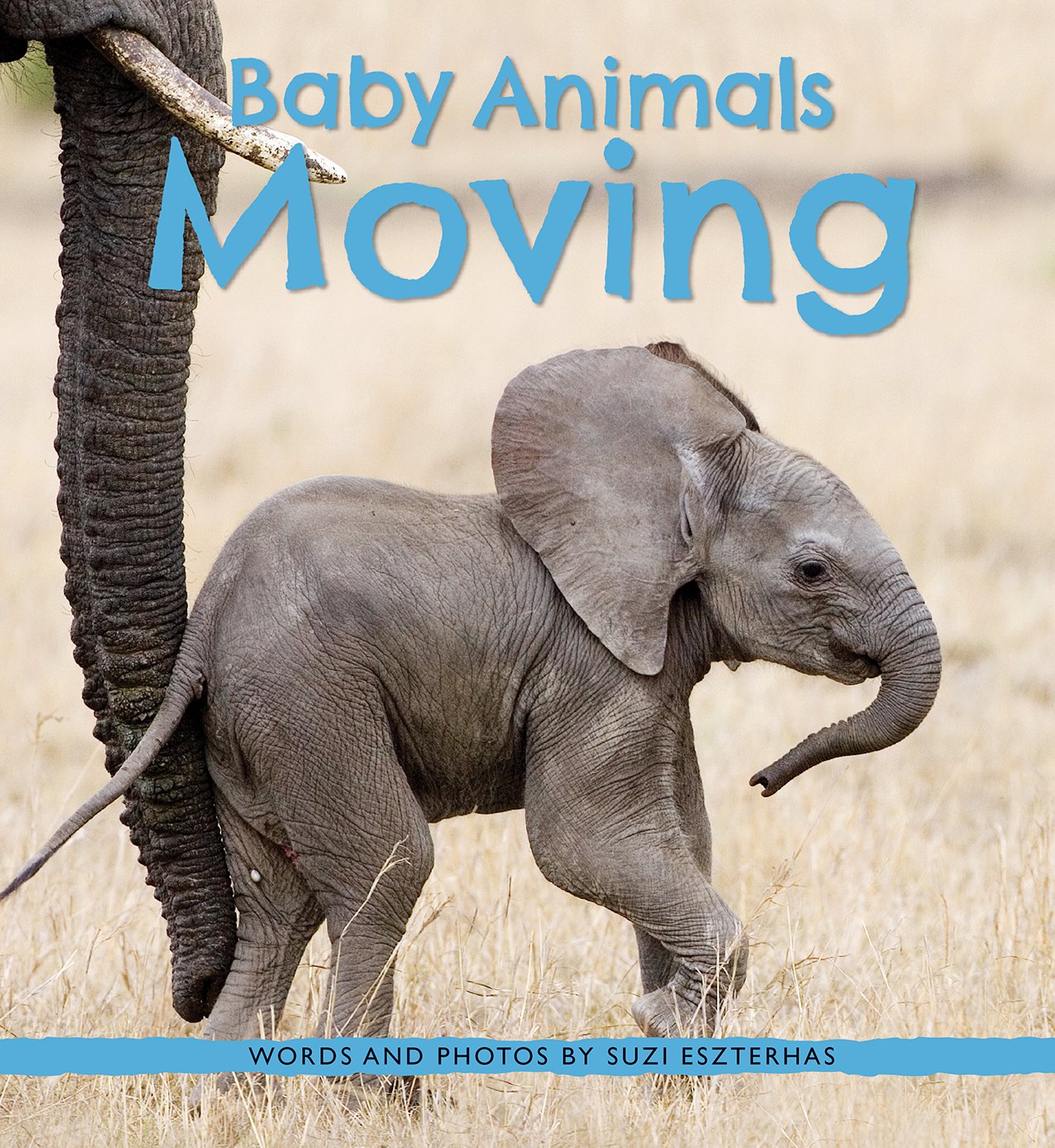
Summary:  Elephants Maggie and Anabelle lived at the Alaska Zoo, good friends for many years until Anabelle died.  Maggie seemed lonely, befriending an old tire that she carried with her everywhere.  Finally, the zookeepers decided it would be best for her to move to a warmer climate where she could be with other elephants.  Maggie was transported to the Performing Arts Welfare Society (PAWS) in California, where she quickly was accepted by the other elephants living there.  She now spends her days with her closest elephant companion Lulu, and has happily abandoned her tire.  Includes additional information about elephants and zoos, as well as Q&A with Maggie’s keeper Michelle Harvey.  32 pages; grades K-3.

Pros:  Kids will enjoy learning the details of Maggie’s life, both in Alaska and California, as well as the logistics for transporting a four-ton elephant from one place to the other.

Cons:  The illustrations were merely serviceable, and more photos (there is one) would have made the back matter more interesting.

If you would like to buy this book through Amazon, click here.


On Our Street: A First Talk About Poverty by Dr. Jillian Roberts and Jaime Casap, illustrated by Jane Heinrichs

Published by Orca Book Publishers

Image result for poverty on our street amazon

Summary:  Poverty and homelessness are explained for young children, using a question and answer format for such queries as “What is it like to live on the streets?” and “Are there children who are homeless?”  Each question is answered on a two-page spread, with stock photos of different people, illustrated with drawings of the same three kids who seem to be the ones having the discussions.  International poverty is addressed, with information about refugees and fundamental human rights. Readers are given suggestions of how to help those who need it, and there is a list of Internet websites at the end, along with notes from both the authors.  32 pages; grades K-3.

Pros:  Simple, straightforward information is given about topics that are not often addressed in children’s literature.  The authors, a child psychologist and the educational evangelist at Google (who grew up in poverty) make an interesting combination of writers.

Cons:  The stock photos somewhat depersonalize the issues; it would have been more effective to follow the same people or family throughout the book.

If you would like to buy this book on Amazon, click here.
All That Trash: The Story of the 1987 Garbage Barge and Our Problem With Stuff by Meghan McCarthy

Published by Simon and Schuster

Image result for all that trash meghan mccarthy amazon

Image result for all that trash meghan mccarthy amazon

Summary:  In 1987, Lowell Harrelson had the brilliant idea to make electricity from the methane gas released by decomposing garbage.  He rented a barge, hired two tugboat drivers, and loaded over 3,000 tons of garbage to be hauled from New York to North Carolina.  When the (incorrect) rumor got out that there was medical waste on the barge, officials in North Carolina refused to let the trash into the state. Thus began a saga that continued for five months and over 6,000 miles as one state after another (and a few countries) refused the barge entry.  Unbelievably, the trash ended up back in New York, where sanitation workers burned it. The news media picked up the story and ran with it, raising awareness about the problem of overflowing landfills and giving momentum to the recycling movement. Includes additional facts about the barge, garbage, and recycling, as well as a very complete bibliography.  48 pages; grades 2-5.

Pros:  Meghan McCarthy has a knack for finding obscure stories and bringing them to life, making them relevant to today’s readers.  Her bug-eyed portraits and cartoon bubbles make this entertaining and highly readable, while the text imparts plenty of information.

Cons:  Five months hauling a barge with 3,000 tons of garbage.  Eww.

If you would like to buy this book on Amazon, click here.