The Good Egg by Jory John and Pete Oswald

Published by HarperCollins
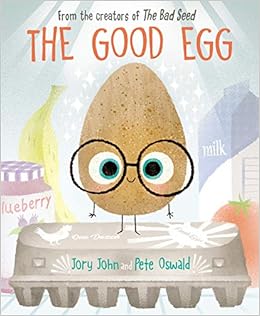
Image result for good egg jory john amazon

Image result for good egg pete oswald

Summary:  The Good Egg likes to help others and follow the rules.  The other eggs in his carton…not so much. As they stay up late, eat sugary cereal, and throw tantrums, the Good Egg tries to keep the peace and get everyone to behave.  Finally, the stress is too much, and he begins to crack. His doctor tells him the cracks are from all the pressure he is putting on himself. The Good Egg decides to take a little me time, and leaves the carton for an extended vacation.  Some R & R fixes those cracks, and he returns to the carton with new tools for taking care of himself and not worrying so much. 40 pages; ages 4-8.

Pros:  A little bibliotherapy from the team who brought you The Bad Seed.  Kids will enjoy the antics of the “bad” eggs, and hopefully learn a few lessons about the dangers of perfectionism.

Cons:  It seemed a bit preachier and not quite as much fun as The Bad Seed.  Guess it’s more fun to root for the bad guy than the good guy.
If you would like to buy this book on Amazon, click here.

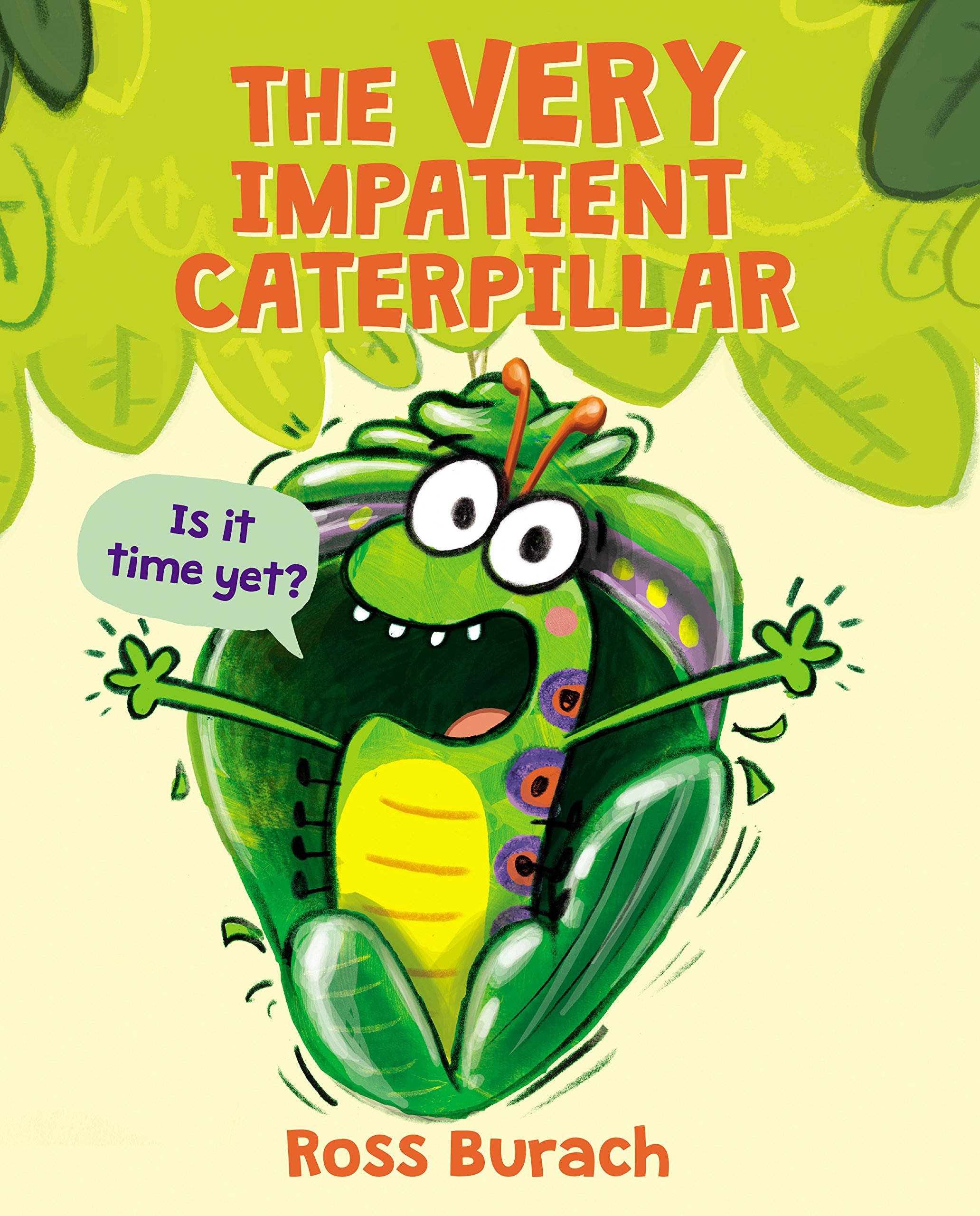
The Very Impatient Caterpillar by Ross Burach

Published by Scholastic

Image result for very impatient caterpillar amazon

Image result for very impatient caterpillar burach

Summary:  A caterpillar notices that others are climbing a tree; they tell him they are going to metamorphosize.  He’s never heard of this, but doesn’t want to get left behind. After a few attempts, he manages to wrap himself in a chrysalis, but it’s boring waiting to become a butterfly!  Unable to make it the full two weeks, he emerges after a day, only to discover he hasn’t grown wings. Back he goes, and after 14 days of giving himself pep talks, he manages to get through the wait and turn into a butterfly.  He’s sure he’s transformed in more ways than one, and plans to be way more patient. The last page shows him joining a butterfly migration, and, of course, asking, “Are we there yet?!” 32 pages; ages 3-8.

Pros:  Great goofy fun that will be enjoyed by children of all ages.  The whole story is told through cartoon bubble dialogue, and the comic-style illustrations will provide lots of laughs.

Cons:  The scientific content is pretty light.

Click here if you would like to buy this book on Amazon.

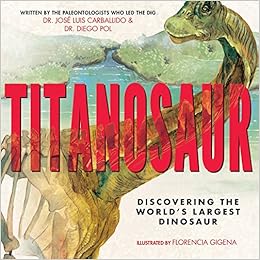
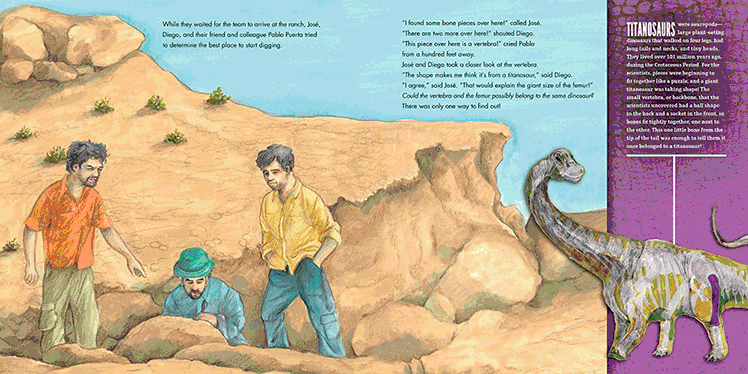
Titanosaur: Discovering the World’s Largest Dinosaur by Dr. Jose Luis Carballido and Dr. Diego Pol, illustrated by Florencia Gigena

Published by Scholastic Press

Image result for titanosaur gigena amazon

Image result for titanosaur gigena

Summary:  When an Argentinian gaucho told museum staff that he had found a dinosaur bone much larger than the one they had on display, paleontologists Jose Luis Carballido and Diego Pol wanted to investigate.  They visited the ranch and found out the gaucho was right–he had discovered a dinosaur bone bigger than any previously discovered. The two paleontologists assembled a team and began excavating the fossils.  They eventually were able to estimate the size of the dinosaur, which would have weighed in at seventy tons. Over 100 bones were found, belonging to several dinosaurs.  The team had to work around the clock to uncover them all before cold weather set in, which could damage the fossils. When the titanosaur’s skeleton was finally assembled, it was 122 feet long and almost 26.5 feet tall, making it the largest ever found…for now.  40 pages; grades 1-4.

Pros:  Dinosaur enthusiasts will be blown away by this gigantic dinosaur, and the work it took to dig up and assemble.  The illustrations and photographs add a lot of information, and make a paleontology career look like a very fun adventure.

Cons:  Some back matter would have added a lot; for instance, I couldn’t find any dates for when the expedition took place or the name of the museum where the skeleton is now on display.

If you would like to buy this book on Amazon, click here.

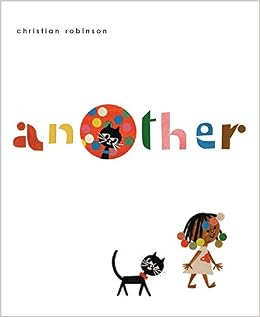
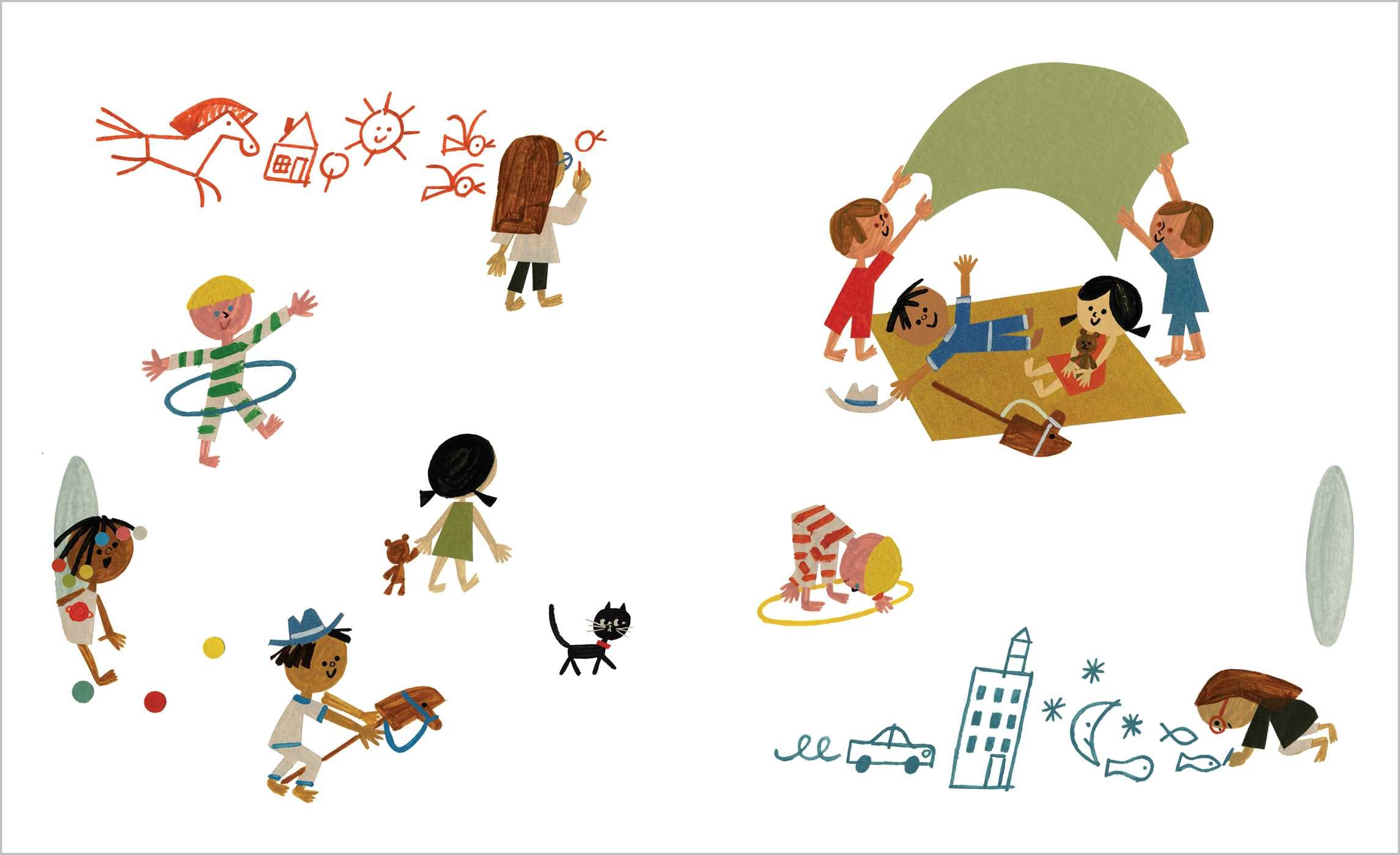
Another by Christian Robinson

Published by Atheneum Books for Young Readers

Image result for another christian robinson amazon

Image result for another christian robinson amazon

Summary:  It’s bedtime for a girl and her cat as this wordless picture book opens; the cat sees a portal open in her wall, and a nearly-identical cat walks through and grabs a red toy mouse from the floor.  The girl wakes up, and the two follow the new cat out through the hole. They find themselves in a new world where up is down and down is up.  Other portals lead to new places where dozens of other children are playing. Finally, the girl and cat meet up with their doubles (except for a few details that are blue instead of red).  The blue-collared cat tosses the red mouse to the red-collared cat, and he and the girl return to their bedroom. Everything seems to be just as it was at the beginning of the story…except that now there is a blue toy mouse on the floor.  56 pages; ages 4-8.

Pros:  This is a real feast for the imagination…so much to look at it in the illustrations and a lot to speculate on in the crazy mixed-up world that Christian Robinson has beautifully created.

Cons:  I was pretty confused my first time through this book.

If you would like to buy this book on Amazon, click here.

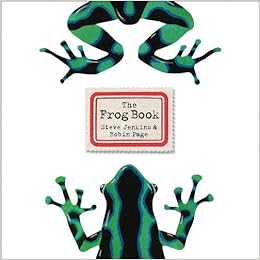
The Frog Book by Steve Jenkins and Robin Page

Published by HMH Books for Young Readers

Image result for frog book jenkins amazon

Image result for frog book steve jenkins

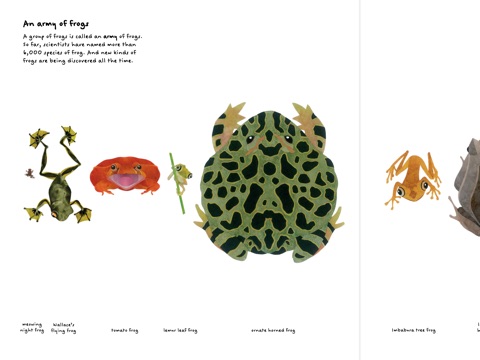
Summary:  Similar in format to Steve Jenkins’ The Beetle Book, this book provides information on frogs’ diets, habitats, defenses, and reproduction.  There’s a page about extreme frogs (smallest, largest, most poisonous, etc.), and another on the endangered status of frogs around the world.  You can also learn the differences between a frog and a toad and a little bit about other amphibians. The last two pages have a table showing all the frogs in the book, with their body lengths, diets, and where in the world they can be found.  Includes lists of books and websites for further information. 40 pages; grades 1-5.

Pros:  There’s a wealth of information that would come in handy for any kind of frog research or report-writing.  The format is inviting, with beautiful cut paper illustrations, and small sections of text with the kinds of interesting facts kids love.

Cons:  I wasn’t a huge fan of the tiny font.  Also, a table of contents or list of the sections in the book would have been helpful.

If you would like to buy this book on Amazon, click here.

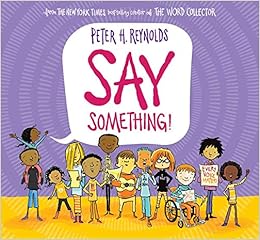
Say Something! By Peter H. Reynolds

Published by Orchard Books

Image result for say something peter reynolds amazon

Image result for say something peter reynolds

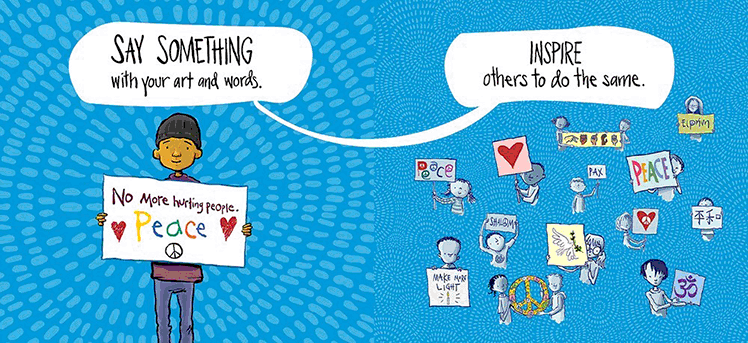
Summary:  “The world needs your voice,” begins this book, then goes on to suggest ways for readers to express themselves.  Sometimes that means talking, like saying “Stop!” if you see someone getting hurt, or telling people why you are angry.  Other times, you can express yourself with painting, planting seeds, or having your own sense of style. It may seem like no one is listening, but if you keep speaking from the heart, you will find someone, and you may be surprised to find the whole world listening.  “Some people find it easier to say something than others,” concludes the author, “but everyone has something to say.” 40 pages; ages 4-9.

Pros:  I love how this book offers ways for introverts to express themselves, as well as those who aren’t shy about speaking up.  As usual, the Peter Reynolds illustrations are adorable and offer a diverse cast of characters.

Cons:  Ironically, the flap of the dust jacket covered up some of the speech bubbles on the front endpaper.

If you would like to buy this book on Amazon, click here.

Good Boy by Sergio Ruzzier

Published by Atheneum Books for Young Readers

Image result for good boy sergio ruzzier amazon

Image result for good boy sergio ruzzier amazon

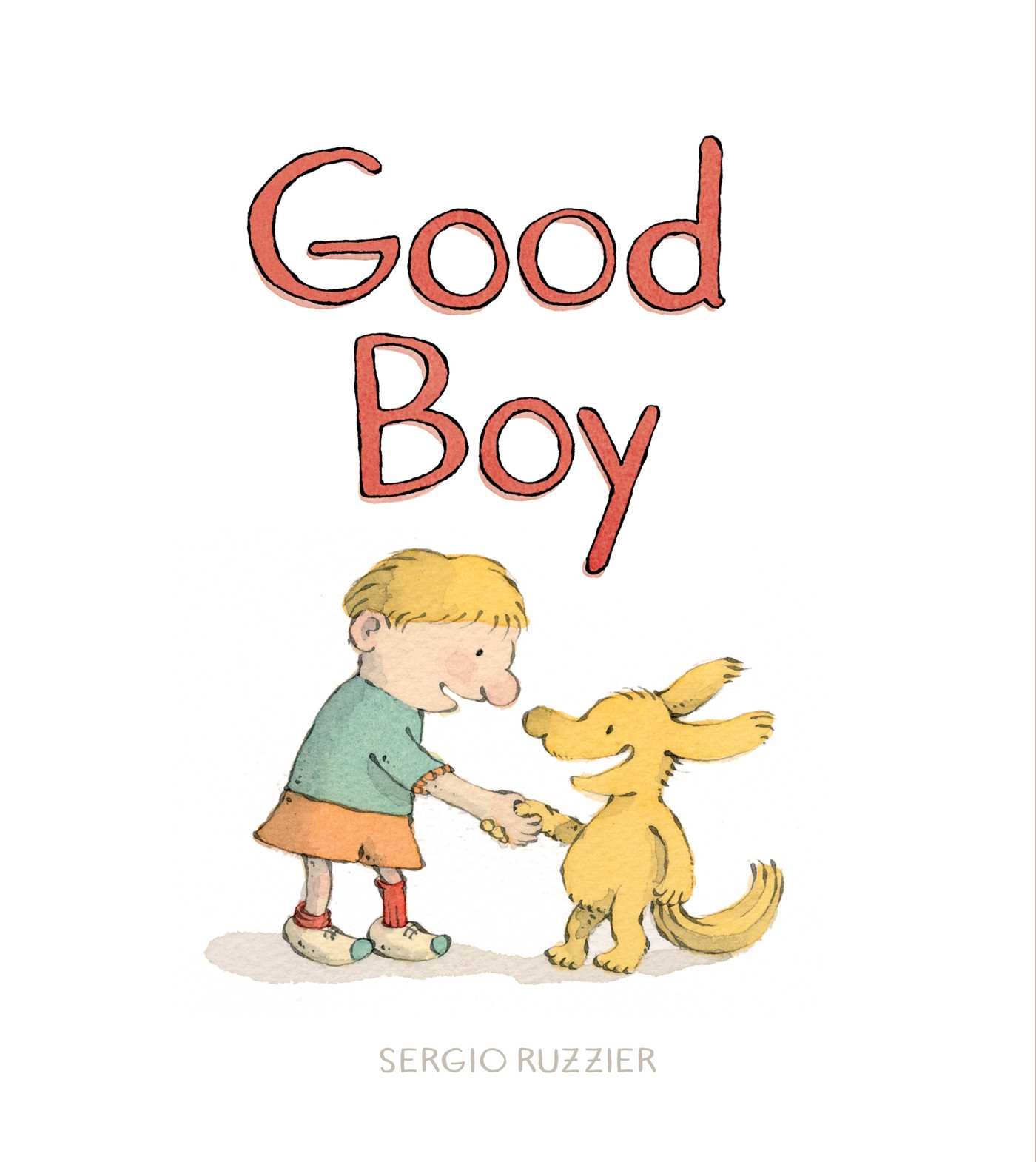
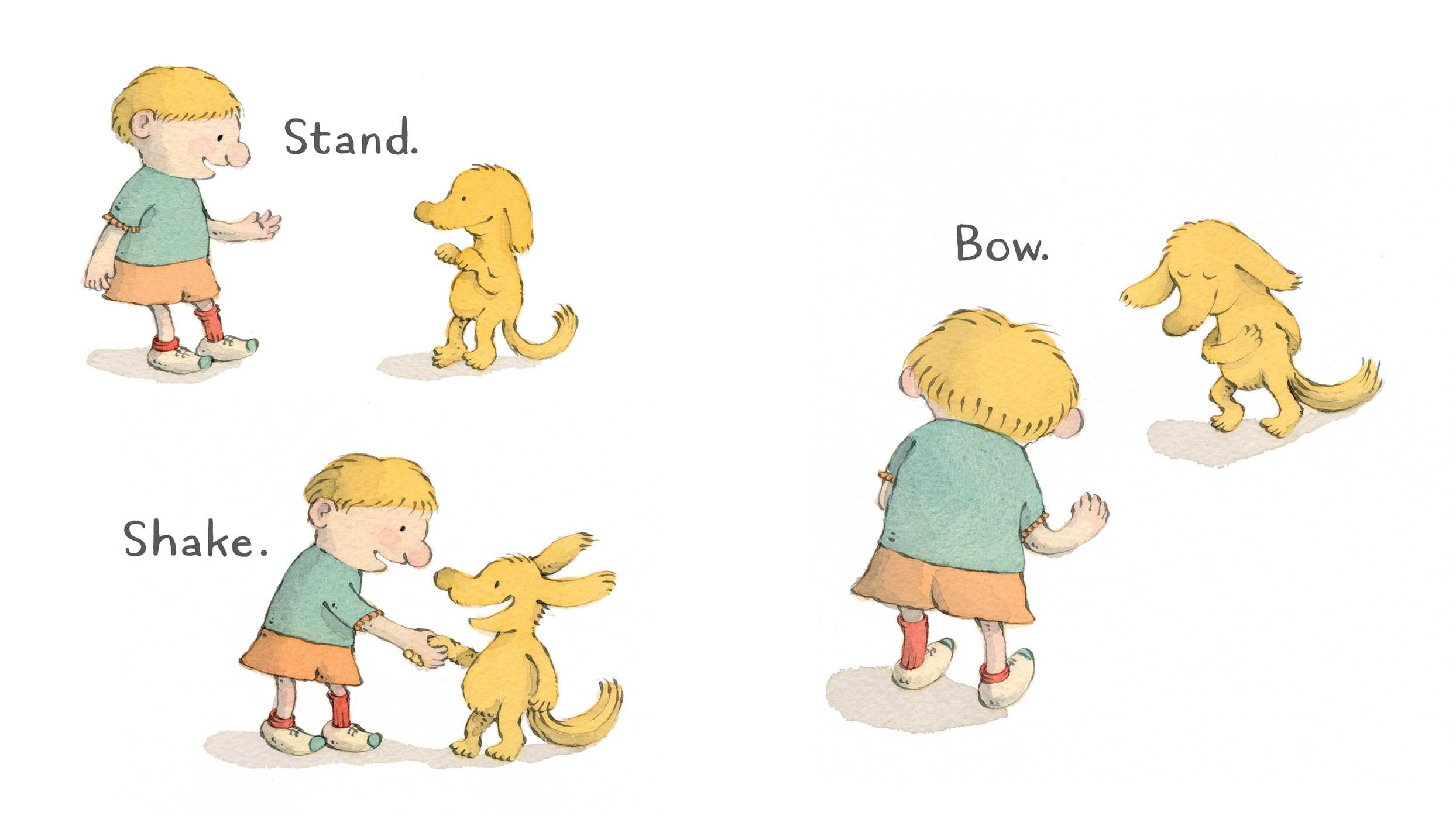
Summary:  It starts out simply enough: “Sit.  Stay. Roll over.” A boy issues commands, and his dog obeys them.  But then the commands get a bit more complex: “Juggle. Cook. Serve.”  Outside, the two get on a bike: “Pedal”. They find a broken-down sailboat: “Fix”.  And finally, they create a rocket ship: “Build” and “Go”. After traveling to another planet, they return home and get ready for bed.  The dog is about to leave the room, when he gets one more command: “Stay”. The last page shows the two snuggled in bed with the caption, “Good boy.”  40 pages; ages 3-6.

Pros:  A nicely illustrated friendship story with a unique approach and an adorable dog.

Cons:  Does the dog ever get tired of being bossed around?

A Ray of Light: A Book of Science and Wonder by Walter Wick

Published by Scholastic Press

Image result for ray of light walter wick

Image result for ray of light walter wick

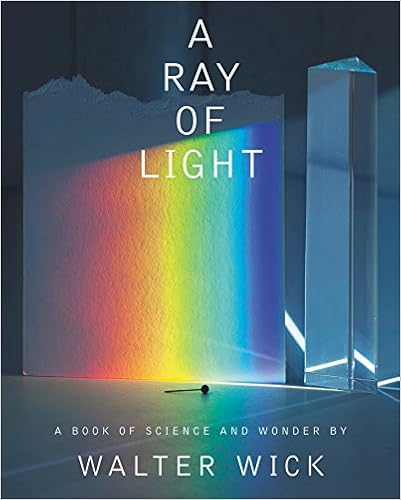
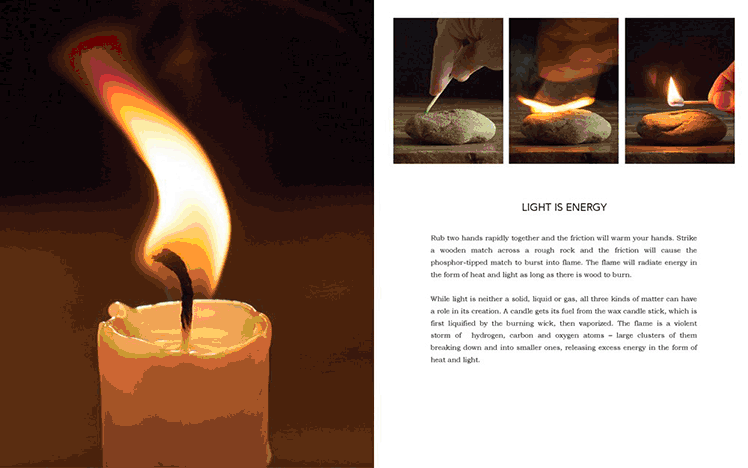
Summary:  As he did in his book A Drop of Water, Walter Wick gives a straightforward explanation about different aspects of light, all illustrated with his own photographs.  A variety of topics dealing with light are included, such as the color spectrum, iridescence, light waves, and incandescence. The text and photos present information in easy-to-understand formats, such as showing a ball attached to a rod vibrating at varying speeds in the water to demonstrate differences in wavelengths as a function of vibration speed.  There aren’t any activities or experiments, but several of the pages have information that would easily lend themselves to either one. The final two pages include notes on each topic, with extra details offered “for the benefit of the more advanced or curious readers”. 40 pages; grades 2-5.

Pros:  This visually appealing book will grab the attention of kids interested in STEM.  The clear explanations provide an excellent introduction to the topic, and the photographs lend themselves well to the text.

Cons:  There’s no table of contents, glossary, index, or list of additional resources.

If you would like to buy this book on Amazon, click here.

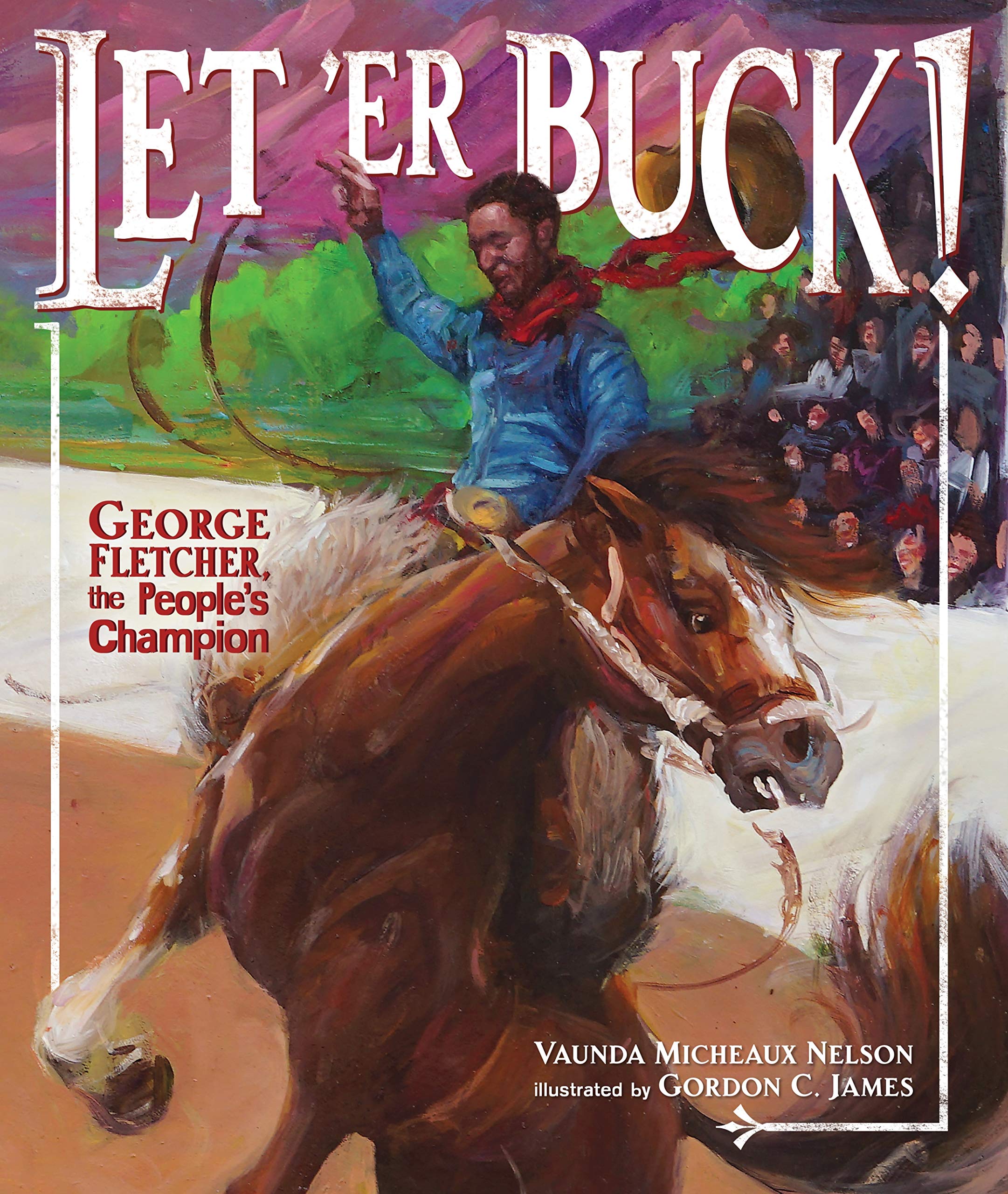
Let ‘Er Buck: George Fletcher, the People’s Champion by Vaunda Micheaux Nelson, illustrated by Gordon C. James

Published by Carolrhoda Books

Image result for let 'er buck george amazon

Image result for let 'er buck george gordon james

Summary:  Growing up in Oregon in the early 1900’s, George Fletcher was one of the only African-Americans in the town of Pendleton.  He spent a lot of time on the nearby Umatilla Indian Reservation, playing with the kids there and learning about horses. His riding skill led him to the rodeo, where he often experienced racism.  Sometimes black cowboys weren’t allowed to compete; other times they weren’t judged fairly against white competitors. This was demonstrated dramatically at the 1911 Pendleton Round-Up, the biggest rodeo in the Northwest.  George made it to the finals of the Saddle Bronc Championship, where he competed John Spain, a white rancher. It was clear to the audience that Fletcher did the best, but the judges chose Spain as the winner.  Sheriff Tillman Taylor grabbed George’s hat, cut it into pieces, then sold the pieces for $5.00 each, raising more money than the first prize saddle was worth. The audience declared George Fletcher the People’s Champion, parading him around the arena on their shoulders.  Includes a glossary of rodeo terms, additional information about and photos of George Fletcher, John Spain, and Tillman Taylor, and a bibliography. 40 pages; grades 2-5.

Pros:  Told with a Texas twang, this action-packed story brings to light a little-known but brave cowboy and his friends and supporters.

Cons:  Because little is known of George Fletcher, especially his early life, some of the details are more speculation than history (as described in the author’s note about the research).

If you would like to buy this book on Amazon, click here.


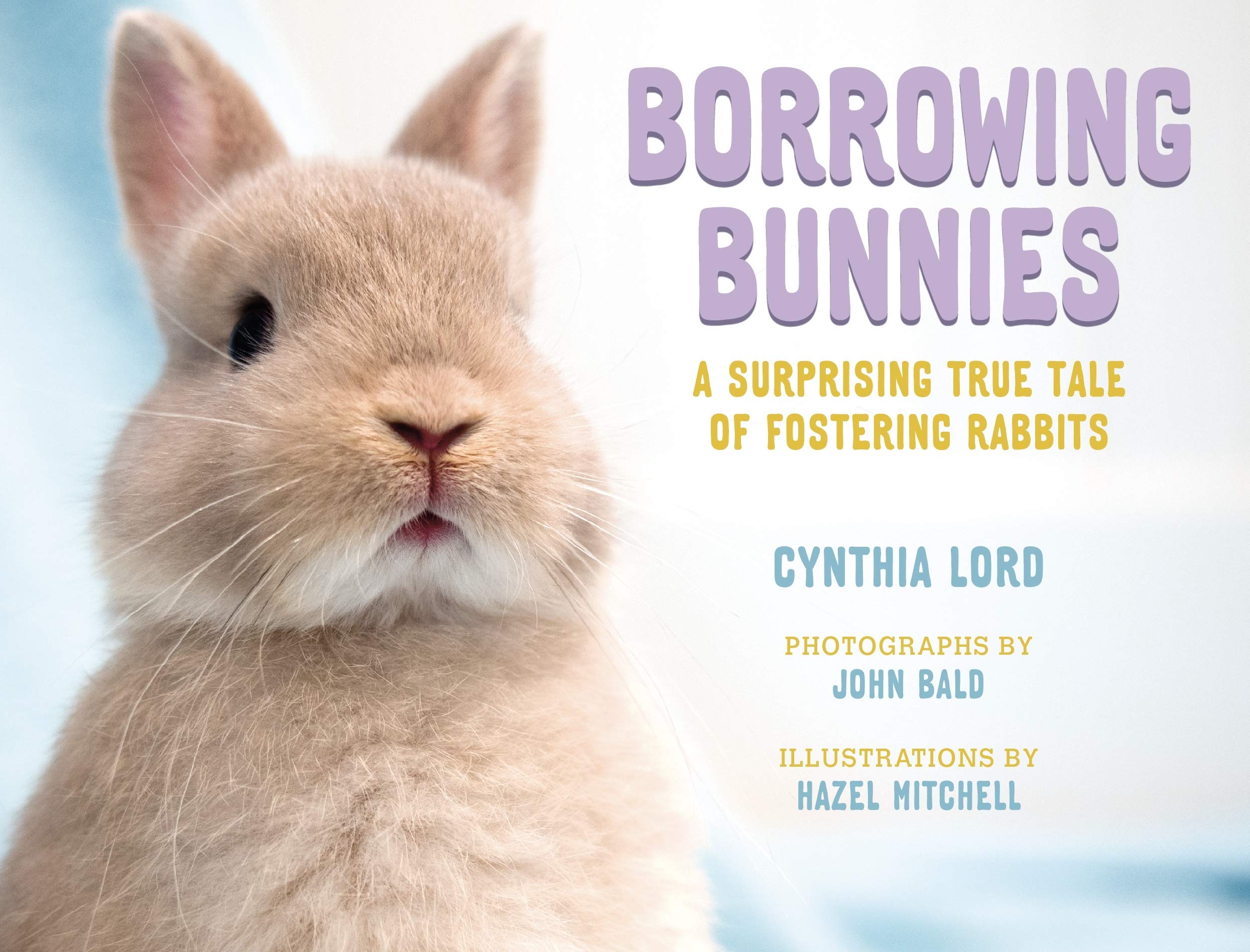
Borrowing Bunnies by Cynthia Lord, photographs by John Bald, illustrations by Hazel Mitchell

Published by Farrar, Straus and Giroux

Image result for borrowing bunnies lord amazon

Image result for borrowing bunnies cynthia lord

Summary:  Cynthia Lord tells of her family’s experience fostering rabbits, focusing on a pair of Netherland Dwarf rabbits named Benjamin and Peggotty.  Coming from a home where they weren’t treated well, the rabbits soon settled into a comfortable life in their new house. The family was just getting ready to think about putting them up for adoption when one morning they discovered four new babies!  They were named Pip, Dodger, Fezzi, and Tiny Tim after characters from Charles Dickens books. Sadly, Pip and Tiny Tim only survived a few days, but Dodger and Fezzi thrived. After eight weeks of fostering, Peggotty, Fezzi, and Dodger were all adopted; Benjamin stayed behind in what had become his new permanent home.  Includes a page of information entitled “Do you want your own rabbit for keeps?” that tells kids all that is involved in having a pet rabbit. 40 pages; grades K-3.

Pros:  It doesn’t get much cuter than baby bunnies; Cynthia Lord’s photographer husband documented every adorable stage of the bunnies’ stay with them.  The last page is a good checklist to make sure no one gets swept up in bunny fever without being prepared for what it takes to have a rabbit for a pet. This book will pave the way for Lord’s new novel, Because of the Rabbit, due out March 26.

Cons:  The sad fates of Pip and Tiny Tim.

If you would like to buy this book on Amazon, click here.