Peace and Me: Inspired by the Lives of Nobel Peace Prize Laureates by Ali Winter, illustrated by Mickael El Fathi

Published by Lantana Publishing
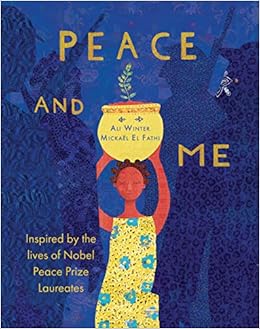
Image result for peace and me ali winter amazon

Summary:  Twelve Nobel Peace Prize winners are profiled, along with the man who started it all, Alfred Nobel.  Winners are presented in chronological order, beginning with Jean Henry Dunant in 1901 and finishing with Malala Yousafzai in 2014.  Some will likely be familiar to kids (Martin Luther King Jr., Mother Teresa, Nelson Mandela), while others are less well known (Fridtjof Nansen, Rigoberta Menchu Tum, Shirin Ebadi).  The first two pages show an interesting timeline, with each person’s name and year shown on a sailboat on the Pacific Ocean.  The last two have a world map showing the country of origin for each recipient.  32 pages; grades 1-5.

Pros:  An interesting and important collection of people for kids to know about.  The collage-style illustrations are fascinating, with lots of details to notice.  Kids will enjoy finding the girl on the cover who appears in every one.

Cons:  Only 12 of the many interesting recipients are profiled.
If you would like to buy this book on Amazon, click here.

The Wall in the Middle of the Book by Jon Agee

Published by Dial Books

Image result for wall in the middle of this book agee amazon

Image result for wall in the middle of this book agee

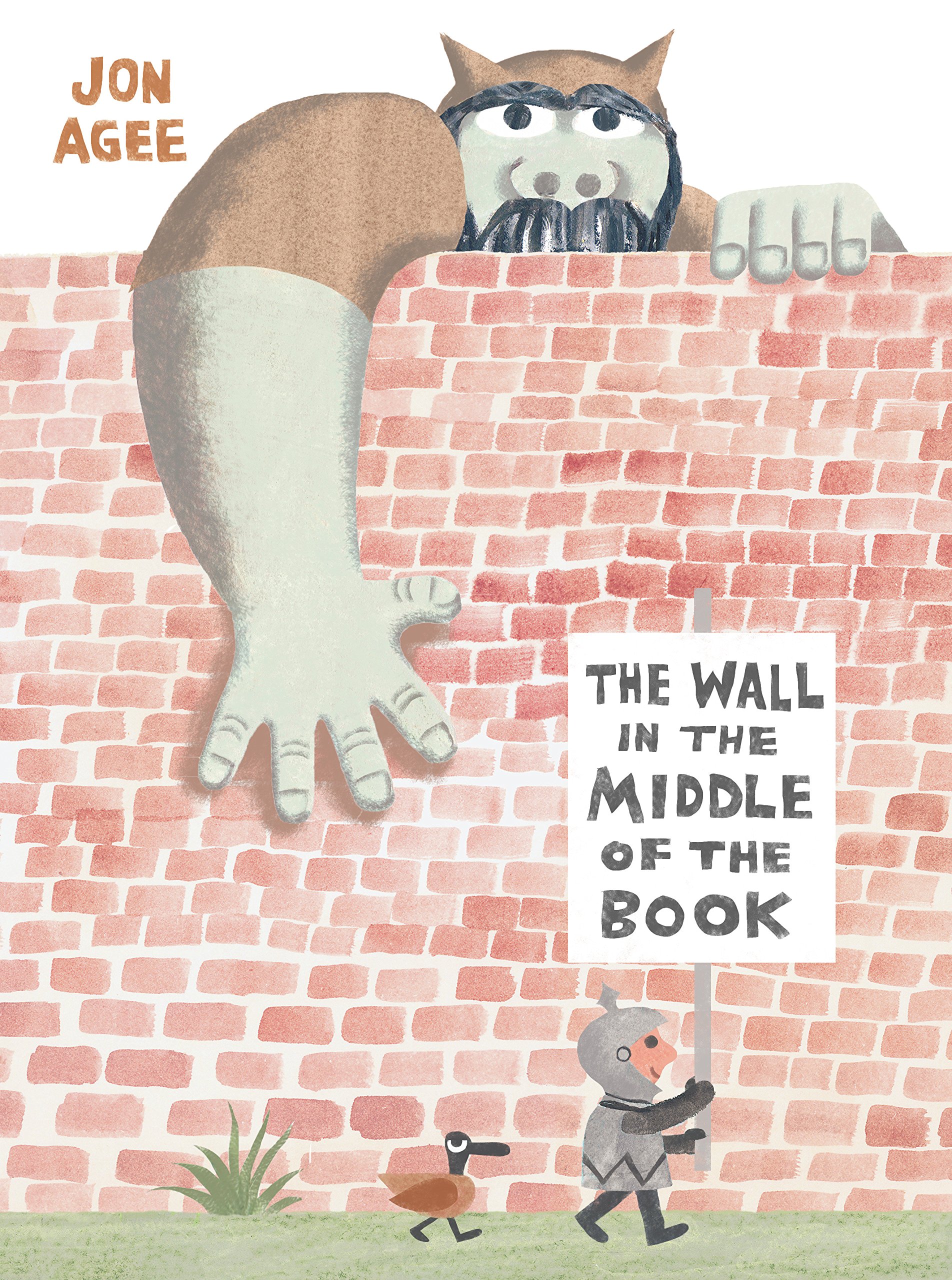
Summary:  The knight narrating the story is glad for the wall in the middle of the book.  It keeps him safe from the wild animals and the ogre that are on the other side.  As he talks, he climbs a ladder leaning up against the wall. Unbeknownst to him, but seen by the reader, water is rising on his side of the wall.  When he realizes he’s about to go under, the knight calls for help, and the ogre reaches over the wall and plucks him off the ladder. Although he’s safe, the knight panics, sure that the ogre will eat him.  The ogres laughs, saying that he’s a nice ogre and that his side of the book is fantastic. In the last few pages, the knight enjoys a ride on the backs of those “wild” animals, while a giant fish swallows a smaller fish on his original side of the wall.  48 pages; ages 4-8.

Pros:  It may or may not be a political allegory, but readers of all ages will get a laugh at the knight’s cluelessness, while learning some important lessons about making assumptions and fears of the unknown.

Cons:  I’m tired of hearing about walls.

If you would like to buy this book on Amazon, click here.

I Got the Christmas Spirit by Connie Schofield-Morrison, illustrated by Frank Morrison

Published by Bloomsbury

Image result for i got the christmas spirit amazon

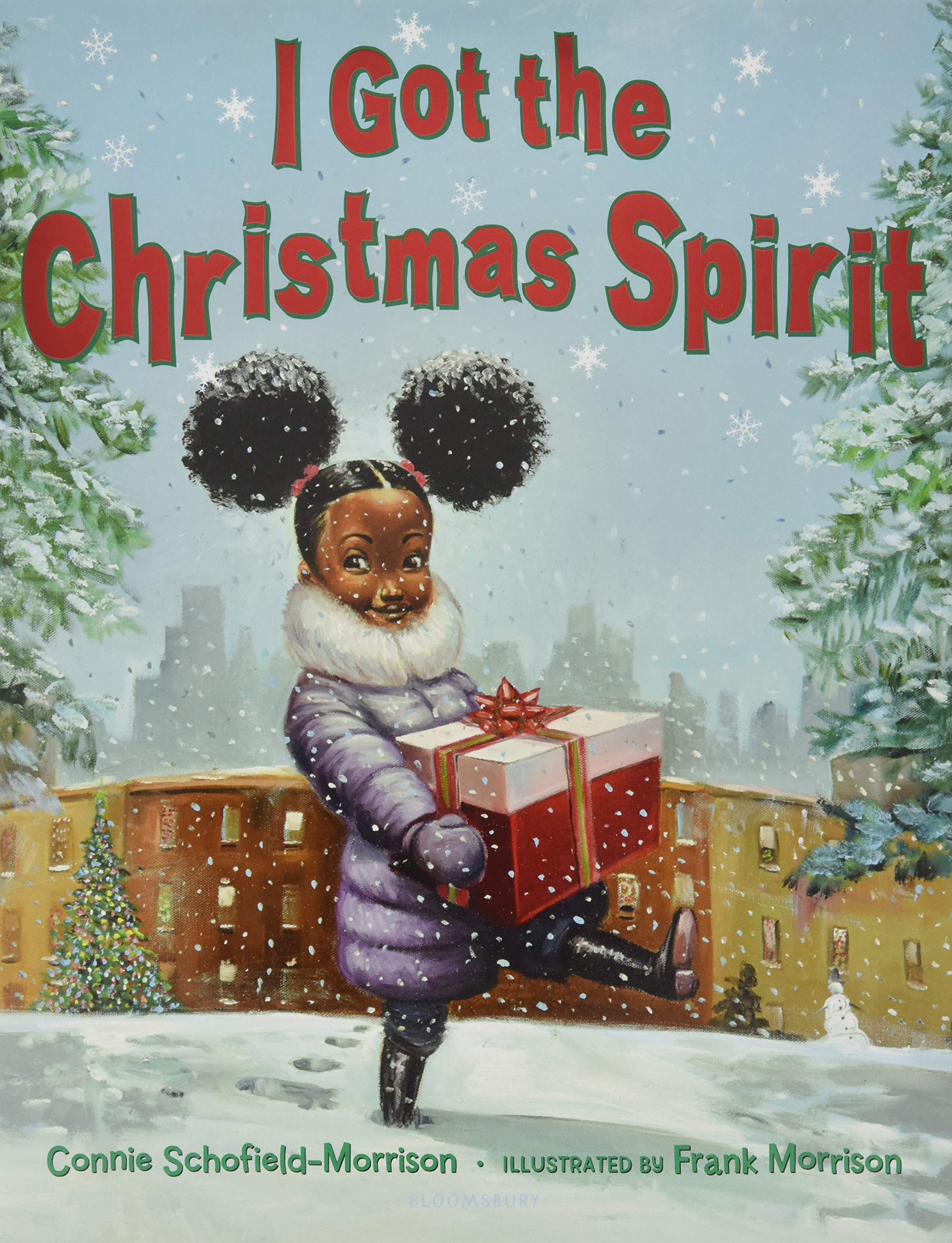
Summary:  From the author-illustrator team that created I Got the Spirit comes this exuberant ode to Christmas.  A little girl goes travels around the city with her mother, excited about Christmas as she embraces its true spirit of giving.  She enjoys singing with carolers, eating crunchy chestnuts, and ice skating in what looks to be Rockefeller Center. She also donates to the Salvation Army and finds a way to help a mother and daughter who are standing on the street with a sign reading “Help, please”.  At the end, she and her mom meet up with her father; as he scoops her up in an embrace; the final page reads, “Peace for all, good tidings, and cheer–let’s live the spirit every day of the year.” 32 pages; ages 3-8.

Pros:  The text is simple, interspersed with rhythmic words (“Dingle Dingle”, “Zoom Zing”).  Readers will want to pay close attention to the colorful oil paintings to see exactly how the girl expresses her Christmas spirit.  This would be a perfect opening to a discussion about the Christmas spirit and how to spread it.

Cons:  This seemed like it should be a rhyming text.

If you would like to buy this book on Amazon, click here.

No Small Potatoes: Junius G. Groves and His Kingdom In Kansas by Tonya Bolden, illustrated by Don Tate

Published by Knopf Books for Young Readers

Image result for no small potatoes amazon

Image result for no small potatoes junius

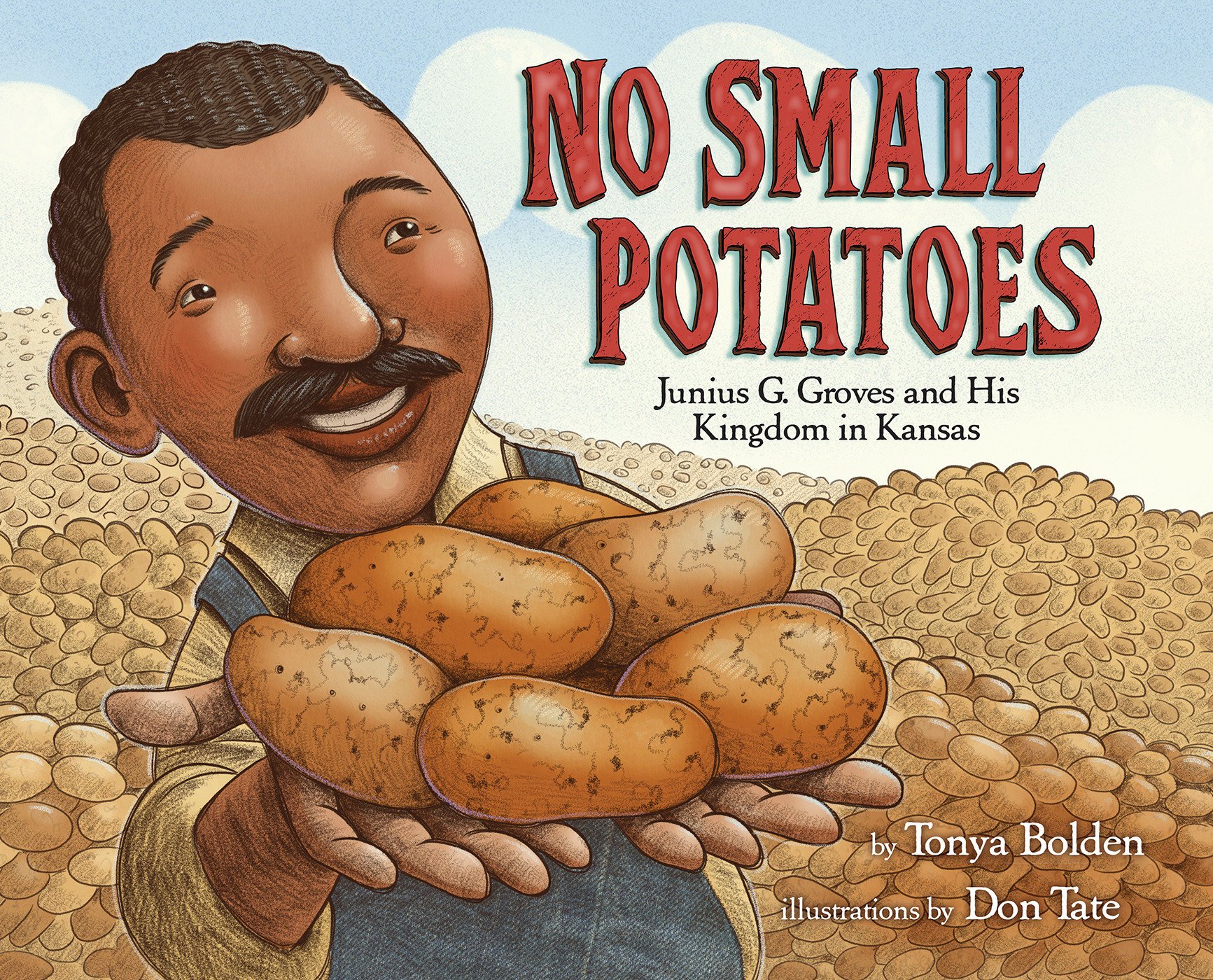
Summary:  Slavery ended just a few years after Junius Groves was born on a plantation in Kentucky.  As a young man, he headed for Kansas to farm.  Starting out as a hired hand earning 40 cents a day, he worked hard to become a foreman, tripling his wages and eventually allowing him to rent his own land to farm.  With his wife Matilda at his side, he saved enough money to buy a farm.  The two of them worked hard, along with their twelve children, to make the farm prosperous.  Their main crop was potatoes: in 1894 he was named Potato King of Wyandotte County by the local paper; six years later, he was called the Potato King of the whole state of Kansas, and in 1902, he was crowned Potato King of the World.  In addition to millions of pounds of potatoes, Junius helped grow a church, a store, a golf course, and a town called Groves Center.  Includes a timeline, glossary, and list of sources.  40 pages; grades 1-4.

Pros:  A real rags-to-riches tale extolling the rewards of hard work, told in a style that almost makes it feel like a tall tale.

Cons:  The potential downside of vying for the title of Potato King of the World at the Thanksgiving table today.

If you would like to buy this book on Amazon, click here.


Pass Go and Collect $200: The Real Story of How Monopoly Was Invented by Tanya Lee Stone, illustrated by Steven Salerno

Published by Henry Holt and Co.

Image result for pass go and collect 200 amazon

Image result for pass go and collect 200 salerno

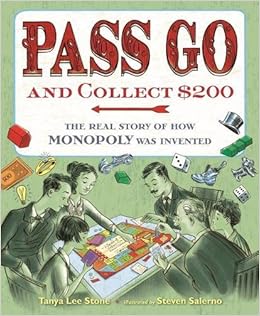
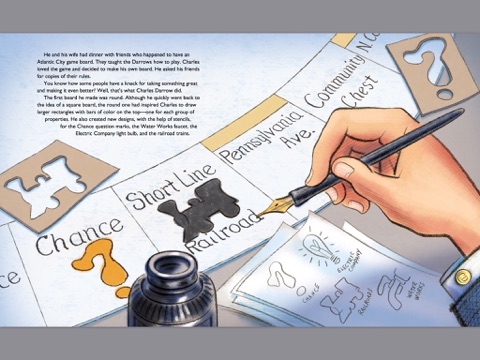
Summary:  The history of one of the world’s most famous board games isn’t a straightforward one.  The earliest form of Monopoly was a game called the Landlord’s Game, created in 1903 by a woman named Lizzie Magie who wanted to show the injustice of landlord-tenant relationships.  Her game had dice, a bank, two kinds of cards called Luxury and Legacy, four railroads, and 22 properties on lots with purchase prices and rents. The game caught on, although an effort by Magie to sell it to Parker Brothers failed, and the properties were named after Atlantic City, NJ landmarks by a teacher in 1930.  During the Great Depression, a man named Charles Darrow, out of work, redesigned the Atlantic City game board and began selling handmade copies from home. Parker Brothers turned him down, too, but when his game became a big seller, they changed their minds. After buying Lizzie Magie’s patent for $500, Charles Darrow and Parker Brothers went on to make millions with the game of Monopoly.  The author ends with some questions: Did Lizzie Magie make a wrong move? Did Charles Darrow? Whatever the answers, there’s no denying that Monopoly’s a winner for many. Includes Monopoly trivia and math, an author’s note, and a list of sources. 40 pages; grades 2-5.

Pros:  A remarkably complex history is laid out in an understandable fashion, with illustrations that document the evolution of the game.

Cons:  Polls done in 2013 and 2017 have resulted in the discontinuation of the classic iron, boot, thimble, and wheelbarrow tokens.  I was always particularly fond of the thimble.

If you would like to buy this book on Amazon, click here.

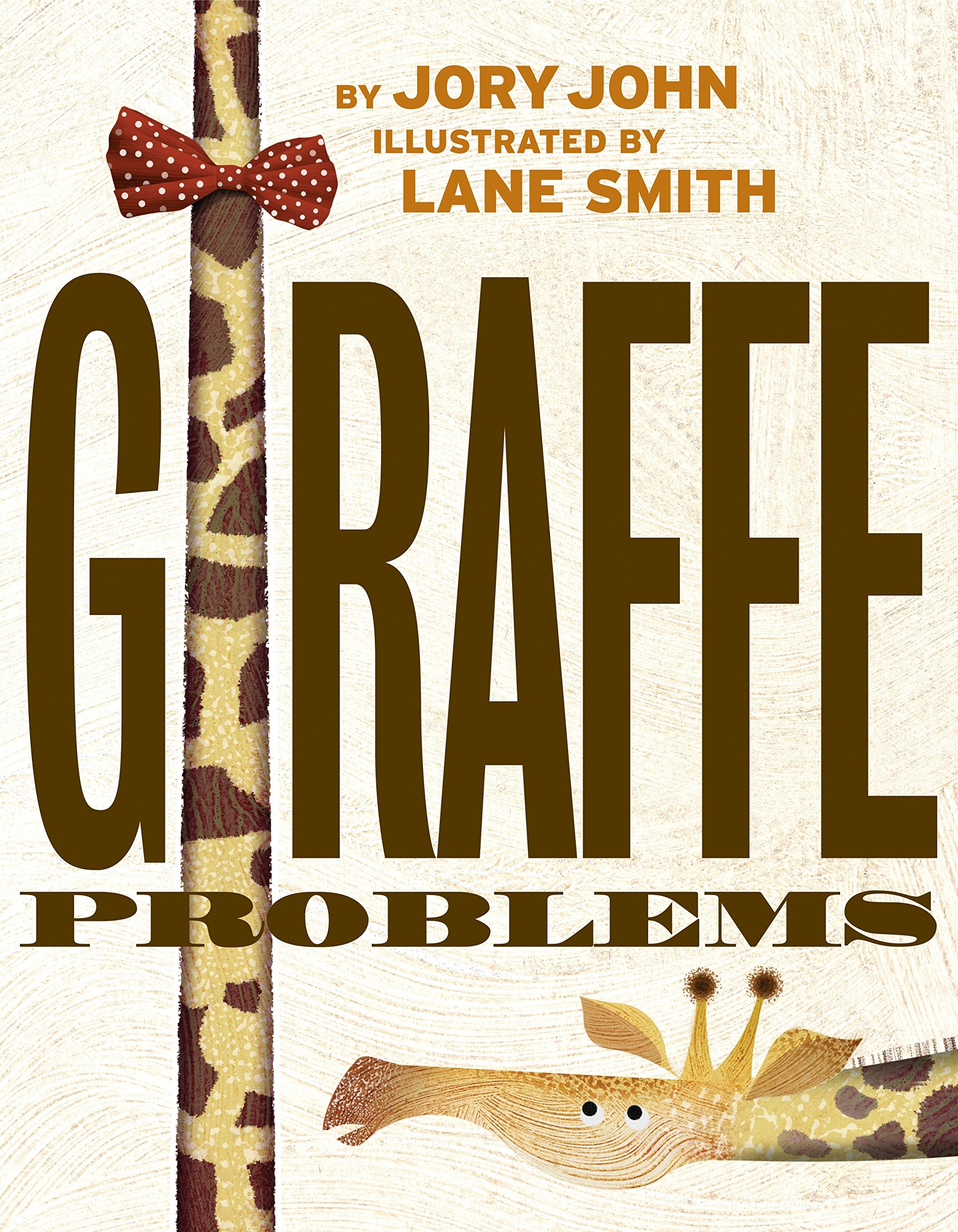
Giraffe Problems by Jory John, illustrated by Lane Smith

Published by Random House Books for Young Readers

Image result for giraffe problems jory amazon

Image result for giraffe problems jory amazon

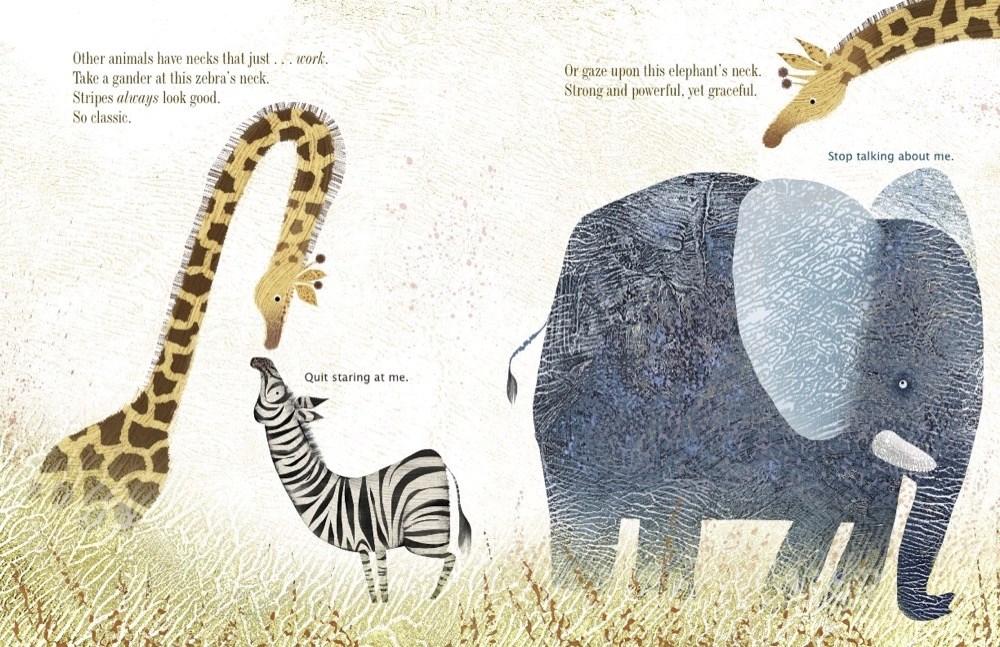
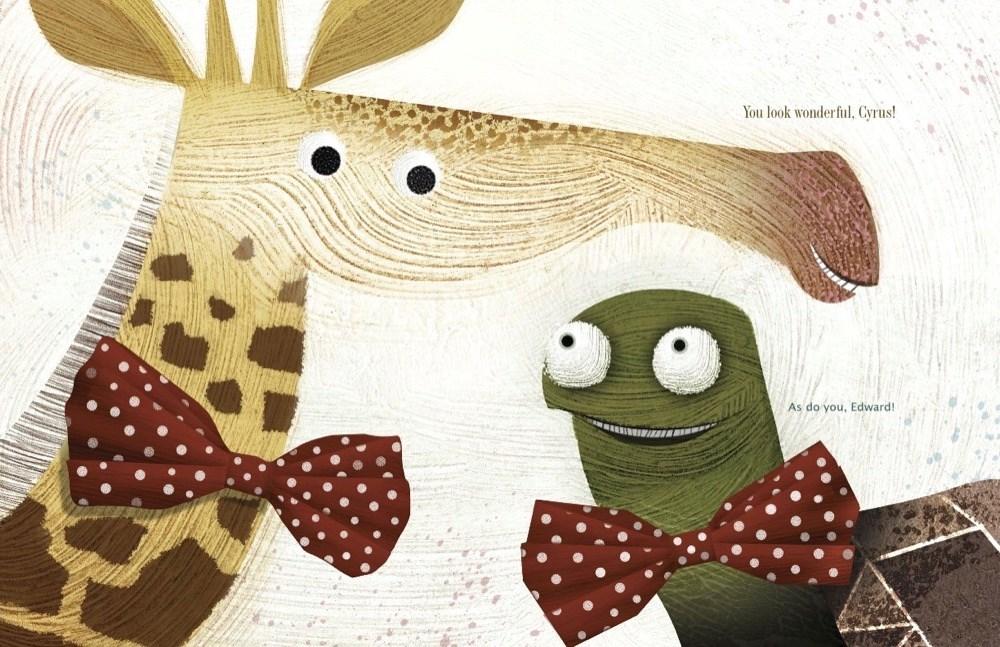
Summary:  Brought to you by the team that produced Penguin Problems, this book features a giraffe named Edward who doesn’t like his neck.  It’s too long, too bendy, too patterned, and a host of other problems.  He’s sure everyone is looking at him and tries to hide his neck with scarves and ties, or by standing behind tall rocks.  He admires the necks of others, like the classically-striped zebra or the heavily-maned lion. A turtle named Cyrus overhears him, and tells him how fortunate he is to have such a long and beautiful neck.  Cyrus has been trying to get a banana off a tree for a week; when he tells Edward, Edward is able to reach it in a matter of seconds. The two admire each others’ necks, and end up feeling a lot better about themselves, even highlighting their necks with bow ties.  42 pages; ages 4-8.

Pros:  There’s still plenty of humor, but a little more of a message here than there was in Penguin Problems.  The multimedia artwork is eye-catching and could be worked into a less on patterns.

Cons:  I read this book to two boys who I thought would find it hilarious.  They seemed to enjoy it, but never laughed.  It’s kind of a dry sense of humor, so some of it may be lost on the young.

If you would like to buy this book on Amazon, click here.

Image result for giraffe problems jory amazon

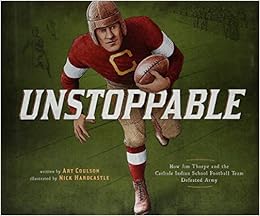
Unstoppable: How Jim Thorpe and the Carlisle Indian School Football Team Defeated Army by Art Coulson, illustrated by Nick Hardcastle

Published by Capstone

Image result for unstoppable how jim thorpe amazon

Image result for unstoppable how jim thorpe amazon

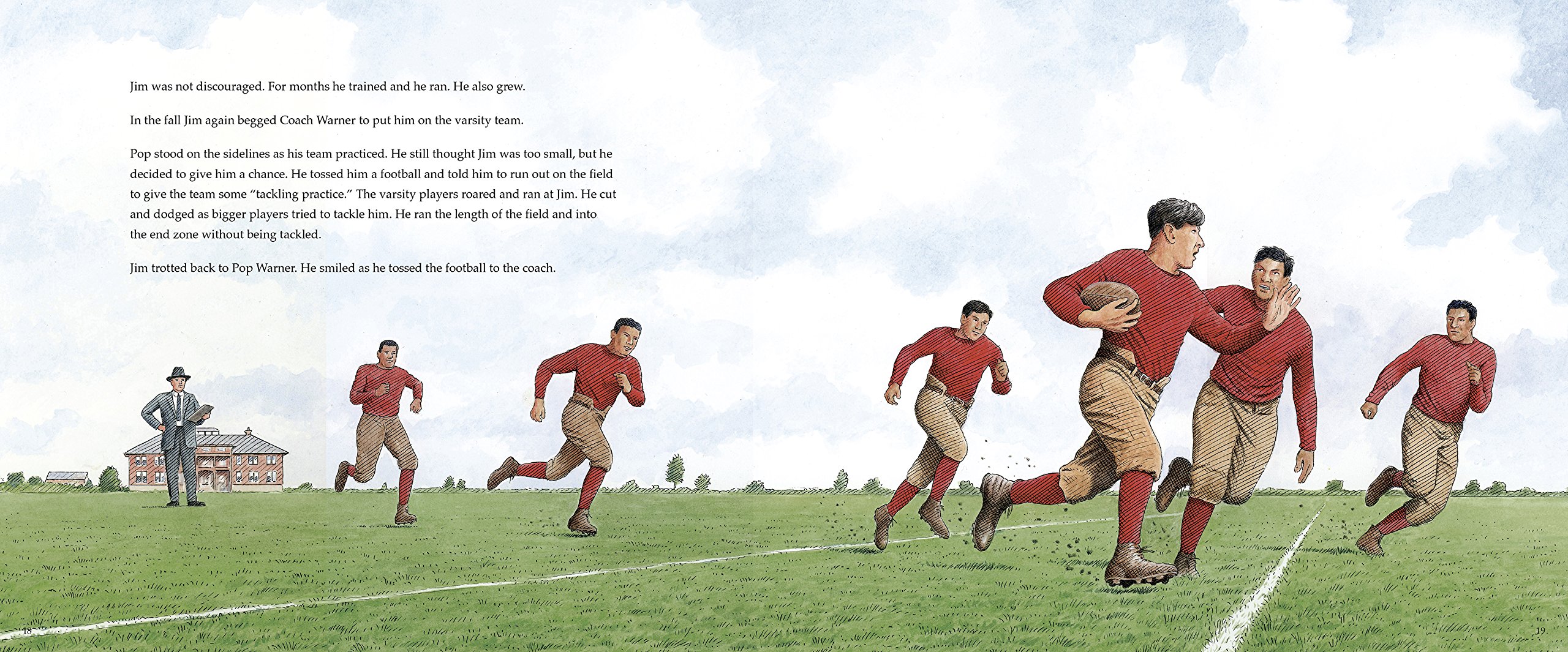
Summary:  The big game against Army is the climax of this book, but there’s a long story to be told before that.  Jim Thorpe, like so many other Indian children, was sent to boarding school, where he was forced to have his hair cut, wear school-issued clothing, and stop speaking his native language.  After running away from a school in Kansas, his father sent him to the Carlisle Indian Industrial School in Pennsylvania. He excelled at all sports there, becoming a football and track star and winning a couple of gold medals at the 1912 Olympics.  Later that year, Thorpe and the Carlisle team traveled to West Point to play against a team that included Dwight Eisenhower and three other future generals. The symbolism of the future Army soldiers versus the Indians was not lost on anyone as the Carlisle team played a new kind of football created by coach Pop Warner and won the game 27-6.  Includes additional information on Jim Thorpe, other members of the Carlisle team, Pop Warner, and the Carlisle Indian Industrial School, as well as a glossary and a list of additional information sources. 40 pages; grades 3-6.

Pros:  So many people (including me) know Jim Thorpe mainly as the guy who lost his Olympic medals for playing semi-professional baseball, but there is so much more to his story.  This is a good introduction to Thorpe, the Carlisle Indian Industrial School, Pop Warner, and the early days of football.

Cons:  Due to the picture book format, a lot of the more interesting (and in some cases, horrifying) details are omitted.  For a more comprehensive picture, read Steve Sheinkin’s Undefeated: Jim Thorpe and the Carlisle Indian School Football Team.

If you would like to buy this book on Amazon, click here.

She Made a Monster: How Mary Shelley Created Frankenstein by Lynn Fulton, illustrated by Felicita Sala

Published by Knopf Books for Young Readers

Image result for she made a monster amazon

Image result for she made a monster sala

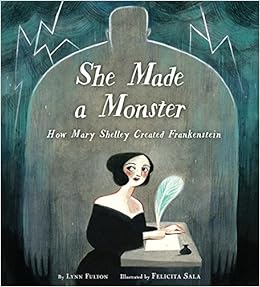
Summary:  On a dark and stormy night two hundred years ago, young Mary sat in her room trying to think of a story.  Downstairs, she could hear her friends Lord Byron and Percy Shelley (soon to be her husband) talking about their own stories.  The group had decided to have a contest to see who could write the best ghost story in a week, and the deadline was approaching.  Finally, Mary went to bed, but in her dreams, she saw a huge creature lying on a table, with a terrified young student shrinking away from him.  Mary knew the young man had brought this being to life. Jolted awake, heart pounding, she realized she finally had an idea for her story. Includes an author’s note about Mary Shelley’s story, Frankenstein, with additional information about Mary and her mother Mary Wollstonecraft, who is referenced in the book.  40 pages; grades 2-5.

Pros:  The writing and illustrations create a deliciously creepy feeling as readers learn about the history behind Mary’s famous book.  This would be an excellent supplement to anyone reading Frankenstein.

Cons:  This is a somewhat fictionalized account (the author’s note tells the parts she took some liberties with) and not really a biography, since it only covers a single episode in Mary Shelley’s life.

If you would like to buy this book on Amazon, click here.

Potato Pants by Laurie Keller

Published by Henry Holt and Co.

Image result for potato pants keller amazon

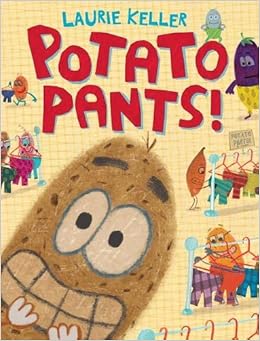
Summary:  One day only…Lance Vance’s Fancy Pants Store is selling Potato Pants!  Potato is so excited he’s doing the Robot (okay, the Po-bot) before rushing down to the store to get a pair.  But when he gets there, he sees Eggplant inside, wearing his new Eggplant Pants! Yesterday Eggplant went rushing past Potato, pushing him right into a nearby trash can.  Potato is sure Eggplant will mash him again if he goes into the store, so he stands outside, watching all the other happy potatoes happily emerging in their apeeling new pants. Finally, he gets up the nerve to go inside, only to find that the pants have sold out, and when they’re gone…they’re gone.  A couple surprising twists bring about a reconciliation between the two vegetables, both of whom emerge well clad, at least from the waist down. 40 pages; ages 4-8.

Pros:  This wildly goofy, high energy veggie tale will have kids doubled over with laughter.  There’s a little bit of a lesson in forgiveness and friendship at the end, but mostly it’s just a lot of fun.

Cons:   After getting to know this cute and friendly Potato, mashed potatoes may be off the table for me at Thanksgiving.

If you would like to buy this book on Amazon, click here.

Picturing America: Thomas Cole and the Birth of American Art by Hudson Talbott

Published by Nancy Paulsen Books

Image result for picturing america talbott amazon

Image result for picturing america talbott

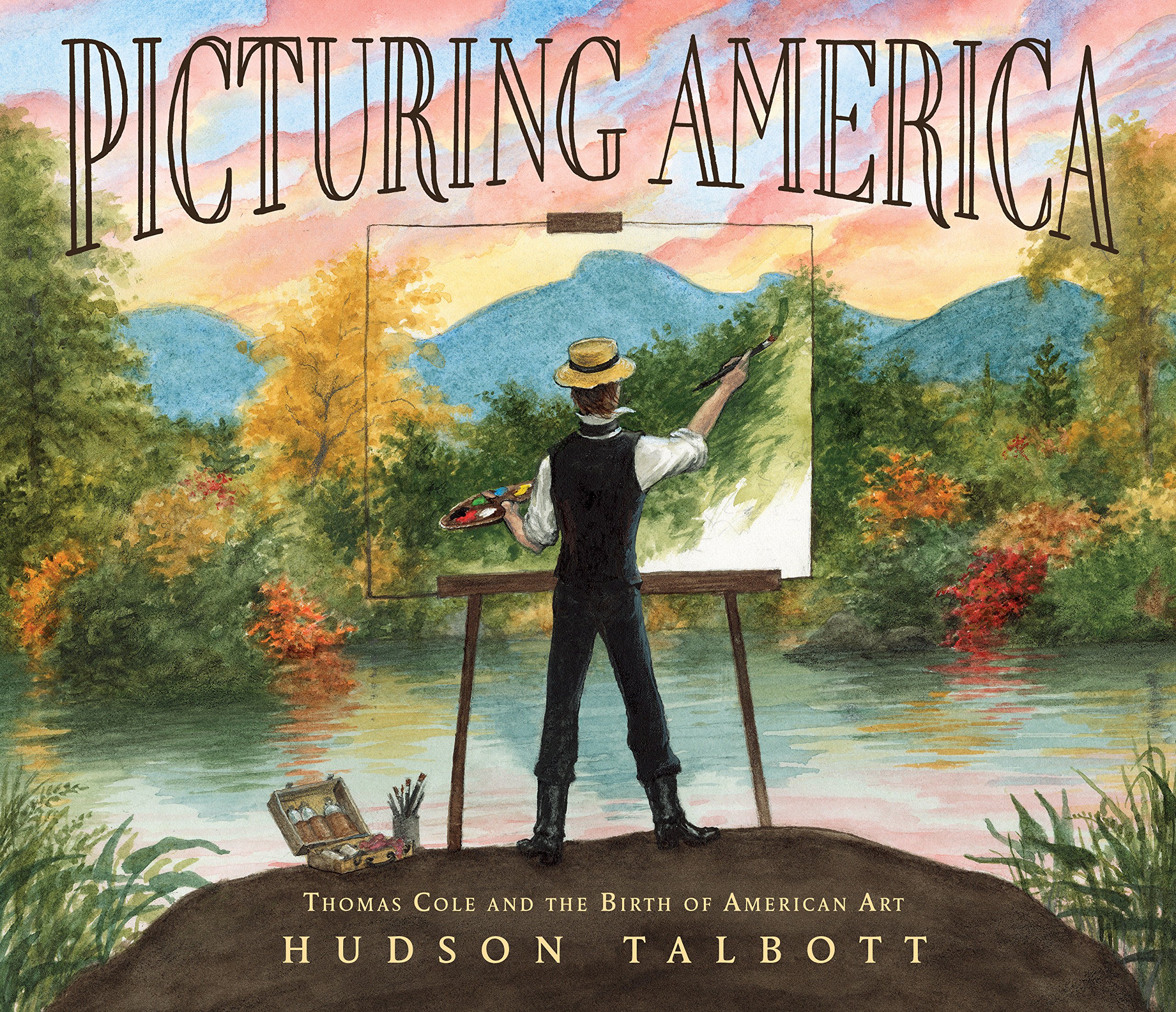
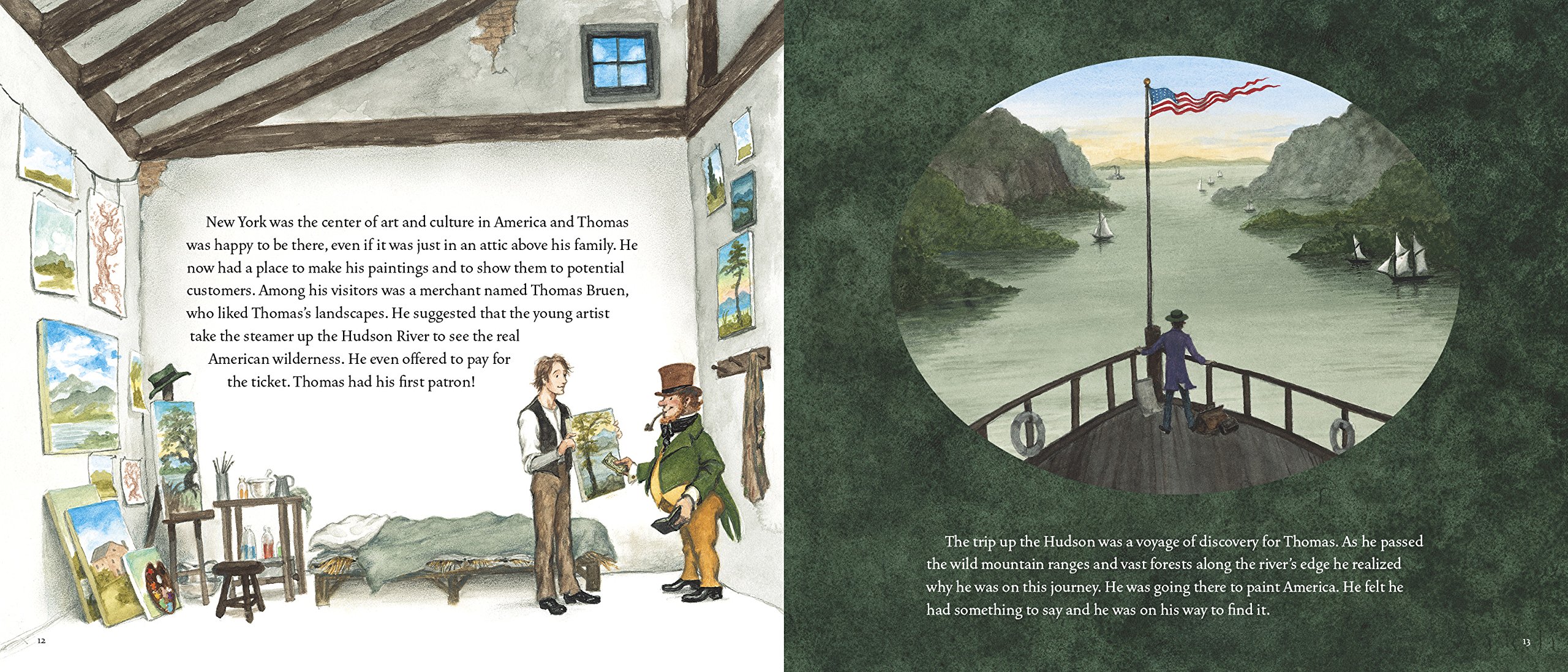
Summary:  Thomas Cole loved nature and drawing from the time he was a little boy growing up in the English countryside.  When the Industrial Revolution hit, his family fell on hard times and decide to emigrate to America. The family settled first in Ohio, then Pennsylvania, but it wasn’t until they moved to New York that Thomas’s luck began to change.  A merchant named Thomas Bruen admired Cole’s landscape paintings and financed a trip up the Hudson.  Cole’s paintings of the wilderness there brought him fame and fortune, enough to support him on a three-year visit to Europe. He was particularly fascinated by the ruins in Rome, and painted a series of landscapes depicting a society moving from wilderness to civilization and back again.  He returned to the U.S., where he married and settled in the Catskills, living and working there until his death at the age of 47. His style, known as the Hudson River school of art, was the first American art movement, and influenced many other American artists for generations. 32 pages; grades 1-5.

Pros:  This straightforward biography is illuminated with many of Cole’s paintings, showcasing an important early American artist.

Cons:  A timeline would have been useful, since only one date is given in the text (1818, the year the Coles came to the U.S.).

If you would like to buy this book on Amazon, click here.