Dude! word by Aaron Reynolds, illustrated by Dan Santat

Published by Roaring Brook Press
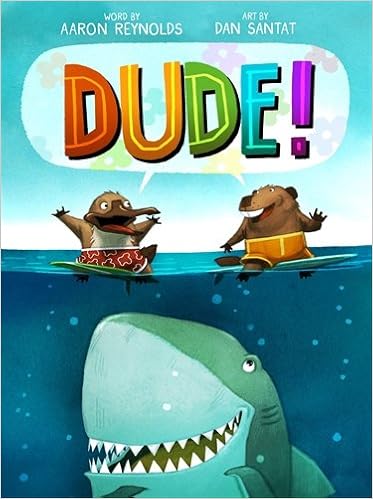
Image result for dude reynolds

Summary:  Cowabunga, dude, this book only has one word, but lots of gnarly pictures!  A platypus and a beaver head out on surfboards one sunny day, disregarding a sign with a big red exclamation mark on it.  The beaver is laughing hysterically after the platypus gets pooped on by a seagull, when suddenly–DUDE!–a great white shark appears.  Thinking fast, the beaver produces an ice cream cone, and the three become friends.  Surf’s up until a big wave smashes the boards into the rocks.  The shark has a solution, and the three head out to sea again, the two smaller animals catching a wave on the back of their great white pal.  Everyone on the beach flees in terror, and the trio enjoy samples from the vacant ice cream stand.  40 pages; ages 4-8.

Pros:  Aaron Reynolds and Dan Santat is a pretty brilliant pairing, and this book of summer fun that includes ice cream, a great white shark, cartoon bubbles, and a poop joke, is pretty much a guaranteed hit at any storytime.

Cons:  If you’re trying to get your offspring to practice reading this summer, this probably isn’t the book for you.  Dude.
If you would like to buy this book on Amazon, click here.

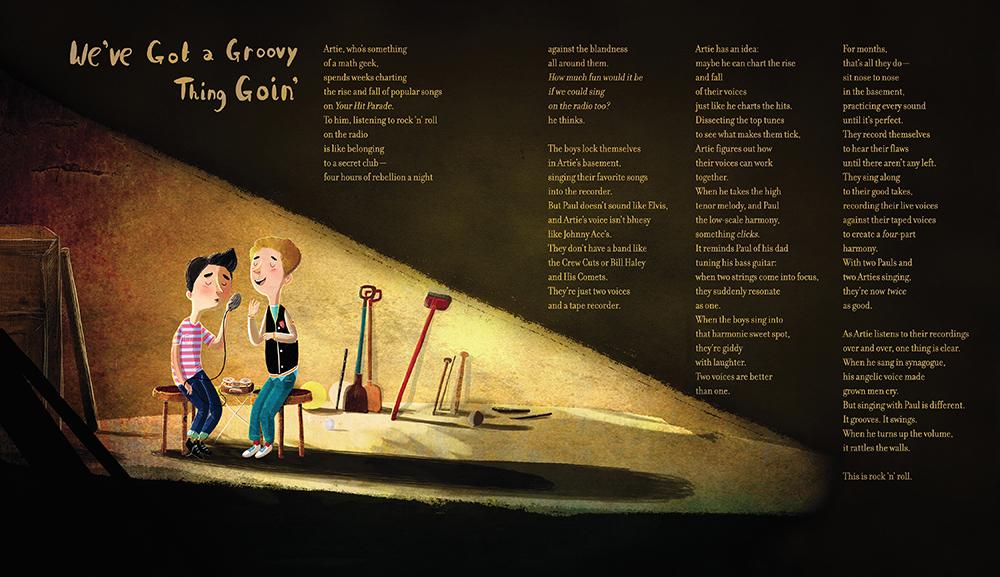
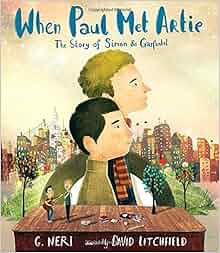
When Paul Met Artie: The Story of Simon and Garfunkel by G. Neri, illustrated by David Litchfield

Published by Candlewick

Image result for when paul met artie amazon

Image result for when paul met artie amazon

Summary:  This story of Paul Simon and Art Garfunkel begins at their Central Park concert on September 19, 1981, then travels back in time 30 years to when the two boys were growing up in 1950’s Queens.  They became friends in a sixth-grade production of Alice in Wonderland, and were inspired by Elvis and other early rockers to try harmonizing, later adding Paul on guitar. At 15, they had their first hit record as Tom and Jerry (Simon and Garfunkel was deemed to Jewish-sounding for 1950’s America), but later recordings failed to catch on.  They met up again in the early 1960’s and released another record, Wednesday Morning, 3 A.M., another flop, except that one song, “The Sound of Silence”, slowly started climbing the charts.  The book ends on New Year’s Day, 1966, when that song reached number one. Includes an afterword, discography, bibliography, and list of musical connections.  48 pages; ages 10 and up.

Pros:  An absorbing history of one of the greatest duos of the rock and roll era.  Each page is a poem titled with one of Simon and Garfunkel’s songs, beginning with “My Little Town”, describing the suburb of Queens where the two grew up.  The illustrations are occasionally goofy, as the two boys were, but really capture the changing times from the 1950’s to the 1960’s. Any fan of their music will enjoy this history and undoubtedly learn a few things as well.

Cons:  Although this looks like an elementary school purchase, it would probably be more interesting to middle schoolers and older, and definitely requires some familiarity with Simon and Garfunkel’s music to be fully appreciated.

If you would like to buy this book on Amazon, click here.

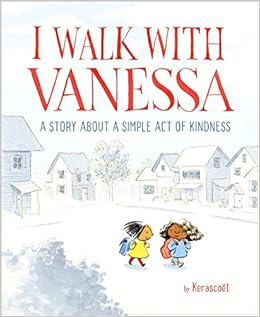
I Walk With Vanessa: A Story About a Simple Act of Kindness by Kerascoet

Published by Schwartz & Wade Books

Image result for i walk with vanessa amazon

Image result for i walk with vanessa kerascoet

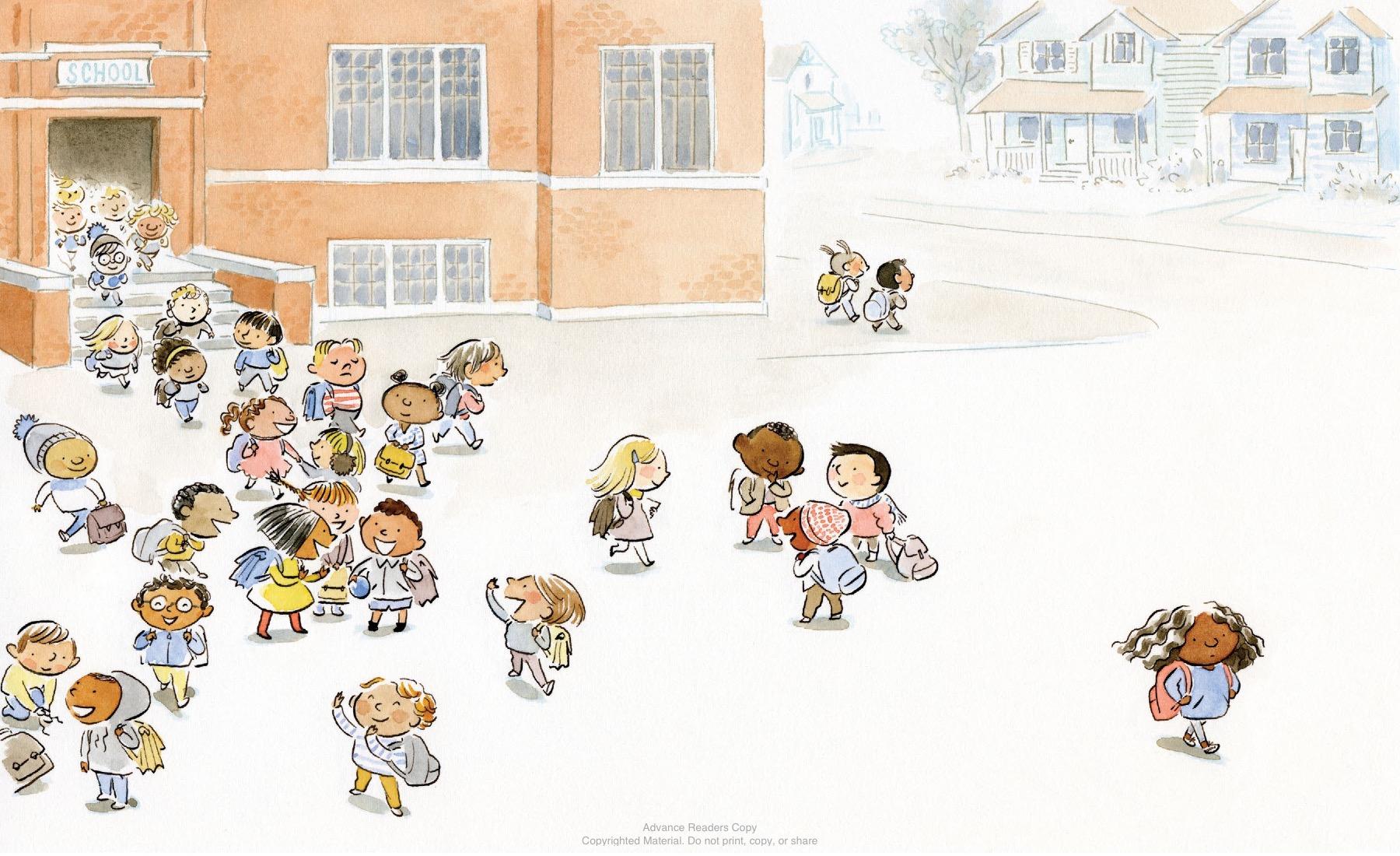
Summary:  In this wordless book, Vanessa is new at school, and seems to be feeling isolated on her first day.  She sits quietly in class and watches kids playing in the gym without joining in.  As she walks home alone, a boy walks up to her and starts yelling.  Another girl witnesses the incident and is clearly bothered by it, continuing to think about it after she gets home.  The next day she wakes up with an idea.  She saw where Vanessa lives, so she stops by her house and asks to walk to school with her.  As the two girls walk, others join them, first one at a time and then in groups, until there are dozens of kids walking together, Vanessa in their midst.  The bully is shown on the edge of the crowd, his face red and angry.  The happy crowd of kids enters the school, and Vanessa has found a new friend.  The last page has a message for kids about how to help someone who is being bullied and some helpful words for adults to use when talking about the book with children.  40 pages; ages 4-8.

Pros:  Although there are no words, kids will get this book right away.  There’s a truly feel-good ending, and the story will lend itself easily to discussion afterward.  The cartoon kids are adorable.

Cons:  The issue of bullying is not always as simple as this book makes it out to be.

If you would like to buy this book on Amazon, click here.


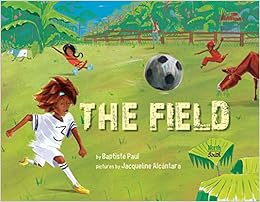
The Field by Baptiste Paul, pictures by Jacqueline Alcantara

Published by NorthSouth Books

Image result for field baptiste amazon

Image result for field baptiste amazon

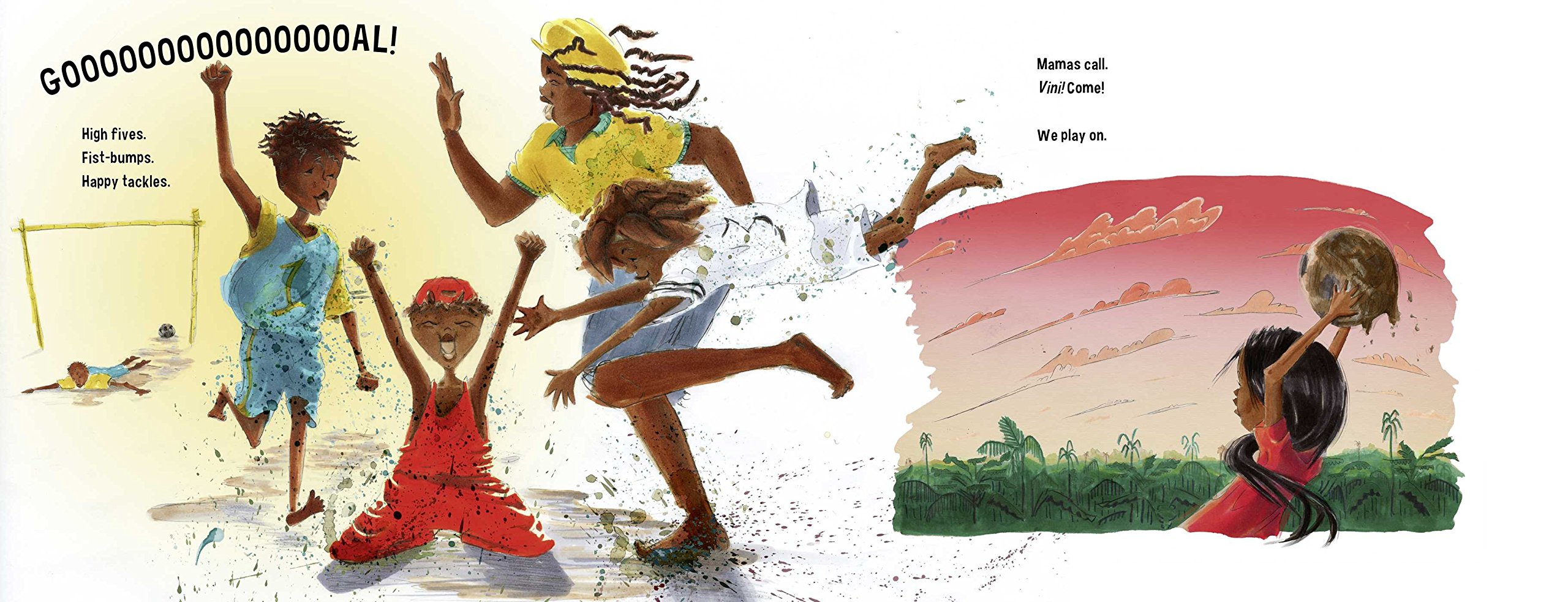
Summary:  A group of enthusiastic children starts a soccer game on a grassy field in St. Lucia, shooing away a group of cows and building their own goal posts.  Passersby lean on the fence around the field, watching the action.  Even a rainstorm doesn’t stop the game, as the players take off their shoes and socks to slip, slide, and belly flop in the mud.  Finally, the mamas call everyone in for dinner; the children go home, but continue to dream about futbol as they sleep.  Includes an author’s note about his childhood playing soccer in St. Lucia and a list of Creole words and phrases used in the story.  32 pages; ages 4-8.

Pros:  Soccer fans will love the action in both the illustrations and the clipped text, interspersed with Creole words.  Even those not familiar with the game will enjoy the sense of play radiating from each scene.

Cons:  The text could have flowed a bit more smoothly.

If you would like to buy this book on Amazon, click here.

Baby Animals Moving by Suzi Eszterhas

Published by Owlkids

Image result for baby animals moving eszterhas amazon

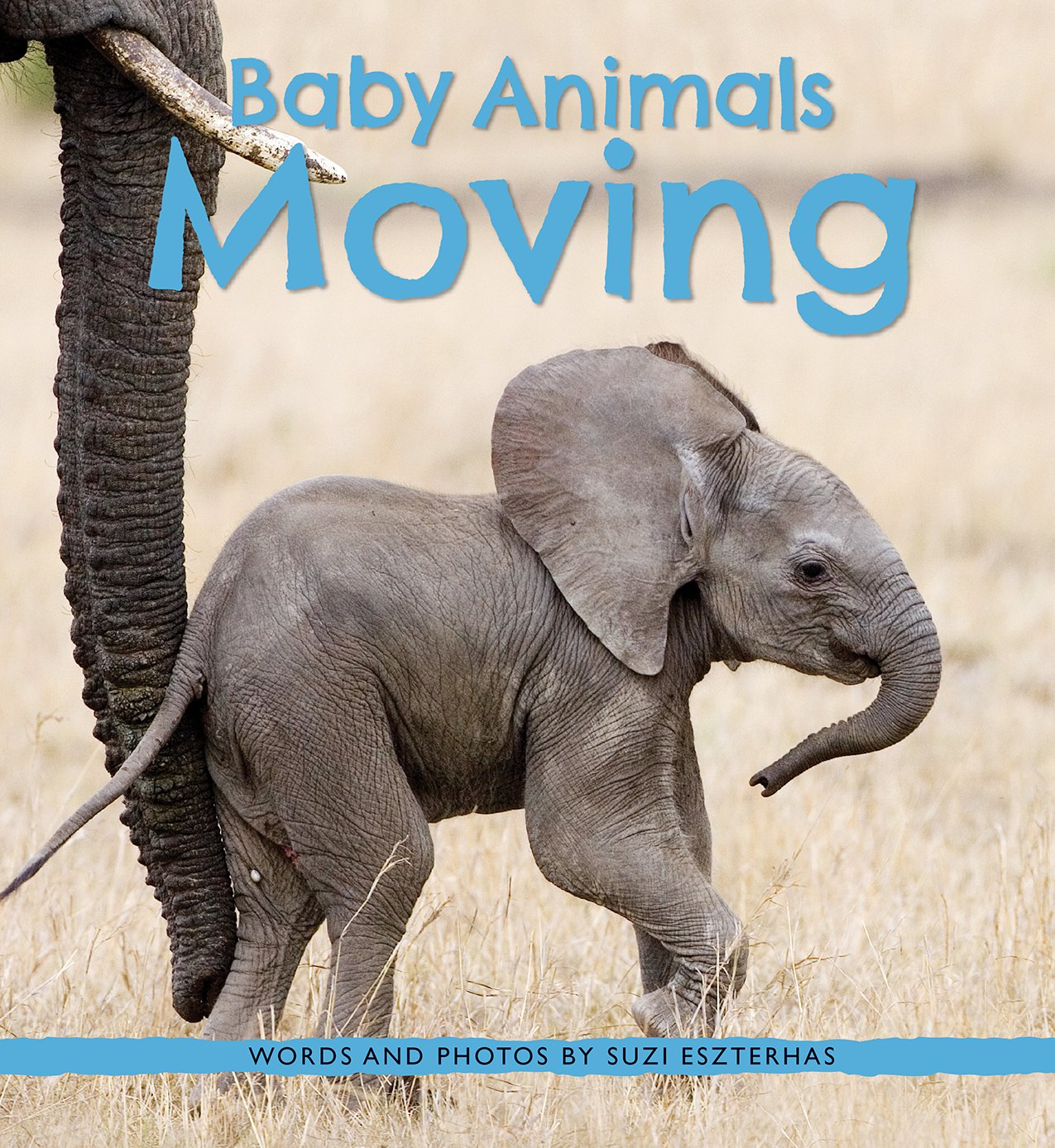
Summary:  Young animals are shown on the move.  Some, like the zebra, can move independently practically at birth, while others, like kangaroos, get a ride with parents.  Each two page spread shows one or two animals moving with their parents, and includes a sentence or two of text describing what’s going on.  Suzi Eszterhas introduces herself on the last two pages, showing additional photographs taken for this book, and explaining a bit about her work as a wildlife photographer.  24 pages; ages 3-8.

Pros:  Another work of almost unbearable cuteness by Suzi Eszterhas.  Kids will love looking at the pictures, and the text is accessible for preschoolers.  Look for other books in this series: Baby Animals Eating and Baby Animals Playing.

Cons:  There’s not a lot of information if readers are doing any kind of research.

If you would like to buy this book on Amazon, click here.

Who Will Bell the Cat? by Patricia C. McKissack, illustrated by Christopher Cyr

Published by Holiday House

Image result for who will bell the cat mckissack

Summary:  In this retelling of an Aesop’s fable, a group of mice takes care of a sick cat, only to be terrorized by her when she recovers.  The mice discuss how to solve their problem, and one of them suggests tying a bell around the cat’s neck so they can hear her coming. It’s a great idea, but who will do it?  They try and fail several times until a human family moves into the house. The young girl in the family finds the bell and ties it around the scowling feline’s neck. Now the cat problem is solved, but old Wise Mouse reminds them that humans can be even more dangerous.  “When you use a tiger to get rid of a lion, what will you do with the tiger?” 32 pages; ages 4-8.

Pros:  Large, realistic illustrations of cute animals illuminate this longer version of an ancient fable.  Readers can discuss the ending and what may happen to the cat and mice now that humans are on the scene.

Cons:  It’s kind of a downer.

If you would like to buy this book on Amazon, click here.

I Got It! by David Wiesner

Published by Clarion Books

Image result for i got it david wiesner amazon

Image result for i got it baseball david wiesner

Summary:  In this almost-wordless picture book, a boy convinces a slightly bigger kid to let him play baseball.  He’s sent to the outfield, and soon a ball is heading his way.  “I got it!” he calls, and immediately, a series of outcomes starts playing out in his mind.  The first is pretty straightforward: he trips over a root, falls on his face, and his teammates cringe in disbelief.  As the ball moves closer and closer to his glove, his imaginings get wilder: he pictures himself colliding with a tree; shrinking so that an enormous ball looms over him; flying with birds over the heads of his oversized teammates.  And then–”I got it!”–he catches the ball.  The other kids cheer wildly, and the boy walks off the field with them, confidently tossing the ball into the air.  32 pages; ages 4-8.

Pros:  Another (almost) wordless wonder from Caldecott medalist David Wiesner.  Readers will need to look closely to understand what is going on, but they will be rewarded with a happy and satisfying ending.  As always, the illustrations are gorgeous and wildly imaginative.

Cons:  I didn’t get it; I had to read reviews to figure out what was going on.  Once I understood the concept that the boy was imagining different outcomes, it all fell into place for me, but I’m guessing many kids will need some help understanding this.

If you would like to buy this book on Amazon, click here.


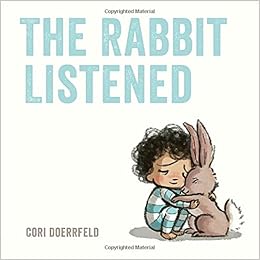
The Rabbit Listened by Cori Doerrfeld

Published by Dial Books

Image result for rabbit listened doerrfeld amazon

Image result for rabbit listened doerrfeld amazon

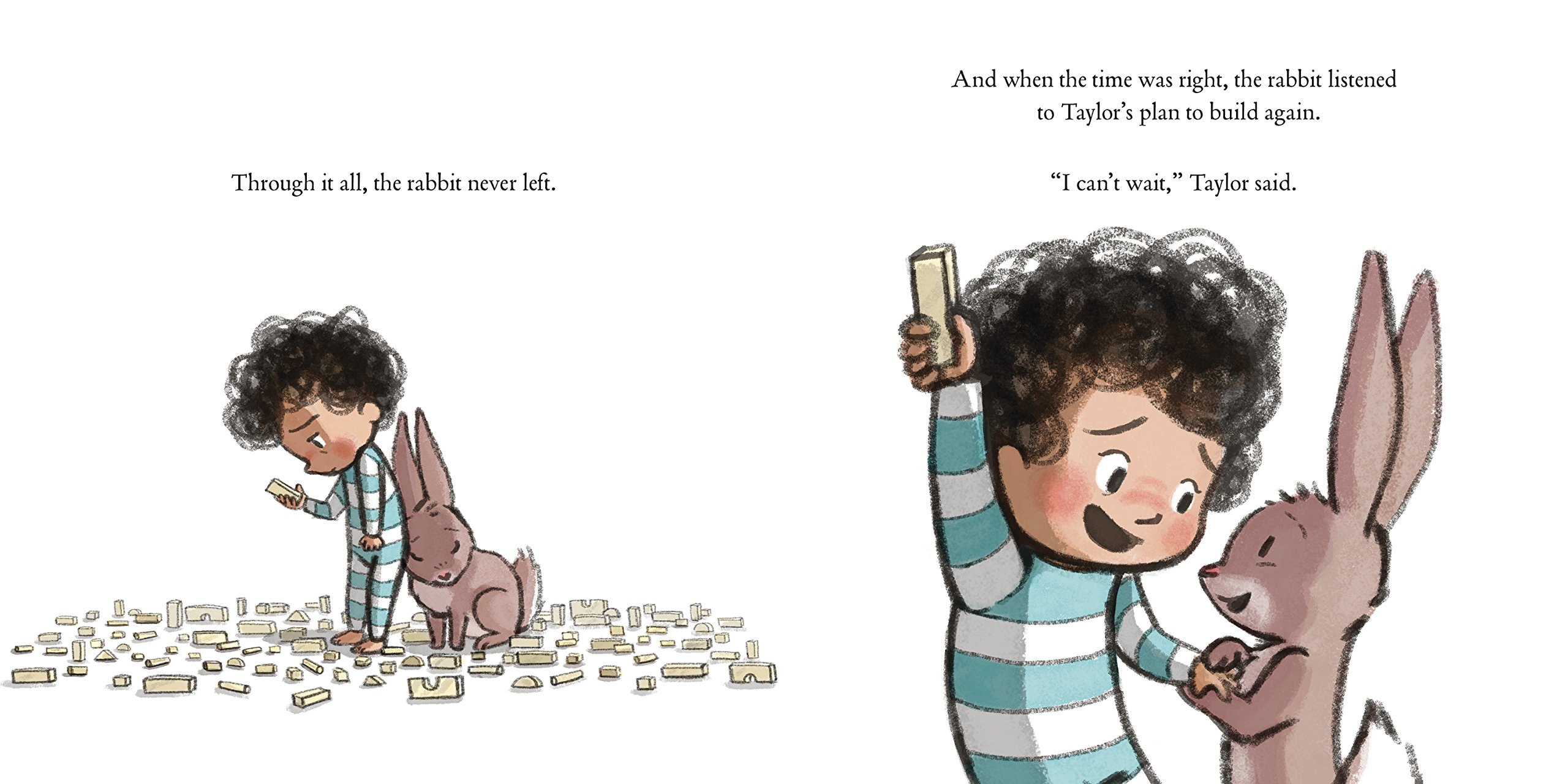
Summary:  Taylor (never identified as male or female) is proud of building a beautiful block tower, until a flock of birds flies through it and knocks it down.  Different animals come along to comfort Taylor; the chicken wants to talk about it, the bear gets angry, the elephant wants to remember exactly how the blocks were arranged, the hyena laughs, the ostrich hides its head, the kangaroo wants to clean up the mess, and the snake suggests knocking down someone else’s creation.  Taylor doesn’t want to do any of those things.  Then the rabbit comes along and sits next to Taylor.  The rabbit just listens as Taylor talks, shouts, remembers, laughs, hides, throws things away, and plans to ruin things for someone else.  Finally, the rabbit listens as Taylor plans to build another amazing structure. 40 pages; ages 3-8.

Pros:  A perfect vehicle for talking with children about how to be with someone who has experienced a loss.  Although it’s a weighty subject, the presentation is kept light with the cute and sometimes funny animals.

Cons:  There should be more rabbits in the world.

If you would like to buy this book on Amazon, click here.


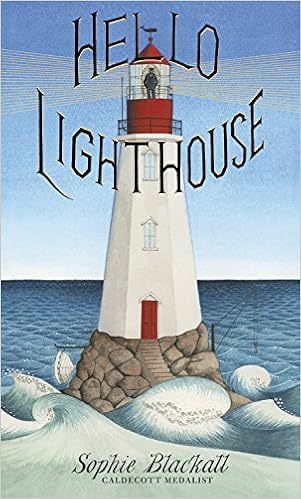
Hello Lighthouse by Sophie Blackall

Published by Little, Brown Books for Young Readers

Image result for hello lighthouse blackall amazon

Summary:  A man arrives at a lighthouse to take his new job as its keeper.  A cutaway illustration shows him busy, tending the light, painting the walls, and cooking food.  Despite his activity, he’s lonely, and often writes messages that he puts in bottles and tosses into the sea.  After awhile, a tender arrives, bringing supplies and the man’s wife.  They are happy together in the lighthouse, and eventually they’re joined by a third person, their new daughter.  Several years later, electricity comes to the lighthouse, and the family moves away.  A fold-out final page shows a little house on the coast, lights from its windows shining to meet the light coming from their old lighthouse home.  Includes additional information about lighthouses and the people who kept them going.  48 pages; ages 4-10.

Pros:  A lovely blend of fact and fiction, Caldecott winner Sophie Blackall makes life in a lighthouse seem indescribably cozy, while presenting each scene creatively (I especially admired the lighthouse cutaway, the shipwreck, and the circular images of the wife in labor).  Hello, my new favorite picture book of 2018!

Cons:  I suspect real life in a lighthouse was not this idyllic.  This sentence in the author’s note about foghorns particularly caught my attention: “Some lighthouse keepers learned to sleep through the din of the horn; others nearly went mad when the fog lasted for days.”

If you would like to buy this book on Amazon, click here.

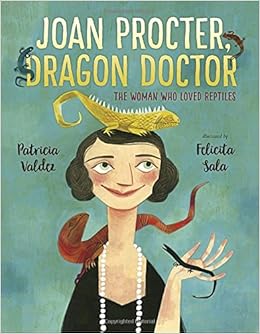
Joan Procter, Dragon Doctor: The Woman Who Loved Reptiles by Patricia Valdez, illustrated by Felicita Sala

Published by Knopf Books for Young Readers

Image result for joan procter dragon doctor amazon

Image result for joan procter dragon doctor

Summary:  From the time she was a young girl, Joan Procter loved reptiles.  Instead of a doll, she carried around her favorite lizard, and she got a pet crocodile for her 16th birthday.  She started hanging out with the curator of reptiles and fish at the Natural History Museum when she was still in high school. He was impressed enough to hire Joan as his assistant, and she eventually took over his job when he retired.  From there, she went to work at the London Zoo, designing a new reptile house. The most amazing part of her new creation was the exhibit featuring Komodo dragons, a fabled but little-known animal from Indonesia.  People assumed they were ferocious, but Joan soon learned they were quite gentle, and one of them, Sumbawa, became something of a pet to her. He often accompanied her around the zoo, at children’s tea parties she held there, and even at a scientific presentation at the Zoological Society in London.  An author’s note gives more biographical information, including the sad fact that Joan was sickly much of her life and died at the age of 34. 40 pages; grades K-4.

Pros:  Kids will warm up right away to Joan and her love of animals; they’ll also be inspired by her groundbreaking work as a woman scientist.  The illustrations are beautiful, especially the ones of the reptiles.  And who doesn’t love a Komodo dragon?

Cons:  Hopefully no reader will be inspired to bring a baby crocodile to math class, like Joan did.

If you would like to buy this book on Amazon, click here.