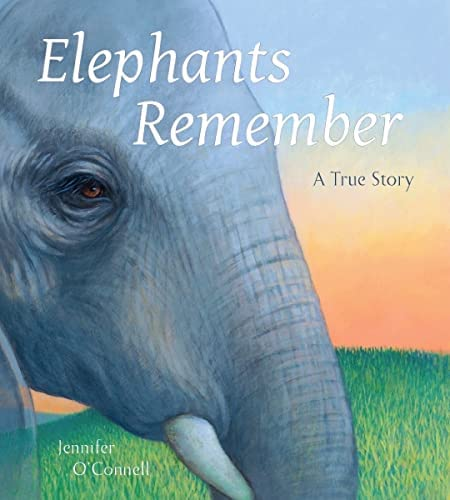
Elephants Remember: A True Story by Jennifer O’Connell

Published by Tilbury House Publishers

Summary:  When Lawrence Anthony gets a call saying that a herd of elephants will be shot if he can’t rescue them, he quickly sets up his wildlife reserve to accommodate them.  The animals have been traumatized after having members of their herd killed by poachers, including the matriarch and her baby.  Lawrence names the new matriarch Nana, and after the elephants trample the reserve’s electric fence and escape the first night, he sets out to earn Nana’s trust.  Slowly, she begins to let down her guard and allow Lawrence to come closer to her.  Over the years, Lawrence distances himself from the growing herd to help them remain wild, but he always keeps a connection with Nana.  When Lawrence dies of a heart attack, Nana leads the herd to his house and does so again on the same day for the next two years.  Includes an author’s note and three pages of additional information about elephants and Lawrence Anthony.  48 pages; grades 1-5.

Pros:  An incredibly moving story of a man dedicated to helping African wildlife and the amazing connection he made with elephants.  

Cons:  Some photos would have been a nice addition.

The Universe in You: A Microscopic Journey by Jason Chin

Published by Neal Porter Books

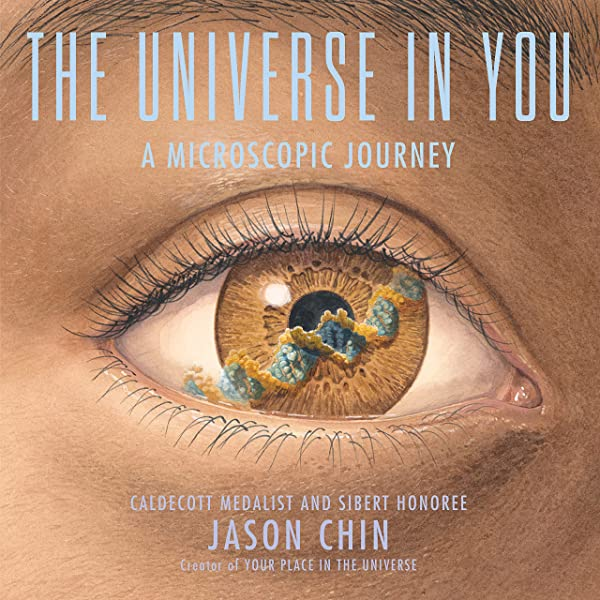
Summary:  In Your Place in the Universe, Jason Chin starts with a group of kids, then gradually moves out into the farthest reaches of the universe.  In this book, he goes in the opposite direction, beginning with the smallest bird–a Calliope Hummingbird–landing on a girl’s hand, then moving to the hair on her skin, then to cells, DNA, atoms, and eventually to elementary particles.  From there, the journey continues back outward, inviting a sense of wonder that everything in the universe is made of the same molecules, yet combines in a way to make a unique human.  Includes additional information on the building blocks of matter, as well as an author’s note and a note about the illustrations.  40 pages; grades 3-7.

Pros:  Another mind-blowing offering from last year’s Caldecott medalist, Jason Chin, with amazingly detailed illustrations, some of things that are too small to be seen with the human eye.  A contender for a Caldecott or Sibert, both of which Chin has already won.

Cons:  I’m more wowed by the larger universe than the subatomic one.

Polar Bear by Candace Fleming, illustrated by Eric Rohmann

Published by Neal Porter Books

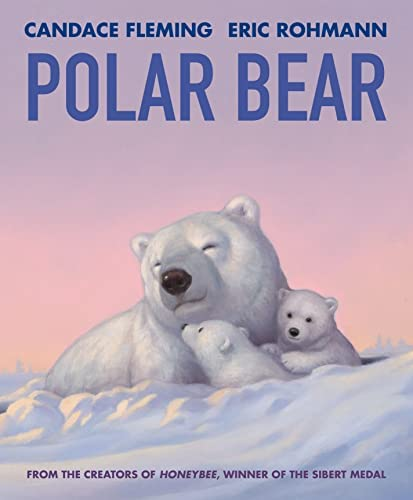
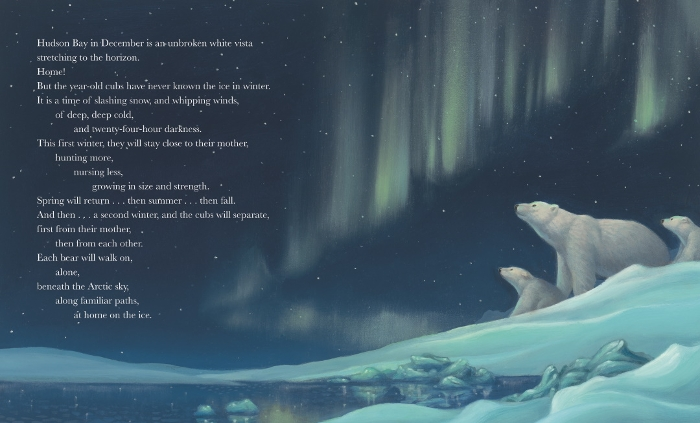
Summary:  The award-winning team behind Giant Squid, Honeybee, and Strongheart has created a new book that explores the world of a mother polar bear and her two cubs.  Emerging from five months in the den, during which time she gave birth and nursed her offspring, the mother bear emerges emaciated and hungry.  She heads for the ice where she knows she can hunt seals.  The narrative follows the bears through the year, showing how climate change affects their ability to hunt and perilously strands them on some floating ice.  They survive the dangers, and the final pages show them back on the ice in the 24-hour darkness of an Arctic winter.  Includes a two-page labeled diagram of a polar bear, additional facts about polar bears and the effects of warming in the Arctic, and a list of resources.  32 pages; grades K-5.

Pros:  Another breathtaking science book with poetic informative text and detailed realistic paintings of the polar bears and their environment.  With a Sibert Medal and Honor on their resumé, this team can expect awards consideration again for this book.

Cons:  As always, I found it stressful to read about the effects of climate change.

Luminous: Living Things That Light Up the Night by Julia Kuo

Published by Greystone Kids

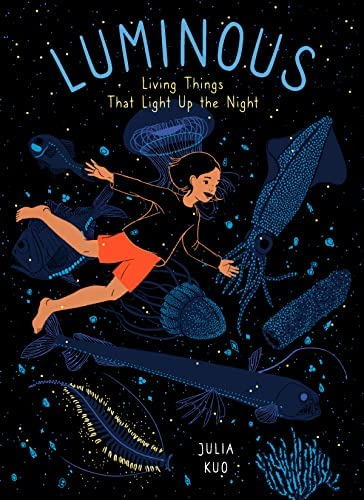
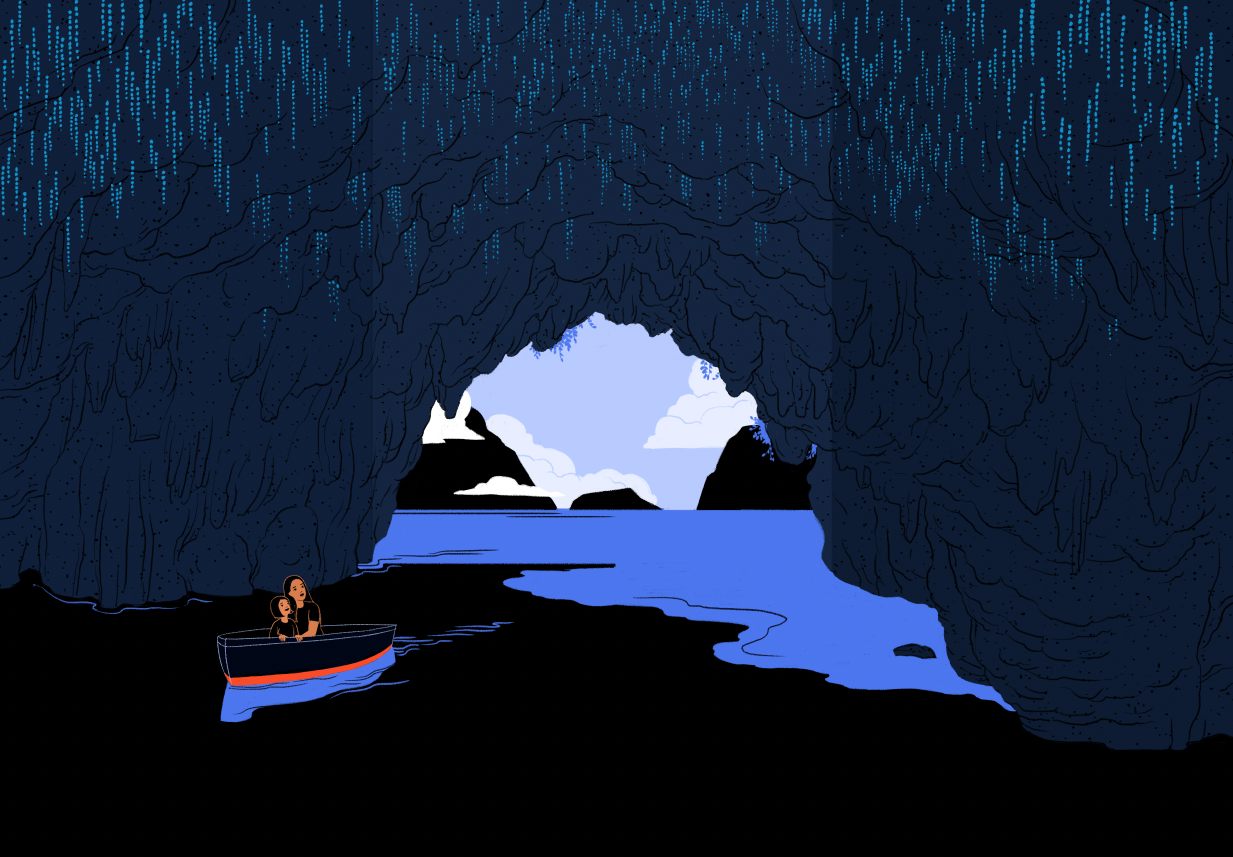
Summary:  A mother and child travel through the night, walking, boating, and swimming to observe bioluminescence in many different forms.  The pages are all in black, making the colors glow brightly.  Each page has a single phrase or sentence in a larger font, then a few sentences in smaller print that give additional information.  A sense of wonder is conveyed in the last few pages, sharing the information that many life forms have yet to be discovered, and encouraging readers to look closely at the world around them.  44 pages; ages 4-10.

Pros:  A beautiful introduction to bioluminescence that will encourage kids to look for other wonders in the world as well.  The illustrations are striking and there is plenty of interesting information.

Cons:  No back matter.
Yuck, You Suck! Poems About Animals That Sip, Slurp Suck by Jane Yolen and Heidi E. Y. Stemple, illustrated by Eugenia Nobati

Published by Millbrook Press

Summary:  Thirteen animals are profiled in this poetry collection, from the tiny mosquito to the elephant.  Some animals, like the vampire bat, have a reputation for sucking but actually lap up blood from the animals they bite (is that better?).  The first poem introduces the concept of sucking, and the final one connects the animals to humans, who start their lives sucking milk.  Includes additional information about animals that suck, a list of additional resources, anatomical terms for body parts that suck, a glossary, and a bit more information on each animal.  32 pages; grades 2-5.

Pros:  From the team that brought you Eek, You Reek! (about stinky animals) comes a book that is sure to catch the eye of many elementary students.  Most of the poems have catchy rhymes (although there’s a haiku thrown in, for the honeybee), and kids will get a kick out of the bug-eyed creatures in the illustrations.

Cons:  There’s a certain bloody gross-out factor inherent in the subject matter. You may not want to read this book before sitting down to Thanksgiving dinner and perhaps not too soon after either.

A Journey Under the Sea by Craig Foster and Ross Frylinck

Published by Clarion Books

Summary:  The narrator takes readers on a dive into the ocean at the tip of South Africa.  Underwater, they observe all kinds of animals including a seal, an octopus, a cuttlefish, and a couple of different sharks.  On the way back, they see tiny snail eggs and a whale, which likes to snack on the sea snails, an example of how ocean animals are all connected.  Includes a note from the authors and additional information about each photo in the book.  56 pages; grades K-5.

Pros:  A gorgeous picture book from the creators of The Octopus Teacher, now streaming on Netflix. Their joy and enthusiasm for diving and exploring the ocean really shines through in both the photos and the text.  From the eye-catching cover to the farewell from the dolphins, kids will be captivated by this journey.

Cons:  There’s just a little bit of information about each animal, so some additional resources would have been nice.

Digestion: The Musical by Adam Rex, illustrated by Laura Park

Published by Chronicle Books

Summary:  Digestion: The Musical unfolds in three acts, featuring Your Body, L’il Candy, Gum, and the Baby Carrot Singers.  Starting from the moment the brain gets the signal to open the mouth and let in L’il Candy, the story continues down the esophagus and into the stomach, where Candy meets up with Gum (has he really been stuck there for years? “Nah, that’s a myth.”).  She’s consistently dismissed as junk food by the heart, lungs, gallbladder, and even the seemingly useless appendix.  But Candy persists and is eventually shown to have a nutritional core that can be used by the body.  The final number [two], “Let’s Get This Potty Started”, will leave audiences with a smile on their faces.  Includes a glossary and a literal appendix, which it turns out, is actually useful for storing good bacteria. 76 pages; grades 2-6.

Pros:  I laughed, I cried, I gasped aloud at this fascinating and hilarious mix of fiction and nonfiction that’s presented in both horizontal and vertical spreads.  You’ll probably want to supplement this with other material, but the basic facts are here and likely to stick in kids’ heads due to the high entertainment factor of the presentation.

Cons:  It’s tough to let yourself get too attached to a protagonist that you know is about to be pulverized by the digestive system.

A Leopard Diary: My Journey Into the Hidden World of a Mother and Her Cubs by Suzi Eszterhas

Published by Owlkids

Summary:  When Suzi Eszterhas hears about a pregnant female leopard living in Botswana, she decides to travel there to photograph her and her cubs.  The leopard, named Camp Female, is more relaxed around humans than most leopards, making opportunities for photographing more likely.  This book is written like a diary, from Suzi’s arrival on April 19 when the cubs are just a few weeks old, until February two years later, when those two are grown and living on their own, and Camp Female has a new baby.  Suzi makes several trips during that time, capturing the leopards on film as the play, hunt, and rest.  She also records other animals she sees on her trips, like elephants, giraffes, and baboons.  The narrative ends when the newest cub is still a baby, but Suzi promises she’ll be back to continue her work.  Includes an interview with Kambango, her guide and friend, and a glossary.  40 pages; grades 3-5.

Pros:  I’m always thrilled to see a new book by Suzi Eszterhas, because they’re so popular with kids.  And why not?  High quality photos of adorable animals and stories written engagingly for elementary students make a winning combination that is continued in her most recent work.

Cons:  Camp Female seemed like a pretty dreary name for a leopard, with not much improvement when she was renamed “Mom”. 

Concrete: From the Ground Up by Larissa Theule, illustrated by Steve Light

Published by Candlewick

Summary:  We may not think much about concrete (I know I don’t), but it’s an amazing material that has allowed engineers to design some pretty spectacular structures beginning with the Roman Colosseum and Pantheon.  The technology was lost for centuries after the fall of the Roman Empire, but an engineer named John Smeaton rediscovered it to construct a lighthouse in 1757.  Since then, engineers have learned how to reinforce concrete with steel that has allowed them to build bridges, dams, and skyscrapers.  The final page asks the question of what may come next for concrete as the needs of humans and the planet change in the future.  48 pages; grades 2-5.

Pros:  Answers the question “How could concrete possibly be interesting?” with engaging stories of different structures around the world and incredibly detailed drawings that feature various characters making funny comments about their circumstances and inventions.  Fans of David Macaulay books will enjoy poring over the details.  Amazon has this listed as part of a series called Material Marvels, so I am hoping there will be more books to come.

Cons:  Many readers may see the cover and think, “How could concrete possibly be interesting?”

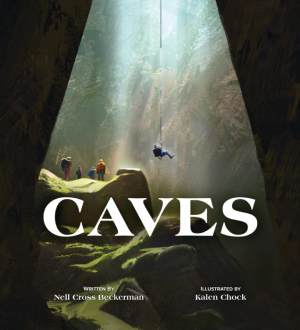
Caves by Nell Cross Beckerman, illustrated by Kalen Chock

Published by Orchard Books

Summary:  Addressing the reader in the second person (“You want to go in…do you dare?”), the book introduces different features of caves, then shows unusual examples of each one in seven caves around the world.  There’s the Cueva de Los Cristales in Mexico, filled with 39-foot crystals that had to be pumped dry for people to explore. And the Bracken Cave in Texas, summer home to twenty million bats.  The realistic illustrations convey the magnitude of the caves, often showing how small the human explorers are in comparison.  Includes notes from the author and illustrator, lists of cave rules and spelunking equipment, and more fun facts about three of the caves.  40 pages; grades 1-4.

Pros:  The poetic text and gorgeous illustrations combine to make a nonfiction book that invites readers on an adventure, in the spirit of Candace Fleming’s Giant Squid or Jason Chin’s Grand Canyon.  I’d love to see this get some Siebert Award recognition.

Cons:  I wish that there were more fun facts about all of the caves mentioned in the book, not just three.