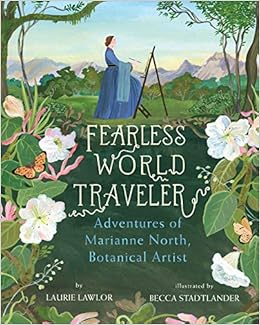
Fearless World Traveler: Adventures of Marianne North, Botanical Artist by Laurie Lawlor, illustrated by Becca Stadtlander

Published by Holiday House

Fearless World Traveler: Adventures of Marianne North, Botanical Artist:  Lawlor, Laurie, Stadtlander, Becca: 9780823439591: Amazon.com: Books

Summary:  Growing up in Victorian England, Marianne North was never encouraged in her passions for art and botany.  Self-taught in both, she stayed home and cared for her “irritable, demanding” father until his death when she was 40.  When an elderly widow invited her to be a traveling companion to North America, Marianne jumped at the chance.  This trip led her to Jamaica and the tropics she had long dreamed of seeing.  She eventually circumnavigated the world several times, seeking out exotic plant species that she could paint.  When her paintings crowded her London flat, she arranged to have a gallery built for them as part of the Royal Botanic Gardens.  The Marianne North Gallery opened in 1882 with 627 paintings on display.  She spent the last few years of her life at home in the English countryside, gardening, painting, and writing her memoirs before her death in 1890 at the age of 59.  Includes additional information on her legacy and writings, as well as sources and a who’s who of people Marianne encountered throughout her life.  44 pages; grades 2-5.

Pros:  This fascinating account of a woman who defied social expectations to lead an adventurous life makes for an inspiring read.  Her single-minded passions, preference for being alone, and discomfort with social situations made me wonder if she was neurodivergent.  The brilliant illustrations capture the spirit of North’s work, and make sure to check out the endpapers for reproductions of some of her paintings (identified in the back matter).

Cons:  The small font of the text.

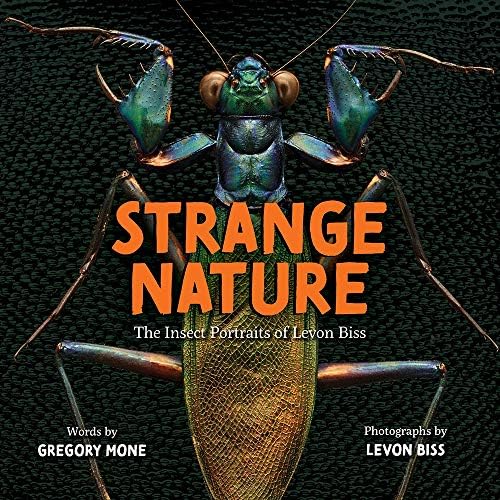
Strange Nature: The Insect Portraits of Levon Biss by Gregory Mone, photographs by Levon Biss

Published by Harry N. Abrams

Strange Nature: The Insect Portraits of Levon Biss: Mone, Gregory, Biss,  Levon: 9781419731662: Amazon.com: Books
Bound To Stay Bound Books, Inc. - Bookstore

Summary:  Levon Biss is a photographer whose work was mostly focused on celebrities and political leaders until the day his son Sebastian brought a beetle into the kitchen.  When the two of them looked at it under a microscope, Levon was captivated by the beauty and complexity of the insect.  Since then, he’s created amazing photos of all kinds of creatures, taking thousands of photos of each one, then piecing them together on his computer.  This book includes 16 insects, with the photos as the main attraction, but also including some information about where each one lives, its size, a description, and a few facts.  Includes a glossary.  40 pages; grades 2-5.

Pros:  Anyone with the slightest interest in insects will be amazed by these photos and enriched by the information; anyone without that interest may be surprised to find out how beautiful and complex insects can be.

Cons:  The author has a note at the end that begins, “Normally an author wouldn’t send his or her readers to the Internet.  Not when there are shelves and shelves stacked with wonderful printed books….”  It’s okay, here in the 21st century, it is actually okay to unapologetically send readers to the Internet.

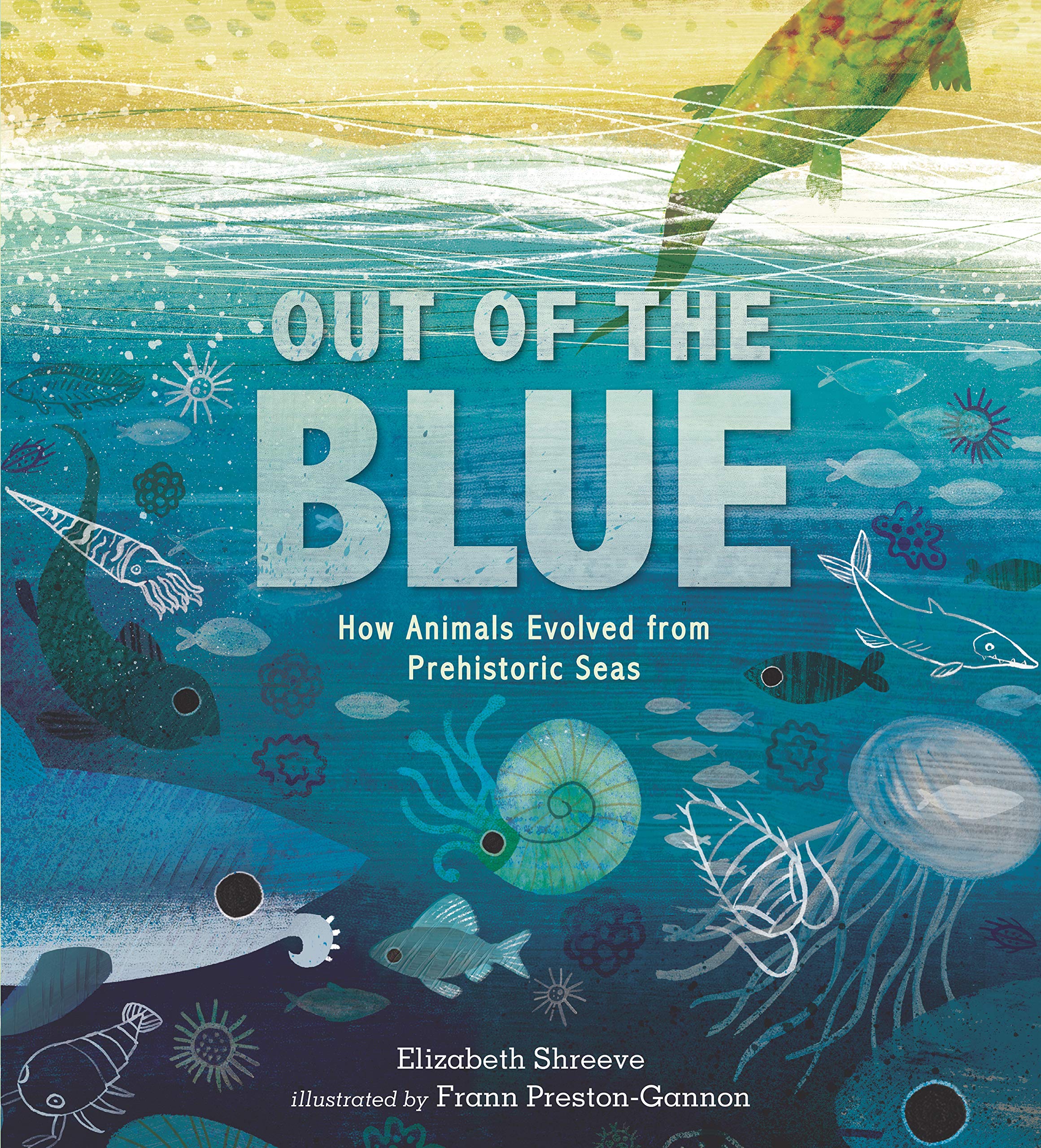
Out of the Blue: How Animals Evolved from Prehistoric Seas by Elizabeth Shreeve, illustrated by Frann Preston-Gannon

Published by Candlewick

Out of the Blue: How Animals Evolved from Prehistoric Seas: Shreeve,  Elizabeth, Preston-Gannon, Frann: 9781536214109: Amazon.com: Books

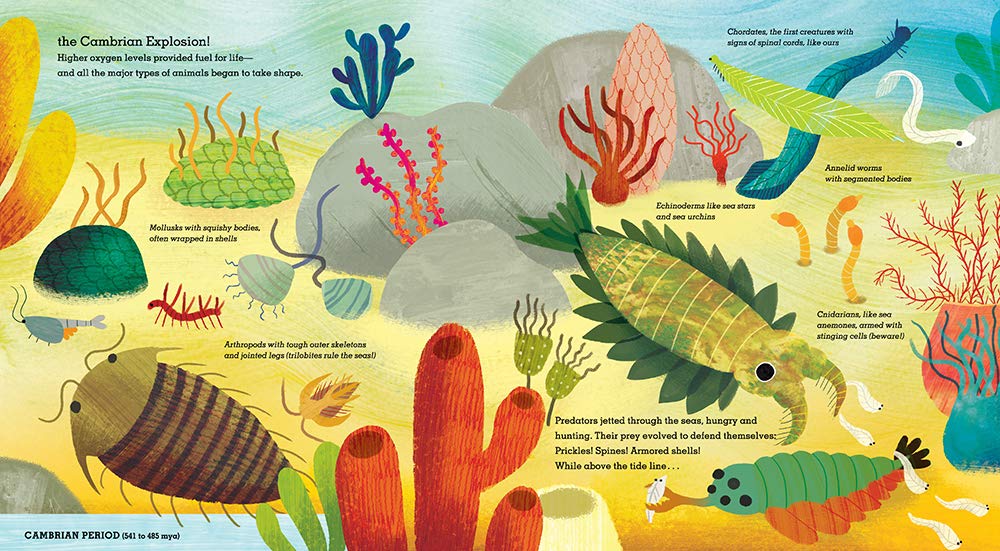
Summary:  Which two are the most closely related: hippo, dolphin, shark?  That question is asked before the title page; the text goes back to the beginning of life on earth to find an answer.  Each two-page spread shows animals for a geologic period, with several sentences of text telling what happened during this time.  The final three (Paleozoic Era, Mesozoic Era, and Cenozoic Era) are covered on two pages and take us up to the present, where we learn how the hippo and dolphin are related.  “Always changing.  Always evolving.  From out of the blue…and back again.”  Includes a list of sources.  32 pages; grades 1-5.  

Pros:  An excellent introduction to geological history and evolution.  Kids will enjoy poring over the illustrations of so many interesting creatures from so many different time periods.  A first-rate science book.

Cons:  It’s pretty challenging to cover the history of life on Earth in just 32 pages, and I can’t help thinking a little more back matter could have added more substance.

A Shot in the Arm! (Big Ideas That Changed the World) by Don Brown

Published by Harry N. Abrams

A Shot in the Arm! (Hardcover) | ABRAMS
Bound To Stay Bound Books, Inc. - Bookstore

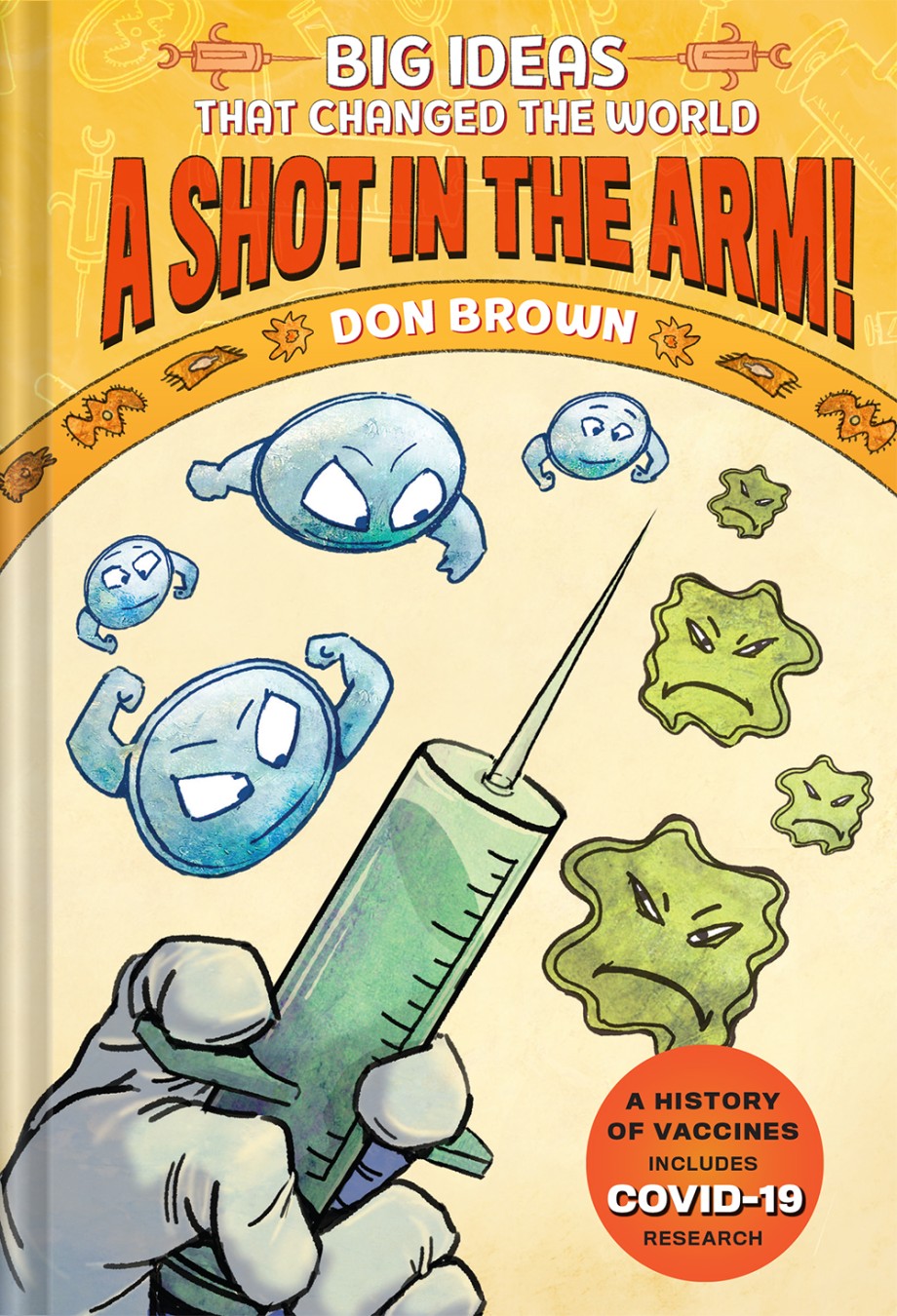
Summary:  Lady Mary Wortley Montagu narrates this graphic history of vaccines from the early 18th century.  After losing a brother to smallpox and becoming scarred by the disease herself, she was determined to protect her children from it.  Living in the Ottoman Empire with her family, she heard of a procedure that involved introducing some matter from a pox sore into a cut on a person’s arm.  She decided to have the procedure done on her son, and when she returned to England, on her daughter.  Princess Caroline, future Queen of England, got wind of this, and began her own series of experiments which eventually popularized the procedure in Great Britain.  From there, Lady Montagu continues the story of vaccines against various diseases: measles, mumps, polio, and, of course Covid.  The narrative ends in November of 2020 as Covid vaccines are being developed and tested: “The world holds its breath…and hopes.”  Includes a timeline; additional information on Mary Wortley Montagu; a lengthy bibliography; an author’s note; and an index.  144 pages; grades 3-7.

Pros:  I looked for an interview of Don Brown to see if he began work on this book before or after Covid, but couldn’t find one.  Either way, this book could hardly be more timely.  It does a great job of explaining the science in an understandable way, coming down firmly on the side of vaccination while acknowledging those who fear it with a certain degree of sympathy.  (Although I did love page 67 showing 19th-century British anti-vaxers saying things like, “I heard the doctors are wrong!” and “I don’t like the government telling me what to do!”).    The back matter makes this an excellent research tool.  

Cons:  This book is billed as #3 of 3 in the Big Ideas That Changed the World series.  I do hope that doesn’t mean it’s the last one.

How to Build an Insect by Roberta Gibson, illustrated by Anne Lambelet

Published by Millbrook Press

How to Build an Insect - Kindle edition by Gibson, Roberta, Lambelet, Anne.  Children Kindle eBooks @ Amazon.com.
How to Build an Insect: Gibson, Roberta, Lambelet, Anne: 9781541578111:  Amazon.com: Books

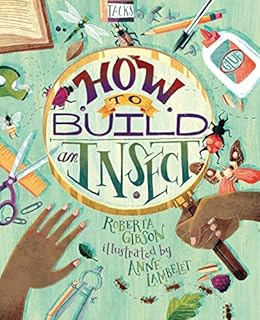
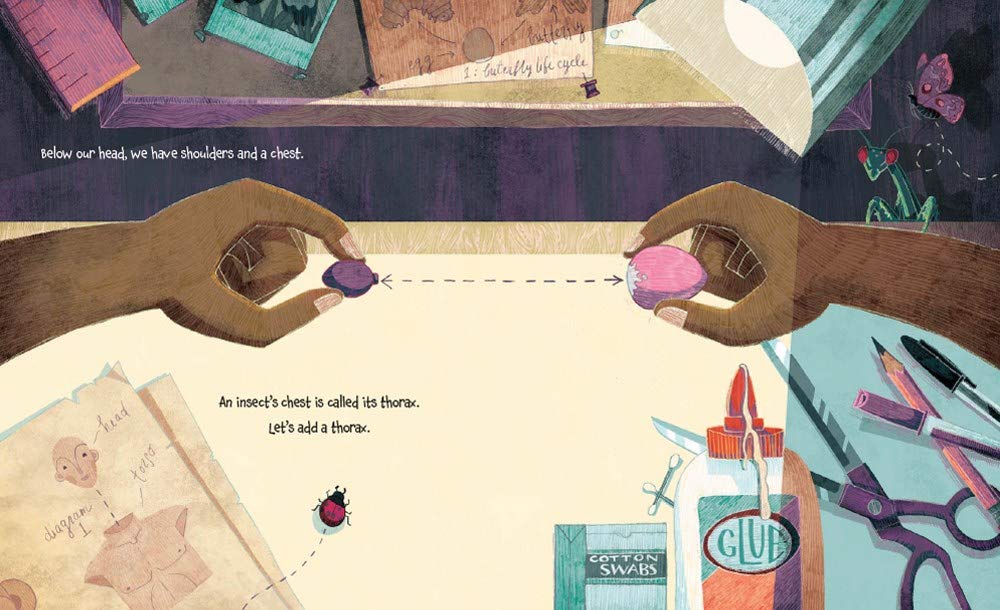
Summary:  Readers learn about insects’ body parts as a young artist works on creating one.  First comes the head, followed by the thorax and the abdomen.  Decisions are made about a skeleton, legs, and wings.  Then the senses are considered: eyes, ears, a mouth, and antennae.  Decorations like hair and horns are the final touch before the insect is given a place to live and a snack, at which point the artist declares the work done.  Includes a two-page labeled illustration of an insect, a glossary, and instructions for building an insect model.  32 pages; grades K-4.

Pros:  An engaging way to learn about insects, with large, colorful illustrations and text that reads like a conversation between the narrator and the artist.  A perfect example of blending art and science.

Cons:  Kind of an anti-climactic ending.

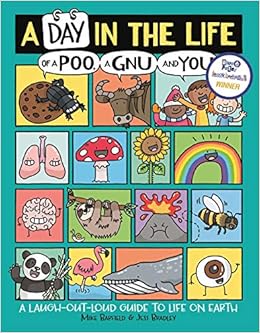
A Day in the Life of a Poo, a Gnu, and You: A Laugh-Out Loud Guide to Life on Earth by Mike Barfield, illustrated by Jess Bradley

Published by Aladdin

A Day in the Life of a Poo, a Gnu and You: Barfield, Mike: 9781780556468:  Amazon.com: Books
A Day in the Life of a Poo, a Gnu, and You: Barfield, Mike, Bradley, Jess:  9781534467217: Amazon.com: Books

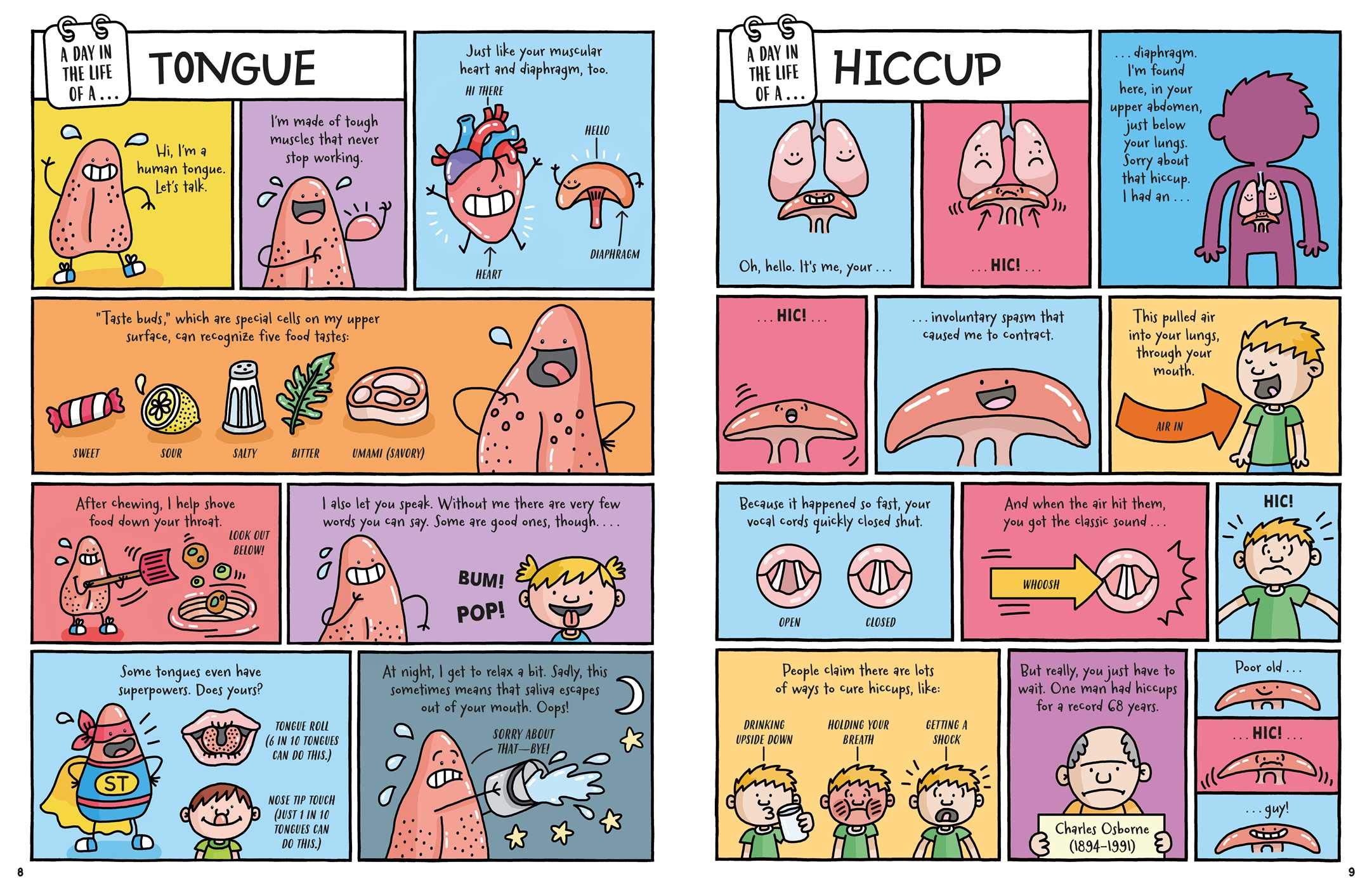
Summary:  Divided into three sections–human body, animal kingdom, and earth and science–this book investigates life on earth through comic book-style stories about a day in the life of various things.  From the profound (brain, blue whale, moon) to the profane (fart, pimple, dung beetle), these stories will educate and entertain many different types of kids.  Includes a glossary.  128 pages; grades 2-6.  

Pros:  Both the format and the wide range of topics make this a very appealing book that is perfect for browsing.

Cons:  There’s a little information on a lot of topics, so probably not the best for research. 

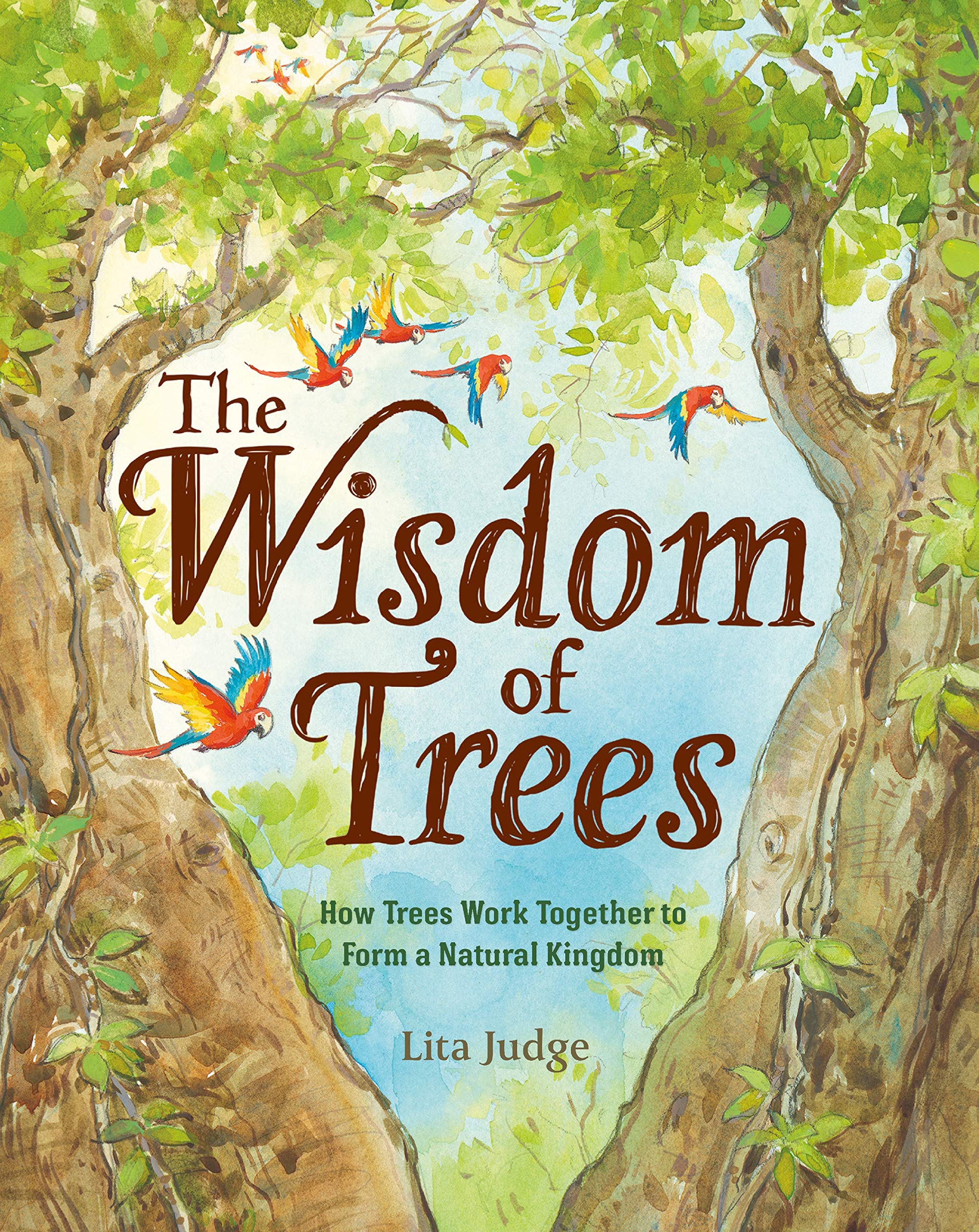
The Wisdom of Trees: How Trees Work Together to Form a Natural Kingdom by Lita Judge

Published by Roaring Brook Press

The Wisdom of Trees: How Trees Work Together to Form a Natural Kingdom:  Judge, Lita: 9781250237071: Amazon.com: Books
The Wisdom of Trees | Lita Judge | Macmillan

Summary:  Each two-page spread has a watercolor illustration of the tree in its natural habitat with animals that live in or near it, a free-verse poem, and several paragraphs of information about the tree.  The “wisdom” aspect of trees is emphasized, showing the remarkable ways trees defend themselves, maintain Earth’s balance, and even communicate with each other.  Includes an author’s note; additional information about each tree in the book and the future of forests; how to help forests; glossary; and sources.  48 pages; grades 3-6.

Pros:  This gorgeous science book has some pretty mind-blowing information about trees that scientists are just beginning to discover.  It certainly gave me a new appreciation for trees, and it will undoubtedly have the same effect on younger readers.

Cons:  It will take a pretty dedicated tree enthusiast to get through the entire book. But the good news is, if this tree book doesn’t grab you, there are a couple dozen more to choose from this year.

My Tiny Life by Ruby T. Hummingbird by Paul Meisel

Published by Holiday House

My Tiny Life by Ruby T. Hummingbird by Paul Meisel: 9780823443222 |  PenguinRandomHouse.com: Books
Paul Meisel-My Tiny Life by Ruby T. Hummingbird

Summary:  A ruby throated hummingbird narrates a year in his life, starting on May 15 when he hatches out of an egg.  A few weeks later, he’s ready to fly, and spends the summer sipping nectar and fighting/playing with the other hummingbirds.  August 22: “I’m hearing a lot of chatter about a big trip soon.”  In September, he heads to Mexico, where he stays until the end of February.  By May 4, he’s back home again, and thinking about finding a mate.  Includes additional information about hummingbirds on both the front and back endpapers, as well as a glossary and a list of sources and recommended reading.  40 pages; ages 4-9.

Pros:  Paul Meisel and Holiday House have teamed up for a number of I Like to Read books, and this series feels like it could appeal to the same audience.  There’s just a sentence or two of text on each page, and the diary format makes it engaging and fun.  Yet there’s plenty of back matter that could make this a great research resource for older kids.  There are three other books in this series, which started in 2018.

Cons:  As you may recall, I’m not a big fan of using the endpapers for additional information.  Fortunately, the book I got from the library didn’t have a dust jacket, so nothing was covered up.

Butterflies Are Pretty…Gross! by Rosemary Mosco, illustrated by Jacob Souva

Published by Tundra Books

Butterflies Are Pretty ... Gross! (Nature's Top Secrets): Mosco, Rosemary,  Souva, Jacob: 9780735265929: Amazon.com: Books
Butterflies Are Pretty . . . Gross: A Q&A with Rosemary Mosco - A Fuse #8  Production

Summary:  A butterfly tells readers that “everyone knows that butterflies are pretty.”  If that’s as much as you want to know about butterflies, you’re warned not to read any further.  But, of course, who can resist?  Keep going, and you’ll learn that butterflies can be drab, noisy, and eat rotten food or poop.  Some are stinky, sneaky, and all are shape-shifters, turning from a caterpillar into a butterfly.  They taste with their feet and drink other animals’ tears.  Butterflies are gross, they are amazing, AND they are beautiful…just like humans!  Includes additional information about the butterfly species in the book.  36 pages; grades K-4.

Pros:  This is a fun approach that is a nice counterbalance to more traditional butterfly books.  I used to teach in a school where there was a second grade field trip to The Butterfly Place in Westford, MA, and there were always one or two kids who were completely freaked out by butterflies.  They might enjoy having their phobias validated by this book.

Cons:  Honestly, I was hoping for something a little bit grosser.

Welcome Home, Whales by Christina Booth

Published by Blue Dot Kids Press

Welcome Home, Whales: Booth, Christina: 9781733121286: Amazon.com: Books

Summary:  A child hears a voice calling from the bay, a voice that the adults are unable to hear.  The voice grows loud, sometimes joyful and sometimes full of sorrow.  A whale is telling the story of how she wants to come home but feels unsafe, knowing that other whales have been hurt or sent away.  Then one morning, the whale appears in the bay with her baby.  People gather on the shore to watch and to hear her call, which others beside the child can finally hear. Includes two pages of additional information about right whales and four things people can do to help whales.   32 pages; ages 4-8.

Pros: The gentle voice of the text and beautiful watercolor illustrations provide a compelling introduction to whales and their endangered status.  

Cons:  There were no additional resources about whales listed.