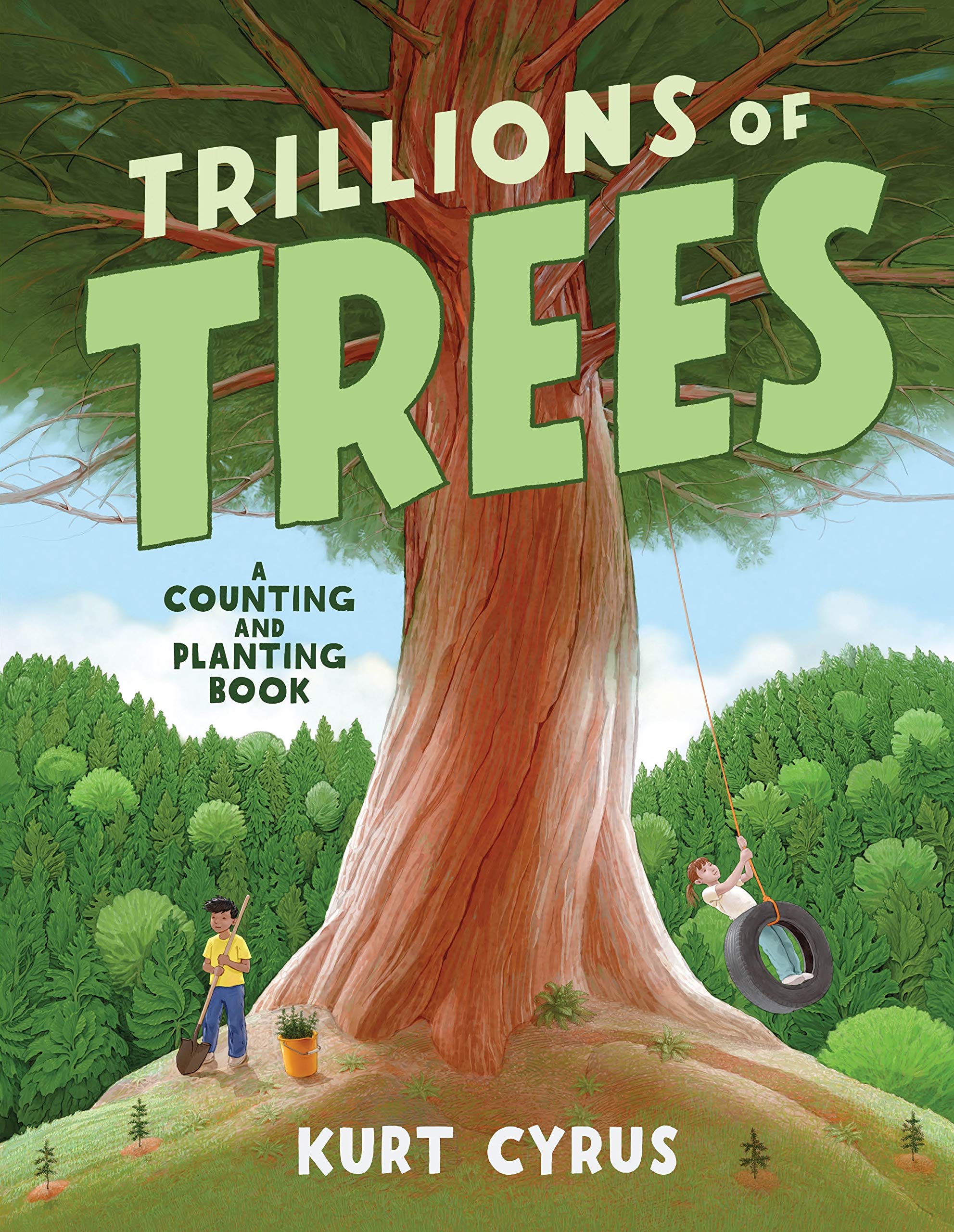
Trillions of Trees: A Counting and Planting Book by Kurt Cyrus

Published by Henry Holt and Co.

Trillions of Trees: A Counting and Planting Book: Cyrus, Kurt, Cyrus, Kurt:  9781250229076: Amazon.com: Books
Trillions of Trees | Kurt Cyrus | Macmillan

Summary:  When the narrator’s sister calls the nursery to order “a trillium, please”, the worker there hears “a trillion trees”.  Before long, the first installment–a thousand saplings–is delivered to their house.  The whole family races to plant the trees all over town, identifying many of them as they go.  Exhausted, they return home, only to face the next delivery arriving.  40 pages; ages 4-8.

Pros:  This follow-up to Billions of Bricks has the same fun rhyming text and big numbers incorporated into the story.  There’s some good information on trees here as well as plenty of humor tied to the impossibility of the family’s tree-planting situation.

Cons:  The lack of back matter about trees and/or large numbers.

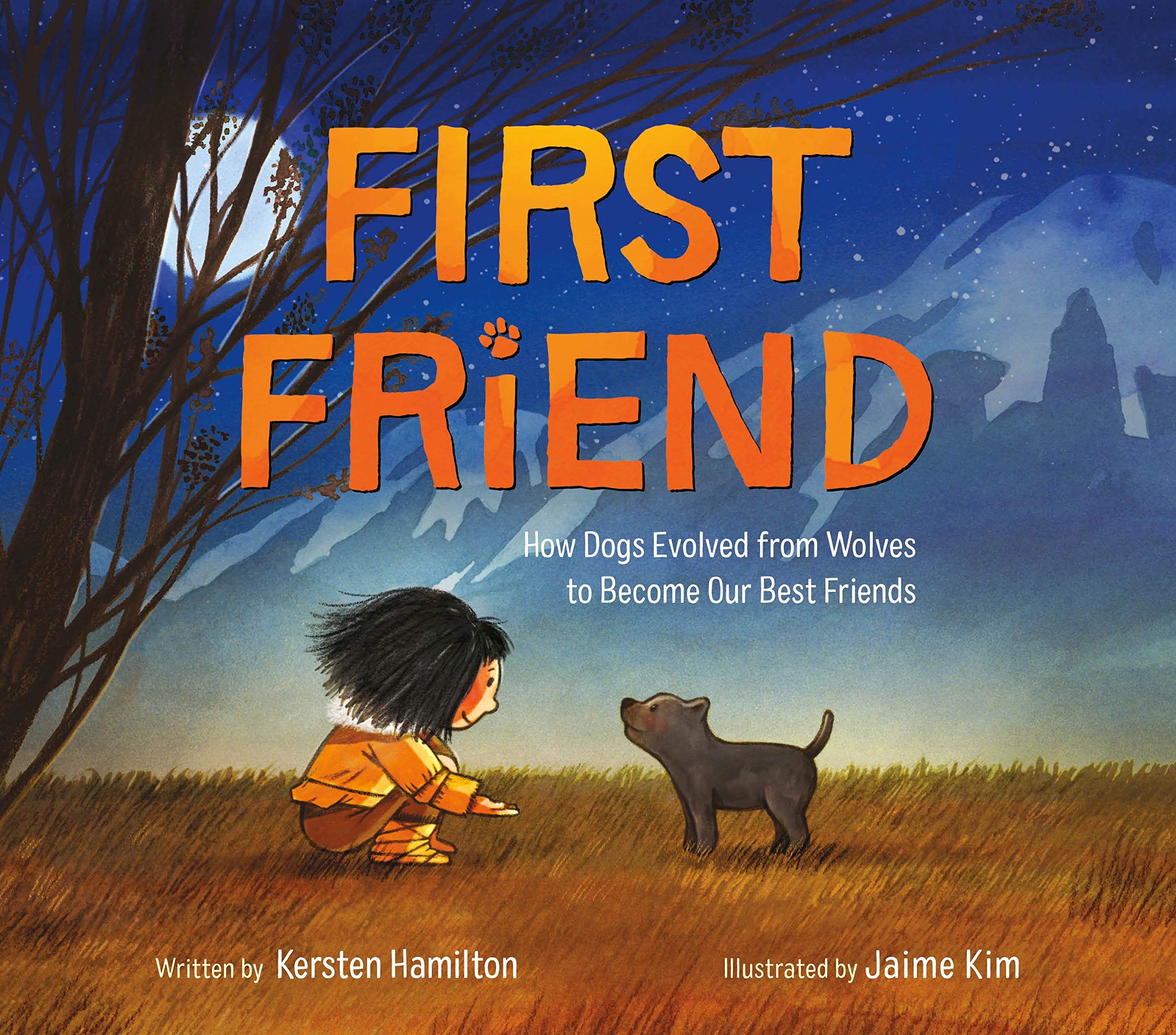
First Friend: How Dogs Evolved from Wolves to Become Our Best Friends by Kersten Hamilton, illustrated by Jaime Kim

Published by Farrar, Straus, and Giroux

First Friend: How Dogs Evolved from Wolves to Become Our Best Friends:  Hamilton, Kersten, Kim, Jaime: 9780374313432: Amazon.com: Books
First Friend | Kersten Hamilton | Macmillan

Summary:  The narrative begins long ago when nomads traveled through Europe and Asia, fighting wolves for their prey.  A girl meets a young wolf and they play together until the pup gets older.  This cycle is repeated throughout history, with the bond between child and pup growing, and the certainty that their friendship can’t last becoming less.  In the last iteration, the human group packs up and leaves the area, the boy calls to his wolf friend, “and Dog left the wolf pack to follow his boy away.”  The last spread shows a contemporary girl and puppy meeting for the first time.  Includes two pages of back matter giving additional information on how dogs became domesticated and a bibliography.  40 pages; ages 4-8.

Pros:  Dog lovers will be intrigued by the progression of domestication over thousands of years.  The illustrations seem simple with cartoon-inspired characters, but also include gorgeous backgrounds portraying the natural world.  The back matter adds to the research value and will make the book more interesting to older kids.

Cons:  The process of domestication is very simplified.

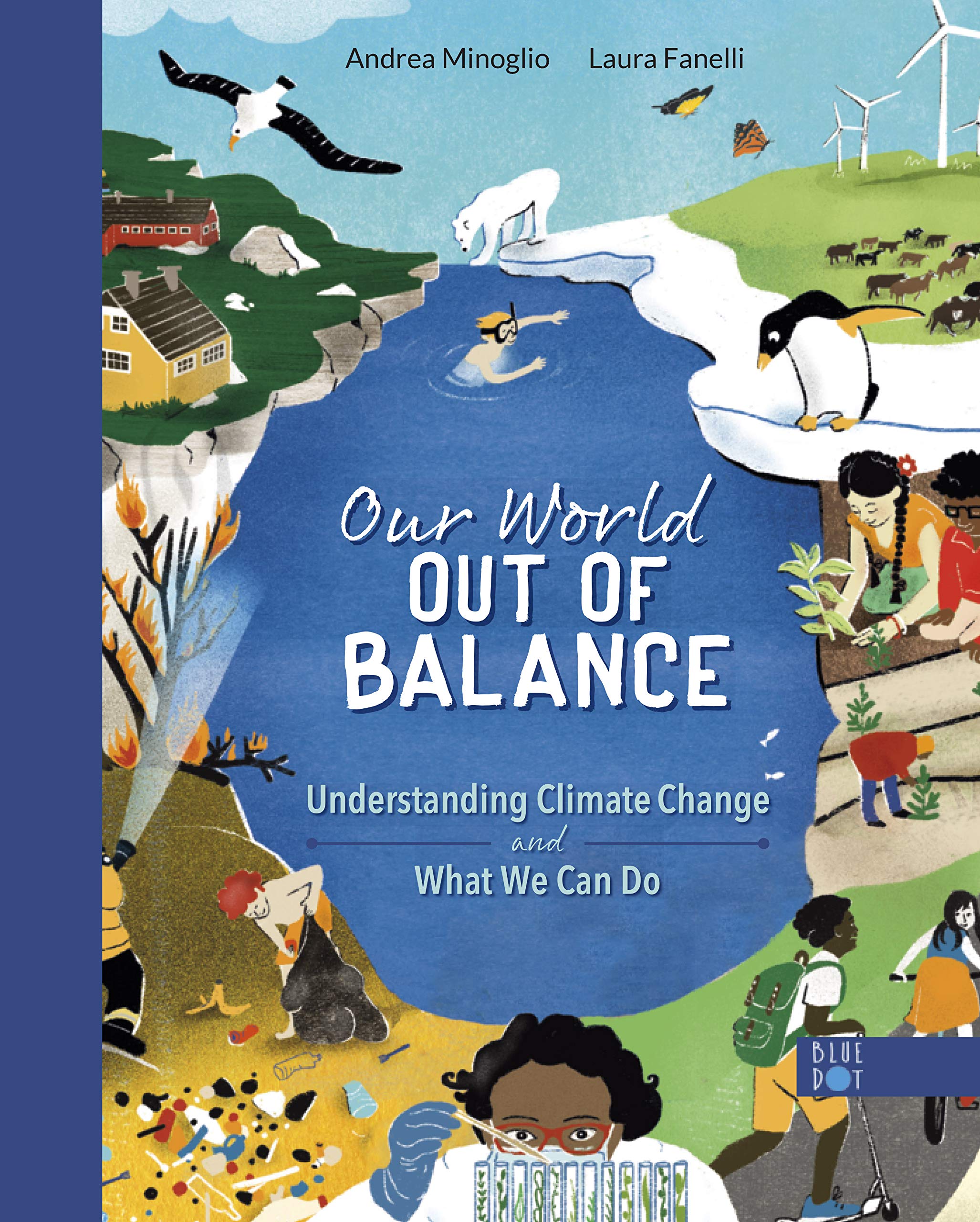
Design Like Nature: Biomimicry for a Healthy Planet by Megan Clendenan and Kim Ryall Woolcock and Our World Out of Balance: Understanding Climate Change and What We Can Do by Andrea Minoglio, illustrated by Laura Fanelli (released April 13)

Published by Orca Book Publishers

Design Like Nature: Biomimicry for a Healthy Planet (Orca Footprints, 20):  Clendenan, Megan, Woolcock, Kim Ryall: 9781459824645: Amazon.com: Books

Published by Blue Dot Kids Press

Our World Out of Balance: Understanding Climate Change and What We Can Do:  Minoglio, Andrea, Fanelli, Laura: 9781735000534: Amazon.com: Books

Summary:  These two books provide a starting point for learning more about climate change and actions kids can take, both now and as they begin their careers.  Our World Out of Balance has 17 chapters that address various areas of environmental concern, such as global warming, plastics in the ocean, and extreme weather.  In addition to facts, there are sidebars on how kids can help address these problems.  Design Like Nature looks at ways people can study nature to inspire designs that will help the environment.  Both books include additional resources, an index, and a glossary.  Design Like Nature, 48 pages; Our World Out of Balance, 72 pages; both, grades 3-7.

Pros:  As environmental problems worsen around the world, it’s important to raise awareness with kids as to what the issues are and what can be done to solve them.  Both books take the problems seriously, but also offer a note of optimism that there are solutions.

Cons:  The illustrations in Design Like Nature are mostly stock photos that don’t always do a great job supporting the text.

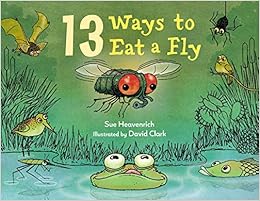
13 Ways to Eat a Fly by Sue Heavenrich, illustrated by David Clark

Published by Charlesbridge

13 Ways to Eat a Fly: Heavenrich, Sue, Clark, David: 9781580898904:  Amazon.com: Books

13 Ways to Eat a Fly – Charlesbridge

Summary:  Zapped, wrapped, trapped, or poked: those are a few of the ways flies get eaten by other animals.  Each method is accompanied by a cartoon illustration along with a few sentences of text describing how the fly is trapped and consumed.  The last few pages give nutrition facts for flies, show their edible parts, and offer lists of books and websites, as well as a selected bibliography.  32 pages; ages 4-8.

Pros:  The emphasis on the gross-out factor, reinforced in the illustrations, will undoubtedly have readers flocking to this book like the proverbial flies to honey.

Cons:  If flies are such easy prey, why are there still so many of them around?

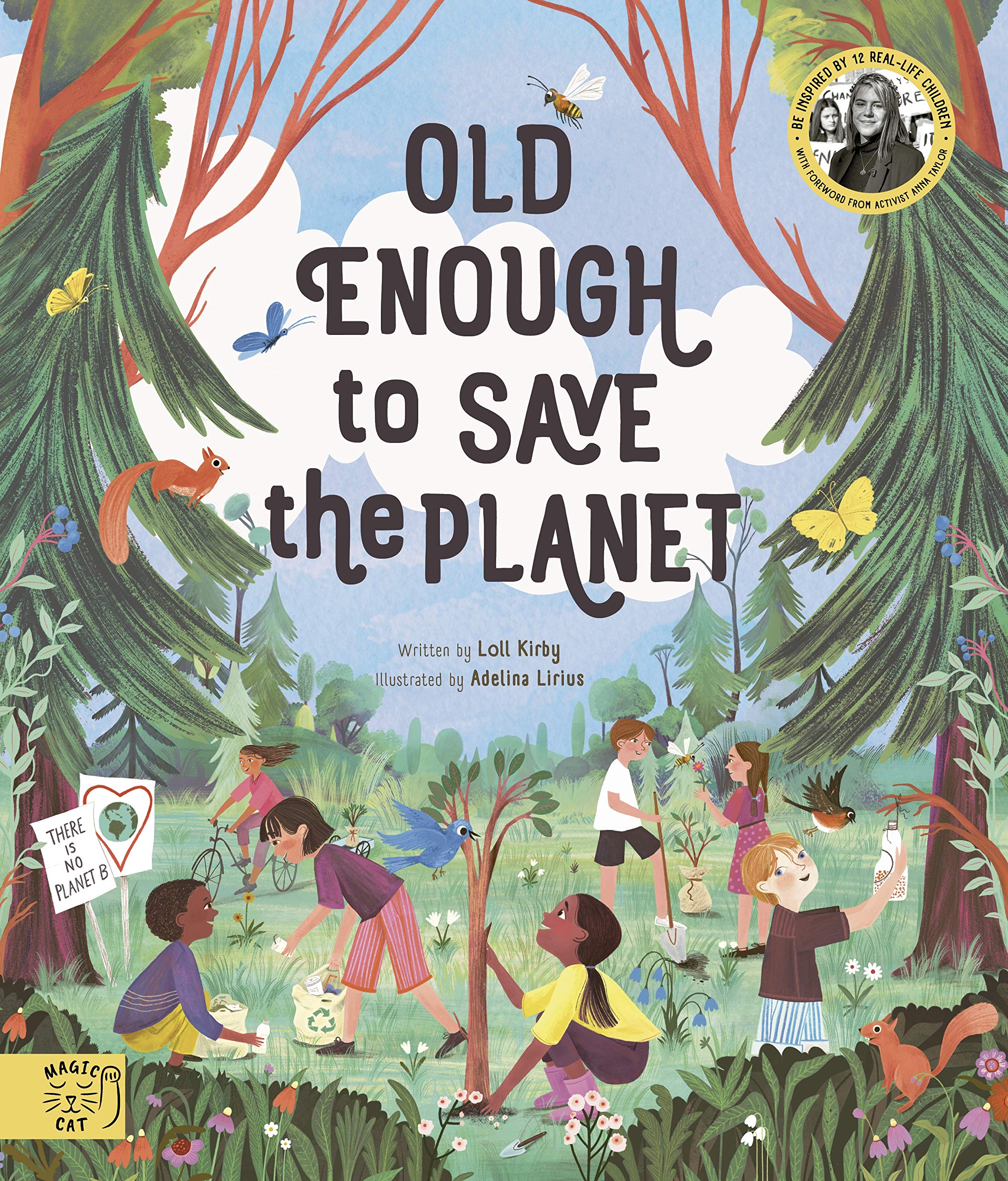
Old Enough to Save the Planet by Loll Kirby, illustrated by Adelina Lirius

Published by Magic Cat Publishing

Old Enough To Save The Planet: 9781916180529: Amazon.com: Books
Why everybody is old enough to save the planet | BookTrust

Summary:  Twelve children from around the world are profiled, each one having started an initiative to help the planet.  Each two-page spread shows kids at work, with a brief paragraph describing the young person and their activity.  Captions in the illustrations give additional information.  The last few pages offer ten things kids can do to help save the planet; ten things they can do to make their voices heard; and a list of seven websites with additional information.  32 pages; grades 1-5.

Pros:  Readers will be inspired by these kid activists who have already done amazing things to help make the world a better place.  There’s a lot to see in each illustration, and the information is brief enough for the younger grades.

Cons:  In the back matter, the author states that the Intergovernmental Panel on Climate Change “found that the world is already 34 degrees Fahrenheit warmer than two hundred years ago.” Was a decimal point left out?

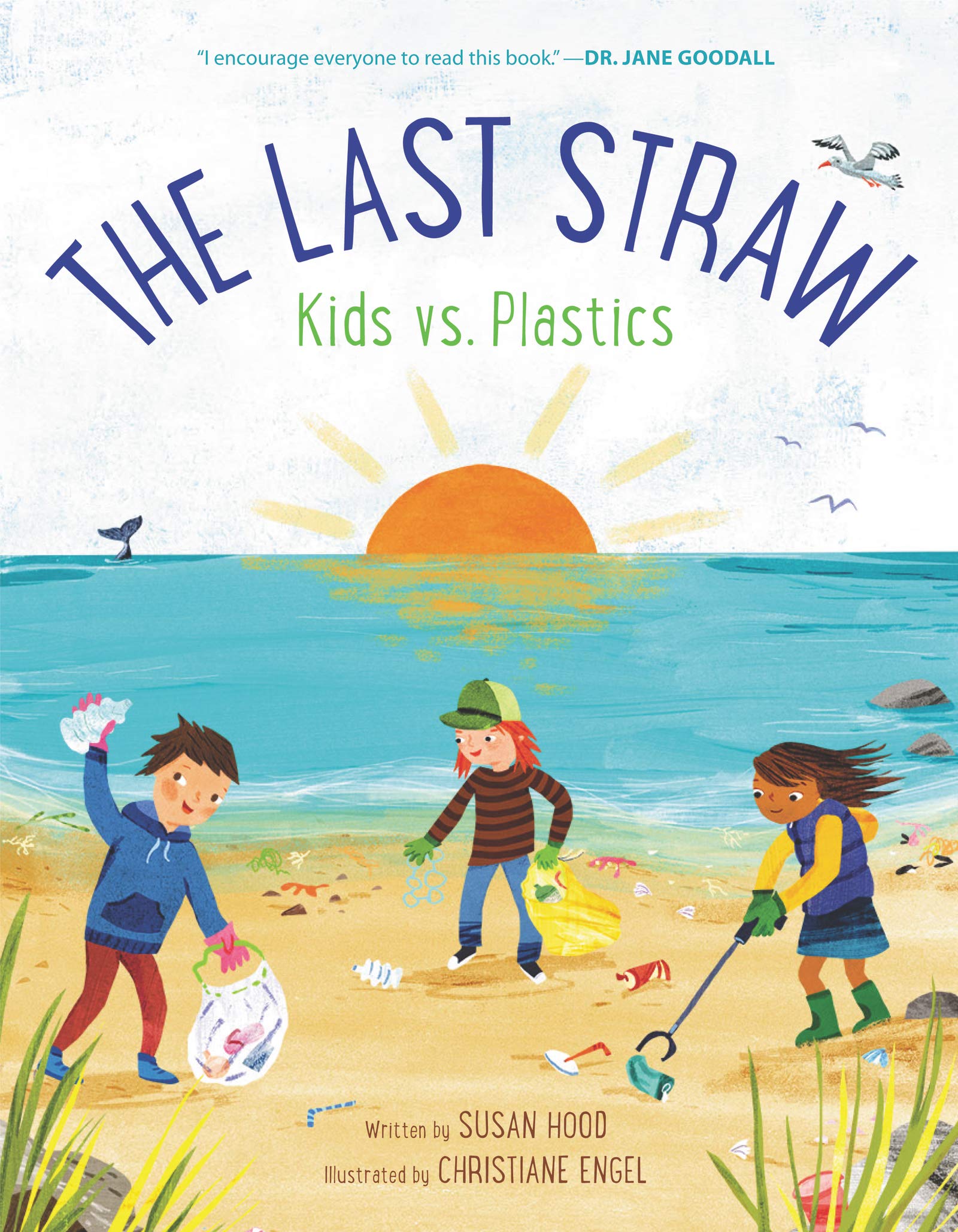
The Last Straw: Kids vs. Plastics by Susan Hood, illustrated by Christiane Engel

Published by HarperCollins

The Last Straw: Kids vs. Plastics: Hood, Susan, Engel, Christiane:  9780062981394: Amazon.com: Books

Summary:  Following an introduction by 9-year-old Milo Cress, founder of Be Straw Free, this poetry collection looks at different aspects of plastic, from its undeniable usefulness in many areas to the damage it is wreaking on the environment (especially the oceans) to different ways kids and teens are figuring out to recycle and find alternatives to plastic.  Includes a two-page author’s note; a timeline of the history of plastic from 1839; alternatives to single-use plastic items; top ten plastic ocean polluters; sources, websites, and additional notes for each poem; poetry notes for each poem; three books for further reading; and additional websites for news about plastics.  48 pages; grades K-5.

Pros:  The poetry is just the beginning in this book that is jam-packed with information and inspiring stories about kids working to make a difference in the world by recycling or eliminating plastics.  The colorful illustrators add a lot to the poems, and the 13 pages of back matter, enough to satisfy even me, would make this an excellent resource for older kids.

Cons:  I was feeling so bummed after reading the first few poems that I almost didn’t make it to the more inspirational section.

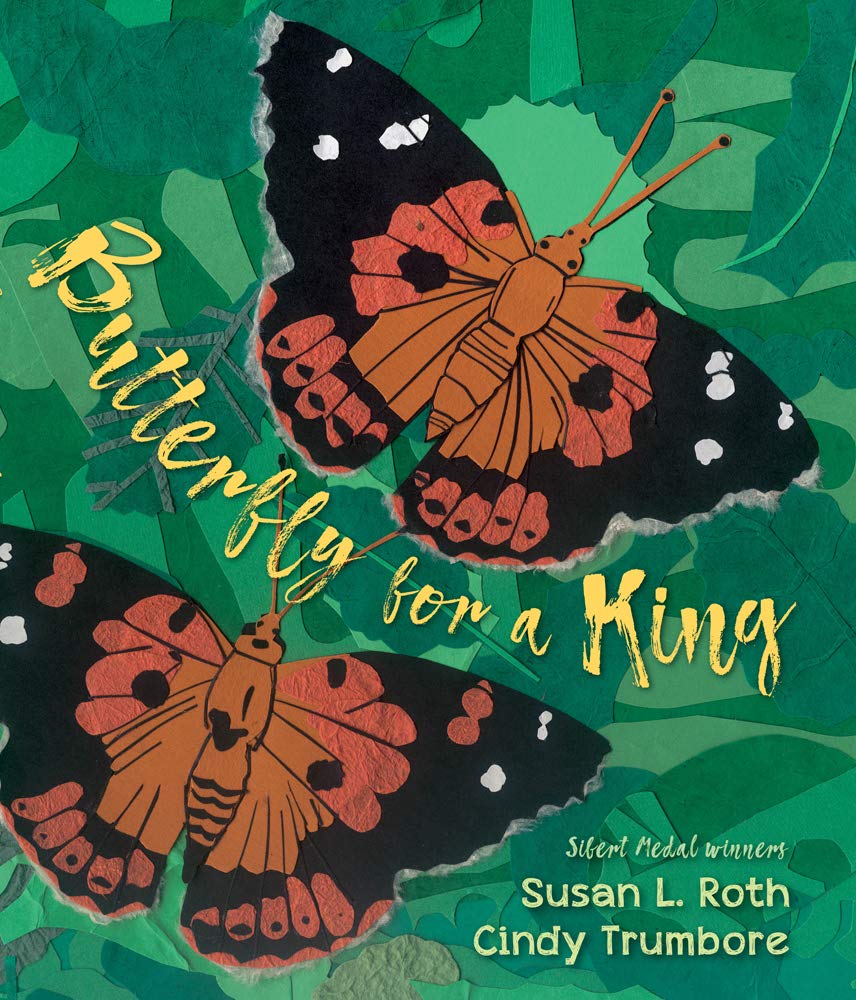
Butterfly for a King by Susan L. Roth and Cindy Trumbore

Published by Lee and Low Books

Image result for butterfly for a king amazon
Image result for butterfly for a king susan roth

Summary:  The isolation of the islands that make up Hawai’i means that they are home to plant and animal species that exist nowhere else on Earth.  One of these is the Kamehameha butterfly, named for the king who united all of the islands.  In 2009, a group of fifth grade students led a successful campaign to make this butterfly the state insect, hoping to bring attention to the endangered butterfly.  Soon scientists from the state and the University of Hawai’i started working together to help save the Kamehameha.  Citizen scientists helped collect data and photos.  Since then, thousands of butterflies have been raised in captivity and released all around Hawai’i.  Includes an afterword with a map and many photos; an illustrator’s note; and a list of sources.  48 pages; grades 2-5.

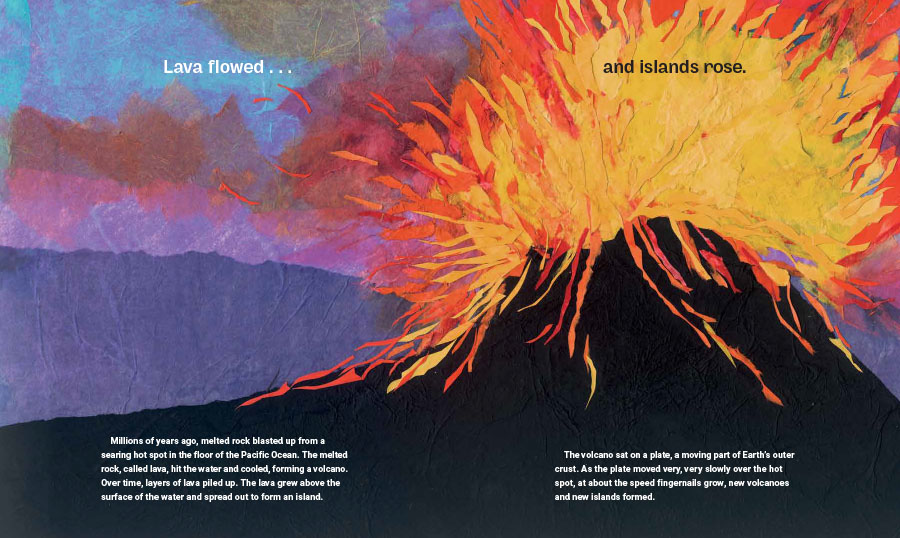
Pros:  Another excellent nonfiction book by the Sibert Medal winning team of Susan Roth and Cindy Trumbore.  Kids will be inspired by the way elementary students made a real difference in helping with an environmental issue.  The collage illustrations enhance the text, which includes information on the formation of the Hawaiian islands, the butterfly’s life cycle, King Kamehameha, and how the scientists carried out their project.

Cons:  Even with the pronunciation guides, I struggle with how to say some of the Hawaiian words.

Stella’s Stellar Hair by Yesenia Moises

Published by Imprint

Image result for stella's stellar hair amazon

Summary:  It’s the day of the Big Star Little Gala, and Stella wants her hair to look just right.  But it’s twisting and turning, zigging and zagging, making loopity-loops and lots of curly Q’a.  Stella’s Momma sends her off to visit her aunt on Mercury.  Aunt Ofelia’s stay-smooth style isn’t quite right, so Stella goes to see Auntie Alma on Venus.  Each planetary aunt has different ideas about her hair, but none satisfies Stella.  Finally, Auntie Solana, the aunt over by the sun, has the best advice of all: just be yourself.  So Stella does her own hair, enjoying its twists, turns, and curls, and that turns out to be the best hair-do for the big event.  Includes two pages of information about the planets and why each one has its particular hairstyle.  40 pages; ages 4-8.

Pros:  The eye-popping art and be-yourself message are sure to resonate with anyone who’s ever had a bad hair day, and particularly celebrates Black hair.

Cons:  I still miss Pluto.

Hello, Earth! Poems to Our Planet by Joyce Sidman, illustrated by Miren Asiain Lora

Published by Eerdmans Books for Young Readers

Image result for hello earth joyce sidman

Summary:  Newbery Honor poet Joyce Sidman explores different aspects of Earth in these poems addressed to the planet itself.  There’s a sense of wonder, “How can we be here, climbing trees, walking paths, staring up at constellations…and also out in deepest space?”  There are poems about volcanoes, earthquakes, jungles, and mountains.  Taken together, the poems are a love letter to Earth, and a promise to take care of the planet.  Includes six pages of additional information about each topic addressed; resources about climate change, ways kids can help, and citizen science projects; and a list of books for further reading.  68 pages; grades 1-5.

Pros:  This beautifully illustrated book of poems celebrates Earth and many aspects of earth science.  The poems and illustrations are accessible to kids in primary grades, and the extensive back matter makes it useful for older kids to explore further.

Cons:  Earth doesn’t seem to have any answers for all the questions.

The Beak Book by Robin Page

Published by Beach Lane Books

Image result for beak book page

Summary:  Each page shows a large, colorful picture of a bird, a small picture of the bird using its beak, a sentence about how the bird uses its beak and a label identifying the bird.  Beaks are used for straining, tossing, crushing, and a host of other activities.  The final bird is a baby ruddy duckling who uses its beak, as do many birds, to break out of its egg.  Includes a two-page spread showing silhouettes of each bird relative to a human, where it lives in the world, and what its diet is; also a bibliography.  40 pages; ages 3-8.

Pros:  Over 20 birds are profiled, and the illustrations are striking.  Readers will be amazed at how many different uses there are for a beak.

Cons:  The information is pretty minimal; this is probably more of a read-aloud or a book to browse than something that will help much with research.