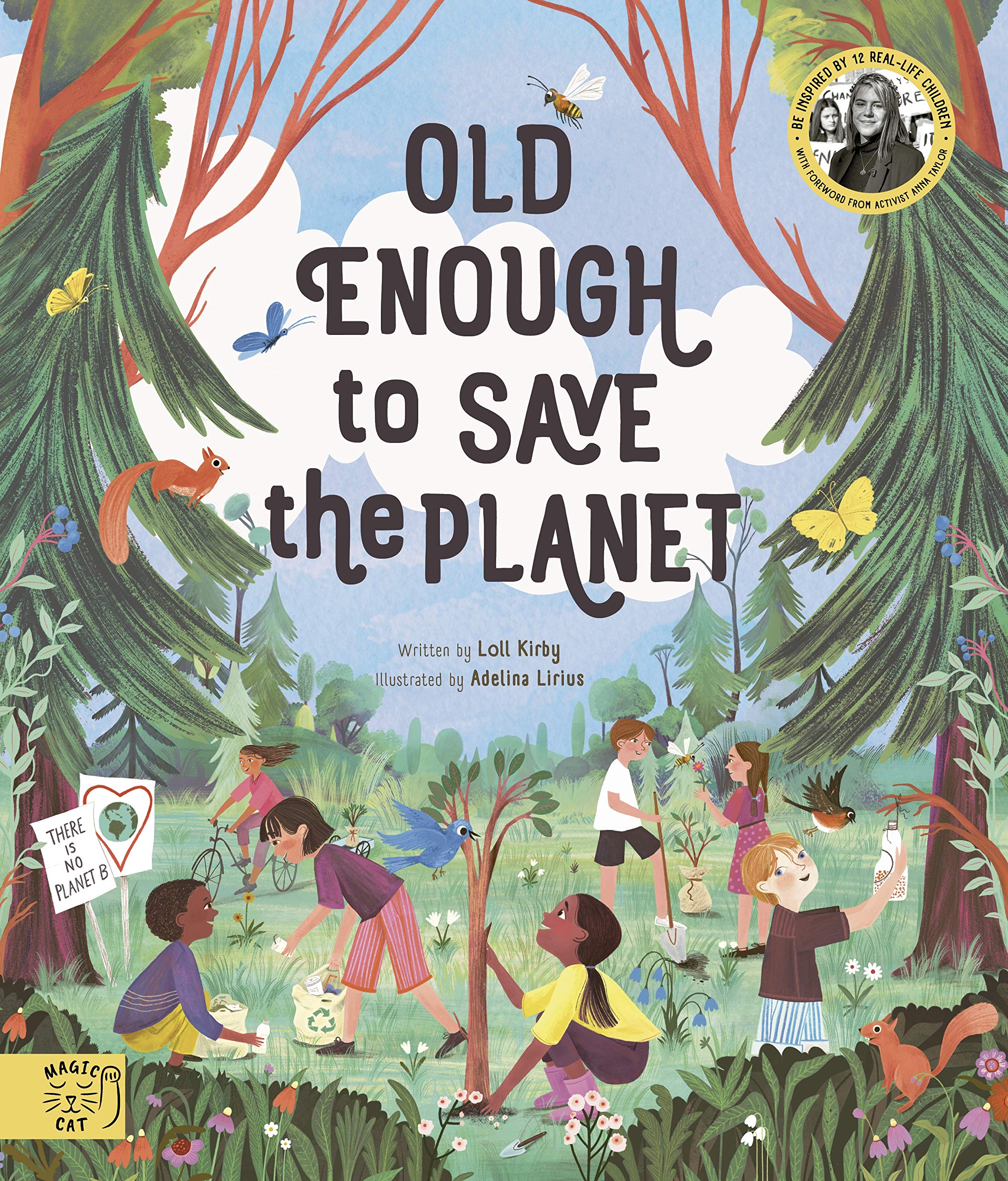
Old Enough to Save the Planet by Loll Kirby, illustrated by Adelina Lirius

Published by Magic Cat Publishing

Old Enough To Save The Planet: 9781916180529: Amazon.com: Books
Why everybody is old enough to save the planet | BookTrust

Summary:  Twelve children from around the world are profiled, each one having started an initiative to help the planet.  Each two-page spread shows kids at work, with a brief paragraph describing the young person and their activity.  Captions in the illustrations give additional information.  The last few pages offer ten things kids can do to help save the planet; ten things they can do to make their voices heard; and a list of seven websites with additional information.  32 pages; grades 1-5.

Pros:  Readers will be inspired by these kid activists who have already done amazing things to help make the world a better place.  There’s a lot to see in each illustration, and the information is brief enough for the younger grades.

Cons:  In the back matter, the author states that the Intergovernmental Panel on Climate Change “found that the world is already 34 degrees Fahrenheit warmer than two hundred years ago.” Was a decimal point left out?

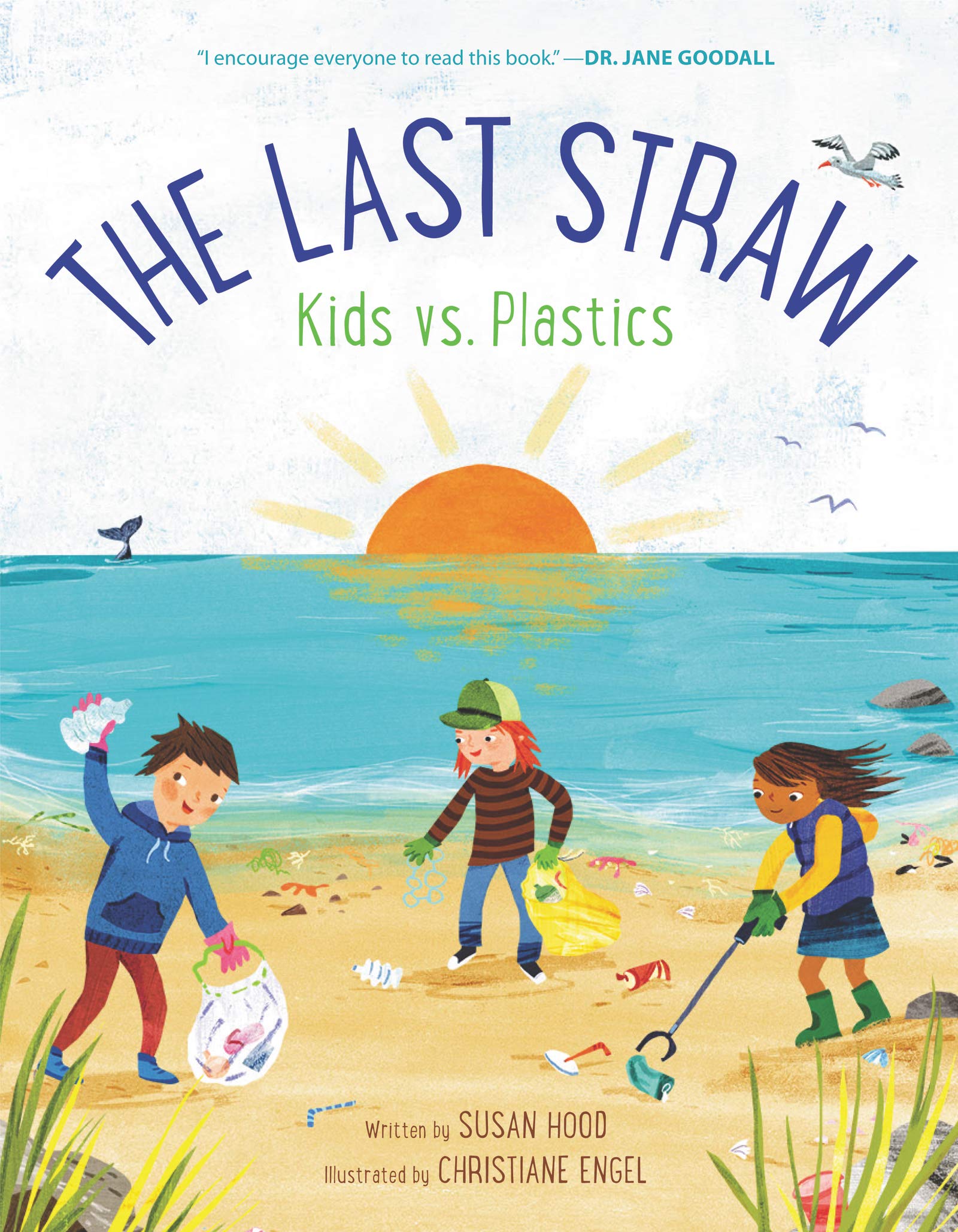
The Last Straw: Kids vs. Plastics by Susan Hood, illustrated by Christiane Engel

Published by HarperCollins

The Last Straw: Kids vs. Plastics: Hood, Susan, Engel, Christiane:  9780062981394: Amazon.com: Books

Summary:  Following an introduction by 9-year-old Milo Cress, founder of Be Straw Free, this poetry collection looks at different aspects of plastic, from its undeniable usefulness in many areas to the damage it is wreaking on the environment (especially the oceans) to different ways kids and teens are figuring out to recycle and find alternatives to plastic.  Includes a two-page author’s note; a timeline of the history of plastic from 1839; alternatives to single-use plastic items; top ten plastic ocean polluters; sources, websites, and additional notes for each poem; poetry notes for each poem; three books for further reading; and additional websites for news about plastics.  48 pages; grades K-5.

Pros:  The poetry is just the beginning in this book that is jam-packed with information and inspiring stories about kids working to make a difference in the world by recycling or eliminating plastics.  The colorful illustrators add a lot to the poems, and the 13 pages of back matter, enough to satisfy even me, would make this an excellent resource for older kids.

Cons:  I was feeling so bummed after reading the first few poems that I almost didn’t make it to the more inspirational section.

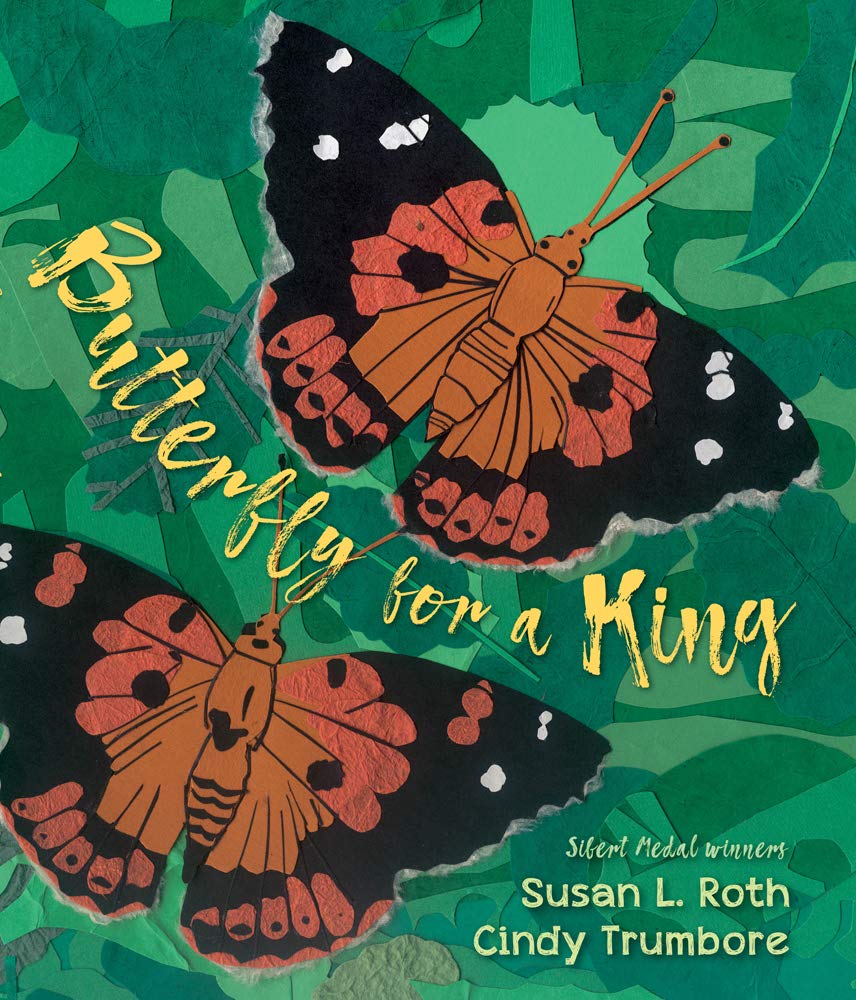
Butterfly for a King by Susan L. Roth and Cindy Trumbore

Published by Lee and Low Books

Image result for butterfly for a king amazon
Image result for butterfly for a king susan roth

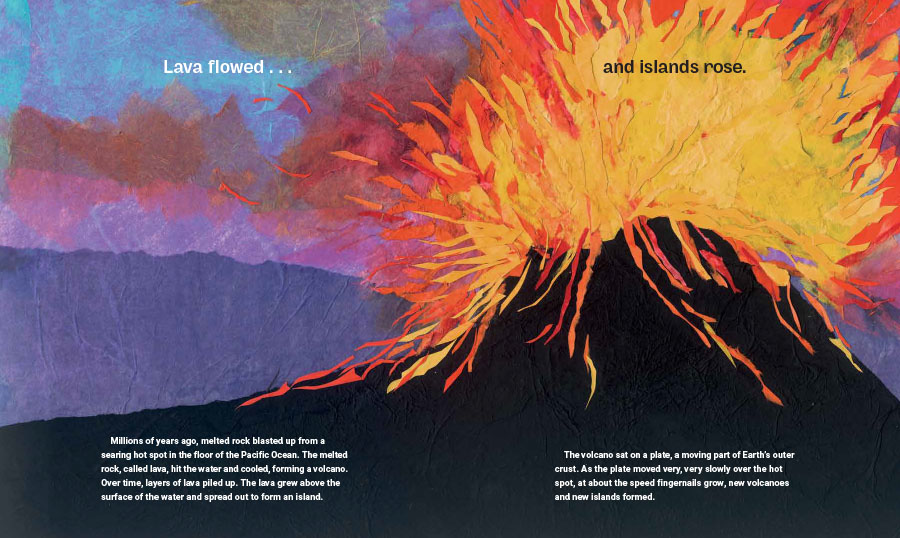
Summary:  The isolation of the islands that make up Hawai’i means that they are home to plant and animal species that exist nowhere else on Earth.  One of these is the Kamehameha butterfly, named for the king who united all of the islands.  In 2009, a group of fifth grade students led a successful campaign to make this butterfly the state insect, hoping to bring attention to the endangered butterfly.  Soon scientists from the state and the University of Hawai’i started working together to help save the Kamehameha.  Citizen scientists helped collect data and photos.  Since then, thousands of butterflies have been raised in captivity and released all around Hawai’i.  Includes an afterword with a map and many photos; an illustrator’s note; and a list of sources.  48 pages; grades 2-5.

Pros:  Another excellent nonfiction book by the Sibert Medal winning team of Susan Roth and Cindy Trumbore.  Kids will be inspired by the way elementary students made a real difference in helping with an environmental issue.  The collage illustrations enhance the text, which includes information on the formation of the Hawaiian islands, the butterfly’s life cycle, King Kamehameha, and how the scientists carried out their project.

Cons:  Even with the pronunciation guides, I struggle with how to say some of the Hawaiian words.

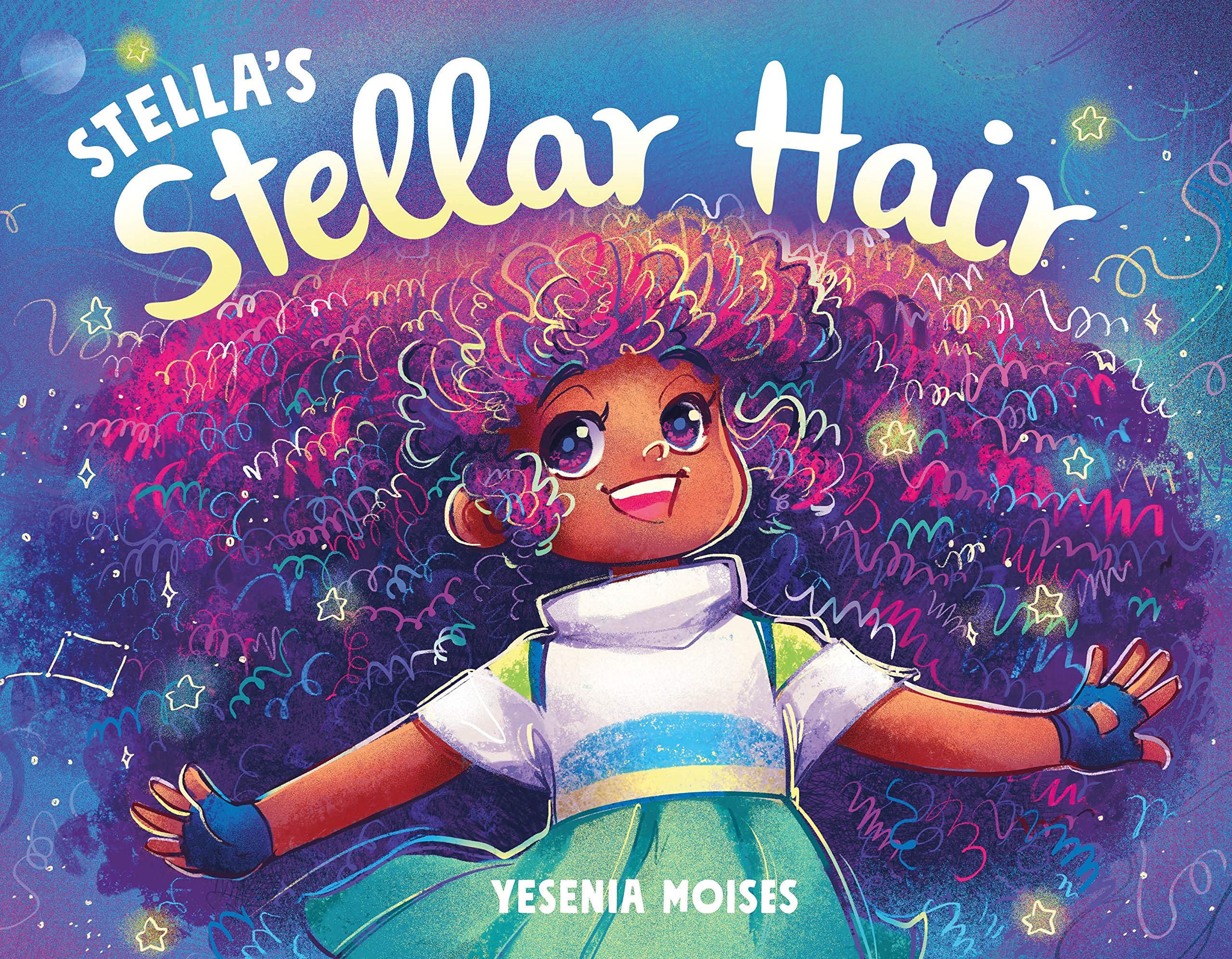
Stella’s Stellar Hair by Yesenia Moises

Published by Imprint

Image result for stella's stellar hair amazon

Summary:  It’s the day of the Big Star Little Gala, and Stella wants her hair to look just right.  But it’s twisting and turning, zigging and zagging, making loopity-loops and lots of curly Q’a.  Stella’s Momma sends her off to visit her aunt on Mercury.  Aunt Ofelia’s stay-smooth style isn’t quite right, so Stella goes to see Auntie Alma on Venus.  Each planetary aunt has different ideas about her hair, but none satisfies Stella.  Finally, Auntie Solana, the aunt over by the sun, has the best advice of all: just be yourself.  So Stella does her own hair, enjoying its twists, turns, and curls, and that turns out to be the best hair-do for the big event.  Includes two pages of information about the planets and why each one has its particular hairstyle.  40 pages; ages 4-8.

Pros:  The eye-popping art and be-yourself message are sure to resonate with anyone who’s ever had a bad hair day, and particularly celebrates Black hair.

Cons:  I still miss Pluto.

Hello, Earth! Poems to Our Planet by Joyce Sidman, illustrated by Miren Asiain Lora

Published by Eerdmans Books for Young Readers

Image result for hello earth joyce sidman

Summary:  Newbery Honor poet Joyce Sidman explores different aspects of Earth in these poems addressed to the planet itself.  There’s a sense of wonder, “How can we be here, climbing trees, walking paths, staring up at constellations…and also out in deepest space?”  There are poems about volcanoes, earthquakes, jungles, and mountains.  Taken together, the poems are a love letter to Earth, and a promise to take care of the planet.  Includes six pages of additional information about each topic addressed; resources about climate change, ways kids can help, and citizen science projects; and a list of books for further reading.  68 pages; grades 1-5.

Pros:  This beautifully illustrated book of poems celebrates Earth and many aspects of earth science.  The poems and illustrations are accessible to kids in primary grades, and the extensive back matter makes it useful for older kids to explore further.

Cons:  Earth doesn’t seem to have any answers for all the questions.

The Beak Book by Robin Page

Published by Beach Lane Books

Image result for beak book page

Summary:  Each page shows a large, colorful picture of a bird, a small picture of the bird using its beak, a sentence about how the bird uses its beak and a label identifying the bird.  Beaks are used for straining, tossing, crushing, and a host of other activities.  The final bird is a baby ruddy duckling who uses its beak, as do many birds, to break out of its egg.  Includes a two-page spread showing silhouettes of each bird relative to a human, where it lives in the world, and what its diet is; also a bibliography.  40 pages; ages 3-8.

Pros:  Over 20 birds are profiled, and the illustrations are striking.  Readers will be amazed at how many different uses there are for a beak.

Cons:  The information is pretty minimal; this is probably more of a read-aloud or a book to browse than something that will help much with research.

Seeing an Aurora by Elizabeth Pulford, illustrated by Anne Bannock

Published by Blue Dot Press

Image result for seeing an aurora bannock amazon

Summary:  A father wakes his child in the middle of the night.  “We’re off to find an aurora.”  They go out into a cold, snowy night.  The child is full of questions: is it scary? Are stars in the aurora? The moon?  Finally, they reach the top of a high hill, and the colors of the aurora explode all around them.  Neither speaks, but on the walk back home, Dad tells all he knows about auroras.  Includes a note entitled “Everything Dad Knew About the Aurora”.  32 pages; ages 3-8.

Pros:  This beautiful book, originally published in New Zealand, captures the feel of being out on a winter’s night, and the magic of the aurora.  The colors in the illustration are gorgeous, and the information is just right for a young child.

Cons:  Although the final note mentions that auroras occur at the North Pole and South Pole, it doesn’t specify where on Earth they can be seen.  Also, a photo or two and a list of additional resources wouldn’t have been amiss.


Zonia’s Rain Forest by Juana Martinez-Neal (released March 30)

Published by Candlewick

Zonia's Rain Forest: Martinez-Neal, Juana, Martinez-Neal, Juana:  9781536208450: Amazon.com: Books

Summary:  “Every morning the rain forest calls to Zonia.”  Off she goes with her animal friends: playing hide-and-seek, running races, and lying quiet and still.  After a day with the animals, she’s ready to return to her parents and baby brother.  On the way home, though, she stumbles upon something she’s never seen before: the severed stumps of trees that have been cut down.  She tells her mother that the forest needs help, and her mother says it is calling to her.  “‘Then I will answer,’ says Zonia, ‘as I always do.’”  Includes additional information about the Asháninka, the largest indigenous group living in the Peruvian rain forest; a few facts about the Amazon; threats to the Amazon; and Zonia’s animal friends in order of appearance.  Spanish version also available: La Selva de Zonia. 40 pages; ages 4-8.

Pros:  This is sure to be a hit with any child who loves animals.  Zonia’s life in the rain forest looks like a lot of fun, and the animals are beautifully rendered.  The environmental message is delivered delicately, then reinforced with the excellent back matter.  Another Caldecott contender!

Cons:  I hate to mention it with all the excellent back matter, but I would have liked to have seen a map.

The Boy Whose Head Was Filled With Stars: A Life of Edwin Hubble by Isabelle Marinov, illustrated by Deborah Marcero

Published by Enchanted Lion Books

The Boy Whose Head Was Filled with Stars: A Life of Edwin Hubble: Marinov,  Isabelle, Marcero, Deborah: 9781592703173: Amazon.com: Books
The Boy Whose Head Was Filled With Stars, A Life of Edwin Hubble —  Enchanted Lion Books

Summary:  As a young boy growing up in Missouri, Edwin Hubble was fascinated by the stars.  When his grandfather gave him a telescope for his eighth birthday, he eschewed birthday cake in favor of looking at the stars.  His strict father prohibited him from studying astronomy in college, but happily for the history of science, said father died in 1914, and Edwin was able to quit teaching high school and go back to school.  He set himself to work on the problem of nebulae like Andromeda: were they within the Milky Way galaxy, or separate galaxies themselves? His discovery, which built on the research of Harvard astronomer Henrietta Swan Leavitt, showed that they were separate galaxies, revealing that the universe was bigger than previously thought, and that it was expanding.  Edwin helped to create the Hale telescope and was the first to use it in 1949; he was honored with the Hubble Space Telescope, launched in 1990.  Includes an author’s note, an illustrator’s note, additional information about Hubble’s research, and a bibliography listing three sources.  52 pages; grades 2-5.

Pros:  There don’t seem to be other picture book biographies of Hubble, and this one does a nice job, emphasizing Edwin’s inquisitive mind, clearly explaining the difficult concepts he was researching, and showing the wonders of the universe through the black-sky illustrations.

Cons:  A timeline would have made this a more useful research book.

Another list of six: favorite nonfiction books

Your Place in the Universe by Jason Chin

Published by Neal Porter Books

Your Place in the Universe: Chin, Jason: 9780823446230: Amazon.com: Books

I notice that Jason Chin has made it onto three of my last five favorite nonfiction book lists, so guess I’m a bit of a fan. His illustrations are awe-inspiring, and I loved the comparisons in this book that made enormous numbers and sizes a little more understandable.

Grow: Secrets of Our DNA by Nicola Davies, illustrated by Emily Sutton

Published by Candlewick

Grow: Secrets of Our DNA: Davies, Nicola, Sutton, Emily: 9781536212723:  Amazon.com: Books

Explaining DNA and genetics in a way that’s accessible to readers as young as kindergarten is no easy feat, but Nicola Davies and Emily Sutton pulled it off. Watson and Crick would be proud.

We Are Power: How Nonviolent Activism Changes the World by Todd Hasak-Lowy

Published by Abrams Books for Young Readers

We Are Power: How Nonviolent Activism Changes the World: Hasak-Lowy, Todd:  9781419741111: Amazon.com: Books

I thought I knew a fair amount about nonviolent activism–I’m a Quaker, for Pete’s sake–but I learned so much from reading this book. 2020 had its share of activism and books about activism, but this was the one I found most inspiring.

The Fabled Life of Aesop by Ian Lendler, illustrated by Pamela Zagarenski

Published by HMH Books for Young Readers

The Fabled Life of Aesop: The extraordinary journey and collected tales of  the world's greatest storyteller: Lendler, Ian, Zagarenski, Pamela:  9781328585523: Amazon.com: Books

I’m sure Aesop never imagined he’d be part of the Common Core, but there he is. As a school librarian, I am grateful for this comprehensive introduction to his life and fables, and I also appreciated the sly observations on what it means to have power. Pamela Zagarenski has a couple of Caldecott honors to her name, so don’t count her out this year.

Facts vs. Opinions vs. Robots by Michael Rex

Published by Nancy Paulsen Books

Amazon.com: Facts vs. Opinions vs. Robots (9781984816269): Rex, Michael,  Rex, Michael: Books

Who knew that when I was playing Kick the Can with Michael Rex and the rest of our neighbors in 1970’s suburban New Jersey that in 2020 I’d be reviewing his book? Well done, Michael, I loved your take on facts vs. opinions. Librarians everywhere should thank you for this book.

All Thirteen: The Incredible Cave Rescue of the Thai Boys’ Soccer Team by Christina Soontornvat

Published by Candlewick Press

All Thirteen: The Incredible Cave Rescue of the Thai Boys' Soccer Team -  Kindle edition by Soontornvat, Christina. Children Kindle eBooks @ Amazon .com.

I guess none of us should be surprised that this drama we watched unfold a couple of years ago would be made into a gripping nonfiction tale. Christina Soontornvat added so much context with her sidebars on Thailand, caves, and Buddhism, as well as her personal connection to the story that readers get much more than just a survival story.