Published by Clarion Books
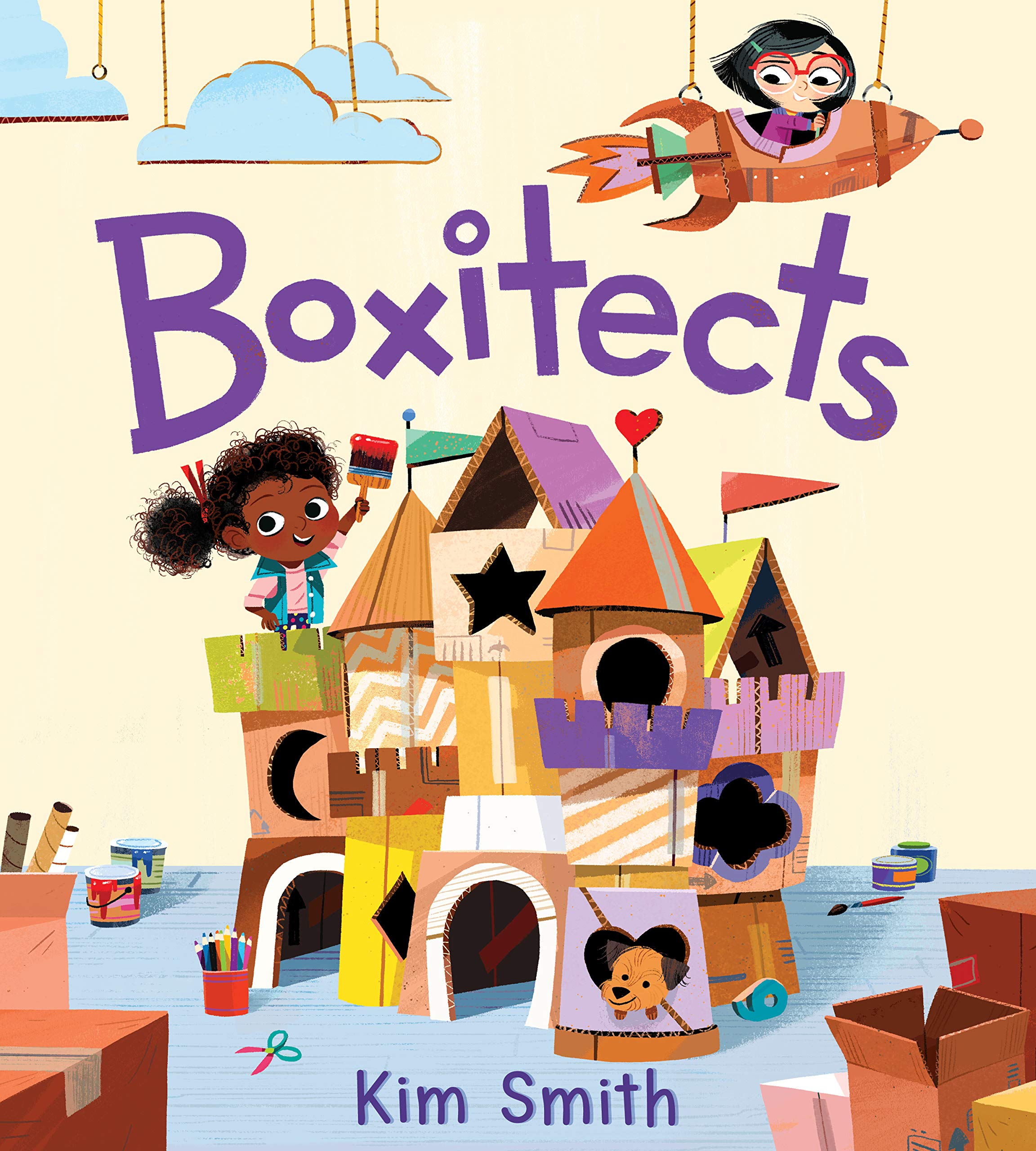

Summary: Meg is a boxitect who loves to create all kinds of structures from cardboard boxes. Her mother signs her up for Maker School so she can be with other kids who like to build and create. At first, Meg is the only boxitect, and enjoys this distinction among the blanketeers, egg-cartoneers, and spaghetti-tects. But one day, Simone shows up in class. Simone is another boxitect, and pretty soon a rivalry develops between the two of them. Things come to a head at the school’s Maker Match, when the two are put on a team. Not wanting to work together, they divide their space in half and each compete to see whose structure can be bigger and better. This results in disaster, and they have to work together to salvage anything from their original design. They don’t get first place, but together they make something pretty cool…and each one also makes a new friend. Includes four pages showing why cardboard is a good building material and giving directions to build a tunnel and castle from cardboard boxes. 40 pages; ages 4-8.
Pros: This would be a perfect introduction to any kind of maker session for young kids, with a nice emphasis on teamwork and friendship.
Cons: The ending was pretty predictable from the moment Simone showed up.








 Summary:
 A Kids Book A Day