Apollo 8: The Mission That Changed Everything by Martin W. Sandler

Published by Candlewick
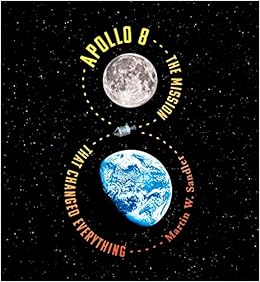
Image result for apollo 8 the mission that changed amazon

Summary:  Coinciding with the 50th anniversary of the Apollo 8 mission, this book starts with a look at the history that led up to the first manned flight to the moon.  The first chapter explores the space race, John F. Kennedy’s vow to put a man on the moon by the end of the decade, the early Soviet successes, and the tragic deaths of the three Apollo 1 astronauts in a fire.  The rest of the book is about Apollo 8 and its crew, commander Frank Borman, Jim Lovell, and Bill Anders, who risked their lives to reach the moon. They succeeded in entering into orbit around the moon, becoming the first humans to view its dark side, then left lunar orbit and returned to Earth.  Their TV broadcast from space was watched by millions of people, and and helped generate excitement about the space program.  Bill Anders’ iconic photograph of the Earth rising is one of the most famous ever taken. The success of the Apollo 8 mission laid the groundwork for Apollo 11 six months later, when Neil Armstrong and Buzz Aldrin became the first to walk on the moon. Includes a bibliography and index.  176 pages; grades 5-8.

Pros:  Packed with exciting details and photos about the space program in general and Apollo 8 in particular, this large glossy book will appeal to aspiring astronauts in late elementary, middle, and high school.  The cover design is one of my favorites of the year.

Cons:  Every several pages, there were 2-3 pages on a related topic inserted into the text.  While these sidebar-type entries were interesting, they interrupted the main narrative in a way that was somewhat jarring.
If you would like to buy this book on Amazon, click here.

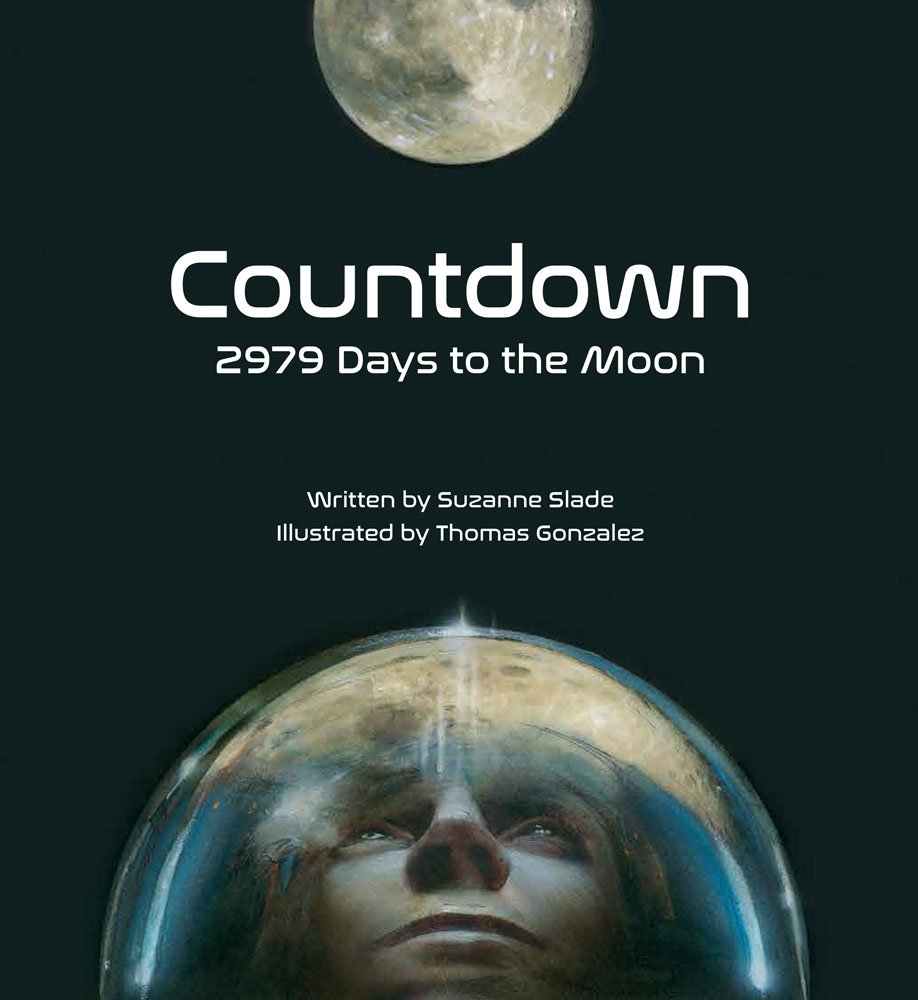
Countdown: 2979 Days to the Moon written by Suzanne Slade, illustrated by Thomas Gonzalez

Published by Peachtree Publishers

Image result for countdown 2979 days amazon

Image result for countdown thomas gonzalez

Summary:  Starting with President John F. Kennedy’s 1961 commitment to put a man on the moon before the end of the decade, and ending with Neil Armstrong and Buzz Aldrin’s historic 1969 walk on the moon, this free-verse history covers the history of the Apollo space missions.  The heartbreak of Kennedy’s assassination and the fatal Apollo 1 fire set the stage for the enormous determination that was required to design and build the vehicles that could safely transport astronauts to the moon and back. Each Apollo mission is described, followed by two pages that show photos and give profiles of the astronauts on each one.  The large, pastel portraits realistically render the people, places, and technology that were all part of the Apollo program. Includes author’s and illustrator’s notes, additional information about Team Apollo and bringing Apollo 11 home (with photos), and a list of books and websites with additional information. 144 pages; grades 5-8.

Pros:  A fascinating look at an exciting and important chapter in the history of space exploration.  The free verse format makes for a fairly quick and easy read, but there is still plenty of information packed into the text and back matter.  The beautiful oversized illustrations bring immediacy to the story.

Cons:  As a big fan of the movie Apollo 13, I was disappointed that the narrative ended with Apollo 11.

If you would like to buy this book on Amazon, click here.

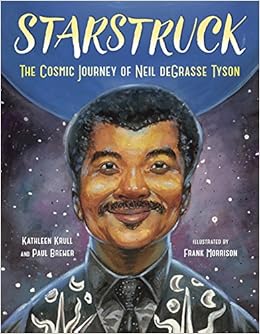
Starstruck: The Cosmic Journey of Neil DeGrasse Tyson by Kathleen Krull and Paul Brewer, illustrated by Frank Morrison

Published by Crown Books for Young Readers

Image result for starstruck neil degrasse amazon

Image result for starstruck frank morrison

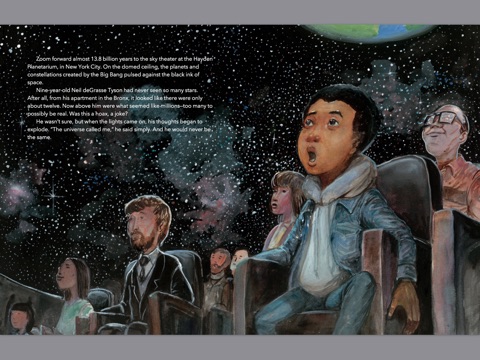
Summary:  Growing up in the Bronx, young Neil DeGrasse Tyson only saw a few stars in the night sky.  He couldn’t believe his eyes when he visited the Hayden Planetarium at age 9 and saw how many stars were really there.  From that time on, Neil was fascinated by astronomy. His parents supported him, buying him a telescope and books, and a sixth-grade teacher suggested he take an advanced class at the planetarium.  He went on to the Bronx High School of Science and Harvard, where he learned all he could about science, while also enjoying dancing and wrestling. Eventually, he wound up back at the Hayden Planetarium as a director, and has become a voice for science, appearing on TV and writing books and tweets to share his enthusiasm.  In life and in the universe, says Tyson, “It’s always best to keep looking up.” Includes an authors’ note and sources.  48 pages; grades 1-5.

Pros:  The authors show how Tyson turned his passion into a rewarding career through hard work and determination.  The illustrations capture his energy, as well as the beautiful night sky.

Cons:  I often see books like this recommended for grades K-3 (all the reviews I looked at, as well as Amazon, had that range for their recommendations).  I find picture book biographies are appreciated by upper elementary and middle school students even more than the younger ones.

If you would like to buy this book on Amazon, click here.

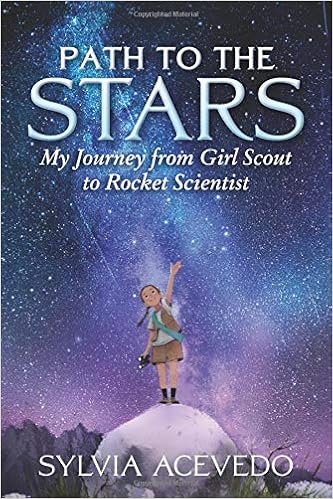
Path to the Stars: My Journey from Girl Scout to Rocket Scientist by Sylvia Acevedo

Published by Clarion Books

Image result for pathway to the stars sylvia acevedo amazon

Summary:  Sylvia Acevedo grew up in a Mexican-American family in New Mexico.  Her father was born in the U.S., graduated from college, and worked as a chemist, but expected his daughter to become a wife and mother.  From an early age, Sylvia had different ideas. Her younger sister’s tragic case of meningitis changed the family dynamics, and Sylvia was often left to advocate for herself.  She excelled at school and learned how to set and reach goals through Girl Scouts. Graduating at the top of her class, she gave up her dreams to attend Stanford University, staying at home to help take care of her younger siblings while she got her industrial engineering degree from New Mexico State University.  After graduation, she worked at the Jet Propulsion Laboratory in Pasadena and got a master’s degree at Stanford. After serving many years on the board of Girl Scouts USA, she was appointed CEO of the organization in 2017. 320 pages; grades 5-8.

Pros:  Ms. Acevedo clearly demonstrates how hard work, perseverance, and determination can lead to success beyond one’s wildest dreams.  As a veteran of Girl Scouts, including a 13-year stint as a leader, it was interesting to me to see how scouting has influenced Sylvia’s life.

Cons:  I never had the success selling GS cookies door to door that young Sylvia did.  

If you would like to buy this book on Amazon, click here.

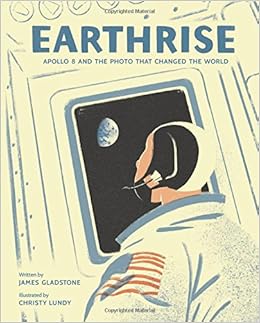
Earthrise: Apollo 8 and the Photo That Changed the World by James Gladstone, illustrated by Christy Lundy

Published by Owlkids

Image result for earthrise apollo 8 james amazon

Image result for earthrise apollo 8 christy lundy

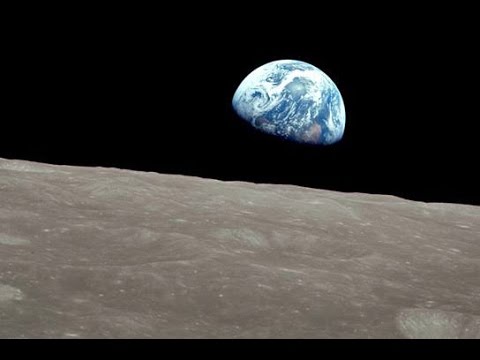
Summary:  1968 was a year of war, unrest, and marches that demanded peace and justice.  At the end of the year, three astronauts, Frank Borman, Jim Lovell, and Bill Anders, flew into space as the Apollo 8 mission.  They traveled further than any humans had gone before, going all the way to the Moon to figure out the best place for future missions to land.  On their fourth orbit around the Moon, they saw the Earth rising above the moon, and snapped a color photo of it from their window.  That photo became famous, showing the Earth as a peaceful planet with no national borders, home to all people.  Includes a brief note with additional information about Apollo 8 and the Earthrise photo.  32 pages; ages 4-8.

Pros:  A perfect introduction to the space program for young kids with a nice message about a photo that inspired people to see Earth in a different way.

Cons:  It’s a pretty brief introduction with no resources for further research.  Also, I wound up with Bette Midler’s “From A Distance” stuck in my head for hours after reading this.

Image result for earthrise photo apollo 8

If you would like to buy this book on Amazon, click here.


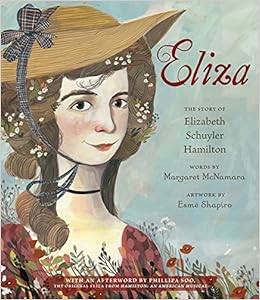
Eliza: The Story of Elizabeth Schuyler Hamilton by Margaret McNamara, illustrated by Esme Shapiro.  

Published by Schwartz & Wade

Image result for eliza mcnamara amazon

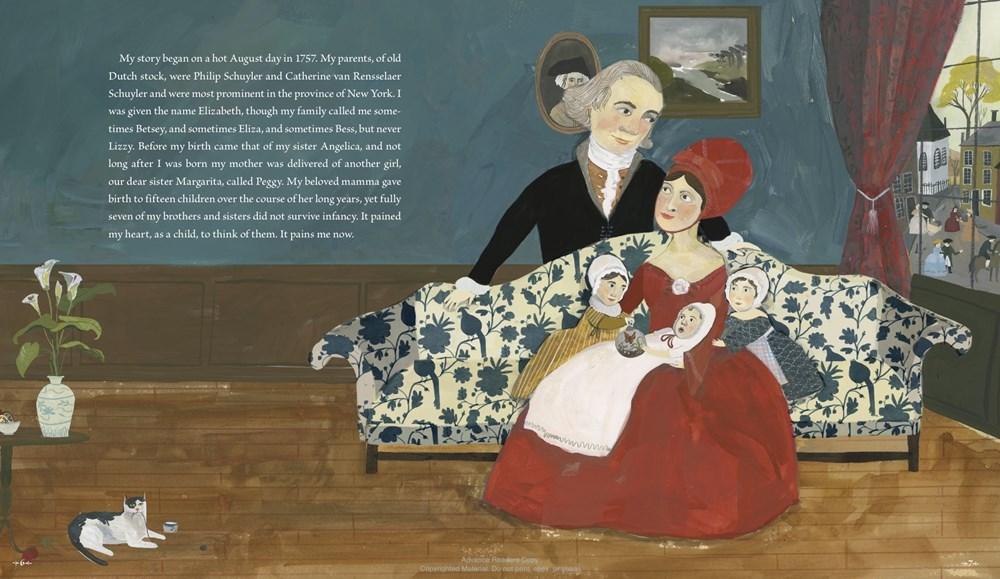
Image result for eliza mcnamara amazon

Summary:  Writing a letter to her soon-to-be-born grandchild, Eliza Hamilton tells the story of her life, starting as an adventurous girl who liked to run and play on her family’s farm in upstate New York.  She writes of her regret that her family owned slaves, and how they eventually freed them. Then she moves on to meeting and falling in love with Alexander Hamilton, and how she helped introduce him to some of her family’s socially prominent acquaintances.  After his death, she worked for many years to preserve his legacy, raise money for the Washington Monument and to continue and expand upon the charitable work the two of them had started. Her proudest achievement seems to have been founding New York’s first orphanage in 1806, an institution that continues to this day.  Back matter includes extensive notes and additional resources, as well as an afterword by Phillipa Soo, the original Eliza from Hamilton: An American Musical. 48 pages; grades 3-6.

Pros:  An excellent introduction to a lesser-known founding mother, with her accomplishments presented in their own right, not only in connection with her famous husband.  The folk art style illustrations add a lot to the text; older fans of the musical will enjoy this book as well as the youngsters.

Cons:  I’ve seen this book recommended for kids as young as 4 years old.  In my opinion, it wouldn’t be appreciated much by anyone without some background knowledge of early American history.

If you would like to buy this book on Amazon, click here.

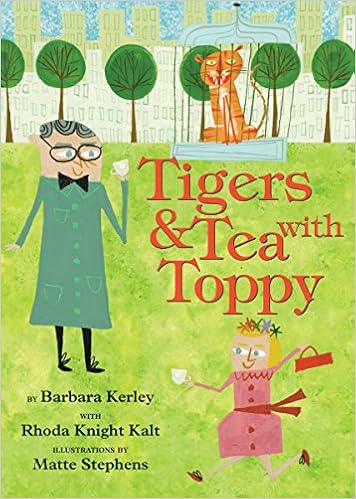
Tigers and Tea With Toppy by Barbara Kerley and Rhoda Knight Kalt, illustrated by Matte Stephens

Published by Scholastic

Image result for tigers and tea with toppy amazon

Image result for tigers and tea with toppy

Summary:  Rhoda loves spending weekends in New York City with her Grandpa Toppy and Grandma Nonnie.  On Saturday, Toppy, whose real name is Charles R. Knight, takes his granddaughter to the American Museum of Natural History where he shows her the paintings he created of animals and prehistoric scenes.  Even though he is legally blind, he is able to draw and paint the dinosaurs from their fossilized skeletons. The next day they visit the Central Park Zoo where Toppy shows Rhoda the animals he studied so closely to learn how to draw them accurately.  Rhoda, Toppy, and Nonnie finish off the weekend with a celebratory tea at the Plaza Hotel. Includes author and artist notes with more information about Knight and the creation of the book; source notes; some of Knight’s animal drawings; and photos of Toppy and Rhoda.  48 pages; grades K-3.

Pros:  A fun way to introduce the life of Charles Knight.  One interesting tidbit: illustrator Matte Stephens is legally blind, like Knight was, and uses some of the same techniques to create his art.

Cons: I would have enjoyed seeing more of the prehistoric paintings.

If you would like to buy this book on Amazon, click here.

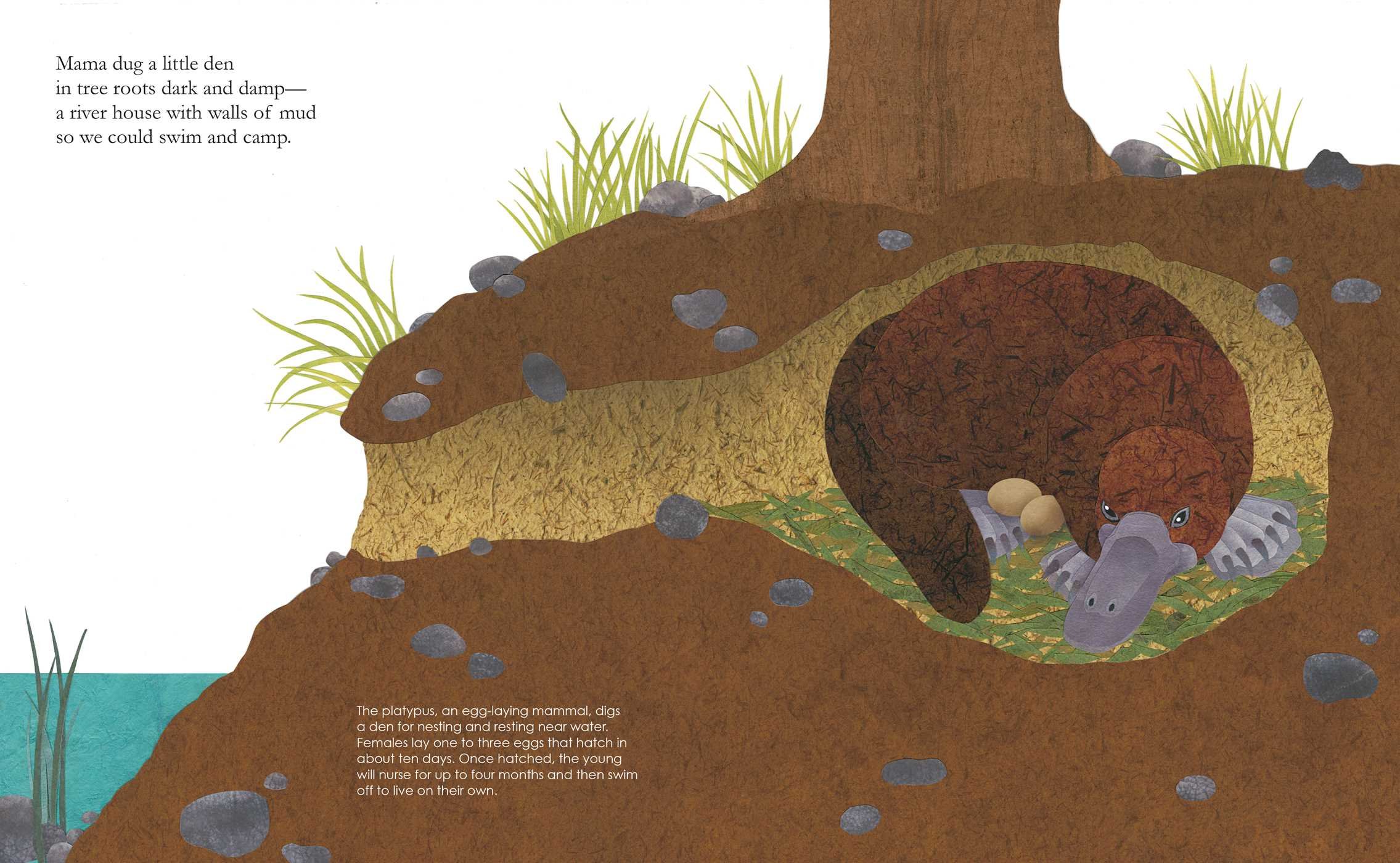
Mama Dug A Little Den by Jennifer Ward, illustrated by Steve Jenkins

Published by Beach Lane Books

See the source image

Image result for mama dug a little den amazon

Summary:  Each two-page spread has a rhyme beginning with the line “Mama dug a little den” (“Mama dug a little den/beneath a fallen tree./An earthy home as soft as moss,/a nursery for three” is the first one about red foxes).  A smaller paragraph gives additional information. The illustrations are in Steve Jenkins’ signature cut-paper collage style, and show the animal in its den and some of the surrounding habitat. A final page contains a note from the author about how she came to write the book, and some additional information about what to look for if you find a den to determine what kind of animal lives there.  32 pages; ages 4-8.

Pros:  In this follow-up book to Mama Built A Little Nest, preschoolers will learn a bit about animal homes and how to discover them in their own backyards.  As president of the Steve Jenkins fan club (well, I would be, if there were such a thing), I appreciated the beautiful illustrations.

Cons:  The back matter was so small and unobtrusive, many readers may miss it.

If you would like to buy this book on Amazon, click here.

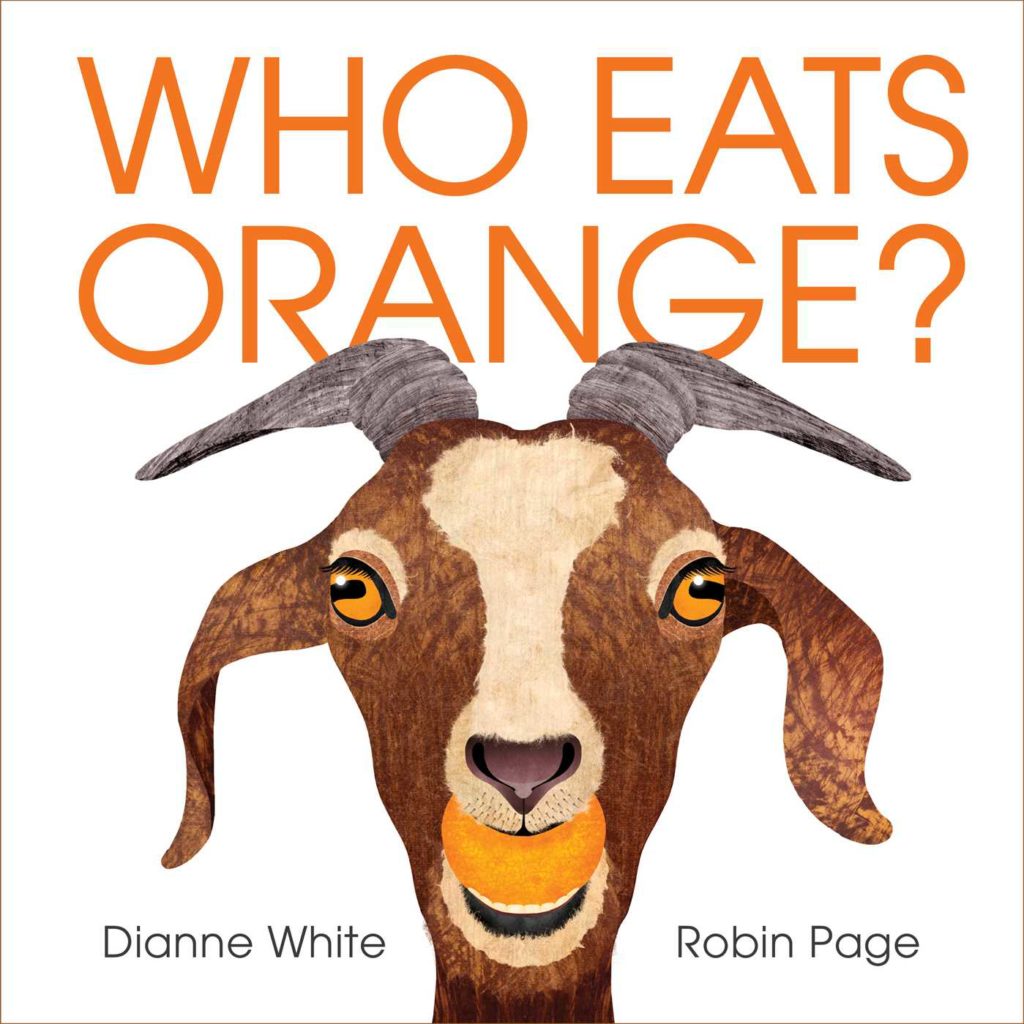
Who Eats Orange? by Dianne White, illustrated by Robin Page

Published by Beach Lane Books

Image result for who eats orange diane white amazon

Image result for who eats orange robin page

Summary:  Animals, foods, colors, and habitats are introduced in this book that has a repeating question and answer format: “Who eats orange? Bunnies in their hutches do. Chickens in the henhouse too.  Who else eats orange? Goats. Pigs. Gorillas too? Gorillas? No! Gorillas don’t eat orange. They eat…green.” The large illustrations have plenty of color on a simple white background. Humans, the book concludes, eat a rainbow of colors.  The last two pages list various habitats with the animals from each listed and additional information about what and how that animal eats. 32 pages; ages 4-8.

Pros:  Catchy rhymes and eye-catching graphics make this an appealing introduction for a wide variety of topics.

Cons:  The habitats listed at the end include farms, Africa, ocean, forest, rainforest, and tundra; but Africa is a continent with many different habitats.

If you would like to buy this book on Amazon, click here.

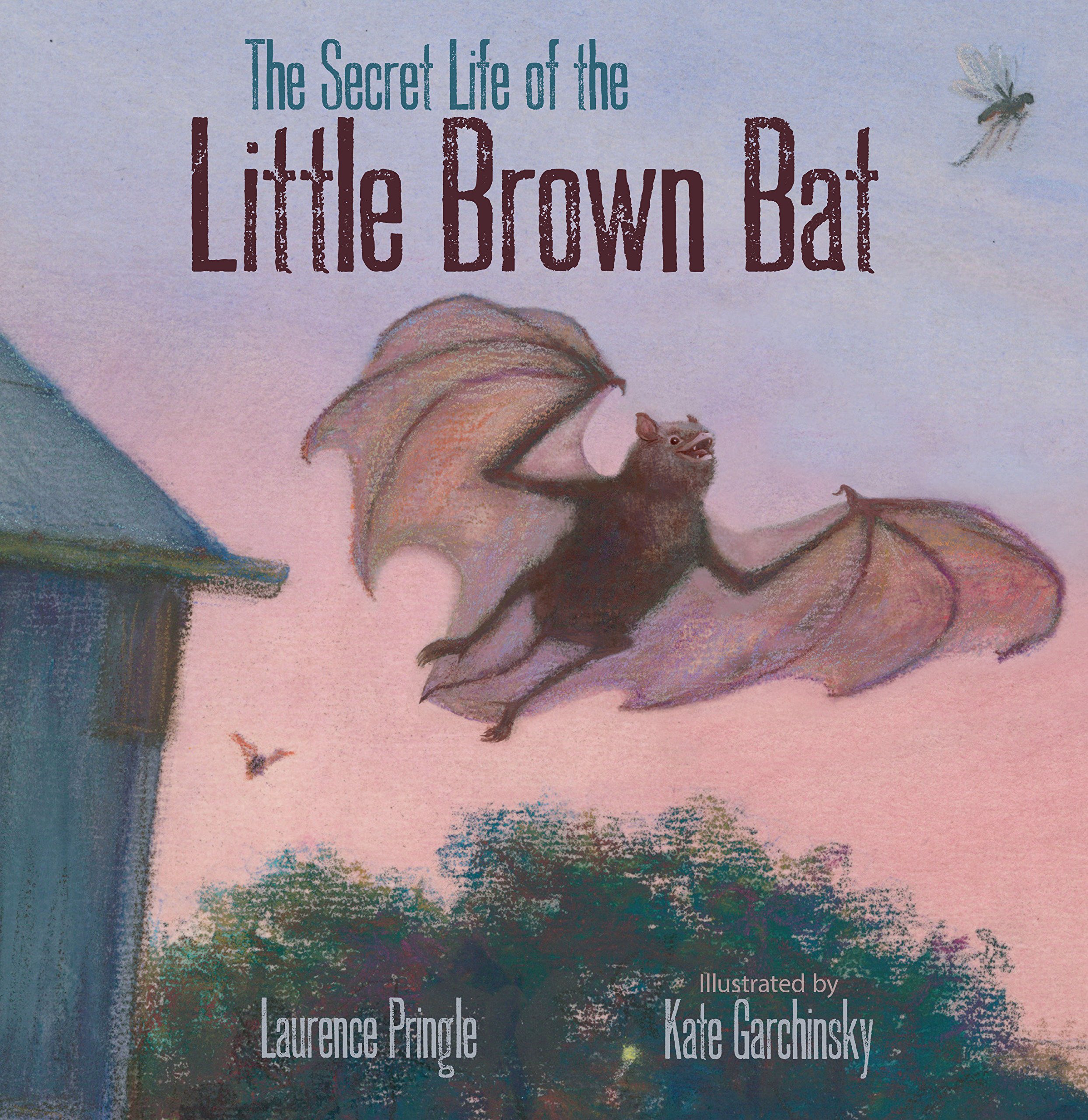
The Secret Life of the Little Brown Bat by Laurence Pringle, illustrated by Kate Garchinsky

Published by Boyds Mills Press

Image result for secret life little brown bat amazon

Summary:  This story starts shortly after Otis, a little brown bat, has left his mother and is living on his own.  Watching how Otis spends his days and nights, the reader will learn the physical characteristics of bats, their diet, where they live, how they hunt using echolocation, and their life cycle.  The illustrations mostly portray Otis at night in a variety of settings: roosting in an abandoned building, hibernating in a cave, flying through the sky, and hunting for insects in a meadow. At the end, Otis has found a mate and is settling down for a long winter’s sleep.  Includes two pages of additional information about little brown bats and a glossary. 32 pages; grades 1-4.

Pros:  An excellent introduction to a bat’s life, told in a narrative form that will hold readers’ interest.  The pastel illustrations on the dark background provide striking portrayals of Otis (whose name comes from his species’ scientific name, Myotis lucifugus) and the other bats.

Cons:  Otis didn’t really seem to be leading a “secret life”.

If you would like to buy this book on Amazon, click here.