Always Remember by Cece Meng, illustrated by Jago

Published by Philomel Books
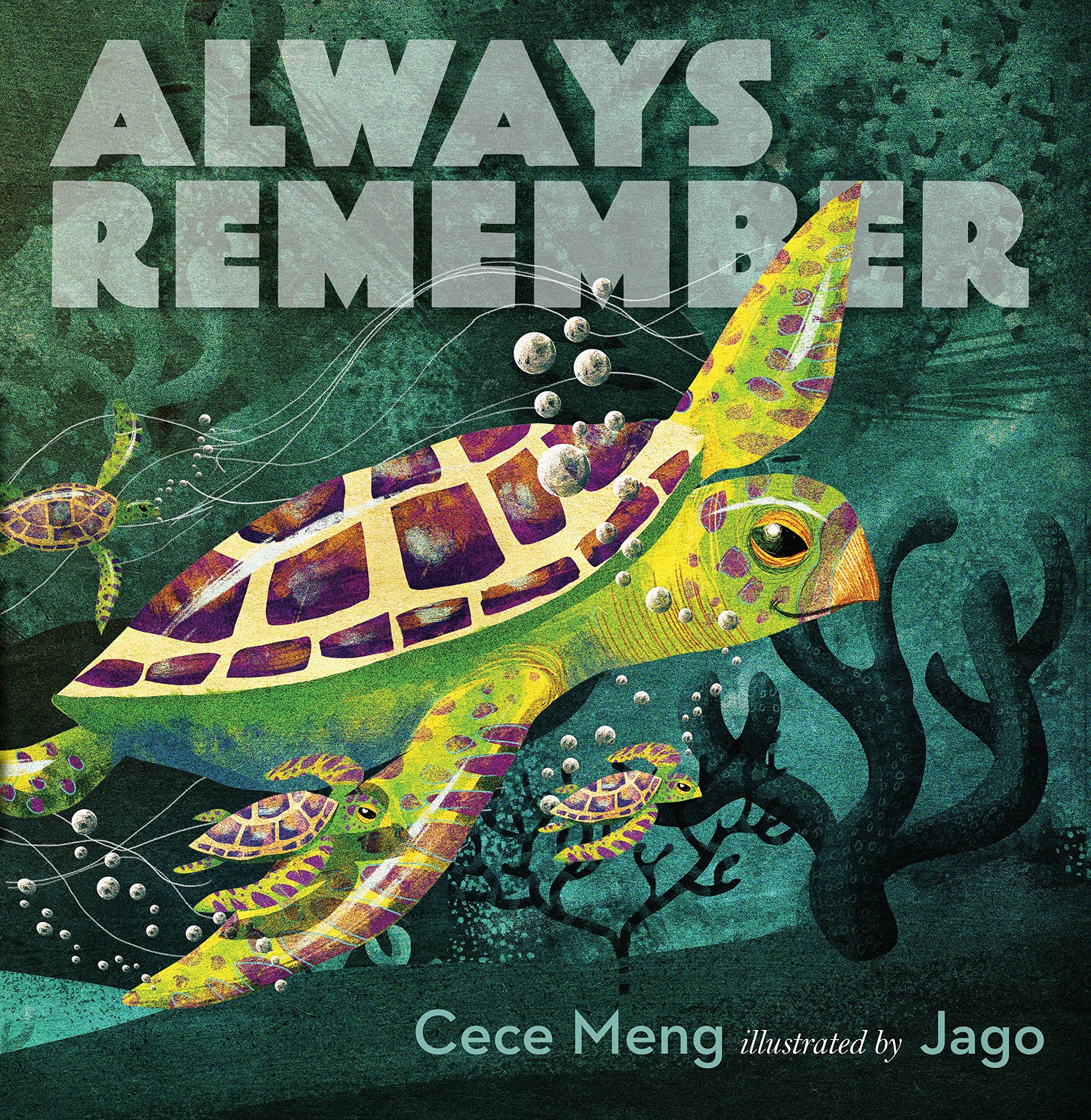
Always Remember: Meng, Cece, Jago: 9780399168093: Amazon.com: Books

Summary:  When Old Turtle takes his last breath and swims his last swim, the waves carry him away, and his friends remember him.  The young turtles remember how he taught them how to swim; the otters remember how he loved to play and have fun; the manatee remembers how he rescued him when he was tangled in a fishing net.  At the end, they conclude that Old Turtle lived a life filled with kindness, love, and helpfulness, and his legacy will live on through their own lives.  32 pages; ages 3-7.

Pros:  A beautifully illustrated simple story that celebrates a life well-lived and gives children a way to look at death as the completion of life.

Cons:  Another three-Kleenex read-aloud.
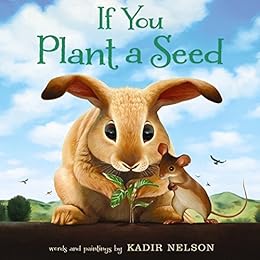
If You Plant a Seed by Kadir Nelson

Published by HarperCollins 

If You Plant a Seed - Kindle edition by Nelson, Kadir, Nelson, Kadir.  Children Kindle eBooks @ Amazon.com.

Summary:  If you plant carrot, tomato, and cabbage seeds, Bunny and Mouse discover, you get carrots, tomatoes, and cabbage.  They’re just about to enjoy the fruits of their labor when a flock of birds shows up, clearly wanting to sample the veggies.  If you plant the seeds of selfishness, they grow, too…into a heap of trouble.  And, in this case, a food fight.  Ready for a different approach, Bunny and Mouse try sharing, planting seeds of kindness.  The birds reciprocate by flying overhead, dumping bags of seeds.  The resultant garden makes everybody happy.  32 pages; ages 4-8.

Pros:  The big, beautiful pictures of really, really cute animals complement the simple text and message.

Cons:  The message may be a bit heavy-handed.

New Shoes by Susan Lynn Meyer, illustrated by Eric Velasquez

Published by Holiday House

Summary:  When Ella Mae’s family scrapes together enough money to buy her a new pair of shoes, she is dismayed to learn that black people can’t try on shoes at the store.  She watches a white girl try on her shoes, while Ella Mae’s mother has to trace around her foot to figure out her size.  The first day she wears her shoes to school, she feels bad about her experience at the shoe store all day.  Then she and her friend Charlotte come up with a brilliant plan.  For weeks, they do chores for people, asking for payment in used shoes.  Finally, they display all the shoes in their barn, then put a sign up announcing people can buy a pair for ten cents and another used pair of shoes.  The people in their community are thrilled that they’ll never have to use the shoe store again.

Pros:  I loved this powerful story about segregation.  Instead of the girls feeling victimized by it, they come up with a solution and work hard to make it happen.

Cons:  The solution is inspiring but a bit simplistic, and a larger conversation about segregation would be helpful when reading this.