Bringing Down A President: The Watergate Scandal by Dr. Andrea Balis and Elizabeth Levy, illustrated by Tim Foley

Published by Roaring Brook Press

Image result for bringing down a president amazon

Summary:  From the break-in at the Watergate hotel on May 25, 1972 to Richard Nixon’s resignation as U.S. President on August 9, 1974, this book covers what went on in the White House in a unique fashion.  The story is narrated by a “fly on the wall”, whose story is interspersed with quotes from many different key players in the events. There are black and white illustrations, some with cartoon bubbles that quote the people shown.  The epilogue tells what happened to those who went to jail (answer: all served ridiculously short terms and made obscene amounts of money off of their experiences when they got out), and those who put them in prison by persisting in their investigation.  Includes almost 200 sources and a three-page bibliography with a tiny font. 240 pages; grades 5-8.

Pros:  Even though I’ve watched All the President’s Men about ten times, this added a lot to my understanding of Watergate and the depths of the corruption going on in Richard Nixon’s presidency.  Once I got through the first few chapters and figured out who was who (there are a lot of characters, and they’re almost all white men in suits), I couldn’t put it down.  Anyone from tween to adult will add to their knowledge of history pretty painlessly by reading this book.

Cons:  1. The illustrations are fun, but photos would have been a nice addition. Those who went to jail are pictured at the end, but there’s not a single photo of Nixon. 2. As one might expect from a book featuring Tricky Dick, there is plenty of salty language, either quoted directly or through #?!&* indicators.

If you would like to buy this book on Amazon, click here.

Liberty Arrives! How America’s Grandest Statue Found Her Home by Robert Byrd

Published by Dial Books

Image result for liberty arrives byrd

Image result for liberty arrives byrd

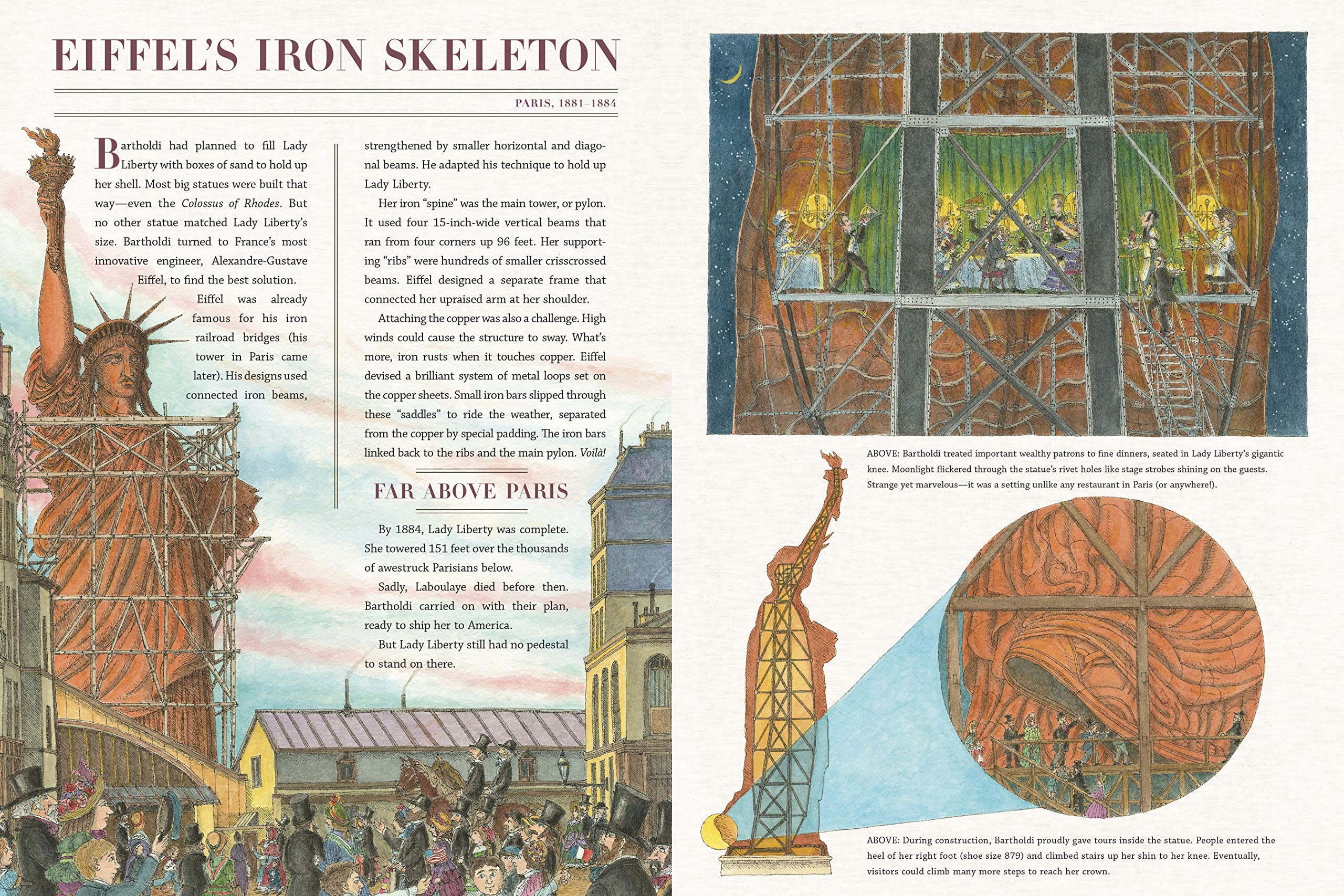
Summary:  The idea for the Statue of Liberty began in France in 1865 when Édouard de Laboulaye, a wealthy French judge who admired America, dreamed of presenting the United States with a gift for the 1876 centennial.  He enlisted sculptor Frédéric-Auguste Bartholdi who specialized in large creations. Little did the two of them realize it would take more than two decades before their dream would finally come to fruition–and Laboulaye wouldn’t live to see it.  Part of the reason for the slowdown was the logistics of constructing a 151-foot statue and shipping it to the U.S.; the other part was money for covering the cost of creating the statue, shipping it, and building the base for her to stand on. Joseph Pulitzer finally solved the problem by challenging Americans to donate through his newspaper, the World, and approximately 121,000 people sent in $102,000.  On October 28 , 1886, Liberty Enlightening the World–more commonly known as the Statue of Liberty–was dedicated in New York Harbor.  Includes a diagram showing measurements of different parts of the statue; a timeline; a bibliography of books for adults and children and online sources; and Emma Lazarus’s poem printed on both endpapers.  40 pages; grades 2-6.

Pros:  This oversized book offers a wealth of fascinating, engagingly written information about the origins of the Statue of Liberty, all illustrated with Robert Byrd’s detailed watercolors.  Fun for browsing, and plenty of facts for research.

Cons:  The small, dense text may be a bit off-putting to kids.

If you would like to buy this book on Amazon, click here.

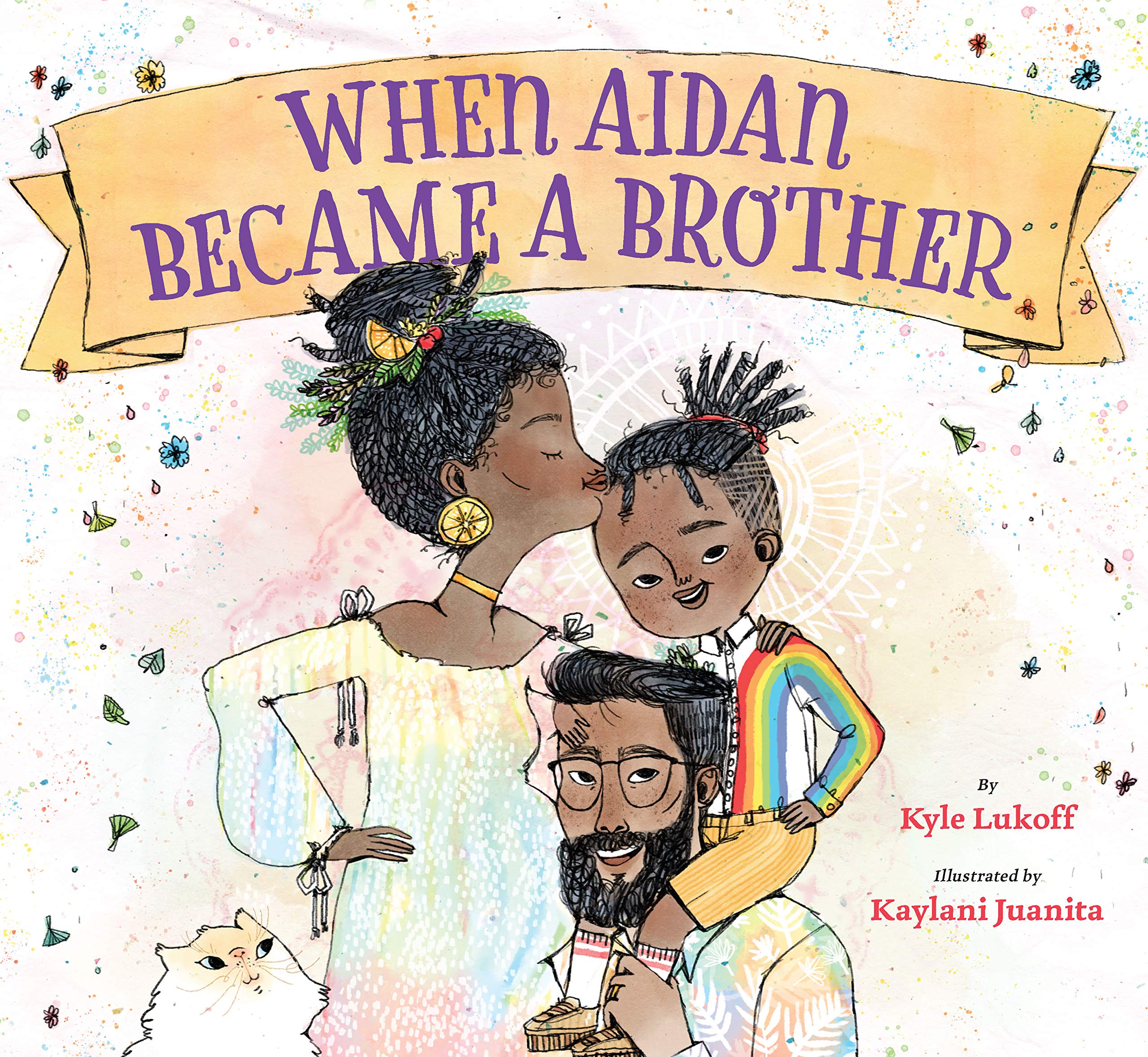
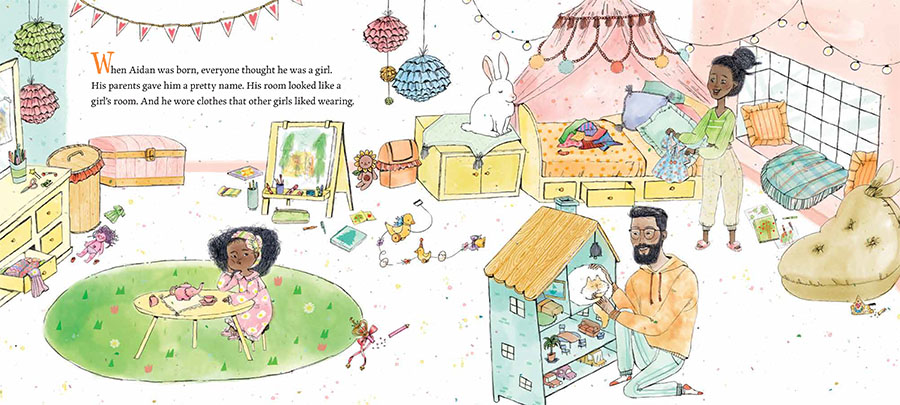
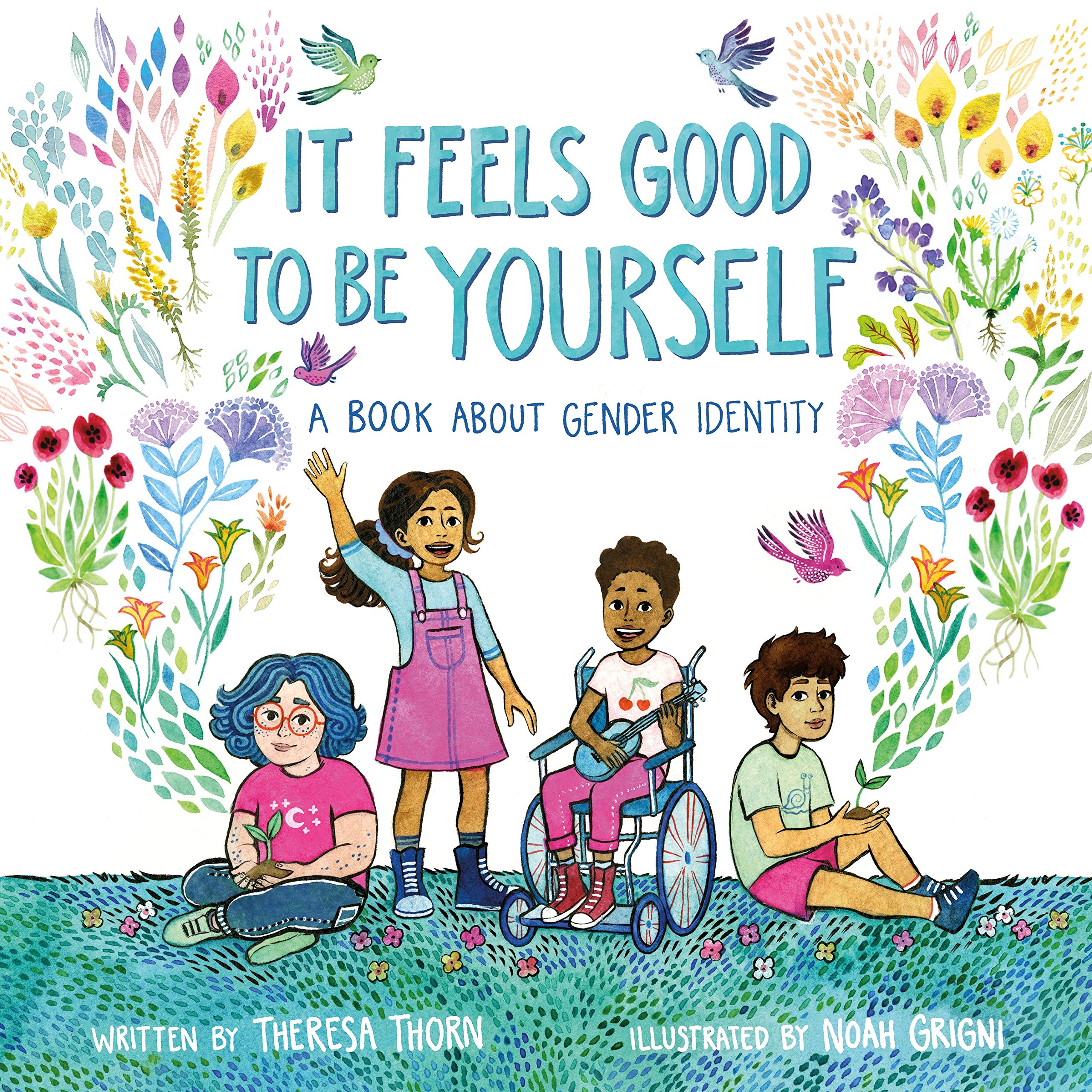
When Aidan Became a Brother by Kyle Lukoff, illustrated by Kaylani Juanita and It Feels Good to Be Yourself: A Book About Gender Identity by Theresa Thorn, illustrated by Noah Grigni

Published by Lee and Low Books

Image result for when aidan became a brother

Image result for when aidan became a brother


Published by Henry Holt and Co.

Image result for it feels good to be yourself amazon

Image result for it feels good to be yourself noah

Summary:  Aidan is concerned about the new baby that’s coming to his house.  Suppose his parents don’t recognize the new baby’s correct gender? That’s what happened to Aidan.  His parents thought he was a girl, and it took a few years to convince them that he was really a boy.  Finally, his mom reassures him: “We made some mistakes, but you helped us fix them. And you taught us how important it is to love someone for exactly who they are.  This baby is so lucky to have you, and so are we.” The gender of the baby is never revealed, but they are fortunate to have such a loving and accepting family. Families who may be struggling with acceptance could benefit from It Feels Good to Be Yourself, which defines the terms transgender, cisgender, and non-binary, giving examples of kids who describe themselves in each of these ways.  The conclusion here: “Your feelings about your gender are real. Listen to your heart. No matter what your gender identity is, you are okay exactly the way you are.”  32 pages (Aidan) and 40 pages; ages 4-8.

Pros:  Love and acceptance is good for everyone, and these two books help create more of it for kids and families who may be working through issues of gender identity.  

Cons:  There’s a certain free-to-be-you-and-me earnestness, particularly with It Feels Good to Be Yourself, which may feel dated when different gender identities become more a part of the culture.

If you would like to buy When Aidan Became a Brother, click here.

If you would like to buy It Feels Good to Be Yourself, click here.


Stonewall: A Building. An Uprising. A Revolution. by Rob Sanders, illustrated by Jamey Christoph

Published by Random House

Image result for stonewall christoph amazon

Image result for stonewall christoph amazon

Summary:  Narrated by the building that became Stonewall, this story begins in the 1840’s when the original structure was created to stable horses.  There’s a brief history of the building’s other incarnations and the evolution of Greenwich Village before reaching the 1960’s when the Stonewall Inn became a club for gay men and women, as well as for “teenagers, transgender people, drag queens, veterans, businesspeople, students, people of different colors, religions, and cultures”.  The club was raided regularly, and each time some of its clientele would be arrested, while the rest would quietly go home. But on the night of June 28, 1969, the angry crowd confronted the police, who were driven inside Stonewall until they could call in reinforcements. In the 50 years since that night, people have celebrated June 28 as the beginning of the movement for LGBQT+ rights.  Includes additional history and photos of the Stonewall Inn; an interview with activist and Stonewall Uprising participant Martin Boyce; a glossary; and a list for further reading. 40 pages; grades K-5.

Pros:  An excellent introduction to the Stonewall Uprising that emphasizes the importance of inclusivity through the story as well as with the gorgeous illustrations.  Using the building as a narrator is a perfect way to relate the entire history of the place, placing the night of June 28, 1969 in context.

Cons:  A few reviews I saw felt there was not enough inclusion of trans people in this telling; since I’m not familiar with the history, I can’t say if this is true or not.

If you would like to buy this book on Amazon, click here.


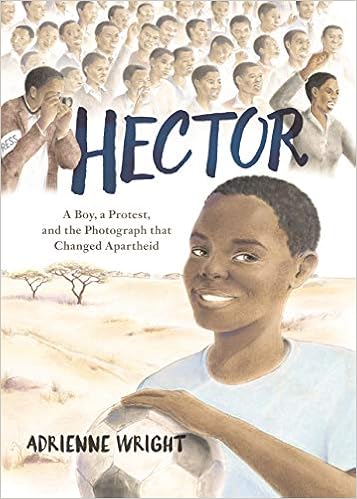
Hector: A Boy, A Protest, and the Photograph That Changed Apartheid by Adrienne Wright

Published by Page Street Kids

Image result for hector a boy a protest and the photograph that changed apartheid

Image result for hector a boy a protest and the photograph that changed apartheid

Summary:  In 1976, Hector Pieterson was an ordinary 12-year-old boy living in Soweto, South Africa.  He went to school, played soccer, did chores, and hung out with his friends. On June 16, he went to school like he did every day; when he got there, he discovered a student demonstration going on to protest a new law forcing them to have half their lessons in Afrikaans instead of English.  A single moment is shown from three different perspectives: Hector, his older sister Antoinette, and Sam Nzima, the photojournalist who took a picture of Hector getting shot by police. The police confiscated all the film, but Sam managed to hide a roll in his sock. His picture of Hector’s lifeless body appeared in The World newspaper the next day, ending Sam’s career, but opening up the eyes of the world to apartheid in South Africa.  48 pages; grades 3-8.

Pros:  I didn’t know this story, and was shocked when Hector was killed at the end of it, much as Hector’s family must have been shocked by the turn of events on June 16, 1976.  This is an important book for American kids, many of whom are probably unfamiliar with South African apartheid.

Cons:  It’s difficult to know what ages to recommend this for.  It definitely could be disturbing to younger kids, and would be best read with some adult discussion.

If you would like to buy this book on Amazon, click here.

Groundbreaking Guys: 40 Men Who Became Great By Doing Good by Stephanie True Peters, illustrated by Shamel Washington

Published by Little, Brown Books for Young Readers

Image result for groundbreaking guys

Summary:  From John Stuart Mill to Kendrick Lamar, these 40 men have become great by being good people.  As the author states in her introduction, “These men served their communities. They treated people with respect.  They lifted up others. They chose to listen and to care, even when doing so meant giving up control or feeling nervous or standing out.”  The men are from a variety of countries, mostly the United States and Great Britain, but also others like Japan, China, and Bangladesh. They contributed in all sorts of areas, including politics, literature, art, and music.  Some names will undoubtedly be familiar to readers, while others will be new, but all will inspire and possibly lead to further research. Includes source notes for each subject. 96 pages; grades 3-7.

Pros:  There have been a lot of collective biographies of women lately, so it’s nice to see this collection of interesting men, particularly with the theme of men who contributed positively to the world.  Each profile has a head shot of the subject. The interesting profiles and endnotes would make this a great resource to begin a biography research project.

Cons:  A timeline would have been a nice addition.

If you would like to buy this book on Amazon, click here.

Enemy Child: The Story of Norman Mineta, a boy imprisoned in a Japanese American internment camp during World War II by Andrea Warren

Published by Margaret Ferguson Books

Image result for enemy child andrea warren amazon

Summary:  Norman Mineta spent his first decade living a happy middle class life with his family in San Jose.  His father sold insurance and his mother was a housewife. Both his parents were born in Japan, but second-generation Norm felt very much an American.  After World War II started, though, all Japanese Americans were seen as suspect, and in May of 1942, the Mineta family was forced to leave behind their home and business for the Heart Mountain Internment Camp in Wyoming.  They were more fortunate than most: Norm’s father eventually got a job in Chicago, and after a little over a year in the camp, the family was able to relocate there. They rented their San Jose house, and moved back at the end of the war.  During his time at the camp, Norm met a local boy named Alan Simpson at a Boy Scout gathering; the two became friends, and later reunited when both served in Congress as adults. Extensive back matter tells more about the Japanese American experience during World War II and lists many resources for further research.  224 pages; grades 5-8.

Pros:  The story of Norm’s journey from a seemingly all-American childhood to being held prisoner by his own country is an eye-opening one that is told in terms many young readers will relate to.  The Mineta family’s unwavering optimism and courage is inspiring.  Andrea Warren should receive some Sibert award consideration.

Cons:  It would have been interesting and informative to hear more details about some of the Japanese American families who didn’t fare so well at the end of the war.

If you would like to buy this book on Amazon, click here.

Bilal Cooks Daal by Aisha Saeed, illustrated by Anoosha Syed

Published by Salaam Reads/Simon and Schuster

Image result for bilal cooks daal

Image result for bilal cooks daal

Summary:  Bilal invites his friends over for dinner to sample some of the daal his father  is cooking.  The kids help get things started, but when his friends think the ingredients look and smell funny, Bilal is worried. Dad starts the cooking, then tells them to go outside to play, as it will take a long time.  They have fun together playing hopscotch, swimming, and hiking, but after each activity, they stop back at Bilal’s to check on the daal, only to hear “Daal takes time”. Finally, as the sun sets, the daal is almost ready.  It’s time for Dad and the kids to add some herbs and spices, then sit down to eat it with some naan and rice.  Bilal can breathe a sigh of relief as his friends dig in and give the dinner two thumbs up. Includes an author’s note and recipe for chana daal.  40 pages; ages 4-8.

Pros:  Suffice it to say that this very cute book has inspired me to plan on trying out the recipe myself next week.

Cons:  The recipe doesn’t specify how many servings it makes.  I may be eating daal all week.

If you would like to buy this book on Amazon, click here.

You Are Home: An Ode to the National Parks by Evan Turk

Published by Atheneum

Image result for you are home turk

Image result for you are home turk

Summary:  “To the chipmunk in her burrow, sleeping beneath the leaves to keep warm; to the resilient bison in the steaming oases of of an endless winter: you are home.”  Evan Turk goes on to welcome animals and humans from all over America to more than 20  national parks: children in the city, children on farms, children who have just arrived to the United States, as well as those whose ancestors predated the United States by centuries are all welcomed.  The accompanying illustrations show scenes from the parks, each one captioned with a small label to identify it. The author’s note tells more about the history and importance of the parks, as well as the need for changes to preserve them going forward. There’s also a note about the art that encourages kids to experience some of the parks by creating art in them.  56 pages; ages 5 and up.

Pros:  This touching and beautiful ode to America’s national parks would make a perfect read for Independence Day, and is sure to inspire readers of all ages to spend some time in a national park or two this summer.  A Caldecott contender for sure.

Cons:  I guess the word “ode” in the title should have tipped me off, but I was hoping for more travel guide type information about each park.

If you would like to buy this book on Amazon, click here.

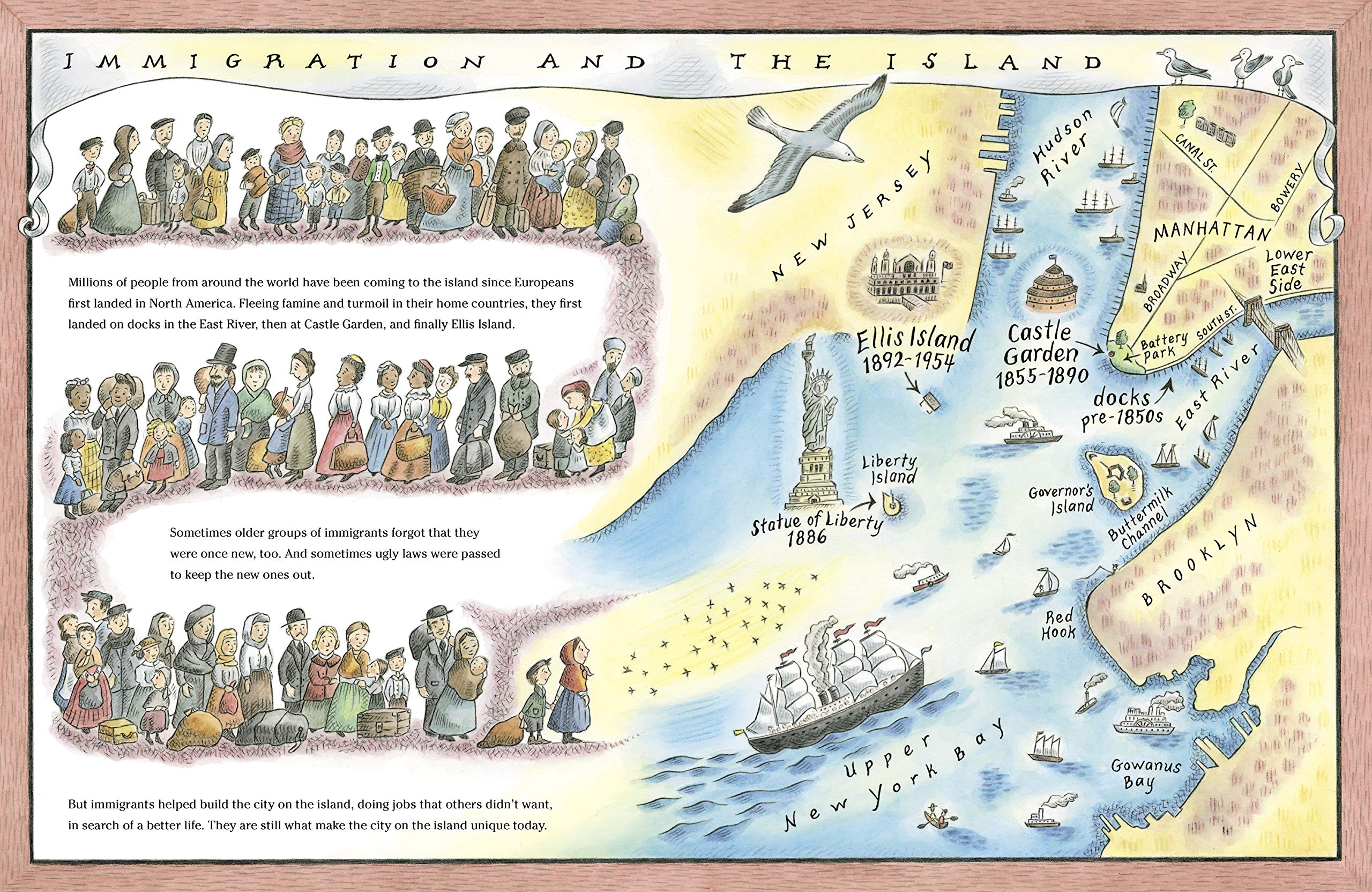
Crossing on Time: Steam Engines, Fast Ships, and A Journey to the New World by David Macaulay

Published by Roaring Brook Press

Image result for crossing on time macaulay amazon

Image result for crossing on time macaulay

Summary:  In September of 1957, David Macaulay left with his mother, sister, and brother to travel to America, where his father had been offered a new job.  Their mode of transportation was the SS United States, the fastest, most advanced steamship ever built.  Macaulay starts the story with himself at age 10 getting ready to go to America, then goes back to the 18th century and traces the history of steam power and the steamship.  The text is illustrated with his trademark detailed, technical drawings illuminating each page, including a six-panel foldout cutaway of the United States with 100 labeled parts.  The last chapter tells about his family’s journey and their move to New Jersey.  Includes an afterword, a timeline, and a list of selected reading. 128 pages; grades 5-8.

Pros:  If you’re interested in engineering, you will never go wrong with David Macaulay.  The personal connection to his family made the story interesting to non-techies like myself.  The illustrations range from amazing to truly mind-boggling, like the one of the ship described above.

Cons:  It will take a pretty dedicated shipping enthusiast to get through all the details in the text.

If you would like to buy this book on Amazon, click here.