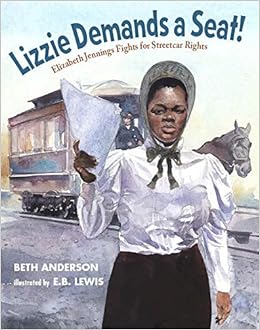
Lizzie Demands A Seat! Elizabeth Jennings Fights for Streetcar Rights by Beth Anderson, illustrated by E. B. Lewis

Published by Calkins Creek

Image result for lizzie demands a seat

Image result for lizzie demands a seat

Summary:  When Lizzie Jennings was denied admission onto a New York City “Whites Only” streetcar in 1854, she stood her ground, refusing to leave until she was forcibly thrown off by the driver and conductor.  Lizzie was a teacher whose parents were abolitionists. When she told the people of her church what had happened, they hired a lawyer and formed a committee to make sure she had plenty of support. Her case became Elizabeth Jennings v. The Third Avenue Railroad Company, and she was represented by Chester A. Arthur, who went on to become President of the United States.  Lizzie won her case, and the “Colored People Allowed on This Car” came off the Third Avenue streetcars.  Others were inspired by her courage, and continued the fight against segregated public transportation, including, a century later, Rosa Parks.  Includes a lengthy author’s note with additional information and photos; and an extensive bibliography. 32 pages; grades 1-5.

Pros:  A fascinating and little-known story about an ordinary person whose courageous deeds led to real change.  Caldecott honoree E. B. Lewis’s colorful paintings complement the story perfectly.  

Cons:  It would have been nice to tie this to the more familiar story of Rosa Parks, either through the text or the illustrations.

If you would like to buy this book on Amazon, click here.

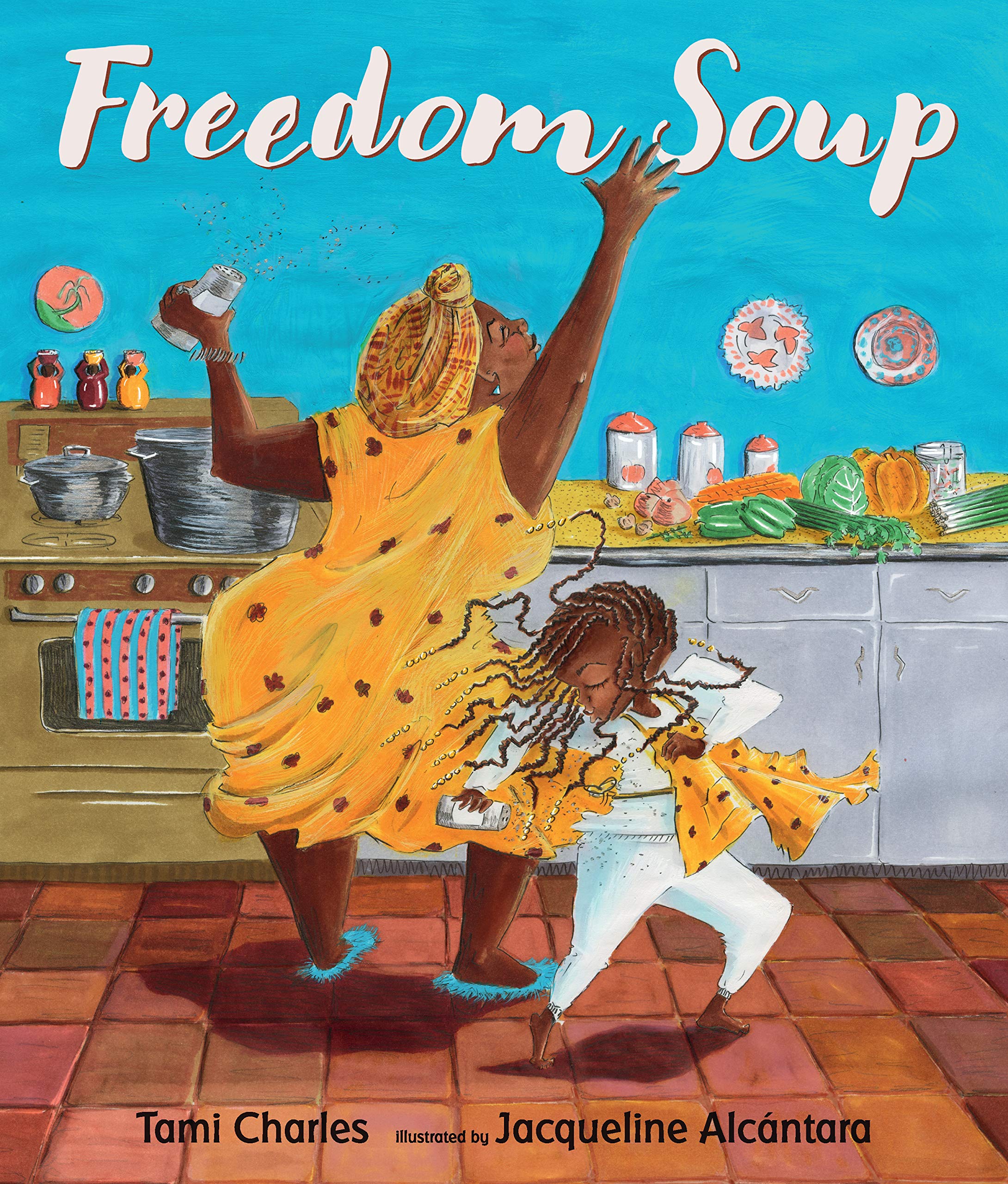
Freedom Soup by Tami Charles, illustrated by Jacqueline Alcántara

Published by Candlewick

Image result for freedom soup tami charles

Summary:  The girl telling the story is excited that her grandmother has invited her to help make the soup for New Year’s Day.  The name of the soup is Freedom Soup, and making it inspires Ti Gran to tell the story of Haiti, and how the slave revolt there led to freedom for their ancestors.  The story has been passed down from Ti Gran’s mother and grandmother, and both the girl and Ti Gran like the idea that she will someday pass it along to her own children and grandchildren.  When the soup is done, it’s time to share it with the family, and everyone enjoys it to the last drop as they celebrate a new year. Includes an author’s note with additional information about Haiti and the author’s own grandmother and a recipe for Freedom Soup.  32 pages; ages 4-9.

Pros:  A perfect way to celebrate New Year’s and effortlessly learn something about history and cooking in the process.  The vibrant illustrations make the story come alive.

Cons:  The recipe is billed as “kid-friendly”, but there’s a pretty long list of ingredients and will definitely require a good deal of adult help.

If you would like to buy this book on Amazon, click here.
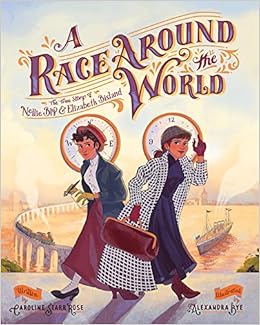
A Race Around the World: The True Story of Nellie Bly and Elizabeth Bisland by Caroline Starr Rose, illustrated by Alexandra Bye

Published by Albert Whitman and Co.

Image result for race around the world caroline starr

Image result for race around the world alexandra bye

Summary:  In 1889, reporter Nellie Bly declared she could travel around the world in 75 days.  She convinced her boss at the New York World to let her try, and on November 14, she set off from New Jersey.  When Elizabeth Bisland’s boss at Cosmopolitan magazine read about her trip, he convinced her to take a train to San Francisco that night and try to beat Bly back to New York.  The two women, traveling in opposite directions, took trains and ships from one destination to the next, as readers followed their adventures.  Nellie returned on January 25, 1890, to cheering crowds and a ten-cannon salute. Elizabeth made it back on January 30 to a much smaller crowd. But both women had made it in under 80 days, breaking the previous record.  Elizabeth, who had been something of a homebody before, traveled and wrote for the rest of her days. Includes an author’s note and three additional sources. 32 pages; grades K-4.

Pros:  My daughter loved Nellie Bly when she was younger.  Come to think of it, I wrote in my eighth grade diary that I wanted to be a reporter like Nellie after reading how she went undercover to report on insane asylums.  So I know Nellie’s story is captivating to kids.  I didn’t know about Elizabeth Bisland, but it makes a great tale to follow both women’s adventures as they hurried around the world.

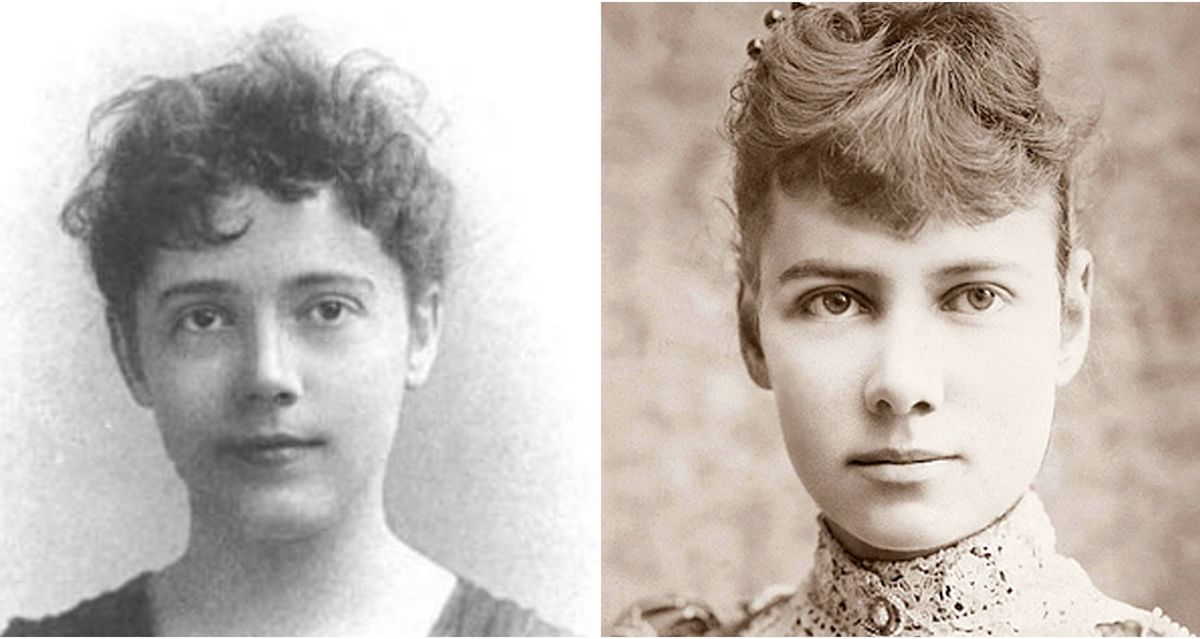
Cons:  Photos and/or more research material would have made a nice addition, so here’s one for you now.  Elizabeth is on the left, Nellie on the right.

Image result for elizabeth bisland nellie bly photo

If you would like to buy this book on Amazon, click here.
 

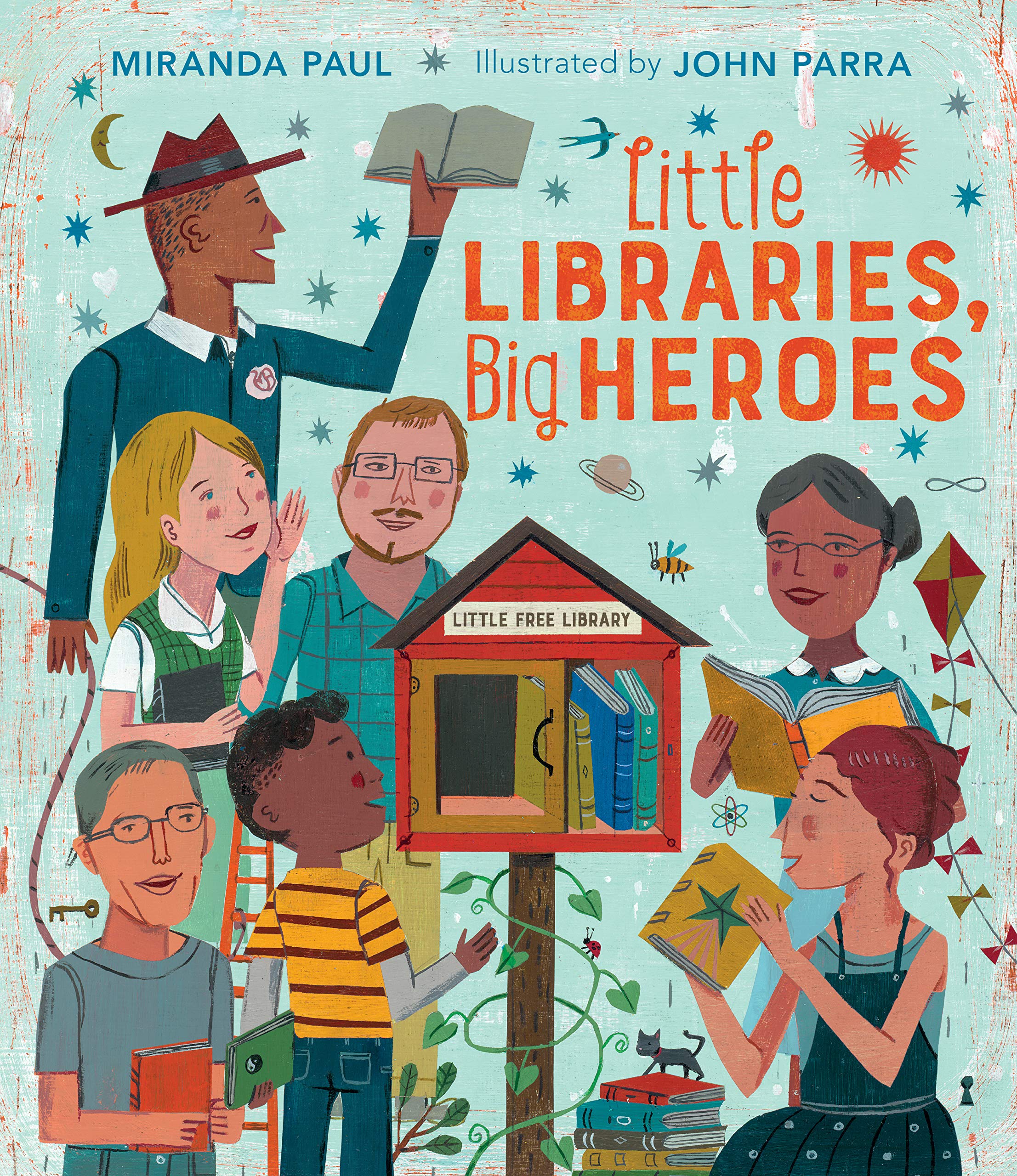
Little Libraries, Big Heroes by Miranda Paul, illustrated by John Parra

Published by Clarion Books

Image result for little libraries big heroes

Image result for little libraries big heroes

Summary:  Even when Todd struggled in school, his mom told him he could be whatever he wanted to be.  After she died, he remembered her teaching neighborhood kids to read and decided to build a box shaped like a small schoolhouse and fill it with books.  His neighbors noticed it during a yard sale, and their enthusiasm inspired Todd to build more boxes. When sales remained flat, Todd and his friend Rick traveled around the midwest, planting boxes in Wisconsin, Illinois, and Minnesota.  Their efforts made the news, and little libraries became a big thing. There are now libraries all over the U.S. and around the world. Todd was a hero, the people who were inspired by his idea are heroes, and maybe one day you will start a little library and be a hero too.  Includes an author’s note and additional sources of information. 40 pages; grades 1-4.

Pros:  I always enjoy Miranda Paul’s inspiring nonfiction picture books, and I like how this one emphasizes that even ordinary people can become heroes.  Readers will come away with an idea of something they can do today to help others.

Cons:  You’d think I would be all over the little library idea, but somehow it has never really grabbed me.  Guess I just prefer big libraries.

If you would like to buy this book on Amazon, click here.
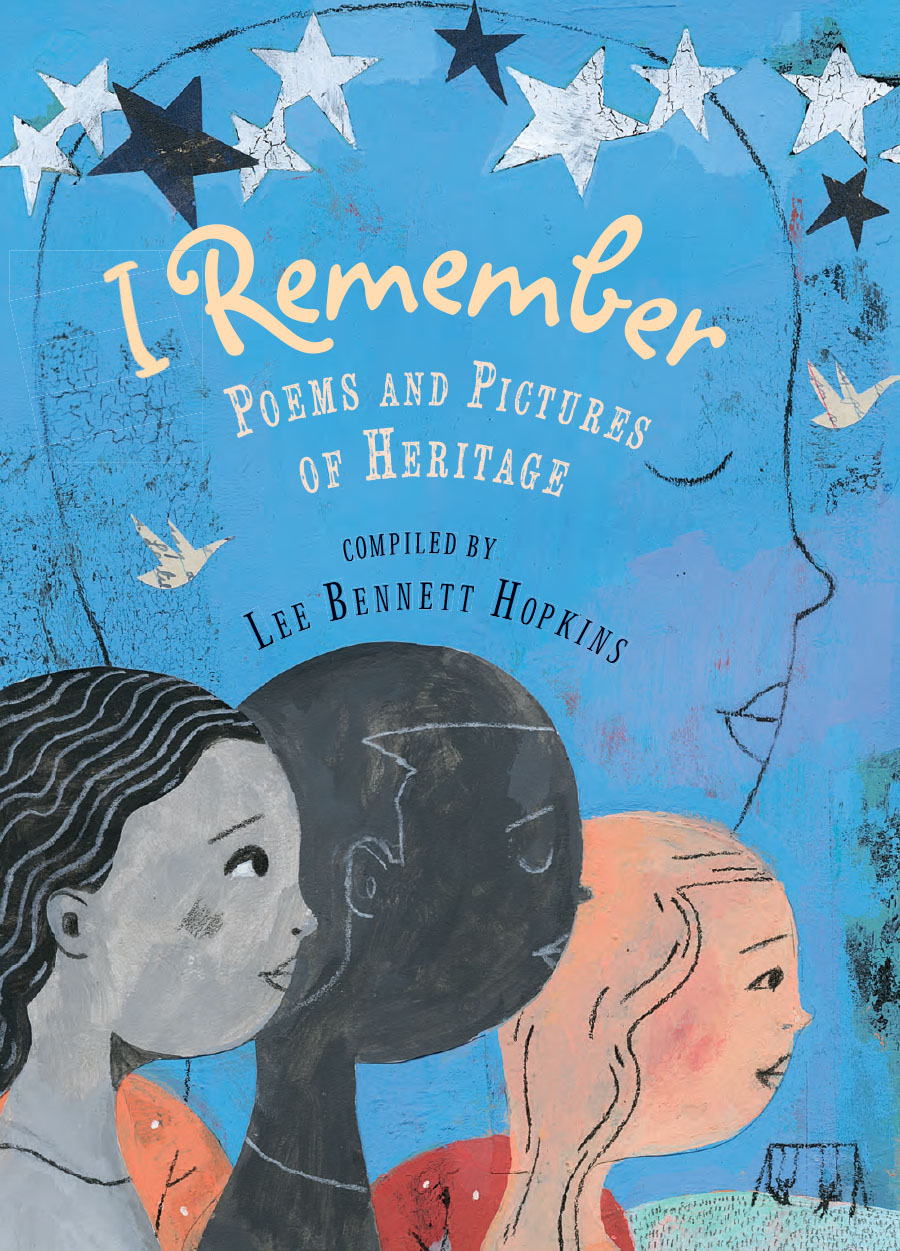
I Remember: Poems and Pictures of Heritage compiled by Lee Bennett Hopkins

Published by Lee and Low Books

Image result for i remember poems and pictures of heritage lee bennett

Image result for i remember poems and pictures of heritage lee bennett

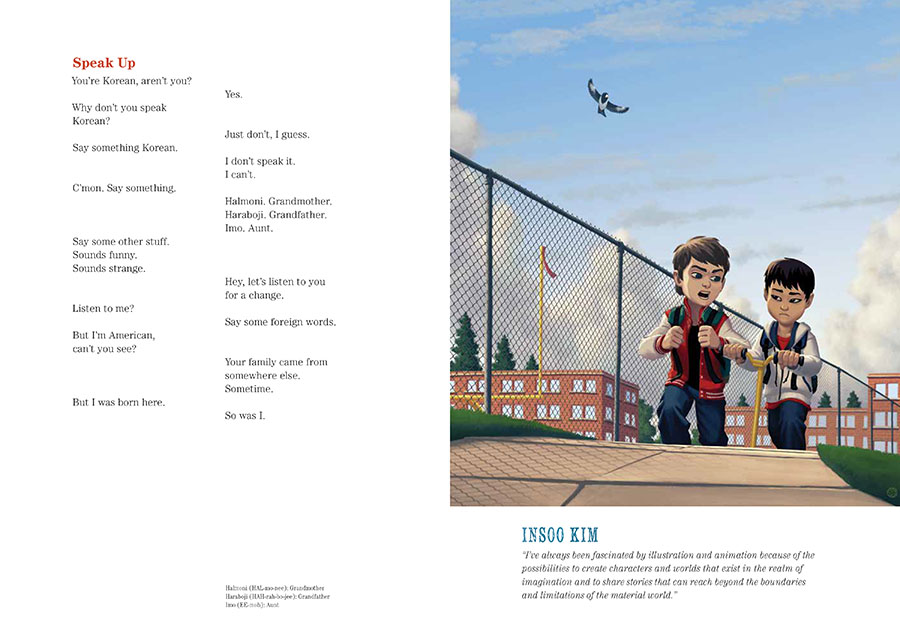
Summary:  Fourteen poets have written childhood remembrances, with an emphasis on their cultural heritage and how it shaped them.  Each poem is illustrated by a different artist, and every artist and poet has written a sentence or two about their art or writing.  Some (“Grandpa” by Douglas Florian; “Amazing Auntie Anne” by Cynthia Leitich Smith) celebrate a person; others (“Route 66” by Marilyn Nelson; “Tepechapa River” by Jorge Tetl Argueta), a particular place; and still others (“Speak Up” by Janet S. Wong; “Pick One” by Nick Bruel) speak to the experience of growing up as an immigrant in America.  Includes brief biographical information and photos of all the writers and illustrators. 56 pages; grades 3-7.

Pros:  This beautiful and accessible collection of poetry and artwork shows readers the variety of experiences in America and may inspire them to find a way to express their own story through writing or art.

Cons:  The cover and title didn’t really grab me (sorry, Sean Qualls, I generally love your work); I was pleasantly surprised once I dove in.  

If you would like to buy this book on Amazon, click here.


If you would like to buy this book on Amazon, click here.
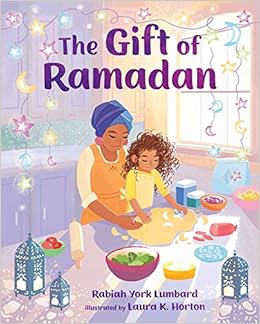
The Gift of Ramadan by Rabiah York Lumbard, illustrated by Laura K. Horton

Published by Albert Whitman and Co.

Image result for gift of ramadan amazon

Summary:  When Sophie’s grandmother tells her that the heart of a person who fasts during Ramadan is “pretty and sparkly” like Sophie’s new ring, Sophie decides she wants to fast.  Waking up before sunrise is tough, though, and Sophie falls asleep at breakfast, and again during morning prayers. By lunchtime, she is famished, and her little brother is tempting her with his delicious cookie.  Grandma finds her eating cookies, and reassures her that her sparkles are growing, and that there are other ways to celebrate the holiday. She and Grandma spend the afternoon preparing a pizza dinner, which the whole family enjoys after sunset.  Includes an author’s note about Ramadan. 32 pages; ages 4-9.

Pros:  Children of all faiths will connect with this story, and those who don’t know about Ramadan will learn about it through the eyes of another child who is a lot like them.  

Cons:  The reasons for fasting during Ramadan aren’t explained in either the story or the author’s note.

If you would like to buy this book on Amazon, click here.
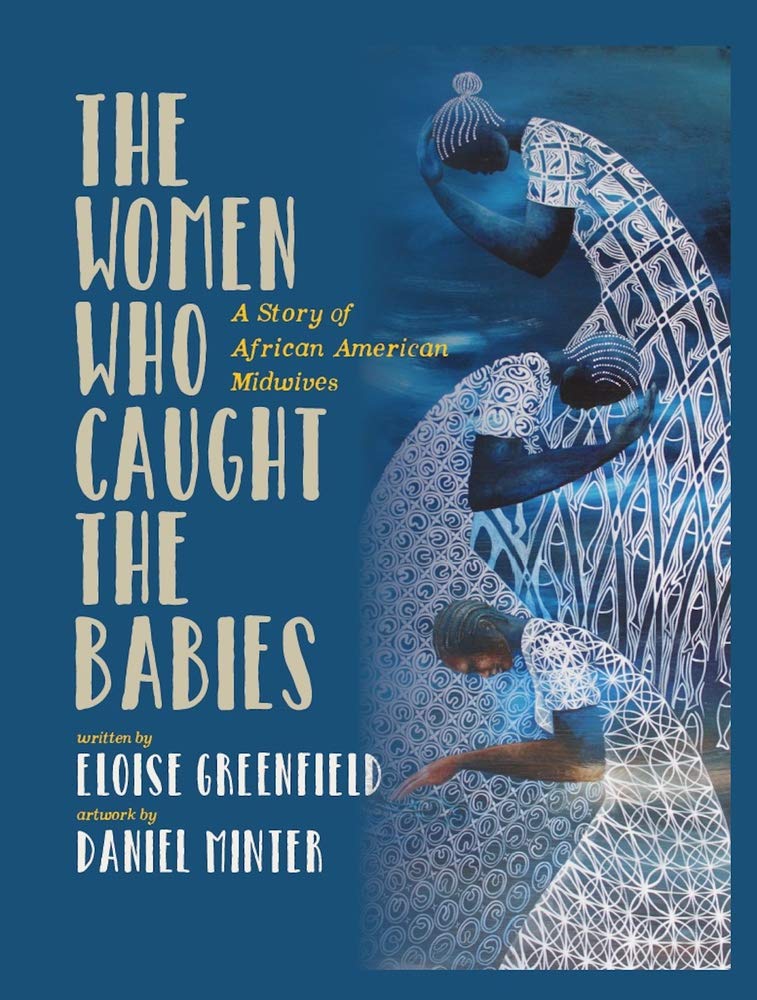
The Women Who Caught the Babies:  A Story of African American Midwives by Eloise Greenfield, illustrated by Daniel Minter

Published by Alazar Press

Image result for women who caught the babies minter

Summary:  Eloise Greenfield kicks things off with a five-page introduction giving a brief history of midwives, starting in Africa a few hundred years ago, traveling to slavery in America, and finishing up with midwives today.  This section is illustrated with black and white photographs. The rest of the book is her poetry, celebrating midwives of the past and present. There are seven poems altogether, from “Africa to America” to “After Emancipation, 1863” to “The Early 2000s”.  The final piece, “Miss Rovenia Mayo” is about the midwife who “caught” Eloise Greenfield on May 17, 1929. Includes a bibliography. 32 pages; grades 3-7.

Pros:  We should all hope to be producing works of art like this at the age of 90.  The poetry is lyrical and the illustrations are unique and fascinating. The Caldecott committee can add this to its list of works to consider, along with another Daniel Minter book, Going Down Home With Daddy.

Cons:  This doesn’t seem like a book most kids will pick up on their own. 

If you would like to buy this book on Amazon, click here.

Torpedoed: The True Story of the World War II Sinking of the “The Children’s Ship” by Deborah Heiligman

Published by Henry Holt and Co.

Image result for torpedoed heiligman"

Summary:  On September, 1940, the ship SS City of Benares left England, bound for Canada.  On board were 90 children traveling as part of the Children’s Overseas Reception Board (CORB) program, which evacuated British children to safer countries.  A few days into their journey, the ship was torpedoed by a German submarine, and sank in about half an hour. Of the 90 children, only 17 survived. Most were picked up the next day, but due to a miscalculation, Lifeboat 12 was missed by the rescuers and was adrift for eight days before finally being spotted by a plane (a story told in verse by Susan Hood in 2018’s Lifeboat 12).  The survivors returned to England, and CORB suspended operations after this tragedy.  Includes a list of all those who died, as well as a lengthy bibliography and index. 304 pages; grades 5-8.

Pros:  I started reading this with trepidation, as I’m not crazy about reading about disasters at sea (no more Titanic books, please).  I kept flipping between the narrative and the list of those who died, and I could tell the outlook for most was not good.  Once the torpedoes hit, though, I couldn’t put the book down. The storytelling is masterful, following the narratives of so many different children and the adults who traveled with them.  I saw this on a Newbery prediction list.  I’d be surprised if it got a Newbery, but I could definitely see a Sibert award.

Cons:  As mentioned above, reading about the drowning deaths of 73 children isn’t really my favorite pastime.

If you would like to buy this book on Amazon, click here.
 

Fever Year: The Killer Flu of 1918 by Don Brown

Published by HMH Books for Young Readers

Image result for fever year don brown

Image result for fever year don brown

Summary:  Using a graphic novel format, Don Brown tells the story of the flu epidemic of 1918 and how it spread across the United States and around the globe.  The tale is told in three acts: January-July 1918 when the epidemic began; August-December 1918 when it raged full force; and 1919 when it came back to life, sickening, among others, President Woodrow Wilson at an important peace conference in Paris.  The text is brief, but covers many different aspects of the epidemic, including the spread and death toll, the importance and shortage of nurses, how different cities reacted when the flu hit them, and scientists’ attempts to figure out what was causing the disease.  The book concludes with recent scientists’ experiments that lead to the revival of the virus which had been preserved in the lung tissues of one of its victims, and questions as to the ethics of such work. Includes a five-page bibliography. 96 pages; grades 5-8.

Pros:  Don Brown packs a lot of information into fewer than 100 pages, in a format that will appeal to many readers.  Fans of Nathan Hale’s Hazardous Tales may enjoy this, as well as other graphic history books by Brown.

Cons:  All the reviews I saw recommended this for grades 7 and up, but I feel like there’s no reason not to suggest it to fifth and sixth grade history buffs.  True, it’s a story of disease, pestilence, and death, but nothing that I would consider inappropriate for kids 10 and up.

If you would like to buy this book on Amazon, click here.
Just Ask! Be Different, Be Brave, Be You by Sonia Sotomayor, illustrated by Rafael López

Published by Philomel Books

Image result for just ask be different be brave be you

Image result for just ask be different be brave be you

Summary:  Supreme Court Justice Sonia Sotomayor begins the book by telling her own story, how she was diagnosed with juvenile diabetes at the age of 7.  She sometimes felt self-conscious when she had to give herself insulin injections around others. Although she felt like other kids were curious, no one ever asked her about what she was doing.  She encourages readers to ask questions if they want to know about something they don’t understand. The book then looks at kids planting a garden; just like the plants in the garden, each child is different in some way: one is blind, one is in a wheelchair, two have different forms of autism, and so on.  Each child tells a little about himself or herself, then asks a question like, “Do you ever take medicine to be healthy?” or “How do you use your senses?” Sonia finishes up by celebrating everyone’s abilities, and how all the differences make the world a more interesting place. Her final question is, “What will you do with your powers?”  Also available in a Spanish-language edition, ¡Solo Pregunta! 32 pages; ages 4-8.

Pros:  This is a great introduction to a wide range of conditions that affect many different kids.  The tone is accepting and celebrating, and it’s a nice way to encourage children to talk to each other about differences in a respectful way.  The illustrations are gorgeous, showing a diverse group of children frolicking around a beautiful garden.

Cons:  I wish there had been more specifics about how a child (or adult) should ask someone about a physical difference.

Image result for solo pregunta sotomayor

If you would like to buy the English edition on Amazon, click here.

If you would like to buy the Spanish edition on Amazon, click here.