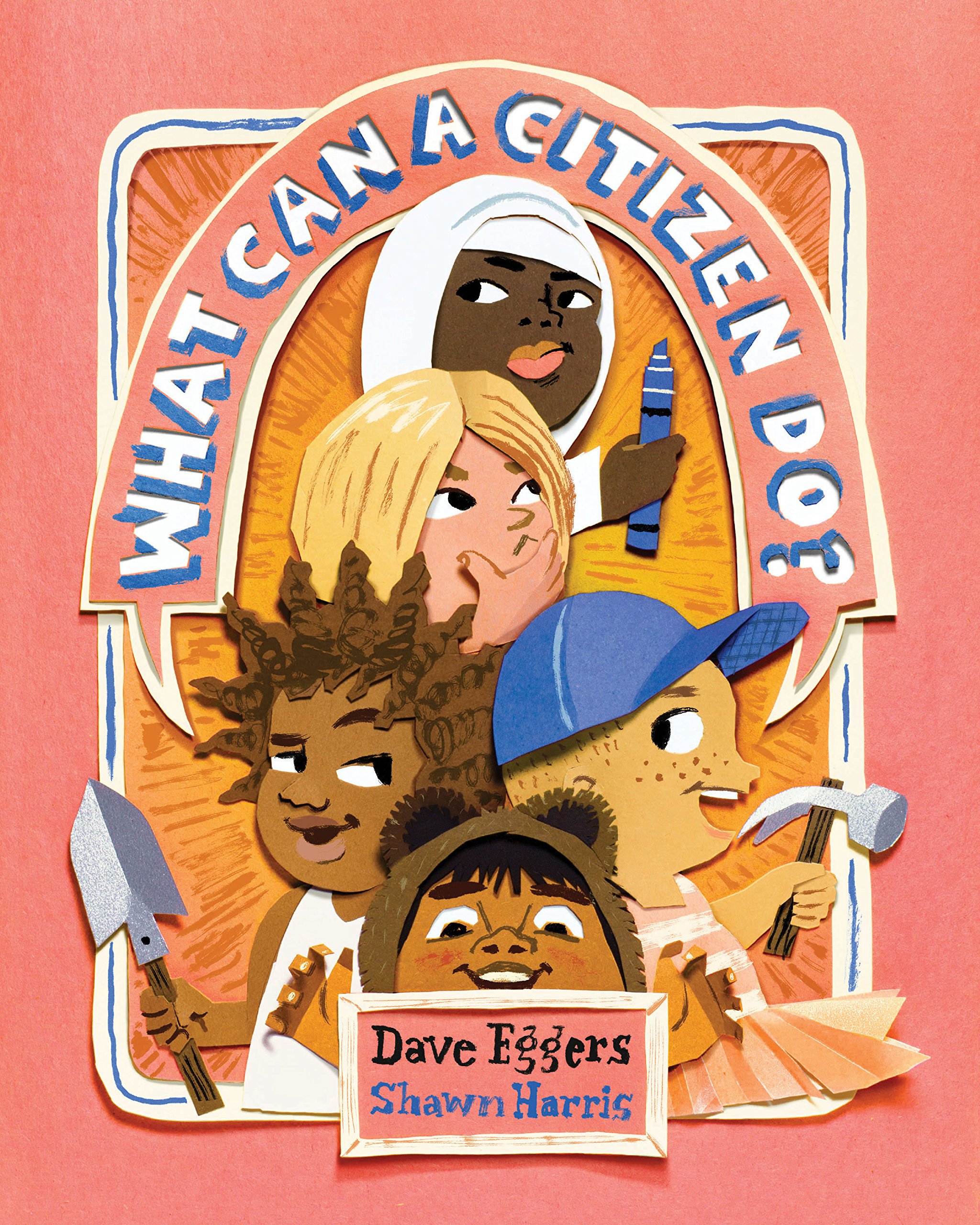
What Can a Citizen Do? By Dave Eggers, illustrated by Shawn Harris

Published by Chronicle Books

Image result for what can a citizen do eggers amazon

Image result for what can a citizen do eggers amazon

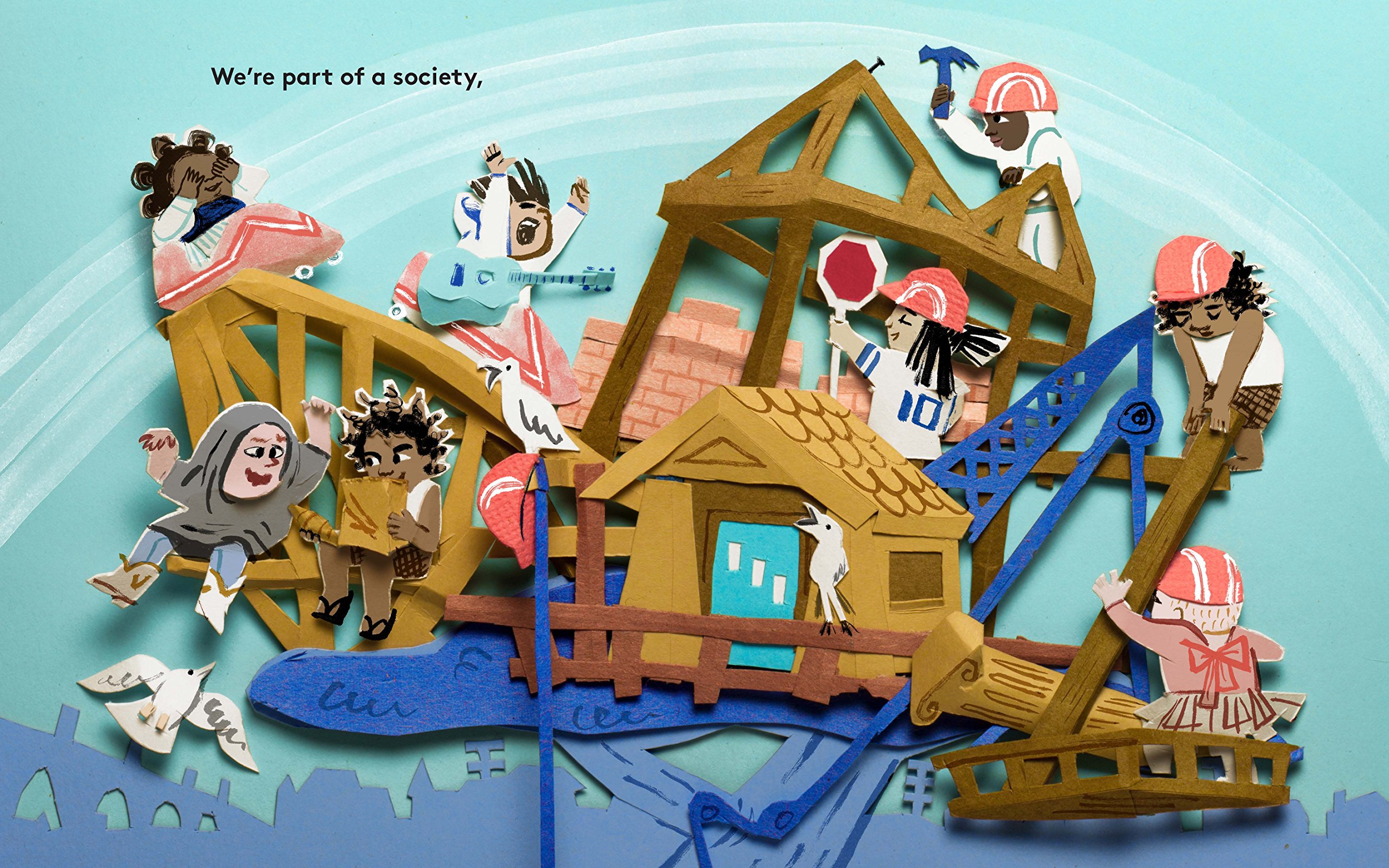
Summary:  The team that brought us Her Right Foot takes a look at the rights and responsibilities of citizenship.  The rhyming text is simple, emphasizing the importance of helping others and working to make a better society.  Suggestions include helping a neighbor, joining a cause, writing a letter, and the generic “righting a wrong”. There may be a sly political message in the “No Trumpets” sign in a couple of the illustrations.  The conclusion? “So forget yourself a second/Grab a shovel or a pen/Do something for another./Don’t you dare doubt that you can!/Everything makes an impact/on a bigger big than you./And it all starts with the question:/What can a citizen do?”  40 pages; ages 4-8.

Pros:  A basic introduction to civics for preschool and primary students.  The illustrations are the star of the show here, with a diverse cast of kid characters portrayed in collage illustrations that seem to pop out of the page.  

Cons:  If ever a book cried out for back matter, this is it.  What is a citizen? What are some specific actions citizens can take?  Definitely some missed opportunities here, particularly after the thought-provoking Her Right Foot.

If you would like to buy this book on Amazon, click here.


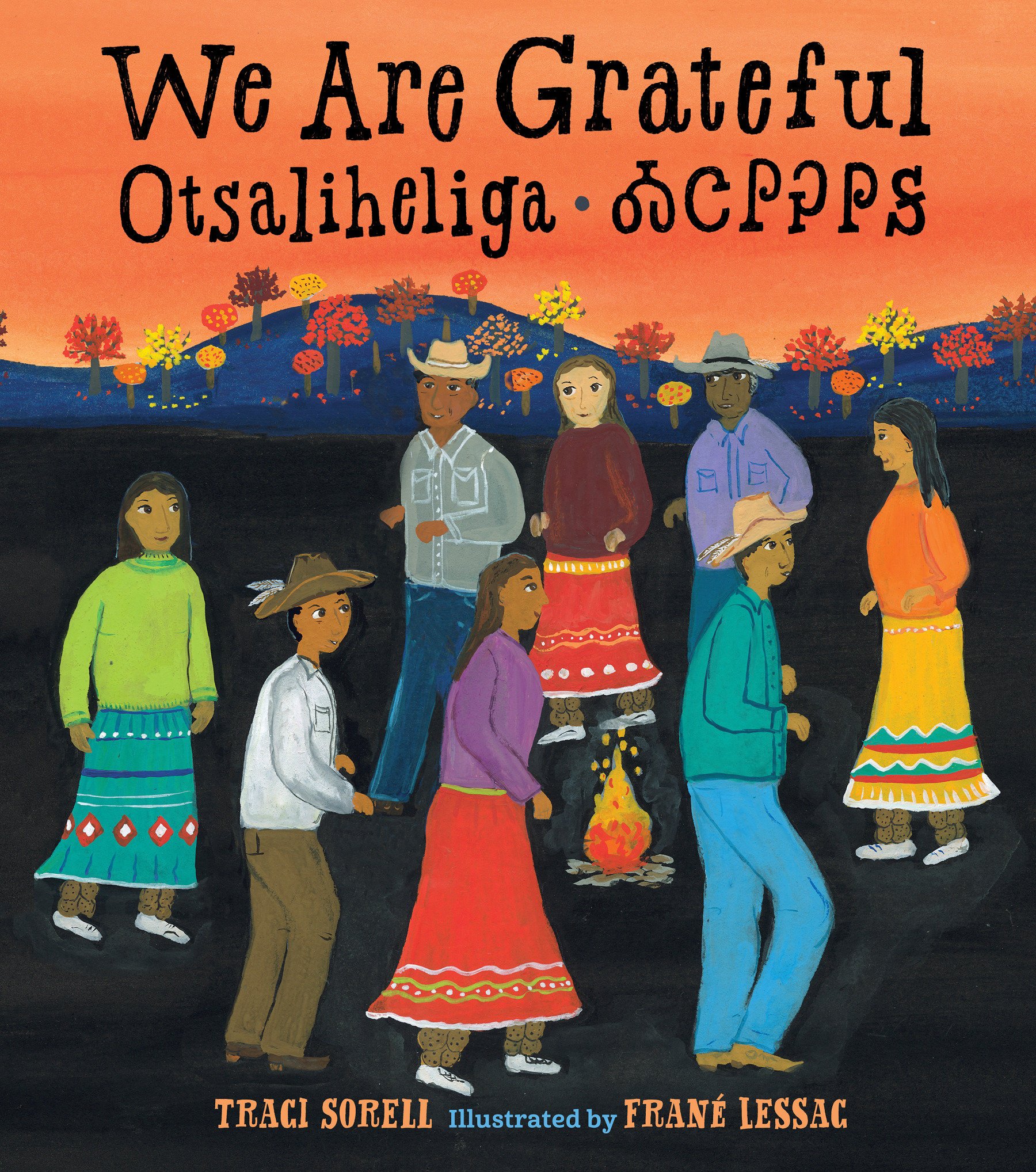
We Are Grateful: Otsaliheliga by Traci Sorell, illustrated by Frane Lessac

Published by Charlesbridge

Image result for we are grateful otsaliheliga amazon

Image result for we are grateful sorell

Summary:  “Cherokee people say otsaliheliga to express gratitude.  It is a reminder to celebrate our blessings and reflect on struggles–daily, throughout the year, and across the seasons.”  With each season, the Cherokee people in this book are grateful, whether it is for food or community or festivals or family.  People are shown creating traditional crafts, celebrating life and death, eating, playing, and remembering their people’s history and how it is woven into the history of the United States.  Cherokee words and their pronunciations are scattered throughout the text. End matter includes a glossary, an author’s note, and a Cherokee syllabary with some lessons about the Cherokee language.  32 pages; ages 4-8.

Pros:  A beautiful book that would make an interesting harvest time supplement to Thanksgiving reading.  I loved the bright folk art style illustrations.

Cons:  After studying the Cherokee syllabary, I think I can safely cross learning that language off my bucket list.

If you would like to buy this book on Amazon, click here.

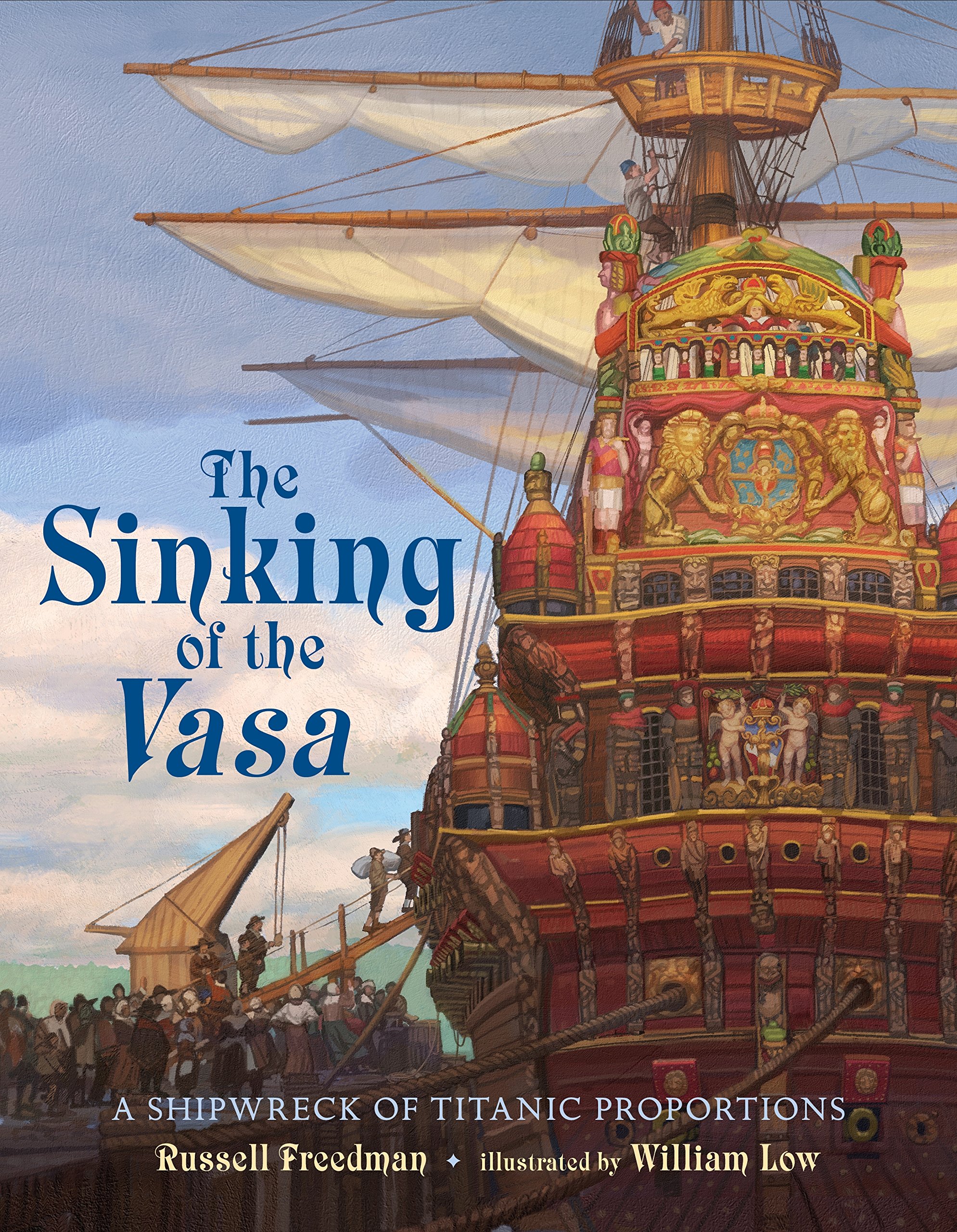
The Sinking of the Vasa: A Shipwreck of Titanic Proportions by Russell Freedman, illustrated by William Low

Published by Henry Holt and Company

Image result for sinking of the vasa amazon

Summary:  On August 10, 1628, the warship Vasa set sail, the flagship of the Swedish navy, commissioned by the king and two years in the making.  The crew was on board with their families; to their horror, a wind blew that ship over less than a mile into the voyage, sinking it and killing many men, women, and children.  An investigation ensued, and several theories were put forth, but the cause of the accident was never determined. Centuries later, in 1956, the remains of the Vasa were discovered by Anders Franzen.  It took five years to figure out how to raise her, but this feat was accomplished on April 24, 1961.  Today the ship has been restored and is on display at the Vasa Museum in Stockholm, Sweden. Includes a list of sources. 44 pages; grades 1-5.

Pros:  Quite a bit shorter than Russell Freedman’s usual works (maybe because he passed away in March), this is nevertheless an interesting and well-researched story of a tragedy that will draw readers in.  The illustrations are sumptuous, particularly the large foldout page, and are done in a style appropriate for the period of the story.

Cons:  From the title, kids may be expecting a story more similar to the Titanic.  It would make an interesting compare/contrast exercise, though, for those familiar with that story.

If you would like to buy this book on Amazon, click here.

Spooked: How a Radio Broadcast and The War of the Worlds Sparked the 1938 Invasion of America by Gail Jarrow

Published by Calkins Creek

Image result for spooked jarrow amazon

Summary:  In chapter one, readers learn of a mysterious radio broadcast on October 30, 1938, reporting that the United States had been invaded and was quickly being destroyed.  They soon find out that this was actually a radio play based on H. G. Wells’ science fiction novel The War of the Worlds about invaders from Mars.  Orson Welles and his team at CBS radio’s Mercury Theater adapted the story to sound like it was actually happening, simulating broadcasts from New Jersey that broke into a musical program.  No one was prepared for the panic that ensued, as many people across America believed that the invasion was real. Jarrow reports on the variety of reactions, including letters and telegrams sent to CBS and Welles, some critical and others complimentary of the program.  She also looks at the exaggerated reporting that made it sound as though the panic was much more widespread than it actually was. Includes a timeline; information about other hoaxes; links to the original broadcast, script, and other source materials; an author’s note; and source notes.  144 pages; grades 5-9.

Pros:  This well-researched book with lots of photos brings the events of October 30, 1938 to life and ties them into today’s world of fake news and Internet hoaxes.  

Cons:  The font was a little small.

If you would like to buy this book on Amazon, click here.

National Parks of the U.S.A. by Kate Siber, illustrated by Chris Turnham

Published by Wide Eyed Editions

Image result for national parks of the us kate amazon

Image result for national parks of the u.s.a. turnham

Image result for national parks of the u.s.a. turnham

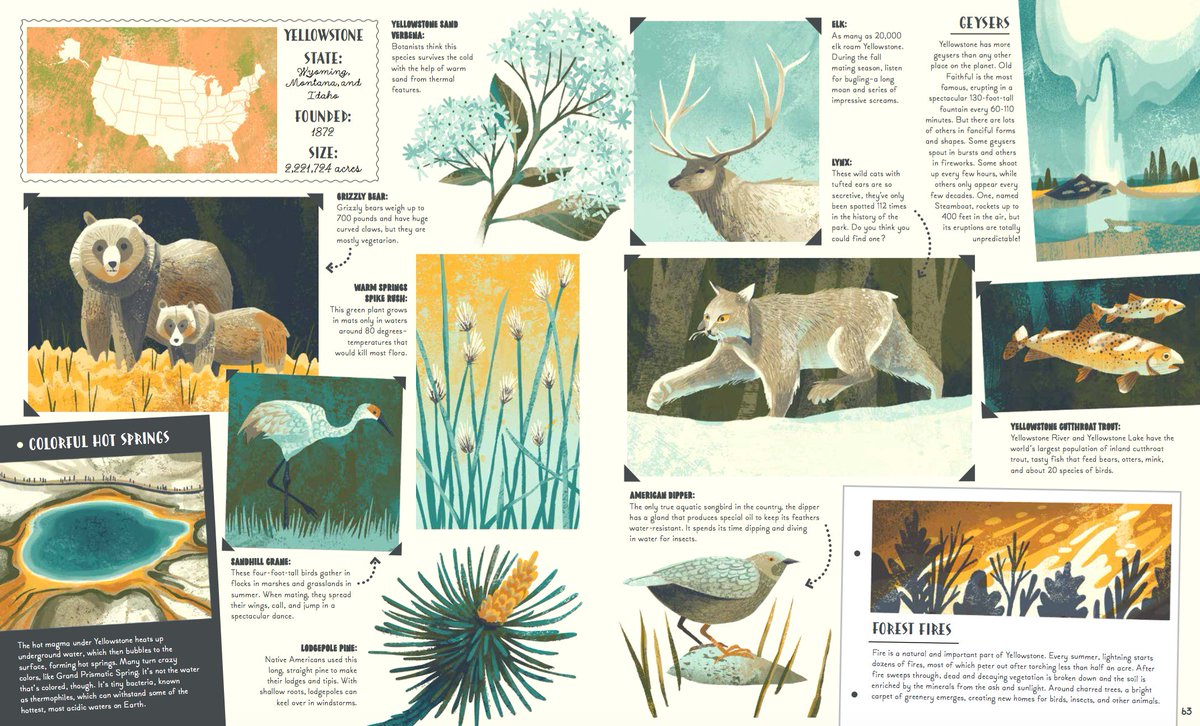
Summary:  This oversized guide to the national parks of the U.S. is divided into seven sections: Alaska, Tropics (Hawaii, the Virgin Islands, and American Samoa), West, Southwest, Rocky Mountains, Central, and East.  Each section starts with a map showing all the parks from that area, then gives more in-depth information (a two-page spread) on a few selected ones. These spreads include the location, date founded, size, and information about various plants and animals that can be found in the park.  Two pages at the end have an A-Z of wildlife: 26 plants and animals with a challenge to find which parks they are from. Also includes information on how to help protect the national parks and an extensive index. 112 pages; grades 1-7.

Pros:  It will take a pretty committed homebody to resist the urge to go exploring after perusing these pages.  The retro illustrations, oversized pages, and fascinating information make every park beckon to road trippers.

Cons:  For such a big book, some of the type is pretty tiny.

If you would like to buy this book on Amazon, click here.

Crescent Moons and Pointed Minarets: A Muslim Book of Shapes by Hena Khan, illustrated by Mehrdokht Amini

Published by Chronicle Books

Image result for crescent moons and pointed minarets

Image result for crescent moons and pointed minarets

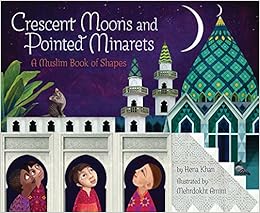
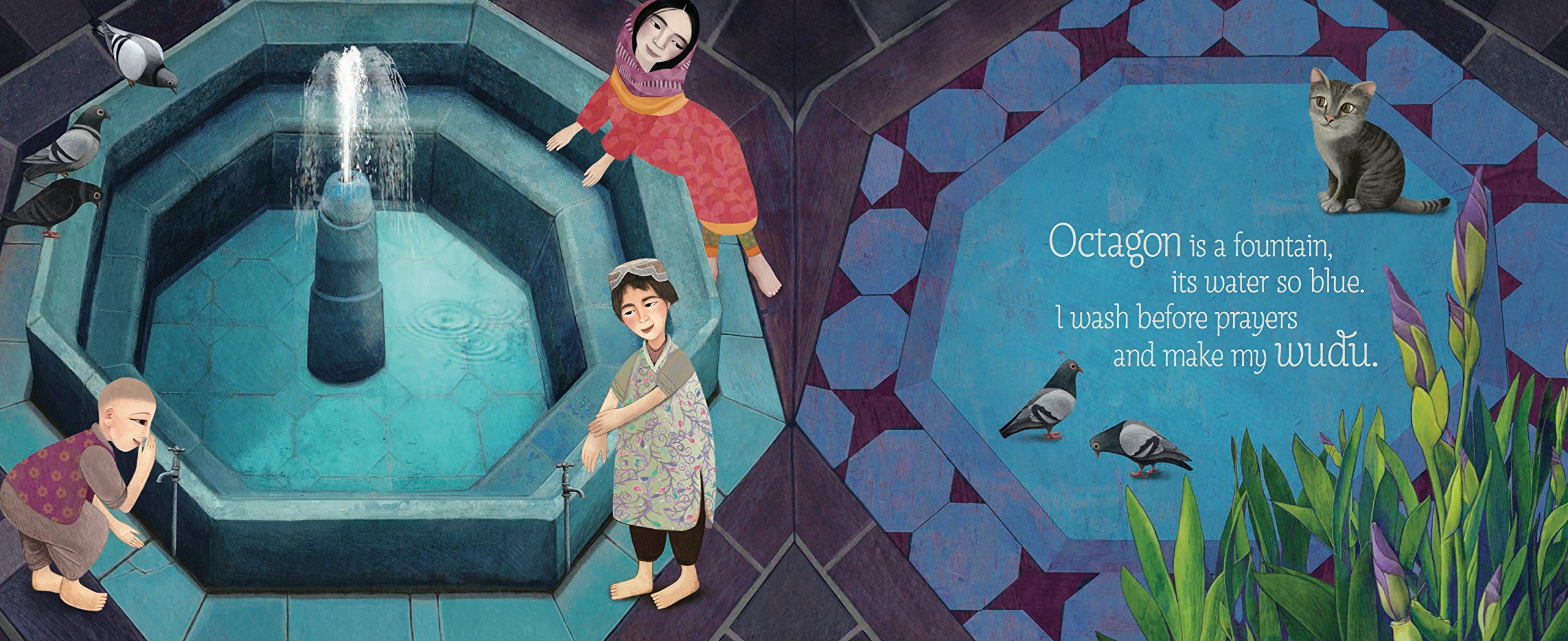
Summary:  In this follow-up to Golden Domes and Silver Lanterns: A Muslim Book of Shapes, the author-illustrator team explores various aspects of Islam by looking at different shapes.  Each page contains a rhyming couplet introducing a shape and a word from Islam (“Circle is a daff, a drum large and round./We fill the air with its festive sound”).  The illustrations portray Muslims from a variety of countries and cultures. Includes a glossary that gives more information about each term from the text and an author’s note describing the importance of shapes and geometry in Islamic art.  32 pages; ages 3-8.

Pros:  An excellent introduction to the Muslim faith, with interesting illustrations that include a wide variety of beautiful geometric patterns.

Cons:  The information is pretty brief; I was curious about many of the terms, but the glossary only provides a sentence or two about each one.

If you would like to buy this book on Amazon, click here.

The Promise written by Pnina Bat Zvi and Margie Wolfe, illustrated by Isabelle Cardinal

Published by Second Story Press

Image result for promise zvi amazon

Image result for promise isabel cardinal zvi

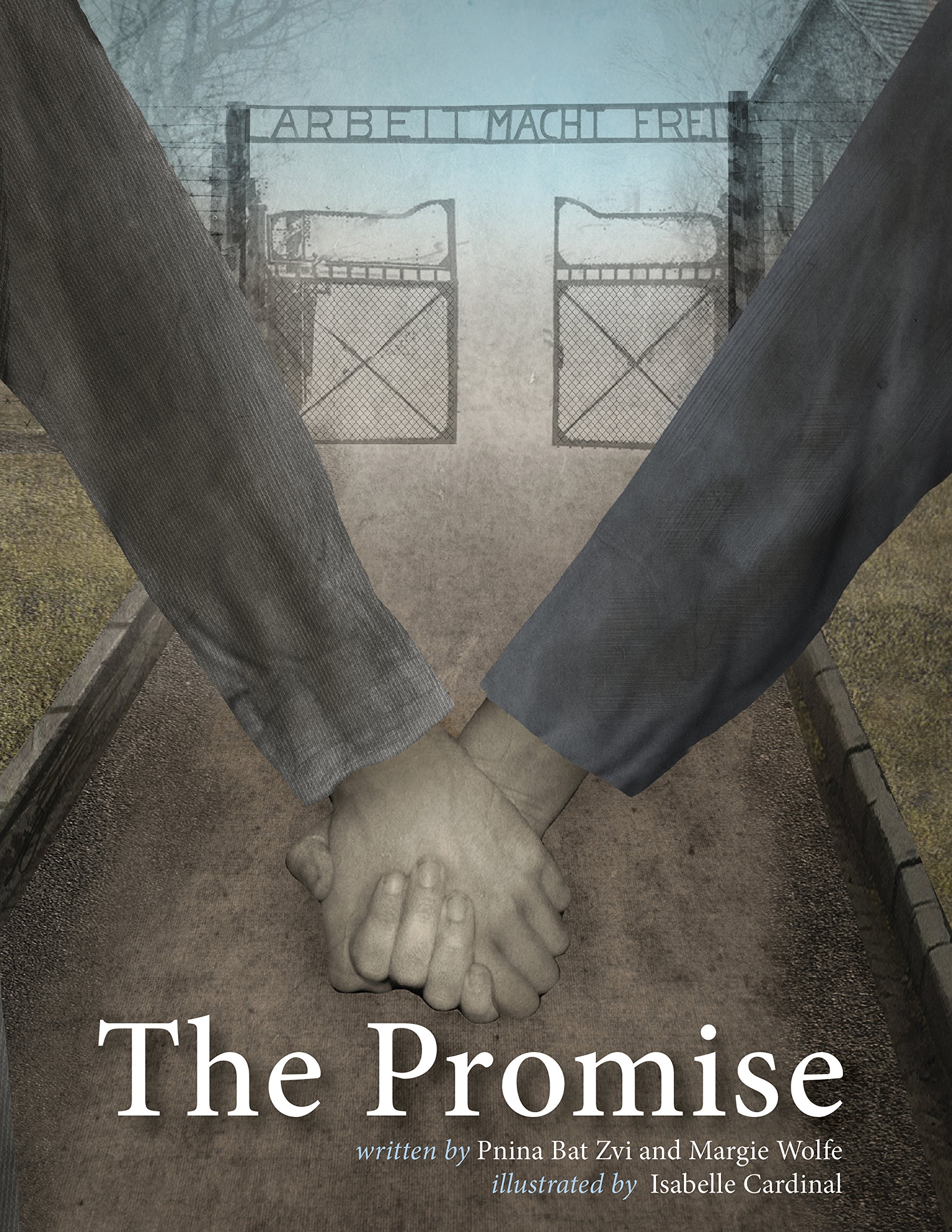
Summary:  Rachel and Toby have been in Auschwitz since the night their parents were taken away by the Nazis.  Before he left, their father gave Toby three gold coins.  Their mother told them to stay together no matter what.  Toby promised to take care of Rachel and not to spend the coins unless she absolutely had to.  When Rachel falls ill in the concentration camp, Toby realizes the situation is desperate enough to warrant using the coins.  She successfully rescues her sister from the sick ward, defying the Nazi guards and earning herself a beating.  The girls are allowed to stay together, though, and survive their imprisonment until the end of the war.  32 pages; grades 4-8.

Pros:  A beautiful and moving story about courage, loyalty, and hope during the most difficult circumstances.  The authors are cousins, the daughters of Rachel and Toby.

Cons:  Most reviewers recommend this book for grade 2 and up, but I would be hesitant to share it with kids under the age of 10.  The illustrations are kind of creepy, and the death of several characters at the hands of the Nazis is implied.

If you would like to buy this book on Amazon, click here.

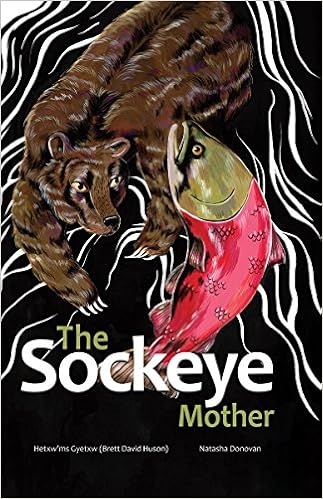
The Sockeye Mother by Hetxw’ms Gyetxw (Brett David Huson), illustrated by Natasha Donovan

Published by Highwater Press

Image result for sockeye mother brett amazon

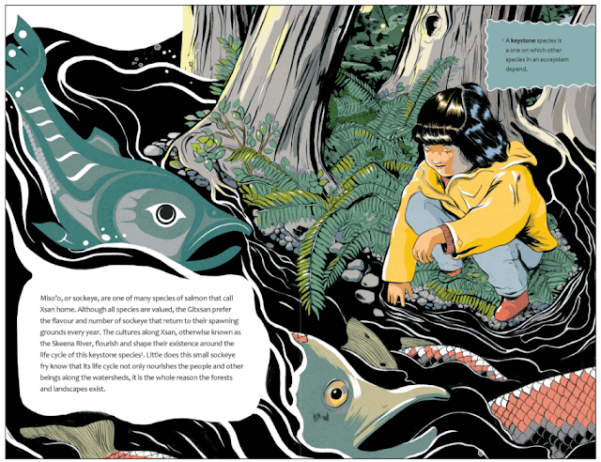
Image result for sockeye mother natasha donovan

Summary:  The life of a sockeye salmon is described from the time she hatches from an egg until she returns to the same spawning ground two years later to lay her eggs before dying.  The sockeyes’ connection to the Gitxsan, indigenous people of British Columbia, is alluded to, as well as the reverence these people have for the fish that help sustain them.  The balance of nature is also described in a section called “A Replenishing Death”, when the salmon’s body becomes fertilizer for the flora in and around the water. 32 pages; grades 2-6.

Pros:  The author grew up in the Gitxsan Nation and imparts both scientific and cultural information in this brief story of a sockeye salmon.  The close-up illustrations vividly bring to life the different stages of the fish’s life, as well as the people and animals around her.

Cons:  This may not be a book many kids will pick up on their own, but with some guidance, they will find it an interesting resource.

If you would like to buy this book on Amazon, click here.

La Frontera/The Border: El Viaje Con Papa/My Journey With Papa by Deborah Mills and Alfredo Alva, illustrated by Claudia Navarro

Published by Barefoot Books

Image result for la frontera deborah mills amazon

Image result for la frontera claudia navarro

Summary:  Alfredo tells the story of his life in Mexico, how his father was no longer able to support the family, and his parents’ decided to send him and papa north to the United States.  A coyote led the two of them to the Rio Grande, gave them an inner tube to float across, then disappeared with their money.  After a grueling week of traveling on foot, they found a shack to sleep in, and a friend of Alfredo’s grandfather picked them up and drove them to Texas.  They settled in to the Embassy, a collection of broken-down vehicles parked behind a factory.  When Alfredo started school, his father gave him a $100 bill to buy a bus ticket back home if he was picked up by immigration officials and sent back to Mexico.  After a difficult transition, Alfredo enjoyed school.  President Reagan granted amnesty to immigrants, and Alfredo and his father were able to start the path to citizenship.  Best of all, four years later, the rest of the family was able to come to the United States.  Includes photos of Alfredo and his family, and extensive information on Alfredo’s story, borders and culture, and immigration.  In English and Spanish.  48 pages; grades 1-5.

Pros:  A grittily realistic story of a family seeking a way out of desperate poverty in the United States.  Although it takes place more than 30 years ago, the story is more relevant than ever to readers today.  Putting a face on “illegal immigrants” will help students have greater empathy for others in a similar situation, and those who have experienced a journey like Alfredo’s will feel a connection to him and his father.

Cons:   Too bad certain government officials in Washington, D.C. aren’t reading this.

If you would like to buy this book on Amazon, click here.


Every Month Is a New Year by Marilyn Singer, illustrated by Susan L. Roth

Published by Lee & Low Books

Image result for every month is a new year singer amazon

Image result for every month is a new year roth

Summary:  Designed like a calendar, opening at the bottom instead of the right side, this book explores how a new year is celebrated in cultures around the world.  Eighteen poems celebrate the new year, beginning with “Midnight Ball Drop” on December 31 in New York City, and wrapping up with “Las Doce Uvas de la Suerte” in Spain the following December 31.  In between, there are visits to Scotland, Russia, China, Iran, Thailand, Jordan, Chile, New Zealand, India, and Ecuador, and celebrations that take place in every month of the year. Includes several pages with additional information about each holiday; a glossary and pronunciation guide; and author’s sources.  48 pages; grades 2-5.

Pros:  A wealth of information about a wide variety of cultures, all in a clever package–a book designed like a calendar.  The collage illustrations add texture and plenty of color to the poems.

Cons:  I would have preferred the information about each holiday to be on the page with the poem rather than all in the back.  The poems made me curious to learn more, and it was a little unwieldy to have to keep flipping back and forth.

If you would like to buy this book on Amazon, click here.